President Muhammadu Buhari has sacked the Director-General of the National Directorate of Employment (NDE), Dr. Nasiru Mohammed Ladan Argungu
According to a statement by the Senior Special Assistant to the President on media and publicity, Malam Garba Shehu, his sack took effect
from yes, December 7th, 2020.
There was no reason given for the sudden sack but the President has asked the Supervising Minister of the Agency, the Minister of State, Labour and Employment, to nominate an Acting DG from amongst the most Senior Directors based on competencies and seniority to take over from Dr. Argungu until a substantive holder of the post is appointed by Mr. President.
The Inspector General of Police, Mohammed Adamu, has ordered officers of Ebonyi State Police Command to shoot anybody that put their lives into danger.
“When your life is danger, you use your fire arm. You are meant to maim and not to kill that person.”
The Inspector General, who spoke today, December 8 at the Command Headquarters, Abakaliki, during a one-day working visit to the State, said that Police officers are special breed of Nigerians charged with the responsibility of protecting lives and properties of citizens of the country.
He expressed displeasure in the huge number of police that were killed and destruction of police stations during the last EndSars protests, adding that such violent protests will never be allowed to happen again in the country.
Mohammed Adamu directed men and officers of the Nigerian Police to use maximum force to suppress any form of violent protests and to follow laid down rules of engagement.
He called on Police officers not to be demoralized as a result of the negative impact that occasioned the EndSars protests as the police high Command had put modalities in place to ensure improvement in the welfare of all serving and retired officers.
“When your life is danger you, use your fire arm. You are not meant to kill but to maim. Shot the suspect on the leg not on the heart. “Endsars protests created a lot of problems for the Nigerian Police and the country. This protest came as a result of what many people have yearning about.
“The Endsars started as a result of fake news provided by the social media. There have been lots of reforms has been putting in place.
“The Endsars protests started from Delta, to Lagos and other parts of the country. The motive behind the protests was not endsars but attack on government. Police provided them cover.
“Their aim was not peaceful protest as it turned violence few days after. The reason was to attack the police that can protect the citizens and corporate offices in the country. “Police has the capability to prevent loss of lives. We are meant to protect and not to destroy lives. It was through maximum restraint we saved the country from anarchy. We proved that during the protests, the police can be trusted.
“The President supported the police and the Governor’s forum, saying that we love our police. What happened because of attack on police, has the tendency for the police to be demoralized as Banks, companies, private and public properties were destroyed.
“Other sectors were attacked; police was not only the worse hit. Nigeria police will never again accept such type of violent protest. If you want to protest we will provide security but it should be within the law. “We shall suppress violent protests with maximum force and follow the rules of engagement. Police officers are special breed of Nigerians specially trained.
“The officers that died did not die in vain. We have promoted them and look into the issue of compensation. Welfare issues will be addressed including myself. We have health insurance scheme. “In January, 2021, there will be renovation of barracks and new ones will be built. Let us not be demoralized.
“Follow the rules of engagement. Go out with the authority that backs you in line with the constitution. ” In his welcome address, the Commissioner of Police, Ebonyi State Police Command, CP Philip Sule Maku stated that the Command lost four police officers, 11 police structures, a total of 20 vehicles as 14 police officers sustained varying degrees of injury in the cause of the Endsars protests in the country.”
President Muhammadu Buhari is talking tough on the moves by some people to return to the streets with EndSARS protest, saying that his government will not tolerate it.
President Buhari sounded a strong warning about reoccurrence of the EndSARS protest, saying that no responsible government will allow that to happen, stressing that violent demonstrations will no longer be allowed.
“Democracy does not mean confusion or lack of accountability.”
The President, who had a meeting with governors from the six geo-political zones in the country, said that the recent wave of ENDSARS protest was hijacked by hoodlums to cause mayhem and destroy private and public property and that he would not want a repeat performance of the same thing again.
“We do not stop anyone from demonstrating, but you don’t set up roadblocks and smash windscreens. Which government will allow that?’’
President Buhari noted that the foreign press coverage of the EndSARS violence was not balanced, citing specifically the CNN and BBC, for omitting the number of policemen killed, police stations that were razed, and the prisons that were thrown open for inmates to escape.
“I was disgusted by the coverage, which did not give attention to the policemen that were killed, the stations that were burnt, and prisons that were opened. They said we are all at fault. We don’t have the sympathy of anyone. We are on our own.”
On the eight-month long strike by Academic Staff Union of Universities, the President said lecturers had not taken into consideration the larger challenges facing the country.
“Government conceded something. The problem is that they refused to look at the problem of the whole country. The Minister of Labour is working hard at it. It is amazing how ASUU will stay out of classrooms for so long. There’s a need for our elites to understand the challenges facing the country.”
The National Population Commission (NPC) has said that the current country’s population figure is officially 206 million.
Chairman of the Commission, Nasir Kwarra, briefing reporters today, December 8 in Abuja on the commencement of the next Enumeration Area Demarcation, said that since Nigeria had not been able to hold a census in the last 14 years, it would be difficult to know the exact population of the country.
“In the absence of actual census, we formally do projections and we have all along been doing our projections and we estimate that as of 2020, the estimated population of Nigeria 206 million.”
He said that the date for the holding of next census in the country can only be announced by President Muhammadu Buhari, who has the sole right to do so, saying however, that Buhari would do the needful soon.
According to him, the commission is working on getting Buhari to make the proclamation.
Buhari had last two months approved N10 billion for the NPC to enable the commission to continue its Enumeration Area Demarcation (EAD) in 540 local government areas across the country.
The president also approved an additional N4. 5 billion to be included in the 2021 budget for the completion of preparation for the next census.
While announcing the commencement of the Enumeration Area Demarcation exercise, Kwarra said that about 260 local government areas out of the 774 in the country had been fully demarcated.
He said that the 11th phase of the exercise would begin on December 9, 2020, and end on January 20, 2011, adding: “planning for the census is anchored on the EAD as the basis for estimating both the human and material resources required for the census. In essence, the success of a credible and accurate census depends very much on the quality and reliability of the EAD.”
NPC boss said that the EAD exercise is not the enumeration of persons living in the country but a preparatory exercise before the census.
He said the NPC would be assisting the Independent National Electoral Commission (INEC) to create digitised maps of INEC registration areas for the first time as part of the EAD.
He said this collaboration would positively affect future elections.
“It is important to state that the latest technology is being deployed for this EAD exercise, including the use of very high-resolution satellite imageries as the base map, the use of GPS for georeferencing and the use of GIS for data management.
“Also, personal data assistants (handheld devices/tablets) that include computer software for population estimation are being used for data capture.”
He said that data can also be used to tackle the security situation in the country.
Aare Onakakanfo of Yorubaland, Gani Abiodun Ige Adam, has said that he had never in his life requested to visit former President Olusegun Obasanjo whether when he was in office or after.
“I have never in my life requested to visit Baba Obasanjo, whether while he was in office or after,” Gani Adam emphasized in reaction to Obasanjo’s claim last week that Adam had requested on several occasions to visit him but that he refused because of his (Adam’s) past record that did not match his standard.
Describing such comment by the former Nigerian leader as “weighty,” the Aare Onakakanfo said that he decided to respond in order to clear the air on Obasanjo’s “aspersions” against him.
“In truth, Baba Obasanjo was aware of the meeting held at the Lekki residence of Afenifere leader, Pa Ayo Adebanjo. He signified interest in the meeting, that was why he travelled for over six hours from Abeokuta to Lekki.
“But for him to have said he was not aware of the meeting was a huge misinterpretation of all that transpired between us. I have never in my life requested to visit Baba Obasanjo, whether while he was in office or after. I need to clear all these not because of today, but for future references.
“By virtue of my position now as the Aare Onakakanfo of Yorubaland, and also as somebody from a humble beginning, what have I done to deserve such an assault from a former president that had a hand in my arrest and detention, which to me was unjust and uncalled for?
“On the two occasions of my travails with the Obasanjo administration, I was discharged and acquitted. So what else does the old man want from me that made him say in the statement that my past ways of life was not in accord with his principles and standard?
“I represent the progressive minded people and the ex-president is well known for his conservative ideas. Thus, there is no way we can share the same ideology. I think that is where the ex president missed it. I can never go to his house or reconcile with him. I am sure if I do, my guardian angel will never forgive me.”
Unidentified thieves have stormed the Akwa Ibom state government house, carting away millions of Naira earmarked to pay journalists.
The thieves were said to gained entrance into the office of the Secretary to the Chief Press Secretary to the Governor, Ekerette Udoh, where the money was kept and emptied the contents of the Ghana-must-go bag, in which the money was kept.
Information had it that the money came in since yesterday afternoon, December 7, but that the office refused to share it to the journalists and the thieves came in the night and destroyed the keys and gained access to the office of the Secretary to the CPS.
It was gathered that this is not the first time the government house press centre is being robbed. In recent past, the government house lost about three Plasma Televisions, one at the reception, one in the reporter’s office and the other in the office used by cameramen.
There is an indication that no security camera is located anywhere at the press centre, making it impossible to trace the culprits.
The All Progressives Congress (APC) has granted waver to new people joining the part in the area of contesting for elective posts.
The National Executive Committee (NEC), which approved this position at its meeting today, December 8 at the presidential villa, Abuja, emphasized that waver was also granted those who are desirous of joining the party in the nearest future.
“By this, such new members will enjoy all the benefits and privileges accruable by virtue of their membership of the party.
” So, they will be able to contest for positions in the party; they will be able to contest elections without any requirement of being members for number of years or period of time.”
Briefing newsmen after the meeting which was presided over by President Muhammadu Buhari, the Governor of Kaduna State, Nasiru Ahmed El-Rufai said that NEC of the party also approved the extension of the tenure of Caretaker/Extraordinary National Convention Planning Committee led by Mai Mala Buni, which expires in December 25, 2020 for another six months period, to terminate on 30th of June, 2021.
“This is to enable the Caretaker and Convention Planning Committee to conclude its assignment as laid before NEC.”
Governor El-Rufai said that NEC approved the expulsion of Ntufam Hilliard Eta from the party for flaunting the directives of NEC to discontinue all litigation against the party and its members.
“The fourth resolution, NEC approved the immediate dissolution of the party organs at the polling units, wards, local government, states and zonal levels as well as the non National Working Committee component of the National Executive Committee as well as their immediate reconstitution and composition of the dissolved EXCOs to serve in their respective offices in a caretaker committee capacity but excluding the non-NWC members of NEC.
” Finally, the NEC condemns in very strong terms, the call by the PDP leadership and some of their cheer leaders for the resignation of Mr. President. NEC observes that security challenges though regrettable can only be addressed when all interest, civil and military, governments and opposition, security forces and indeed all citizens collaborate irrespective of party affiliation. This is not the time to politicize security.”
The Nigerian government deregulated the downstream petroleum sector with effect from March 19, 2020. The key argument was that the fuel subsidy regime which gulps billions of Naira annually, had become unrealistic and unsustainable. One or two months later, with the impact of COVID-19 biting hard, disruptions in the global demand and supply chain turning everything askew and the corresponding effect of these factors on government revenue which had dipped terribly, government pointed to additional justifications for its action. It was further argued that the subsidy regime benefits the rich at the expense of the poor. The effect, as explained is that the pump price of fuel will now be determined by market forces. In other words, since petroleum products are refined from crude oil, the price of the crude for refining will determine eventual cost at the fuel station. Prices thus responding to market forces could and would go up and down. Government spokespersons further assured the public that the Federal Government through the Petroleum Products Pricing Regulatory Agency (PPPRA) would under the new arrangement continue to interface with the markets to prevent arbitrary price fixing, and protect the interest of consumers.
This was the second time in eight years that Nigeria would focus on the deregulation of the downstream sector. The same arguments, at different times, under different administrations, and with different reactions and outcomes. In 2012, under the Jonathan administration, the deregulation of the downstream petroleum sector was stoutly resisted by the opposition, organized Labour and civil society groups. The administration was compelled to review the pump price of fuel downwards, but the protests marked the beginning of a long-term, gradual erosion of emotional connection with the people, which was capitalized upon and exploited by the then emerging coalition of opposition groups. The Jonathan administration introduced the SURE-P Programme. It also provided palliatives in form of mass transit buses which were publicly handed over to Road Transport Workers. In 2020, the Buhari administration returned to the same objective. There were no widespread protests, perhaps because of the advantage of timing.
The entire nation inexorably slipped into a lockdown due to COVID-19. Even if anyone wanted to protest, it was not the right time to do so. The world was in the grips of debilitating fear. COVID-19 was an entirely new global, public health proposition, the type that no one had seen since the Spanish Flu of 1918-1920. The country’s budget had to be reviewed about twice as the spot price of crude oil to which the nation’s budget is benchmarked, jumped up and down like a yo-yo. The people were skeptical, but they were more or less helpless. The Nigeria Labour Congress (NLC) filled the gap on behalf of workers, not ordinary Nigerians, as one of its spokespersons boldly asserted. The NLC nonetheless raised the same vexed questions about the need to get Nigeria’s four refineries working, to eliminate the embarrassing cost of fuel importation. We would learn in due course that these same four refineries operate at a loss. Labour also told the Federal Government that it was insensitive to impose a lockdown on the people, increase electricity tariffs and at the same time, submit the pump price of fuel to neo-liberal market forces which tend to promote capital, not the human interest. The Nigeria Labour Congress was not saying anything new, or original. It was Joe Ajaero, its Deputy President’s public declaration, at the time, that the Congress does not fight for every Tom, Dick and Harry but its own members and their families, that I found instructive as a new introduction to the selfish dynamics of Labour politics in Nigeria.
It is part of the responsibility of government to listen to the people, to collate and process feedback, and respond to public opinion as a key factor in the governance process. The Buhari administration may have used the COVID-19 situation to play the victim: the country was busy looking for loans, COVID support, to provide much needed support for small and medium scale enterprises, the poor, vulnerable and disadvantaged (food palliatives, job schemes in 774 local governments), and set up in the short to medium term, concrete monetary measures (re: the Central Bank of Nigeria’s N100 billion package) and an economic sustainability plan (worth N2.3 trillion) that can sustain the country. But the government also made promises with regard to the impact of deregulation and the requests made by Organized Labour.
“Fuel subsidy is gone forever in Nigeria”, so said Mallam Mele Kyari, the insider, union-leader, turned Group Managing Director of the NPPC. How much subsidy that was? Nobody has ever told us the truth! The Minister of State for Petroleum, Timipre Sylva, would later add that “We are not just deregulating, we are also giving you an alternative to make it easier for the average Nigerian.” What alternative did they both promise? The big issue was the high cost of petrol. Minister of State Timipre Sylva told Nigerians that Nigeria was working on the provision of an alternative in the form of Liquefied Natural Gas (LNG), Liquefied Petroleum Gas (LPG) and Compressed Natural Gas (CNG), deployed as Auto-Gas. In addition, Nigerians were told that 32, 000 micro distribution centres will be set up for LPG. Refineries will also be rehabilitated, and modular refineries will be provided. The resort to Auto gas is part of the NNPC’s Gas Development Policy. Nigeria, with over 260 trillion cubic feet of gas, is generally regarded as a gas country, more than a crude oil country. Timipre Sylva boasted that the deployment of AutoLNG, AutoCNG and Auto LPG would be cheaper as an alternative to fossil fuel. Nigerians would not pay more than N97 per litre to fuel their vehicles. The NLC which continued to negotiate with government was promised 133 AutoCNG buses in demonstration of government’s sincerity that AutoGas, the new buzzword, holds the key to the future. Both the NNPC GMD, Mele Kyari and the Minister of State for Petroleum, Timipre Sylva were convinced that the introduction of AutoLPG, AutoCNG and AutoLNG, would be “a game-changer” for Nigeria and put to rest all fears about deregulation as proposed.
This background is useful to enable us place what has now happened in context. In the month of November, the Federal Government disclosed that it had signed an agreement to build a rail line to Maradi in the neighbouring Republic of Niger, to enable Nigeria evacuate petrol from a refinery in that country that has a production capacity of 20, 000 barrels per day. Nigeria has four refineries, with a combined refining capacity of about 445, 000 barrels per day. Why should Nigeria be more interested in a refinery in Niger when it should be seen to be fixing its own? The additional talk about a rail line to Niger, stopping just at the border, only had the effect of raising more suspicions. Nigeria’s four refineries operate at a loss, maintained as they are at public expense. Without a doubt, resolving the energy crisis in Nigeria remains a perennial headache for successive Nigerian governments.
Nonetheless, the Buhari government may have managed to crawl out of the woods in the past few weeks. But a lot will depend on how it manages the pathways ahead. This is what I mean: In November, the President commissioned a modular refinery in Ibigwe, Imo State, the Waltersmith modular refinery, with a capacity of 5, 000 barrels per day, expandable to 50, 000 bpd. Other modular refineries are reportedly in the pipeline. This is in addition to the much-touted 650,000 bpd, Dangote Refinery, expected to be delivered by 2021. This is in line with the presumption that improved local refining capacity will help reduce the pump price of fuel. It may also assuage the feeling of hurt associated with the thinking that rather than look towards Niger, considered by many a satellite state of Nigeria, it is better for Nigeria to look inwards and develop its own resources. Perhaps, the more notable effort in this direction is the launch by President Muhammadu Buhari on December 1, of the National Gas Expansion Programme (NGEP) at the Lugbe Dispensing Station in Abuja.
Officially, the year 2020, is designated as “the Year of Gas”, the year when Nigeria declared its intention to move faster to claim its bona fide as a gas country. I believe that it was in this context that Timipre Sylva, Minister of State for Petroleum and the GMD NNPC, Kyari, offered Auto-gas as an alternative to petrol after deregulation. On December 1, President Buhari signalled the country’s determination to move along on that lane. The plan is as follows: (1) the Department of Petroleum Resources has instructed about 9, 000 filling stations across the country to start the installation of facilities for gas products as an alternative to petrol; (2) the government is committed to the conversion of one million vehicles from petrol to Auto-gas by the end of 2021; (3) government vehicles are already being converted from petrol to gas; (4) the projection is that the average Nigerian motorist will have access to fuel at a much cheaper rate. Auto-gas will be no more than N97 per litre. Petrol is currently N168 per litre; (5) at the official launch in Lugbe, Abuja, the NLC received five buses converted to run on Auto-gas. The total that was agreed upon at a September meeting was 133 CNG buses. Femi Adesina, Presidential spokesman has written an op-ed to argue that these developments provide an opportunity to think of the situation in the country as half-full, rather than half-empty. He sees a fulfilment of legacy ahead. What do I think?
I think that the Auto-gas plan is a very good policy. Mele Kyari, NNPC GMD and Timipre Sylva, Minister of State for Petroleum, with their boss, Buhari providing necessary leadership, should be commended for moving the needle in this direction. In the most recent past, poor co-ordination and lack of synergy in the oil and gas sector, frustrated every meaningful effort, as birds of passage fought over territory and influence. There have been experimental attempts in Nigeria to promote a gas policy. Even the idea of auto-gas as alternative fuel is not new (in Edo State, a few years ago, there were experimental efforts), but perhaps in terms of articulation, this is the loudest effort made so far. The resort to Auto-Gas will provide cheaper fuel. It will curb carbon emission in line with global environmental expectations and Nigeria’s commitment to the Paris Climate Change Agreement (2015) and the insistence of the Inter-Governmental Panel on Climate Change (IPCC) on a limit of no more than 1.5-degree centigrade greenhouse emission. The move towards alternative automotive fuel also signals concrete policy action on the part of the Nigerian government, a commitment that Nigerian Presidents have expressed at every UN Plenary session in the last decade. Nigeria has 263 trillion cubic feet of gas in proven reserves. The country is among the top ten gas countries in the world but per capita consumption of gas in Nigeria is one of the lowest, even within the West African sub-region. The Nigeria Gas Programme is meant to boost the domestic utilization of gas in the country. Gas is clean, cheap, flexible, affordable and practical. It has a faster combustion rate than petrol. The Federal Government tells us that it will create about two million jobs, save cost of transportation, reduce engine noise, protect our environment, expand the country’s energy mix, and reduce our dependence on foreign exports once there is a stable energy market at home in Nigeria. This is possible, with the right political will.
There are more than 70 countries in the world where Auto-gas is either preferred or is part of the energy mix, with Turkey, South Korea, Poland, Italy and Australia as the most dominant. This is so despite the fact that vehicle manufacturers seem to be more focused on the development of electronic vehicles (EVs). Yesterday, the United Kingdom opened its first major all-electric auto service station as demand increases for environmentally friendly vehicles to reach about 30 million on the road by 2040. Nigeria, beginning with Auto-gas-propelled vehicles is definitely on the right track. It can only be hoped that vehicle manufacturers will devote as much attention to Auto Gas vehicles as they do to EVs.
The residual issue for now in Nigeria is the cost of conversion from petrol to gas. Many vehicles manufactured in the last decade can be easily converted from petrol to gas or re-designed to operate in a dual-fuel mode. Nigerians are already grumbling about the cost of petrol. When they were initially told last week, that conversion from petrol to gas will cost as much as N250, 000 per vehicle, that caused a lot of panic. The Technical Adviser who made that announcement has since retracted the statement. What government plans to do, we have been told subsequently, is to convert one million vehicles free of charge between now and 2021 December. Sounds nice, but what will be the criteria for choosing the beneficiaries? The size of the car? The beauty of the owner’s face? Ethnicity? Religion? Political party affiliation? If the Federal Government of Nigeria plans to convert one million vehicles to Auto-gas in one year, it would have to come up with a sharing formula that is in accord with the country’s Federal Character formula! That is one problem to worry about. The Federal Government has also promised a financing scheme of N250 billion in the form of stimulus and intervention facility to promote gas penetration. Excellent idea, but how will the money be shared? And by the way, how much exactly is a conversion kit, for the benefit of Nigerians who may not be covered by the government’s one million charity scheme? Electricity DISCOs are complaining that they don’t get gas to power turbines. What is the guarantee that there will be regular gas supply to power the Auto-gas development scheme? Gas supply in Nigeria is a big problem and that is another topic entirely.
My final take: Good policy, poor communication so far, and that requires a little more work. I also think government needs to work harder on the inter-related Petroleum Industry Bill (PIB).
No fewer than five million farmers have registered for fertilizer subsidy in Nigeria, the Minister of Agriculture and Rural Development, Alhaji Muhammad Nanono, has said.
Muhammad Nanono, who today, Decemer 7, at a Consultative Meeting on Restructuring of Presidential Fertilizer Initiative (PFI) for Sustainability in Abuja , said the Federal Ministry of Agriculture and Rural Development had registered and developed the database targeting smallholder farmers for the fertilizer subsidy support.
He said that the meeting was organised to critically examine the proposed option to evolve the best strategy to reach the smallholder farmers with the subsidy support, adding that the meeting with relevant stakeholders on the development of template for the administration of subsidy to the smallholder farmers on sustainable basis was organized jointly by his ministry and Federal Ministry of Finance, Budget and National Planning.
He said that the primary concern of government was to get majority of the smallholder farmers out of extreme poverty through targeted support to increase their level of productivity.
“We are all aware of the efforts of President Muhammadu Buhari in promoting local production of fertilizer in the country in order to ensure easy access by farmers.
“This was made possible by the establishment of the President Fertilizer Initiative.
“However, Mr President has restructured the PFI with a view to repositioning it for long term sustainability and greater impact.
“In order to support the teeming smallholder farmers, Mr. President approved that, an implementation template be developed through consultative engagement with the relevant stakeholders.”
This was even as the Minister of Finance, Budget and National Planning, Hajiya Zainab Ahmed, said that the meeting would be guided by fundamental changes upon which sustainability would be built.
Zainab Ahmed said that the role of NAIC-NPK would be restricted to the importation of the raw materials, monitoring activities and provision of cost basis for government to pay subsidies as for vulnerable smallholder farmers.
She said that all blending plants were to handle their logistics, recover their production cost and profits through the sale of their products in the market.
The Minister was represented by Mallam Aliyu Ahmed, the Permanent Secretary Ministry of Finance, Budget and National Planning.
Dr. Andrew Kwasari, Senior Special Assistant to the President on Agriculture, said that one of the objectives of the nation’s fertilizer strategy was to create sufficient supply of safe, high quality crops and price competitive fertilizer.
Kwasari said another strategy was to ensure expanded access to such fertilizer supply to all via commercial channels.
The immediate past national chairman of the ruling All Progressives Congress (APC), Adams Oshiomhole has confirmed that the 21-member National Working Committee (NWC) under his leadership largely worked cohesively and harmoniously.
He said that the only exceptions were those of the three members used by forces desperate to take control of the party.
“They contrived a crisis and abused the judicial process to undermine the constitution and integrity of the party.”
“The majority of 18 members worked as a team and not as allies or loyalists of any body. When the National Executive Committee (NEC) in its wisdom dissolved the NWC, I immediately announced publicly that I accepted the decision, regardless of its illegality or otherwise, as it affected my position as national chairman.”
“I was the only one at the press conference where I made the announcement for personal reasons. The reason, of course, was that some of my colleagues in the dissolved NWC obviously didn’t share my position not to contest the dissolution in court. I can only accept responsibility for my own decision.”
“Subsequently, I instructed my lawyers to withdraw the suits challenging my purported suspension from office by the proxies of those bent on removing me as chairman. It is, therefore, the height of mischief to insinuate, as it is being done in some quarters, that I would publicly accept the decision and later surreptitiously seek to contest it in court.”
“That chapter of my political life is closed. Even if another NEC decision or a court order reverses the dissolution, with utmost humility I will decline to return as APC chairman.”
“I am proud of the accomplishments of the NWC under my leadership and I am grateful to the principled 18 members who worked as a team committed to the cause of the party.”
“Above all, I bear no grudges against any one for the manner of my removal. Instead, I am grateful and loyal to President Muhammadu Buhari who encouraged me to contest the chairmanship of the party.I am also very much appreciative of the support of President Buhari who encouraged me to assert the authority of the party without fear or favour.”
“Indeed, I would not have lasted as long as I did as national chairman but for the President’s and support for me. I will continue to support his administration to succeed in serving the common good of the people of Nigeria.”
In a lengthy statement he issued today, Oshiomhole described as ‘fake news’ reports that he has returned to court to challenge his removal as the party’s chairman.
“In reporting the legal action taken by a member of the dissolved National Working Committee (NWC) of the All Progressives Congress (APC), some attributions have been made to the effect that plaintiff is an “ally of Oshiomhole” or an “associate of Oshiomhole.”
“The court documents are clear on who is the plaintiff. For the avoidance of doubt,
We use cookies on our website to give you the most relevant experience by remembering your preferences and repeat visits. By clicking “Accept”, you consent to the use of ALL the cookies.
This website uses cookies to improve your experience while you navigate through the website. Out of these, the cookies that are categorized as necessary are stored on your browser as they are essential for the working of basic functionalities of the website. We also use third-party cookies that help us analyze and understand how you use this website. These cookies will be stored in your browser only with your consent. You also have the option to opt-out of these cookies. But opting out of some of these cookies may affect your browsing experience.
Necessary cookies are absolutely essential for the website to function properly. This category only includes cookies that ensures basic functionalities and security features of the website. These cookies do not store any personal information.
Any cookies that may not be particularly necessary for the website to function and is used specifically to collect user personal data via analytics, ads, other embedded contents are termed as non-necessary cookies. It is mandatory to procure user consent prior to running these cookies on your website.


 President Muhammadu Buhari has sacked the Director-General of the National Directorate of Employment (NDE), Dr. Nasiru Mohammed Ladan Argungu
 President Muhammadu Buhari is talking tough on the moves by some people to return to the streets with EndSARS protest, saying that his government will not tolerate it.
 The National Population Commission (NPC) has said that the current country’s population figure is officially 206 million.
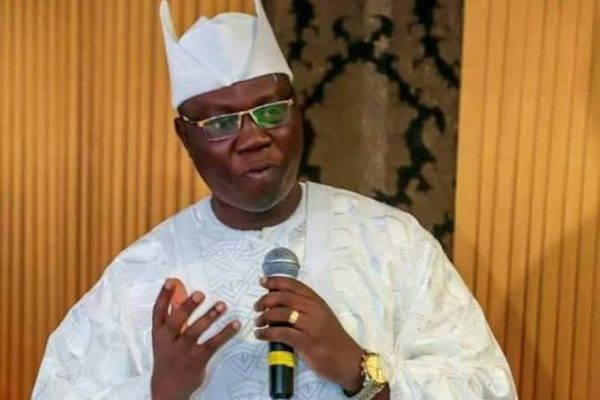 Aare Onakakanfo of Yorubaland, Gani Abiodun Ige Adam, has said that he had never in his life requested to visit former President Olusegun Obasanjo whether when he was in office or after.
 Unidentified thieves have stormed the Akwa Ibom state government house, carting away millions of Naira earmarked to pay journalists.
 The Nigerian government deregulated the downstream petroleum sector with effect from March 19, 2020. The key argument was that the fuel subsidy regime which gulps billions of Naira annually, had become unrealistic and unsustainable. One or two months later, with the impact of COVID-19 biting hard, disruptions in the global demand and supply chain turning everything askew and the corresponding effect of these factors on government revenue which had dipped terribly, government pointed to additional justifications for its action. It was further argued that the subsidy regime benefits the rich at the expense of the poor. The effect, as explained is that the pump price of fuel will now be determined by market forces. In other words, since petroleum products are refined from crude oil, the price of the crude for refining will determine eventual cost at the fuel station. Prices thus responding to market forces could and would go up and down. Government spokespersons further assured the public that the Federal Government through the Petroleum Products Pricing Regulatory Agency (PPPRA) would under the new arrangement continue to interface with the markets to prevent arbitrary price fixing, and protect the interest of consumers.
 The immediate past national chairman of the ruling All Progressives Congress (APC), Adams Oshiomhole has confirmed that the 21-member National Working Committee (NWC) under his leadership largely worked cohesively and harmoniously.
