
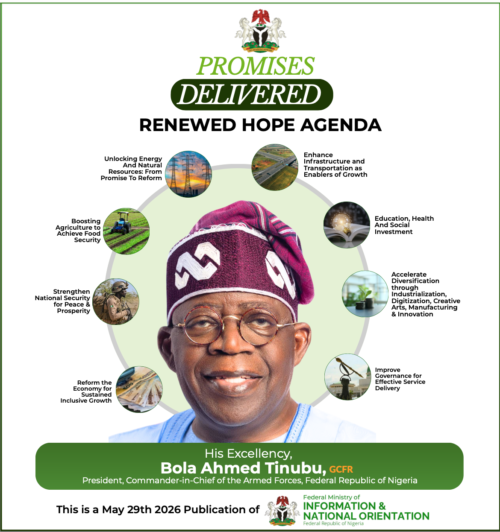

Things that Held Nigeria Back Will Soon Be put Behind – Tinubu
 Asiwaju Bola Tinubu
National leader of the ruling All Progressives Congress, Bola Ahmed Tinubu has said that all the negative things that held Nigeria from moving forward will soon be put behind as the APC federal government lay solid foundation.
“Under the current APC administration, the nation is now building the institutional framework and infrastructural networks that will bring forth an era of beneficial growth and development for all Nigeria and all Nigerians no matter your current station in life and without regard to your incidence or place of birth.”
In his message on the nation’s 60th Independence celebration coming up tomorrow, October 1, Tinubu noted that it is a reality that Nigeria had often stumbled and lost its way since independence.
“Brother has fought against brother. We spilled blood that ought not have been spilled. We have squandered opportunity. We have let our immense potentials lay idle and stagnant.
“But not anymore. Those things are remnants of the past for which we now draw important lessons to guide us to a more optimistic and fecund tomorrow.”
Full text of the message is reproduced here:
Three score years ago, our people determined to amend their political relationship with the world as well as the relationship among themselves. From the unfairness and limitations inherent in the colonial situation we claimed our independence to establish our own way that we might be servile to none. We asserted our independence that we may be the most populous, most powerful and most prosperous nation in Africa and in the process lead our continent and our race into a more just and equable condition.
Thus we do not commemorate Independence Day as some empty ritual. It is not some excuse to begin the 10th month of the year with a holiday. Instead, it is an annual reminder and affirmation of the noble and excellent trek upon which we have embarked as a people. During these 60 years we have passed important milestones and progressed in many ways. We have endured long nights that skeptics said would end us. In my own state of Lagos we have transformed what many had written off as a dying city into a dynamic hub of commerce, openness and infrastructural development.
Under the current APC administration, the nation is now building the institutional framework and infrastructural networks that will bring forth an era of beneficial growth and development for all Nigeria and all Nigerians no matter your current station in life and without regard to your incidence or place of birth. We press onward despite the unique difficulties and challenges posed this year by the global pandemic and its attendant economic difficulties. In fact, Nigeria should be proud of how it decisively managed this challenge. For among the worlds most populous nations, we rank among the least affected by the scourge. This we owe primarily to the merciful hand of God but also to the sage actions of government and the civic responsibility of the people.
Yet I would be less than honest if I did not state we have often stumbled and lost our way at times since we gained independence. Brother has fought against brother. We spilled blood that ought not have been spilled. We have squandered opportunity. We have let our immense potentials lay idle and stagnant. But not any more. Those things are remnants of the past for which we now draw important lessons to guide us to a more optimistic and fecund tomorrow.
The sixty years Nigeria has stood as an independent land may seem long in the life of a man, but in the life of a nation it has been but a single breath.Wisdom instructs us to love our nation for it is truly an unfortunate son who hates his own home and family. However, wise and enlightened it may be to love Nigeria as a nation that is still insufficient. It only gets us halfway to where we need to go. It does little good if we love the geopolitical construct named Nigeria but fail to love and have utmost compassion for the very people who comprise this landand who make it a living daily reality by calling themselves Nigerians.
Today, let us not just celebrate the political space we call Nigeria. Let us celebrate the decent, industrious and kind people who make Nigeria what it is and who strive with care and passion to bring Nigeria closer to what it ought to be.
We are a nation and a people fashioned by a unique history. We bear no shame for our history is no better or worse than any other nation on the face of the earth. From our forbearers, we inherited a land and its ways and means. We have been entrusted by generations yet to come to improve upon those ways and means in order to establish a Nigerian way of life in which all children of this land may flourish in new ways and one in which the social ills of the past no longer seek to haunt the broad avenues of our future.
I would be selling you falsehood if I were to promise that our daily path would be lined with rose petals and sweet fragrance. I would be selling you false hope if I were to say nothing but gentle days and tranquil nights await us.
However, I tender this sound and fundamental truth. This beloved nation now faces in the right direction. We move closer to the reality of a greater nation based on a more just and compassionate society. Because of you, the fine and patriotic people who are this nation, we are better than we were yesterday but not quite as good as we shall be tomorrow.
Thus, we honor our independence not because it is a day on the calendar. We value this independence because it allows – in fact demand of us – that we assess and define ourselves and our nation as we deem fit. That we define our society, its economy and political institutions in a manner that answers the questions we pose to them instead of responding to the demands of outside forces.
We cherish our independence so that we may build a society according to the humane and progressive values that animate us, and that we not lie supine and beholden to interests that care nothing for us, save that we serve them.
We cherish our independence because we are Nigeria and Nigeria is us. As one, we are greater and more capable than the sum of our individual parts. During these trying times we face, many will ask why should I love this nation? What has it given me? It has given us a large potentially bountiful home. No power on earth can divest your rights to and in this home. Yet, with ownership comes responsibility. You have the inalienable right, no duty, to build and improve this home as you see fit.
This is the true meaning of independence and we should observe this how we treat and relate to one another. Let us forever join in common purpose and strong bond to build Nigeria as a citadel of peace, a catalyst of prosperity and a tower of justice that wherever they may go in the world Nigerians can hold themselves proud. And wherever they may be in the world, there one thought is of returning to this fine and outstanding home we now build for ourselves of our own ingenuity, ideas and of our very independence. As long as this earth stands, may Nigeria too stand as among its leading nations.
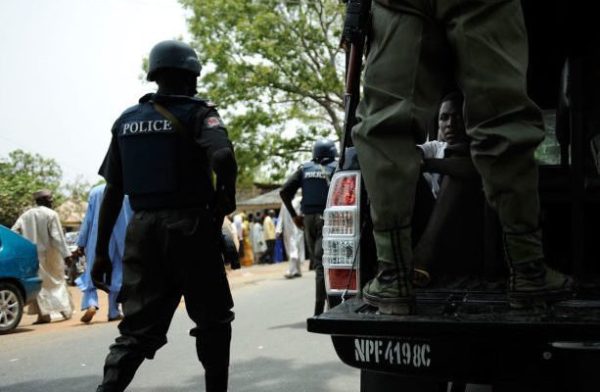 Report reaching us at Greenbarge Reporters indicated that police have arrested no fewer than 16 robbery suspects that have been terrorizing residents of some parts of Kuje Area Council of the Federal Capital Territory (FCT), Abuja.
 The Queen of England, has sent a message of felicitation to President Muhammadu Buhari on the occasion of Nigeria’s 60th Independence Anniversary tomorrow, October 1, 2020.




With 600 Road Projects, President Buhari Sets Unbeaten Record, By Garba Shehu
As we mark the 60th Anniversary Day, the record-setting, mega roadways infrastructure development projects by the Buhari administration numbering up to 600 that are undergoing major upgradation or rehabilitation call for public attention and appreciation.
The size and magnitude of the road projects notwithstanding, the clamour by Nigerians for more motorable roads is not abating, and neither is the President Muhammadu Buhari Government’s commitment to delivering on an improved national road network, which it inherited at different stages of disrepair from previous administrations. When there is a will, as the adage goes, there will be a way or two.
Since 2015, the Buhari administration has done more than its predecessors to rehabilitate Federal Roads despite other competing infrastructural funding needs. For an Administration willed to funding numerous other critical national infrastructure projects aimed at economic self-reliance and increased domestic output, it is indeed commendable how the Buhari Administration devised economically sound fiscal strategies to fund the redevelopment of various Federal Highways, including those nearing completion.
A quality road network being the most critical component of a national multimodal transportation plan is the foundation of a thriving economy. Good roads link up the national socioeconomic arteries, centres and hubs. People move about and perform everyday activities, mostly by road. It is also by the road that people go to earn a living, farm, or access other transportation modals like rail, air, and water. Essential social services such as education, healthcare, hospitality, community integration, neighbourhood security, religious and private interactions are majorly accessed by roads. A quality road network is therefore the mainstay of any thriving economy.
Nigeria’s 108,000km of surfaced roads of which those categorised as Federal Roads make up 32,000km or 18 per cent had steadily deteriorated in the period preceding this administration through a combination of official neglect, a poor maintenance culture, and perhaps more fundamentally, the absence of a legal and policy framework for private sector participation in funding, management and maintenance of Federal Highways.
Despite the recent drop in revenues due to lower oil prices and the aftershock of the Covid-19 shutdown, Nigeria’s economic potentials are enormous. Although the Buhari Administration is mindful of the pains the average Nigerian is passing through due to the coronavirus-induced recession, it has nonetheless been resolute in continuing with its economic recovery plans which have as a key component the rebuilding of national infrastructures.
It is therefore highly commendable the ceaseless fiscal and administrative stimulus this Administration puts into the timely completion of major roads and bridges across the six geopolitical zones of the country to stimulate economic growth.
The Administration is achieving this objective through the establishment of the Presidential Infrastructure Development Fund (PIDF), in 2018, to fast-track the completion of critical infrastructure projects. In addition, President Buhari, in January 2019, signed Executive Order 7 (the “Companies Income Tax Road Infrastructure Development and Refurbishment Investment Tax Credit Scheme) which is aimed at attracting PPP financing for road construction across Nigeria. It was through this laudable scheme that infrastructural funding is sourced from the Sukuk Bond.
Some of the 600 on-going federal road projects whose completion will immediately impact economic activities include the Apapa-Oshodi-Oworonshoki Expressway, which is being reconstructed as a concrete road, for the first time since it was built 40 years ago. This vital economic gateway can be likened to the nation’s spinal cord, the backbone of our import and export business. When this road is choked and vehicular traffic snarls in gridlock, as it often is, the economy of Nigeria, and indeed the entire West African region, is effectively paralysed. The buhari Administration is committed to reconstructing the Expressway to benefit national and regional economic development. Both the Apapa-Oshodi-Oworonshoki Expressway and the Bodo-Bonny Bridges and Road, (which was conceived in the 1980s, but actual construction started in 2017), were executed under the Executive Order 7 projects.
Other projects being funded under PIDF include the Second Niger Bridge. Main construction for this vital gateway into the South-South and South East regions started in 2018, and completion is scheduled for 2022. As it stands today, the construction company, Julius Berger is claiming 57 per cent completion. There is also the reconstruction of the 375km Abuja-Kaduna-Zaria-Kano Expressway and its transformation to a six-lane configuration; reconstruction of the Benin – Ofusu – Ore – Ajebandele – Shagamu Expressway; the Enugu-Port Harcourt Expressway, and the Kano-Maiduguri Expressways. The Loko-Oweto Bridge, linking Benue and Nasarawa States, an important interstate project started by the Goodluck Jonathan administration, is being completed by President Buhari.
In 2017, the Buhari Administration identified and marked out 63 roads across the country, including 44 Federal Highways. These roads which linked up trade, commerce, port, and agricultural centres across the six geopolitical zones of the country were classified under Critical Economic Routes and Agricultural Routes, and accorded budgetary priority.
The roads include the Apapa/Tincan Port, NNPC Depot (Atlas Cove) to Mile 2 Accessed Road, Apapa-Oshodi Road, Third Mainland Bridge, Apapa/Tincan Island Port-NNPC Depot Access Road, Benin-Ofosu-Ore Ajebandele-Shagamu Road, Obajana Junction-Benin Road Phase 2: (Sections i-iv), Sapele-Ewu Road Sections 1&11, Second Niger Bridge, Onitsha-Enugu Expressway (Amansea-Enugu State Border), Yenegoa Road Junction-Kolo-Otueke-Bayelsa Palm and Bodo-Bonny Road with Bridge.
Included are the Abuja-Lokoja Road Sections i&iv; Suleja-Minna Road Section 11; Kaduna Eastern Bypass; Kano-Maiduguri Road Section 1-1V; Hadejia-Nguru-Gashua-Bayamari Road and Kano Western Bypass; Odukpani-Itu-(Spur Ididep-Itam)-Ikot Ekpene Federal Highway Sections 1&11; Ikom Bridge; Enugu-Port Harcourt Dual Carriageway Sections i-iv; Calabar-Ugep-Katsina-Ala Road; Vandeikya-Obudu-Obudu Cattle Ranch Road; Oshegbudu-Oweto Road; Oju/Loko-Oweto Bridge with approach roads; and the Nassarawa-Loko Road.
Others are the Kano-Katsina Road (Phase 1: Kano Town at Dawanau Roundabout to Katsina State Border); Sokoto-Tambuwal-Jega-Yauri Road; Ilorin-Jebba-Mokwa-Bokani Road; Ilorin-Kabba-Obajana Road (Sections 1&11); Ibadan-Ilorin Road, Section11 (Oyo-Ogbomosho); Lagos-Shagamu-Ibadan Dual Carriageway, Sections 1&11, and Lagos-Otta Road.
Others are the Zaria-Kano Road, Abuja-Lokoja Road (Sections i-iv), Ilorin-Jebba-Bokani Road, Ibadan-Ilorin Road (Sections `1&11), Lagos-Shagamu-Ibadan Road (Sections1&11), Benin-Ofosu-Ore-Ajebandele-Shagamu Road, and Obajana-Benin Road (Sections i-iv).
The Kaduna-Zaria Road, Otukpo Township Road, Kaduna-Katsina Road, Onitsha-Enugu Road (Section 1&11), Enugu-Port Harcourt Road (Sections i-iv), Calabar-Odukpani-Itu Road (Section 1), Calabar-Ugep-Katsina-Ala Road (Sections 1&11), Alesi-Ugup (Iyamoyung-Ugup) Road, Ogoja(Mbok Junction) Abuochichie Road, Kano-Maiduguri Road(Sections i-v), among others, were also among those listed.
There is no doubt the completion of the reconstruction of these roads will heighten the tempo of national economic recovery and achieve one of the cardinal objectives of the Muhammadu Buhari Administration.
With a government determined to provide smooth and motorable roads, it is the hope that we will achieve a mitigation of the wear and tear of vehicles, enhance the country’s socio-economic development, improve road safety, ensure smooth traffic, reduce travel time and traffic congestion, make for better connectivity in and around the federation.
The movement of people and goods is also improving substantially, even if gradually.
* Garba Shehu is Senior Special Assistant to the President on Media and Publicity.