Home Blog Page 770

Buhari Seeks To Refund N148.13 Billion To 5 States Over Federal Road Projects

President Muhammadu Buhari has made a move to pay the sum of N148,141,969,161.24, as promissory notes to five states for Federal Road projects they executed in their States. The states are: Bayelsa, Cross River, Ondo, Osun and Rivers.

The President, in a letter to the Senate today, September 29 and dated August, 13, 2020, which was read by the Senate President, Ahmad Lawan, during plenary today, September 29, reads: “The Senate May wish to be informed that the Federal Executive Council (FEC), at its meeting of June 3, 2020 approved the reimbursement of N148,141,969,161.24 through the issuance of Promissory notes to the Bayelsa, Cross River, Ondo, Osun and Rivers State Governments for Federal Road Projects executed by the states.

“The approval by FEC was subsequent to the recommendation of an Inter-Ministerial Committee which reviewed the requests for reimbursement made by the State Governments for the projects. The Committee reviewed the documents submitted and carried out physical inspection and verification of the projects in the respective states before making its recommendation to FEC.”

Out of the sum of N148,141,969,161.24, Bayelsa State is expected to be reimbursed N38,404,564,783.40; Cross River State, N18,394,732,608.85; Ondo, N7,822,147,577.08; Osun State, N4,567,456,673.63; and Rivers State, N78,953,067,518.29.

Osinbajo Wants Whistleblowing Policy Fully Implemented In States

Vice President Yemi Osinbajo, has stressed the need for the implementation of whistleblowing policy in the thirty States of the Federation and the Federal Capital Territory (FCT) for wider reach.

He also wants the policy to be extended issues of public safety, security, gross mismanagement of the rights of people, and waste of resources, among others.
The Vice President, who spoke today, September 29 at the National Conference on Whistleblower Policy at a Virtual session, said that whistleblower Policy was developed as a tool for the exposure of corruption and corrupt actors in Government and to validate controls and ensuring compliance with public finance management principles.
“It is clear that under the current whistleblowing policy, it is only with respect to acts of corruption that whistleblowing is considered lawful. However, there are a whole range of issues that may not endanger public finance directly but may constitute public safety or security risks. Reporting such may save lives and or property.
“The scope may then cover such matters as a violation of law, gross mismanagement of the rights of people and waste of public resources, or acts inimical to public health or safety.”
Vice President Osinbajo said that some progress had been achieved through this policy at the federal level with regard to recoveries, prosecutions, and convictions, adding: “it is essential that the policy operates widely in States and Local Governments as the tiers closest to the people and overseers of about half of the nation’s revenues.
“Exposing corruption is for the good of our nation. Our goal in this regard is to harness the huge potential of the people to deliver on their moral obligation to report cases of corruption within their immediate environments.
“As we deliberate on the finer details of implementation of this policy, we must consistently remind ourselves of the importance of the task at hand notwithstanding the difficulties.”
Professor Osinbajo called for a legislative backing for the policy, explaining that an Act of the National Assembly to back the policy is a necessity.
“Such a law should also provide for comprehensive protection of whistleblowers, including against reprisals from their employers and those whose activities they expose. These may include witness protection type provisions and this will give the whistleblower some protection where they may have to appear in court.”

The Vice President stressed the importance of his proposal for adjustments in the policy, adding: “certainty and clarity of the reporting processes and adequate protection of the whistleblowers would improve confidence in the initiative.
“Similarly, enhanced transparency and accountability in the implementation of the policy will result in more discoveries and recoveries.”
The conference was organized by the Federal Ministry of Finance, Budget, and National Planning in collaboration with agencies and departments involved in the anti-corruption battle.

Buhari Opens 326 Kilometre Rail Line From Itape In Kogi To Warri In Delta

Itakpe train station

President Muhammadu Buhari has declared open, 326 kilometre Itakpe-Ajaokuta-Warri rail line for commercial operation as well as the ancillary facilities yard, at the recently named Goodluck Jonathan Railway Complex in Agbor (Owa-Oyibu), Delta State.

At the virtual opening of the rail line linking Itakpe in Kogi State to Warri in Delta State today, September 29, President Buhari directed the Federal Ministry of Transportation to link all the nation’s ports of origin and destination – Apapa, Tin Can, Warri, Onne, Calabar Ports- to the rail network in order to significantly improve overall   transportation and economic capacities.

The President said that his administration recognized the importance of the railway mode of transportation as a vital backbone to support industrialization and economic development.

”Accordingly, I have approved the prioritization of viable railway routes for either new rail lines or the reconstruction and rehabilitation of some, to achieve effective and efficient train services supporting the country’s trade and commerce.

”The Railway Infrastructure that I have the honour to commission today is the rail line from Itakpe via the steel town complex of Ajaokuta to Warri, and is an important link for the country’s economy as the central rail line.

”This Government has also approved to link this line further from Itakpe to Abuja, thereby, connecting the Northern Zone of the country and also extending southwards to link the Warri Ports.”

The President expressed confidence that the project, which serves as a vital link of South-South geopolitical zones of the country to the Northern zones, would be completed during the tenure of this administration.

”It will link people across the cultural divides and expand the frontier of trade and commerce, which will lead to better standards of living for our citizens.”

He recalled he recently named 11 railway stations and railway village  after some deserving citizens as a way of giving recognition to Nigerian sons and daughters who have distinguished themselves at nation building and development.,

He listed them as follows:  Adamu Attah Station, Itakpe;  Abubakar Olusola Saraki Station, Ajaokuta; Augustus Aikhomu Station, Itogbo; George Innih Station, Agenebode; Anthony Enahoro Station, Uromi; Tom Ikimi Station, Ekehen and Samuel Ogbemudia Station, Igbanke.

Others are Goodluck Jonathan Railway Complex, Agbor, Owa-Oyibu; David Ejoor Station, Abraka; Michael Ibru Station, Opara; Alfred Rewane Station, Ujevwu; and Michael Akhigbe Railway Village, Agbor

The President enjoined all Nigerians in the transportation industry, especially the railway sub-sector, to continue to support Government in its stride to achieve other railway infrastructure projects.

He also enlisted the support of all at realizing this milestone of a functional and full-fledged central railway, after more than 30 years during which the project has suffered several setbacks and false starts.

”I implore those who work on this line to uphold maintenance and safety culture necessary for long-lasting service in this difficult terrain.

”By the same token, I urge other sectors who will be primary beneficiaries of this transportation backbone, including, the iron and steel sector, stakeholders in agricultural and mining sectors on this corridor, as well as the host communities to protect and sustain this infrastructure and maximize the benefits that could be derived from it and which is readily available at their doorsteps.

”This project will increase the volume of their trade and kickstart and resuscitate the iron and steel complexes.

”All these, I hope will improve our industrial potentials and capacities as well as boost employment.”

President Buhari said projections indicate that the commencement of operation of the Itakpe-Ajaokuta-Warri Rail line  will account for close to one million passengers annually and also unleash approximately 3.5 million tonnes capacity of freight annually that will service all off-takers on the corridor and beyond.

He congratulated the Minister of Transportation, Rotimi Chibuike Amaechi and his team for successfully completion the project, even as he recognized the host communities on this corridor for their patience during the long wait of over 30 years for the realization of the project.

He also commended the host communities for their cooperation during the completion works by the Federal Government.

He assured Nigerians that his administration would continue, within available resources, to judiciously connect commercial and industrial hubs to boost trade, generate wealth and create employment.

In his remarks, Delta State Governor, Dr Ifeanyi Okowa commended President Buhari’s bi-partisan approach to governance, saying ‘‘it is a thing of pride and joy that this rail line was completed under your watch.

”Deltans are excited that this day has come,” he said, adding that the Ika nation is glad of the recognition accorded former President Goodluck Jonathan, in naming the railway complex in Agbor after him.

Okowa urged the private sector to take advantage of the historic corridor by establishing investments that will create jobs for locals, curb youth restiveness and stem the tide of criminality.

”It is imperative that the Federal Government in collaboration with the States provide adequate security cover for this rail line corridor.”

In his remarks, Edo State Governor, Godwin Obaseki congratulated the President on the feat of completing the project, saying it is quite fortuitous that few days to the country’s 60th independence celebration, the President has achieved the completion of this critical infrastructure.

”For us in Edo State we are excited that we have a few stops that have been completed and we are going to be working with you to utilise this infrastructure.”

The Edo Governor appealed to the minister of transportation to extend the rail line to the industrial park in Benin City to facilitate the movement of goods to the northern part of the country.

In his remarks, Minister Amaechi said the project was fully funded by the Nigerian government, adding that 8 of the 10 stations are in the Niger-Delta/ South South region of the country.

”There is no loan on this project, it was funded from the budget and I had the directive of the President to go and revive it and complete it as soon as possible.”

According to the Transportation Minister, the project started under the military era in 1987 but ‘‘underwent protracted hiccups, prolonged abandonment and massive vandalisation,’’ before it was resuscitated by the Buhari administration.

Oba Of Benin To Rivers Gov, Others: We Don’t Want Godfathers For Our Gov

The Oba of Benin, capital of Edo State, Omo N’Oba N’Edo Uku Akpolokpolo, Oba Square II, has made it clear to Governor Nyeson Wike of Rivers State and leadership of the Peoples Democratic Party (PDP), that people in the state would not tolerate any form of godfatherism around the re-elected Governor, Godwin Obaseki.

The Omo N’Oba who spoke today, September 29 when Governor Wike, led three other PDP governors on a thank-you visit to him for his efforts at ensuring a peaceful election in Edo State on September 19, reiterated his disdain for the concept of godfatherism.

“I want to on this occasion plead with the PDP that you also as you have always been talking about the concept of godfatherism, you will uphold it and don’t let unscrupulous members of your party try to now come out and start to use your party by proxy or remote control to control our governor and end up being the hidden godfathers, we don’t want hidden godfathers.”

The Oba of Benin expressed gratitude to the God and the ancestors for hearing the prayers for a peace election.

“If you will recall when I invited the distinguished political actors of all the political parties particularly the two most active political actors, I also said why were they being called gladiators as if they were in the coliseum in Rome. I asked if they had been to the coliseum where they kill themselves at all cost, where the winner is the only one that is alive to claim victory and all the others dead. I said this is not the coliseum, this is not winner takes all or do or die affair and I did say that at the end of the day, it should be no vanquished, no victor and that both sides should consider it a win-win for everybody. I pleaded that the winner must accommodate the other persons”, the Omo N’Oba noted.

The Oba appealed to the governor to let bygone be bygone, and to “stretch out the olive branch for all sides to work with him. All hands should be on deck to work for Edo state and Edo people everywhere they may be proud to be”.

Wike, who was the Chairman of the PDP Campaign Council for the Edo governorship election was joined on the visit by of Governors Aminu Tambuwal of Sokoto, Seyi Makinde, Oyo State, Ahamdu Fintiri, Adamawa State, the host governor, Godwin Obaseki of Edo state and PDP South-South Vice Chairman, Chief Dan Orbih.

Speaking during the visit, the Rivers State governor said that the visit was a fulfilment of the promised they made when they paid the Oba a visit, the day the party flagged off its campaign in the state.

“Your Royal Majesty just like the governor of Sokoto state said when we came here to flag off the campaign of our brother Godwin Obaseki, we made a promise to you and the palace that by the special grace of God if Godwin Obaseki emerges as the winner, we will come back here and thank the Oba and the palace chiefs on the 19th of September, election was held and then on the 20th of September, Godwin Obaseki was declared as the winner of that election”, Wike explained.

The Rivers State governor added that PDP places much premium on the respect for the traditional institution, hence the party had come to ” thank the monarch and the palace leaders.

“You made a promise to us that as a traditional ruler, and as far as everybody is concerned, you are apolitical and so that you will not canvass for votes for anybody. What you preach is that there should be peace, there should be free and fair election.

“Your Royal Majesty, we have seen with our eyes indeed, there was a free and fair election.  Indeed, the election was peaceful. You said you will pray to our ancestors that in Edo, there shouldn’t be bloodshed and that is why the election was very free, was not violent and a leader has emerged.

“We felt it will be very bad on our part if we have made that commitment before and you have also made commitment that you will pray that there will be peace and that you will pray that there will be free and fair election and there was free and fair election, and there was peace then we have no duty other than to come and also play our role to say thank you for gathering the entire people of Edo state to make sure that Edo State was peaceful and the election was free and fair.

“That is what we have come here to do today. We are not a party that will promise and fail, when we promise, we will deliver and to take your son now that he is back for everybody to unite together for the development of Edo State.”

In his remarks, the host governor, Obaseki, said that the PDP owed it a duty to preserve the traditional institution.

“You have kindly received us today, I want to assure you that as the governor of Edo state I have heard your admonitions. I want to promise that I will rededicate myself in my next tenure to the full service of Edo state and the people of Edo state. We will always rely on your wise counsel, we will always rely n you to pray for us and ensure that we the required peace so that we can do all the good things that God desires of us to do for our people.”

Acting Secretary For Education In FCT Administration Dies Amidst Preparations For Re-Opening Of Schools

Alhaji Umaru Marafa | OgeneAfrica

The acting secretary for education in the Federal Capital Territory Administration (FCTA), equivalent to State Commissioner, Alhaji Umaru Marafa is dead. He died today, September 29, according to information reaching us, after a brief illness.

His death came just he is leading the education team to prepare for the reopening of schools which were closed since March this year as a result of the outbreak of coronavirus pandemic across the world.

The late Alhaji Marafa, who hailed from Niger State, had held several strategic positions in the FCTA, including, Head of Finance at the Abuja Geographic Information System (AGIS), Director of Administration and Finance at the Social Development Secretariat before he was appointed acting secretary in the education secretariat.


In a condolence message, the FCT Minister, Malam Muhammad Musa Bello expressed deep sadness over his death, describing him as a dedicated, resourceful and hardworking officer who devoted a greater part of his working career to the service of the FCT Administration.

The minister recalled  the tremendous amount of work Alhaji Marafa and his team in the Education Secretariat wer doing to ensure the safe re-opening of schools in Abuja.

Muhammad Musa Bello commiserates with the Government and people of Niger State and the Kontagora Emirate where the late Umaru Marafa was a prince.

He prayed for the repose of his soul and fortitude for his family to bear the loss.

How Organized Labour Deceived Nigerians, By Reuben Abati

I was very skeptical when the current leadership of Organized Labour in Nigeria objected to the decision of the Federal Government to withdraw fuel subsidy and hand over the pump price of petrol to the forces of demand and supply, also known as market forces. Labour, represented by the Nigeria Labour Congress (NLC) and the Trade Union Congress (TUC), and their affiliates and privies in civil society, further threatened that they were opposed to the hike in electricity tariffs. They issued a statement in which they railed against neo-liberal policies, bad timing, and the insensitivity of government. They made heavy weather out of the hardship that COVID-19 has imposed on the people and why any form of additional taxation that could pressurize the people would be utterly unacceptable. Deregulation of the downstream sector is not a new subject in Nigeria. Removal of fuel subsidy is an old subject. Only the dumb and the deaf would deny being aware of the persistent argument that a functioning electricity sector in Nigeria would unleash the country’s energy and potentials, through the values derivable therefrom: saving of costs, creation of jobs, a value-added SME, an improved manufacturing sector and a happier, more productive citizenry.

In 2012, when the Jonathan administration announced a full deregulation of the downstream sector and removal of fuel subsidy, Organized Labour aligned with opposition politicians and turned the argument on its head. They called out their troops and a thoroughly hypnotized political class, and workers’ community, fostered tension and instability in the system. In 2016, the party that succeeded the Peoples Democratic Party (PDP), that is the All Progressives Congress (APC) and its leaders who had lied to Nigerians that there was no fuel subsidy in the country, but unconscionable theft, and that the Jonathan government was wrong, promptly increased fuel prices. They argued that a fuel subsidy regime was not sustainable: the same argument that they opposed in 2012.

Their conspirators at the time in Organized Labour kept mute. In 2020, with COVID-19 disrupting everything in the world including relationships, with Nigeria suffering a debt and revenue crisis, the collapse of fiscal buffers, and sheer adversity, the Federal Government decided to pull the plugs. It blamed all of these factors and chose to announce a removal of fuel subsidy.  Pump price of fuel, benchmarked to the spot price of crude oil in the international market jumped through the roof. Nigerians groaned. The Federal Government argued that it was not left with any other option.  Everyone expected that Organized Labour would intervene. But Labour didn’t quite do so. Groups in civil society had to picket the Abuja Headquarters of the Nigeria Labour Congress to protest that the NLC should speak up and call the people out on the streets, because life had become harsh and hard for the average Nigerian.

After being pushed, a combined team of the NLC and TUC finally announced that they would call out Labour on strike and shut down the country. They gave the Federal Government stringent conditions: a complete reversal of the hike in fuel price and electricity tariffs. Or else, Nigeria would be shut down indefinitely beginning from September 28, 2020. I was not impressed. I questioned Labour’s sincerity of purpose. I felt they were just playing a game. The biggest tragedy that has befallen Organized Labour in Nigeria is the thinking since 1999, that the leadership of Labour can be used as a stepping stone to a bigger role in Nigeria. Labour leaders use their positions to negotiate big benefits. They mouth progressive slogans and parrot aggressive rhetoric but it is all a lie.

Under the military, there was a man called Paschal Bafyau who used the ladder of Labour leadership to gain prominence. Matthew Hassan Kukah in his book – Democracy and Civil Society In Nigeria (Ibadan: Spectrum, 1999) considers him “a sell-out”.  With the return to democracy in 1999, the new Labour hero was Adams Oshiomhole of the Textile Garments and Tailoring Union.  He was a thorn in the flesh of the Obasanjo administration. He could talk, dance and make Communist-style speeches. He captured the public imagination. He would soon make a leap from being Labour leader into partisan politics. He became Governor of Edo State for two terms. He later became Chairman of Nigeria’s ruling party. He also became a Godfather of Nigerian politics. Something tells me every Labour leader after Oshiomhole wants to be like him. They too want to ride SUVs, and enjoy unfettered access to the seat of power. They also want to be Godfathers in Nigerian politics. The danger here is that this transmogrification of Labour Leadership in Nigeria, sighted first with Paschal Bafyau and raised to another level with Oshiomhole, created a new brand of Labour activism that contradicts norm, culture and tradition in the Nigerian Left. This new generation of opportunistic Labour leaders have devalued the heroism of the likes of Labour Leader No 1, Michael Imoudu, Herbert Macaulay, Eskor Toyo, Wahab Goodluck, the Sunmonu brothers and Frank Kokori. A compromised Labour leadership is a disgrace to the Revolution. I find no better exemplification than the current Labour Movement in Nigeria led by Comrade Aliyu Wabba, and the incompetent and hypocritical response to Labour issues in the country.

In my view, the NLC and the TUC had no business calling out anybody on strike. When they reluctantly did so, they were playing politics and trying to appear concerned about workers’ welfare. This new set of Labour leaders don’t care about the people. They are partisan politicians. Civil society organizations continue to make the mistake that they are dealing with persons of like minds who want to interrogate issues and offer solutions. The truth is that the most conflicted community in Nigeria today is what we broadly describe for want of a better term as the “Nigerian Left”. They are just as worse as the conservatives and fascists; they claim to be defenders of the people’s interests whereas they are just interested in themselves. I am convinced that Nigeria’s Labour leaders knew as far back as 2012, that a subsidy regime either in the downstream or the electricity sector was unsustainable. They knew that getting Nigeria to work in an accountable manner was a useful national priority. They cannot claim ignorance of the inefficiency, leakages and wastages in the system that have, combined, cost Nigeria trillions of Naira. The Jonathan administration tried to address this in 2012. Organized Labour joined partisan politics and became an instrument. When their clients took over in 2015, and brought up the same issue, they kept quiet. When matters reached a head in 2016/2020, they were bound to be deceptive. And this is what they have done. The strike action that they promised on September 28 was never going to happen. It was unnecessary by the way. The so-called agreements that they reached to justify their hypocrisy sound ludicrous. The communique that Nigerians saw in the morning of September 28 is questionable. It may have been designed to help Labour save face, but it merely exposes a Labour leadership that should be a subject of ridicule.

Three meetings were reportedly held – September 15, 24, 27, 2020. After the second meeting, Labour announced that it would go ahead with the nationwide strike because it had reached a deadlock with government. The NLC and the TUC ended up taking Nigerians for a ride. The Communique that eventually signaled the cancellation of the strike exposes their lack of rigour. The document says the Federal Government negotiators and Labour leaders agreed on a number of issues. Let’s examine a few. On the issue of the hike in electricity tariffs, the communique says the bipartite meeting has decided to set up an ad-hoc technical committee to re-examine electricity tariff reforms. This committee will sit for two weeks effective September 28. During that period, “DISCOs have been directed to suspend the application of the cost-reflective Electricity Tariff adjustments.”  This is a totally meaningless statement and it is surprising that someone like Joe Ajaero, a leader of the National Union of Electricity Employees, who was named as a member of the proposed Technical Committee was not awake enough to point out the problem with this proposal. There are technical questions.

In the first place, the current electricity tariffs are not cost-reflective, they are service-reflective. The new template by the National Electricity Regulatory Commission (NERC) creates a service-reflective template, problematic as it is, which ensures that houses, factories and businesses which consume more electricity within an A, B, C, D, range pay more than R1 band designated consumers at the lower end who still pay N4. 00 per unit, thus creating a cross-subsidy regime. The proposed two-week suspension of electricity tariff is also in every sense ambiguous. Is the FG saying the DISCOs should not bill any house, factory or business for two weeks? Is the President now going to ask the Ministry of Finance, the BPE, the NERC and other relevant agencies to re-adjust meters and return to the old tariffs for two weeks?  Did anyone represent the Vice President who oversees Privatization, the NERC, the BPE and the DISCOs at the meetings with Organized Labour? At best, the Federal Government team merely threw the two-week strategy at the unthinking Labour leaders just to buy time. Nothing will happen.

The Federal Government says it intends to review the NERC Act and involve Labour in the electricity value chain. This is meaningless. The Federal Government, States, and Local Governments own 40% of DISCOs. Government can take part of its 40% to the Stock Exchange, but what will be the value of whatever it expropriates? It is a non-issue. The leaders of Organized Labour could not see through that trick. They were also told the National Labour Advisory Council (NLAC) will be inaugurated before the end of the year. And these greedy guys fell for it! If that Council remains moribund, what can they do?

The other big issue was the deregulation of the downstream sector. Our Labour Leaders were told that the Federal Government will now fix Nigeria’s four petroleum refineries and that in fact the Port Harcourt refinery will be 50% completed by December 2021. They were told there will be timelines for delivery and even the national leadership of NUPENG and PENGASSAN will be appointed into a Steering Committee and a Validation team. The guys embraced this old, jaded lie as if they were being addressed by King Solomon. How many times have we been told that Nigeria’s refineries will be fixed? At a time, the FG wanted to privatize these same refineries. Labour leaders opposed the initiative. Today, most of them are struggling to have their children employed in a yet uncompleted Dangote Refinery and the modular refineries by Walter Smith, NIPCO and the Edo State Government.  They want the same private sector that they disparage for their own private benefits!

Labour leaders were further told that the Federal Government will ensure the delivery of one million CNG/LPG Auto Gas conversion kits, storage skids and dispensing units by December 2021 under Nigeria’s Gas Expansion Programme. With the challenges of Corona Virus, this is not possible. To even order the equipment and the accessories, or to build the plant, not less than 18 months will be required.  Who is going to reshape the petrol stations?  Many of the old vehicles on Nigerian roads cannot also be converted. And even if so, who will bear the cost? We are told the Federal Government will provide 133 CNG/LPG transit buses. Nobody manufactures such buses in Nigeria. They will have to be imported. In other words, apart from taking care of the interest of Labour Leaders, the communique that ended the proposed strike of September 28, also very nicely, provided an opportunity for government officials to award contracts! There is also something in there about a 10% housing allocation for Nigerian workers. This is mere wishful thinking. Did anybody talk to Babatunde Fashola, SAN, the Minister of Works and Housing before making this commitment?

They didn’t need to bother, of course, because both Labour and the Federal Government negotiators knew that they were both playing a game and taking Nigerians for a ride. Organized Labour, having obviously embraced deregulation and market forces, should have raised other questions that could be helpful to Nigerians as follows:  If the Federal Government is eliminating subsidy, what does it intend to do with its savings from the downstream sector and the electricity tariffs?  Can the savings be used to fund education and healthcare under a mutually agreed framework? Instead, Labour leaders were discussing buses and houses!  They could also have asked what the FG intends to do with savings in the electricity sector. Is it possible to use the savings to strengthen Transmission infrastructure? Instead, they were discussing how Labour leaders can become members of the Regulatory Board!

The Government negotiators deserve our commendation. They have done a good job of preventing a “worthless” national embarrassment in the shape of a Labour strike in the same week that Nigeria celebrates its 60th Independence Anniversary They have also helped to expose the incompetence and hypocrisy of the current Labour leadership in Nigeria. They have also won an ideological war over the subsidy regime. Those Labour leaders who grumble about neo-liberalism have now embraced it. Their lack of rigour, clarity and intellect provides a strong case for an urgent reform of Labour Leadership in Nigeria. Once upon a time, Labour used to be a strong voice in this country. In those days, government controlled everything: Telcom, Banking, Insurance etc, It was quite easy then to blackmail government, and use that as a platform to become a national figure. The times are changing, indeed the times have changed. Labour must reinvent itself or risk the tragedy of becoming irrelevant.

How Judiciary Promotes Corruption Through Long Prosecution Of Cases – Senate President

Sen. Ahmed Lawan

Senate President, Ahmed Lawan, has fingered judiciary in the promotion of corruption through long prosecution, sometimes lasting for years.

The Senate President, who answered reporters’ questions today, September 28, after attending the 2nd National Summit on Corruption, at the presidential villa, Abuja, dismissed the notion that the present administration’s fight against corruption has been selective.

“The emphasis is to ensure that all hands are on deck. First of all, without the Legislature there wouldn’t have been the ICPC. In the fourth session of the National Assembly, the ICPC bill was passed, which was assented to by the then President, that is to tell you the level of the need and imperative for togetherness in the fight against corruption.

“When you have a judiciary that works to ensure that cases of corruption are treated with dispatch, you will agree with me that that will help in the fight against corruption.

“If a case of corrupt practice or alleged corrupt practice will last up to four, five, six or ten years or so, you’ll know that something is wrong and that is giving some kind of tacit support to the corrupt practice.

“But if there’s always dispatch in the treatment of such cases, that will expedite action by the Judiciary to give support to the fight against corruption.

“So, that I believe is the kind of togetherness that is so important, that is so necessary for us to ensure that we fight corruption at the level of governance.

“But fighting corruption also require the support of the populace. Citizens need to be on board and one way of ensuring that citizens are on board and remain on board is to see genuinty, sincerity and honesty in the way and manner the fight against corruption is carried out and I believe that so far this administration has done quite a lot on this.

“Some people will argue that sometimes there’s selectivity in the way and manner that the anti-corruption fight is fought. I think that is a matter of misunderstanding because when you have a set of people interested in public funds for 16 years, where do you think most of those that will be alleged to have done the wrong thing will come from?

“Certainly from that set of people and I believe that given the types of cases that were completely dispatched, we had APC or people who are supposed to be part of this administration, party or government, who are also incacerated or prosecuted.

“So I believe that the fight against corruption by this administration has been quite open, quite non-partisan and I believe that going forward, we all the three arms of government, all the three levels of government, we need all the citizens to be part and parcel of the fight against corruption in Nigeria.”

The Senate President also dismissed insinuation that there is more corruption under the present administration than previous ones, recalling that the government campaigned on anti-corruption mantra an had followed up on it.

“I don’t know who they are and I don’t know what their facts are, but I will not speak to speculations, I speak to facts. I want to see the facts that there’s more corruption in this administration than the previous administrations.

“You’ll recall that in a particular former administration, we know that somebody once said that what people accused the government of corruption was simple stealing. This administration does not see anything that appears like corruption or thievery and leaves it untreated. So I believe it depends on who is talking.

“If you have an opposition, it is likely the opposition will tell you there’s so much ‘persecution’ of the opposition, that there’s so much corruption in this administration than the previous one, but we know that previous administrations…let me be a bit more descent and may be non-political, but with I want to tell you that this administration has done so well because we campaigned on the basis of three pillars of anti-corruption, the fight against insurgency and insecurity across the country and the revitalisation of our economy.

“So, no administration or political party, in the history of Nigeria, that fought its campaigns on the basis of fighting corruption in Nigeria, in fact there were administrations that never mentioned corruption in their entire tenure.

“This administration has stood firmly, trying to fight corruption and I want to believe that those who are saying that there’s more corruption in Nigeria today than before are simply trying to be partisan or petty.”

Anti Corruption Agency Traces N2.67 Billion School Feeding Funds To Private Accounts: N2.5 Billion In Dead Man’s Account

Professor Bolaji Owasanoye

The Independent Corrupt Practices and Other Related Offences Commission (ICPC), has traced the sum of N2.67 billion payment made to some federal colleges for school feeding during lockdown when children are not in school in personal accounts, even as it announced the discovery of over N2.5 billion appropriated by senior civil servant in ministry of Agric now deceased for himself and cronies.

It also listed other assets recovered in the Agric ministry to include 18 buildings, 12 business premises and 25 plots of land.

The Chairman of ICPC, Professor Bolaji Owasanoye, who delivered a keynote address at the second National Summit on Diminishing Corruption with the theme: “Together Against Corruption and Launch of the National Ethics and Integrity Policy” today, September 28 at the Presidential Villa, Abuja said that under Open Treasury Portal review carried out between January and August 15, 2020, out of 268 Ministries, Departments and Agendas (MDAs) 72 of them had cumulative infractions of N90 million.

According to him, while 33 MDAs tendered explanations that N4.1 billion was transferred to sub-TSA, N4.2 billion paid to individuals had no satisfactory explanations.

“We observed that transfers to sub-TSA was to prevent disbursement from being monitored. Nevertheless, we discovered payments to some federal colleges for school feeding in the sum of N2.67 billion during lockdown when the children are not in school, and some of the money ended up in personal accounts. We have commenced investigations into these finding.”

The ICPC chairman said that under its 2020 constituency and executive projects tracking initiative, 722 projects with a threshold of N100 million (490 ZiP and 232 executive) was tracked across 16 states.

He noted that a number of projects described as ongoing in the budget, were found to be new projects that ought to have been excluded in order to enable government complete exiting projects; absence of needs assessment resulted in projects recommended for communities that do not require them being abandoned; projects sited in private houses on private land thus appropriating common asset to personal use, hence denying communities of the benefit; absence of synergy between outgoing project sponsors and their successors.

Owasanoye said that the commission also found that uncompleted projects sponsored by legislators who do not return get abandoned to the loss of the community and the state; use of companies owned by sponsor’s friends or relatives or companies belonging to civil servants in implementing MDAs to execute projects which are abandoned or poorly performed; conspiracy between legislative aides of sponsors and implementing MDAs and contractors to undermine quality of project without knowledge of the sponsor; vague project description that result in diversion of funds by implementing MDAs or project sponsor with collusion of contractors and absence of community ownership of project because they were not consulted or largely ignorant of projects allocated to them.

The ICPC chairman said in education sector, 78 MDAs were reviewed and common cases of misuse of funds were uncovered.

Some of the discoveries include life payment of bulk sums to individuals/staff accounts, including project funds; non-deductions/remittance of taxes and IGR; payments of unapproved allowances, bulk payment to micro finance banks, payment of arrears of salary and other allowances of previous years from 2020 budget, payment of salary advance to staff, under-deduction of PAYE and payment of promotion arrears due to surplus in Personnel Cost, abuse and granting of cash advances above the approved threshold and irregular payment of allowances to principal officers.

On asset recovery, Owasanoye said the commission recovered N16 billion from ministry of agriculture, paid into individual accounts for non-official purposes.

Also covered were payments to Agric contractors for no job done or over payment for jobs done, appropriation of projects to private farms of senior civil servants of the ministry. It also discovered N2.5 billion appropriated by an individual now deceased for himself and cronies.

Other assets recovered include 18 buildings, 12 business premises and 25 plots of land.

“We have restrained or recovered by administrative or court interim and final orders assets above N3 billion, facilitated recovery of $173,000 by the whistle blower unit of FMFB&P from an erring oil company, retrained £160,000 in a UK-bank in an ongoing interim forfeiture. This figures exclude quantum of recoveries on return or contractors to site as a result of projects tracking initiatives.

“It should however be noted that some of these assets are subjected to ongoing cases and where suspects proved their cases physical or liquid assets will be released in accordance with laid down laws, guidelines or court directives.”

The ICPC chairman said that in order to boost community involvement for its 20th anniversary, it launched in July, N20 million from ICPC @20 project with two main competitions aimed at provoking youth creativity and support for the fight against corruption. These were the National Music Competition and National Essay Competition for Junior and Senior Secondary Schools with Anti-Corruption or Integrity Clubs.

Why We Called Off Nationwide Strike, Labour Unions Give Details 

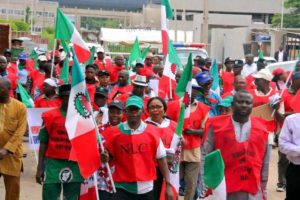
The Nigeria Labour Congress (NLC) and the Trade Union Congress (TUC), the two major labour unions in Nigeria, have given reasons why they called off the nationwide strike action against the federal government that would have commenced today, September 28.
In a joint communique between the labour unions and the federal government after a meeting at the presidential villa, Abuja, last night, September 27, the unions said that to cushion the impacts of the downstream sector deregulation and tariffs adjustment in the power sector, the Federal Government will implement the following:
A specific amount to be unveiled by the FGN in two weeks’ time will be isolated from the Economic Sustainability Programme Intervention Fund and be accessed by Nigerian Workers with subsequent provision for 240,000 under the auspices of NLC and TUC for participation in agricultural ventures through the CBN and the Ministry of Agriculture. The timeline will be fixed at the next meeting.
Federal Government will facilitate the removal of tax on minimum wage as a way of cushioning the impacts of the policy on the lowest vulnerable.
Federal Government will make available to organized labour 133 CNG/LPG driven mass transit buses immediately and provide to the major cities across the Country on a scale up basis thereafter to all States and Local Governments before December 2021.
Housing: 10% be allocated to Nigerian workers under the ongoing Ministry of Housing and Finance initiative through the NLC and TUC.
Consequently, the NLC and TUC agreed to suspend the planned industrial action.
Part of the communique is reproduced here:
A Bipartite Meeting between the FGN and the two Labour Centres – Nigeria Labour Congress (NLC) and Trade Union Congress of Nigeria (TUC),
Having been convened at the Banquet Hall, State House, Abuja to discuss emerging labour issues arising from recent cost – reflective Electricity Tariff adjustments and deregulation of the downstream sector of the Petroleum Industry,
Recognizing the public outcry and protest over the recent Federal Government twin policies on Electricity Tariff Reform and full implementation of deregulation of the downstream sector of the Nigerian Oil and Gas Industry resulting in the planned nation-wide industrial action by Organised Labour,
Bearing in mind the spiral and negative impact of COVID-19 pandemic on world economy,
Further bearing in mind that due to impact of COVID-19 pandemic the world is undergoing socio-economic transition which has affected price stability, sustainability of enterprises, employment, and other socio-economic indices,
Acknowledging that the spiral and negative impact of COVID-19 pandemic on the global economy has given rise to the need for a new socio-economic order,
Recognising the need to sustain enterprises for retention and creation of jobs as well as sustainable growth and development,
Acknowledging the need for social concertation between the Federal Government and workers’ representatives, namely the two Labour Centres – The NLC and TUC,
To aid in the dialogue and communication, the Federal Government side made presentations to show the state of economy and the drive behind the recent cost – reflective Electricity Tariff adjustments and deregulation of the downstream sector of the Petroleum Industry,
Bipartite meeting to address and resolve the issues in dispute between the FG and Labour Centres were held on September 15, 24, and 27, 2020,
After exhaustive deliberations on the issues raised by Labour Centres, the FGN stated that it has fashioned out palliatives that would ameliorate the sufferings that Nigerian workers may experience as a result of the cost – reflective Electricity Tariff adjustments and deregulation of the downstream sector of the Petroleum Industry. The palliatives will be in the areas of transport, power, housing, agriculture and humanitarian support.
After thorough debates and negotiations on various issues raised by all parties, the following resolutions were reached and mutually adopted:
ELECTRICITY TARIFF REFORMS
The parties agreed to set up a Technical Committee comprising Ministries, Departments, Agencies, NLC and TUC, which will work for a duration of two (2) weeks effective Monday 28th September 2020, to examine:
the justifications for the new policy in view of the need for the validation of the basis for the new cost reflective tariff as a result of the conflicting information from the fields which appeared different from the data presented to justify the new policy by NERC;
metering deployment, challenges, timeline for massive roll – out.
The Technical Committee membership is as follows:
Mr Festus Keyamo, SAN – Hon. Minister of State Labour & Employment – Chairman
Mr Godwin Jedy-Agba – Hon. Minister of State Power – Member
Prof. James Momoh – Chairman National Electricity Regulatory Commission – Member
Engr. Ahmad Rufai Zakari – SA to Mr. President on Infrastructure – Member/Secretary
Dr. Onoho’Omhen Ebhohimhen – Member (NLC)
Comrade Joe Ajaero – Member (NLC)
Comrade Chris Okonkwo – Member (TUC)
1no. Representative of DISCOS – Member
The Terms of Reference (ToR) are as follows:
To examine the justification for the new policy on cost – reflective Electricity Tariff adjustments.
To look at the different Electricity Distribution Company (DISCOs) and their different electricity tariff vis-à-vis NERC order and mandate.
Examine and advise Government on the issues that have hindered the deployment of the six million meters.
To look into the NERC Act under review with a view to expanding its representation to include organized labour.
The Technical sub – committee is to submit its report within two (2) weeks. During the two weeks, the DISCOs shall suspend the application of the cost – reflective Electricity Tariff adjustments.
The meeting also resolved that the following issues of concern to Labour should be treated as “stand – alone” items:
The 40% stake of Government in the DISCO and the stake of workers to be reflected in the composition of the DISCO’s Boards.
An all-inclusive and independent review of the power sector operations as provided in the privatization MOU to be undertaken before the end of the year 2020, with Labour represented.
That going forward, the moribund National Labour Advisory Council (NLAC) be inaugurated before the end of the year 2020 to institutionalize the process of tripartism and socio dialogue on socio – economic and major labour matters to forestall crisis
DOWNSTREAM SECTOR DEREGULATION
Consequent upon the critical review of the various challenges of the downstream sector of the Nigeria oil and gas industry vis a vis the incalculable losses associated with a subsidy regime the Country has been incurring in terms of, stifled growth in the downstream sector, diminished human capital development and massive financial leakages and flight. This is in addition to the dire financial circumstances of the Federation that precludes any ability to sustain any subsidy on PMS and making deregulation of PMS inevitable. Consequently, the Parties agreed to the following:
All parties agreed on the urgency for increasing the local refining capacity of the nation to reduce the overdependency on importation of petroleum products to ensure energy security, reduce cost of finished products, increase employment and business opportunities for Nigerians.
To address (1) above, NNPC to expedite the rehabilitation of the nation’s four refineries located in Port Harcourt, Warri and Kaduna and to achieve 50% completion for Port Harcourt by December 2021, while timelines and delivery for Warri and Kaduna will be established by the inclusive Steering Committee.
To ensure Commitment and transparency to the processes and timelines of the rehabilitation exercise, the management of NNPC has offered to integrate the national leadership of the Nigeria Union of Petroleum and Natural Gas Workers (NUPENG) and Petroleum and Natural Gas Senior Staff Association (PENGASSAN) into the Steering Committee already established by the Corporation.
A Validation team comprising the representatives of the NNPC, Nigeria Extractive Industries Transparency Initiative (NEITI), Infrastructure Concession Regulatory Commission (ICRC), NUPENG and PENGASSAN will be established to monitor progress of the rehabilitation of the refineries and the pipelines/strategic depots network and advice the Steering Committee periodically.
Post rehabilitation, NNPC shall involve the PENGASSAN and NUPENG in the process of establishing the operational model of the Nation’s refineries.
The Federal Government will facilitate the delivery of licensed modular and regular refineries, involvement of upstream companies in petroleum refining and establishing framework for financing in the downstream sector.
NNPC to expedite work on the Build Operate and Transfer framework for the nation’s pipelines and strategic depots network for efficient transportation and distribution of Petroleum products to match the delivery timelines of the refineries as agreed.
The Federal Government and its agencies to ensure delivery of 1 million CNG/LPG AutoGas conversion kits, storage skids and dispensing units under the Nigeria Gas Expansion Programme by December 2021 to enable delivery of cheaper transportation and power fuel. A Governance Structure that will include representatives of organized Labour shall be established for timely delivery.
GENERAL INTERVENTION
To cushion the impacts of the downstream sector deregulation and tariffs adjustment in the power sector, the Federal Government will implement the following:
A specific amount to be unveiled by the FGN in two weeks’ time will be isolated from the Economic Sustainability Programme Intervention Fund and be accessed by Nigerian Workers with subsequent provision for 240,000 under the auspices of NLC and TUC for participation in agricultural ventures through the CBN and the Ministry of Agriculture. The timeline will be fixed at the next meeting.
Federal Government will facilitate the removal of tax on minimum wage as a way of cushioning the impacts of the policy on the lowest vulnerable.
Federal Government will make available to organized labour 133 CNG/LPG driven mass transit buses immediately and provide to the major cities across the Country on a scale up basis thereafter to all States and Local Governments before December 2021.
Housing: 10% be allocated to Nigerian workers under the ongoing Ministry of Housing and Finance initiative through the NLC and TUC.
Consequently, the NLC and TUC agreed to suspend the planned industrial action.

Over 1 Million Deaths From Coronavirus Recorded Across The World – Report

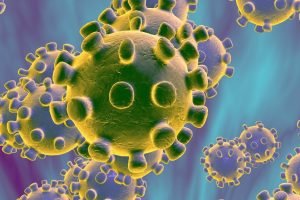
The coronavirus pandemic has now claimed one million lives around the globe, according to the latest official death tolls, with more than 33 million cases.


The milestone was passed shortly after the UK government on Sunday announced a further 17 deaths.

In total, 1,000,207 people have died according to worlddometer, which calculates the total from sources including governments. The Johns Hopkins Coronavirus Resource Centre, which also calculates global totals, was reporting a figure of 995,190.

Since the first-known cases emerged at a Wuhan wet market in December 2019, the pattern of life has been drastically, perhaps in some ways irrevocably, altered the world over.

Within six months, Covid-19 had taken at least 500,000 lives and infected 10 million people. It has taken just half that time for the known death toll to double.

The virus has now spread to 210 countries and territories, infecting at least 32 million people.

However, the true number of deaths and infections are likely far higher due to a lack of sufficient testing and reporting in many countries.

Europe, which emerged as an early epicentre of the virus is now battling a second resurgence as the continent enters the winter months, with governments and citizens grappling with the prospect of renewed curbs on personal freedoms.

And with populists at the helm in US and Brazil, where both Donald Trump and Jair Bolsonaro have sought to publicly play down the seriousness of the virus and resisted mitigation efforts that could hamper the economy, the Americas remain the hardest-hit, having quickly seen their death tolls soar once the virus took hold.

Soon after, India emerged as a further hotspot, and continues to record new daily caseloads in the tens of thousands, with more than 85,000 infections identified on Saturday.

Meanwhile, the impact on the economy has little to no precedent, with the International Monetary Fund (IMF) in April describing the resulting global recession as “a crisis like no other”.

But while the abrupt plunges into the red cut an alarming trajectory, many economists were buoyed by the promise of a relatively sharp rise once lockdowns and curfews were lifted.

However, speaking on Thursday, the second-in-command at the IMF – which has poured $90bn in funding to nations since the crisis began – warned that the recovery was taking longer than expected, and that it could take some countries years to return to states of growth.

Yet following an unprecedented reconcentration of scientific efforts worldwide, our ability to adapt to and combat the virus grow ever stronger.

The virus’s genetic makeup was quickly sequenced, allowing for successful tests to be quickly developed and creating a groundwork for vaccine creation.

As contact-tracing systems around the world grow increasingly advanced, and work on creating faster, more accurate tests continues, trials are also underway on promising treatment methods, such as dexamethasone and convalescent blood plasma.

And of some 200 inoculations being developed globally, eight are in the final phase of clinical trials. The UK’s top advisors have suggested a vaccine could be widely available by autumn 2021.

Advertisement ADVERTORIAL
WP2Social Auto Publish Powered By : XYZScripts.com