Information reaching us at Greenbarge Reporters online newspaper has confirmed that the new moon, Shawwal, has not been sighted today, March 29, which would have terminated the Fasting and made tomorrow, March 30, Eid-el-Fitr (Sallah celebration). This information on none sighting of the Shawwal Crescent has come from no fewer than five Islamic countries as at 3pm today. Earlier in the day, the Australian Fatwa Council had said that Shawwal Crescent was not sighted today, meaning that Eid-el-Fitr would not be tomorrow, Sunday but Monday, March 31. Other countries that announced Monday as Eid-el-Fitr are Bangladesh, India, Indonesia and Malaysia. Most of the information about the none sighting of the Shawwal Crescent today came through the authorities of the Kingdom of Saudi Arabia. Meanwhile, the Sultan of Sokoto and President General of the Supreme Council of Islamic Affairs in Nigeria, Alhaji Muhammed Abubakar Sa’ad III has already asked Muslims in the country to look out for the new moon of Shawwal today, and to communicate designated Islamic personalities across the country if it is sighted.
About 10 years after, Muhammadu Buhari, who ruled Nigeria as elected President from 2015 to 2023, is still savouring the great contribution of the current President, Bola Tinubu to that victory. In a message to celebrate the 73rd birthday of President Tinubu, Buhari said that his family and himself remain indebted to President Tinubu and the other leaders of the All Progressives Congress (APC) for the invaluable contributions they made that catapulted him to the presidency for two terms after failed attempts in the past. Such efforts, which led to the formation of the first-ever successful coalition, he said, also helped to produce another APC administration with the Asiwaju himself at its head. Buhari appreciated the bond that had built up between him and President Tinubu over the years. Garba Shehu, spokesperson to Buhari when he was President, said that his former boss told Tinubu in a telephone conversation that he and the members of his family are in prayers for him (Tinubu) for long life, good health and the successful administration of the country. “When we pray for our leaders, we are praying for ourselves and the nation. We owe this to ourselves and the nation,” Buhari said to President Tinubu. Ex President made it clear that the history of the country would not be complete without bringing into mention, and a recognition of the varied and numerous roles of President Tinubu as an entrepreneur, a party stalwart, a staunch activist, party organizer, party builder, a reliable ally and a serial winner of democratic elections. “I am truly proud of my association with the Asiwaju. “When Nigerians handed the baton of leadership to the APC in 2015, it was a mandate to lay the foundation for a new Nigeria where the poor get opportunities for a better future and I am glad that the vision is not lost. “It was a victory of all those who wish the country’s good.” He used the opportunity to wish the president, his family, and the nation a successful completion of the Ramadan fast and a happy and joyful Sallah(Eid).
Some industry leaders have made it clear that Nigeria needs more than just Executive Order on the Designation and Protection of Critical National Information Infrastructure (CNII) to ensure effective telecom infrastructure safety. They insisted that operators need to resolve what they called “certain internal and standardisation issues.” The leaders who met to identify important measures to secure telecommunications infrastructures in the country and ensure that investments in the telecoms space are protected, highlighted pressing issues such as infrastructure vandalism, unauthorized installations, and cable theft, even as they proposed actionable solutions to safeguard the country’s critical national infrastructure. Speaking at the 7th Policy Implementation Assisted Forum (PIAFo) Summit on CNII implementation, held in Lagos, Chairman of the Association of Licensed Telecommunications Operators of Nigeria (ALTON), Gbenga Adebayo, stressed the importance of proper infrastructure maintenance and installation to prevent vandalism and theft. Adebayo noted the widespread issue of stolen manhole covers and poles, attributing the problem to poor maintenance practices. “When properly installed, these components are difficult to remove. However, due to negligence, they are often left unsecured, making them easy targets for theft.” Adebayo said that community resistance to infrastructure projects has significantly hindered progress, and specifically noted instances where local communities prevented trucks from accessing sites due to previous unaddressed damages caused by contractors. “A diesel supplier was blocked from entering an estate because a previous contractor had damaged their property and failed to make repairs. This lack of accountability breeds distrust and delays crucial projects.” He asked stakeholders to foster better relationships with communities to prevent such conflicts. Another critical issue Adebayo identified was the unauthorized installation of infrastructure without government approval, leading to inadvertent damage during road construction projects. “Government agencies often damage unregistered infrastructure simply because they were not documented in official records. Proper approvals and collaboration with authorities will ensure accountability and protection of critical infrastructure.” He called for improved industry coordination to resolve these challenges internally before seeking external solutions that are promised by the CNII provisions. President of the Association of Telecommunications Companies of Nigeria (ATCON), Tony Emoekpere emphasised the need for standardisation and better coordination among stakeholders. He pointed out that Nigeria’s infrastructure challenges go beyond technical issues, extending into environmental and moral concerns. “We are dealing with a moral challenge. An engineer who switched from diesel to gas generators encountered a new problem—workers began stealing engine oil instead, as they could no longer siphon diesel. These issues require both technical and ethical solutions.” Emoekpere argued that standardisation is the key to long-term sustainability. “If infrastructure is deployed in a suboptimal manner, failure is inevitable. We need to establish proper standards that all stakeholders—government, private sector, and the public—can align with.” He also emphasized that Nigeria has strong policies, such as local content policies, but implementation remains a major challenge. “We must move beyond discussions and focus on actionable steps, follow-ups, and policy enforcement.” The Chief Executive Officer (CEO) of Cedarview Communications Limited, Wale Owoeye, spoke on the importance of addressing cable theft and vandalism He lamented over the alarming rate of cable cuts, which disrupt network operations and drive up maintenance costs. “Cable theft is a serious issue. Airtel representatives told me they experience a cable cut every six minutes. The assumption that all black cables contain valuable copper leads to reckless vandalism.” To combat problem, Owoeye proposed three key approaches, including reorientation, enforcement, and proactive measures. “We need to engage local communities in their native languages, educating them on the consequences of vandalism.” He suggested that strict legal penalties, including long-term imprisonment, should be enforced to deter offenders. He also emphasized the need for preventive strategies rather than reactive responses. “Prevention is always more effective and cost-efficient than restoration.” Owoeye proposed the creation of a dedicated fund to support advocacy and awareness campaigns across Nigeria. To demonstrate his commitment, he pledged to contribute N500,000 quarterly as a seed fund and encouraged other industry players to follow suit. “This is like planting a seed. With collective effort, we can grow it into a sustainable solution for protecting Nigeria’s telecom infrastructure.” The experts collectively emphasised that addressing these challenges requires collaboration among industry players, government agencies, and local communities. They called for a concerted effort to enforce policies, engage stakeholders, and implement practical solutions that will ensure the long-term sustainability of Nigeria’s telecommunication infrastructure.
The Independent National Electoral Commission (INEC) has confirmed the receipt of a petition from registered voters in Kogi Central Senatorial District seeking the recall of the Senator representing them, in the person of Natasha Akpoti-Udusghan. At the end of its regular weekly meeting today, March 25, the electoral body confirmed recieving six bags of documents “said to be signatures collected from over half of the 474,554 registered voters spread across 902 Polling Units, in 57 Registration Areas (Wards) in the five Local Government Areas of Adavi, Ajaokuta, Ogori/Magongo, Okehi and Okene. “The Commission’s immediate observation is that the registration of the petitioners did not provide their contact address(s), telephone number (s) and e-mail address(s) in the covering letter forwarding the petition through which they can be contacted as provided in Clause 1(f) of our Regulation and Guidelines. “The address given is “Okene, Kogi State,” which is not a definite location for contacting the petitioners. Only the telephone number of “the lead petitioner is provided as against the numbers of all the representatives of the petitioners.” INEC however made it clear that the recall of a legislator is the prerogative right of registered voters in a constituency who sign a petition indicating loss of confidence in the legislator representing them.
Full text of the statement signed by Sam Olumekun, the National Commissioner & Chairman Information and Voter Education Committee of the INEC goes thus: PETITION FOR THE RECALL OF THE SENATOR REPRESENTING KOGI CENTRAL SENATORIAL DISTRICT The Commission held its regular weekly meeting today, Tuesday 25th March 2025. Among other issues, the meeting discussed the petition for the recall of the Senator representing Kogi Central Senatorial District. The process of recall is enshrined in the 1999 Constitution, the Electoral Act 2022 as well as the Commission’s detailed Regulations and Guidelines for Recall 2024, available on our website. All petitions will be treated in strict compliance with the legal framework. The petition from Kogi Central Senatorial District was accompanied by six bags of documents said to be signatures collected from over half of the 474,554 registered voters spread across 902 Polling Units in 57 Registration Areas (Wards) in the five Local Government Areas of Adavi, Ajaokuta, Ogori/Magongo, Okehi and Okene. The Commission’s immediate observation is that the representatives of the petitioners did not provide their contact address, telephone number(s) and e-mail address(es) in the covering letter forwarding the petition through which they can be contacted as provided in Clause 1(f) of our Regulations and Guidelines. The address given is “Okene, Kogi State”, which is not a definite location for contacting the petitioners. Only the telephone number of “the lead petitioner” is provided as against the numbers of all the other representatives of the petitioners. The Commission wishes to reiterate that the recall of a legislator is the prerogative of registered voters in a constituency who sign a petition indicating loss of confidence in the legislator representing them. Once the petition meets the requirements of submission, as contained in our regulations, the Commission shall commence the verification of the signatures in each Polling Unit in an open process restricted to registered voters that signed the petition only. The petitioners and the member whose recall is sought shall be at liberty to nominate agents to observe the verification, while interested observers and the media will also be accredited. At each Polling Unit, signatories to the petition shall be verified using the Bimodal Voter Accreditation System (BVAS). Consequently, if the petitioners fully comply with the requirements of Clause 1(f) of the Regulations and Guidelines regarding the submission of their petition, the Commission will announce the next steps in line with the extant laws, regulations and guidelines. In the absence of a definite contact address, the Commission is making efforts to use other means to notify the representatives of the petitioners of the situation. The Commission reassures the public that it will be guided by the legal framework for recall. The public should therefore discountenance any speculations and insinuations in the social media. Sam Olumekun mni National Commissioner & Chairman Information and Voter Education Committee Tuesday 25th March 2025.
Democracy as a leading form of government globally, thrives mainly on accountability and transparency which are sine-qua-non for good governance. It is a fact that notwithstanding the modest successes recorded, Nigerians are still far from experiencing good governance full blast, some 26 years after the country’s return to democracy. However, the trend appears to be fast changing in Yobe State, a 34-year-old state where Mai Mala Buni holds sway as its executive governor. As one of the states with the least allocation and revenue generation, prudency plays a major role in its financial stability towards meeting the people’s expectations on good governance. And this feat has never gone unnoticed by professionals and experts who are on the trail of how states manage their funds. Just last year, Yobe state made it to the top as the best in the 2023 Subnational Audit Efficacy(SAE) index report on accountability and transparency in public funds, put together by the Paradigm Leadership Support Initiative (PLSI), an internationally recognised civil society group noted for tracking public accountability and transparency in the expenditure of public funds. This was after emerging as the second best in 2022 with 63 per cent after Akwa Ibom which placed first position with 69 per cent. And to demonstrate that the previous standings were no fluke, the state came top in the 2024 edition. The flagship research report rates Ekiti as second with 54%, and Adamawa (47%) as occupying the third position. At the lower rung of the ladder are Ogun, Bayelsa, and Ebonyi states jointly placed 34th position with each coring 7%. More than anything, the Index seeks to foster a culture of accountability in the public sector, ensuring good governance and effective resource utilisation for the overall benefit of the citizens. The Index further goes to underscore the significance of regular audits, prompt implementation of recommendations, and collaboration among government entities to promote good governance. In arriving at the verdict, the PLSI usually carries out an assessment process of some critical factors such as getting value for public funds, audit legal framework and operationalisation, annual activity report, publication of annual audit report, and performances. The rest components are citizens’ account reports, civil societies and media participation reports, and monitoring and oversight functions of the legislative committee on public accounts. The SAE PLSI assessment system is designed to assess the performance of Nigerian states on key aspects of public accountability and to initiate and implement audit reports by key stakeholders. The SAE Survey figures reveal Yobe as being consistent in providing and maintaining quality services that are in line with public opinion, transparent and accountable policies, making it an outstanding example for other states in Nigeria. The index marks Yobe as the first state to promote accountability among the people, ensuring efficient use of resources for the benefit of the people and the welfare of the people of the state. Speaking at the launch of the report, the 5th in the series, in Abuja recently, the Director of PLSI, Olusegun Elemo, said: “Our SAE index is a technology that reflects the transformational nature and strengthens public trust, the success of Yobe State shows that it has given all other states a leg up in the management of financial and natural resources.” “The SAE Index is a tool for driving reform and strengthening public trust. Yobe’s achievement shows that prioritising transparency in public financial management is possible and rewarding,” he further stated. Elemo said the initiative was birthed in 2021 to evaluate states’ transparency and accountability in public fund management and policy implementation. According to him, the 2024 report highlighted concerns over declining commitment to fiscal accountability following the end of the $1.5 billion World Bank-Assisted States Fiscal Transparency, Accountability, and Sustainability (SFTAS) Programme (2018-2022). The PLSI boss stated that while the 2021 assessment showed progress in public sector auditing due to legal reforms, subsequent evaluations revealed stagnation or decline, adding that the 2022 edition recorded an average score of 31.81%, which dropped to 30.58% in 2023 and declined to 29.47% in 2024. Major highlights of the report showed that of the 36 states, only 4 have so far implemented financial autonomy for the Office of the Auditor-General, while 12 states activated legal provisions for administrative independence, limiting the effectiveness of public audit institutions. Besides, the PLSI said no state produced a standard performance audit report on government programs or projects in 2023, just as 21 states failed to publish their 2023 audit reports online, as it was the previous years. While stressing the need for governance to prioritise accountability, Elemo called on the state governors to strengthen relevant offices for financial and administrative independence. It also urged greater collaboration among state governments, legislative houses, and auditors-general to improve transparency. On methodology, the 2024 edition retained that used in 2023, with data from audit institutions, public accounts committees, accountant-general offices, civil society organizations, and the media, being put to use. On the whole, the report dwelt on the need for enhanced auditors’ technical capacity to ensure public accessibility of audit reports, and promote citizen engagement in financial transparency efforts. …‘Consequence of deliberate planning’ In a reaction, the state’s Auditor General, Alhaji Mai Aliyu Umar, attributed the success to the free hand provided to the audit by Governor Mai Mala Buni. “The governor has provided us with very free hands to perform our duties and responsibilities without interference” he said. Director General Media and Press Affairs to the Governor, Mamman Mohammed, said the governor is a firm believer in the independence of government sectors, agencies and officials. “This independence has contributed immensely to the performance and successes of government and its agencies” Mamman said. He described the feat as “certainly not unexpected given what His Excellency has been doing in the area of fiscal discipline. This is not accidental, it is a consequence of deliberate planning targeted at good governance. “This is a further demonstration of the Mai Mala Buni administration to ensure good governance and transparency in all ramifications. I mean, what else can I say?. He is a man who is conscious of his covenant, the social contract with the people of Yobe state.” Let me recall for the record what the governor said when the state achieved the same feat last year: “The state government, through the Fiscal Responsibility Board, instituted reforms in public finance which have translated into worthy investments, accountability and transparency in government transactions. “I am glad to say that our audit department and institutions like the Bureau for Public Procurement are independent and ensure transparency and accountability of government expenditure, which has placed the state above board. “We will continue to strengthen these institutions to promote accountability and transparency in every expenditure of public funds.” “Now, this was last year. And since then, the state government has upped its ante by ensuring further reforms and initiatives that resulted in its emergence in the 2024 Index Report. I can only tell you that the various initiatives have resulted in the right appropriation of resources in the area of infrastructure as well as human development for the good people of the state,” Mohammed added. Wining it back-to-back, the Buni administration can’t afford to falter in the years ahead. Analysts believe if Yobe, a frontline state gradually coming out of the wrecks of insurgency can do it, then other states won’t have any reason not to be up and doing. Expectations are high from the citizenry, and like the PLSI said, “…Yobe’s achievement shows that prioritising transparency in public financial management is possible and rewarding.”. It is hoped that Yobe will sustain the tempo and make itself the true model of fiscal discipline for others to emulate and follow.
Former Nigeria President Muhammadu Buhari has sympathised with the Katsina State Governor, Dikko Umaru Radda over the death of his mother, Hajiya Safara’u Umaru Baribari. In a message to the governor, the former president said: “ it is with profound sadness that I convey my deepest sympathies for the passing of your beloved mother, Hajiya Safara’u. “No matter how big a person becomes, they need their mother. The thoughts and prayers of my family are with you and your family during this difficult period as we remember her life and service to women and the community at large. “May Allah reward her good deeds, and her legacy an inspiration to her descendants and future generations. May Allah grant her Aljannatul Firdaus.”
Kogi State Government has kicked out Abuja Electricity Distribution Company (AEDC) with the establishment of Kogi State Electricity Regulatory Commission (KERC) to assume a regulatory oversight in the electricity sector. Information reaching us at Greenbarge Reporters online newspaper said that the government of Ahmed Usman Ododo has taken advantage of the amended Electricity Act 2023 to take full control of the state’s power sector, thereby reducing reliance on the regulatory and distribution framework of the old order in Nigeria. It was learnt that as part of the reform, the state government has also established its own power distribution company, Kogi Electricity Distribution Limited (KEDL), a subsidiary company of the Abuja Electricity Distribution Company (AEDC) to oversee electricity distribution across the state. With this development, Kogi State joins the rank of progressive states like Lagos, Enugu, Niger, Kano and others that have taken charge of their electricity generation and distribution. The establishment of KEDL means that residents and businesses will no longer depend solely on electricity distribution networks outside the state. A statement from the office of the Special Adviser to Governor Ododo on media, Ismailia Isa said that for years, unstable electricity has been a major hindrance to economic growth, forcing businesses to operate at a loss and leaving many communities without access to power. It said that small-scale enterprises, including welders, frozen food vendors, and tailors, have been forced to rely on costly fuel-powered generators, severely cutting into their profits. “Even scrap dealers, who contribute significantly to the recycling industry, have to transport materials as far as Kano for proper processing due to the lack of adequate power facilities in Kogi. “Governor Ododo understands these struggles as a player in the sector for many years, and through KERC, he is providing a solution that will empower businesses and create an environment for economic growth. “Beyond improving power supply, this transition brings multiple economic benefits. “One of the most immediate advantages is job creation for youths. As Kogi expands its power infrastructure, thousands of direct and indirect jobs will be created, from engineers and technicians to administrative personnel and field workers.”
The Paradigm Leadership Support Initiative (PLSI), a civic organization promoting public accountability in Nigeria, has declared Yobe State as the best-performing state in its 2024 Subnational Audit Efficacy (SAE) Index. The SAE Index, according to the Support Initiative, assesses the level of transparency and accountability in the management and utilization of public funds, as well as the implementation of public policies across Nigeria’s 36 states. The edition of PLSI’s flagship research report, launched in Abuja today, March 20, ranked Yobe State again as the top performer among all the 36 States, scoring 73 percent. Ekiti came second with 54 percent while Adamawa State scored 47 to secure 3rd positions. At the lower end of the rankings, Ogun, Bayelsa, and Ebonyi states occupied the 34th place, each scoring 7 percent. A statement by Yusuf Ali, Senior Special Assistant to the state Governor, Mai Mala Buni on Digital and Strategic Communications said that the latest ranking highlights Yobe State’s consistency in maintaining robust public audit practices and transparency mechanisms, setting a benchmark for other states in the Federation. He said that the PLSI’s SAE Index evaluates states based on critical components of the public audit action cycle, including the submission, review, and implementation of audit reports by key stakeholders. The spokesman said that the Index aims to foster a culture of accountability in the public sector, ensuring effective resource utilization for the benefit of citizens. He quoted PLSI’s Executive Director, Olusegun Elemo as having commended Yobe State for its exemplary performance and encouraged other states to adopt similar measures to improve governance and accountability. “The SAE Index is a tool for driving reform and strengthening public trust. Yobe’s achievement shows that prioritizing transparency in public financial management is possible and rewarding.” Ali said that the SAE Index underscores the importance of regular audits, prompt implementation of recommendations, and collaboration among government entities to promote good governance. “This marks another milestone for Yobe State in its pursuit of excellence in governance, reinforcing its position as a leader in public sector accountability in Nigeria.”
The House of Representatives of the Federal Republic of Nigeria has adopted sections 11(4) and (5) of the Constitution, 1999 (As amended), which provides for the National Assembly to take over the lawmaking functions of a State House of Assembly if deemed necessary to restore order and governance in the state. This was one of the amendments made to the State of emergency declared on Rivers State by President Bola Tinubu, which was forwarded to the House of Representatives and the Senate to ratify. In confirming the presidential declaration at its plenary today, March 20, the House wanted a National Mediation Committee constituted, comprising eminent Nigerians, including representatives from the Federal Executive and Legislature, to facilitate dialogue and resolution during the emergency period. It also wanted periodic review of the emergency rule within the initial six-month duration as declared by the President, with the possibility of early termination if peace is sufficiently restored. The House unanimously approved the presidential declaration of State of emergency with voice vote by 243 Members present at plenary, in accordance with Section 305 of the Constitution of the Federal Republic of Nigeria, 1999, (as amended). It was preceded by extensive deliberations with key amendments introduced. The House commenced today’s session with an executive session in line with Order 16 of the Standing Orders (Eleventh Edition), where the Speaker and Presiding Officer, Abbas Tajudeen, read the President’s communication on the proclamation. At plenary, the House adopted a motion to stand down (suspend) all other business scheduled in the Order Paper for the day, allowing for robust deliberation on the President’s request after the House Majority Leader, Prof. Julius Ihonvbere, briefed Members on the circumstances necessitating the emergency rule and rallied the House on the need to move Rivers State forward. In a debate that took a multi-partisan dimension, some Members supported the State of Emergency, citing the necessity of deploying additional security resources to restore order and protect lives and property. However, concerns were raised about the potential for abuse of power and implications for fundamental human rights, prompting calls for strict legislative oversight to ensure lawful implementation and adherence to the stated objectives. After extensive deliberations, the House, unanimously ratified the amended proclamation via a voice vote, with no dissension recorded from the 243 Members present, representing two-thirds of the House membership. The Reps spokesman, Akin Rotimi Jr. confirmed that the approval of the presidential proclamation of the State of emergency in Rivers State underscores the House’s commitment to constitutional governance, ensuring that emergency measures align with democratic principles and respect for the rule of law in the interest of the people of Rivers State and Nigeria at large.
Kogi Central sociocultural umbrella body, Ebira People’s Association (EPA) has dismissed the underground fireworks going on for the recall of the embattled Senator Natasha Akpoti-Udusghan, who is representing Kogi Central Senatorial District in the Red Chamber of the National Assembly. Information reaching us at Greenbarge Reporters online newspaper indicated that a group of people who call themselves Kogi Central stakeholders, have initiated the process of recalling Senator Natasha, who was suspended for six months on March 6, for alleged unruly behaviour in the Chamber. In a statement today, March 19, reacting to such a move, the President of EPA, Dr. Godwin Oyibo asked the people in the Senatorial District to remain vigilant, united, and committed to the shared dream of building a great constituency where love and brotherliness reign supreme. “We passionately appeal to all constituents to stand solidly behind our senator, who has proven herself to be a true and worthy representative of our constituency. We must avoid needless distractions at this period.” Dr. Oyibo said that EPA is aware of”an attempt to initiate a recall process against our Distinguished Senator, Barrister Natasha Akpoti, from the National Assembly by some stakeholders in Kogi Central. “Initially, we dismissed it as a rumor, but we have continued to receive calls and messages from concerned constituents of Kogi Central, both at home and in the diaspora, confirming the development. “This situation is disturbing, not only because of its potential impact on the collective peace of our district, but also because it threatens the unity and cohesion that have pervaded our land in the recent times. “We recall the oneness of our people during the last governorship election in 2023 when we were confronted with people who referred to us as common enemies. It is too soon to sacrifice that oneness. “While EPA acknowledges the right of individuals to belong to different political persuasions, we need to stress that the issue at stake concerns our developmental interests. “We must diligently consider the options available to us now and in the future. “Our current senator has attracted development to Kogi Central, and we cannot deny her those achievements. “Despite facing numerous challenges, Senator Natasha Akpoti has remained a steadfast advocate for our cause, delivering numerous projects and amenities that have significantly improved the lives of her constituents. “We urge all constituents to exercise extreme caution and not be swayed by external interests seeking to disrupt our peace and progress. “We must recognize that the rumored recall process is not only unnecessary but also potentially detrimental to our corporate interest and image. “It is crucial for us as a people to appreciate the fact that our collective cohesion could be threatened by such a move.”
We use cookies on our website to give you the most relevant experience by remembering your preferences and repeat visits. By clicking “Accept”, you consent to the use of ALL the cookies.
This website uses cookies to improve your experience while you navigate through the website. Out of these, the cookies that are categorized as necessary are stored on your browser as they are essential for the working of basic functionalities of the website. We also use third-party cookies that help us analyze and understand how you use this website. These cookies will be stored in your browser only with your consent. You also have the option to opt-out of these cookies. But opting out of some of these cookies may affect your browsing experience.
Necessary cookies are absolutely essential for the website to function properly. This category only includes cookies that ensures basic functionalities and security features of the website. These cookies do not store any personal information.
Any cookies that may not be particularly necessary for the website to function and is used specifically to collect user personal data via analytics, ads, other embedded contents are termed as non-necessary cookies. It is mandatory to procure user consent prior to running these cookies on your website.











Yobe’s Leadership In Accountability In Governance, By Zarah Kasha
Democracy as a leading form of government globally, thrives mainly on accountability and transparency which are sine-qua-non for good governance. It is a fact that notwithstanding the modest successes recorded, Nigerians are still far from experiencing good governance full blast, some 26 years after the country’s return to democracy.
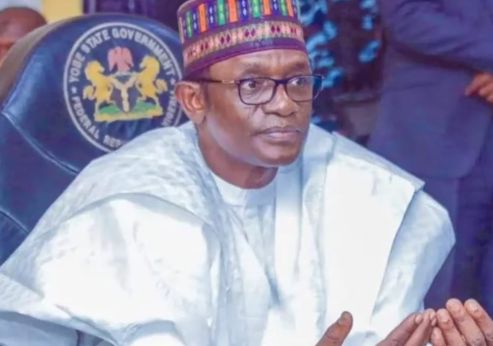
However, the trend appears to be fast changing in Yobe State, a 34-year-old state where Mai Mala Buni holds sway as its executive governor. As one of the states with the least allocation and revenue generation, prudency plays a major role in its financial stability towards meeting the people’s expectations on good governance. And this feat has never gone unnoticed by professionals and experts who are on the trail of how states manage their funds.
Just last year, Yobe state made it to the top as the best in the 2023 Subnational Audit Efficacy(SAE) index report on accountability and transparency in public funds, put together by the Paradigm Leadership Support Initiative (PLSI), an internationally recognised civil society group noted for tracking public accountability and transparency in the expenditure of public funds.
This was after emerging as the second best in 2022 with 63 per cent after Akwa Ibom which placed first position with 69 per cent.
And to demonstrate that the previous standings were no fluke, the state came top in the 2024 edition. The flagship research report rates Ekiti as second with 54%, and Adamawa (47%) as occupying the third position.
At the lower rung of the ladder are Ogun, Bayelsa, and Ebonyi states jointly placed 34th position with each coring 7%.
More than anything, the Index seeks to foster a culture of accountability in the public sector, ensuring good governance and effective resource utilisation for the overall benefit of the citizens.
The Index further goes to underscore the significance of regular audits, prompt implementation of recommendations, and collaboration among government entities to promote good governance.
In arriving at the verdict, the PLSI usually carries out an assessment process of some critical factors such as getting value for public funds, audit legal framework and operationalisation, annual activity report, publication of annual audit report, and performances.
The rest components are citizens’ account reports, civil societies and media participation reports, and monitoring and oversight functions of the legislative committee on public accounts.
The SAE PLSI assessment system is designed to assess the performance of Nigerian states on key aspects of public accountability and to initiate and implement audit reports by key stakeholders.
The SAE Survey figures reveal Yobe as being consistent in providing and maintaining quality services that are in line with public opinion, transparent and accountable policies, making it an outstanding example for other states in Nigeria.
The index marks Yobe as the first state to promote accountability among the people, ensuring efficient use of resources for the benefit of the people and the welfare of the people of the state.
Speaking at the launch of the report, the 5th in the series, in Abuja recently, the Director of PLSI, Olusegun Elemo, said: “Our SAE index is a technology that reflects the transformational nature and strengthens public trust, the success of Yobe State shows that it has given all other states a leg up in the management of financial and natural resources.”
“The SAE Index is a tool for driving reform and strengthening public trust. Yobe’s achievement shows that prioritising transparency in public financial management is possible and rewarding,” he further stated.
Elemo said the initiative was birthed in 2021 to evaluate states’ transparency and accountability in public fund management and policy implementation.
According to him, the 2024 report highlighted concerns over declining commitment to fiscal accountability following the end of the $1.5 billion World Bank-Assisted States Fiscal Transparency, Accountability, and Sustainability (SFTAS) Programme (2018-2022).
The PLSI boss stated that while the 2021 assessment showed progress in public sector auditing due to legal reforms, subsequent evaluations revealed stagnation or decline, adding that the 2022 edition recorded an average score of 31.81%, which dropped to 30.58% in 2023 and declined to 29.47% in 2024.
Major highlights of the report showed that of the 36 states, only 4 have so far implemented financial autonomy for the Office of the Auditor-General, while 12 states activated legal provisions for administrative independence, limiting the effectiveness of public audit institutions.
Besides, the PLSI said no state produced a standard performance audit report on government programs or projects in 2023, just as 21 states failed to publish their 2023 audit reports online, as it was the previous years.
While stressing the need for governance to prioritise accountability, Elemo called on the state governors to strengthen relevant offices for financial and administrative independence.
It also urged greater collaboration among state governments, legislative houses, and auditors-general to improve transparency.
On methodology, the 2024 edition retained that used in 2023, with data from audit institutions, public accounts committees, accountant-general offices, civil society organizations, and the media, being put to use.
On the whole, the report dwelt on the need for enhanced auditors’ technical capacity to ensure public accessibility of audit reports, and promote citizen engagement in financial transparency efforts.
…‘Consequence of deliberate planning’
In a reaction, the state’s Auditor General, Alhaji Mai Aliyu Umar, attributed the success to the free hand provided to the audit by Governor Mai Mala Buni.
“The governor has provided us with very free hands to perform our duties and responsibilities without interference” he said.
Director General Media and Press Affairs to the Governor, Mamman Mohammed, said the governor is a firm believer in the independence of government sectors, agencies and officials.
“This independence has contributed immensely to the performance and successes of government and its agencies” Mamman said.
He described the feat as “certainly not unexpected given what His Excellency has been doing in the area of fiscal discipline.
This is not accidental, it is a consequence of deliberate planning targeted at good governance.
“This is a further demonstration of the Mai Mala Buni administration to ensure good governance and transparency in all ramifications. I mean, what else can I say?. He is a man who is conscious of his covenant, the social contract with the people of Yobe state.”
Let me recall for the record what the governor said when the state achieved the same feat last year: “The state government, through the Fiscal Responsibility Board, instituted reforms in public finance which have translated into worthy investments, accountability and transparency in government transactions.
“I am glad to say that our audit department and institutions like the Bureau for Public Procurement are independent and ensure transparency and accountability of government expenditure, which has placed the state above board.
“We will continue to strengthen these institutions to promote accountability and transparency in every expenditure of public funds.”
“Now, this was last year. And since then, the state government has upped its ante by ensuring further reforms and initiatives that resulted in its emergence in the 2024 Index Report. I can only tell you that the various initiatives have resulted in the right appropriation of resources in the area of infrastructure as well as human development for the good people of the state,” Mohammed added.
Wining it back-to-back, the Buni administration can’t afford to falter in the years ahead.
Analysts believe if Yobe, a frontline state gradually coming out of the wrecks of insurgency can do it, then other states won’t have any reason not to be up and doing.
Expectations are high from the citizenry, and like the PLSI said, “…Yobe’s achievement shows that prioritising transparency in public financial management is possible and rewarding.”.
It is hoped that Yobe will sustain the tempo and make itself the true model of fiscal discipline for others to emulate and follow.