Hamza Al-Mustapha, outspoken retired army chief and aide to late military Head of State, General Sani Abacha, has formally joined the Social Democratic Party (SDP). This came over 24 hours after the immediate past Governor of Kaduna State, Malam Nasiru El-Rufai defected from the All Progressives Congress (APC) which he helped to form ahead of 2015 general elections to the SDP. Hamza Al-Mustapha, accompanied by his team, arrived at the SDP headquarters in Abuja, where he was warmly received by party leaders and supporters. He said that his move to the party signals his commitment to leadership based on justice, security, and progress. The outspoken army officer-turned politician declared: “we intend to get the North back on track; we know we would hurt People.” Hamza Al-Mustapha was the Chief Security Officer to former military ruler General Sani Abacha during his administration from 1993 to 1998. He was known as one of Abacha’s closest associates during the military regime.
The Guild of Corporate Online Publishers (GOCOP) has been thrown into mourning in the past three months as four of its members lost their loved ones. While Max Amachie, publisher of Sundiata Post online newspaper lost his father and mother in quick succession, Okafor has just lost his mum. Earlier, Tunde Abatan, publisher of Newsdawn online newspaper lost his wife, Mrs. Desola Amoke Latifat Abatan, who died at the age of 58 after a brief illness.
Mrs. Abatan… Max Amachie was just preparing to bury his father, High Chief Emmanuel Ikonne Amuchie, Ugo Eji Ejemba I of Uvuru, Mbaise in Imo, scheduled for April 29 and 30 when his mother, Lolo Angela Ihuoma Amuchie, died just a few days ago.
Mrs Bene…
Only today, March 13, Celestine Okafor, publisher/Editor-in-chief of Nigerian NewsLeader Newspaper, announced the death of his mother, Mrs Benedette Okafor, aged 75. Mrs Bene Okafor, an educationist and retired school headmistress, hails from Ishi-Ozalla Autonomous Community in Nkanu West Local Government Area of Enugu East Senatorial district, Enugu state, South East, Nigeria.
Godfrey….
The father of Nkechi Esezobor, Chief Onyemaobichukwu Godfrey Naeche died on January 13 this year.
Dotun… This was even as the immediate past President of the Guild, Dotun Oladipo and his wife narrowly escaped death in gas explosion in Lagos yesterday, though their mechanic died in the explosion. We in Greenbarge Reporters online newspaper and hardcopy magazine, a pioneer member of the Guild of Corporate Online Publishers (GOCOP) send our heartfelt condolences to all the bereaved families, and congratulate our Emeritus President for surviving the gas explosion.
“Senator Natasha Akpoti-Uduaghan was suspended for gross misconduct and unruly behaviour and not as a result of allegation of sexual harassment or assault. “The authority of the Senate of the Federal Republic of Nigeria firmly refutes the deliberate misinformation and false narrative being circulated by certain media organisations regarding the sixth-month suspension of Senator Natsaha Akpoti-Uduaghan.” These were contained in a letter to the International Parliamentary Union (IPU) over the claims by Senator Natasha Akpoti-Uduaghan that she was suspended for accusing the Senate President, Senator Godswill Akpabio, of sexual harassment. Senator Natasha, representing Kogi Central Senatorial District in the Senate, had earlier appeared the IPU in New York to lay complaint about her suspension from the senate over sexual Harassment and other forms of maltreatment. In the letter reacting to Natasha’s complaint, the Senate explained that she was suspended for the violations of its rules and speaking abusive words to the leadership. The letter was read at the IPU by the Chairperson of the House of Representatives Committee on Women Affairs and Social Development, Hon. Kafilat Ogbara, who is presently at the event in her official capacity. The letter, signed by Senate Leader, Senator Opeyemi Bamidele, stressed that the actions of Senator Akpoti-Uduaghan represented a direct challenge to the authority of the Senate. “Senator Natasha-Akpoti-Uduaghan was suspended for gross misconduct and unruly behaviour and not as a result of allegation of sexual harassment or assault. “The authority of the Senate of the Federal Republic of Nigeria firmly refutes the deliberate misinformation and false narrative being circulated by certain media organisations regarding the sixth-month suspension of Senator Natsaha-Akpoti-Uduaghan. “Let it be unequivocally stated that Uduaghan was suspended solely for her persistent act of misconduct and disregard for the Senate Standing Orders. “Natasha was suspended over her repeated violations, legislative decorum, including refusing to seat in her assigned seat on the 25th of February, despite multiple pleas from the leadership and other ranking senators, and act of open defiance and disorderly conduct, speaking without being recognised by the Presiding officer in clear violations of parliamentary practices and procedures on the 25th February, 2025. “Engaging in an unruly behaviour and disturbing the orderly conduct of Senate proceedings, making abusive and disrespectful remarks against the leadership of the Senate, ignoring the summons of the Senate Committee on Ethics and Privileges mandated to investigate the cases of misbehaviour.”
Senator Natasha had submitted her position to the IPU, saying: “I come with a heavy heart from Nigeria. But first, I’d like to apologise to Honorable Kathila Obara. I am not here to bring shame to our country. I am here to seek help for the women of Nigeria. “Again, my name is Senator Natasha Akpoti-Uduaghan. Five days ago, on the 6th of March, 2025, I was suspended. “As a senator, I was suspended illegally because I submitted a petition of sexual harassment against the president of the Nigerian Senate, Senator Godswill Akpabio. “I thought that by submitting the petition, he would recuse himself and both of us will submit ourselves to the Committee on Ethics, Privileges and Public Petition for a fair and transparent investigation. Unfortunately, I was silenced and I was suspended. “I was suspended for six months, amongst many other stringent conditions, such as taking away my security and all the officials, vehicles, and other items handed over to me as a senator. “My salaries would be cut off. I must not appear anywhere near the National Assembly. “And for six months, I’m not to introduce myself or present myself as a senator locally in Nigeria or internationally. “That means I am here illegally. But I have no other place to go but to come here and speak to you women. Because this is a bigger picture. “This is a bigger picture. It depicts the crisis of women’s political representation. My suspension is not just about me. It’s about the systemic exclusion of women from political leadership in Nigeria. Women make up 3.6 percent of political office holders. “And in the Senate, it’s just 2.8. We have 109 men, and only four of us are women. So right now, it’s 108 with only three women. This is a clear case of political victimisation, punishment for speaking out against security, corruption, and gender-based violence. The United Nations Declaration 48-104 declares sexual harassment as a form of gender violence. “The Senate action is an assault on democracy. I was elected by my constituents to represent them, yet a few powerful men have unilaterally decided to silence their voices by suspending me for six months. My call for an open and transparent investigation into harassment allegations has been met with hostility instead of accountability. “If a female senator can be treated this way in the full view of the world, imagine what partners in Nigeria will go through every day, in workplaces and in universities.”
The Acting Controller-General of the Nigeria Correctional Service (NCS), Sylvester Nwakuche, has said that the number of prisoners waiting to be executed in Nigeria is now 3,688, a rise from 3,590 in September 2024. He said that the increase represents a 2.73 percent or 98 prisoners within six months. Speaking when the Senate Committee on Interior, chaired by Senator Adams Oshiomhole, was screening him for the position of substantive Comptroller General, he explained the major challenges facing the correctional service in the country, including the fact that majority of inmates are currently awaiting trials. “That is the major headache we are trying to address on a daily basis. “State governors are part of our challenges. They refuse to execute inmates on the death row, neither do they commute their death sentence to life imprisonment. “If they commute death sentences to life imprisonment, it is easier for us to distribute them to rural correctional facilities, which are not as congested as those in urban correctional facilities. “This is because the issue of congestion is a major urban phenomenon. “Our correctional facilities in urban centres are more congested than those in rural areas. “If we commute them to life sentencing, we will be able to distribute them equitably.” The acting comptroller-general pledged to collaborate with other security agencies more strategically to ensure that the issues of awaiting trials are permanently resolved so that the prison can be decongested. Nwakuche emphasised the need for collaboration and synergy, specifically with the Nigeria Police, EFCC, DSS and ICPC, among others to decisively address the challenge of awaiting trials in all the correctional facilities nationwide. “This is very important for any establishment to forge ahead. “An establishment like correctional centres cannot do anything without collaboration. “We are the one at the recipient of the products of all the prosecuting agencies.” According to Nwakuche, the Nigeria Police, EFCC, DSS, Nigeria Customs Service, Nigeria Immigration Service, and ICPC “will bring all these products to our doorpost. “They are expected to turn around and push them into the society and be law-abiding citizens. “If we must meet this expectation, we need to collaborate more meaningfully.” He lamented that the dispensation of justice system “is very slow. “When I met with the Inspector-General of Police, I said some of your inmates are in our facilities. “They have stayed up to five or six years. “Some of them are not needed to be in our facilities any longer. “If they have been sentenced, some of them will not spend up to two to three years in prisons. “But they have stayed in our facilities for six years. “For me, such persons should be discharged and acquitted. “That is one area we must collaborate to decongest our facilities. “I also met the Director-General of the DSS on the need for collaboration. “I met the Attorney-General of the Federation for the same reason. “Some of the inmates are waiting for the advice of the Director of Public Prosecution. “If we do not reach out to these agencies, our people will continue to be in prisons unnecessarily.” In his remarks, Chairman, Senator Oshiomhole said that the committee would submit its report based on the performance of the Acting Controller-General of the Nigerian Correctional Service. Nwakuche was accompanied to the screening at National Assembly by his Principal Staff Officer, Godwin Okosun; Deputy Controller of Corrections of NCoS, Babatunde Ogundare and Assistant Controller General of NCoS, Ahmed Adagiri, among others.
Former Kaduna State Governor, Nasir Ahmed el-Rufai has confirmed that former President Muhammadu Buhari endorsed his decision to leave the ruling All Progressives Congress (APC) for the Social Democratic Party (SDP). In an interview with BBC Hausa service, el-Rufai said: “I met with him (Buhari) on Friday and informed him of my plans to leave the party. I sought his blessings and prayers and told him about the new party I intended to join. He gave me his full support and wished me well.” The former two-term Kaduna state governor dismissed insinuation in some quarters that his defection from APC was driven by bitterness because he was not appointed a minister in the Bola Tinubu’s government. He stressed that he did not lobby for a position in Tinubu’s cabinet and could not have been bitter for not getting any. “Tinubu publicly appealed to me in Kaduna to work with him. Even then, I didn’t immediately accept. “We later had a private discussion where he explained that resolving Nigeria’s persistent power supply issues was a key priority for his administration.” El-Rufai said that he agreed to support Tinubu based on the president’s commitment to tackling the power sector crisis. “I believed he was serious about addressing this challenge. That’s why I agreed to consider working with him.” He expressed disappointment in Tinubu’s leadership, saying however that he had no regrets backing him in the 2023 presidential election. “I’m not bitter, but I’m disappointed,” Peoples Gazette quoted him as saying in Hausa language.
President Bola Tinubu, along with Vice President Kassim Shettima, hosted Senate President, Godswill Akpabio and other senate leaders to the breaking of Fast (Iftar) last night, March 12.
Lagos State has been adjudged as Africa’s second largest city economy with its Gross Domestic Product hitting $259 billion based on Purchasing Power Parity. According to a report presented at the official launch of the Lagos State Economic Development Update (LEDU) 2025, the state ranks as Africa’s second-largest city economy by PPP, behind Cairo, the capital city of Egypt. The report showed that the state’s Gross Domestic Product stood at $259.75 billion in 2023. It is noted that the Lagos economy recorded significant growth in the first half of 2024, expanding to N27.38 trillion, a substantial increase from N19.65 trillion in 2023. This development highlights the resilience of Nigeria’s commercial capital amid economic reforms and ongoing infrastructure investments. Despite this growth, the tax-to-GDP ratio remains low at 2.3%, reflecting the need for enhanced revenue mobilisation efforts. Meanwhile, the State Government has set ambitious projections for the 2025 fiscal year, with expectations for further economic expansion and stability. The state’s GDP is projected to grow from N54.77 trillion in 2024 to N66.47 trillion in 2025. Real GDP growth is expected to range between 5.02 percent and 6.49 percent. The service sector will continue its expansion, complemented by improvements in agriculture and industrial production. Economic stability is expected to be aided by a decline in PMS (petrol) prices and a stable naira/dollar exchange rate. Headline inflation is projected to be 34.2 percent, with food inflation slightly higher at 34.9 percent. The State Government anticipates generating N2.79 trillion in revenue for 2025, emphasising the need for increased fiscal discipline and diversification of revenue sources. Lagos remains a key destination for investors looking to tap into Nigeria’s vibrant economic landscape. The state’s continued economic expansion, coupled with strategic policy interventions, presents opportunities in infrastructure development, technology, real estate, and manufacturing. However, observers note that while Lagos enjoys a large economy, challenges such as high inflation, foreign exchange volatility, and infrastructure deficits must be addressed to sustain long-term growth. The National Bureau of Statistics is set to rebase Nigeria’s Gross Domestic Product (GDP) this year, using 2019 as the new base year instead of 2010. The base year for GDP calculations is being updated from 2010, which has been in use for the past 15 years, to 2019. The rebasing process includes extensive updates in the scope of economic activitiesu captured, with particular focus on the following: Digital Economic Activities: Inclusion of e-commerce, fintech, and other online services. Emerging Sectors: Data from modular refineries, pension fund administrators, and quarrying industries. Source: The Eagle online.
An Assistant Superintendent of Immigration with the Nigerian Immigration Service (NIS), Abubakar Mohammed Aseku, has been dragged to court for allegedly drawing salaries from two additional government agencies while still employed by the NIS. The Independent Corrupt Practices and Other Related Offences Commission (ICPC) dragged Aseku before Justice Binta Dogonyaro of the Federal Capital Territory (FCT) High Court, Abuja, today, March 12, on a nine-count charge bordering on abuse of office and corruption. According to the ICPC, the defendant allegedly received N4.2 million in salaries from the Nasarawa State Ministry of Education, Science and Technology in 2015 while working as a school teacher, despite being on active duty with the NIS. He is further accused of drawing N13.4 million in salaries from the Department of Petroleum Resources (DPR) between 2018 and 2019, while employed by the Immigration Service. It is alleged that as a Pay Officer with the NIS, Aseku facilitated the payment of N4.7 million in salaries to seven individuals who were neither employees of the NIS nor on its payroll. One of the charges reads: “that you, Abubakar Mohammed Aseku, between October 2018 and October 2019, in Abuja, while serving as an Assistant Superintendent Immigration Officer, used your position to confer corrupt advantage upon yourself by receiving a total sum of N13,400,889.90 in salaries from the Department of Petroleum Resources, while concurrently employed by the Nigerian Immigration Service, thereby committing an offence contrary to and punishable under Section 19 of the Corrupt Practices and Other Related Offences Act, 2000.” Aseku pleaded not guilty to all charges even as his counsel, Basil Hemba, informed the court that his client had previously been granted bail by another FCT High Court sitting in Maitama and urged the court to maintain the existing bail terms. Justice Dogonyaro upheld the bail conditions, which had been granted by the Maitama court. The ICPC’s counsel, Michael Adesola, requested an adjournment to allow the prosecution to present its witnesses. The presiding judge later adjourned to April 29, 2025, for further hearing of the matter.
GoGreen Environmental Health Sustainability Initiatives, a Non-Governmental Organization, on March 8, 2025, organized a transformative one-day workshop in Makurdi, Benue State to commemorate the International Women’s Day. The event brought together women livestock herders and crop farmers from Tse-Akpuku in Makurdi and Abinsi in Guma Local Government Areas, celebrating their pivotal roles in peacebuilding, conflict resolution, leadership, and gender equality. The workshop underscored GoGreen’s unwavering commitment to empowering women as agents of change and fostering harmony in communities historically affected by disputes between herders and farmers. At the heart of GoGreen’s mission is a belief in the transformative power of women. During the workshop, the GoGreen CEO, Jackson Ameh, represented by Mrs. Theodora Chia, reaffirmed the organization’s dedication to equipping women with the skills and resources necessary to drive change. He emphasized that true peace and sustainable development are unattainable without the full inclusion of women in decision-making processes. GoGreen through the support of the UK Government, has provided critical training in sustainable agriculture, cooperative management, and dialogue facilitation under the SPRiNG Programme, ensuring that women farmers and herders are not only beneficiaries of development but also key stakeholders. “Empowering women is at the heart of our mission. “Healthy relationships between herders and farmers are critical for lasting stability, and women play a crucial role in fostering these relationships.” The International Women’s Day celebration served as a platform to showcase the achievements of women trained under the SPRiNG Project. Their testimonials highlighted how the program has equipped them with the tools to foster peaceful coexistence, advocate for gender equality, and become role models for the next generation. During the workshop, Dr. Helen Teghtegh highlighted women’s legal rights and strategies for empowerment, saying that amplifying women’s voices in governance leads to more resilient and inclusive societies. Also, Mrs. Lucia Torjir a gender advocate lauded the participants as crucial pillars of support for their families and communities, urging them to leverage their leadership potential.
Mrs. Blessing Adzaagee, an advocate for women in peacebuilding, emphasized the indispensable role of women in conflict resolution. “Women are not just beneficiaries of peace; they are architects of it,” she declared. She highlighted how women’s participation in conflict resolution mitigates violence, builds trust, and nurtures sustainable peace. Mrs. Magdalen Andoor, Director of Women Affairs at the Ministry of Women Affairs and Social Welfare, reinforced the need for women to claim their space in governance, breaking barriers that hinder gender equality. She encouraged women to aspire for leadership roles in various sectors and actively participate in decision-making processes. The workshop’s impact was evident in the testimonies of the participants. Mnena Igba from Abinsi and Harila Umar from Tse-Akpuku expressed profound appreciation for GoGreen’s initiatives. They acknowledged the organization’s role in enhancing agro-pastoral cooperation and providing them with the knowledge to advocate for gender equality and social justice. Through shared experiences and interactive discussions, participants reflected on their growth as leaders, mediators, and champions of peace. Many shared inspiring success stories of how they have leveraged their newfound skills to mitigate conflicts and strengthen community resilience. As the world continues to strive for gender equality and sustainable peace, GoGreen remains steadfast in its mission to empower women as catalysts for change. The success of the International Women’s Day workshop reaffirmed the importance of women’s active participation in peacebuilding and conflict resolution. The SPRiNG’s Project and GoGreen’s broader initiatives are not just about celebrating women’s contributions but about equipping them to be leaders, decision-makers, and architects of lasting peace. By investing in women, we invest in the future of communities, ensuring a world where peace, security, and equality prevail. GoGreen calls on governments, civil society organizations, and community leaders to support women’s empowerment efforts and create an enabling environment where women can thrive as leaders and peacebuilders. As we move forward, let us remember that empowering a woman is empowering a community. Together, we can build a more peaceful, equitable, and prosperous future for all.
“No government will fold its arms and allow people to sabotage a project for the interest of the public.” This were the starn words of the minister of the Federal Capital Territory (FCT), Nyeson Wike, when he personally led a team to demolish houses at Gishiri village in Katampe District of the city. The houses and other structures were believed to be obstructing the construction of the Arterial Road N16 in Gishiri village in Katampe District. Speaking to newsmen at the site, the Minister said that the residents were duly served with eviction notices and clearly communicated the necessity of their cooperation with the government. He said that this was vital for the contractor to complete the road project and hand it over by the end of May. He regretted that the residents rejected government’s offer of compensation and pledge to facilitate their relocation, despite being granted one-week extension as requested by the village chief, thereby impeding work on the road project. He said that the road project was in the public interest and not a case of acquiring land for private development. Wike warned that the Administration would not tolerate the sabotage of projects of public interest. He said that he was personally involved in the demolition exercise to send a message that it would no longer be business as usual. The Minister said: “we served them with the eviction notice and we told them the need for them to cooperate with the government so that the contractor, CGC will be able to complete this road and then hand it over by May ending. “The traditional ruler of course pleaded with us to give them one week. The money for compensation has been made available and we did also promise that in spite of that, we will still make available somewhere they can relocate. “But with all these assurances, it did appear, from what I got in the report, that work is not going on. I informed the traditional ruler that this work has to go on and enough is enough. “No government will fold its arms and allow people to sabotage a project for the interest of the public. It’s not as if anybody is coming to acquire land to build houses.” The Minister said that government would not halt a crucial project for the sake of a few individuals, having granted them enough time and made funds available for compensation. He however promised to relocate the affected residents and provide them compensation even as he advised them to cooperate with the FCT Department of Resettlement and Compensation to finalize the modalities for their relocation.
We use cookies on our website to give you the most relevant experience by remembering your preferences and repeat visits. By clicking “Accept”, you consent to the use of ALL the cookies.
This website uses cookies to improve your experience while you navigate through the website. Out of these, the cookies that are categorized as necessary are stored on your browser as they are essential for the working of basic functionalities of the website. We also use third-party cookies that help us analyze and understand how you use this website. These cookies will be stored in your browser only with your consent. You also have the option to opt-out of these cookies. But opting out of some of these cookies may affect your browsing experience.
Necessary cookies are absolutely essential for the website to function properly. This category only includes cookies that ensures basic functionalities and security features of the website. These cookies do not store any personal information.
Any cookies that may not be particularly necessary for the website to function and is used specifically to collect user personal data via analytics, ads, other embedded contents are termed as non-necessary cookies. It is mandatory to procure user consent prior to running these cookies on your website.




 Mrs. Abatan…

 Dotun…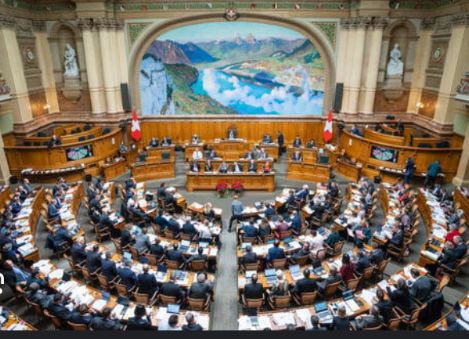
 Senator Natasha had submitted her position to the IPU, saying: “I come with a heavy heart from Nigeria. But first, I’d like to apologise to Honorable Kathila Obara. I am not here to bring shame to our country. I am here to seek help for the women of Nigeria.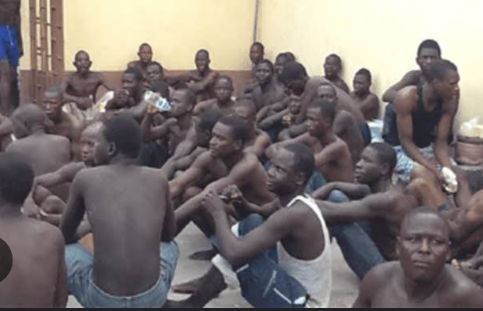





GoGreen Empowers Benue Women To Be Pillars Of Peace, Leadership
GoGreen Environmental Health Sustainability Initiatives, a Non-Governmental Organization, on March 8, 2025, organized a transformative one-day workshop in Makurdi, Benue State to commemorate the International Women’s Day.
The event brought together women livestock herders and crop farmers from Tse-Akpuku in Makurdi and Abinsi in Guma Local Government Areas, celebrating their pivotal roles in peacebuilding, conflict resolution, leadership, and gender equality.
The workshop underscored GoGreen’s unwavering commitment to empowering women as agents of change and fostering harmony in communities historically affected by disputes between herders and farmers.
At the heart of GoGreen’s mission is a belief in the transformative power of women.
During the workshop, the GoGreen CEO, Jackson Ameh, represented by Mrs. Theodora Chia, reaffirmed the organization’s dedication to equipping women with the skills and resources necessary to drive change.
He emphasized that true peace and sustainable development are unattainable without the full inclusion of women in decision-making processes.
GoGreen through the support of the UK Government, has provided critical training in sustainable agriculture, cooperative management, and dialogue facilitation under the SPRiNG Programme, ensuring that women farmers and herders are not only beneficiaries of development but also key stakeholders. “Empowering women is at the heart of our mission.
“Healthy relationships between herders and farmers are critical for lasting stability, and women play a crucial role in fostering these relationships.”
The International Women’s Day celebration served as a platform to showcase the achievements of women trained under the SPRiNG Project.
Their testimonials highlighted how the program has equipped them with the tools to foster peaceful coexistence, advocate for gender equality, and become role models for the next generation.
During the workshop, Dr. Helen Teghtegh highlighted women’s legal rights and strategies for empowerment, saying that amplifying women’s voices in governance leads to more resilient and inclusive societies.
Also, Mrs. Lucia Torjir a gender advocate lauded the participants as crucial pillars of support for their families and communities, urging them to leverage their leadership potential.
She highlighted how women’s participation in conflict resolution mitigates violence, builds trust, and nurtures sustainable peace.
Mrs. Magdalen Andoor, Director of Women Affairs at the Ministry of Women Affairs and Social Welfare, reinforced the need for women to claim their space in governance, breaking barriers that hinder gender equality.
She encouraged women to aspire for leadership roles in various sectors and actively participate in decision-making processes.
The workshop’s impact was evident in the testimonies of the participants.
Mnena Igba from Abinsi and Harila Umar from Tse-Akpuku expressed profound appreciation for GoGreen’s initiatives.
They acknowledged the organization’s role in enhancing agro-pastoral cooperation and providing them with the knowledge to advocate for gender equality and social justice.
Through shared experiences and interactive discussions, participants reflected on their growth as leaders, mediators, and champions of peace. Many shared inspiring success stories of how they have leveraged their newfound skills to mitigate conflicts and strengthen community resilience.
As the world continues to strive for gender equality and sustainable peace, GoGreen remains steadfast in its mission to empower women as catalysts for change.
The success of the International Women’s Day workshop reaffirmed the importance of women’s active participation in peacebuilding and conflict resolution.
The SPRiNG’s Project and GoGreen’s broader initiatives are not just about celebrating women’s contributions but about equipping them to be leaders, decision-makers, and architects of lasting peace. By investing in women, we invest in the future of communities, ensuring a world where peace, security, and equality prevail.
GoGreen calls on governments, civil society organizations, and community leaders to support women’s empowerment efforts and create an enabling environment where women can thrive as leaders and peacebuilders. As we move forward, let us remember that empowering a woman is empowering a community. Together, we can build a more peaceful, equitable, and prosperous future for all.