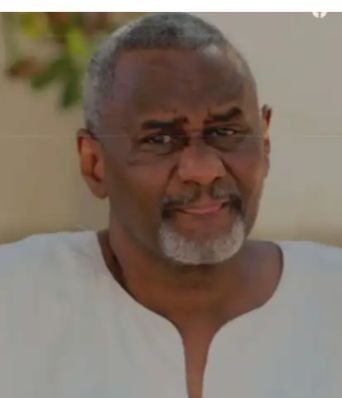
The Governor of the Central Bank of Nigeria (CBN), Olayemi Cardoso, has expressed surprise at the high rate of Infrastructural development and economic diversification in Saudi Arabia. Speaking with the Assistant Governor for Monetary Affairs, Saudi Arabia Central Bank (SAMA), Talal Al-Humond, on the sideline of the just-concluded inaugural Conference on Emerging Markets Economies, Cardoso said that there are lessons to be learned from Saudi Arabia in terms of infrastructural development and tourism. The conference was organised by the Ministry of Finance, Saudi Arabia and the International Monetary Fund (IMF) Regional Office in Riyadh, Saudi Arabia. Cardoso said that Saudi Arabia’s dedication to diversifying its economy through innovative environmental projects, large-scale transformation, and tourism investment is essential for development. He pledged his dedication to collaborating with the Nigerian Diaspora community in the Middle East to improve remittance flows and strengthen Nigeria’s financial sector. He promised that the Central CBN would continue enhancing macroeconomic fundamentals to establish an enabling environment that will facilitate the growth of the private sector and the generation of high-quality jobs for Nigerians. Responding, Mr. Talal Al-Humond assured Cardoso that the Saudi Central Bank will work with the CBN to ensure the attainment of mutually beneficial objectives. Meanwhile, during a panel discussion, moderated by the Director, Middle East and Central Asia Department, IMF, Jihad Azour, at the conference, Cardoso cited reforms in the financial markets that addressed distortions in the Nigerian foreign exchange market, which had previously experienced a gap of up to 60% between the official and parallel market exchange rates. He noted that due to consistent policy direction, improved market confidence, and enhanced transparency in forex trading, the gap has significantly narrowed to approximately 4-5%. Governor Cardoso highlighted the adoption of an electronic matching system to improve transparency in the market and the introduction of a foreign exchange code of ethics, which all Nigerian banks signed to ensure adherence to market rules. He said that as a result of these measures Nigeria’s foreign reserves had exceeded $40 billion, marking the highest level in nearly three years. He acknowledged that Nigeria had faced significant economic challenges, including capital flow exits, multiple exchange rate regimes, currency depreciation, high inflation, and a backlog of foreign exchange transactions, which led to a loss of confidence in the country’s currency. He said that upon assuming office, he and his team prioritised restoring confidence in the market by addressing the backlog of foreign exchange transactions and demonstrating a commitment to economic stability. Cardoso emphasised that Nigeria implemented a tight monetary policy stance to tackle inflation and restore macroeconomic discipline. Over the past year, he explained that the Bank raised interest rates by 850 basis points and shifted away from quasi-fiscal interventions that had distorted the economy. He stressed that Nigeria’s approach had remained firmly rooted in orthodox monetary policies, a Another significant reform, he noted, was the removal of the fuel subsidy, which, along with multiple exchange rate inefficiencies, had cost the country approximately 6% of its Gross Domestic Product (GDP) annually. He acknowledged that previous administrations had lacked the political will to remove the subsidy, but its elimination has had a profound positive impact on Nigeria’s fiscal outlook. On financial sector reforms, he explained that the CBN had mandated banks to recapitalise to strengthen the financial system and build buffers to withstand future economic shocks. He noted that these measures had so far proven successful in bolstering the sector. Addressing the broader global economic climate, he emphasised the importance of tailoring policy decisions to each economy’s unique needs. He recounted how Nigeria continued to tighten monetary policy even when global trends suggested otherwise. Despite the initial skepticism , he noted that a year later, many financial practitioners and international colleagues recognised that Nigeria had made the right decisions based on its specific economic conditions. Speaking on the actions required to enhance financial inclusion and the role of digitalisation and financial technology in mitigating potential risks, the Governor referenced Nigeria’s experience, where the financial inclusion rate currently stands at 74%. He stressed the critical need to expand this aggressively to ensure that economic growth benefits all segments of society. As the economy rebounds, he emphasised reducing disparities and ensuring broad-based financial access. Highlighting digitalisation as a key driver in advancing financial inclusion, he stated that expanding mobile money services, leveraging technology and prioritising gender-focused initiatives due to the positive economic impact of empowering women across the African continent would significantly close the financial access gap, particularly for underserved populations. He reaffirmed the CBN’s commitment to maintaining macroeconomic stability, sustaining policy consistency, and ensuring long-term resilience for the Nigerian economy. The two-day event, which served as a key platform for addressing structural changes in the global economy and their impact on emerging markets, brought together policymakers and economic experts from across emerging markets.
Ex Nigeria’s Vice President Atiku Abubakar has asked President Bola Tinubu to bring Nigeria out of the mess he plunged it into rather than interfering in the leadership crisis bedeviling Lagos State House of Assembly. In tweet today, February 17, reacting to what he said was “viral video of armed security operatives invading the Lagos State House of Assembly,” Atiku described it as “utterly reprehensible and stands condemned. “It must be subjected to a full and thorough investigation. “It is bewildering that the invading operatives reportedly have a mandate to enforce a leadership change in the House.” Atiku said that it is appalling that it is those who claimed to have fought for democracy that decided to sanction this crass desecration of the state’s foremost legislative body, and by so doing, putting our hard-earned democracy in jeopardy. He said that this act is an attack on the sanctity of democracy and a landmark of indignity to the Nigerian electorate, especially the people of Lagos. “Whatever may have caused the leadership crisis in the Lagos State House of Assembly is an undercurrent that is not abnormal in a system of democracy. “The purported invitation of armed security operatives for a conflict resolution in a parliament is an anathema that should be frowned upon and interrogated with all sense of urgency. “Tinubu should focus on bringing Nigeria out of the mess he plunged the country into rather than interfering in the state matters.”
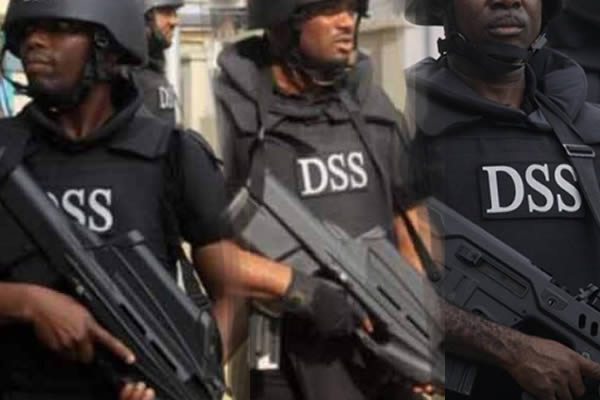
Operatives of the Department of State Services (DSS) and the Nigerian Police Force have stormed the Lagos State House of Assembly, sealing off the offices of Speaker Mojisola Meranda, her deputy, and the Clerk of the House. The action, which was carried out in the early hours of today, February 17, follows a legal suit over the interpretation of several constitutional provisions and the legitimacy of the Lagos State House of Assembly’s proceedings. The application challenges the constitutionality of the sitting, held on January 13, 2025, in which the Speaker was allegedly impeached. The suit contends that the sitting violated constitutional and legislative procedures, including the absence of a formal reconvening of the House by the Speaker or an authorized representative. It also argues that the session took place during a recess without the necessary legal steps to reconvene the House. The application urges that the case be heard promptly to avoid disruptions to legislative activities in the state. The claimant seeks expedited hearing to address the legality of the ongoing sitting under the current leadership, asserting that it is crucial to resolve the issue swiftly in the public interest. The applicant further requests the court to shorten the time for the defendants to respond to the summons and for the claimant to file any necessary replies, emphasizing the urgency of the matter. The court has been asked to grant accelerated hearing and expedite the proceedings in the interest of justice. In a statement, Obasa, the applicant, affirmed that granting the application would not prejudice any party or result in injustice.
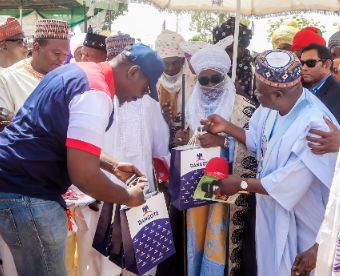
Against the backdrop of some controversies surrounding the soundness of some of the products, especially petroleum from Dangote Group, the Nigeria’s Federal Government has finally confirmed that all such products are excellent. “The quality of Dangote products is not in doubt and that is why people patronize them. You can see that the company is growing every day. I think it is doing a very good job.” The Acting Permanent Secretary in the Ministry of Industry, Trade and Investment, Dr. Dafang I. Sule, gave this confirmation while addressing participants at the ongoing International Trade Fair in Kaduna. He represented President Bola Tinubu and the Minister of Industry, Trade and Investment, Dr. Jumoke Oduwole, Dr. Dafang Sule, stressed that the Federal Government recognises and appreciates the pivotal role Dangote Group is playing in the country’s push towards industrialization. The President’s representative said that his ministry has been partnering with the Dangote Group to drive government policies and programmes, one of which is the Backward Integration Programme. According to him, Dangote Group has taken the center stage at the ongoing Kaduna International Trade Fair, even as he thanked the company for “doing a good job” in Nigeria. Dangote Group is one of the sponsors of the 46th Kaduna International Trade Fair that was declared open by the President. Meanwhile, the Kaduna Chamber of Commerce, Industry, Mines and Agriculture (KADCCIMA) has acknowledged its partnership with Dangote Group, describing it as the Unique Selling Point. Director General of the Chamber, Alhaji Usman Saulawa, who spoke for the Chamber, described Dangote Group as a conglomerate that is helping to drive the Nigerian economy. According to him, the company has not only made a significant positive impact on the business community in Kaduna State but has also contributed immensely to the growth of both the Nigerian, and global economy. He said that no fewer than five countries are participating in the fair that has as its theme: Promoting Efficiency in Manufacturing, Trade, and Agriculture through Digital Transformation. “Our selling point is the joint collaboration and full involvement of Kaduna State Government, Dangote Group and other companies.” The Director General hailed the symbiotic partnership between KADCCIMA and Dangote Group, commending Aliko Dangote, the Group’s President, for being a long time benefactor of the Chamber. He said that through the consistent sponsorship and participation of its Strategic Business Units, Dangote Group has supported economic development in the state.
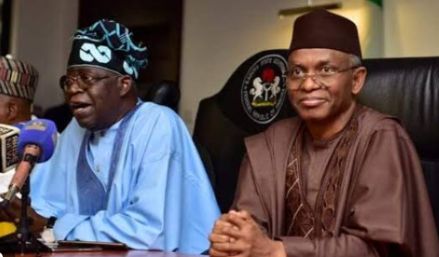
President Bola Tinubu has hailed the former Governor of Kaduna State, Malam Nasiru Ahmed el-Rufai, describing him as resourceful and brilliant. The President acknowledged el-Rufai’s role in the dialogues leading up to the formation of the All Progressives Congress (APC) and his contributions to the success of the party in the three consecutive elections of 2015, 2019, and 2023. In a birthday prayer for el-Rufai who turned 65 today, February 16, President Tinubu acknowledged that the former Governor “is an administrator, scholar, and politician. He is a founding member of the All Progressives Congress (APC) and highly regarded for his resourcefulness and brilliance.” The President recalled that el-Rufai had, in the past, served as governor of Kaduna State for eight years and as Director-General of the Bureau of Public Enterprises, as well as Minister of the Federal Capital Territory (FCT) from 2003 to 2007. Tinubu commended el-Rufai’s endeavours at ensuring the flourishing of democracy in Nigeria, his meritorious service to the nation and mentorship of the younger generation. He wished el-Rufai good health and strength for continuous service to the nation.
The Registrar of the Joint Admissions and Matriculation Board (JAMB), Professor Ishaq Oloyede, has said that over 11,553 underage candidates have registered for the 2025 Unified Tertiary Matriculation Examination (UTME). Professor Oloyede, who spoke while inspecting approved computer-based test centres where candidates are being registered, said that a total of 782,027 candidates have been registered in the last 10 days. “Now, we have registered 782,027, and 11,553 of them are underage. So, you can see that as we are registering, the system is reporting from all over the country. Out of the expected two million candidates, we’re not yet at the 14th day “Monday will mark our 14th day. So, in two weeks, we would have completed about half of our registration process, and by that time, we expect to have over one million candidates registered. So far, everything has been smooth.” Professor Oloyede said that on Friday alone, 443 underage candidates were registered, with 18,813 candidates successfully registered that morning. “Today alone, we have 443 underage candidates, and out of the 18,813 registered this morning, 443 are underage. This year, we’ve introduced a system that allows us to identify and track underage candidates. “This will help us understand their issues and even identify those who might be genuinely gifted but still underage.” He also spoke about a growing trend of parents enrolling their children early, saying: “it has become a common thing now, where parents whether mothers or fathers are registering their underage children, sometimes due to pressure or other reasons.” He said that the registration process for this year’s examination has experienced both commendable progress and notable delays, according to an official statement issued earlier this week. Professor Oloyede shared insights into the ongoing technical challenges and improvements. “You are here. You were here last year. See if you can find any power outages, network failures, and so forth. I just heard recently that due to the technical measures put in place this year, things are a bit slow.” Professor Oloyede acknowledged the delays while hinting that the situation was being actively managed. Professor Oloyede said that Nigerians’ desire for efficiency can sometimes clash with the systems put in place to regulate the process. “No, it’s not a bit slow. You know Nigerians generally want to have things their own way. Look at these students. In other climes, they have to register on their own. Nobody should be doing registration for them.” He emphasised the effort being made to ensure the system is thorough, stating that while some students had the option of having assistance with registration, many were not taking the process seriously. “But go and see the attitude. Even when we have engaged people to be doing the enrollment for them, something they are supposed to do on their own, they are even not attentive.” Professor Oloyede said that new measures are being introduced to ensure candidates fully engaged with the registration process. “What we do is that we put some safety valves into it. For example, for a candidate who is registered, we expect him to read certain rules. Before he will say, I agree. In the past, once he said, I agree, it goes. But we have now put a time limit. A time-space that whether he likes it or not, he must read because the system will not go until that time elapses.” “This is the first time that we have been registering 80,000-plus. Yesterday, we registered close to 100,000 across the country. And we have budgeted for 60,000 per day. That’s what we use in our planning. “But from the third day, we started 80,000, 90,000 per day. So, which means we will finish long before the time.”
The family of the late chieftain of the All Progressives Congress (APC), Chief Dr. Cairo Ojougboh, led by his wife, Mrs. Bose Ojougboh, marked his one-year memorial anniversary with a series of charitable initiatives aimed at honoring his legacy of philanthropy and service to society. The memorial activities included the donation of school books and bags to pupils of Erigbe Primary School, in Agbor, Ika South Local Government Area of Delta State, where Dr. Ojougboh had received his early education. The outreach also included extension of financial assistance to patients at Central Hospital, Agbor, and the provision of toiletries, cash, and food items to children at the Salve Regina Children’s Home, Agbor. The outreach was carried out under the ‘Dr. Cairo Ojougboh Foundation’, a family-led initiative established to immortalise him and continue his lifelong commitment to education, healthcare, and social welfare. Speaking during the event, Mrs. Ojougboh reaffirmed the family’s dedication to sustaining the ideals of the late APC chieftain, describing him as a man who strongly believed in education and giving back to society. “We are here to celebrate the life of my husband, Late Dr. Cairo Ojougboh, who passed on a year ago. In his honour, we decided to give back to society. He was a man who valued education and was always willing to help others. It is only fitting that we continue his legacy through acts of generosity.”
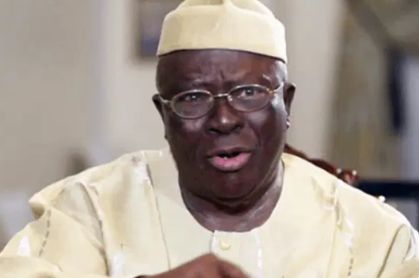
President Bola Tinubu, his predecessor, ex President Muhammadu Buhari and former Nigeria’s Vice President Atiku Abubakar have expressed grief over the death of the chieftain of Yoruba sociocultural group, Afenifere, Pa Ayo Adebanjo. He died today, Friday, February 14 at the age of 96. In a message of condolence from him personally, President Tinubu said that he received the news of the passing of Pa Ayo Adebanjo, with profound sorrow. He said that with the death of Adebanjo, Nigeria has lost a political leader whose decades of unwavering struggle for justice, democracy, and national unity have left an indelible mark on our nation’s history. “All who knew Baba Adebanjo drew from his boundless wisdom and cherished the democratic ideals he tirelessly campaigned for. “His principled voice, which resonated through decades of political activism, will be deeply missed. As a nation, we will miss his regular interventions in national affairs, which enriched our political discourse. Though we mourn his departure, we are also grateful to God for blessing him with a long, remarkable, purposeful life—96 years of unrelenting advocacy for progress and equity. “Baba, as a lawyer, statesman, and politician, stood among the last of a generation of nationalists and independent heroes who shaped the foundation of our country. “A devoted disciple of Chief Obafemi Awolowo, his contributions spanned political eras, from his role as Organising Secretary of the Action Group in the First Republic to his leadership in the Unity Party of Nigeria during the Second Republic. “In moments of national crisis, Baba’s courage shone brightest. When democracy hung in the balance after the annulment of the June 12, 1993 presidential election, he joined the National Democratic Coalition (NADECO) as one of the leading voices against military dictatorship, helping to galvanise a movement that became the bedrock of our collective struggle to reclaim democratic governance. “His unwavering commitment to truth and justice extended to my journey as a governorship candidate in 1999. Baba Adebanjo’s steadfast support was instrumental in my election as Governor of Lagos State under the platform of the Alliance for Democracy. “Though our political paths diverged in later years, my respect and admiration for him never wavered. Until his death, I shared a deep personal bond with Baba Adebanjo; he was like a father figure.” President Tinubu extended his condolences to his family, the Afenifere family, the governors of the Southwest, past and present, and all Nigerians who shared his vision. Also, ex President Buhari described late Pa Adebanjo as “one of the nation’s most notable leaders,” saying that his death was a loss for the nation. “The late Chief Adebanjo was one of those rare politicians who straddled the worlds of the legal profession, politics, and socio-cultural activism.” The former President prayed for the repose of his soul and for fortitude to his family, admirers, and the government and people of Ogun State to bear the loss. This is even as former Vice President Atiku Abubakar described late Afenifere leader as a formidable force and a fearless fighter for justice, equity, and an egalitarian society. Atiku recalled the heroic role that Pa Adebanjo played in wresting power from the military and enthroning democratic governance in Nigeria. “He was at the forefront of the fight against military dictatorship. “It is on record that Pa Adebanjo spent his entire youthful days fighting against colonial rule; spent his middle age to fight against military dictatorship and his latter days to ensure that good governance, rule of law and democracy took firm roots in Nigeria. “I wish to state without equivocation that Pa Adebanjo was a golden example of how to live and die for the good of the country. “Apart from mentoring many generations of civil rights activists across different generations, Pa Adebanjo was an activist extraordinaire and bridge builder who led the battle against injustice and oppression from the trenches “Undoubtedly, the life and times of Adebanjo remain a priceless map for contemporary and upcoming activists, who advocate for good governance to learn and take a cue from. “He taught all of us how to be statesmen of distinction.” Atiku extended his condolences to the Adebanjo family and asked them to take solace in the fact that the patriarch who they mourn was a father to the whole country and a pride to the Black race. “I also commiserate with the people and government of Ogun State.”
In a heated session at the inaugural hearing of the House Subcommittee on Delivering Government Efficiency, Republican Congressman Scott Perry accused the United States Agency for International Development (USAID) of diverting taxpayer funds to finance terrorist organizations, including Nigeria’s notorious Boko Haram.
Perry alleged that USAID’s $697 million annual budget—and additional undisclosed cash shipments—was used to support groups such as ISIS, Al-Qaeda, and Boko Haram, a jihadist faction that has waged a 15-year insurgency in West Africa.
He emphasized the catastrophic impact of Boko Haram, citing over 300,000 child deaths, 2.3 million displaced civilians, and prolonged regional famine. “Your money isn’t building schools—it’s funding terrorist training camps,” he asserted.
The congressman also spotlighted USAID’s $136 million allocation for constructing 120 schools in Pakistan, claiming there was no evidence to prove any of these schools exist. “The Inspector General can’t verify a single brick was laid, yet we doubled down with $20 million for educational TV programs for ‘students’ of these phantom schools,” Perry stated, contending that the spending served as a conduit for terrorism financing.
His remarks echoed earlier criticisms from former President Donald Trump, who moved to shutter USAID over corruption allegations, as well as those from Elon Musk, the agency’s vocal critic and head of the newly formed efficiency department. Musk has accused USAID of engaging in covert operations, including funding “rogue CIA activities” and pandemic-linked bioweapon research.
Perry’s allegations, which have drawn intense scrutiny, have reignited debates over USAID’s accountability as lawmakers push for comprehensive transparency reforms. The agency has yet to issue a public response to the claims.
Former Executive Secretary of the National Health Insurance Scheme (NHIS) and an activist, Professor Usman Yusuf has vowed not to be intimated by President Bola Ahmed Tinubu’s dictatorial and autocratic leadership. In a long write-up he did and sent out from Kuje Prison after he was arrested by officers of the Economic and Financial Crimes Commission (EFCC) in December last year, the activist said: “I would like to assure all Nigerians that I will never be silenced by President Bola Ahmed Tinubu’s dictatorial and autocratic leadership, which is forcefully suppressing any legitimate opposition to his misrule of our fatherland.” In the write-up, Professor Usman Yusuf narrated how and why he was arrested, saying that he had felt the haunting presence of the state stalking him since he started publicly criticising the policies of President Tinubu’s government that have been inflicting unbearable hardships on Nigerians. He admitted that security agents have been physically and electronically tracking him and his family on the orders of this government. Professor Usman Yusuf narrated that on Saturday, 25 January 2025, he was invited to Bauchi to chair the maiden summit of Tafiyar Matasan Arewa, a Northern Youth Movement with branches in all 19 Northern states. The write-up is reproduced hereunder: The summit theme was the role of youths in nation-building. Most speakers spoke in Hausa, but I communicated in both Hausa and English to reach a wider audience. I called on the youths to wake up and take their destinies in their hands because nations are built by the youths, not the aged. I spoke on the following 10 points: 1. Northern Nigeria has only itself to blame for the hardships this government is inflicting on its people, despite contributing 62% of the votes to its election victory. 2. The Muslim-Muslim ticket of the ruling Party APC in the 2023 Presidential elections was an electoral scam that has done nothing but deceived people and widened the fissure between Muslims and Christians in the region. 3. There has been a premeditated plan to divide peoples of the north with insecurity (Boko Haram, Banditry, Lakurawa, etc.), inter-ethnic strife between Hausas and Fulanis in the Northwest and Fulanis and other ethnic groups in the rest of the region. Religious divide and suspicions have been exacerbated by the ruling party’s Muslim-Muslim ticket. 4. Pervasive insecurity has devastated the region and destroyed its social fabric making it poorer, hungrier and very dangerous. 5. Systemic balkanisation and bastardisation of the region’s respected traditional institutions, as in Kano and Adamawa states. 6. Corruption and manipulation of some Clerics in the region by the government for them to pacify the suffering masses. 7. This government is now sponsoring its Hausa political singers to sing songs that fan embers of hatred and enmity between the peoples of northern Nigeria and their brethren in Niger Republic. 8. Deterioration of the relationship between Nigeria and Niger Republic and the exit of Mali, Burkina Faso and Niger from the ECOWAS are bad news for the security and socio-economic wellbeing of Nigeria and northern Nigeria in particular. 9. President Tinubu’s romance with France is a big concern for the security of Nigeria and the West African subregion and a harbinger of bad things to come. 10. This Government needs to review and reverse its economic policies that are causing unbearable hardships for citizens. Finally, I called upon Northern youths to remain united, shun all acts of violence and criminality, engage positively in the political process, and resist any person or group trying to use religion or ethnicity to divide the people of the region. The event received very wide press coverage. In the evening after the event when I returned to my hotel accommodation, I noticed some strange people in the lobby, hallway, and restaurant that I immediately knew were security agents stalking me. Abduction and detention for 6 days at the EFCC: From Wed. 29 Jan. to Mon. 3 Feb. 2025 On Wednesday, 29 January 2025, at around 6:30pm, as I was preparing to break my fast, my wife came upstairs to inform me that two gentlemen in black suits knocked at the door and came inside the house, saying I knew they were coming. I came downstairs in my Jallabiyya (robe), no cap, with bathroom slippers to meet these gentlemen who introduced themselves as operatives of the Economic and Financial Crimes Commission (EFCC) directed to take me to their headquarters. I asked them for their badges, which they showed me with an apology for the oversight. I asked for an arrest warrant, and they told me that they did not need one. I also asked why I was not sent any formal invitation letter before this intrusive visit. I then asked to be allowed to go upstairs to change but was physically blocked by these operatives. I also asked for my wife to be allowed to go upstairs and bring me a change of clothing, but they refused to allow that. On stepping outside the house, there were 5 armed mobile policemen, some deployed to the back of my house, presumably to prevent me from escaping through the back door or window. The engine of the bus they came in was left running with the driver sitting inside. In the heat of argument, my wife got into a shouting match with the lead operative, which made her say a few unpleasant words that provoked him and the rest of his team. My 14-year-old daughter was understandably very shaken by this act of state terror. I shouted out some words of consolation to her because I was blocked from going close to hug and talk to her. I asked my wife to call my brothers and Lawyers to let them know. The lead operative angrily seized my phone from my hand and literally bundled me onto the bus, seating me between him and an armed mobile policeman. The driver then zoomed off, driving crazily, sometimes against the flow of traffic to the EFCC headquarters. All the dark-suited operatives and the five armed mobile policemen in the bus were gleefully high-fiving themselves as if they had captured Kachalla Bello Turji, the notorious Zamfara bandit kingpin. Let us be clear, the main purpose of these cowardly Gestapo tactics by the EFCC was to use the instrument of state to intimidate and terrorise my family. As for me, I was not the least impressed or intimidated by this shameful act of state terror. On arriving at the EFCC, the five armed mobile policemen were dismissed with a part on the back for a job well done while I was escorted by the dark-suited operatives upstairs to the office of head of Procurement Fraud Section (PFS) to whom I introduced myself and asked why he sent his operatives to abduct me from my house to his office. He just handed me a bunch of papers, and he said were my charges asking me to sign, which I did after some back and forth. I asked him for a bottle of water to break my fast, which he obliged, and to be allowed to call my wife. Unfortunately, my phone battery had run down. I was refused a phone call to tell my wife and daughter where and how I was. After signing and collecting a copy of the charges against me, the boss PFS who seemed in a rush to close for the day, asked his assistant to take his bag downstairs to his car as if I was the last item on his to-do list for the day. No one told me why I was abducted, whether or not I was going to be detained, when I would be allowed access to my family and Lawyers, or when I would be arraigned in court to answer the charges labelled against me. I was then taken on foot around the main building to the detention cells. After being processed, I asked to be allowed to say my evening prayers (Maghrib and Isha), after which I was taken to my cell, which I shared with three other detainees. Many of the detainees, especially the youths, recognised me and came over to greet and offer their prayers and best wishes. My three cellmates accorded me all the courtesy and respect befitting my grey hairs. They gave me a sachet of pure water and a cup of hot tea, which helped ease my headache, resulting from caffeine withdrawal and hunger from 20 hours of fasting. Detainees sleep on thin mattresses that touch each other on a bare floor. My cellmates offered me the privileged position of being next to the wall. It was now 11 p.m., the lights were turned off, and the cell doors were locked with keys from outside. I laid down in the dark, pained that I had not spoken with my wife and daughter to tell them where and how I was doing. Soon after the lights went out, one of my cellmates started snoring loudly, ordinarily, this would have kept me awake, but I fell asleep until awoken by the metallic clanging sound of the cell guards opening the cells for morning prayers at 5am. We came out to say our prayers in a small recess on the corridor. My name was called out at 7am on Thursday, 30 January 2025, and told to get ready to be taken to court at 8am. On coming out of the building housing the detention cells with my interrogation officer (IO), a photographer of the media unit of the EFCC was strategically stationed to be taking my pictures unshaven, in bathroom slippers, no cap and in the same clothing that I was abducted from my house the evening before. It was then very obvious to me that one of the directives to the EFCC was to publicly humiliate, demunanise, and weaken my spirit in addition to smearing my reputation and integrity with frivolous made-up charges. When I got into the bus, I jokingly told the operatives that they had forgotten to put on hands and legs, cuffs, and chains on me. They busted out laughing, saying, “Haba Oga, e no reach dat level”. The judge adjourned the date of my arraignment to Monday, 3 February 2025, because lawyers of the EFCC were not prepared, which meant four more days of detention in EFCC’s cell for me. On arriving back at the EFCC, my wife was waiting with a fresh change of clothing and a home-cooked meal; the last time I had anything to eat was about 40 hours ago. I gently reminded her that our fight is not with the EFCC or its operatives but with President Bola Ahmed Tinubu’s corrupt and tyrannical government. I convinced her to come upstairs with me for her to apologize to the operative she got into a shouting match with when they came to our house to abduct me the night before. Her apology worked magic because it got me an upgrade from the cell I shared with three other detainees to a single cell all to myself. The boredom of detention was eased by visits from family and friends, taking walks on the long corridor of the cells, reading the Qur’an, getting enough rest and mentally tuning out of the hustle and bustle of the outside world, I felt the comforting warmth of an inner peace and calmness that I had never experienced in my life. On the day of my arraignment on Monday, 3 February 2025, the Court was packed full with lawyers, youth organisations, and activists. After my arraignment, the judge ordered that I should be remanded in Kuje Prison until 12 February 2025, when she could hear my Lawyers’ bail application. This ended my six days of detention in the EFCC and the beginning of nine days of Incarceration in Kuje Prison. I was promptly taken to the Prison by EFCC operatives in their bus and handed over to the Nigerian Correctional Service, First 9 days of incarceration in Kuje Prison: From Mon. 3 to Wed 12 Feb. 2025 The name Kuje Prison from the outside feels like going to the dark beyond. My experience from the first day I got in to the day I exited was anything but. I found the staff of the Nigerian Correctional Service in Kuje to be compassionate, courteous, supportive, and very professional in the conduct of their duties. They treated the inmates, majority of whom are youths, as humans with the utmost of respect, support, and understanding. I was processed and taken to my new home, called the segregation unit, which houses VIP inmates. Although the setting is relaxed with some few privileges, one is constantly reminded of the loss of his freedom by round the clock presence of guards, CCTVs in the hallway and the courtyard that are monitored both within the Prison and remotely at the headquarters and the fact that the guards locked the door to each cell from the outside each day at 8pm and opened next day at 7am which is 11 hours locked up in a hot cell measuring about 10 by 6 feet with onky one window. The 13 hours of freedom within the Prison yard are invaluable. One could freely walk to the mosque on the other side of the Prison for Zuhr and Asr, the only 2 prayers that are done in a congregation in the mosque because prisoner cells are locked from 6pm to 9am. Kuje Prison brought back memories of my boarding school days with the prisoners policing themselves. Each prisoner knows his assigned job the moment they are let out of their cells in the morning. The yard is kept very clean, and the relationship between wardens and the prisoners is that of mutual respect. The prisoners seemed aware of happenings on the outside. Many of them would come to me to offer words of support. As soon as they found out who I was, I kept getting requests to meet with various individuals and groups who wanted me to advocate for them when I get out, they seemed to have forgotten that I also had my own wahala. I sat down with and heard from young men accused or convicted of being Boko Haram, Bandits, IPOB, Shiites protesters, armed robbers, drug traffickers, murderers, rapists, lifers, 419ers, the list of alleged crimes goes on and on. I also went to the Prison clinic to meet with the staff and patients. I visited the kitchen where prisons did the cooking. I went to and talked to prisoners in the skills acquisition workshops, the small sparsely stocked library and the Nigerian Open University building. I didn’t enter the cells of the inmates but watched them play football matches. It was very sad to see our youths in the prime of their lives wasting away. What was very painful to hear was the stories of many prisoners awaiting trial some for over 10 years. Kuje Prison with an original capacity of 560 inmates, now holds 960 with 198 (21%) convicted while 765 (79%) awaiting trial. I considered my spending time in Kuje Prison as a blessing and an education I would never have gotten from any classroom. It was a privilege to hear and see the sufferings, trials and tribulations of these young men. I promised to do my part when I get out to reach officials and agencies that can help make things better. 15 more days of Incarceration in Kuje Prison: Wed. 12 Feb. to Thurs. 27 Feb. 2025 We returned to court today, Wednesday 12 February 2025, for the judge to hear my Lawyers’ bail application. The judge promptly adjourned to Thursday 27 February 2025 to give her ruling whether to grant me bail or not. I was taken back to the prison to spend 15 more days. Conclusion I have full confidence in my legal team to vigorously defend me against the baseless recycled falsehoods the EFCC charged me with, to which I pleaded not guilty to all. My family and I are deeply touched and remain eternally grateful for the overwhelming support from people all across the country and abroad. I would like to assure all Nigerians that I will never be silenced by President Bola Ahmed Tinubu’s dictatorial and autocratic leadership, which is forcefully suppressing any legitimate opposition to his misrule of our fatherland. I call on all well-meaning Nigerians to resist these dangerous traits that are reminiscent of the dark days of military rule in Nigeria.
Thank You, And God Bless The Federal Republic of Nigeria.
● Usman Yusuf is a Professor of Haematology and Bone Marrow Transplantation
We use cookies on our website to give you the most relevant experience by remembering your preferences and repeat visits. By clicking “Accept”, you consent to the use of ALL the cookies.
This website uses cookies to improve your experience while you navigate through the website. Out of these, the cookies that are categorized as necessary are stored on your browser as they are essential for the working of basic functionalities of the website. We also use third-party cookies that help us analyze and understand how you use this website. These cookies will be stored in your browser only with your consent. You also have the option to opt-out of these cookies. But opting out of some of these cookies may affect your browsing experience.
Necessary cookies are absolutely essential for the website to function properly. This category only includes cookies that ensures basic functionalities and security features of the website. These cookies do not store any personal information.
Any cookies that may not be particularly necessary for the website to function and is used specifically to collect user personal data via analytics, ads, other embedded contents are termed as non-necessary cookies. It is mandatory to procure user consent prior to running these cookies on your website.