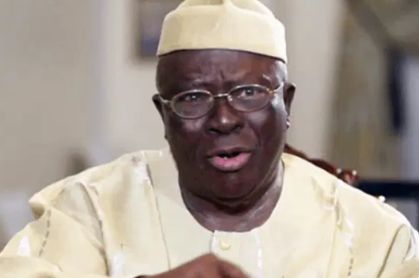
A foremost leader of the Afenifere, leading nationalist and elder statesman, Chief Samuel Ayodele Adebanjo, has died at the age of 96. Adebanjo died today, February 14, at his residence in Lekki, Lagos State. The family confirmed his passing in a statement made available to newsmen on Friday. The statement was signed on behalf of the family by Mrs. Ayotunde Atteh (nee Ayo-Adebanjo), Mrs. Adeola Azeez (nee Ayo-Adebanjo), and Mr. Obafemi Ayo-Adebanjo. “He died peacefully this morning, Friday, February 14, 2025, at his Lekki, Lagos Nigeria home at the age of 96,” the statement read. Adebanjo, a distinguished lawyer, former organising secretary of the Action Group, and the national leader of the Yoruba socio-cultural group, Afenifere, is survived by his 94-year-old wife, Chief Christy Ayo-Adebanjo, along with children, grandchildren, and great-grandchildren. “We will forever cherish his commitment to fighting for truth, equity, and justice. His belief and struggle for a truly independent and progressive Nigeria was total, and this he fought for until he breathed his last breath.” The family said that consultations are ongoing with Adebanjo’s friends, associates, and various interest groups across Nigeria and beyond to finalise plans for his funeral. Details of the funeral arrangements will be announced in due course. Meanwhile, a condolence register has been opened at his residence at 8, Ayo Adebanjo Close, Lekki Phase 1, Lagos, as well as his country home in Isanya Ogbo, near Ijebu Ode, Ogun State.
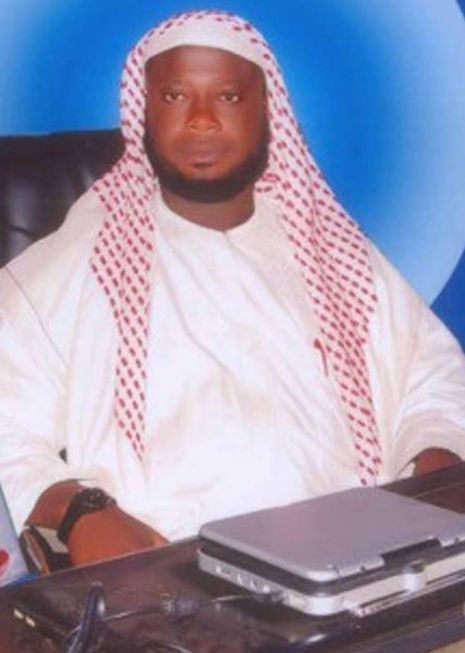
All thanks and praise are due to Allah, from Whom we seek help and forgiveness. We seek refuge with Allah from the evils of ourselves and the evil consequences of our deeds. Whoever Allah guides will never be misled and whoever strays from Him will never find a guide. I bear witness that there is no god except Allah. Likewise, I bear witness that Muhammad (Peace be upon him) is the servant and the Messenger of Allah. Dear brothers and sisters! The month of Ramadan has arrived again, the month of fasting and prayer. It is the month that provides an opportunity for forgiveness from Allah and emancipation from our sins. It is the month for performing good deeds and giving in charity. It is the month when the gates of the heavens are opened and the rewards for our deeds are magnified many times over. It is the month wherein prayers are answered and the status of the worshipper is elevated. It is the month wherein sins are forgiven. Allah bestows so many blessings upon his servants in the month of Ramadan. This is the month of fasting that is one of the five pillars of Islam. The Prophet Muhammad (Peace be upon him) fasted during this month and directed his followers to do the same. He told us that whoever fasts this month with faith, seeking Allah’s reward, will have all of his past sins forgiven. He likewise informed us that whoever stands in prayer throughout this month will have all of his past sins forgiven. The month of Ramadan contains within it a night that is superior to a thousand months. Whoever is denied the goodness of that night is indeed deprived. We should welcome this month and embrace it with happiness and joy. We should have the truest resolve to observe the fasts and the prayers and to compete in doing righteous deeds. During this month, we should ardently repent for all of our sins and encourage each other to engage in virtuous deeds and call to what is right and forbid what is wrong. In this way, we will succeed in attaining the blessings and the great rewards of Ramadan. The fast provides us with many benefits and is full of wisdom. It purifies and strengthens our hearts. It rids us of our baser tendencies like exuberance, arrogance, and stinginess. It reinforces our good traits like fortitude, clemency, and generosity. It supports us in our inner struggle to please Allah and attain nearness to Him. Fasting teaches us about ourselves and our needs. It shows us how weak we are and how truly dependent we are upon our Lord. It shows us how much Allah has blessed us. We are reminded of our brethren those who are less fortunate and are inspired to treat them well. We are compelled to thank Allah and to use the blessings He has provided us in obedience to Him. Allah the Almighty draws attention to these many benefits when he says: “O you who believe, fasting is prescribed for you as it has been prescribed for those who were before you that you may learn self-restraint.” [Surah al-Baqarah: 183] In this Qur’anic verse, Allah makes it clear that he prescribed fasting in order to purify us. Fasting is a means for us to learn self-restraint and cultivate our piety. Piety is to observe the commandments and prohibitions of Allah and His Messenger (Peace be upon him) sincerely out of our love and reverence for Allah, and to avoid His punishment and anger. Fasting is a great act of piety in itself and a great means of increasing our piety in all aspects of our religious and worldly lives. The Prophet Muhammad (Peace be upon him) pointed out one of the benefits of fasting when he said: “O young people, whoever among you has the wherewithal to marry should do so, because it assists us in lowering our gazes and safeguarding our private parts. Whoever cannot do so should fast, because fasting diminishes sexual power.” The reason that fasting has this effect is because Shaitan (Satan) flows like blood through our veins. Fasting constrains this flow while and acts as a reminder of Allah and His greatness, thereby reducing Satan’s influence over the fasting person while at the same time his faith strengthening. He naturally starts engaging in more acts of obedience and fewer acts of sin. There are many other benefits of fasting that we can discover with a little thought and reflection. Fasting is good for bodily health. It gives the body a chance to purify itself of accumulated poisons, a fact which has been confirmed by numerous and famous medical doctors. The sacred texts speak quite extensively about the virtues of fasting in the month of Ramadan and about it being a duty upon the believers. Allah the Almighty says: “O you who believe, fasting is prescribed for you as it has been prescribed for those who were before you that you may learn self-restraint. Fasting for a fixed number of days. The month of Ramadan in which the Qur’an was revealed, a guidance for the people and clear proofs of guidance and the criterion. So whoever witnesses the month should fast it. And whoever is sick or upon a journey should fast the same number of days (later on). Allah wishes ease for you and he does not wish hardship upon you. He wants that you should complete the period and that you should exalt Allah for that to which he has guided you that perhaps you may be thankful.” [Surah al-Baqarah: 183-185] The Prophet Muhammad (Peace be upon him) said: “Islam is built upon five things (pillars): testifying that there is no God but Allah and that Muhammad is the Messenger of Allah, establishing prayer, paying Zakah, fasting the month of Ramadan, and the pilgrimage to the House.” [Bukhari and Muslim] When the angel Gabriel asked the Prophet Muhammad (Peace be upon him) about Islam, he replied: “Islam is to bear witness that there is no God but Allah and that Muhammad is the Messenger of Allah, to establish prayer, to pay charity, to fast the month of Ramadan, and to perform pilgrimage to the House if you are able to make the journey.” [Sunan al-Tirmidhi] Angel Jibril (Gabriel) then said: “You have spoken the truth.” Then he said: “Tell me about faith.” Allah’s Messenger (Peace be upon him) replied: “It is to believe in Allah, His angels, His books, His Messengers, the Last Day, and divine decree, both the good and bad of it.” He said: “You have spoken the truth. Tell me about excellence in faith.” Allah’s Messenger replied: “It is to worship Allah as though you see Him, and though you do not see Him, you know that He sees you.” He said: “You have spoken the truth.” [Muslim] Respected brothers and sisters! This Hadîth is of considerable importance and deserves serious thought and consideration. Once Mu’az Bin Jabal said to the Prophet Muhammad (Peace be upon him): “Tell me about some deed that will admit me into Paradise and distance me from the Hellfire.” The Prophet Muhammad (Peace be upon him) replied: “You have asked about something great, yet it is very simple for one for whom Allah makes it easy. Worship Allah and do not associate anything with him in worship. Establish prayer, pay Zakah, fast the month of Ramadan, and undertake the pilgrimage to the House if you are able to do so.” Then the Prophet Muhammad (Peace be upon him added: “Should I not inform you about the gates of goodness? Fasting is a shield. Charity extinguishes sins like water extinguishes fire.” [Sunan al-Tirmidhi] Dear servants of Allah! Fasting is a most virtuous act with a reward commensurate with its greatness. This is especially true in Ramadan, since Allah has made fasting therein an obligation upon the believers and a means of their attaining peace and salvation. The Prophet Muhammad (Peace be upon him) said: “Every deed of the human being is for himself and its reward is multiplied for him from ten to seven hundred times. Allah says: ‘Except for fasting, for truly it is for Me and I alone will reward it, for verily he abandoned his desires, his food, and his drink for my sake.’ The one who fasts experiences two joys, one upon breaking his fast and one when he meets his Lord. Surely the breath of the fasting person is sweeter to Allah than the fragrance of musk.” [Bukhari and Muslim] The Prophet Muhammad (Peace be upon him) said: “When Ramadan commences, the gates of Paradise (Jannah) are opened and the gates of Hell are closed and the devils are bound in chains.” [Bukhari and Muslim] The Prophet Muhammad (Peace be upon him) said: “On the first night of Ramadan, the devils and rebellious jinn are bound in chains, The gates of Paradise are opened until not a single gate remains closed. The gates of Hell are bound shut until not a single gate remains open. Then a caller calls out: ‘O desirer of good, go forth! O desirer of evil, restrain yourself! Allah is emancipating people from the Fire every night’.” [Sunan al-Tirmidhi] On the eve of Ramadan, the Prophet Muhammad (Peace be upon him) gave a beautiful sermon and said: “O people! A great and blessed month is coming upon you, a month containing a night better than a thousand months. Allah has made fasting in its days an obligation and observing prayer in its nights a voluntary act. Anyone who seeks nearness to Allah in this month through any virtuous act will be like one who carried out a religious obligation at another time, and anyone who performs an obligatory act of worship in this month will be like one who performed seventy such acts at another time. It is the month of patience, and the reward for patience is Paradise.” [Sahih Ibn Khuzaimah] Dear brothers and sisters! We must seize the opportunity presented to us in this blessed month and appreciate the greatness of this time by engaging in all the worship that we can. We must hasten to perform good deeds. Allah has made this month a time for worship and for competing with one another in righteousness and goodness. We must increase our prayer and our spending in charity. We must busy ourselves with reading the Qur’an. We must hasten to help the poor, the needy, and the orphans. The Prophet Muhammad (Peace be upon him) was the most generous of all people and he was even more generous in Ramadan. We must follow the good example of our beloved Prophet Muhammad (Peace be upon him) by redoubling our efforts in this blessed month. We need to safeguard the blessings of our fasts from our sins and our shortcomings. The Prophet Muhammad (Peace be upon him) said: “Whoever does not leave off false speech and false conduct, Allah has no need of his leaving off food and drink.” [Bukhari] The Prophet Muhammad (Peace be upon him) said: “When any one of you is observing the fast for the day, he should neither indulge in obscene language nor raise his voice. If someone insults him or quarrels with him, he should say: ‘I am fasting’.” [Bukhari and Muslim] Respected brothers and sisters! Wallahi, we must beseech Allah for forgiveness in this great month and do all that we can to take advantage of this precious time. We must avoid committing any offence against the fast that will diminish its blessings and invoke Allah’s anger. Therefore, we must not be negligent of our prayers or stingy with our zakah, sadaqah and charity. We must not consume interest or the property of the orphans. We must not steal, oppress anyone, or disrespect our parents. We must not spurn our kinfolk. We must avoid backbiting, slander, lies, and falsehood. We must eschew false oaths and claims. We must not shave or trim our beards or leave our moustaches to grow. We must not listen to song and musical instruments. Women must not make a wanton display of themselves and men should not mix with them. These sins are forbidden throughout the year, but in Ramadan they are even more forbidden and more sinful. We must fear Allah and avoid what Allah and His Messenger (Peace be upon him) have prohibited us. We must be upright in our obedience in Ramadan and throughout the rest of the year. We should call one another to this and by doing so attain the success and salvation that this blessed and great month promises us. Dear brothers and sisters! As usual, please, we are soliciting to you, to assit us, help us, give us your Zakah, your sadaqah, your charity and your donations during this 1446/2025 Ramadan. Indeed, in our great country, Nigeria, in African countries and around the world, orphans and children are facing hunger, poverty, fear and the loss of healthcare and education due to the insecurity, conflict and the climate crisis. In our Islamic center, our teams are working tirelessly to provide the resources orphans and children need to overcome war, famine and other crises – helping them build brighter, more hopeful futures.
This Ramadan, as we come together to celebrate the blessed and great Month, it is important to reflect on those in need. During Ramadan, and all year long, by donating what you can afford, you can help give hope to our orphans, our boys and girls in our Islamic schools. Your Zakah, Sadaqah, charity and donations can make a difference in the lives of children and their families, especially in this Ramadan. Please, donate to help our orphans, children and the needy. Donate to help our Islamic schools. Donate to help our Da’awah activities, FISABILILLAH! Our this year’s (1446/2025) Ramadan target is: Ten million naira (₦10,000,000) In Shaa Allah. And all those who intend to donate food items, clothes etc, our doors are always open In Shaa Allah. The following are our bank details: Account number: 1779691620 Account name: Murtala Muhammed Access Bank. Or: Account number: 0048647196 Account name: Murtala Muhammed GTBank For more information call the following contacts: 08038289761, 08056557477, 09158822160, 09019183949. We’re looking forward to your Zakah, your Sadaqah, your charity and your donations In Shaa Allah. Lastly, I ask Allah the Almighty to reform all our affairs, to provide us with strong will to change our situation for the better and to provide the entire Ummah with glory, strength and unity. I ask Him also to accept our deeds, prayers, and supplications. I also pray, may the Almighty Allah remove all our tears, all our worries, all our sorrows and all our pains and replace them with complete happiness, complete smiles and complete good health, ameen Ya Mujib! All perfect praise is due to Allah, Lord of the worlds. May the peace, blessings and salutations of Allah be upon our noble Messenger, Muhammad (Peace be upon him), and upon his family, his Companions and his true followers.
Murtadha Muhammad Gusau is the Chief Imam of Nagazi-Uvete Jumu’ah Mosque and Late Alhaji Abdur-Rahman Okene Mosque, Okene, Kogi State. He can be reached via: gusauimam@gmail.com; or +2348038289761.
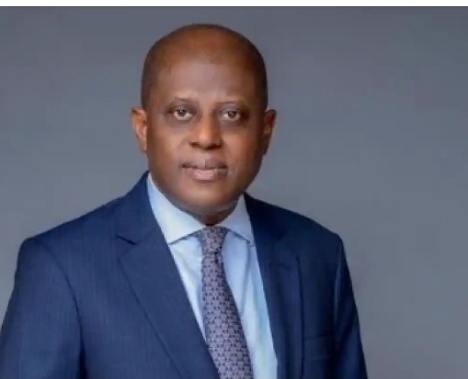
The Central Bank of Nigeria (CBN) has assured stakeholders, including depositors of the safety of their funds in the wake of the acquisition of the bank by the Federal Government through a court ruling. A statement today, February 14 by the apex Bank’s spokesperson, Hakama Sidi All, said: “following the court order that the shares of Keystone Bank Limited previously held by the shareholders be forfeited to the Federal Government of Nigeria, the Central Bank of Nigeria (CBN) wishes to reassure the public that Keystone Bank Limited remains safe, sound, and fully operational.” CBN acknowledged that the acquisition of Keystone Bank might have triggered customer concerns, but stressed that “the stability of the banking system and the safety of depositors’ funds remain our top priorities. “Keystone Bank’s operations are entirely secure, and there is no reason for concern. For clarity, the Court Order merely reaffirmed the Central Bank of Nigeria’s prior decision to take over the management of Keystone Bank Limited in January 2024, following a change in its leadership. Since then, the CBN has closely monitored the bank’s operations to ensure they are in full compliance with regulatory standards, operational transparency, and the interests of depositors. “As part of our commitment to safeguarding the financial system and building public trust, we shall continue to monitor the bank’s performance. “We will take all necessary steps to protect the interests of depositors, staff and stakeholders. “Customers are also encouraged to contact Keystone Bank’s customer support or visit any Keystone Bank branch for inquiries or concerns.
“Strike has never solved any problem; rather it has created more problems. So, I believe that within a short time, we will sort it out.” These were the remarks of the minister of the Federal Capital Territory (FCT), Nyeson Wike, when he addressed newsmen today, February 13, on the ongoing strike action by primary school teachers in the federal city. The teachers are demanding from the six Area Council Administration, the immediate implementation of the new national minimum wage. Wike told newsmen that when the information got to him about the strike, he asked the Minister of State, Dr. Mariya Mahmoud to find out why the teachers were on strike, saying: “it is not good. We are talking about the interest of Nigerians, not the interest of a few. The Minister acknowledged the teachers’ demands for the implementation of the national minimum wage, assuring that the administration will work with the Area Councils to ensure compliance. He said: “It’s really unfortunate that they have gone on strike over this issue of minimum wage. But we will make sure that the teachers will go back. We will do everything we can to see that the Area Councils implement the minimum wage as approved by the National Assembly.” However, the Minister emphasized the importance of dialogue and consultation, urging the teachers to also consider the impact that the strike will have on the FCT children. “I have also said that the teachers should also know that we are talking about the impact; before you go on strike like this, have proper dialogue and consultation.”
The city of Abuja is, indeed, a modern one, reflecting development-in-progress as Federal Capital Territory of Nigeria. The territory is subdivided into six Area Councils, being of equal status to Local Governments in Nigeria. The Government of Nigeria that muted and executed the movement of the seat of power from Lagos to Abuja must have considered the distorted and congestive state of Lagos being the erstwhile Federal Capital. The city of Abuja is privileged to have emerged in advanced era of technology and electronic devices that could be used to track, plan, control crime and criminality but such is being obstructed and most often, unimplemented due to decay in our institutions and endemic corruption of security and relevant personnel. Those are the ones entrusted with enforcement in order to have a seamless and low crime modern city. Road networks and urban planning of Abuja should have been one of the best in Africa but, the menace of lawless road users being encouraged by criminally minded traffic enforcers have remained a cankerworm and destroyers of the good dream of developing Abuja into one of the most beautiful cities in Africa. Security enforcers and road managers cutting across the police traffic departments, Vehicle Inspection Officers, (VIO) Federal Road Safety Corps (FRSC) are culpable in encouraging and clogging the wheel of progress to the sanitization of Abuja from criminal and criminalities. Most flashpoints of traffic violations such as beating traffic lights, plying of One-Ways are being selectively “enforced.” The enforcement is often made on cash induced basis. In fact, such situation is often not the type that can deter traffic offenders. If you are a “big man” or “big madam” and drive around area such as Rita Lori junction along Ahmadu Bello Way through to dead end of Gudu Market and you beat the traffic light, all you need to do is to part with crispy Naira notes for traffic enforcers who would just counsel, threaten and or intimidate you about having your vehicle impounded. At the end, you would be allowed a soft landing from all such threats after corruptly greasing the palm of the officers. Most of the culprits in this lawlessness are drivers of rickety commercial vehicles, as well as delivery riders. All such lawlessness and bribe taking are done by officers who obviously don’t mind whose ox is gored, and in what looks like a synergy amongst the traffic wardens and the FRSC patrol team. These law officers, at the alter of what they corruptly gain from such outing, do overlook breach of traffic light, none use of seatbelts, hyper overloading of vehicles, over expired and life threatening, time bomb worn out Tyres. Grateful for the recent court ruling against the lawless activities of VIOs, a department that is completely enmeshed in corrupt practices. Apo bridge is another dangerous spot where you encounter chaotic display of lawless NAPEP riders and unofficial non gazetted, one-chance-like “enforcers” who are good at snatching car keys from innocent motorists for parking to drop relatives, or family members. Still under the watchful eyes of Police, you sometimes innocently fall victim to their harassment and extortion. It must be stressed that impunity, recklessness of commercial road users and traffic violations are destroying the traffic architecture of Abuja metropolis as a result of selective enforcement, motivated and encouraged by corrupt infractions of the enforcers. These enforcers, seem to be officially operating without adequate supervision and accountability by the relevant Government institutions. Abuja city should be made to enjoy a seamless and less criminal activity in terms of traffic system. Relevant institutions should rise to address the growing corruption trends in the city, brooking no sacred cow or selective enforcement of traffic offenders.. In the word of Robert Kennedy: “Every society gets the kind of criminal it deserves. What is equally true is that every community gets the kind of law enforcement it insists on.” Let there be equity in our justice system and in implementation as well as enforcement. Mr. Emmanuel is a Public Affairs Analyst, and wrote in from Abuja Email: oohinoyi@yahoo.com
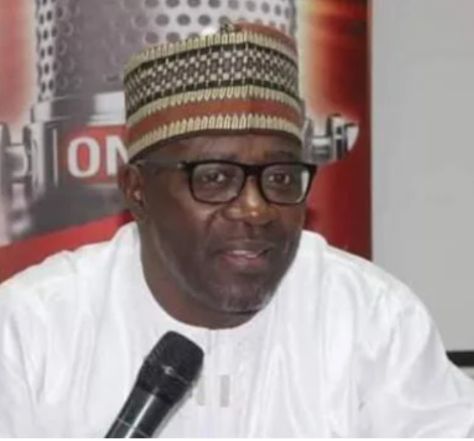
A federal high court in Abuja has discharged and acquitted Ishaq Modibbo Kawu, former Director-General of the National Broadcasting Commission (NBC), of fraud allegations. Modibbo Kawu was first arraigned in May 2019 on a 12-count charge alongside Dipo Onifade, Pinnacle Communications Limited and its former chairman, Lucky Omoluwa. The Independent Corrupt Practices and Other Related Offences Commission (ICPC) accused the defendants of allegedly paying N2.5 billion seed grant for the digital switchover (DSO) project to Pinnacle Communications Limited. ICPC charged Modibbo Kawu with abuse of office, money laundering and misleading a public officer with the intent to defraud the federal government. The act was said to contravene sections 26 (1) (c) and punishable under the section 19 of the Corrupt Practices and Other Related Offences Act, 2000. Although the defendants filed a no-case submission, it was later dismissed by the federal high court and also dismissed by the court of appeal. The defendants, except Omoluwa who died in February 2020, were later re-arraigned on a five-count charge in December 2020. Delivering judgment today, February 13, the trial judge, Justice Folasade Giwa-Ogunbanjo, held that the ICPC was not able to prove the allegations against the defendants. The judge discharged the defendants on the grounds that the statements and evidences of the witnesses could not link any allegation against the defendants. Source: TheCable.
Governor Ahmed Usman Ododo of Kogi State has enumerated a number of the benefits of Radio to the growth and development of a society. Speaking as the world celebrates this year’s World Radio Day today, February 13, Ododo noted that the unique ability of Radio to reach a wide audience transcend geographical boundaries and provide a platform for diverse voices. Such outreach, he stressed, makes Radio to be an indispensable tool for promoting understanding, empathy, unity and social change. “We are reminded of the importance of radio in promoting development, democracy, human rights and social change. “Our investment in climate-resilient agricultural practice and sustainable development and the premium we have placed on expanding access to information through broadcasting and radio in particular resonate with the theme of this year’s celebration, Ismaila Isah, Special Adviser on Media to the Governor”, quoted the governor to have said The Governor reiterated the commitment of his administration to support the growth and development of radio, stressing that radio has the power to transform lives, promote education and health, and foster economic growth and development. The Governor used the occasion to restate his administration’s commitment to promoting inclusion in governance and leaving no voices unheard in the governance of the state. He said that he had demonstrated this by ensuring the participation of youth, women, people living with disabilities and all stakeholders from different ethnic, religious and political affiliations in the administration, he said. “I am delighted to join the rest of the world in celebrating this year’s World Radio Day. I recognize the immense contribution of radio to our state’s development and the nation at large. Radio has been a trusted companion to millions of people around the world, providing news, entertainment and education. “It has been a powerful tool for social change, promoting understanding as a platform for all voices to be heard.” Reflecting on the theme of this year’s celebration, “Radio and Climate Change,” Governor Ododo noted that the celebration presents an opportunity for people around the world to acknowledge the pivotal role radio plays in raising awareness about climate change, promoting and supporting communities affected by climate-related challenges.
Clerk to the National Assembly (CNA), Kamoru Ogunlana has commended the National Assembly Service Commission (NASC), for streamlining appointment of legislative aides. The Clerk noted that the decision to streamline appointment of the legislative aides had enhanced the efficiency and effectiveness of legislative processes. In a speech at the valedictory session for the immediate chairman and members of the NASC, Kamoru Ogunlana said that the Commission’s focus on “optimizing this aspect of our work has ensured that our lawmakers are supported by capable and dedicated professionals, thus strengthening the foundation of our democracy.” He celebrated the achievements of the Commission as chairman and members concluded their five-year tenure. “This moment is not just a reflection on the past, but also a celebration of the transformative journey we have undertaken together.” He said that throughout their time in office, the Commission had championed significant reforms that had profoundly impacted the operations and administration of our National Assembly. Kamoru Ogunlana said that the unwavering commitment to excellence by the Board of the Commission had paved the way for a more efficient and responsive legislative framework. “One of the most commendable achievements has been the successful organization of promotion examinations. “The timely release of results has instilled a culture of meritocracy and transparency, motivating our staff members to strive for excellence. “This initiative has empowered many dedicated individuals in our assembly to realize their career aspirations. “The groundbreaking work on the construction of the permanent complex of the Commission stands as a testament to their vision for creating a conducive work environment. “This complex will not only serve as a physical space for our operations, but will symbolize our commitment to ongoing improvement and modernization in service delivery.” The CNA expressed appreciation for the opportunities he received during his tenure, including three elevations to exalted positions: Secretary, Legal Services, Deputy Clerk to the National Assembly and Clerk to the National Assembly. “Each advancement has been a testament to the confidence the Commission has placed in me, and I am appreciative of the collaborative spirit that imbued our work.” “As we bid farewell to our esteemed Commissioners, I want to express my heartfelt gratitude for your exceptional service to the National Assembly Service. Your leadership, vision and dedication have left an indelible mark on our institution. You have set a high standard that will guide future endeavours within the Commission and beyond. “To conclude, as you embark on new journeys, know that your contributions will always be cherished, and your legacy will continue to inspire us all. Thank you for your service and may you find success in all your future endeavours.”
The Tony Elumelu’s Foundation has signed a $6 million agreement with the UAE’s Office of Development Affairs and the Khalifa Bin Zayed Al Nahyan Foundation to empower 1,000 young African entrepreneurs. The partnership, according to report, is aimed to provide essential resources, including business training, mentorship, and non-refundable seed capital of $5,000. The founder of the Foundation, Tony Elumelu, was quoted as saying: “empowering entrepreneurs is not just a moral imperative, but also a strategic investment in Africa’s future. “By providing the necessary access to capital, mentorship, and resources, we are unlocking the potential of Africa’s entrepreneurial talent, eradicating poverty, driving self-reliance, and paving the way for inclusive growth and prosperity on the continent.” The partnership will leverage the Tony Elumelu Foundation’s expertise in catalysing entrepreneurship through the Tony Elumelu Entrepreneurship Programme.
The Director General of the Khalifa Bin Zayed Al Nahyan Foundation, His Excellency Mohamed Haji Al Khoori, said: ”This partnership aligns with our goal of strengthening economies and creating sustainable businesses that uplift communities”. It would be recalled that since its inception in 2015, the Tony Elumelu Foundation has made significant strides in its mission to support young African entrepreneurs. The foundation has provided access to training and resources via its digital hub, TEFConnect, reaching over 2.5 million young Africans. The foundation has disbursed more than $100 million in funding to over 21,000 entrepreneurs across the continent, creating over 1.5 million direct and indirect jobs. Source: Persecondnews.
Morocco, through its Association of Regions (Governor’s Forum) has made special request for Yobe state government to participate and showcase its sesame seeds and Gum Arabic in the forthcoming international trade fair in Mekenes, Morocco. The Executive Director of the association, Mohammed El Bachiri, said that the association is ready to collaborate with the Yobe state government to attract investors and marketers to the state for direct and indirect investments. He said that under the collaboration programme, there would be rooms for financing of Agriculture, environment, climate and housing in the local government areas. This is even as the leader of the delegation and Secretary to Yobe state government, Baba Malam Wali, said that the state government would take advantage of the forthcoming trade fair to present its agricultural products. “We have high quality graded sesame seeds, Gum Arabic, beans, groundnut and livestock among others in commercial quantities in all the local government areas. “His Excellency Gov. Mai Mala Buni has directed us to collaborate with reputable agencies and organizations to attract employment and wealth Creation opportunities for the benefit of our youth. “The state government is ready to partner the association to engage our youth into agricultural production especially in the sesame seeds and others.” Meanwhile, the state Commissioner for Agriculture, Mustapha Goniri, has said that Yobe state produces and processes the best sesame seeds of international standard. “The state government under His Excellency Governor Mai Mala Buni established four Sesame seeds processing plants to upgrade the quality of the product. “The international trade fair would give our state the opportunity to show the quality of our farm produce to the World” Goniri said. Similarly, the state Commissioner for Local Government and Chieftaincy Affairs, Ibrahim Adamu Jajere, expressed the readiness of the 17 Local Government Councils to participate in the trade fair. “They all have the opportunity to showcase their individual products to attract investors to their areas and secure employment to their people.” The Chief Executive Officer of the consulting firm, African Network Center, Ahmed Shuaibu Gara Gombe, said that documentation and all other necessary requirements for participation in the international trade fair would be completed quickly.
We use cookies on our website to give you the most relevant experience by remembering your preferences and repeat visits. By clicking “Accept”, you consent to the use of ALL the cookies.
This website uses cookies to improve your experience while you navigate through the website. Out of these, the cookies that are categorized as necessary are stored on your browser as they are essential for the working of basic functionalities of the website. We also use third-party cookies that help us analyze and understand how you use this website. These cookies will be stored in your browser only with your consent. You also have the option to opt-out of these cookies. But opting out of some of these cookies may affect your browsing experience.
Necessary cookies are absolutely essential for the website to function properly. This category only includes cookies that ensures basic functionalities and security features of the website. These cookies do not store any personal information.
Any cookies that may not be particularly necessary for the website to function and is used specifically to collect user personal data via analytics, ads, other embedded contents are termed as non-necessary cookies. It is mandatory to procure user consent prior to running these cookies on your website.







Abuja City And The Impunity Of Traffic Law Enforcers, By Emmanuel Omuya Yusuf
The city of Abuja is, indeed, a modern one, reflecting development-in-progress as Federal Capital Territory of Nigeria. The territory is subdivided into six Area Councils, being of equal status to Local Governments in Nigeria.
The Government of Nigeria that muted and executed the movement of the seat of power from Lagos to Abuja must have considered the distorted and congestive state of Lagos being the erstwhile Federal Capital.
The city of Abuja is privileged to have emerged in advanced era of technology and electronic devices that could be used to track, plan, control crime and criminality but such is being obstructed and most often, unimplemented due to decay in our institutions and endemic corruption of security and relevant personnel. Those are the ones entrusted with enforcement in order to have a seamless and low crime modern city.
Road networks and urban planning of Abuja should have been one of the best in Africa but, the menace of lawless road users being encouraged by criminally minded traffic enforcers have remained a cankerworm and destroyers of the good dream of developing Abuja into one of the most beautiful cities in Africa.
Security enforcers and road managers cutting across the police traffic departments, Vehicle Inspection Officers, (VIO) Federal Road Safety Corps (FRSC) are culpable in encouraging and clogging the wheel of progress to the sanitization of Abuja from criminal and criminalities.
Most flashpoints of traffic violations such as beating traffic lights, plying of One-Ways are being selectively “enforced.” The enforcement is often made on cash induced basis. In fact, such situation is often not the type that can deter traffic offenders.
If you are a “big man” or “big madam” and drive around area such as Rita Lori junction along Ahmadu Bello Way through to dead end of Gudu Market and you beat the traffic light, all you need to do is to part with crispy Naira notes for traffic enforcers who would just counsel, threaten and or intimidate you about having your vehicle impounded. At the end, you would be allowed a soft landing from all such threats after corruptly greasing the palm of the officers. Most of the culprits in this lawlessness are drivers of rickety commercial vehicles, as well as delivery riders.
All such lawlessness and bribe taking are done by officers who obviously don’t mind whose ox is gored, and in what looks like a synergy amongst the traffic wardens and the FRSC patrol team.
These law officers, at the alter of what they corruptly gain from such outing, do overlook breach of traffic light, none use of seatbelts, hyper overloading of vehicles, over expired and life threatening, time bomb worn out Tyres.
Grateful for the recent court ruling against the lawless activities of VIOs, a department that is completely enmeshed in corrupt practices.
Apo bridge is another dangerous spot where you encounter chaotic display of lawless NAPEP riders and unofficial non gazetted, one-chance-like “enforcers” who are good at snatching car keys from innocent motorists for parking to drop relatives, or family members.
Still under the watchful eyes of Police, you sometimes innocently fall victim to their harassment and extortion.
It must be stressed that impunity, recklessness of commercial road users and traffic violations are destroying the traffic architecture of Abuja metropolis as a result of selective enforcement, motivated and encouraged by corrupt infractions of the enforcers. These enforcers, seem to be officially operating without adequate supervision and accountability by the relevant Government institutions.
Abuja city should be made to enjoy a seamless and less criminal activity in terms of traffic system. Relevant institutions should rise to address the growing corruption trends in the city, brooking no sacred cow or selective enforcement of traffic offenders..
In the word of Robert Kennedy: “Every society gets the kind of criminal it deserves. What is equally true is that every community gets the kind of law enforcement it insists on.”
Let there be equity in our justice system and in implementation as well as enforcement.
Mr. Emmanuel is a Public Affairs Analyst, and wrote in from Abuja
Email: oohinoyi@yahoo.com