“As the Chief Security Officer of this state, I have directed security agencies to deal decisively with any promoter of violence within the context of rule of law. We will not allow this state to be plunged into a baseless conflict.” These were contained in a statement today, February 12, by Olawale Rasheed, Spokesperson to Governor Ademola Adeleke of Osun State as the state prepares for the local government election, scheduled for February 22, 2025. The spokesperson quoted Governor Adeleke as saying that his government has credible reports of plots by elements within the opposition to foment crisis in the state, saying: “I warn those plotting such evil to desist because of its grave consequences. “Democracy is about ballot papers, not guns and cutlass. Go to the poll on the 22nd. Make your preference known in peaceful manners. Osun is a bastion of democracy. We are ready as we have the capacity to defend our democratic heritage.” The governor commended the peaceful campaigns by various political parties ahead of the elections, but asked candidates across the parties to sell their agenda to the voting public instead of resorting to violence or arm twisting. “As a government, we are committed to free and fair elections. We have followed the preparatory activities of the state electoral commission and we assure the public that we respect the independence of the commission to conduct credible elections. “We are highly educated in Osun state. Our literacy level is at an all time high. This is not a state where residents can be lied to. They read and digest court rulings and political subjects without being hoodwinked. I urge our people to get prepared for February 22. It is an opportunity to vote for your preferred council chairmen and councilors. “We are a nation governed by law. The judiciary, like it has been said recently, is the harbinger of hope. We must avoid misrepresentation and misinformation about court processes. We have a sacred duty to avoid fake news. It is an offence punishable under the law.”
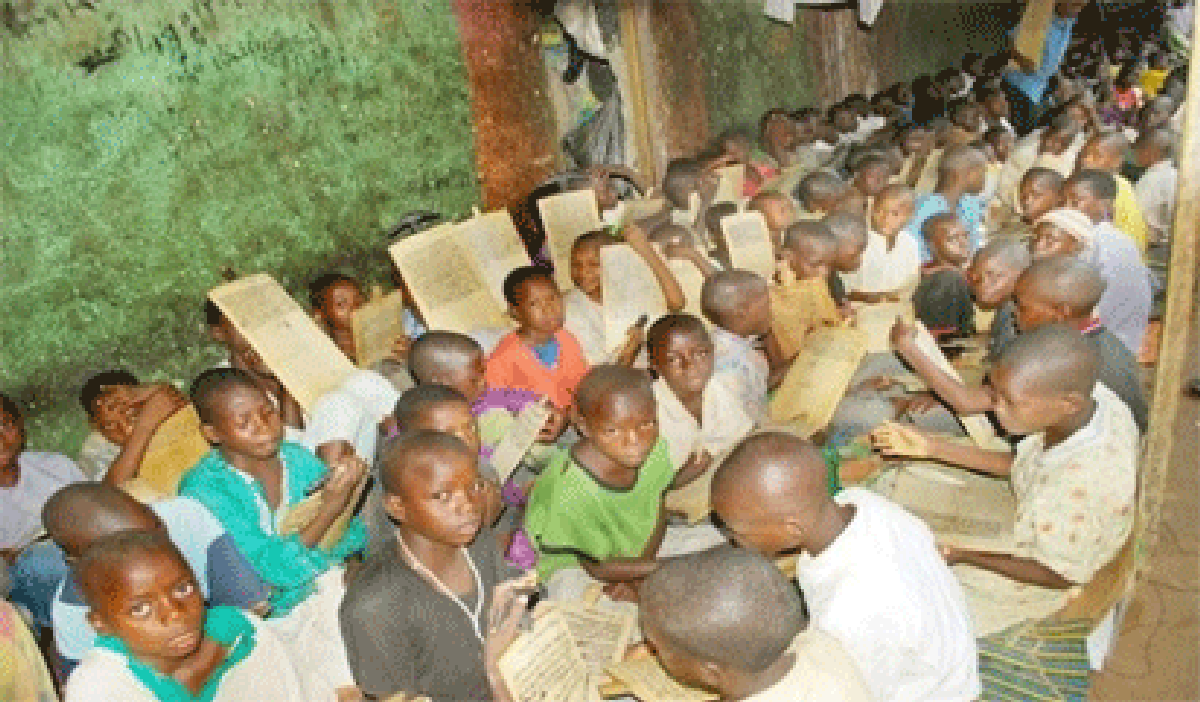
The Security Committee of the Federal Capital Territory (FCT) has raised a special Committee to address what it described as “influx of Almajiri” (Qur’anic pupils) and other persons considered security threats into the city. The formation of the special Committee was made today, February 11, during an expanded security meeting that was chaired by the Minister, Nyesom Wike. The special committee, according to a statement from the minister’s office, would be made up of members from the FCT security agencies, including the Nigerian Police, the Nigerian Army, the DSS and the NSCDC. The special Committee has the responsibilities of working with Area Council Chairmen to identify schools where these Almajiri children are being taught, profile the organizers of the schools, including their pictures and phone numbers, and determining the content of the training provided to the pupils. The statement said that the special committee was given two weeks within which to submit its report to the Minister. The committee advised all FCT residents to be security conscious and report suspicious individuals in their areas to the appropriate authorities. “Everybody should be security conscious; we need to profile people coming into our environments, we need to know them.”
The official manufacturer and marketer of the Peugeot brand of vehicles in Nigeria, Dangote Peugeot Automobiles Nigeria Limited (DPAN), has commenced the assembly of the GT model of the wave-making Peugeot 3008. A statement from the company said that the product has hit commercial success and won awards with its different variants in various markets across the world. The statement said that with its 1.6 litre high performance turbo engine, Peugeot 3008 GT has expanded the existing line-up of vehicles from the assembly lines of the modern plant that opened some years ago in Kaduna. “The new 3008 GT is joining the existing ‘Made-in-Nigeria Peugeot’ range that includes the popular 301 sedan, and the 5008 (a large, seven-seater known for its spacious interior, stylish design, and modern technology features). “Get behind the steering and fall in love with the driver lumbar adjustment and massage seat. And, ready to go? Just push the start button, and you will hear the gentle hum of the engine that is mated to an Automatic Transmission system. “You will find the Bluetooth telephony very useful – keeping you clear of ‘phoning-while-driving’ infraction, which is one of the most violated traffic offences in Nigeria according to the Federal Road Safety Corps (FRSC). “For a long-distance drive on the highway, the vehicle’s cruise control enables the driver to maintain a preset speed without having the need to press the accelerator pedal. “A premium trim level of the Peugeot 3008 SUV, the new GT model being assembled by DPAN features auto headlights, fog lamps, day running lights, sunroof with sliding function and covering, and 17-inch alloy wheels. “Just as In its older siblings, safety, whether active or passive, has not been compromised in the 3008 produced with the needs of the Nigerian market and motoring environment in mind. “Some of the salient safety features are at least eight airbags ensuring comprehensive protection for all occupants, including the driver and front seat passenger; lane departure warning; electric child safety system; as well as graphic and audible rear parking assistance. “The vehicle is also endowed with Anti-lock Braking System (ABS) which obviates locking of the wheels during braking; Electronic Stability Programme (ESP) that prevents skidding and loss of control; and Electronic Brake-force Distribution (EBFD). ‘Working in tandem with the ABS during braking, EBFD distributes braking force to each wheel based on the vehicle’s weight distribution. “As in most class-beating Peugeot vehicles, 3008 GT flaunts the brand’s I-Cockpit, which interfaces with the driver through the 12.3” head-up display, the 8-inch touchscreen, and and a multifunction steering wheel. “The comfortable ambience of the interior is enhanced by the auto dual zone air-conditioner, cooling glove box, top quality CD/MP3 sound system with aux plug and HP pack, as well as rear power windows.” The Dangote Peugeot Chief Commercial Officer, Umar Isa -Kaita, was quoted as having confirmed that the automaker is also set to introduce into the light commercial segment of the market the Peugeot Landtrek 4×2 – a pickup truck with a rear-wheel drive system. “A 2.4 litre engine work horse, the vehicle is part of the Peugeot Landtrek pick-up truck range with a reputation for ruggedness. Another member of the family is the 4×4 version (which DPAN may consider introducing later). Isa-Kaita also disclosed that DPAN has been holding discussions with some auto companies towards expanding the Peugeot sales and after-sales network by accrediting dealerships in parts of Nigeria. “Apart from enhancing the visibility and availability of the new generation vehicles in all parts of the country, increased number of dealerships is expected to ensure satisfactory after-sales support for Peugeot owners nationwide. “Dangote Peugeot Automobiles Nigeria Limited is jointly owned by billionaire businessman and mega industrialist, Alhaji Aliko Dangote, through his Dangote Industries Limited; Kaduna, Plateau and Kebbi State Governments; and the technical partner (Stellantis Group, the parent company of Peugeot). “The addition of the 3008 GT to the ‘Assembled-in-Nigeria’ and the introduction of the Landtrek, were in fulfillment of the promise made by the company during the roll-out of the 301 in January, 2022. The Managing Director, Ibrahim Isa Gachi, had assured that the Landtrek, 3008, 5008 and the new 508, would later be introduced into the market to follow the trail blazed by the 301.” Engineer Isa Gachi expressed confidence that with the capacity to assemble 120 sundry Peugeot vehicles a day (running two shifts), DPAN would gradually return the Peugeot brand to the forefront of the Nigerian auto market. The roaring French lion emblem was the flagship brand of the Nigerian auto industry from the 80s to the early 90s until unfavourable economic atmosphere and policy inconsistency paved the way for the invasion of fully built-up vehicles with Asian DNAs.
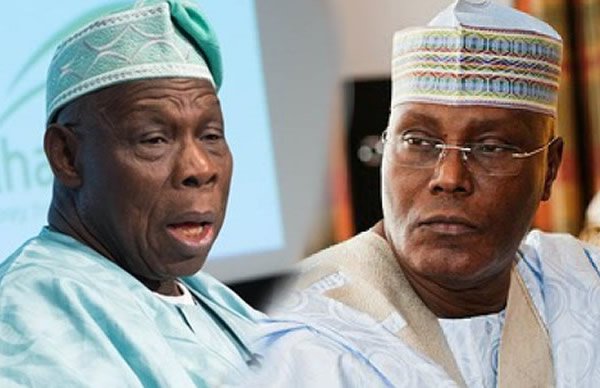
Former Nigeria’s Vice President, Atiku Abubakar has claimed that he and former President Olusegun Obasanjo did not discuss any thing politics when they held a close door meeting today, January 10. Atiku, who arrived at Obasanjo’s Abeokuta residence within the Olusegun Obasanjo Presidential Library at exactly 12:37 pm, was accompanied by former Governor of Cross River State, Senator Liyel Imoke; former Governor of Sokoto State, Senator Aminu Tambuwal; and Senator Abdul Ningi, among others. Atiku and his entourage were received at Obasanjo’s residence by elder statesman Oyewole Fasawe before proceeding upstairs for a private meeting with Obasanjo, which lasted approximately one and a half hours. When he emerged from the meeting at about 2:17 pm, Atiku told journalists that he was on a courtesy visit to his former boss and that politics was not discussed. When asked whether the meeting was related to his 2027 presidential ambition, Atiku said: “I am here on a courtesy call. I am not here to talk politics.”
Guild of Interfaith Media Practitioners (GIMP) has called on the Nigerian Journalists to put the promotion of inter-religious dialogue on the front burner of their news coverage. The Chairman of the group, Abdulkarim Abdulmalik, in a statement in Abuja to commemorate the World Interfaith Harmony Week 2025, said that prioritising stories and articles that promote religious tolerance, peace and harmony underscore the advancement of good journalism and social responsibility of the mass media in the country. According to him, the full impact of this year’s theme – Ensure that no one is left behind – would be felt, if only the mass media give it deserving publicity. Speaking on Muslim-Christian relations in Nigeria, he appealed for more education and enlightenment on religious tolerance and harmony amidst diversity. Abdulmalik explained that in Nigeria, Muslims and Christians live together in the same environment, work in the same offices, travel together in the same commercial vehicles; not minding the religious faith of the driver. They would go to the same market for shopping unmindful of the religious background of the goods sellers’ religion,” adding that their children would go to the same school and play together in the neighbourhood irrespective of their faiths. He pointed out that in some parts of this country, especially the Southwest, it is very common to see members of the same family who are adherents of different religions but live peacefully in the same; a good template for religious harmony. He also noted: “in the wider Nigerian society, Muslims and Christians live together in the same environment, work in the same offices, travel together in the same commercial vehicles; not minding the Religious of the fellow passenger sitting next or even the driver. They would patronise the same market for shopping unmindful of the religious background of goods sellers’ religions.” He said that their children would go to the same schools and play together in the neighbourhood with no prejudice to their respective faiths. It is against this backdrop he accused the elites and religious leaders as being responsible for the scam that is religious intolerance in the society. Admitting that some traditional rulers and religious leaders were doing pretty good work on interfaith dialogue, he opined that more results could be achieved through concerted promotion of Multicultural Diplomacy not only by the religious leaders and the non-governmental organisations (NGOs), but every strata of the leadership. He pointed out that if the citizens could integrate so deep in their various socio-economic activities, there is no gainsaying the fact that religious hostility is the creation of people who are poised to exploit it for their selfish interest. He urged adherents of both Islam and Christianity to take their time to study each other’s faith with positive mind as they discover that there was no need splitting hairs. The the Qur’an and the Bible admonish peace, love and harmony with all men. He however commended the Federal government over it’s various efforts towards promoting religious tolerance in the country. This year’s theme, he said, is a clear reflection of the scriptural multicultural injunctions that should be embraced so that no one is left out.
Former President Muhammadu Buhari has described his minister during his tenure, Dr. John Kayode Fayemi, as one-of-a-kind public figure. In a message congratulating Dr. Fayemi as he observes his 60th birthday, the former President said that Fayemi is a leader that stands tall as a statesman and a leader. He confirmed that the former minister has continued to inspire others in all age brackets across Nigeria. “Fayemi paid an instrumental role in the coming together of our disparate political parties into a single, strong opposition party, the All Progressives Congress, the APC which did the unthinkable in 2015 – ousting of a ruling party through the ballot box for the first time in Nigeria, an election that put me, an opposition candidate in office as president. “His contributions to the presidential campaign both as its director of policy and as a key figure in the struggle for the entrenchment of democracy in Nigeria through his various struggles in the defunct NADECO and other fora promoting freedom and democracy would continue to be remembered by political leaders across the country. “His dedication to building a nation where everyone is free and equal while always putting the welfare of the people first marks him out as an outstanding example of a leader with good character. “When he lost the governorship election in 2014 after one term in office, he never carried any trace of bitterness against party men who worked against his success or against those in the opposition party that succeeded him, even when some of them stooped to new lows by going to the extent of calling him names and distorting the very fine records he left behind in office. “Any ordinary leader would have buckled, but JKF was made differently. “Instead, he went back to the drawing board, calculated and re-calculated, redesigned a path to the State House and was able to convince the people to give him another chance four years after he left the office, to continue the business of building Ekiti State, which he proudly did in the second and final term. I am truly proud of my association with Governor Fayemi as a party man, a minister, and a governor.” Buhari prayed to Almighty God to grant Fayemi a long life in good health and keep him for the family, friends, and the nation.
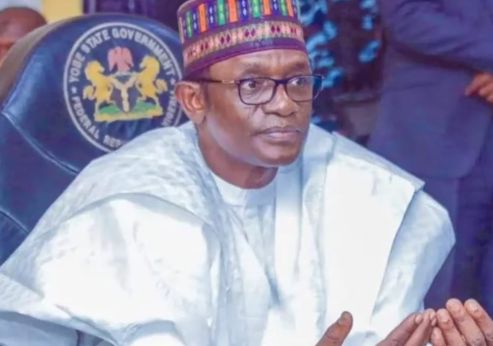
The Yobe State Government has embarked on a research initiative to address the high prevalence of kidney disease in the state. The project was officially launched to herald the State Kidney Researchers’ Training Programme at Sandunes Hotel, Damaturu. Governor Mai Mala Buni’s Special Adviser on Science, Research, and Innovation and Director of the Biomedical Research Training Centre (BioRTC), Dr. Mahmoud Bukar Maina urged communities in Bade Emirate, Damaturu, and other areas to cooperate with enumerators and researchers for the success of the initiative. “This research is a critical step toward identifying and addressing the root causes of kidney disease in Yobe State. “Our team will collect samples from 2,000 individuals in Bade and Damaturu LGAs as part of this effort.” Dr. Maina said that the research is fully funded by the state government and will involve collaboration with researchers from the United Kingdom. The international partnership stems from an agreement initiated two years ago under the leadership of Governor Mai Mala Buni. Speaking on behalf of the Commissioner for Health and Human Services, Dr. Muhammad Lawan Gana, the Chief Medical Director of Yobe State University Teaching Hospital, Dr. Baba Waru Goni, expressed gratitude to Governor Buni for prioritizing healthcare in the state. The research team comprises experts from leading institutions such as the University of Maiduguri Teaching Hospital, Yobe State University Teaching Hospital, Federal Medical Centre Nguru, Jigawa Teaching Hospital, and Bayero University Kano. The ambitious project aims to provide groundbreaking insights into kidney disease and improve healthcare outcomes for the people of Yobe State.
The Minister of Education, Dr Tunji Alausa, has made it clear that the policy requiring students to be at least 16 years old before gaining admission into universities cannot stand. Speaking at the 2025 Extraordinary National Council of Education meeting in Abuja yesterday, Dr. Alausa said: “I am sure many of you have heard about the challenges we face as a nation with talented, bright students being disenfranchised from pursuing tertiary education. “In any society, it is crucial to standardise the education of highly functional and exceptionally gifted students. “We are now preventing these students, after finishing secondary education at the age of 16, from attending university until they are 18. This delays their development and harms their futures. “These students are capable and brave. If we leave them idle, we risk exacerbating mental health issues. Dr. Alausa highlighted the government’s plan to convert federal science and technical colleges into federal technical colleges, emphasising the critical role of technical education in bridging the skills gap in Nigeria’s labour market. “The provision of technical education allows a nation’s human and natural resources to be harnessed more effectively. “Therefore, technical education contributes significantly to national development, driving cultural and industrial progress.” Dr. Alausa suggested a transition to to what he called: “a 12-year basic education system in Nigeria,” which is a shift from the current 9-3-4 model to a 12-4 structure. He stressed that there is the need for this reform to align Nigeria’s education system with global standards. “It is important to acknowledge that while the 9-3-4 system of education has its merits, it also has drawbacks, such as the need for students to work in order to further their education. “It is therefore prudent to transition from the 9-3-4 to the 12-4 system of education. By doing so, Nigeria will align with global standards in preparing students for better tertiary education.” Dr. Alausa outlined the benefits of the proposed 12-year basic education system, emphasising its potential to provide a more structured and uninterrupted learning experience. “A 12-year basic education model will ensure a continuous, uninterrupted curriculum, promoting better standardisation and fostering quality assurance in the education system. “It will also guarantee that students receive a more comprehensive and continuous learning experience, improve educational outcomes, and contribute to a more educated populace that drives Nigeria’s economic development.”
The House of Representatives Committee on Constitution Review has recommended Okura, Okun in Kogi State, Federal Capital Territory (FCT) and 28 others as new states in Nigeria. If the proposal scales through, the Nigerian state will be made up of 67 sub-national governments.
The proposed new states are Okun, Okura and Confluence states from Kogi; Benue Ala and Apa states from Benue; FCT state; Amana state from Adamawa; Katagum from Bauchi states and Savannah states from Borno and Muri State from Taraba. Others are New Kaduna and Gujarat from Kaduna State; Tiga and Ari from Kano, and Kainji from Kebbi State; Etiti and Orashi as the 6th state in the South East Adada from Enugu, Orlu and Aba from the South East. Also included are Ogoja from Cross River State, Warri from Delta, Ori and Obolo from Rivers; Torumbe from Ondo; Ibadan from Oyo, Lagoon from Lagos, Ogun, Ijebu from Ogun state as well as Oke Ogun/Ijesha from Oyo/Ogun/Osun States. The proposal for new states was contained in a letter read during the plenary session of the House today, January 6, by the Deputy Speaker, Benjamin Kalu, who presided over the session in the absence of the Speaker, Tajudeen Abbas. The committee chaired by Kalu proposed six new states for North Central, four in the North East, five in the North West, five in South East, four in South-South and seven in South West. The letter read in part: “The committee proposes the creation of 31 new states. As amended, this section outlines specific requirements that must be fulfilled to initiate the process of state creation, which include the following: New state and boundaries “An act of the National Assembly for the purpose of creating a new state shall only be passed if it requires support by at least the third majority of members. The House of Representatives, the House of Assembly in respect of the area, and the Local Government Council in respect of the area are received by the National Assembly. “Local government advocates for the creation of additional local government areas are only reminded that Section 8 of the Constitution of the Federal Republic of Nigeria, as amended, applies to this process. “Specifically, in accordance with Section 8 (3) of the Constitution, the outcome of the votes of the State Houses of Assembly in the referendum must be forwarded to the National Assembly for fulfilment of state demands. “Proposals shall be resubmitted in strict adherence to the stipulations. Submit three hard copies of the full proposal of the memoranda to the Secretariat of the Committee at Room H331, House of Representatives, White House, National Assembly Complex, and Abuja. “Sub-copies must also be sent electronically to the Committee’s email address at info.hccr.gov.nj. For further information or contact, please contact the Committee Clerk at 08069-232381. “The committee remains committed to supporting the implementing efforts that align with the Constitutional provisions and would only consider proposals that comply with the stipulated guidelines. This is coming from the Clerk of the Committee on Constitutional Review.”
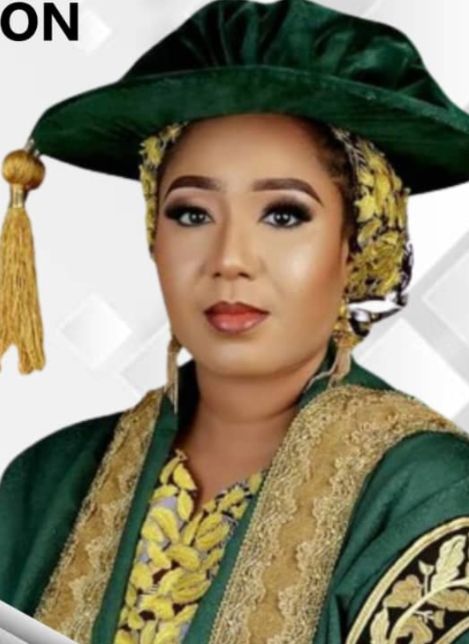
President Bola Ahmed Tinubu has sacked Professor Aisha Sani Maikudi as Vice Chancellor of the University of Abuja, now Yakubu Gowon University. In her place is Professor Lar Patricia Manko, who is appointed as Acting Vice Chancellor of the University. She will serve a six-month term. The Acting Vice Chancellor will not be eligible to apply for the substantive Vice Chancellor position when it becomes available. In the same vein, the President sacked Professor Polycarp Emeka Chigbu as the Acting Vice Chancellor of the University of Nigeria (UNN), Nsuka. A statement today, January 6, by Presidential Adviser on Information and Strategy, Bayo Onanuga, said that these were significant leadership changes the President made in several federal universities with immediate effect. The statement reads further: “At Yakubu Gowon University, President Tinubu dissolved the entire governing council and relieved Professor Aisha Sani Maikudi of her duties as Vice-Chancellor. Senator Lanre Tejuoso, currently Pro-Chancellor of the University of Agriculture, Makurdi, has been appointed Pro-Chancellor of the Yakubu Gowon University. He will be succeeded in Makurdi by Senator Joy Emordi, now pro-chancellor of Alvan Ikoku University of Education. In addition, President Tinubu has removed Professor Polycarp Emeka Chigbu from his position as Acting Vice-Chancellor at the University of Nigeria, Nsukka (UNN), before his tenure ends on February 14. Professor Oguejiofu T. Ujam has been appointed as his successor for six months and will not be eligible to apply for the permanent position. The leadership changes at UNN extend to the role of Pro-Chancellor, with Gen. Ike Nwachukwu reassigned to Pro-Chancellor at the University of Uyo. President Tinubu appointed Engineer Olubunmi Kayode Ojo as the new Pro-Chancellor of UNN. Previously, Ojo held the same position at the Federal University of Lokoja and the Federal University of Oye-Ekiti. Professor Zubairu Tajo Abdullahi, currently the Pro-Chancellor of the University of Uyo, has been appointed to succeed Ojo at the Federal University of Lokoja. Senator Sani Stores is the new Pro-Chancellor of Alvan Ikoku University of Education, succeeding Senator Joy Emordi. Senator Stores is a Council Member at the University of Nigeria, Nsukka. Additionally, Barrister Olugbenga Kukoyi, a current Council Member at the University of Nigeria, Nsukka, has been appointed the new Pro-Chancellor of Nnamdi Azikiwe University in Awka, Anambra State. All appointments and reassignment decisions are effective immediately. President Tinubu emphasised that these changes reflect his administration’s commitment to revitalising Nigeria’s higher education system through dynamic leadership and accountability. The restructuring aims to strengthen governance and academic excellence within Nigeria’s tertiary education sector.”
We use cookies on our website to give you the most relevant experience by remembering your preferences and repeat visits. By clicking “Accept”, you consent to the use of ALL the cookies.
This website uses cookies to improve your experience while you navigate through the website. Out of these, the cookies that are categorized as necessary are stored on your browser as they are essential for the working of basic functionalities of the website. We also use third-party cookies that help us analyze and understand how you use this website. These cookies will be stored in your browser only with your consent. You also have the option to opt-out of these cookies. But opting out of some of these cookies may affect your browsing experience.
Necessary cookies are absolutely essential for the website to function properly. This category only includes cookies that ensures basic functionalities and security features of the website. These cookies do not store any personal information.
Any cookies that may not be particularly necessary for the website to function and is used specifically to collect user personal data via analytics, ads, other embedded contents are termed as non-necessary cookies. It is mandatory to procure user consent prior to running these cookies on your website.