The recently appointed Chief Judge of Boko Haram terrorists, Muhammad Shuwa, has been killed in a brutal air raid operation just as the splinter group, Islamic State in West Africa (ISWAP) camp is currently in disarray due to intense infighting.
Series of air raids and the merciless operations from the Nigerian ground troops have recorded massive eliminations of Boko Haram terrorists in the lake Chad region.
This is even as th Islamic State in West Africa (ISWAP) camp is in disarray as infighting has further factionalized the insurgents, especially with the appointment of Amir Abba-Gana as the new factional leader.
Sources confirmed that ISWAP appointed Abba-Gana as the new factional leader for the group following the elimination of Ba’a Idirisa, by the sect group on February 9, 2019. Ba’a Idirisa had replaced Abu-Mossad Albarnawee both biological children of Late Muhammad Yusuf a few months ago after infighting.
Intelligence sources noted that on the spot assessment conducted on the Jihadists group revealed that about 25 high profile Boko Haram Terrorist Commanders were killed within the past two months following intensified military offensives in the North-eastern Lake Chad.
Terrorists and inhabitants have continued to flee the lake chad general area to the neighbouring countries of Chad, Niger and Cameroon.
An intelligence source spoke about massive death from explosions of Undetonated Improvised explosive Devices(UIED’s), used to fortify the camps by the insurgents after aerial attacks.
The source said: “Two foreign terrorist sponsors were killed during the air raid and ground assault by the Nigerian troops in their camps. During the operations, most of the foreign commanders fled leaving behind few local commanders who move around Tumbun Kibiya, Tumbun Alura, Tumbun Kurna and Kayewa where their fighters relocated to after striking Sabon Tumbun and Tudun Wulgo recently.
“The Tumbus are now virtually left in the hands of local inhabitants who were forcefully recruited or abducted into the sect mostly from Mobbar, Abadan, Guzamalla, Kukawa and Marte Local Government Areas (LGAs) of Borno State, North-East Nigeria. “The local terrorists fighters were also said to have been forcibly recruited along with some few Budumas who stayed back to hold ground in anticipation for elevation in status which mostly can not operate some of the supporting weapons left by the feeing commanders.
“There is an anticipation of an imminent and massive protest in the ISWAP camps as some fighters started accusing the leadership of misleading them while on the other hand, mothers of the trained child soldiers are also calling on their children to lay down their arms and surrender.” source: PRNigeria.
The Nigerian Electricity Regulatory Commission (NERC) has barred the 11 Distribution Companies (DisCos) from charging residential customers above an average of N1,800 monthly until they are metered.
In an Order 197 signed by the Chairman, Professor James Momoh and the Commissioner, Legal, Licencing & Compliance, Dafe Akpeneye, NERC said the new order repeals the 2012 estimated billing regulation effective since last Thursday. It said that electricity consumers have grown from five million in 2012 to over 10 million by December 2019, adding that about 52 percent of them are not metered and are placed on estimated billing by the DisCos. It said that the Meter Assets Provider (MAP) was initiated to increase the metering of consumers within three years. “The Estimated Billing Methodology Regulation is hereby repealed and shall cease to have effect as a basis for computing the consumption of unmetered customers in NESI.” NERC said that vall unmetered residential and commercial customers shall not be invoiced for the consumption of energy if they are not metered by April. It said that R2 customers cannot be billed for more than the worth of 78 kilowatt hour (kwh) of energy monthly which is about N1,800. Residents that consume less than 50kwh will be billed at N4 per kwh and a maximum of N200 monthly. All other customers on higher tariff classes must be metered by DisCos by 30 April 2020, failing which these customers are not liable to pay any estimated bill issued by the DisCo. “Any customer that rejects the installation of a meter on their premises by a DisCo shall not be entitled to supply and must be disconnected.” Source: Dailytrust.
Former political Allie of President Muhammadu Buhari, Alhaji Buba Galadima has lost his business premises and assets of Gecko Nigeria Limited as well as his resident to Asset Management Corporation of Nigeria (AMCON) over an alleged N900 million indebtedness.
In a statement in Abuja today, February 25, AMCO said the Federal High Court in Abuja issued an order for it to take over Gladima’s properties, including his private residence and company, over alleged N900 million indebtedness. The statement said that the order followed a ruling in suit No. FHC/ABJ/CS/1136/2019 against Bedko Nigeria Limited and Galadima. The spokesperson of AMCON, Jude Nwauzor, explained that the loan was sourced from Unity Bank Plc in 2011 during the first phase of Eligible Bank Assets acquisition. “Since then, AMCON has offered the obligor a good measure of olive branches and explored all avenues to resolve the matter amicably. But the obligor, and his company, Bedko Nigeria Limited, have remained recalcitrant and unwilling to repay the huge debt to the Corporation.” AMCON confirmed that the order was granted by Justice A.I. Chikere, empowering it to take over some properties belonging to the politician. It listed the properties to include House No. 15, Addis Ababa Crescent, Wuse Zone 4, Federal Capital Territory (FCT), Abuja and House No. 4, Bangui Street, Wuse 2 also in the high-brow area of Abuja. It added that the enforcement of the order on the properties of Bedko Nigeria Limited and Galadima is one of the many it would be undertaking this year since receiving additional powers from the president late last year. An Inter-agency Committee on the recovery of AMCON debts was constituted by the President Buhari last year following the signing into law of the 2019 Amended AMCON Act. The amendment gave AMCON additional powers to go after all obligors of the corporation no matter how highly placed in society. Nwauzor said that AMCON would take all necessary actions, including asset take-over, liquidation, winding-up and garnishee proceedings against Bedko Nigeria Limited and its directors in line with the court judgment and relevant sections of the AMCON Act as amended. Meanwhile, Galadima has denied knowledge of the allegations of indebtedness against him and his company. Source: PREMIUM TIMES.
People trooped out in their thousands today, February 25 in Akure, capital of Ondo State to cheer President Muhammadu Buhari to the state for a day visit to commission some projects executed by Governor Akeredolu.
The Federal High Court in Abuja has found former spokesman of the Peoples Democratic Party (PDP), Olisah Metuh and his firm, Destra Investments Limited, guilty of first of the seven counts of fraud and money laundering charges. Justice Okon Abang ruled today, February 25, that former National Security Adviser, Sambo Dasuki, unlawfully transferred the sum of N400 million to the defendants in November 2014. Justice Abang said that the defendants should have known that it was an illegal transaction as they had no contract with the NSA’s office. The Economic and Financial Crimes Commission (EFCC) instituted the charges against them. Details later…
Hosni Mubarak, Egypt’s President for almost 30 years (1981-2011) who stepped down after a popular revolution in 2011, has died. He was 91.
State television reported today, February 25 that he died weeks after undergoing surgery.
Mubarak served as Egypt’s fourth president starting in 1981 until his ouster in what became known as the Arab Spring revolution. He was jailed for years after the uprising, but was freed in 2017 after being acquitted of most charges
He was born in a rural village in the Nile Delta in 1928.
Mubarak left behind a complicated legacy. His rule was partly characterised by corruption, police brutality, political repression, and entrenched economic problems.
He joined the Egyptian air force in 1949, graduating as a pilot the following year. He rose through the ranks to become the commander-in-chief of the Egyptian air force in 1972.
Mubarak became a national hero the following year with reports that the Egyptian air force dealt a substantial blow to Israeli forces in Sinai during the Yom Kippur War.
Hosni Mubarak, who became Egypt’s longest-serving ruler in more than 150 years before being forced from office by a popular uprising, has died. He was 91.
His death was announced Tuesday by state TV. No cause was mentioned, although his family recently said he’d been hospitalized.
Dubbed the “pharaoh” by his detractors, Mubarak had ruled for 30 years and was widely accepted to be preparing his younger son Gamal as successor when the Arab Spring surged into Cairo in January 2011. After 18 days of mass protests, he was gone, his image of an all-powerful ruler shredded.
Mubarak attended his trial for the killing of more than 850 protesters by security forces in the final days of his regime in a hospital bed and faced other serious charges, but was only found guilty of fraud and avoided serving additional time in jail. In photographs, a man famously known for jet-black dyed hair and swagger was seen seated, tired and graying.
Military Career
Mohammed Hosni Said Mubarak was born on May 4, 1928, in Kafr El Meselha in the Nile Delta. Opting for a military career when Egypt was still a monarchy, he entered the Air Force Academy in 1950. Four years later, King Farouk was overthrown in a coup led by Gamal Abdel Nasser.
In 1964, Mubarak was appointed head of the Egyptian military delegation to the Soviet Union, the sole supplier of weapons to Nasser’s regime. From 1967 to 1972, he served as air force chief of staff, became deputy minister for military affairs and was promoted to air marshal after the 1973 Arab-Israel war.
After Nasser’s death, Egypt was led by President Anwar Sadat, who appointed Mubarak as vice president in April 1975, effectively designating him as heir apparent. That succession came earlier than expected, with Sadat gunned down by Muslim fundamentalists on Oct. 6, 1981, during an annual parade marking the 1973 war anniversary. Sadat was killed while Mubarak, seated next to him, escaped with a hand wound.
Mubarak cracked down on violent groups and went on to govern in a low-key, stolid style that contrasted with the glitter of the Sadat years.
“Having Sadat as president was like being married to Miss World,” Layla Takla, an opposition member of parliament, said at the time. “It was great for a while, but then you needed someone to do the cooking and look after the children.”
Suppressed Rivals
While Mubarak provided some room for dissent — within specific red lines that included no criticism of his family — he failed to follow through on pledges to open the country’s political system. Suppression of a wide array of perceived rivals, under an emergency law promulgated in 1981, marked his years in power and helped fuel the discontent that led to his downfall.
In the late 1980s, the country was on the verge of bankruptcy when it stopped paying its foreign debts. It was only when Mubarak agreed to send forces as part of the U.S.-led coalition to expel Iraqi troops from Kuwait in 1990 that creditors agreed to write off debts.
In 2004, Mubarak appointed a government that revived the sale of state assets. By 2009, it attracted more than $40 billion of foreign direct investment in industries such as oil and gas, and telecommunications. Emirates Telecom Corp. and Italian bank Intesa Sanpaolo SpA were drawn to the country.
Out of Touch
But critics saw him as out of touch with the lives of most Egyptians — embracing the elite while the poor were left to grapple with an inflation rate that reached more than 20% in 2008. His supporters blamed explosive population growth and the economic mismanagement of past administrations for the ills of a nation that grew to 85 million people by the time of Mubarak’s ouster.
Egypt’s per-capita gross domestic product in 2009 was $2,160, almost identical to $2,155 a decade earlier, according to International Monetary Fund data.
Mubarak never backtracked on the policy of diplomatic rapprochement with Israel, though his only visit to the Jewish state was for the funeral of assassinated Israeli Prime Minister Yitzhak Rabin in 1995. He managed to restore links with fellow Arab rulers who were enraged by Sadat’s decision to sign a peace treaty with Israel.
“There isn’t among us anyone who wants to take the region back to the destruction of war or to the phase of no war and no peace,” he told Arab leaders in 1996. “We are sincerely determined to struggle for peace until the end.”
Key Alliance
He also retained Egypt’s alliance with the U.S., which began with Sadat’s noisy break with the Soviet Union. Egypt receives about $1.3 billion a year in U.S. military aid.
Mubarak presided over several years in which domestic Islamic extremism flared in Egypt. In 1997, violence reached a zenith when 58 foreign tourists in Luxor were gunned down. The massacre, which harmed Egypt’s tourism industry, turned many Egyptians firmly against religious violence.
The Muslim Brotherhood, an Islamist movement that had renounced violence in the 1970s, gained in popularity amid dissatisfaction over corruption and economic inequality.
His experiences at home prompted warnings to his allies. In September 2001, he chided the West for failing to take terrorism seriously, warning that serious events were imminent. A few days later, on Sept. 11, al-Qaeda struck the U.S.
‘Gates of Hell’
Mubarak opposed the 2003 U.S.-led invasion of Iraq, warning that “the gates of hell” would be opened in the Middle East. He argued that the Israeli-Palestinian conflict should be tackled as the first step to regional peace.
He tried to end the rivalry between Palestinian Authority President Mahmoud Abbas and Hamas, an Islamic movement that took over the Gaza Strip in 2007 but faced criticism at home and in several Arab countries for keeping Gaza’s border largely closed as Israel sealed its frontier with the coastal enclave.
It was his ever-tighter grip on domestic freedoms that proved his undoing.
In 2005, Mubarak had opened presidential elections to multiple candidates. Yet the regulations were so restrictive that no strong challengers emerged; the runner-up, lawyer Ayman Nour, won only 7% of the vote to Mubarak’s 88%. After the election, Nour was jailed for four years on fraud charges that human-rights groups say were trumped up.
Muslim Brotherhood
In elections later that year, the Muslim Brotherhood won 88 seats in the 454-member parliament — a surprise result that prompted a crackdown on Islamic activists and on anti-Mubarak secular politicians, judges, newspaper editors, bloggers and street demonstrators. Hundreds of Brotherhood activists were rounded up and some put on trial in closed-door military courts.
His fall came at the hands of an unexpected coalition of opposition parties, the Brotherhood and, most poignantly, a youth movement whose Facebook and Twitter-driven demonstrations mobilized the streets.
Mubarak never officially designated anyone as his likely successor, only appointing intelligence chief Omar Suleiman as vice president in January 2011 in a bid to diffuse mounting protests. The rise of his son, Gamal, up the ranks of the ruling National Democratic Party led Egyptians to conjecture that he’d succeed his father.
Instead that job went, briefly, to Islamist President Mohamed Mursi and then after a 2013 military-backed revolt to former army chief Abdel-Fattah El-Sisi, who has dragged Egypt back to the brand of autocracy mastered by Mubarak.
Mubarak is survived by his wife, Suzanne Thabet, and sons Gamal and Alaa.
The Senate Committee on Federal Character and Inter-Governmental Affairs has vowed to unravel alleged sale of the Nigeran Port Authority jobs for N3 million each by the Federal Character Commission (FCC).
The Chairman of the committee, representing Kaduna South, Danjuma La’ar, who spoke to newsmen in Abuja stated this on Monday while speaking with journalists in Abuja. said that his committee would fish out those behind the alleged shady deal, if any.
La’ar, who insisted that he had evidence from a victim who bought an NPA’s appointment letter for N3 million, allegedly sold to him by an unnamed official in FCC, added that the ears of the panel are full with allegations of illegal dealings within the commission.
“The Senate Committee on Federal Character has been investigating and we are doing everything possible to unravel those behind the sale of jobs there.
“I got reports from different people on sale of jobs going on at the FCC. Appointments into government offices for sale at the FCC are real.
“Someone has forwarded to me a text (message) which is in my phone that he purchased an NPA job from the FCC at N3 million.
“This is shocking; it makes my heart bleed. I’m so sad and I am going to take a drastic action on this case.
“If the committee finds out that this is what they have been doing, we are not going to take it lightly with them. No stone shall be left unturned in telling the country that the FCC is involved in job racketeering.
“There is high unemployment rate in Nigeria. People finished school and there is no job anywhere only to be busy selling jobs. Does it make sense?”
The national chairman of the All Progressive Congress (APC), Adams Oshiomhole, has opened up on how the state governor, Godwin Obaseki sent thugs to prevent him from entering Benin City, the Edo State capital. Oshiomhole said that he got wind of information that the state governor Obaseki had put up elaborate plans to prevent him from entering Benin and alleged that thugs are being “mobilised to stop me.” The APC chairman said that he was even shocked when the state Commissioner of Police, whom he informed earlier about the plan, called to say “he doesn’t want me to come because the governor doesn’t want me to come. “I asked him why? And he said because of the situation at the airport and the number of thugs that had converged there. “I said but you know the thugs, he said ‘yes’. I said; you know that they were sent by the governor, he said ‘yes’. He even said the governor’s CSO is there and one retired DSP. “I said you know the thugs and the man who sent them, you also know their leaders if you cannot do anything to stop the governor because he has immunity fine, but the thugs don’t have immunity. “Why don’t you arrest them? Why will you ask me instead, not to come to attend a private function because the governor does not want me to come to Benin? I told him I’m coming and that it is for him to provide the necessary security. “So, I landed in Benin. With the aid of the security personnel at the airport, I was able to get out of the plane to the lounge and proceeded to the car and the thugs were stoning my convoy. Well, I got home safe. You have seen the photographs of the vehicles. “They even had to move armoured tanks to the airport. I went to the function I came for and came back home. By the time I got home, the governor had ordered his people to use two trucks to block the road to my house. You can’t access my house from either side. My house is on a T-Junction. They blocked both roads.” Oshiomhole, who handed over the Governorship of Edo state to Obaseki said: “I have information that they would send boys to throw bombs into the house and that no one would be able to come to my aid. With that information, I called the CP, he said yes, the governor ordered the blockade of my house because he did not authorize my visit. “I told him I came on a private visit and I don’t need the Governor’s authorization. “I came to attend a burial ceremony of the mother of one of our members. Why do I need the approval of the governor to attend the function? They said the governor also said that he didn’t want anybody to come and visit me at my house in the evening. “But then why should people not be able to come to my house? Am I in solitary confinement? I called the Inspector General of Police who then called the CP to provide additional security for my house. “It was only after the IG called the CP that he sent additional security to my house. Right now I think they are trying to tow the trucks away.”
Here is the main problem with Nigeria’s electricity sector: Nigeria is Africa’s most populous nation, but it has failed consistently to generate, transmit and distribute enough electricity to power its development process and accelerate economic growth. Between 1999 and 2007, President Olusegun Obasanjo focused on the reform of the electricity sector as one of the major priorities of his administration. Gas-powered plants were set up across the country under his watch, turbines and other equipment were imported. His government laid the foundation for reform in the power sector but could not complete the process, particularly the privatization of the power sector. Obasanjo’s legacy includes the National Electric Power Policy (NEPP) of 2001, the National Electric Power Sector Reform Act of 2005 which established the Nigerian Electricity Regulatory Commission (NERC), and the establishment of the Power Holding Company of Nigeria (PHCN), to replace the notorious National Electricity Power Authority (NEPA). The PHCN was later unbundled into 18 successor companies. By the time President Obasanjo left office in 2007, power generation in the country had increased from about 1, 200 MW in 1999 to 4, 000 MW in 2007. For a country of Nigeria’s size and population, this was not enough to transform the country. Obasanjo was succeeded by President Yar’Adua. In the course of his campaign for Presidential office, Alhaji Umaru Musa Yar’Adua stressed the importance of the electricity sector as an engine of growth. He promised to declare a national emergency in the sector. He eventually didn’t declare an emergency but shortly after assuming office in 2007, President Yar’Adua established a Presidential Committee for the accelerated expansion of Nigeria’s power infrastructure with a mandate to ensure the delivery of 6, 000 additional megawatts within 18 months and an extra 11, 000 MW by 2011. By the time President Yar’Adua gave this directive, Nigeria’s power generation capacity was down to 3,000 MW per day. South Africa with a much smaller population was at the time generating 36, 000 MW. Egypt with a population of 78 million also had a generating capacity of 36, 000 MW. The Yar’Adua Committee which was given 18 days to do its work, submitted its report one year later! The House of Representatives also conducted a probe of the electricity sector. The House Committee on Power led by Hon. Ndudi Elumelu accused the Obasanjo administration of having spent over $10 billion on the electricity sector without having much to show for it. The Committee disclosed that between 2000 and 2007, the Obasanjo administration spent over $10 billion on various projects in the power sector. The Elumelu Committee raised questions and demanded answers. The Presidential Committee meanwhile recommended that the country would still need about $85 billion to meet the target of 20, 000 MW generating capacity as recommended by the Vision 2020 Committee. President Yar’Adua in the course of it all, ordered a probe of the Nigeria Electricity Regulatory Commission (NERC). The Chairman of the NERC and six commissioners of the agency were suspended from office and invited for questioning. President Yar’Adua’s government soon entered into discussions with General Electric (GE) and later signed a Memorandum of Understanding with the German Government on power development projects in Nigeria. Siemens was one of the six German companies included in that MOU. The Government also launched a Gas Master Plan to address the problem of gas supply to the Papalanto, Omotosho and Geregu power plants built by the Obasanjo government. Contracts worth over $660 million were awarded, but despite all its good intentions, the Yar’Adua government could not make much difference. Power supply remained epileptic in Nigeria. There are many who believe that the efforts of the Yar’Adua administration were abbreviated by a lack of urgency occasioned by the President’s health challenges and the obsession of that administration with the past administration’s expenditure in the power sector. It was so bad that power equipment worth $5 billion that had been imported in 2, 500 (or 800?) containers by the Obasanjo administration, which arrived three days after President Obasanjo left office were abandoned at the ports for three years. Taxpayers incurred a demurrage of N4 billion! President Yar’Adua was succeeded by Dr. Goodluck Ebele Jonathan. As former Chairman of the National Economic Council and former Chair of the National Council on Privatization, Jonathan was certainly privy to the Electricity Sector Road Map and the Power Sector Master Plan. He continued where his boss former boss stopped, but even more so, from where Obasanjo stopped, and by avoiding the ugly politics and blame game that had developed around the subject of electricity delivery in Nigeria, he was able to make significant process in the areas of accelerated reform, policy execution, provision of power sector infrastructure, public-private sector partnership and privatization. President Jonathan had threatened, right from his early days in power that he would privatize the PHCN, and reform the electricity sector. In due course, he launched a Power Sector Transformation Plan and gave full effect to the Nigeria Electricity Sector Regulatory Act of 2005. He commissioned and upgraded a number of power plans including the Azura-Edo power plant, the first fully privately owned Independent Power Plant in Nigeria. He re-organized the PHCN by selling off the Federal Government’s majority stakes in the 18 companies unbundled from PHCN in the shape of six Generation Companies (GENCOS), 11 Distribution Companies (DISCOs) and a Transmission Company owned fully by the Nigerian government. Private sector investors in the GENCOs and DISCOs paid as much as $3.3 billion for the acquired PHCN assets in what was considered an open and fair process even by international observers. Nigerian banks supported the process, investments were also attracted to the gas sector. By 2013, the power sector had resurrected with installed generation capacity at about 12. 910 MW, but available capacity nevertheless remained at less than 7. 652 MW. Transmission capacity was 8, 1000 MW while a distribution peak of 5, 375 MW was recorded. Thus, the problem of low capacity utilization persisted. President Goodluck Jonathan handed over to President Muhammadu Buhari in 2015. Like other Presidents before him since 1999, President Buhari even as a candidate promised to transform Nigeria’s power sector. In the run up to the 2015 elections, President Buhari in a document titled “Covenant with Nigerians” and also in the “APC Manifesto”, promised that “The APC government shall vigorously pursue the expansion of electricity generation and distribution of up to 40, 000 MW in 4 to 8 years.” The promised figure was twice the Vision 2020 Committee projection of 20, 000 MW by 2020. The reality is that the Buhari administration has not been able to deliver on that promise. In 2017, former Minister of Power, Housing and Works, Babatunde Fashola claimed that the government had achieved a record 5, 074 MW in actual power generation. From 2015 to date, President Buhari has continued to give assurances that his administration will sort out the electricity sector crisis. The administration has reportedly spent more than N900 billion on the power sector as intervention fund. It has signed a six-year contract with Siemens of Germany for an upgrade and technical input across the value chain to generate up to 25, 000 MW in three phases. The Buhari administration accuses previous administrations – Obasanjo, Yar’Adua and Jonathan’s of wasting Nigerian resources on the power sector without results and the Jonathan administration of mismanaging the privatization process. It is alleged that over $6.8 trillion has been spent on Nigeria’s power sector since 1999. Meanwhile, the country remains literally in darkness. Many companies have had to relocate from Nigeria. Businesses, homes and families are compelled to provide their own electricity. The cost of diesel is high. Many lives have been lost to generator explosions. There are communities in Nigeria that have not seen electricity for seven years, simply because they are not connected to the national grid! The House of Representatives has asked President Buhari to declare a state of emergency in the electricity sector. The standard response has been to blame either the former ruling party, the PDP (1999- 2015) or the Jonathan privatization process or more specifically, the power distribution companies. In 2017, the Buhari government mooted the idea of probing the power sector from 1999- 2015. Needless politicking, sentiments and emotions have proven to be the bane of the electricity sector in Nigeria. Every Minister of Power since 1999 has always been ready with an excuse for inefficiency. Babatunde Fashola, as Buhari’s Minister of Power, Works and Housing heaped the blame on the privatization process. Buhari’s NERC blames the DISCOs and even threatened to revoke their licences. This blame game continued last week with Fashola’s successor as Minister of Power, Engr. Saleh Mamman threatening that the DISCOs are the problem of the electricity value-chain and if they do not sit up, their licences will be revoked. He says he has even sent a memo to the Federal Executive Council to that effect. The FEC should ignore his memo. Mamman doesn’t sound like he knows what he is talking about. Ignorance is bad in itself, but the kind of tripodal ignorance that has been demonstrated by the current Minister of Power is curious! It seems to me that government needs to go beyond scapegoating, passing the buck, sentiments and politics, to address fundamental problems of the electricity sector, and cross-cutting issues in the entire value chain. There are consequential steps that should have been taken after the privatization exercise of 2013/2014 to deepen the transition process away from PHCN which the current administration has conveniently ignored. This is in part responsible for the distortions within the entire value chain. If the Minister of Power does not know what these are, he should consult the Bureau for Public Enterprises, the National Electricity Regulatory Commission and the Vice President’s Office which oversees the National Council on Privatization. If he does not trust anyone in those departments, let him talk to Nasir el-Rufai, the Governor of Kaduna State who as Director General of BPE, at the time of the commencement of reforms in that sector can tell the story much better – that is, if he doesn’t choose to play convenient politics. If el-Rufai plays politics with the matter, let him talk to Dr. Lanre Babalola and Bola Onagoruwa. For example, the Gas Production and supplies to the various Power Plants are still largely dependent on NGC/NNPC which are government-controlled and as usual cannot respond to the 24 hours need of the privatised power generating plants. Unfortunately, in the last 5 years, this critical component of the value chain of power generation has not been resolved by President Buhari’s Government. Gas Production and supplies is yet to be privatised and NNPC/FGN remain the major bureaucratic problem for the gas-based electricity generating investors. Even the gas price in USD has not been allowed to be translated into appropriate naira tariff for the entire value chain of electricity supplies. Recently we read in the media, that the Federal Government has granted sovereign guarantee to NNPC to build gas pipeline from Ajaokuta to Kano (AKK) for $2.8 billion, with about two captive gas-powered generating plants along the gas pipeline. But any discerning observer of the industry will ask whether this AKK should be a priority now, when you can deploy the $2.8 billion to solve the immediate problems of the stranded 10 gas-powered generating plants in the hands of NIPP/Niger Delta Power Holding Company. It is certain that this $2.8 Billion project will not be completed in the next 3-4 years and may never get sufficient gas to reach Abuja or Kano, when even Kaduna refinery built since 1989 with Crude Pipeline from Escravos has never gotten enough to refine Nigeria’s export crude on a daily basis. These are the issues each of the Ministers has refused to look into, focussing instead on chasing the DISCOS as the weeping child. Is Minister Mamman aware at all of the existence of 10 power plants that are being managed by the Niger Delta Power Holding Company (NDPHC), a limited liability company that is managed by public officers? The Minister of Power was quoted as saying Nigeria now has a generating capacity of 13, 000 MW in 2020. In 2013, Nigeria had a generating capacity of 12, 910 MW. What has been added since 2015? Even if 7000 MW is produced today, can TCN with its 330KVA/132KVA transmit that much to all the DISCOS? The answer is capital NO. The Minister pretends not to know that TCN is the weakest link between the GENCOs and DISCOs. The Minister should show us how much has gone into 330KVA/132KVA in the last 5 years across Nigeria. The Federal Government could have sold ten more power plants to increase capacity. It has not done so. Even then, the so-called claim of 13, 000 MW is at best academic and fictitious. Minister Mamman claims that the Transmission Company of Nigeria (TCN) has a capacity to transmit 7, 000 MW but it actually transmits about 5, 000 MW out of which the DISCOs can only take about 3, 000MW. There is shortage of electricity in the country and so, high demand for limited supply has driven up prices and yet government is insisting on the withdrawal of subsidy and a hike in electricity tariffs by April 1. I don’t get it. No wonder all the private sectors, industrial and commercial houses generate electricity at about 70-85 Naira per kilowatt hour for themselves, but this has disenabled them from competing with other manufacturers around the world. This is one of the major reasons that the private sector must be allowed to take over the entire value chain of the electricity industry. Since 2015 that Yola DISCO has been returned to the Federal Government, it will interest the general public to hear from the Minister, how much investment in 132KVA, 33KVA and 11KVA infrastructure has been provided in the entire North East that Yola DISCO covers. The Buhari government simply needs to move beyond politics and sentiments. If President Buhari succeeds in solving the electricity supply conundrum in Nigeria, that alone will be enough legacy for his administration. He should listen only to those who know. Engr. Saleh Mamman has absolutely no clue. I hope the Minister knows he is a member of the National Council on Privatisation and therefore cannot take any policy decision without NCP approval first.
President Muhammadu Buhari has assured Nigerians that in coming weeks, Nigerians will witness an aggressive military crackdown to rout out Boko Haram insurgents once and for all.
The President, in his reaction today, February 23 to Boko Haram attack on Garkida in Adamawa State, said: “in the coming weeks, Nigerians would witness an aggressive campaign to rout Boko Haram once and for all.
“Security will continue to be well funded despite the competing needs of social services. I appeal to Nigerians to continue to support our troops in their gallant efforts to protect the citizens and secure the country.”
President Buhari expressed his sympathy to families of victims of the Adamawa attack, even as he assured that no part of Nigeria would be abandoned to their fate.
“These attacks on soft targets by the terrorists are obvious signs of frustration because my administration has significantly weakened Boko Haram’s military capability to invade and hold Nigerian territory unchallenged.
“Our gallant forces deserve our appreciation for repelling the attackers but they must go beyond this point. They have our full support to go after the terrorists and have them pay a huge price. I want to assure the country that terrorists will continue to face the combined power of our military until they give up their mistaken ways.
“These occasional and episodic attacks on poor civilians by the terrorists are mere propaganda efforts to portray them as strong in order to fool the public into believing that they haven’t been militarily weekend by our gallant troops.”
President Buhari said that since the coming of his administration, Boko Haram’s ability to invade and occupy Nigerian territories, let alone be able to hoist their flags had been frustrated.
We use cookies on our website to give you the most relevant experience by remembering your preferences and repeat visits. By clicking “Accept”, you consent to the use of ALL the cookies.
This website uses cookies to improve your experience while you navigate through the website. Out of these, the cookies that are categorized as necessary are stored on your browser as they are essential for the working of basic functionalities of the website. We also use third-party cookies that help us analyze and understand how you use this website. These cookies will be stored in your browser only with your consent. You also have the option to opt-out of these cookies. But opting out of some of these cookies may affect your browsing experience.
Necessary cookies are absolutely essential for the website to function properly. This category only includes cookies that ensures basic functionalities and security features of the website. These cookies do not store any personal information.
Any cookies that may not be particularly necessary for the website to function and is used specifically to collect user personal data via analytics, ads, other embedded contents are termed as non-necessary cookies. It is mandatory to procure user consent prior to running these cookies on your website.



 The Nigerian Electricity Regulatory Commission (NERC) has barred the 11 Distribution Companies (DisCos) from charging residential customers above an average of N1,800 monthly until they are metered.
 Former political Allie of President Muhammadu Buhari, Alhaji Buba Galadima has lost his business premises and assets of Gecko Nigeria Limited as well as his resident to Asset Management Corporation of Nigeria (AMCON) over an alleged N900 million indebtedness.
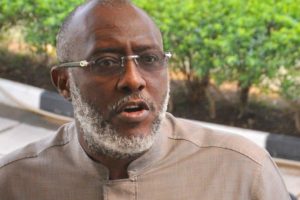


 The national chairman of the All Progressive Congress (APC), Adams Oshiomhole, has opened up on how the state governor, Godwin Obaseki sent thugs to prevent him from entering Benin City, the Edo State capital.
 Here is the main problem with Nigeria’s electricity sector: Nigeria is Africa’s most populous nation, but it has failed consistently to generate, transmit and distribute enough electricity to power its development process and accelerate economic growth. Between 1999 and 2007, President Olusegun Obasanjo focused on the reform of the electricity sector as one of the major priorities of his administration. Gas-powered plants were set up across the country under his watch, turbines and other equipment were imported. His government laid the foundation for reform in the power sector but could not complete the process, particularly the privatization of the power sector. Obasanjo’s legacy includes the National Electric Power Policy (NEPP) of 2001, the National Electric Power Sector Reform Act of 2005 which established the Nigerian Electricity Regulatory Commission (NERC), and the establishment of the Power Holding Company of Nigeria (PHCN), to replace the notorious National Electricity Power Authority (NEPA). The PHCN was later unbundled into 18 successor companies. By the time President Obasanjo left office in 2007, power generation in the country had increased from about 1, 200 MW in 1999 to 4, 000 MW in 2007. For a country of Nigeria’s size and population, this was not enough to transform the country. Obasanjo was succeeded by President Yar’Adua.

