The Yobe State Government, under the leadership of Governor, Mai Mala Buni, is set to host the 5th Lake Chad Basin Governors’ Forum from January 29 to 31, 2025, in Maiduguri. The Forum is made up of governors from Cameroon, Chad, Niger and Nigeria, representing the four countries and eight territories severely affected by the Boko Haram crisis. The fifth Summit will aim at tackling key socio-economic challenges facing the region. Information reaching us at Greenbarge Reporters online newspaper said that the host, Governor Mai Mala Buni pledged his commitment to ensuring the success of the forum. The governors are expected to discuss pressing issues and develop strategies for promoting regional cooperation and development. The forum will focus on addressing security challenges, promoting regional cooperation, and fostering socio-economic recovery in the region. It will also provide an opportunity for the governors to share experiences and best practices in addressing the unique challenges facing their respective states. Governor Mai Mala Buni, a seasoned politician with a strong track record of public service, has been at the forefront of efforts to promote peace, stability, and development in Yobe State and the wider Lake Chad Basin region. The hosting of the 5th Lake Chad Basin Governors’ Forum is a testament to Governor Buni’s commitment to regional cooperation and development, and his determination to work with his counterparts to address the common challenges facing the region.
Governors of the 36 States of Nigeria, under the auspices of the Nigeria Governors’ Forum (NGF) have declared support for the tax reform bills presently before the National Assembly for consideration and passage into law. The Governors rose from a meeting with the Oyedele-led presidential tax reform committee today, January 16, asking, in a communique, for the continued exemption of essential goods and agricultural produce from Value Added Tax (VAT). They stressed that such exception would safeguard the welfare of citizens and promote agricultural productivity. Members agreed that there should be no increase in the VAT rate or reduction in Corporate Income Tax (CIT) at this time, to maintain economic stability. The governors said that there should be no terminal clause for TETFUND, NASENI, and NITDA in the sharing of development levies in the bills. Other resolutions as contained in the communique go thus: “We, members of the Nigeria Governors’ Forum (NGF) and presidential tax reform committee, convened on the 16th of January 2025 to deliberate on critical national issues, including the reform of Nigeria’s fiscal policies and tax system, and arrived at the following resolutions:
The Forum reiterated its strong support for the comprehensive reform of Nigeria’s archaic tax laws. Members acknowledged the importance of modernizing the tax system to enhance fiscal stability and align with global best practices.
The Forum endorsed a revised Value Added Tax (VAT) sharing formula to ensure equitable distribution of resources: o 50% based on equality, o 30% based on derivation, and o 20% based on population.
The meeting supports the continuation of the legislative process at the National Assembly that will culminate in. the eventual passage of the Tax Reform Bills.”
𝐒𝐢𝐠𝐧𝐞𝐝 H.E. AbdulRahman AbdulRazaq Chairman, Nigeria Governors’ Forum & Governor of Kwara State.
Catholic Pope Francis has suffered a fall leading to an injury on his right arm. This was announced by the Vatican today, January 16. In a statement, the Vatican said that the 88-year-old pontiff fell at his Vatican residence, saying that the arm which did not break has been immobilised as a cautionary measure. Though this development is the second time that the revered Pope will suffer a fall in just over a month, but he has given assurance that there’s nothing to fear. In his recently published autobiography titled “Hope,” Pope Francis was quoted as having said that he is in good health, ruling out resigning from his position. He admitted that “the reality is, quite simply, that I am old.” He said that it is “embarrassing at first to have to use a wheelchair, but old age never arrives by itself, and it must be accepted for what it is. “The Church is governed using the head and the heart, not the legs. I do physiotherapy twice a week, I use a walking stick, do as many steps as I can, and I carry on.” It would be recallled that on December 6, the pontiff fell and hit his chin on his bedside table, resulting in facial bruising. The pope has suffered a number of health problems in recent years and this is the second fall he has had in a matter of weeks. In early December, he appeared with a large bruise on his chin after falling and hitting his bedside table during the night. He has had to make use of a wheelchair due to mobility problems which has been blamed on a pain in his knee.
Once in a while, I used to go into introspection with loads of questions about life and about lack of it; about the circumstances of the living and death. Indeed, I am not wrong, because even God Almighty, and His beloved Prophet, Muhammad (S.A.W) recommend that we, the living, should always engage in such introspection. Such introspection should be the source of reminder of the temporariness of the sojourn on this side of Allah’s creations. Besides the question as to why God Almighty in His infinite mercy, hides the date and time of our death from us, I have, most times, journeyed into recounting how many people have so far gone, within these some sixty something years I have tarried around here on earth. Sometimes, for the purpose of close analysis, I would narrow the number of those I interacted with in one way or the other, that have passed on. And I discover the number is overwhelming. Such people include my father, my mother, my immediate younger sister, immediate elder brother, the last male child of my mother. Others are my six uncles, eight aunties, more than a dozen cousins and other siblings, including Alhaji Idris Ondeku who died while performing Hajj in Makkah in 2018, and Abdulazeez. There were also friends like Sadiq Aliyu, Ibrahim Ozovehe, Haruna, Isah, Solomon, Mike, Peter Uzodinma, Kabiru Yusuf, kola, Augustine, and several others. There were also more than a dozen of my colleagues, either in the same profession with me or those who worked with me in the same organisations. They are countless, so to speak. There was the recent one: Professor Nuhu Omeiza Yaqub! And there was a friend’s big son, Muhammad Alhassan Yusuf that occurred just this week. Within the same areas in which I grew up and in which I worked all through my journey in this life were many people that have similarly gone underground. They are big and small, males and females, rich and poor and so on. And when I reflect, I discover that I have nothing to show that I could not have been one of those who should be down there – underground. Afterall, there were many occasions things happened that would have probably taken me there. It suffices for me to mention just three of such incidences, from where I emerged, still breathing, walking, talking, laughing, eating and so on. The first one was what was to be a fatal accident in Kano in 1984. I was driving my Volkswagen car, with my cousin who came visiting from home (Okene) on a holiday, to a nearby village to buy some foodstuffs. There was a narrow, delapidated bridge which could take only one vehicle at a time. Just when I drove into the middle of the bridge, there appeared from nowhere, a huge trailer, entering the same bridge with mad speed. The trailer and my car headed to each others in what was clearly a head-on collision course. Seeing that I was not going to escape the worst, I quickly said my last prayer with closed eyes. Alas, nothing happened. There was no metal touch or loud sound as I concluded. I opened my eyes to find that I was out of the bridge. My car was still moving, and I was still driving. Allah, the miraculous worker did it at no cost to me!!! The second incident was when I boarded a luxurious bus, on a night journey, from Kano to Lagos. I was going to the headquarters of THISDAY newspaper where I was working as Kano State Correspondent. I was going to receive my salary and to take instructions from my bosses on certain news items I was working on (being an investigative reporter, with all the risks involved). The luxurious bus was on high speed amidst heavy downpour, around Pandogari in Niger State. Every passenger seemed to have slept off as the bus meandered its way through the not-so-good road. It appeared that it was only I that was not sleeping. I engaged in silent prayer, from the very point of departure in Kano. It was about 2.30am. All of a sudden, the vehicle swerved off the road and headed to a huge river. The driver, who obviously was dozing off when it happened, woke up in panic, forced the vehicle back to the road, but it was on the bridge the vehicle landed. And the banging of metals, the screeching sounds of the engine, the screening by passengers who woke up in panic from sleep, the shout of Jesus and all that, took the centre stage. We didn’t know what happened but the next thing was that the long bus made a sudden halt in the middle of the bridge with deafening sound. It did not fall on its side, but crossed the bridge horizontally. Many passengers jumped in panic into the river below, others jumped onto the bridge while I remained seated where I had sat before the commotion started. I quietly climbed down the bus gently through the window and walked away from the bridge. The deafening sound of the cranking metals must have woken up the people in the nearby village. They rushed to the scene in that wee hours of the night to render rescue assistance. The scenario can only be imagined. The third escape, in my own human estimation, was when I was driving home, Okene with my new wife besides me. The drive from Abuja was dotted by incidences of missed accidents, three of which were to be with trailers, driven obviously by drunken drivers. The last one occurred right in Okene town, a few metres to veer off the main road to my house. As a matter of fact, there, at the junction where I was to make the last turn, appeared a trailer that was on highly dangerous speed: meanwhile, I was already negotiating the bend. How I was able to quickly turn the steering to dodge the trailer that was clearly heading to my car could only be the work of He who knows what we can’t fathom. However, in the process of panicky dodging, my car rammed onto another car parked by the roadside. My car and the other car I rammed into were badly battered. I was made to pay some money to the owner of the other car to repair it. The funny part of it was that the panelbeater who I invited to take the car for repairs, had an accident the following day with another car. Message got to me that the panelbeater was on danger list in hospital. I ended up driving my car, the way it was battered, with my wife, back to Abuja. The incidents as narrated, are just a few of what would have led me to be among those who have transited to the other side of where we don’t know. My people call the other side we don’t know “market.” They, my people would say: “it is a market to which one goes without ever returning home.” If really it is a market, or whatever it is, definitely, it must have filled up now; from the day I was born to date. Consider the people that have died in our homes, in our localities, in our villages, in our towns and country, and around the world, you should be able to imagine the magnitude of the number of the people in that market. In my little perception, it presupposes that when eventually I transit, I will be in the midst of familiar people. In other words, I will not be lonely.
That as I am surrounded by members of my family here, so I will also be surrounded by members of my family there. In the final analysis, either way, I find that I don’t have to fear: I don’t have to fear to live because I have loving people around me, and I don’t have to fear to die because I have loving people to welcome me. I hope my calculation is correct and true? If it is, then I can infer that I will meet and be welcomed by my father, my mother, my brothers, my sisters, my aunties, my uncles, my friends, my colleagues and others over there? I perceive that place to be as populated as even more than this place (where we are now, temporarily). I’m curious however, as to whether they are together in one peace there? Just thinking aloud ni ooo!!!
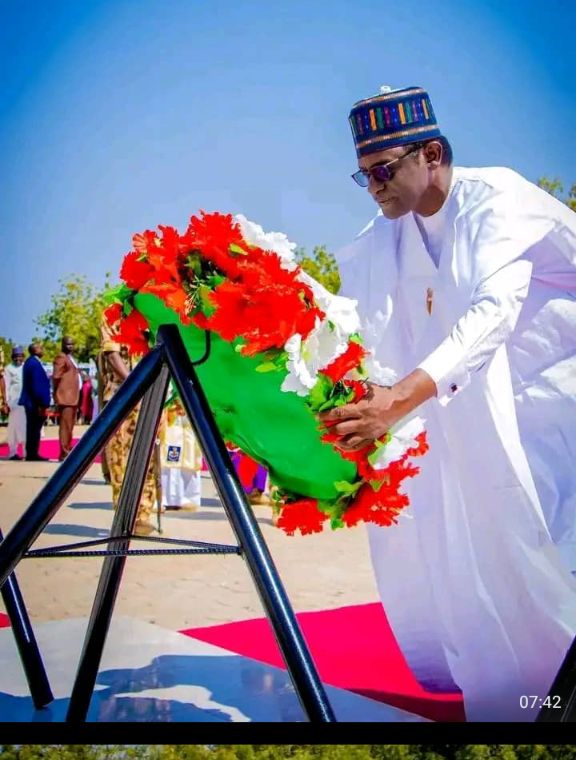
Yobe State Governor, Mai Mala Buni, performed the wreath-laying ceremony in honour of fallen heroes as part of the 2025 Armed Forces Remembrance Day in the state. The ceremony, held in Government House, Damaturu, was attended by top government officials, military personnel and members of the public. The event began with a parade by the military and was followed by prayers, offered by Christian and Islamic clerics for the souls of the departed heroes. Governor Buni was joined by the Deputy Governor, representatives of the armed forces, the state legislature, traditional rulers, and veterans of the Nigerian Legion. The Armed Forces Remembrance Day is observed annually on January 15 to celebrate the bravery of Nigerian military personnel and remember those who paid the ultimate price in service to the nation. The event was concluded with a symbolic release of doves, signifying peace and hope for the state and the country.
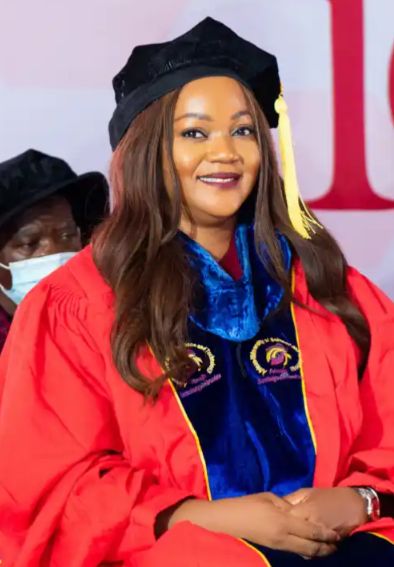
Chief Executive Officer of the Nigerian Identity Management Commission (NIMC), Engineer Abisoye Coker-Odusote and Publisher of Sundiata Post, an online newspaper, Max Amuchie have bagged Honorary Doctorate Degrees. While Engineer Abisoye Coker-Odusote got her own from African University of Science and Technology, Abuja, Nigeria’s Federal Capital Territor, Amuchie got his own from Gulf American University, Dubai, United Arab Emirates. The degree was conferred on Engineer Abisoye Coker-Odusote during the University’s 10th Convocation in Abuja yesterday, January, 14. The university said that Engineer Abisoye Coker-Odusote was being recognized for her immense contributions to nation-building, particularly her sterling performance in identity management. The institution said that she has been able to transform the identity management space of the country within a short time of her assumption as the DG/CEO of NIMC. Engr. Coker-Odusote thanked the management of the African University of Science and Technology for the award and promised not to rest on her oars in making meaningful contributions to the development of the country.
Max Amuchie was honoured with an Honorary Award of Science (Doctorate) after a year-long assessment on three areas – contribution to knowledge, humanitarian service and community development – which ended with Amuchie’s successful appearance before an Honorary Award Interview Panel set up by the Board of GAU on 23 December 2024, two days before the award was released. At the panel session, Amuchie, a Rotarian, talked about his passion for humanitarian service. As President of the Rotary Club of Abuja CBD in the 2022-2023 Rotary Year, he led a Board that successfully ended open defecation in the Central Primary School, Gidan Gimba, Nasarawa State. The club under his leadership built three modern toilets for the boys, girls and staff of the primary school. The project was commissioned on 23 June 2023. He also started a Basic Education Project consisting of a block of classrooms and a headteacher’s office in the school. The project reached advanced level of completion before his tenure ended on 30 June 2023. Amuchie told the panel that ending open defecation in the Gidan Gimba Primary School and starting the Basic Education Project meant so much to him as it was a significant achievement of his Rotary Club under his presidency, adding that the local chief of Gidan Gimba community, his subjects as well as the pupils and staff of the school expressed deep gratitude to the Rotary Club of Abuja CBD for the gesture. Max Amuchie’s media platform, Sundiata Post, which was officially unveiled at an impressive ceremony in Abuja on 7 July 2015, won, in July 2020, the Google News JERF Award. Amuchie, a chartered human resource consultant, is a Doctoral Fellow of the Chartered Institute of Human Resource Management. He is also an Associate of the Nigerian Institute of Public Relations (NIPR) and member of the Institute of Strategic Management, Nigeria. He is a member and North-Central Zonal Co-ordinator of the Guild of Corporate Online Publishers (GOCOP), where, for three years, he has been a member of the Annual Conference Planning Committee. A former Vice President, Public Relations of Unity Toastmasters Club, Abuja, Dr Max Amuchie is also a member of the Nigerian Guild of Editors (NGE). In a letter he sent to GAU in appreciation, he expressed hope that the award would open a vista of relationship between the Gulf American University and Sundiata Post Media Ltd as well as the Rotary Club of Abuja CBD.
THE Central Bank of Nigeria (CBN) has slammed N150 million fine on each of nine Deposit Money Banks (DMBs) for failing to make Naira notes available through automated teller machines (ATMs), during the Christmas and New Year holidays. A statement by the Director in the apex Bank’s Corporate Communications Department, Hakama Sidi-Ali, described the action as a sign of the CBN’s zero tolerance for cash flow disruptions. The names of the affected banks were given as follows: Fidelity Bank Plc First Bank Plc Keystone Bank Plc Union Bank Plc Globus Bank Plc Providus Bank Plc Zenith Bank Plc United Bank for Africa Plc Sterling Bank Plc. Hakama Sidi-Ali said that each of the banks was fined N150 million for non-compliance, in line with the CBN’s cash distribution guidelines, following spot checks on their branches. She said that the enforcement action followed repeated warnings from the CBN to financial institutions to guarantee seamless cash availability, particularly during periods of high demand. “Communication with the banks revealed that the fines would be debited directly from their accounts with the apex bank. “Ensuring seamless cash flow is paramount to maintaining public trust and economic stability. “The CBN will not hesitate to impose further sanctions on any institution found violating its cash circulation guidelines,” she said. She said that the CBN’s investigations and monitoring would continue to scrutinise cash hoarding and rationing, both at bank branches and by Point-of-Sale (POS) operators. She stressed that the CBN is working with security agencies to crack down on illegal cash sales and operational violations, including enforcing POS operators’ daily cumulative withdrawal limit of N1.2 million. She urged all financial institutions to comply with its guidelines, warning that further violations would attract swift and decisive sanctions. The CBN Governor, Yemi Cardoso, had earlier warned banks to strictly adhere to cash distribution policies or face severe penalties. Cardoso gave the warning in his address at the Annual Bankers’ Dinner of the Chartered Institute of Bankers of Nigeria (CIBN) in Nov., 2024. He stressed the apex bank’s commitment to maintaining a robust cash buffer to meet the need of Nigerians. “Our focus remains on fostering trust, ensuring stability, and guaranteeing seamless cash circulation across the financial system.”
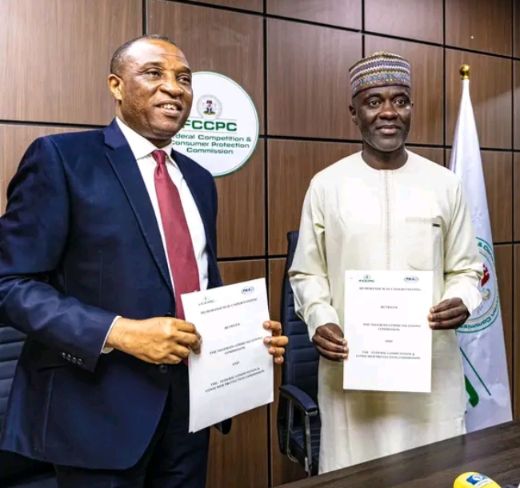
The Nigerian Communications Commission (NCC) and the Federal Competition and Consumer Protection Commission (FCCPC) have come together to protect telecommunication consumers from arbitrary charges. Chief Executives of the two Commissions, yesterday, January 14, signed a Memorandum of Understanding (MoU) in that regard. Speaking at the signing process, the Executive Vice Chairman and Chief Executive Officer of the NCC, Dr. Aminu Maida, narrated efforts made that have culminated in the resolve of both the institutions to protect the Nigerian consumer, especially in the communications industry. “Today, we celebrate the beginning of a strategic partnership between two critical regulatory institutions, each committed to advancing the welfare of the Nigerian people through fair competition and robust consumer protection frameworks.” According to Dr. Aminu Maida, The telecommunications sector, in particular, has become the cornerstone of Nigeria’s economic and social development, making it imperative for the operators to ensure a level playing field for all stakeholders while protecting consumers who depend on reliable and affordable communications services. “This MoU is a testament to our shared vision of fostering a transparent, competitive, and consumer-focused telecommunications industry. “By aligning our efforts, the NCC and FCCPC aim to avoid regulatory uncertainty and create clarity for the benefit of all stakeholders in the communications sector and in furtherance of their joint responsibility to ensure the realization of the Federal Government’s Ease of Doing Business objectives. “Our partnership also highlights the importance of synergy in regulatory oversight. The challenges we face today—whether they relate to market abuses, consumer rights violations, or the complexities of a digital economy—demand a united front and a consistent approach to policy implementation. “This MoU will ensure that our respective mandates are harmonized to achieve maximum impact.” He called on all stakeholders to embrace the spirit of collaboration that the partnership represents, adding that Together, they could achieve the goals of innovation, inclusivity and sustainability in Nigeria’s telecommunications sector and beyond. On his part, the Executive Vice Chairman and Chief Executive Officer of the FCCPC, Dr. Tunji Bello, identified what he called “the interwoven relationship between the Federal Competition and Consumer Protection Commission (FCCPC) and the Nigerian Communications Commission (NCC), saying that this highlights the importance of Section 105 of the Federal Competition and Consumer Protection Act (FCCPA) 2018, which explicitly provides for cooperation and collaboration between the FCCPC and sector regulators. “This synergy is critical to ensuring comprehensive oversight and consumer protection without regulatory conflicts or duplications. “By this, we are also making life easier for the generality of consumers in dealing with two government agencies on the same issue at the same time. “The signing of this MoU today symbolises the convergence of two diligent government agencies in compliance with legal requirements to eliminate regulatory gaps in the telecoms industry. Dr. Tunji Bello is sure that this partnership will benefit both operators and consumers as well as foster harmonious collaboration between the two Commission; streamline operations for telecoms operators through a one-stop-shop approach in many instances, and ensure robust consumer protection, fair competition, and the eradication of exploitative practices. “This is entirely consistent with President Bola Tinubu’s vision of fostering economic growth through regulatory collaboration, enhanced market efficiency, and prioritising consumer welfare. “Given the importance of this legal requirement, today’s event should inspire other sector regulators to establish similar collaborative frameworks with the FCCPC, as mandated by Section 105 of the FCCPA. This will ensure that consumers across all sectors enjoy the benefits of coordinated and comprehensive regulatory oversight.”
Ghanian Muslims have erupted into frenzy jubilation as the new President, John Dramani Mahama begins the process of fulfilling his campaign promises to them, including drastic reduction in Hajj fares, introduction of Islamic Banking, scholarships for Muslims to study medicine, law, ICT and others. The President, who was addressing Muslims, days after he was sworn-in, in a video clip that is trending on social media, said that he had already commenced the process towards”drastically” reducing Hajj fare. Mahama said that he had set a five-member Hajj Task Force, led by Honourable Collins Dabra, adding that members of the Task Force are expected to be in Saudi Arabia tomorrow, January 13, to participate in the Hajj Conference. “One of the tasks I have given to the Task Force is to make arrangement to bring down Hajj fares as low as possible, so that many Muslims can perform Hajj.” President Mahama said that he has also set the machinery in motion to elongate Ed-el-Fitr holiday by additional one day for Muslims. The President said that the process is also ongoing to allow citizens to freely practice whatever religion they chose without restriction. “We promise to uphold the constitution that Ghanians are free to belong to any religion and to profess their religions unfettered. And on the basis of that, we will protect the right of women to wear their hijjabs (veils) anywhere in the country.” President Mahama said that he would also fulfil his promise to give scholarships to students in the Muslim communities to study medicine to get more Muslim doctors in the country. He said that scholarships would also be given for Muslims wanting to study law and Information and Communication Technology (ICT). The Ghanian President announced that his government will train and recruit more Arabic teachers in the country’s Islamic schools, in addition to establishing what he called “Soyaiya Fund” (a micro credit scheme) that will support Muslim communities. He said that his government will work with the country’s Central Bank towards establishing Islamic Banking Instruments. “We will soon be discussing with the Ghana Central Bank on how to establish the Islamic Banking Instruments in the country’s banking and financial systems.” President Mahama, who said that he would move fast to fulfill other campaign promises he made to Muslims in the country, asked leaders at all levels to see their positions as trust from God. He stressed that leadership carries a lot of responsibilities that should be executed with fear of God. Mahama went on to quote chapter 3, verse 159 of Suratu Al-Imran in the Holy Qur’an to justify his position. He read the chapter thus: “And by the mercy of Allah, you dealt with them gently. And had you (Muhammad) been severe and harsh-hearted, they would have broken away from about you; so pass over (their faults), and ask Allah’s forgiveness for them; and consult them in the affairs. When you have taken a decision, put your trust in Allah, certainly, Allah loves those who put their trust in Him.”
Governor Ahmed Usman Ododo of Kogi State has made it clear that he would soon embark on reclaiming gold mining site around the Central Senatorial area of the State from illegal foreign miners. The governor sought the cooperation of the leadership of the area, including Sensor Natasha Akpoti-Uduaghan (representing Kogi Central Senatorial Area in the Senate) to effectively take possession of the site. Speaking forcefully in Ebira language, at the palace of the paramount ruler, the Ohinoyi of Ebiraland, Alhaji Ahmed Tijani Anaje, in a trending video clip on social media, Governor Ododo said that his attention to the mining site was drawn by a good Samaritan from Ekiti State. Ododo, who did not give the specific location of the site as he addressed the Ohinoyi and his subject, said that the illegal mining activities by foreign miners have been going on in the past 30 years. He said that when his attention was drawn to the site, he first sent one of his commissioners to verify the fact at the site but that some youth who were guarding the site prevented entry into it. “I then sent another delegation with security personnel to the site. To my surprise, the delegation confirmed that no fewer than 1,500 people were there (on the site), mining our wealth,” Ododo lamented. He regretted that while the people, especially the youths in the area are wallowing in poverty and lack of jobs, some foreigners have taken advantage of the kindness of the local people to take over their wealth. “This time around, your Royal Majesty, we are not going to sit and watch foreign elements tapping our wealth while our people are jobless and hungry.”
We use cookies on our website to give you the most relevant experience by remembering your preferences and repeat visits. By clicking “Accept”, you consent to the use of ALL the cookies.
This website uses cookies to improve your experience while you navigate through the website. Out of these, the cookies that are categorized as necessary are stored on your browser as they are essential for the working of basic functionalities of the website. We also use third-party cookies that help us analyze and understand how you use this website. These cookies will be stored in your browser only with your consent. You also have the option to opt-out of these cookies. But opting out of some of these cookies may affect your browsing experience.
Necessary cookies are absolutely essential for the website to function properly. This category only includes cookies that ensures basic functionalities and security features of the website. These cookies do not store any personal information.
Any cookies that may not be particularly necessary for the website to function and is used specifically to collect user personal data via analytics, ads, other embedded contents are termed as non-necessary cookies. It is mandatory to procure user consent prior to running these cookies on your website.




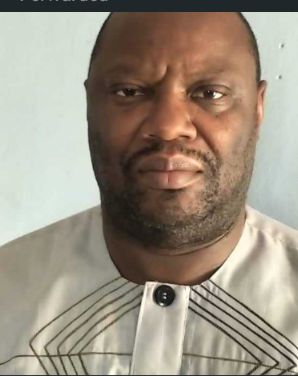 Max Amuchie was honoured with an Honorary Award of Science (Doctorate) after a year-long assessment on three areas – contribution to knowledge, humanitarian service and community development – which ended with Amuchie’s successful appearance before an Honorary Award Interview Panel set up by the Board of GAU on 23 December 2024, two days before the award was released. At the panel session, Amuchie, a Rotarian, talked about his passion for humanitarian service.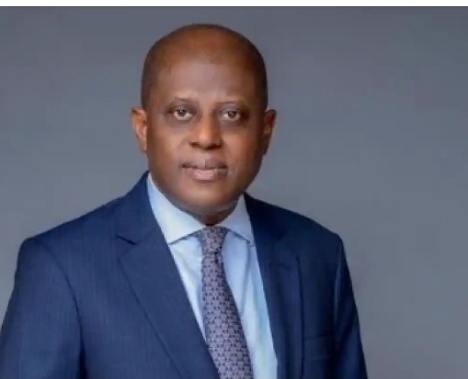

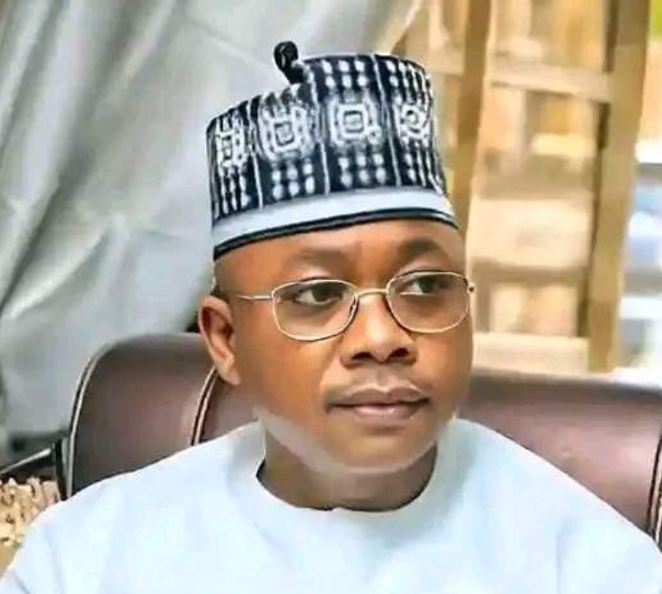



Market Of Those Who Passed On Must Be Full Now, Just Thinking Aloud, By Yusuf Ozi-Usman
Once in a while, I used to go into introspection with loads of questions about life and about lack of it; about the circumstances of the living and death.
Indeed, I am not wrong, because even God Almighty, and His beloved Prophet, Muhammad (S.A.W) recommend that we, the living, should always engage in such introspection. Such introspection should be the source of reminder of the temporariness of the sojourn on this side of Allah’s creations.
Besides the question as to why God Almighty in His infinite mercy, hides the date and time of our death from us, I have, most times, journeyed into recounting how many people have so far gone, within these some sixty something years I have tarried around here on earth. Sometimes, for the purpose of close analysis, I would narrow the number of those I interacted with in one way or the other, that have passed on. And I discover the number is overwhelming. Such people include my father, my mother, my immediate younger sister, immediate elder brother, the last male child of my mother.
Others are my six uncles, eight aunties, more than a dozen cousins and other siblings, including Alhaji Idris Ondeku who died while performing Hajj in Makkah in 2018, and Abdulazeez.
There were also friends like Sadiq Aliyu, Ibrahim Ozovehe, Haruna, Isah, Solomon, Mike, Peter Uzodinma, Kabiru Yusuf, kola, Augustine, and several others. There were also more than a dozen of my colleagues, either in the same profession with me or those who worked with me in the same organisations. They are countless, so to speak.
There was the recent one: Professor Nuhu Omeiza Yaqub! And there was a friend’s big son, Muhammad Alhassan Yusuf that occurred just this week.
Within the same areas in which I grew up and in which I worked all through my journey in this life were many people that have similarly gone underground. They are big and small, males and females, rich and poor and so on. And when I reflect, I discover that I have nothing to show that I could not have been one of those who should be down there – underground. Afterall, there were many occasions things happened that would have probably taken me there.
It suffices for me to mention just three of such incidences, from where I emerged, still breathing, walking, talking, laughing, eating and so on.
The first one was what was to be a fatal accident in Kano in 1984. I was driving my Volkswagen car, with my cousin who came visiting from home (Okene) on a holiday, to a nearby village to buy some foodstuffs. There was a narrow, delapidated bridge which could take only one vehicle at a time. Just when I drove into the middle of the bridge, there appeared from nowhere, a huge trailer, entering the same bridge with mad speed. The trailer and my car headed to each others in what was clearly a head-on collision course. Seeing that I was not going to escape the worst, I quickly said my last prayer with closed eyes. Alas, nothing happened. There was no metal touch or loud sound as I concluded. I opened my eyes to find that I was out of the bridge. My car was still moving, and I was still driving. Allah, the miraculous worker did it at no cost to me!!!
The second incident was when I boarded a luxurious bus, on a night journey, from Kano to Lagos. I was going to the headquarters of THISDAY newspaper where I was working as Kano State Correspondent. I was going to receive my salary and to take instructions from my bosses on certain news items I was working on (being an investigative reporter, with all the risks involved).
The luxurious bus was on high speed amidst heavy downpour, around Pandogari in Niger State. Every passenger seemed to have slept off as the bus meandered its way through the not-so-good road. It appeared that it was only I that was not sleeping. I engaged in silent prayer, from the very point of departure in Kano. It was about 2.30am.
All of a sudden, the vehicle swerved off the road and headed to a huge river. The driver, who obviously was dozing off when it happened, woke up in panic, forced the vehicle back to the road, but it was on the bridge the vehicle landed. And the banging of metals, the screeching sounds of the engine, the screening by passengers who woke up in panic from sleep, the shout of Jesus and all that, took the centre stage. We didn’t know what happened but the next thing was that the long bus made a sudden halt in the middle of the bridge with deafening sound. It did not fall on its side, but crossed the bridge horizontally. Many passengers jumped in panic into the river below, others jumped onto the bridge while I remained seated where I had sat before the commotion started. I quietly climbed down the bus gently through the window and walked away from the bridge.
The deafening sound of the cranking metals must have woken up the people in the nearby village. They rushed to the scene in that wee hours of the night to render rescue assistance. The scenario can only be imagined.
The third escape, in my own human estimation, was when I was driving home, Okene with my new wife besides me. The drive from Abuja was dotted by incidences of missed accidents, three of which were to be with trailers, driven obviously by drunken drivers.
The last one occurred right in Okene town, a few metres to veer off the main road to my house. As a matter of fact, there, at the junction where I was to make the last turn, appeared a trailer that was on highly dangerous speed: meanwhile, I was already negotiating the bend. How I was able to quickly turn the steering to dodge the trailer that was clearly heading to my car could only be the work of He who knows what we can’t fathom. However, in the process of panicky dodging, my car rammed onto another car parked by the roadside. My car and the other car I rammed into were badly battered. I was made to pay some money to the owner of the other car to repair it.
The funny part of it was that the panelbeater who I invited to take the car for repairs, had an accident the following day with another car. Message got to me that the panelbeater was on danger list in hospital.
I ended up driving my car, the way it was battered, with my wife, back to Abuja.
The incidents as narrated, are just a few of what would have led me to be among those who have transited to the other side of where we don’t know. My people call the other side we don’t know “market.” They, my people would say: “it is a market to which one goes without ever returning home.”
If really it is a market, or whatever it is, definitely, it must have filled up now; from the day I was born to date. Consider the people that have died in our homes, in our localities, in our villages, in our towns and country, and around the world, you should be able to imagine the magnitude of the number of the people in that market.
In my little perception, it presupposes that when eventually I transit, I will be in the midst of familiar people. In other words, I will not be lonely.
That as I am surrounded by members of my family here, so I will also be surrounded by members of my family there. In the final analysis, either way, I find that I don’t have to fear: I don’t have to fear to live because I have loving people around me, and I don’t have to fear to die because I have loving people to welcome me.
I hope my calculation is correct and true? If it is, then I can infer that I will meet and be welcomed by my father, my mother, my brothers, my sisters, my aunties, my uncles, my friends, my colleagues and others over there?
I perceive that place to be as populated as even more than this place (where we are now, temporarily). I’m curious however, as to whether they are together in one peace there?
Just thinking aloud ni ooo!!!