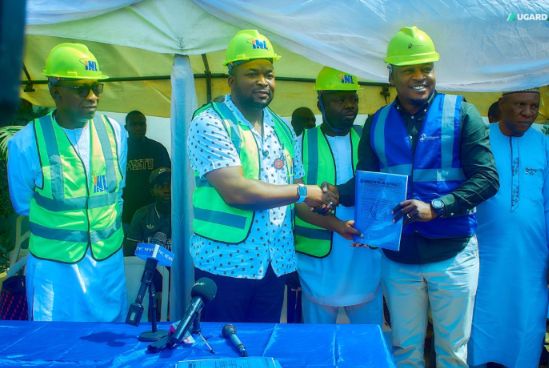
Kogi state government is committing over 7 Billion Naira for rehabilitation of additional 88 Primary Healthcare Centres across the 21 local government areas. Governor Ahmed Usman Ododo, who made this known at the Model Primary Healthcare Centre in Felele, Lokoja, while handing over sites of the 88 Centres to contractors, said that the revitalisation of the new set of 88 Primary Healthcare Centres followed the commencement of the revitalisation of over 70 Primary Healthcare Centres which are already at various stages of completion. Governor Ododo, who was represented by the State Commissioner for Health, Dr. Abdulazeez Adams, said that the revamping of the Primary Healthcare Centres which will upgrade over 150 of such institutions in the state to functional level-2 health facilities, reflected the commitment of his government to enhance access to healthcare delivery across the state. He said that the upgrade of primary healthcare facilities is part of the strategic plan of the State government to improve access to quality healthcare services in all parts of the state with support by the World Bank. “As we step into the New Year 2025, we are proud to launch a groundbreaking initiative—the upgrade of 88 additional Primary Healthcare Centres (PHCs) across the state, complementing the ongoing upgrade of 70 PHCs to functional Level-2 facilities. “This marks another bold step towards achieving effective healthcare delivery and universal health coverage for our people. “With the invaluable support of the World Bank, the Kogi State Government has committed over ₦7 billion to this project, a testament to our unwavering dedication to improving the lives of our citizens.” Governor Ododo stressed his commitment to the wellbeing of ordinary the people through enhanced access to healthcare, especially for people at the grassroots level. He acknowledged efforts by the immediate past administration of former Governor Yahaya Bello for laying a solid foundation in the health sector in the state. He called on the contractors to adhere to the highest standards of professionalism in the execution of the projects and to ensure timely completion of all the projects within four months. The Governor who urged the contractors to engage with the local government authorities and stakeholders in the communities for inclusive approach towards social and environmental safeguards in project implementation also called on the local authorities and stakeholders in all communities where the projects have been sited to take ownership and ensure adequate protection of personnel, equipment and the Primary Healthcare Centres when completed. He also called for effective supervision of the projects by all relevant authorities of the government under the coordination of the state ministry of health.
Professor Yahaya Mustapha Maisuna of the Department of Islamic studies, University of Abuja has recommended the kind of house good Muslims should always strive to build before death comes on them. Professor Yahaya Mustapha spoke today, January 11, in a short lecture after an intense prayers, including recitation of the whole Holy Qur’an and its Qutbah at the 8 day Fidau prayer for the soul of Professor Nuhu Omeiza Yaqub, who died on January 4 after a brief illness and was buried the same day in Abuja, Nigeria’s federal city. He said that late Professor Nuhu Yaqub had successfully built his house in paradise by the kind of pious life he lived. “The houses we built in this world are not ours, but the ones we try to build in the hereafter are the ones we should be proud and determined to have. “We can build such heavenly house by conducting our lives in accordance to the dictate of Allah and His Commands in the Holy Qur’an and the Hadith of His beloved Prophet, Muhammad (PBoH)”
… members of Ulamah in prayer..
Professor Yahaya testified that late Professor Nuhu Yaqub lived a pious life in strict compliance with Allah’s injunctions. “Professor Nuhu Yaqub had built a beautiful house in Aljanatu Firdausi for himself before he departed the world.” He said that the departed Professor was able to touch the lives of many people in positive ways, adding that he was the only “big man” that would write “please” on any note he would send to or through messengers. He described late Professor Nuhu Yaqub as a political academia who would not play real politics, recalling some political appointments he turned down “because of their implications.” Professor Yahaya Mustapha swore that the late Professor Nuhu Yaqub was a special creation of God for special purpose, adding that the deceased was a great respecter of all categories of people in the same way he respected time. “He has left a lot of legacies: he was sincere, trustworthy, humble, God-fearing, hardworking and a good family man.”
Editor-in-chief of Greenbarge Reporters online newspaper, Yusuf Ozi-Usman (left) at prayer.
The seventh day Fidau prayer, which was conducted at his Abuja residence, Aso Drive, attracted hundreds of sympathizers, including Vice Chancellors of Universities, leadership of other tertiary institutions, Professors, others in academic system, former Niger State Governor, Dr Babangida Aliyu and other political and economic gladiators, Council of Ulamah, NASFAT, representative of the United Nations, diplomats as well as government officials. Similar Fidau prayer was offered simultaneously today at the family house of late Professor Nuhu Yaqub in Okene, Kogi State. The governor of Kogi State, Ahmed Usman Ododo had earlier delegated two top government officials from Lokoja to commiserate with the family in Abuja. Professor Nuhu Yaqub died in Abuja on Saturday, January 4, after a brief illness and was buried the same day in the Abuja city. He left behind, a wife, Hajiya Mulikat Bola, three males: Nuhu Yaqub Jr, Hashim and Ademo and a female, Najatu. The eight day Fidau prayer in Abuja was put together by a very close family friend, Dr. Suleiman Abubakar.
DEATH. That eliminator; the terminator of life comes in many forms and at any time. At dawn it comes to wake man to the reality of the brevity of life. At dust it comes to sound its knell and when the knell tolls, both the strong and the weak do nothing but answer the eternal call. Like John Dryden would say “All human things are subject to decay. And when fate summons the low and the high must obey” And so Professor Nuhu Yakub obeyed. The final call came on Saturday 4th January, 2025 in Abuja. Prof. Yakub was one of the refined and dignified men to have donned the garb of teaching. The name, Prof. Nuhu Yakub has come to invoke and represent a bye-word for honesty, transparency, sincerity, hardwork, courage and integrity. He was a pure intellectual, propelled only by a desire for the best his brain could offer humanity. Prof. Yakub was not just an enigma but an erudite scholar who had delivered dozens of papers and written series of articles on vexed national issues and his submissions always made long lasting impression on his audience. He was an academic sophistry and a credible voice in the academic world. He never fell short of his famed sense of integrity and honour. Professor Yakub was of sharp intelligence and dazzling humility. His style of writing is scintillating, incisive and educative. He represented the undiluted essence of a gentleman, one who returns your greetings with telling warmth. Prof. Yakub was a two-time Vice Chancellor – The University of Abuja and Sokoto State University. He was reputed to be very networked, with very useful contact both home and outside the shores of Nigeria. Prof. Yakub demonstrated greatness, passion and dexterity in all the places he had ever worked and positions held. The passion and drive to excel in all assignments he was saddled earned him several merit awards, and these he capped with National Award of Commander of the Niger (CON). A high profile member of various professional bodies.
…. Joseph With utmost sense of humility and at the risk of sounding immodest, Ebira Renaissance Group (ERG) can say, Prof. Yakub was God-sent to University of Abuja. He came there when the institution was gripped with despondency and mistrust among the various segments in the University. The Prof. never claimed to mount the Vice Chancellorship of Uniabuja with a glass-filled ideas but within short space of time, the Prof. left no one in doubt about his purpose-driven objective of changing the face of the institution for good. The good works carried out there earned him the V.C of Sokoto State University without asking for it. Prof. Yaqub was a tremendous blessing to Anebira and Ebira Youths in terms of employment and admissions. EYC had been in touch with him and he had severally attended its National Annual Summit and had on two occasions served as guest speaker. Leadership as Munroe Myles articulated, is the capacity to influence others through inspirations, motivation by passion, generation by vision, produced by conviction, ignited by a purpose, Prof. Yaqub eminently radiated all these in his leadership of University of Abuja. Prof. S.A. Zuru (SAN) has this to say of Prof. Yaqub in his tribute “…You were one of the rarest few of your generation that found their true purpose in life and never surrender to toxic temptation of pursuit of blinded ambition and bizarre opportunism.” ERG offers its deepest condolences to the immediate family of Prof. Yaqub, the academic world and Ebira nation as a whole. As a deeply religious man, a devoute muslim he was, ERG believes Prof. Yaqub has experienced the death of the righteous, the last danger is passed, the last victory is won and the last tear is shed. Enjoy your world of perfect purity, unbroken peace and undisturbed rest reserved only for the eminent, honourable and pious men like you. Heroes are never remembered for the amount of wealth they had but for the joy they brought to the hearts of those they came across while on earth. Prof. Yaqub was a distinguished academic, an accomplished administrator, prolific writer, above all a pious Muslim. Prof. Nuhu Yaqub, you will forever reign in our hearts Good night, the peoples’ professor. Pastor Suleiman Joseph (Manjoe) wrote in from Okene, Kogi State.
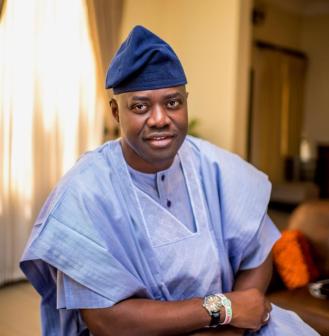
Tension appears to be gathering in the ancient city of Oyo, as the kingmakers in Oyo have described the appointment of Prince Abimbola Owoade as the new Alaafin by Governor Seyi Makinde, as illegal, illegitimate, unlawful, unconstitutional and the height of impunity. Five kingmakers from the town declared the appointment null and void in a statement yesterday, January 10, saying that they did not recommend such a name to the state government. They insisted that the only person they recommended as the next Alaafin is Prince Lukman Gbadegesin. “You will recall that on 30th September, 2022, at the meeting of the Kingmakers in accordance with the Alaafin of Oyo Chieftaincy Declaration, 1961, the Kingmakers appointed Prince Lukman Adelodun Gbadegesin as the Alaafin of Oyo by a majority of the lawful votes of the Kingmakers. “Prince Lukman Adelodun Gbadegesin, having obtained the majority of votes of the Kingmakers present and voting, was deemed appointed, and his name was forwarded to your Excellency as the candidate appointed by the Kingmakers as Alaafin of Oyo for your approval, which you refused to approve for no disclosed reason at all. The Kingmakers thereafter filed an action to stop your excellency from truncating the process, culminating in the present appeal at the court of appeal,” the letter read. They said that they were surprised that in the announcement by the government, it claimed that the selection was made after wide consultation and divination. “We must emphatically state that the Alaafin is not chosen by consultation or divination but in strict compliance with the Registered Alaafin of Oyo Chieftaincy Declaration of 1967, which codifies the native law and custom governing the selection process for the vacant stool of the Alaafin. “Any meeting of few kingmakers and emergency warrant chiefs held at the Governor’s office or elsewhere at the instance of the Commissioner for Local Government and Chieftaincy Affairs to select the preferred candidate of the Governor as the new Alaafin is not only contrary to the native law and custom and Chieftaincy Declaration of Alafin of Oyo Chieftaincy but unlawful, illegal, invalid, null, and void. “It is not the duty of the governor to convene the meeting of a few kingmakers and emergency warrant chiefs to select or appoint a new Alaafin on the 9th of January, 2025, and hurriedly approve the appointment on the 10th of January, 2025.” Meanwhile, MURIC, a Islamic human rights organisation, in a statement by its Chairman in Oyo State, Barrister Abdulwaheed Lawal, and Secretary and Ambassador. Mallam Ibrahim Agunbiade, respectively, said: “It is surprising that Governor Seyi Makinde could ignore the recent letter written by the Oyo Kingmakers, expressing their displeasure with the Governor’s attempt to restart the selection process despite a pending court case. The new selection is therefore sub judice. “Besides, Makinde has made a caricature of the tradition and custom of the ancient town of Oyo Alaafin with this appointment. It is lawlessness without borders.” Governor Makinde, had on yesterday announced Abimbola Akeem Owoade as the new Alaafin of Oyo. The announcement was made in a statement by Dotun Oyelade, state commissioner for information and orientation. Owoade’s appointment was made public over two years after the death of Lamidi Adeyemi, who was Alaafin from 1970 to 2022. The commissioner said: “after thorough consultations and divinations,” Makinde approved Owoade as Alaafin following recommendations by the Oyomesi (kingmakers). He added that a statement to this effect has been issued by Ademola Ojo, commissioner for local government and chieftaincy affairs, “who said that the announcement has put to rest all the socio and legal bickerings that have ensued since the demise of His Imperial Majesty, Oba Lamidi Olayiwola Adeyemi III, on April 22, 2022. “Hon. Ademola Ojo called on all citizens of Oyo State to join the government in celebrating this momentous occasion and lend their support to the new Alaafin of Oyo. The Commissioner prays that his reign will bring peace, prosperity, and unity to the historic Oyo Kingdom.” The announcement came about a day after a five-member faction of the Oyemesi wrote to Makinde, asking the governor to refrain from interfering in the selection process for a new Alaafin. In a letter, signed by Kazeem Sobaloju, their legal counsel, and addressed to Makinde, the kingmakers claimed the governor’s move violates a pending court case on the selection process. They insisted that the kingmakers had already chosen Lukman Gbadegesin as the Alaafin-elect. The kingmakers in the faction include Yusuf Akinade, (Basorun), Wakeel Akindele, (Lagunna), Hamzat Yusuf (Akinniku), Wahab Oyetunji, warrant chief standing in for the (Asipa), Gbadebo Mufutau, warrant chief standing in for (Alapinni).
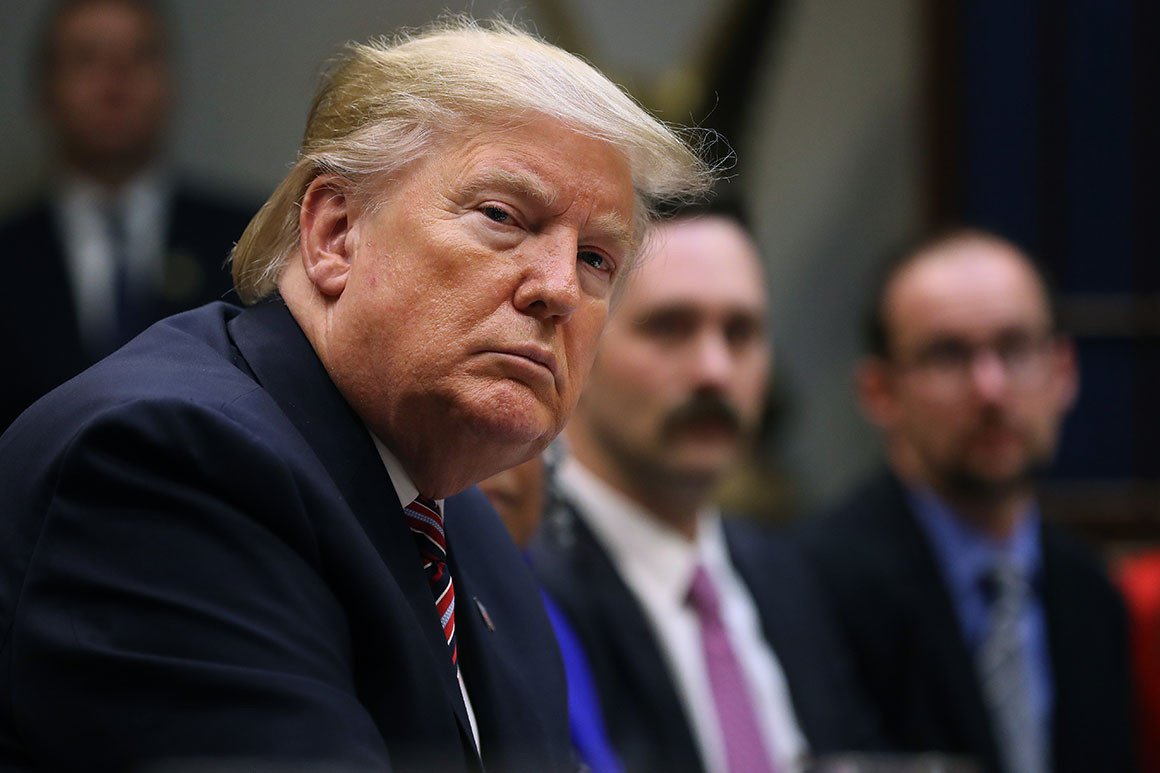
The United States Supreme Court has sentenced the country’s President-elect, Donald Trump over hush-money payments made to an adult film actress. But he will avoid penalties for his conviction. Judge Juan Merchan, who sentenced Trump to an “unconditional discharge” today, January 10, rejected an attempt by his legal team to delay sentencing before the Republican leader’s inauguration on January 20. The decision means that Trump’s conviction will appear on his permanent record, but he does not face imprisonment, a fine, or probation – leaving him unencumbered to enter the White House. Trump, who previously served as president from 2017 to 2021, was found guilty in late May on 34 counts of falsifying business documents related to hush-money payments made to Stormy Daniels, among other things. The US president-elect had denied any wrongdoing and said that he planned to appeal his conviction. Appearing virtually at today’s sentencing hearing, Trump said his criminal trial and conviction had “been a very terrible experience” and insisted that he committed no crime. “It’s been a political witch-hunt,” Trump said before the judge issued his decision. “It was done to damage my reputation so I would lose the election and obviously that didn’t work.” Prosecutors in the New York case had argued that the hush-money payments aimed to conceal allegations of a sexual relationship with Daniels that could have been politically damaging. The payments were made ahead of the 2016 US presidential election, which saw Trump defeat Democrat Hillary Clinton to win the White House. Trump, who pleaded not guilty in the case, has denied any sexual relationship took place. Prosecutors had argued: “it was important that Donald Trump was held responsible. “The judge himself said this was a unique and difficult case, but in the end, he decided that the sentence had to be an unconditional discharge.” Under New York’s penal code, a court can sentence a defendant to an unconditional discharge if it “is of the opinion that no proper purpose would be served by imposing any condition upon the defendant’s release.” Earlier, Trump’s lawyers had asked the Supreme Court to delay the sentencing “to prevent grave injustice and harm to the institution of the Presidency and the operations of the federal government.” They argued that a ruling last year by the top court that grants presidents broad immunity from criminal prosecution means that some of the evidence should not have been presented in the case. But a majority of the justices on the Supreme Court said in a decision that the “alleged evidentiary violations” at Trump’s state-court trial “can be addressed in the ordinary course on appeal.” They also said “the burden that sentencing will impose” on Trump’s responsibilities “is relatively insubstantial in light of the trial court’s stated intent to impose a sentence of ‘unconditional discharge’ after a brief virtual hearing.” Trump’s legal team is expected to appeal his conviction. Now that he has been sentenced, Trump is free to pursue the appeal, a process that could take years and play out while he is serving his four-year term as president. “Today’s event was a despicable charade, and now that it is over, we will appeal this Hoax, which has no merit, and restore the trust of Americans in our once great System of Justice,” Trump wrote on his Truth Social platform after his sentencing.
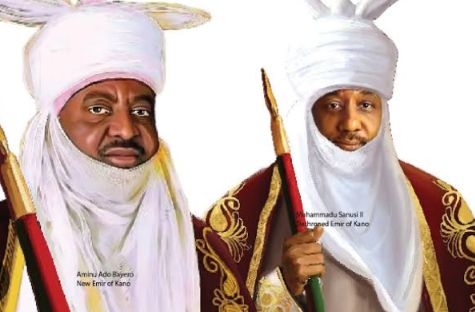
The Court of Appeal in Abuja has described the manner in which the Kano High Court ruled in favour of Alhaji Aminu Ado Bayero in the legal tussle over who is the bonafide Emir of Kano between Muhammadu Sanusi II and Aminu Ado Bayero as “shoddy.” Delivering the judgment today, January 10, Justice Mohammed Mustapha accused the High Court of having acted unjustly by not notifying Muhammadu Sanusi about the hearing, thereby denying him the opportunity to present his case. “The conduct of the proceedings without notifying Sanusi amounted to a travesty of justice.” Justice Mohammed Mustapha ordered a fresh hearing in the legal dispute concerning the Kano Emirate, involving Ado Bayero and Muhammadu Sanusi II. Justice Mustapha stressed that it is the court’s duty to ensure fairness by allowing all parties in the Kano Emirate dispute to present their grievances. The Appeal Court went on to criticize the “shoddy arrangement” under which the Kano High Court ruled against Sanusi without giving him a chance to respond. “The principles of natural justice demand that no one should be condemned unheard.” As a result, the Appeal Court returned the case to the Chief Judge of the Kano State High Court, to be reassigned to another judge for an impartial and expedited hearing. Justice Mustapha however,did not award any costs against the respondents. The legal dispute between Bayero and Sanusi is centered on issues surrounding the leadership and governance of the Kano Emirate.
Federal High Court, Ikoyi, Lagos, has granted an order restraining all commercial banks in Nigeria from releasing or dealing in all monies and assets up to $225.8 million due to Nduka Obaigbena from any account maintained by him. Obaigbena is the chairman and editor-in-chief of THISDAY Media Group and Arise News Channel. The court also blocked all commercial banks from releasing or dealing in all monies and assets up to the said amount belonging to Efe Damilola Obaigbena, Olabisi Eka Obaigbena and General Hydrocarbons Limited, an oil and gas firm in which all the three are directors and shareholders. Another order barring the banks from dealing in or releasing such monies and assets due to the company, its agents, privies, subsidiaries and sister companies with the banks up to the same sum was issued, according to court documents. First Bank of Nigeria Limited and FBN Quest Trustees Limited had on 27 December 2024 approached the Federal court to seek the orders in respect of a total claim of $225.8 million being alleged outstanding indebtedness on General Hydrocarbons’ account with First Bank as of 30 September 2024. The legal action pertains to “the loan facilities granted to the first defendant by the first plaintiff/applicant pending the hearing and determination of the motion on notice for interlocutory injunction.” First Bank Vs Obaigbena: A background:- Atlantic Energy Drilling Concepts Limited, chaired by Jide Omokore, an associate of a former Minister of Petroleum Diezani Alison-Madueke, took a facility from First Bank in 2011. The $490 million loan was to fund the company’s operating and capital expenditure requirements for the drilling of four oil wells with proven reserves (together known as the Forcados assets) as well as its Strategic Alliance Agreement with the Nigerian Petroleum Development Company (NPDC). The credit was secured with Atlantic Energy’s assets and rights through the agreement, while First Bank had charge over the company’s collection accounts. In the years that followed, the loan became problematic after Atlantic Energy defaulted in its repayment obligation. “In line with our commitment to address the legacy asset quality challenges, exposure to Atlantic Energy, our biggest NPL ( non performing loan), was written off in the second quarter,” Adesola Adeduntan, First Bank former CEO said in 2019. Writing off the N126 billion loan helped First Bank pared down its non-performing loan ratio to 14.5 per cent as of June 2019 from 25.3 per cent in the first quarter of the year, according to its earnings report. In a letter to Yemi Cardoso, the governor of the Central Bank of Nigeria, dated 7 November 2024, Obaigbena stated how in 2020 he facilitated a meeting between Oba Otudeko, the then chairman of FBN Holdings and Mele Kyari, the managing director of NNPC Limited. “His problem was that the NNPC under the late Maikanti Baru, then GMD, NNPC had refused to sign the security documents for the now bad, non-performing loan to Atlantic Energy Drilling Concept Nigeria Limited (Atlantic Energy) for OML 26, OML 42, OML30 and OML 34 under separate Strategic Alliance Agreements between Atlantic Energy and NPDC Limited, claiming it was a fraudulent scheme to defraud the Federal Government by the then Minister of Petroleum Resources, Diezani Allison-Madueke.” The editor-in-chief of THISDAY Media Group noted that it was obvious during the meeting, which he claimed to be part of, that the facilities granted to Atlantic Energy by First Bank did not follow due process. “FBN was now faced with an unsecured and non-performing exposure of $718M and was on the verge of becoming a systemic risk to the banking sector. “It was discovered that FBN had given this loan recklessly without security as part of a scheme that funded Diezani Allison-Madueke and Kola Aluko, (details of these are still being investigated by Nigeria’s Economic and Financial Crimes Commission“EFCC” and the United Kingdom’s National Crime Agency “NCA”),” Obaigbena further stated. According to the letter, Otudeko sought, Obaigbena’s help to help rescue First Bank from an imminently disastrous situation, causing the two agree to work together since the latter held an approved oil mining lease (OML) from ex-President Umaru Yar’Adua. Obaigbena said that the licence was then ratified by former President Muhammadu Buhari, resulting in OMLs 120 and 121 being granted to General Hydrocarbons in 2021. Following a series of meetings between First Bank and General Hydrocarbons, he said there was an agreement based on the fact that he held a valid OML award that First Bank would finance the optimum exploration, development and production of OML 120. Part of the terms, he added, was that General Hydrocarbons would share the profit equally with First Bank over eight years to help the latter “reduce the holes in their books” caused by their bad loans particularly the facilities availed to Atlantic Energy. “However, we made it clear that we are not Atlantic Energy and would never assume their obligations which was then being pursued by AMCON and EFCC and our central role was to assist FBN return to good standing with a totally different transaction structure as GHL has no nexus with Atlantic Energy.” The letter stated that First Bank sold its outstanding exposure as an Eligible Bank Asset (EBA) to AMCON at a discount to be paid off by its share of profit from the deal it earlier reached with General Hydrocarbons. It added that the lender agreed to a clawback provision with AMCON, meaning that in the event that the outstanding exposure was not paid, AMCON would recover the EBA from First Bank’s books The THISDAY newspaper editor-in-chief stated that First Bank, AMCON and General Hydrocarbons signed an outstanding exposure tripartite deed allowing Global Hydrocarbons to guarantee payment of a pending of a now discounted outstanding exposure of $600 million in naira on the books of the bank. The deal, he claimed, was in exchange for financing the optimum exploration, development and production of OML 120 by FBN. “Once GHL signed the Outstanding Exposure Tripartite Deed effective 31st December 2021, FBN’s account which was then classified by the Central Bank of Nigeria (CBN) was now whole again having escaped a loan loss provision of 302Bn Naira against a profit of 151Bn Naira ultimately declared for the year ending 31st December 2021,” the document stated. “Had GHL not signed and guaranteed the EBA to AMCON, FBN’s loss for 2021 would have been 161Bn Naira, a whopping amount for the financial sector at that time, when the exchange rate was N400 – $1 having regard to the fact that this loan had been classified and non performing since 2015 (six years before).” Obaigbena alleged that the bank put stumbling blocks in the financing of the development of OML 120 in breach of the outstanding exposure tripartite deed. More than seventy utilisation requests made by General Hydrocarbons in respect of the facility took First Bank between seven and 67 days to pay instead of five days, he added, causing significant losses to Global Hydrocarbons.
“FBN’s reluctance to pay as at when due started soon after consultants appointed and working for FBN and AMCON started making demands of GHL for “fees” not connected with the transaction. Indeed, GHL told the consultants that this would amount to bribery and corruption (we have evidence).” “Since FBN got its way and avoided the 160Bn Naira loss following GHL’s signing of the Outstanding Exposure Tripartite Deed and with its account now performing, FBN has failed, refused and/or declined to perform its obligations under the MOU and the Outstanding Exposure Tripartite Deed, contributing to GHL’s loss of the Blackford Dolphin drill ship for which we are currently facing claims of over $100M (One Hundred Million Dollars) now in Arbitration.” The document further noted that Global Hydrocarbons requested a $53 million facility from First Bank on on 28 August 2024, which was granted two months after by which time the lender “smuggled in a new variable of the appointment of an Independent Asset Manager” under a framework agreement that sought to effectively replace key components of the foundational MOU, unknown to the Tripartite Deed between AMCON, FBN and GHL and also unknown to the Petroleum Industry Act. Obaigbena alleged the framework document intended to give First Bank full control over OML 120. “Mr. Governor, we have been left with no choice but to go to court and arbitration to preserve our fundamental rights and our rights under the agreements in the face of FBN’s attempts to clubber and bully us out of existence,” he said. “We are seeking to enforce the provision of our MOU which allows us to raise finance independent of FBN when they fail to do so, for which they have failed abysmally. After over three and half years (3.5) years, all we have received from FBN is bad faith.” But on 27 December 2024, First Bank and FBN Quest approached the Federal High Court, Ikoyi, Lagos, seeking among other things an order forbidding all the commercial banks in the country from releasing or dealing with all monies and assets up to $225.8 million due to the THISDAY editor-in-chief from any account maintained by him. Among other prayers sought by the plaintiffs was a similar order restraining the banks from releasing or dealing in all monies and assets up to the said amount belonging to Ms Efe Damilola Obaigbena, Ms Olabisi Eka Obaigbena and General Hydrocarbons Limited. The banks were also barred from dealing in or releasing such monies and assets due to the company, its agents, privies, subsidiaries and sister companies with the banks up to the same amount. On 30 December 2024, Justice D.I. Dipeolu of the Lagos court granted the orders and adjourned the matter to 20 January 2025. Source: Premium Times.
Governor Monday Okpebholo of Edo State has appointed the General Secretary of the Guild of Corporate Online Publishers (GOCOP), Collins Edomaruse as Special Adviser on International Development Partners. Edomaruse is serving his second term as GOCOP General Secretary, which will terminate in October this year, 2025. He is Publisher/Editor-in-chief of METROWATCH online and a Fellow of the Nigerian Guild of Editors (FNGE). The new Special Adviser had worked with THISDAY newspaper in many senior Editorial positions. He was Group News Editor, Group Politics Editor, Deputy Editor (Daily, Saturday and Sunday titles), and Editor, Nation’s Capital/Abuja Bureau. Popularly known as ‘General’ because of his mastery of the Defence Beat, his records in THISDAY have remained unbeaten where he ranked the best among the Editors. Collins, from the Igbanke area of Edo State, attended Asaba Technical College, Delta State. He holds a postgraduate degree in Communications Studies. Edomaruse is a member of several other professional bodies, including the Nigerian Institute of Public Relations.
A Catholic Christian priest with 17 years of experience, Dr. Echezona Obiagbaosogu, has officially stepped down from his clerical duties to adopt African traditional spirituality. Dr. Obiagbaosogu, who lectures in African Traditional Religion at Nnamdi Azikiwe University in Awka, Anambra State, said that his passion for traditional African beliefs and rainmaking practices influenced his decision. Repots have it that during the defense of his PhD dissertation titled: “Rainmaking and Control in Igbo African Medicine,” Dr. Obiagbaosogu highlighted the significance of Africa’s cultural and spiritual heritage, which he claims has been deeply affected by colonial legacies. “I’ve realized my true purpose lies in serving my people through our ancestral traditions,” he said. “I served as a Catholic priest for 17 years before resigning. My research topic focuses on ‘Rainmaking and Control in Igbo African Medicine: A Case Study of Isieke in Ihiala Local Government Area, Anambra State.’” Dr. Obiagbaosogu recounted how his childhood experiences shaped his current path. His father, a Christian who valued traditional medicine, and his grandfather, a staunch traditionalist, nurtured his curiosity about nature and spirituality. During his academic research, Obiagbaosogu studied under a seasoned native healer to explore ways of reclaiming Africa’s lost cultural values. He also recalled founding the Society for African Culture during his seminary days, where he invited a rainmaker to demonstrate his craft, sparking his academic interest in the practice. “My exploration of rainmaking and other African traditions is not a rejection of God but an effort to connect with the divine more authentically.” Dr. Obiagbaosogu argued that African traditional practices contain significant scientific insights that are often misunderstood. “Magic evolved into religion, which has now transformed into modern science, including nanotechnology. The principles behind African magic are essentially scientific, yet they remain untapped.” He criticized Nollywood for its portrayal of African traditions, which he believes has damaged cultural values. Dr. Obiagbaosogu emphasized the need to document and modernize traditional practices for future generations. When asked about his departure from the priesthood, Dr. Obiagbaosogu described it as a deeply personal journey of self-reflection. “Life is about growth and finding alignment with one’s understanding of reality.” He refused to discuss the specific details of his resignation, but said that it is a necessary step in his personal and spiritual evolution.
Brito Sporting Club of Portugal, a football club founded in 1956, has signed an official contract with a United Kingdom-based young Nigeria-born footballer, Yaqub Usman-Malah. The official unveiling of the young promising footballer was carried out on Saturday, January 4, 2025. Yaqub, born in Nigeria in 2006, is a budding Nigerian talent with unquantifiable promise and potential. Prior to his official contract with Brito Sporting Club of Portugal, he was a student and a trainee player with the Brooke College Football Academy in the United Kingdom. At Brooke College Football Academy, Yaqub had an impressive goal average of 17 in 32 matches with no injuries in 116 training days, cumulating into 2, 270 minutes of on-field action. A clear testimony of his outstanding performance at the Academy was provided by the lead coach of the Under-17B team Yaqub played with. The lead coach, Tomasz Wasylik, described Yaqub as a ‘well-liked person’ and a role model to his teammates due to his professionalism and unmatched work rate. The Lead Coach said that Yaqub has played in National School Cup competitions against other colleges and programmes in the 2023/2024 session and is a good ‘tactical player’, ‘technically good” and can ‘play in multiple positions on the field’. Meanwhile, Yaqub’s father, Usman Malah has, in a statement today, January 8, 2025, said that he had no doubt that his son will live to the potential and promise identified by Coach Tomasz Wasylik of the Brooke College Football Academy and achieve greatness in his new club. “While looking forward to the display of his skills and boundless stamina, I wish my son, Yaqub, a successful career and a place in the halls of football greatness across the globe.”
We use cookies on our website to give you the most relevant experience by remembering your preferences and repeat visits. By clicking “Accept”, you consent to the use of ALL the cookies.
This website uses cookies to improve your experience while you navigate through the website. Out of these, the cookies that are categorized as necessary are stored on your browser as they are essential for the working of basic functionalities of the website. We also use third-party cookies that help us analyze and understand how you use this website. These cookies will be stored in your browser only with your consent. You also have the option to opt-out of these cookies. But opting out of some of these cookies may affect your browsing experience.
Necessary cookies are absolutely essential for the website to function properly. This category only includes cookies that ensures basic functionalities and security features of the website. These cookies do not store any personal information.
Any cookies that may not be particularly necessary for the website to function and is used specifically to collect user personal data via analytics, ads, other embedded contents are termed as non-necessary cookies. It is mandatory to procure user consent prior to running these cookies on your website.






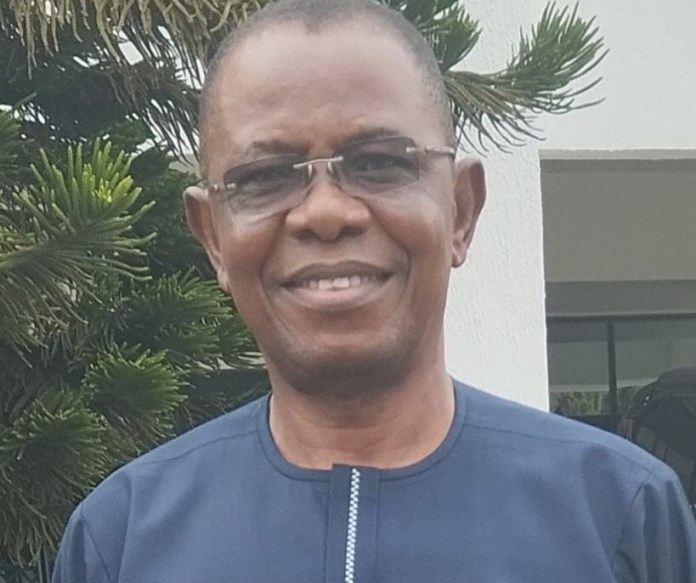




Adieu Prof. Nuhu Yaqub: Tribute To Erudite Scholar, By Suleiman Joseph
DEATH. That eliminator; the terminator of life comes in many forms and at any time. At dawn it comes to wake man to the reality of the brevity of life. At dust it comes to sound its knell and when the knell tolls, both the strong and the weak do nothing but answer the eternal call. Like John Dryden would say “All human things are subject to decay. And when fate summons the low and the high must obey” And so Professor Nuhu Yakub obeyed. The final call came on Saturday 4th January, 2025 in Abuja.
Prof. Yakub was one of the refined and dignified men to have donned the garb of teaching. The name, Prof. Nuhu Yakub has come to invoke and represent a bye-word for honesty, transparency, sincerity, hardwork, courage and integrity. He was a pure intellectual, propelled only by a desire for the best his brain could offer humanity.
Prof. Yakub was not just an enigma but an erudite scholar who had delivered dozens of papers and written series of articles on vexed national issues and his submissions always made long lasting impression on his audience. He was an academic sophistry and a credible voice in the academic world. He never fell short of his famed sense of integrity and honour.
Professor Yakub was of sharp intelligence and dazzling humility. His style of writing is scintillating, incisive and educative. He represented the undiluted essence of a gentleman, one who returns your greetings with telling warmth.
Prof. Yakub was a two-time Vice Chancellor – The University of Abuja and Sokoto State University. He was reputed to be very networked, with very useful contact both home and outside the shores of Nigeria. Prof. Yakub demonstrated greatness, passion and dexterity in all the places he had ever worked and positions held. The passion and drive to excel in all assignments he was saddled earned him several merit awards, and these he capped with National Award of Commander of the Niger (CON). A high profile member of various professional bodies.
With utmost sense of humility and at the risk of sounding immodest, Ebira Renaissance Group (ERG) can say, Prof. Yakub was God-sent to University of Abuja. He came there when the institution was gripped with despondency and mistrust among the various segments in the University. The Prof. never claimed to mount the Vice Chancellorship of Uniabuja with a glass-filled ideas but within short space of time, the Prof. left no one in doubt about his purpose-driven objective of changing the face of the institution for good. The good works carried out there earned him the V.C of Sokoto State University without asking for it.
Prof. Yaqub was a tremendous blessing to Anebira and Ebira Youths in terms of employment and admissions. EYC had been in touch with him and he had severally attended its National Annual Summit and had on two occasions served as guest speaker.
Leadership as Munroe Myles articulated, is the capacity to influence others through inspirations, motivation by passion, generation by vision, produced by conviction, ignited by a purpose, Prof. Yaqub eminently radiated all these in his leadership of University of Abuja.
Prof. S.A. Zuru (SAN) has this to say of Prof. Yaqub in his tribute “…You were one of the rarest few of your generation that found their true purpose in life and never surrender to toxic temptation of pursuit of blinded ambition and bizarre opportunism.”
ERG offers its deepest condolences to the immediate family of Prof. Yaqub, the academic world and Ebira nation as a whole. As a deeply religious man, a devoute muslim he was, ERG believes Prof. Yaqub has experienced the death of the righteous, the last danger is passed, the last victory is won and the last tear is shed. Enjoy your world of perfect purity, unbroken peace and undisturbed rest reserved only for the eminent, honourable and pious men like you.
Heroes are never remembered for the amount of wealth they had but for the joy they brought to the hearts of those they came across while on earth. Prof. Yaqub was a distinguished academic, an accomplished administrator, prolific writer, above all a pious Muslim.
Prof. Nuhu Yaqub, you will forever reign in our hearts
Good night, the peoples’ professor.
Pastor Suleiman Joseph (Manjoe) wrote in from Okene, Kogi State.