The Governing Council of the University of Abuja has embarked on calming frayed nerves which developed in the process of search for a new Vice Chancellor from where Professor Aisha Sani Maikudi emerged as winner. She is the first female to become Vice Chancellor of the university. The Council, in a statement today, January 8, said that in a contest of 87 applicants with only one winner expected to emerge, the losers must exhibit great sportsmanship and maturity to accept the outcome. The statement, signed by the acting Registrar and Secretary to the Governing Council, Mrs. Islamiyat F. Abdulrahim, said that the Council is not unaware of complaints raised by some interested parties in the course of the transition process, which commenced as far back as March 2024 when the University initially advertised the position of Vice-Chancellor. “However, it is important to note that all such concerns and issues were considered and efforts made to resolve the issues amicably with the active involvement of major stakeholders in the University, including the Senate and the local branch of the Academic Staff Union of Universities (ASUU). “That explains the wide and enthusiastic acceptance of the announcement of the new Vice-Chancellor within and beyond the University community. “Council appreciates that in a contest of eighty-seven applicants with only one winner expected to emerge, the losers must exhibit great sportsmanship and maturity to accept the outcome. “This is necessary for the University to forge ahead and allow the brand-new substantive Vice-chancellor who served in an acting capacity in the past six months, to unfold and pursue her vision for the University in an atmosphere of inclusiveness and enduring corporate harmony.” The Council, led by retired Air Vice Marshall Saddiq Ismaila Kaita, insists that it had complied with the extant laws and laid down procedures and processes in the appointment of the seventh substantive Vice-Chancellor of the University It said that contrary to the insinuations in some quarters, the Council, in making the appointment announced on 31st December 2024, strictly complied with the relevant provisions of the two main acts guiding the appointment of Vice-Chancellors of the University, “namely, the University of Abuja Act and the Universities (Miscellaneous Provisions) (Amendment) Act 2003, NO 1 of 2007.”
“Kyari is a shining example and embodiment of the ideals of the Renewed Hope Agenda. I commend his commitment to creating new opportunities and ensuring the growth and sustainability of Nigeria’s energy sector.” This is the verdict of President Bola Ahmed Tinubu in a message congratulating Mallam Mele Kolo Kyari, the Group Chief Executive Officer of the Nigerian National Petroleum Company Limited (NNPCL), on his 60th birthday today, January 8. The President commended Kyari’s diligence in transforming the NNPCL into a profitable organisation, adding that despite cynicism in some quarters, the NNPCL under Kyari’s leadership has recorded notable achievements. Such achievements, Tinubu said, including the resuscitation of two refineries, an increase in domestic natural gas consumption and a boost in oil production to 1.8 million barrels per day.
Mele Kyari
The President applauds Kyari’s dedication to service and the professionalism he has maintained throughout his distinguished career at the NNPC, OPEC and as the first Group Chief Executive Officer of NNPCL. He prayed to Almighty Allah to continue to grant Kyari sound health, wisdom, and strength to serve the nation while mentoring the next generation of energy sector leaders.
I don’t know whether the title of this piece should be classified as a warning or an advice, for the reason that everything in the capital city of this abundantly blessed country, Nigeria, has become untouchable, even by those that have been branded middle-class citizens. As a matter of fact, citizens of the country, in general,have currently reached a stage in their lives in which they are not really sure where they are headed. I’m talking about the economic situation; their purchasing power has obviously nose-dived into nothingness and made them look like orphans. Since the federal government under President Bola Tinubu began its socio economic reforms immediately on taking over the power in May 2023, things have practical changed from good to bad and worse, and headed to worst. And the music that has continued to be played out at every oppotuned time is “things would get better soon.” It is however hard to believe that medical system would be so affected by the worsening purchasing power to the point where the poor and even not-so-poor are virtually boxed to the corner. Indeed, the worst thing that can happen to many Nigerians and which unfortunately is happening now, apart from hunger that has become the defining factor in their lives, is to fall sick, especially in the nation’s Federal Capital Territory (FCT). This is against the backdrop of the policy of the Administration to hike consultation and other medical fees in general hospitals. What is happening now is that a patient who goes to a general hospital for medical attention would have to obtain hospital card with N2,600 and pay consultantion fee of N1,500 for doctor to listen to him. If such patient is unlucky to be placed on admission, he is expected to pay the sum of N12,000 for a bed, not a room in a lodge, for a minimum of (compulsory) four nights. This is aside from medical or laboratory tests, drugs that he has to buy and many others. It looks strange that the Government’s general hospitals that used to treat patients with very low and affordable cost are now competing with private hospitals, to the point that the poor ones in our midst, who happen to fall sick are simply being told, Willy nilly, to quietly die in their homes. These are the people who even before the present economic hardships via Government’s reforms, could not afford three good square meals a day. With children school fees to be paid, with many mouths to feed everyday and other financial commitments, and with slave-like incomes, where would an average civil servant get the money to go to the government hospital for treatment of say, minor ailment? It is not surprising if very soon, the general hospitals will be empty of patients with traditional healers taking over their responsibilities to the poor ones,or deaths rising against the background of inability to fund their treatment in the hospital. There doesn’t seem to be any reason to increase Doctors’ consultation fees and bed fees in the hospital designated as general, if really such hospital is meant to take the financial burden off the shoulders of the people. The government at all levels need to be seen to be there to cussion the effects of excruciating living for the people and not squeezing them to death through uncountable taxes, levies, increased costs in what they are supposed to enjoy as bonafide citizens of the country. My honest advice therefore is that until government finds it benevolent to remove or reduce the fees in the general hospitals, people should try, please try not to fall sick.
Mele Kyari, a geologist and Group CEO of the Nigerian National Petroleum Company Limited (NNPCL), has dug his way into the tunnel of history. Within a space of two months, he announced the successful revamp of two refineries. In November 2024, Port Harcourt refinery came on stream. The following month, December, Warri refinery burst back to life. Both are not performing optimally, yet. But the journey has only just begun. Kaduna refinery is projected to begin production later this year. And if all goes well, a substantial percentage of the nation’s local petrol consumption would be sourced in-country. The implication on forex, job creation and economic reflation is enormous, positively. So what? Some Nigerians have asked this question. I won’t even tag them naysayers. There is a tincture of justification in their rage. But if such Nigerians did not rage against those who in the past brought the refineries – Port Harcourt, Warri and Kaduna – to ruins, they should not shudder at the celebratory dance of President Bola Tinubu and his laudation of Kyari and his team for achieving both the improbable and the impossible. After many years of redundancy, after several failed attempts to restream the moribund refineries with billions of dollars wasted in the fitful misadventures, someone has finally belled the cat. Such a person deserves a worthy pat on the back. Little wonder, President Tinubu was gushing at the news of Warri refinery cracking back to life. Here, I salute the wisdom of Tinubu in keeping Kyari on his job. Against a crude and virulently malicious campaign to get Kyari out of the way, Tinubu ignored the mob and renewed Kyari’s tenure. One of the missteps of the past was a high and volatile turnover of leadership at the nation’s oil and gas behemoth. Commonsense management will tell you that job insecurity, at any level, is antithetical to sustainable planning for long term goals. Fixing a refinery, especially one that has been rendered comatose for many years (with some bolts and parts gone rusty) is not a one-hour flight. It’s a long-distance haul, requiring patience, precision and meticulous planning. Had Kyari been shoved aside to fit the script of his ‘enemies’ and political mandarins seeking to give ‘wise’ counsel to Tinubu, these refineries would never have come on stream. In the stereotypical Nigerian way, the new management would have reviewed the contract, reworked the papers and even re-awarded aspects of the contract to another corporate. Herein is the wisdom of Tinubu in retaining Kyari highly commendable. As more Nigerians push for the refineries to attain 100 percent production efficiency, it is apposite to state what Kyari did differently. How did Kyari succeed where many others in the past failed woefully? Dateline: October 21, 2021, NAF Conference centre, Abuja: Kyari was Special Guest of Honour at the All Nigeria Editors’ Conference. He spoke off the cuff on the subject, “Insecurity as it affects the Oil and Gas sector.” He showed a good grasp of the malaise that has afflicted the Nigerian oil and gas industry. He, however, raised a banner of hope that under his watch, “things are now done differently.” He said issues of refineries not working, crude oil theft, among others, are all traceable to the Nigerian elite which include the editors and everyone present at the event. Kyari said that refineries had become comatose because the leadership elite had been doing things the wrong way over the years by relying on the builders of the refineries to come to Nigeria to fix the refineries. This model, he explained, does not happen anywhere because there are specialists whose business is to fix such refineries. They are not the builders but their job is to fix them when they break down. He called such companies EPCs (Engineering, Procurement and Construction). He gave an analogy: “You cannot ask Toyota to come down to Nigeria to fix your Toyota car. You give it to a technician. This is the error we have been repeating over the years.” He credited President Muhammadu Buhari for giving his management the free hand to do the right thing. “This is the first time in history that NNPC and its subsidiaries are allowed to do things the way things should be done. Now, I can confirm to you that we have taken responsibility and we will fix the refineries. We have started the process, contractors have been mobilised to the Port Harcourt refinery, while the same process for Warri and Kaduna refineries will be concluded by the end of this year,” he told a now excited crowd of over 200 editors, representatives of several government agencies including security agencies and the private sector. He got a standing ovation afterwards. Fast forward. Three years later at the twilight of 2024, two of the refineries had become operational once again all because Kyari walked a different path. It’s no magic. Just focussed, honest leadership. Kyari had been sincere as the helmsman of the NNPC even to his own hurt. The first NNPC honcho to open the ledger for public scrutiny. He did not only audit NNPC accounts, he got them published. And for once in ages, Nigerians got to know the assets, liabilities, strength and weaknesses of the company they own. Kyari has shown that he is a different breed of leader, a transformational leader who has used the same personnel at NNPC, in the same country, against the same headwinds to achieve milestones, some once thought unattainable. Retaining Kyari, a man he did not appoint, is one of the smartest decisions of President Tinubu. Kyari bestrides two worlds in Nigeria’s oil and gas history. The pre-PIA (Petroleum Industry Act) and the post-PIA, a delicate transition that required experience, emotional intelligence, industry knowledge, and leadership savvy. If the transition was a kind of exam for him, the geologist, earth scientist of crude oil marketer of renown simply aced it. He proved one thing: Nigeria’s challenges can be surmounted by Nigerians. He deserves all the Presidential plaudits and a green ribbon around his neck as a memorial of national honour.
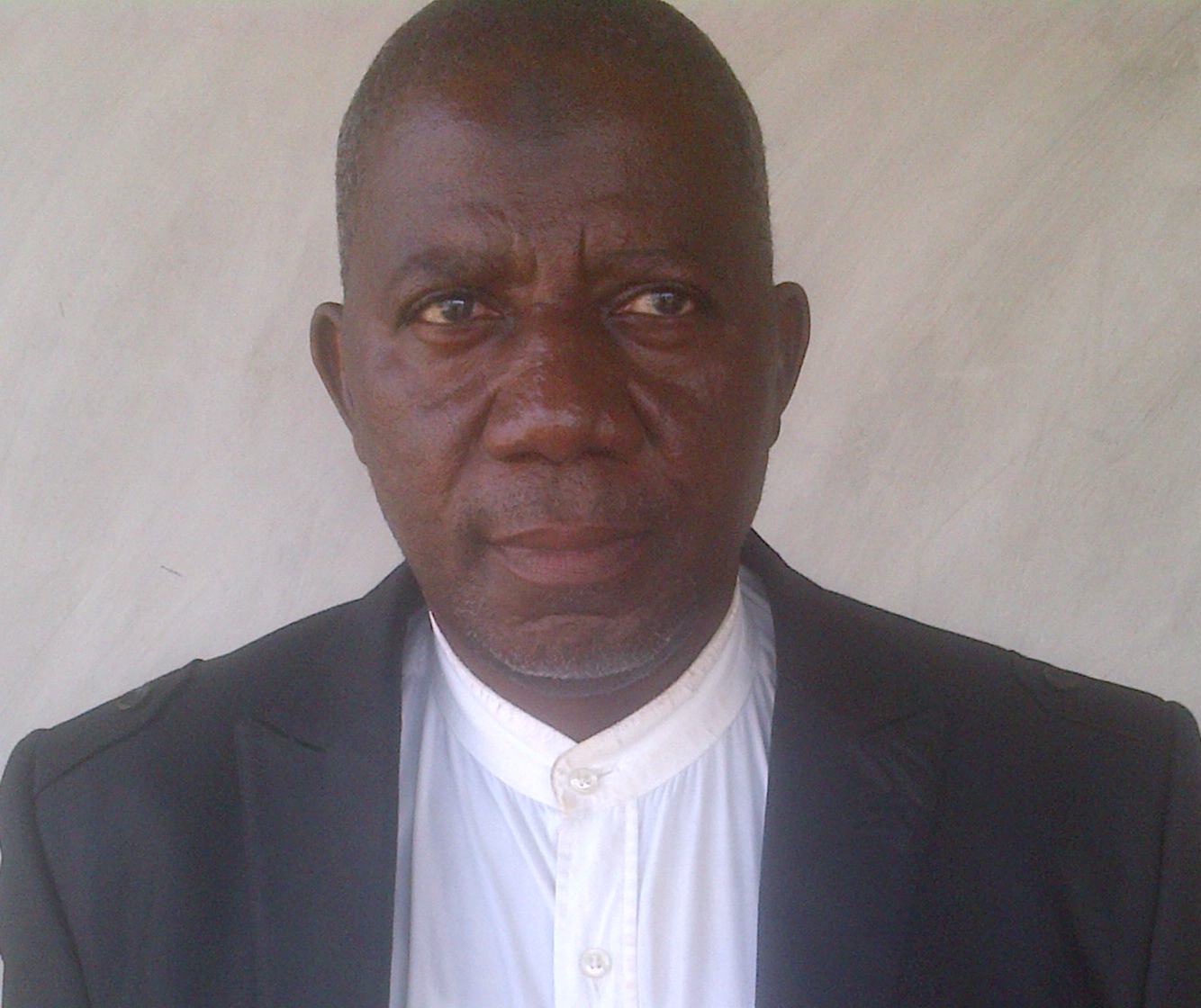
Chairman of a large poultry farm, the Premium Poultry Farm Limited in Kuje in the Federal Capital Territory (FCT), Alhaji Mahey Rafindadi Rasheed (OFR), has taken personal responsibility for the treatment of a farm worker that was involved in factory accident. The factory tractor, yesterday evening, January 6, matched one of the legs of the said worker, Khaleef Adeyiza Yusuf inside the farm compound. Report reaching us at Greenbarge Reporters online newspaper and hardcopy magazine said that Khaleef Yusuf was first rushed to a private local bone setter in Chibiri, the suburbs of Kuje town, to ascertain whether the bone was broken in the accident. It was learnt that the bone setter confirmed, after examining the setting, that the bone was not broken, but prescribed certain drugs and ointment to be applied regularly on the swollen area of the affected leg. It was gathered that immediately information got to the chairman of the farm earlier today, January 7, he sent a car with a driver to take Khaleef for thoroughly medical examination and treatment at the University Teaching Hospital, Gwagwalada, FCT.
… Khaleef Speaking to our reporter, Khaleef expressed deep appreciation to Alhaji Mahey Rasheed for the personal interest he had displayed towards him. He praised the chairman for taking every worker in the company as a member of his family, pledging his commitment to the service of the company when he fully recovers The fully-automated Premium Poultry Farm, one of the largest integrated in Nigeria, boasts of producing about 10,000 crates of eggs daily. It was once managed by a South African poultry expert, Mr. Grant Shepherd.
The Abuja Police command has announced the arrest of 50 thieves and recovered from them various items, including manhole covers, solar street lights, vehicles and many more. The Command told newsmen today, January 6, that the arrests were made in partnership with relevant bodies “The Command has successfully arrested groups of suspects involved in the vandalism and theft of manhole covers within the territory. “Our operatives conducted a targeted operation, leading to the arrest of FIFTY (50) suspects and recovery of TWENTY-FIVE (25) manhole covers, THREE (3) vehicles, vandalized solar street lights, galvanized rods used in the construction of flyovers, other tools used in vandalizing these government installations, and several other exhibits at various panteka hotspots in Kabusa, Garki, Mabushi and Wuse. “Investigations have revealed that these individuals operate as part of a larger network, selling stolen manhole covers to scrap dealers. This criminal activity endangers the lives of the general public by creating hazards on roads and walkways while undermining the integrity of public infrastructure. “Below is a detailed breakdown of the suspects arrested and exhibits recovered: SUSPECTS ARRESTED: 1. Bashir Usman 2. Shaibu Ibrahim 3. Sani Isah 4. Ibrahim Hassan 5. Mustapha Hassan 6. Awal Nawan 7. Umar Aliyu 8. Auta Umar 9. Simon Clement 10. Datti Ibrahim 11. Mohammed Salim 12. Ibrahim Ibrahim 13. Ifeanyi-Chuckwu Emmanuel 14. Abba Ismail 15. Najib Abdul 16. Muhammed Lawal 17. Rabiu Ibrahim 18. Adamu Suleiman 19. Abdulkarim Abdullahi 20. Haruna Nasiru 21. Abdul Nai’ja 22. Josua Steven 23. Livinus Steven 24. Ismail Abdullahi 25. Munir Sada 26. Ibrahim Yahaya 27. Yahaya Musa 28. Dahiru Nasiru 29. Abdullahi Muhammed 30. Monday Barnabas 31. Hamisu Iman 32. Promise Abanonum 33. Ehieze Emeka 34. Ehieze Justice 35. Mohammed Inusa 36. Tijanni Suleiman 37. Promise James 38. Haruna Auwalu 39. Ayuba Danjuma 40. Suleiman Abu 41. Nafiu Ahmmed 42. Kamalu Junaidu 43. Zaradeen Yakubu 44. Abdulhadi Adam 45. Mohammed Ibrahim 46. Chukwu Emmanuel 47. Douglas Yahaya 48. Mohammed Lawal 49. Auwal Musa 50. Abubakar Kabiru EXHIBITS RECOVERED: ● Twenty-five (25) galvanized manhole covers ● Five (5) solar street lights ● Several galvanized poles used in the construction of flyovers ● Fifteen (15) street light poles cut into smaller pieces. ● Several rolls of high voltage AEDC cables ● Two locally made pistols ● Two live cartridges ● One sharp knife ● Thirty (30) tubes of triple sub glue ● Several charms ● Thirteen (13) large solar panels ● Seven (7) barrels of diesel suspected to have been stolen from network masts ● One (1) Volkswagen sporter bus with Reg. No. BJK 592 XA reconstructed into a diesel tanker ● One Toyota Carina II vehicle with Reg. No. RBC 312 JL ● Several iron rebar rods. ● Nine (9) car tire rims. ● One (1) fire extinguisher ● Eleven (11) plasma TV sets ● Several decoders and remotes ● Thirteen (13) cement bags ● Two reinforced iron doors ● Three (3) pumping machines suspected to be used in extracting diesel ● Two (2) car batteries ● One photo frame ● One (1) pack of tiles ● Sixteen (16) plastic chairs ● Three (3) generators ● One (1) aluminum ladder ● One (1) wheel barrow ● One (1) roll of roofing sheets ● Two (2) gas cylinders ● One (1) indoor and outdoor AC Unit ● Four (4) sumo water pumps ● Several iron cutting tools The diversity and volume of recovered items highlight the extensive and organized nature of these syndicates, whose activities have caused significant harm to public infrastructure projects and services in the FCT. “I want to emphasize that the FCT Police Command and our sister security agencies operate a zero-tolerance policy toward acts of vandalism and theft that undermine public infrastructure and safety. This achievement underscores our unwavering commitment to protecting the critical infrastructure of the Federal Capital Territory. “We will continue to ensure that all those responsible for these criminal acts are brought to justice. The kind of these enclaves will continue.”
Thieves have continued to frustrate the Federal Capital Territory Administration (FCTA) which has expressed deep concern over the increasing stealing of manhole covers across the Federal Capital City. Addressing journalists shortly after inspecting ongoing repairs on some recently stolen manhole covers in the Central Business District of the city today, January 6, the Executive Secretary of the FCDA, Engr. Richard Yunana Dauda, said that such acts damage public infrastructure and deprive citizens of essential services and resources. He said that the stolen covers were specifically designed to withstand heavy vehicular traffic and are crucial for the proper functioning of the city’s drainage system. Engr. Dauda emphasized the security implications of the theft of public infrastructure, saying that the FCT Administration is working with security agencies to strengthen measures to check acts of vandalism in the nation’s capital city. “It is unfortunate that we continue to face this challenge. Despite our efforts to replace these covers, they are repeatedly stolen. This is primarily a security issue, and the FCTA administration will take decisive action to curb vandalism within the city.” The Executive Secretary said that the FCT Minister, Nyesom Wike, has directed the swift replacement of all stolen covers to ensure public safety and prevent damage to vehicles. He however explained the challenges of replacing these crucial infrastructure elements, saying: “Because of the nature of our infrastructure design, we have them in the middle of the road. There are sewer lines and some are storm water lines. They are load-bearing because they take the vehicular load. So, they are specially made for that purpose. So, replacing them, it takes time. It takes quite a deal of effort.” The Executive Secretary highlighted efforts by the FCTA to explore alternative materials for the covers, such as composite materials, which are less attractive to thieves due to their low recycling value but regretted that they were still being targeted by vandals. “In many other areas we have used other materials… you still see people coming to break them. For what purpose and for what benefit? I don’t know. Because when you steal infrastructure like this, it’s like stealing from yourself. It’s federal government resources, it’s the national resources that have been used to put it in place.” He assured that the replacement will be completed soon, even as he called on the media to join in the campaign against the destructive behavior and educate the public on the importance of protecting public property.
The Economic and Financial Crimes Commission (EFCC), has announced the dismissal of 27 officers from its workforce in 2024. The anti-graft agency said in a statement that the sack was part of its quest to enforce integrity and rid its fold of fraudulent elements. In the statement by the Head of the media and publicity, Dele Oyewale, the Commission said that the officers were dismissed for various offences bordering on fraudulent activities and misconduct. Their dismissal was effected from the recommendation of the staff Disciplinary Committee, and ratified by the Executive Chairman, of the Commission, Ola Olukoyede. Olukoyede was quoted as reiterating the commitment of the Commission to zero tolerance for corruption, warning that no officer is immune to disciplinary measures. “Every modicum of allegation against any staff of the Commission would always be investigated, including a trending $400,000 claim of a yet-to-be-identified supposed staff of the EFCC against a Sectional Head. “The core values of the Commission are sacrosanct and would always be held in optimal regard at all times.” The EFCC also alerted the public about the sinister activities of impersonators and blackmailers using the name of its Executive Chairman to extort money from high-profile suspects being investigated by the EFCC. The Commission said that two members of an alleged syndicate, Ojobo Joshua and Aliyu Hashim were recently arraigned before Justice Jude Onwuebuzie of the Federal Capital Territory High Court, Abuja for allegedly contacting a former Managing Director of the Nigerian Ports Authority, Mohammed Bello-Kaka and demanding $1million from him for “Olukoyede to give him soft landing” on a non-existing investigation. “Such characters are still on the loose seeking victims. “Olukoyede remains a man of integrity that cannot be swayed by monetary influences. The public is enjoined to always report such disreputable elements to the Commission. “Additionally, the EFCC is aware of moves being hatched in some quarters to blackmail officers of the Commission through unwholesome means. Suspects being investigated for some economic and financial crimes who have failed to compromise their investigators would always clutch at any straw. Such blackmailers should not be accorded any form of attention,” EFCC spokesman said.
Most parts of Makkah and Madinah regions, especially the Jeddah city and other areas of the governorate, witnessed heavy rain today, January 6. Reports reaching us at Greenbarge Reporters online newspaper said that many roads and squares were flooded with rainwater, affecting the smooth flow of traffic on highways and streets in the cities of Makkah, Jeddah and Madinah. Reports have it that Al-Shafiyah in Badr governorate in the Madinah region recorded the highest rate of rainfall with 49.2 mm while Al-Basateen district in the Jeddah city recorded the second highest rainfall with 38 mm. The country’s Environment Agency said that areas in the Madinah region recorded the highest amounts of rain, saying that the Central Haram Area at the Prophet’s Mosque in Madinah recorded 36.1 mm, Al-Masjid in Badr 33.6 mm, Quba Mosque 28.4 mm, Sultana neighborhood 26.8 mm and each of Al-Suwaidriya and Badr 23.0 mm. According to the reports, the regions of Makkah, Madinah, Qassim, Tabuk, Northern Borders and Al-Jouf are receiving rain and will continue to receive during the period from the morning of Sunday, January 5 until the morning of Tuesday, tomorrow, January 7. The National Center of Meteorology (NCM) said that the alert level for the city of Jeddah has been lowered from red to orange. It also indicated the possibility of moderate rain accompanied by strong winds, almost zero visibility, high waves, thunderstorms and water accumulation. The center confirmed that the rainy conditions are still continuing in several regions, calling on the public to strictly adhere to the advisory and warnings issued by the competent authorities so as to ensure their safety. The King Abdulaziz International Airport in Jeddah has called on travelers to contact their respective air carriers before heading to the airport to check flight schedule updates, due to the rainy situation in Jeddah. NCM Spokesperson, Hussein Al-Qahtani said that there is possibility for the continuation of moderate to heavy rains in Jeddah governorate, stressing that the rainy situation is still continuing in the regions across the Kingdom. He called on everyone to exercise caution, follow instructions and to stay in safe places when it rains. The NCM warned of strong winds blowing in Jazan city, and the governorates of Farasan Islands, Al-Darb, and Beesh, the accompanying effects of which include a decrease in horizontal visibility, high waves, and winds reaching speeds of 40-49 km/h. The Jeddah Mayoralty has raised its readiness and dealt with the rainy conditions witnessed by the governorate, through the deployment of teams, removing water pools and treating affected sites to ensure the safety of residents and the smooth flow of traffic on public roads. The mayoralty indicated that field teams have begun implementing their tasks within 11 municipalities and 15 support centers, reinforced by 4,032 individuals and 1,811 equipment and mechanisms, in conjunction with reports received from the National Center of Meteorology. It stressed the activation of plans, taking the necessary measures and deploying teams and mechanisms, in coordination with the relevant authorities. The mayoralty called on everyone to take precautions and stay away from waterlogged areas, and avoid sources of electrical currents. It urged to report any emergency cases related to the effects of the rainy situation, through the unified number for receiving reports 940 or via Baladi application. Source: Saudi Gazette.
Chairman of Okene Local Government in Kogi State has formally banned what it called “unnecessary” outings of masquerades in the area, with a threat to take legal action against violators. The decision emanated from a high-level security meeting hosted today, January 5, at the Local Government Secretariat by the Council’s chairman, Ahmed Nuhu Enesi. It was held to look into pressing security concerns in the area. A statement by the Council’s Head of Media, Abdulkareem Abdulwahab, said that during the meeting, Ahmed Nuhu Enesi announced an immediate ban on unnecessary masquerade outings across the local government area. The Council’s chairman was quoted as emphasizing that any masquerade procession must obtain proper authorization. He made it clear that the new regulation is aimed at maintaining public order and security. “Masquerades found operating without permission will face legal action,” the Council’s chairman stressed, even as he said that all vehicles without number plates and those with tinted windows are prohibited from plying the roads. He stressed that violators would be dealt with in accordance with the law, as part of efforts to curb criminal activities and enhance public safety. The statement said that the security meeting was attended by heads of security agencies, government officials and other key stakeholders, reflecting the collective commitment to fostering a safer and more secure environment for residents. The stakeholders called on all residents to cooperate with the directives to ensure peace and stability across Okene.
We use cookies on our website to give you the most relevant experience by remembering your preferences and repeat visits. By clicking “Accept”, you consent to the use of ALL the cookies.
This website uses cookies to improve your experience while you navigate through the website. Out of these, the cookies that are categorized as necessary are stored on your browser as they are essential for the working of basic functionalities of the website. We also use third-party cookies that help us analyze and understand how you use this website. These cookies will be stored in your browser only with your consent. You also have the option to opt-out of these cookies. But opting out of some of these cookies may affect your browsing experience.
Necessary cookies are absolutely essential for the website to function properly. This category only includes cookies that ensures basic functionalities and security features of the website. These cookies do not store any personal information.
Any cookies that may not be particularly necessary for the website to function and is used specifically to collect user personal data via analytics, ads, other embedded contents are termed as non-necessary cookies. It is mandatory to procure user consent prior to running these cookies on your website.







 … Khaleef