For those who may not know, considering that I am a journalist and he is a politician, the first time I knew Ambassador Umar Iliya Damagum, the Acting National Chairman of the People’s Democratic Party (PDP), was in 1977, some 48 years ago. When God brought us together at Government College Maiduguri, we were both teenagers, eager and ready to dive headlong into the world of adventure. We wanted to survey the world, savour its mysteries, learn from the experience it would offer us, become better humans, and collect the baton from those we saw at its helm. Five years down the line, we all took our various paths and, pulled by the hands of fate, each went on to fulfil the call of destiny. And like the life of every human, each of us went through various forms of trials, tribulations, and successes that define what we all are today, lending credence to the truism that “man is the sum total of his experiences in life.” These experiences have shaped us and contributed significantly to our personal growth. Although we were in different classes and hostels, our relationship has always been built on mutual respect and openness. Damagum was of sound mind and jovial. He loved jokes and was commendably fiercely independent. Despite his relatively small size, he was his own man and was loyal to his friends and mentors. From those formative years, Ambassador Damagum has done wonderfully well for himself. His achievements have made those of us who love to say we are GOCOMAID products proud—especially those of us from the 1982 set. A few weeks ago, though, he got upended over an issue left for him to prove his enemies wrong because whether he likes it or not, believes it or not, acts it or not, it is in public discourse. As a politician of his stature, he cannot escape allegations, false or true, and he cannot wish away criticisms even if he were a political saint. He is in the kitchen and must be ready to take the heat. I formed this WhatsApp group four years ago for our college-year mates and did the same for our Shehu Garbai Primary school-year mates. Mates who have not met for years reconnect in these groups, and friendships are rekindled. In the primary school group, some left Maiduguri after General Murtala Mohammed created seven more states in 1976, and some left earlier due to relocation. The WhatsApp group brought us all back together. Such groups are platforms where mates who fortune is smiling at try, individually or collectively, to pull up those who fortune is snarling at. It is also an avenue where mates can tackle each other for the good of all and society. It is also a place where you can put each other to task and challenge each other for the betterment of one another. It is also a place where you can ask any member, especially a public official whose activities are open to scrutiny by the public, for an explanation because his shame can rub off on other members and even the alma mater. Therefore, if any of us hear accusations, false or true, against him that contradict what we knew him to be, it is incumbent upon us to bring them to his attention. I also expect the same if he or any of my mates hear of accusations against me that border on unethical deeds. This open communication is crucial for maintaining trust and understanding among us. So, I brought up an accusation by Dele Adeyanju against the ambassador over his political activities for further clarification. Even though he posted an apology letter by Adeyanju, my friend took offence, accused me of envy, and assured me he would remain PDP chairman whether I liked it or not, a proposition neither beneficial nor harmful to me. I told him I would never have written positively about him on at least two occasions and allowed others to project him beautifully in my newspaper if I was not proud of his achievements. From a tender age, I have been lucky to realise that envy is not only from the devil but a disease that debilitates the soul and affects the countenance. I also learned long ago that the heart is a good fertiliser, so I planted love rather than hate and jealousy in mine. If I were to envy someone (to imitate), it would be one whose soul, illuminated by knowledge, approaches the throne of the Creator, for at my age now, I am much nearer that side than this. But perhaps he was looking at it from the adjectival prism, hence his protective anger. But talking about age and inferring jealousness (that was what he meant), I know that if I were to enter politics today, which I would not, I would never come near where Ambassador Damagum has reached. And if he were to enter my profession today, he would enter his grave without acquiring a quarter of what I know. Surely, he may be wealthier, but that may bother only those who worship money and do everything with it in mind. Again, what would further debunk the perception of jealousy can be derived from an incident when he wanted to contest for the governorship of our state, Yobe, in 2023. We met in Maitama at the house of a senior politician from Yobe, our mutual benefactor. On seeing me, he told him, “Your Excellency, dama ina so na kawo karan Hassan wajen ka…” or “I have wanted to report Hassan to you; he is not supporting my ambition.” I did not allow the respected elder to speak but quickly said, “I just saw your intent on Facebook; however, I am already committed to the ambition of Mai Mala.” To be fair to him, he did not pursue it, telling us, “I understand; I know you have come a long way since the days of the Advanced Congress of Democrats (ACD).” We left the matter there, never to be brought up again. Nonetheless, that did not stop me from calling three of our classmates, Umar Ibrahim Biu, then a director with the Central Bank; Liman Shettima, chief procurement officer at the University of Maiduguri; and Mohammed Mai Luku, a retired Yobe State auditor, and telling them to call for a meeting of the old boys to drum support for him. I told them I would not attend because I was committed to the Mai Mala project, but “for psychological and solidarity reasons,” they should call the meeting. I told them it was the least we could do for him because he had the habit of assembling and entertaining mates in his house. Yet, I am a journalist. He is a politician. While I am used to probing and prodding for answers, he is used to hedging and surreptitious planning. Nevertheless, at our ages, being grandfathers with stakes in Nigeria, we must unite to strengthen our constitutional democracy. Nigeria, after God, must rank the highest on our list of priorities. It is more so for him because he is at a point in his life where his name can be written in Nigeria’s history, either with gold ink or charcoal. Having said all this, I believe, and I agree, that every man is free to follow his chosen path. Either narrow, bushy, thorny, and challenging but noble, or cruise on the smooth and wide autobahn that is comfortable but perditious. After all, even the God who created us and sent us messengers with truth gifted us the free will to decide which path to ply.
Hassan Gimba, anipr, is the publisher and CEO of Neptune Prime.
Nigerian students are being positioned to begin to learn practical vocational skills, including agriculture, plumbing and tiling from primary to secondary school levels, starting this year, 2025. This is coming against the backdrop of the Federal Government’s move to revamp Nigeria’s Basic Education curriculum, introducing 15 new trades to enhance the employability and practical skills of students. Information reaching us at Greenbarge Reporters online newspaper said that the updated curriculum will be implemented in January 2025, following approval from the National Council on Education. It was learnt that government has finalized preparations over the next three months to ensure that both private and public schools are ready for the new dispensation. It was gathered that the preparations for the takeoff of the new curriculum include teacher training, development of instructional guides and infrastructure improvements. The curriculum, it was learnt, would aim to equip Nigerian students with modern skills like digital literacy, robotics, and various vocational and entrepreneurship opportunities. Information has it however, that each students will have the option to choose just one out of the courses, aimed at ensuring that he or she graduates with practical knowledge relevant to the economy. The government’s goal is to make students self-reliant and competitive, aligning with global standards. The 15 new trades introduced in the Basic Education curriculum are: 1. Plumbing 2. Tiling and Floor Works 3. POP Installation 4. Event Decoration and Management 5. Bakery and Confectioneries 6. Hairstyling 7. Makeup 8. Interior Design 9. GSM Repairs 10. Satellite/TV Antenna Installation 11. CCTV, Intercom Installation, and Maintenance 12. Solar Installation and Maintenance 13. Garment Making 14. Agriculture and Processing (including crop production, beekeeping, horticulture, sheep and goat farming, poultry, and rabbit farming) 15. Basic Digital Literacy (IT and Robotics) Source: Dockaysworld.
Kogi State Governor, Ahmed Usman Ododo has expressed grief over the death of Professor Nuhu Omeiza Yaqub, former Vice Chancellor of the University of Abuja. In a condolence message today, January 5, by his spokesman, Ismailia Isah, the Governor described Professor Yaqub’s death as a sad loss of one of the influential voices of the people of Kogi State and Nigeria. He said the late Professor was one of the few that used to speak truth to power and against oppressive tendencies. The Governor sympathized with the Ohinoyi of Ebira land, Alhaji Ahmed Tijani Muhammed Anaje, the people of Kogi State and the immediate family of the late Professor Yaqub. Governor Ododo prayed for the peaceful repose of the late Professor Yaqub and for Allah to grant the family the fortitude to bear the loss.
In his condolence message, the former minister of Digital Economy, Professor Isa Ali Pantami sympathized with the family, friends, relatives and associates of Professor Nuhu. O. Yaqub. He prayed to Allah to admit the late former Vice-Chancellor of University of Abuja 2004-2009) into Jannah. This came even as the immediate past President of De Noble Club 10 Kogi Central, Alhaji Abdulrazak Onivehu Leramoh, on behalf of the Club, consoled with the family of the departed Professor. He recalled that Professor Nuhu Yaqub delivered a keynote address at its organized lecture session in Okene, Kogi State on December 26, 2024. Born on the 3rd of March, 1951, in Okene, Kogi State, the late Professor Nuhu Yaqub served as the Vice-Chancellor of the University of Abuja from June 2004 to May 2009 and went on to serve as the pioneer Vice-Chancellor of Sokoto State University from 2012 to 2017, and as the Dean of the School of Postgraduate Studies at Nile University of Nigeria, Abuja, from 2017 to 2019, among other academic leadership positions. He died yesterday, January 4, in Abuja at exactly three months to his 74th birthday after a brief illness. His and remains were buried at Gudu cemetery in Abuja the same day according to Islamic rites.
The Abuja Electricity Distribution Company (AEDC) has put major parts of the city and its environment on the power interruption from tomorrow, January 6 to January 21 The Company, on its X handle, attributes the expected power outages to the relocation of the Federal Capital Development Authority (FCDA) 33 Kilo Volt (KV) DC Airport Feeder and 132KV Kukwaba-Apo Transmission Line Towers along the Outer Southern Expressway. It listed areas that would experience power outages during the period to include Lugbe and environs, Airport Road, Kapwa, NNPC, Games Village, National Stadium, Eye Clinic, Indoor Complex, Christ Embassy Church. “Others areas are American International School, Spring Court, American Embassy Quarters, EFCC headquarters, Coca Cola, Railway, Federal Medical Centre (FMC). ”Parts of Apo, Parts of Gudu, Gbazango and environs, Parts of Kubwa, Bwari and environs, Parts of Jahi, Parts of Jabi, Karu, Nyanya, Mararaba, Keffi and environs, and other parts of Abuja. ”We are working round the clock to reduce downtime as much as possible, and regret any inconvenience and appreciate your understanding.”
Former Nigerian President, Muhammadu Buhari has described Professor Nuhu Omeiza Yaqub, a former Vice Chancellor of the University of Abuja, who died today, January 4, in Abuja, as an intellectual giant. In a condolence message by his spokesman when in power, Malam Garba Shehu, the former President grieved over the death of Professor Nuhu Yaqub, describing him as towering intellectual giant. He said that the deceased, a Professor of political science, was also the pioneer vice chancellor of the Sokoto State University, Sokoto. Tge former president said that Professor Yaqub had left an indelible mark on the nation’s intellectual landscape through his works in teaching and research. “I have known him for many years as a towering scholar whose knowledge, passion, and insights on public policy were taken very seriously by serious administrators. He was a scholar par excellence. May Allah grant him Aljannah.”
The death has just been announced of the former Vice Chancellor of the University of Abuja, Professor Nuhu Yaqub, aged about 74. Information reaching us at Greenbarge Reporters online newspaper just now said that Professor Nuhu Yaqub died few minutes ago at a private hospital in Abuja, the nation’s federal capital after a brief illness. The decreased was in Okene, Kogi State on December 26 to deliver a keynote address in a lecture session orgainsed by De Noble Club 10 Kogi Central.
Professor Nuhu Yaqub was born in Okene on 3rd March, 1951 to late Alhaji Yaqub and Hajiya Aishatu Yaqub. They were three in number from his mother side and all were boys. His mother also had five female kids who never survived beyond childhood. He grew up playing the role of both a boy and a girl for his mother, because he stayed longer with her than his other brothers.
He started with Qur’anic education which he completed in 1963. He was the first in his family to do so. He completed reading the Qur’an before he left primary school, and started his primary education at Nurul Islam Primary School in Okene in 1961. He was there up to 1967.
After his first degree, he was employed by the old Kwara State as a teacher at Lennon Memorial College Okene. He was there for about a year before he got appointment as a graduate assistant at the then University of Sokoto, which later changed to Usmanu Danfodio University (UDUS). He was there up to the time he came to University of Abuja as Vice Chancellor.
The Usmanu Danfodio University sent him for his MA at University of Toronto, Canada. He also got federal government scholarship to go to University of Sussex, England where he did his PhD in 1989. He rose steadily to the rank of a Professor in 1998. At a point, he was Head, Dept. of Political Science. Later, he became the Dean of the Faculty of Social Sciences and coordinator of four faculties under him because the institution ran a collegiate system. From 1999, he was made Deputy Vice Chancellor for four years before he came to Abuja as VC.
Late Professor Nuhu Yaqub once granted an interview to a national newspaper, part of which is reproduced hereunder:
Do you have any childhood memory that you can recollect?
Yaqub: I told you earlier that I was sometimes very rascally. I would not want to do chores for my mother, but I feared my father because he didn’t spare the rod. One day, my mother asked me to assist her in the kitchen and I refused. Not only did I throw a stone at her pot and the soup poured away, I ran away from the house. When my father got back home, she reported me to him. My father went round the neighbourhood and caught me red-handed. He beat and took me straight to the Qur’an school, so that I could also be punished, but before he could drag me across the road to the school, I escaped.
He calculated that I might still go home later to look for food since I had not eaten lunch. He laid an ambush for me. He beat me again and took me to the Qur’an school. I never forgot that episode. The other childhood memory I have, especially in terms of aspiration, has to do with my ambition. My generation had little ambition. Okene then had only two secondary schools.
As a child, I wanted to work as a clerk in the post office because I was fascinated with the picture of the postman. The other thing I wanted to do was to be a chauffeur. I also got fascinated with chauffeurs driving First Republic politicians like Sar’dauna, Sir Tafawa Balewa, Azikiwe and Awolowo, especially during campaigns whenever they visited Okene. I felt that they were neat and cool. I wanted to be a driver to the Prime Minster.
Do you have any role model?
Yaqub: When I was a child, my role model was my father. This was a man who was full of respect for elders and learned people. He respected malams. As I grew up, I came to admire Sar’dauna and Sir Tafawa Balewa. These were personalities who gave their lives for service of the nation. Among the soldiers who ruled the country, Murtala was my role model. He was bold, courageous and very frank to a fault. All these leaders affected my leadership disposition, especially Murtala when I had the opportunity of leading people.
I feel that a good leader should be courageous, steadfast and incorruptible. He should be able to tell anybody off especially if they’re doing the wrong thing. I come from a very courageous family. Somebody once remarked that I’m fearless and courageous. I told him that I took after my uncle who once fought three men and beat all of them flat.
Why the academics?
Yaqub: Teaching is in my blood. It is a passion. When I was in primary school, I used to gather my mates and teach them. Even before I went to the university, I made up my mind that I would end up in the academics. As a trained teacher, I know that teaching is the noblest job anyone should do.
In fact, I recommend teaching to female children. It will enable them to know how to bring up not only their children but the children of others. I thank Allah I’ve never regretted choosing the teaching profession. As I’m talking to you now, I have gone back to the classroom immediately after my tenure as VC.
What was the highest point of your tenure as VC of University of Abuja?
Yaqub: There were harvests of high points during my tenure. First, I came and increased the academic profile of the University of Abuja. That is a plus, because the courses I introduced were science-based. The people of science background were overwhelmed. All my predecessors were science-based people and they never took the courage to introduce these science courses.
Coming from my background as a social scientist, I think I made a remarkable contribution to the development of that university. The next high point for me is that the programmes attracted scholars of international repute to the university. These reputable scholars made my day, because they left their comfort zones for Abuja at a period when accommodations were being monetised. They struggled to get their own accommodation before the university settled their rent. I pay tribute to them because they made my day. That was one of my happiest moments as VC.
These respected scholars have raised the academic tone of the university. I was also very happy that there were professors from other universities who on account of knowing that I was the VC of UniAbuja decided to follow me to Abuja. They are also making their mark. I think the final high point was the fact that I was able to move the university to its permanent site. The university existed for over 20 years on a plot that was initially a primary school.
What then were the low points of your tenure?
Yaqub: One of the low points was the battle I had with cultists. In fact, it pained me that I had to dismiss students. I had no option because the students actually violated the oath they took as students that they were no going to create problem on the campus. When it got to that point, I felt that the system must be preserved and we flushed them out.I was also not happy that I relieved some staff of their job. Again, it is because they violated the ethics of their profession. One of them was asked to go on account of plagiarism.
My mother really wanted a female child. She prayed and prayed but Allah never gave her one that survived. Today, I’m very loving to her. I carry her on my lap and pet her. She is very old now at 90 years.
The Chief Executive Officer of the MTN Nigeria Communications Plc, Karl Toriola has given reasons why telecom companies want the current tariff rates in Nigeria to be increased by 100 percent and have already applied for such increase. The MTN CEO, who spoke today, January 2, in an interview, decried the rising cost of operations which is threatening their survival. Though the regulatory body, Nigerian Communications Commission (NCC) has refused to approve the tariff hike because of hardship faced by consumers, Toriola said: “The cost we are expending are actually exceeding our revenue. “Even though we are seeing revenue growth and there is no way that the industry can continue to sustain itself and provide the required quality of service under this structure. “We have put forward the request of approximately 100 per cent in tariff increases to the regulators. I doubt they are going to approve that quantum of increases because they are very sensitive to the current economic situation in the country. “But we are hopeful and optimistic that the realities are steering us in the face and the right decision will be taken for the sustainability of the industry.” The MTN boss admitted that the government has been supportive of the industry with regulations like the National Infrastructure Bill which protects telecom infrastructures as national assets. The CEO said: “Yes everyone in Nigeria has gone through difficult time in the last few years due to inflation and devaluation, etc, but the challenge that we face is not about profitability. It is about sustainability. “If you imagine a company that four or five years ago earned N1 trillion and was making 10 per cent profit- N100 billion. The total cost put together was N900 billion. “Subsequently, two or three things happened like devaluation of the naira. Official exchange has gone up from about N420/$ or N450/$ to N1550/$ at the end of the year. So, that has driven our cost structures up drastically. “Diesel has gone from pre-COVID-19 times of N200-N300/litre to N1000; petrol has gone up several folds. Power generation and the cost of procuring material.” He said that raw materials in the sector include batteries, fibre cables and base station towers, adding that the network service providers also pay software licensing fees for the networks and that the costs have risen astronomically. The tariff hikes, according to informed source, cover all telecom services, including voice and data. The Minister of Communication and Digital Economy, Bosun Tijani in a recent interview, said that there is more to the communication sector than the tariff review. Source: The Whistler
Hundreds of excited supporters, kinsmen and well-wishers of the immediate past Governor of Kogi State, Alhaji Yahaya Bello, thronged Lokoja, the State capital and Okene local government today, January 1 to welcome him back home. Report reaching us at Greenbarge Reporters online newspaper and hardcopy magazine said that the impenetrable crowd of supporters, kinsmen and well-wishers virtually blocked Koton-karfe/Lokoja road as the former governor’s convoy made its way towards Lokoja. It was learnt that it took the former governor about six hours to finally access the palace of the Ohinoyi of Ebiraland, His Royal Majesty, Alhaji Tijani Ahmed Anaje. The former Governor was granted bail on December 19, 2024 and released after meeting his bail conditions in the alleged money laundering case, instituted against him by the Economic and Financial Crimes Commission (EFCC). Kinsmen and supporters, who had been waiting for the entry of former governor Yahaya Bello and the incumbent governor, Alhaji Usman Ahmed Ododo, stormed the streets, chanting solidarity songs and praying for the continuous upliftment of the state under the new administration. Many of those who managed to speak amidst the celebrations, eulogised Yahaya Bello and assured him that their prayers were with him. They also thanked him for giving them a governor like Ododo as successor. They said that they had been waiting since 9am to welcome home their son, whom they said opened Kogi up for laudable development, after a very long time. The former Governor, accompanied by Governor Ododo and other past and present key officials, first made a stop over at the resting place of his late mother for a special prayer for the departed. Speaking at the palace of the Ohinoyi of Ebiraland, in Okene, the former Governor called for unity among the people of the state, assuring that the current administration, led by Governor Usman Ododo, would deliver more dividends of democracy to all parts of the state. Yahaya Bello also sought the support and prayers of Nigerians for the President Bola Tinubu administration. He urged citizens to exercise patience and pray specially for the President to be able to continue executing his plans and programmes for the country, saying that, in the end, Nigeria and Nigerians would be better off for it. The former governor expressed strong confidence in the ability of the policies of the current administration to take the country to the promised land. Addressing the mammoth crowd, the Kogi State Governor, Usman Ododo, said that Yahaya Bello had laid a solid foundation for the sustainable growth and development of the state. Ododo pointed out that the ability of the Yahaya Bello administration to reform the state’s civil service and institute a productive workforce was a solid foundation on which the current administration is thriving. According to Governor Ododo, the prompt payment of salaries by his administration is the outcome of the efforts and foresight of the Yahaya Bello’s administration. “I attribute the ability of my administration to pay prompt salaries at both state and local government levels to the solid foundation for resource and economic development put in place by the administration of my predecessor, Alhaji Yahaya Bello. “The success of my administration today was borne out of the commitment and good foundations laid down by my immediate predecessor and the support and encouragement he often gives to us. “For us to succeed, we need the support of our people because I am ready to serve you and I will continue to do my best to unite the people of the state,” Gov. Ododo said. The Ohinoyi of Ebiraland, Dr. Tijani Ahmed Anaje in his remarks, charged the people of Ebiraland at home and in diaspora to embrace peace, speak with one voice and prioritise the interest of Ebiraland over any personal interest. The Royal Father, who offered prayers for Ebiraland and Kogi State in general, solicited support for Governor Ahmed Usman Ododo to enable him achieve more development for the state. In his speech, the Chairman of the Kogi State Chapter of the All Progressive Congress (APC), Abdullahi Bello, described former Governor Yahaya Bello as the one who had laid a solid foundation for the state in the area of infrastructure and human capital development. He assured that, based on the activities of the Governor Ododo-led administration, Year 2025 would usher in peace, unity and development to Kogi State. Source: The Eagle online.
President Bola Tinubu has asked state governors to drive development in the local governments of their respective states. He said: “You own the land, and the job is in your hands. Just drive development at the local governments. Nobody wants to take them away from you, but we need collaboration.” The President, who spoke today, January 1, when members of the Nigerian Governors’Forum (NGF), visited him at his Ikoyi, Lagos residence, stressed that their leadership at the subnational level is central to achieving food security, economic prosperity and rapid national growth. He emphasized the need for stronger collaboration between the federal and state governments to address pressing challenges, including local government autonomy, agricultural productivity, and currency stability. He expressed his commitment to local government development and autonomy, even as he stressed its importance for grassroots development. He however dispelled rumours of disagreement with the governors. “We will not fight within us. I will drive the change. You control your local governments. You can restore hope by effectively fulfilling what the people expect at the grassroots level.” Tinubu debunked gossips that he and governors had disagreements on local government autonomy, even as he called for cooperation to ensure that Nigeria is better off. President Tinubu advised the governors to prioritise agricultural growth as a pathway to economic stability. “We have to work harder, grow more, and ensure the situation of our currency improves. “Nigeria will see prosperity, but it requires consistent effort from all of us,” he said. He also urged the governors to take pride in their efforts and acknowledged their progress across the states. “There is no state we cannot visit and be proud of its development. We have better allocations now. Let me take the abuse; you take the privileges. Together, we will build a nation we are all proud of.” Reflecting on his leadership journey in the last 19 months, the President expressed confidence in Nigeria’s capacity to thrive given the resilience and leadership demonstrated by the administration. “I am glad I asked for this job, and Nigerians gave me the mandate. We’ll be on this voyage together. I thank all of you for where we are today and where we are heading.” The President announced that he will be visiting Enugu State on January 4 as part of his planned visits to some states of the federation. This was even as the chairman of the Nigeria Governors Forum and Governor of Kwara State, Abdulrahman Abdulrazak assured the President of the support of the governors, particularly in contributing to local security architecture to further enhance the nation’s security. “I must confess that I have not done two years in this administration, but I’ve done more projects in two years than in the four years of my first term. “We are getting more funding due to the restructuring of the economy. Yes, there is inflation, but we are overriding it.”
President Bola Tinubu has called on Nigerians to ignore a tiny section of the population that would not see anything good in his socio economic reformation drive. In his New Year message today, January 1, President Tinubu said: “I seek your cooperation and collaboration at all times as we pursue our goal of a one trillion-dollar economy. Let us stay focused and united. “We are on the right path to building a great Nigeria that will work for everyone. Let us not get distracted by a tiny segment of our population that still sees things through the prisms of politics, ethnicity, region, and religion.” The President sees hopes, aspirations and prospects for better days in 2025, saying: “by the grace of God, 2025 will be a year of great promise in which we will fulfill our collective desires.” He acknowledged that 2024 posed numerous challenges to the citizens and households, but expressed confidence that the New Year will bring brighter days. According to him, economic indicators point to a positive and encouraging outlook for the nation, noting that so far fuel prices have gradually decreased, as the nation recorded foreign trade surpluses in three consecutive quarters. “Foreign reserves have risen, and the Naira has strengthened against the US dollar, bringing greater stability. “The stock market’s record growth has generated trillions of naira in wealth, and the surge in foreign investment reflects renewed confidence in our economy. “Nevertheless, the cost of food and essential drugs remained a significant concern for many Nigerian households in 2024. Tinubu promised that in 2025, his government would be committed to intensifying efforts to lower these costs by boosting food production and promoting local manufacturing of essential drugs and other medical supplies. “We are resolute in our ambition to reduce inflation from its current high of 34.6% to 15%. With diligent work and God’s help, we will achieve this goal and provide relief to all our people.” The President promised to establish the National Credit Guarantee Company to expand risk-sharing instruments for financial institutions and enterprises. “The Company—expected to start operations before the end of the second quarter—is a partnership of government institutions, such as the Bank of Industry, Nigerian Consumer Credit Corporation, the Nigerian Sovereign Investment Agency, and Ministry of Finance Incorporated, the private sector, and multilateral institutions. “This initiative will strengthen the confidence of the financial system, expand credit access, and support under-served groups such as women and youth. It will drive growth, re-industrialisation, and better living standards for our people. President Tinubu who thanked Nigerians for placing their confidence in him as President, stressing that their trust had humbled him. “I promise to continue serving you diligently and wholeheartedly,” he said, adding that he would continue to embark on necessary reforms to foster sustainable growth and prosperity for our nation. ” To achieve our national goals and objectives, we must become better citizens and uncompromising in our devotion and allegiance to Nigeria. “Citizens’ moral rectitude and faith in our country are fundamental to the success of the Renewed Hope Agenda. “In 2025, we will commit to promoting adherence to ethical principles, shared values, and beliefs under the National Identity Project. “I will unveil the National Values Charter, already approved by the Federal Executive Council, in the first quarter of 2025. “I will launch an ambitious national orientation campaign that fosters patriotism and love for our country and inspires citizens to rally together. “The Charter will promote mutual commitments between the government and citizens and foster trust and cooperation among our diverse population and between the government and the citizens. “As far-reaching and foundational as our reforms are, they can produce the desired outcomes only through shared common values and identities and unconditional love for our country. “The Youth Confab will begin in the first quarter of 2025, a testament to our commitment to youth inclusiveness and investment as nation-builders. “The Ministry of Youth will soon announce the modalities for selecting the conference’s representatives from our diverse, youthful population.” Tinubu asked Nigerians to continue to believe in themselves and keeping faith in the country, even as he called on State governors and local council chairpersons to work closely with the central government to seize emerging opportunities in agriculture, livestock, and tax reforms and move our nation forward. “I commend governors who have embraced our Compressed Natural Gas initiative by launching CNG-propelled public transport. “I also congratulate those who have adopted electric vehicles as part of our national energy mix and transition. The Federal Government will always offer necessary assistance to the states.”
We use cookies on our website to give you the most relevant experience by remembering your preferences and repeat visits. By clicking “Accept”, you consent to the use of ALL the cookies.
This website uses cookies to improve your experience while you navigate through the website. Out of these, the cookies that are categorized as necessary are stored on your browser as they are essential for the working of basic functionalities of the website. We also use third-party cookies that help us analyze and understand how you use this website. These cookies will be stored in your browser only with your consent. You also have the option to opt-out of these cookies. But opting out of some of these cookies may affect your browsing experience.
Necessary cookies are absolutely essential for the website to function properly. This category only includes cookies that ensures basic functionalities and security features of the website. These cookies do not store any personal information.
Any cookies that may not be particularly necessary for the website to function and is used specifically to collect user personal data via analytics, ads, other embedded contents are termed as non-necessary cookies. It is mandatory to procure user consent prior to running these cookies on your website.




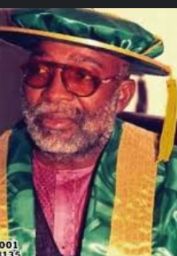







The Matter Between Me And Umar Damagum, By Hassan Gimba
For those who may not know, considering that I am a journalist and he is a politician, the first time I knew Ambassador Umar Iliya Damagum, the Acting National Chairman of the People’s Democratic Party (PDP), was in 1977, some 48 years ago.
When God brought us together at Government College Maiduguri, we were both teenagers, eager and ready to dive headlong into the world of adventure. We wanted to survey the world, savour its mysteries, learn from the experience it would offer us, become better humans, and collect the baton from those we saw at its helm.
Five years down the line, we all took our various paths and, pulled by the hands of fate, each went on to fulfil the call of destiny. And like the life of every human, each of us went through various forms of trials, tribulations, and successes that define what we all are today, lending credence to the truism that “man is the sum total of his experiences in life.” These experiences have shaped us and contributed significantly to our personal growth.
Although we were in different classes and hostels, our relationship has always been built on mutual respect and openness. Damagum was of sound mind and jovial. He loved jokes and was commendably fiercely independent. Despite his relatively small size, he was his own man and was loyal to his friends and mentors.
From those formative years, Ambassador Damagum has done wonderfully well for himself. His achievements have made those of us who love to say we are GOCOMAID products proud—especially those of us from the 1982 set.
A few weeks ago, though, he got upended over an issue left for him to prove his enemies wrong because whether he likes it or not, believes it or not, acts it or not, it is in public discourse. As a politician of his stature, he cannot escape allegations, false or true, and he cannot wish away criticisms even if he were a political saint. He is in the kitchen and must be ready to take the heat.
I formed this WhatsApp group four years ago for our college-year mates and did the same for our Shehu Garbai Primary school-year mates. Mates who have not met for years reconnect in these groups, and friendships are rekindled. In the primary school group, some left Maiduguri after General Murtala Mohammed created seven more states in 1976, and some left earlier due to relocation. The WhatsApp group brought us all back together.
Such groups are platforms where mates who fortune is smiling at try, individually or collectively, to pull up those who fortune is snarling at. It is also an avenue where mates can tackle each other for the good of all and society. It is also a place where you can put each other to task and challenge each other for the betterment of one another. It is also a place where you can ask any member, especially a public official whose activities are open to scrutiny by the public, for an explanation because his shame can rub off on other members and even the alma mater.
Therefore, if any of us hear accusations, false or true, against him that contradict what we knew him to be, it is incumbent upon us to bring them to his attention. I also expect the same if he or any of my mates hear of accusations against me that border on unethical deeds. This open communication is crucial for maintaining trust and understanding among us.
So, I brought up an accusation by Dele Adeyanju against the ambassador over his political activities for further clarification. Even though he posted an apology letter by Adeyanju, my friend took offence, accused me of envy, and assured me he would remain PDP chairman whether I liked it or not, a proposition neither beneficial nor harmful to me. I told him I would never have written positively about him on at least two occasions and allowed others to project him beautifully in my newspaper if I was not proud of his achievements.
From a tender age, I have been lucky to realise that envy is not only from the devil but a disease that debilitates the soul and affects the countenance. I also learned long ago that the heart is a good fertiliser, so I planted love rather than hate and jealousy in mine. If I were to envy someone (to imitate), it would be one whose soul, illuminated by knowledge, approaches the throne of the Creator, for at my age now, I am much nearer that side than this. But perhaps he was looking at it from the adjectival prism, hence his protective anger.
But talking about age and inferring jealousness (that was what he meant), I know that if I were to enter politics today, which I would not, I would never come near where Ambassador Damagum has reached. And if he were to enter my profession today, he would enter his grave without acquiring a quarter of what I know. Surely, he may be wealthier, but that may bother only those who worship money and do everything with it in mind.
Again, what would further debunk the perception of jealousy can be derived from an incident when he wanted to contest for the governorship of our state, Yobe, in 2023. We met in Maitama at the house of a senior politician from Yobe, our mutual benefactor. On seeing me, he told him, “Your Excellency, dama ina so na kawo karan Hassan wajen ka…” or “I have wanted to report Hassan to you; he is not supporting my ambition.” I did not allow the respected elder to speak but quickly said, “I just saw your intent on Facebook; however, I am already committed to the ambition of Mai Mala.”
To be fair to him, he did not pursue it, telling us, “I understand; I know you have come a long way since the days of the Advanced Congress of Democrats (ACD).” We left the matter there, never to be brought up again.
Nonetheless, that did not stop me from calling three of our classmates, Umar Ibrahim Biu, then a director with the Central Bank; Liman Shettima, chief procurement officer at the University of Maiduguri; and Mohammed Mai Luku, a retired Yobe State auditor, and telling them to call for a meeting of the old boys to drum support for him. I told them I would not attend because I was committed to the Mai Mala project, but “for psychological and solidarity reasons,” they should call the meeting. I told them it was the least we could do for him because he had the habit of assembling and entertaining mates in his house.
Yet, I am a journalist. He is a politician. While I am used to probing and prodding for answers, he is used to hedging and surreptitious planning. Nevertheless, at our ages, being grandfathers with stakes in Nigeria, we must unite to strengthen our constitutional democracy. Nigeria, after God, must rank the highest on our list of priorities. It is more so for him because he is at a point in his life where his name can be written in Nigeria’s history, either with gold ink or charcoal.
Having said all this, I believe, and I agree, that every man is free to follow his chosen path. Either narrow, bushy, thorny, and challenging but noble, or cruise on the smooth and wide autobahn that is comfortable but perditious. After all, even the God who created us and sent us messengers with truth gifted us the free will to decide which path to ply.
Hassan Gimba, anipr, is the publisher and CEO of Neptune Prime.