

Battle Against Houthi Militia: Saudi Arabia Signs Deal With Yemen
 Yemen’s deputy prime minister Ahmed Saeed al-Khanbashi (R) and the Southern Transitional Council representative Nasser al-Habci shake hands during a the signing ceremony. Photograph: Anadolu Agency/Anadolu Agency via Getty Images
Saudi Arabia has formally signed as a power-sharing agreement with Yemen to end the lingering crisis in the region.
Announcing the agreement today, November 5 in Riyadh, Saudi Arabian federal capital, Crown Prince, Muhammed bin Salman, explained that the deal of power-sharing is between Yemeni government and the Southern Transitional Council.
According to a statement from Riyadh, the agreement was jointly signed in the presence of Crown Prince Mohammed bin Salman, Sheikh Mohamed bin Zayed, Crown Prince of Abu Dhabi and Deputy Supreme Commander of the Armed Forces, Yemeni President Abdrabu Mansur Hadi and General Aidrous Al Zoubaidi, the leader of the Southern Transitional Council, Nizar Haitham.
The spokesman of the Southern Transition Council (STC), who issued the statement said: “signing the agreement, which is the fruit of long and relentless efforts exerted by our brothers in Saudi Arabia and the UAE, will be a turning point in the battle against the Houthi militia and a new stage towards strengthening relations between the Arab Coalition and the STC.”
The UN special envoy for Yemen, Martin Griffiths, congratulated both countries on the deal, saying: “the signing of this agreement is an important step for our collective efforts to advance a peaceful settlement to the conflict in Yemen.”
A communique emanating from the meeting goes thus:
Under the auspices of the Custodian of the Two Holy Mosques, King Salman bin Abdul-Aziz Al-Saud, and in the presence of His Royal Highness, the Crown Prince of the Kingdom of Saudi Arabia, Prince Muhammad bin Salman, and His Royal Highness, the Crown Prince of Abu Dhabi, Sheikh Mohammad bin Zayed, and the Yemeni President, Abd Rabbo Mansour Hadi, and members of the Southern Transitional Council, the Riyadh Agreement was signed today.
Salient points of the Riyadh Agreement:
● The patronage of the custodian of the two holly mosques king Salman bin Abdul Aziz and HRH crown prince to
Riyadh Agreement reflects the Saudi leadership Keenness to safeguard the strategic interest of Yamen and stability and sovereignty of yamen ..
– The presence of the
YAMANI president Abdu Rabu Hadi and both government and transitional Council Delegates who is going to sign the Riyadh is the guarantee to implement the this agreement fully ..
– the participantion of Shiekh Muhammad Bin Zaid is an evidence of the solidarity unification and solidarity of the Arabian alliance to restore the Yamni legitimacy and the Keenness of UAE to fully support the Riyadh agreement and restoring peace stability and national unity of yamen and also rejection of the Iranian sectarian agenda in Yamen
– The Riyadh Agreement emphasizes strict measures to manage the country’s financial resources in order to achieve economic stability and raise the efficiency of expenditure,, and activating the role of parliament in the fields of evaluation and control.
● The Riyadh agreement stresses joining efforts to restore security stability and sovereignty in Yemen, and combat terrorism. This will be achieved by reorganizing and training counter-terrorism special forces, consistent with the Coalition’s objectives to establish regional and international security, and its keenness to maintain security, reject all forms of extremism, and expose its sources.
● The Kingdom is a key player to any solution in Yemen and the region, and has managed this dispute with wisdom that prevented bloodshed among Yemenis, and led to a peaceful, consensus-based solution built on key principles and reference points.
● The Arabic Coalition to restore the legitimate government appreciates the response and cooperation of all parties in reaching a peaceful solution to the crisis and an agreement that prioritises Yemen’s strategic interests and contributes to its security and stability.
● The Kingdom supports a peaceful political solution to the Yemeni issue. The Riyadh agreement calls for optimism that a solution to all crises in Yemen can be found if there are honest intentions on all sides to reach such a solution.
● The Riyadh agreement reaffirmed commitment to the three terms of reference: the Gulf Initiative and its executive mechanism, the outcomes of the comprehensive national dialogue, and UN Security Council Resolution 2216.
● The Riyadh agreement included mechanisms and arrangements for activating the roles of all Yemeni state authorities and institutions, and reorganizing the military and security forces under the leadership of the Ministries of Defense and Interior.
● The Riyadh agreement affirmed commitment to full civil rights for all Yemeni people, renouncing regional and sectarian discrimination and divisions, and halting all kinds of negative media campaigns among all parties.
● Yemen is on the verge of a new developmental phase, led by a government of politically competent individuals, and comprised of no more than 24 ministers with established competency, integrity, and expertise. The National unity government will work in full harmony under Yemeni President Abd-Rabbu Mansour Hadi, with a mission to unify the nation and activate state institutions to serve all Yemeni citizens and meet their living needs.
● The appointment of leaders, governors, and officials must be based on competence, integrity, and expertise. None of the appointees shall be individuals who participated in the fighting in Aden.
● The new developmental phase focuses on the transparent management of state resources, combating corruption through activating accountability and monitoring bodies, and forming the Supreme Economic Council and fortifying it with persons of experience and integrity.
● The military and security forces in the southern provinces will play a role in enhancing security and stability, and maintaining the security of state institutions, after being reorganized under the leadership of the Ministries of Defense and Interior
● The return of the prime minister to Aden will allow him to activate state institutions and to start paying the salaries of military personnel and civil servants, and to form the new government.
● The Riydh agreement respects the demands of all Yemeni sides, including those related to the southern issue, through political dialogue and action, maintaining security, and economic growth.
● The Kingdom respects all the components of the Yemeni people and respects what they agree on in the future. Its role is to support Yemen and its people to achieve security and stability.
● The Kingdom has supported Yemen politically, militarily, developmentally and in the provision of aid in all provinces to restore the state, end Iranian interference, and combat terrorism.
● The Kingdom values the role played by the UAE to reach this agreement, which prioritises the strategic interests of Yemen and contributes to its security, stability, and unity.
 President Muhammadu Buhari has lamented over a combination of economic sabotage by some politicians and oil companies to shortchange Nigeria in the last 25 years.
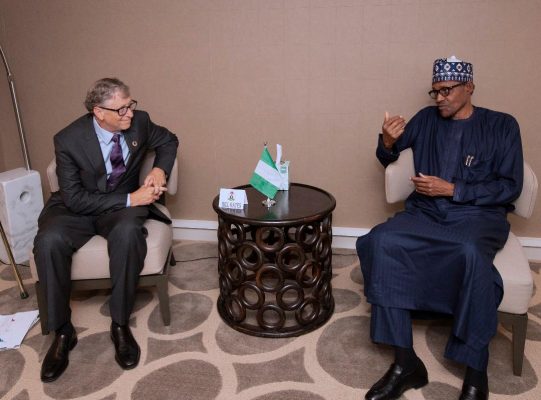 About three years ago, President Muhammadu Buhari visited the Kingdom of Morocco. He asked King Mohammed VI to give Nigeria from their rich phosphate mineral so that fertilizer can be produced here at home for the teeming farming population. Agreement reached, President Buhari set up a Presidential Fertiliser Initiative in his office.
 The People’s Democratic Party (PDP) has given an early indication that it will float the current governor of Rivers State, Nyeson Wike, serving his second and last tenure as governor as its Presidential Candidate for the 2023 election.
 President Muhammadu Buhari has congratulated the President of African Development Bank (AfDB), Dr Akinwunmi Adesina, Board of Governors and members of staff on historic increase of its capital from $93 billion to $208 billion, placing the multilateral institution on a stronger pedestal to drive growth and development on the continent.
 President Muhammadu Buhari’s four-day visit to the Kingdom of Saudi Arabia came to an end on Saturday. The President participated in the Future Investment Initiative, which was christened “Davos in the Desert”. Apart from attending the summit, which had a debating format for global leaders, investors and innovators to compare notes and share ideas, President Buhari held extensive talks with the Kingdom’s rulers, King Salman bin Abdulaziz and his son, the powerful Crown Prince Mohammed bin Salman, MBS. The Presidents meetings with the two prominent rulers marked an important upswing in relations between Nigeria and the Kingdom of Saudi Arabia.
 Former Executive Secretary of Universal Basic Education (UBEC), Professor Ahmed Modibbo, has accused the governors of 19 Northern States of frustrating the integration of Almajiri schools into the basic education system.


Towards A New Deal For Nigeria, By Abba Kyari
The decision by the National Assembly to amend the Deep Offshore (and inland basin production sharing contract) Act is a huge victory for Nigeria. The articles and clauses of complex legislation may not appear to be the stuff to set pulses racing. But there should be no doubt: this is a watershed moment for our economy, our
As a result of this amendment, Nigeria could earn an extra billion dollars a year from our oil. These are funds that will help restore our schools and hospitals, repair our roads and infrastructure and give our armed forces the support they need to keep us safe. That is a big win. But it is about more than just the money.
There is no doubt that the Deep Offshore Act had to change. The original law that provided for the operation of oil licences in deep water was introduced by the military regime back in 1993. New techniques in drilling and computer modelling were then beginning to emerge, allowing for the exploitation of oil in water depths that had previously been impossible. Fiscal terms were based on the industry’s long-term outlook for oil prices of around USD18-20/ barrel, above which profits were hardly taxed at all.
Crucially, the 1993 contract provided only for a review of terms. Oil passed USD20 barrel in 2003 but companies could, and did, refuse to accept any changes. The ‘business as usual’ lobby made sure that every attempt until now to amend the law ended in failure. But more than 25 years on, advances in technology have substantially reduced costs to industry and oil has consistently traded way above that anticipated range. For international oil companies, this has been a regulatory bonanza. A better balance between reasonable profits and a fair tax regime would years ago have delivered the billions we need to invest in Nigeria’s future.
The amendment calls time on this contractual anachronism. But it should not be seen in isolation, or as a ‘one off’. President Muhammadu Buhari pushed for the amendment as part of an ambitious programme to overhaul a corruption-saddled and under-performing oil and gas sector.
This is the key to the delivery of a more diverse and productive economy that will provide the jobs and sustainable growth we need in the coming decades to end poverty and raise living standards. Headline increases in our GDP will be matched by policies that ensure growth is inclusive and evenly shared, and provide protection and opportunity for the most vulnerable.
The President has worked with the 9th National Assembly, its leadership and members, to deliver this amendment. This is the kind of partnership that we have seen all too rarely since the restoration of democracy in 1999. We have shown how national institutions, the executive and legislature, can come together to work for the common good and the National Interest.
A sense of patriotism and the drive to deliver reform is replacing the sterile self-interest that has for too long dominated public administration. The passage of the amendment shows that the 9th National Assembly has the ambition and commitment to help make the real changes Nigeria needs if we are to move forward. The Senate and House of Representatives have shown that we can replace exploitation of the system by the few for the benefit of the few with a new spirit of co-operation – to build a fairer, more efficient system for the benefit of rich and poor alike.
Our vision is for an oil and gas industry that is attractive to investors and competitive in a crowded international market. Operations should be driven by commercial principles, transparent and free from political interference. We will deliver a new deal for host communities and proper guarantees for environmental standards.
The Collins English dictionary defines a free-for-all as “a situation in which several people or groups are trying to get something for themselves and there are no controls on how they do it.” We need an oil industry that is fair for all its stakeholders, to move towards a new partnership that ends the adversarial dysfunction and searching for loopholes that has become the norm.
The amendment is important for three reasons: it brings our laws and taxes into the 21st century; it shows that our institutions are effective and resolute in support of the National Interest; and that President Buhari means business. As Britain’s wartime prime minister Winston Churchill once said, ‘This is not the end. It is not even the beginning of the end.’ We have a lot of work to do. But this amendment shows where we are going – and that now, within our grasp, is a Nigeria that works for us all.