Six students of a school in Kaduna state and two staff members kidnapped a fortnight ago from their dormitories were said to haven been. Armed assailants had kidnapped the six students, school vice principal and matron in a dawn raid on their mixed boarding school on October 3. A statement by the state commissioner for internal security and home affairs, Samuel Aruwa said:”the students and staff of the Engravers College who were abducted have regained their freedom today.” Samuel Aruwan did not say how the kidnapped students were released or if a ransom was paid eventhough the state governor, Mallam Nasir El-Rufai had told reporters days after the abduction that the kidnappers had made contact demanding ransom payment. Although the governor declined to give details of those demands, some parents of the hostages said the abductors had demanded 50 million naira ($140 000) for the release of their daughters.
Catholic bishops gathered at a special Vatican assembly today, October 26 and called on Pope Francis to open the priesthood to married men in the Amazon, as well as giving women a greater role to play and making damaging the environment a sin. The bishops issued a list of recommendations at the close of a three-week “synod” on the Pan-Amazonian region which highlighted challenges such as the destruction of the rainforest, the exploitation of indigenous peoples and a scarcity in priests. This was even as pontiff said that he would addressing the issues before the year ends. The text could have repercussions not only for the vast, isolated territory, but the whole of the Roman Catholic Church. The synod brought some 184 bishops to the Vatican, over 60 percent of whom hail from the nine Amazon countries. Together with representatives of indigenous peoples, experts and nuns, they discussed a multitude of regional concerns, from climate change to poverty, land-grabbing, mercury-polluted waters and violence against women. The most hotly-debated question was whether or not to allow “viri probati” — married “men of proven virtue” to join the priesthood in remote locations, where communities seldom have Mass due to a lack of priests. It would not be necessary to rewrite Church law; the bishops simply asked Francis for an exemption to the rules — like the one already granted to married Anglican pastors who later converted to Catholicism. “Sometimes it takes not just months but even several years before a priest can return to a community to celebrate the Eucharist, offer the sacrament of reconciliation or anoint the sick,” the synod document said. It suggested ordaining as priests “suitable and esteemed men of the community” who had “a legitimately constituted and stable family”. But the ultra-conservative wing of the Catholic Church — particularly in Europe and North America — has spoken out strongly against the idea, warning that making exceptions could pave the way to the abolition of celibacy globally. The bishops also urged the Argentine pope to make “the acts and habits of pollution and destruction of the harmony of the environment” an “ecological sin” or the breaking of a divine law. It called for the Church to lead the battle against “our culture of excessive consumption”, saying “we must reduce our dependence on fossil fuels and the use of plastics. They also proposed creating a “world fund” to protect the Amazon and its indigenous communities from “the predatory compulsion to extract their natural resources by national and multinational companies”. The document also called for an official recognition by the Church of the key role played by lay women in the evangelisation of indigenous people by creating a formal specific role, or “ministry”, called “woman leadership of the community”. There are some in the Church who would even like them to be allowed to become deacons, a function currently reserved for lay men. A representative of one of the Amazon rainforest’s ethnic groups reads a document Male deacons, who can be single or married, are able to baptise, witness marriages, perform funerals and preach homilies. Pope Francis said that he would reconvene a commission to study the history of female deacons in the early Catholic Church, after the body’s initial report – delivered to the pontiff this year – was inconclusive. Two thirds of the indigenous communities without priests are guided by women. “We still have not grasped the significance of women in the Church. Their role must go well beyond questions of function,” Francis said.
Governor Simon Lalong of Plateau has narrated how his uncle, Stephen Sule adopted him and contributed greatly to making him what he is today. The governor who spoke today, October 26 at a memorial Mass in Shendam for Stephen Sule, and other deceased relations, said that the late Stephen Sule adopted him as his son. “Late Sule went to his brothers in the village and told them that he wanted a male child to train because there was no primary school in Ajikamai, my village, then. “Quickly my father gave me to him, saying take this one, he is your son, henceforth. “I met other children in his house and all of us were using his name. “It was my uncle that told me when I was in form five that I had now grown up, and that I should change to my father’s name. “He told me that I am the first son, if I don’t change it, my siblings would be confused. “I changed to my father’s name and today it has become a subject of litigation.” The governor prayed to God for the repose of the soul of his uncle whom God used to help him to become what he is today.
“So say it loud and let it ring; we are all a part of everything; the future, present and the past; fly on proud bird; you’re free at last.” ~Charlie Daniels, an American singer, songwriter and multi-instrumentalist On October 28, last year, the curtains fell, bringing the life and times of the Iyasele of Esanland, Chief Anthony Akhakon Anenih, to a celebratory terminus; and so, he joyfully departed this terrestrial plane for a place in the celestial realm that typifies the future. Anenih passed on a few weeks after his 85th birthday, which he soberly marked on August 4 (2018) in a low key-fashion. Perhaps, beyond the economic reason that he had cited for not celebrating as he was wont to do, he had, unknown to us, begun a transcendental journey characterised by self abnegation, a detachment from the social and the worldly, for an immersion in the spiritual and the celestial. I remember how, in the twilight of his life and in his quietude, Anenih had always listened to gospel songs, his favourite being Steve Crown’s “You are Great”. He had, in fact, requested that the song be played for him while giving his address on the occasion of the reception he organised at the International Conference Centre, Abuja, in 2016 to thank God for giving him a second chance to live after his major heart operation in 2015. He had taken the opportunity of the thanksgiving to present to the public his autobiography titled: “My Life and Politics”. Those of us who were very close to the influential political warhorse knew that the colossus would one day go the way of all mortals. We carried on and helped him to play his part well while here. We contributed our little quotas in helping him to define his eon with the magnitude of his politics. At different intersections, he had the benefits of having committed men to work closely with him in government and out of government. In politics, where he became something like an avatar, he had tended to the needs of his tribe of loyalists, becoming a formidable rallying point. The exertions that came with that responsibility were not going to last forever, though. Yet his expected transmutation at some point, when it came on October 28, 2019, was like the passage of a Comet. He left behind a body of legacies in business and politics. It was in politics that he cut a national niche for himself. But interestingly, it was in politics that he was caught up in the fundamental contradictions of real and imagined identities. Certainly, it was not an identity crisis. It was a crisis of perception by the significant others, which manifested in the garb of a somewhat deconstructed persona. This was a comfortable resort to those who were at the receiving end of his political legerdemain; they were quick to deprecate and demonise him as “Mr Fix It”. To those who were beneficiaries of his eleemosynary acts, he was a benevolent political leader who was touched with the feeling of their infirmities. It was thus not surprising that a rash of controversies was spawned around his personality and his politics. The contextualization of his personality within his politics or vice versa had brought him fame; it had also brought him scorn. In keeping fidelity with the obligation to document his odyssey for posterity, he had through the medium of his autobiography summed up his essential politics, clearing a number of misconceptions in some quarters. From his foray into politics in the second republic where, as State Chairman of National Party of Nigeria (NPN) in old Bendel State, he was instrumental to the emergence of Samuel Ogbemudia as governor the State, Anenih’s tactical role in politicking and electoral matters received public approbation and appreciation subsequently. His functionality would later receive further validation as Chairman of the Social Democratic Party (SDP) under whose leadership Chief MKO Abiola won the June 12, 1993 presidential election that was annulled by the General Ibrahim Babangida’s administration. His leadership was understandably harangued by some persons who felt that the SDP leadership traded off Abiola’s mandate. Anenih’s autobiography serves as his living voice in the eternal controversy and complex narratives that will continue to dog the annulment of the June 1993 presidential election, regardless of the fact that the President Muhammadu Buhari administration has declared it as Nigeria’s Democracy Day, instead of May 29. Anenih’s role in Nigeria’s presidential politics was writ large. It continues to enjoy historical reference even after his demise. Posterity will glean from historical accounts how the retired Police Commissioner turned businessman-politician rose through the haze of the nation’s cloak and dagger politics to become an executor of campaign and electoral strategies that had, in the fourth republic, produced as presidents, at different intersections, Olusegun Obasanjo, the late Umaru Yar’Adua and Goodluck Jonathan. Like an Octopus, Anenih’s ubiquity in the nation’s political waters was legendary. His political opponents loved to hate him; whereas, his political circles had always found comfort and strength in his leadership. He was always trusted to deliver. Where he was not trusted to deliver, and thus denied the free reins to assume the command room, the result had always been disastrous. To appreciate, somewhat, the politics of Anenih and how he deployed his deftness in moderating the dialectics that it produced, a run through his autobiography would provide some understanding. The autobiography represents the essential summation of Anenih’s political trajectory. In a most significant way, Anenih had, before his transmutation, defined his eon with the enormity of his politics. His moniker as “Mr Fix It” measures the complexity of the narratives that were woven around his individuality as a consequence. Without a doubt, Anenih meant different things to different people. Like the proverbial elephant that was subjected to the appreciation of some blind folks, his persona continues to be differently described, dependent on the part that each blind person was able to touch. It was interesting that it was in his departure lounge of life that he made the greatest impact on party politics in Nigeria and also on humanity. Anyone above 70 years is considered to be in the departure lounge of life. But Anenih became Minister of Works and Housing in 1999 at the age of 66. He was a standard bearer of an enduring leadership that played an influential role on the political turf until 2015 when Nigeria witnessed an unusual outcome in that years’ presidential election. To be sure, Anenih enjoyed the grace of good health. He was therefore able to ply his political trade without much difficulty. He was consistent and persistent to the end. At 82, after stepping aside as Chair of the Board of Trustees of the Peoples Democratic Party (PDP) following the defeat of President Jonathan by President Muhammadu Buhari, he had a major heart surgery that slowed him down. He survived the 23-hour operation in a UK hospital where he was dubbed the “Miracle Man”. Since no one can cheat nature, at over 80, the body and the elements within would naturally and steadily depreciate. That became the lot of the Iyasele of Esanland until the domestic accident that culminated in his transition. On Monday, 28, 2019, the Anenih family holds the one-year remembrance thanksgiving Mass at St. Anthony Catholic Cathedral, Uromi and a reception in the family house at Uzenema, Arue, Uromi, thereafter in his honour. The late Chief Anthony Akhakon Anenih left behind good legacies for posterity and continues to live in the hearts of those of us that he affected positively with the fountain of his humanity. Rest in peace, Owaren!
The United States budget deficit widened to almost $1 trillion in the latest fiscal year, surging to the highest level since 2012 as President Donald Trump cut taxes and boosted spending. The gap increased by 26 percent to $984 billion in the 12 months through September, representing 4.6 percent of gross domestic product, the Treasury Department reported Friday. The fourth straight increase confirms that the deficit under Trump is on pace to expand to historic levels. Few economists outside the administration expect the GOP’s $1.5 trillion in tax cuts to deliver a sustainable economic boost that would narrow the gap. The deficit — which has little precedent at these levels outside recessions or wartime — is set to widen further as spending increases for mandatory programs and interest payments. The ballooning gap has stirred vigorous debates over how much the government can borrow and spend without driving up interest rates or inflation. At the same time, price gains and yields remain historically low despite the expanding deficit. For the 12-month period, spending rose 8.2%, the most since 2009, totaling $4.45 trillion on increased outlays for the military, health care and education. Revenue advanced 4% to $3.46 trillion, helped by $70.8 billion in customs duties. For September alone, the surplus was $82.8 billion, compared with $119.1 billion a year earlier. “President Trump’s economic agenda is working,” Treasury Secretary Steven Mnuchin said in a statement accompanying the release. “In order to truly put America on a sustainable financial path, we must enact proposals — like the president’s 2020 budget plan — to cut wasteful and irresponsible spending.” The non-partisan Congressional Budget Office has forecast that the deficit will top $1 trillion in 2020, with estimates showing a shortfall of about $1.2 trillion each year over the next decade. That would amount to nearly 5% of total gross domestic product, a measure that puts the deficit in context of the overall economy. Trump’s 2020 election bid is beginning to ramp up and he’s eager to show that his three-pronged economic agenda of tax cuts, deregulation and new trade deals have spurred growth. However, key indicators, such as business investment in equipment and machinery, have cooled lately despite incentives from tax policy. In addition, the trade tariffs are causing businesses to become hesitant with spending, while research has shown that the tax cuts are most favorable to higher-income Americans. The president has repeatedly blamed the Federal Reserve for hampering the economy by raising interest rates too high last year and failing to cut quickly enough. The central bank is projected by economists to cut interest rates next week for the third time in three months. Officials may also telegraph that they are likely to pause for some time before making another rate move. Fed Chairman Jerome Powell has repeatedly warned that the U.S. is on an unsustainable fiscal path. But economists are revisiting traditional ideas about how much debt can be issued, and markets don’t appear worried. Democratic candidates seeking to challenge Trump in 2020 are pushing plans to widen access to health care and education that could cost trillions of dollars. And yields on U.S. Treasuries have fallen sharply this year to the lowest level since 2016 amid a weaker growth outlook as well as investors seeking better returns than even lower-yielding bonds from overseas. The deficit may have exceeded $1 trillion had it not been for the trade war with China, where Trump has escalated levies over the past year. The customs-duties revenue represented a 71% increase from 2018, as American companies paid more at the border for Chinese imports, steel and other goods. While the countries came to a preliminary agreement that’s delayed at least one planned increase in levies, current tariffs aren’t being rolled back yet. Government outlays have provided a sizable boost to U.S. GDP amid a slowdown in business investment. Federal spending rose at an annualized pace of more than 5% in the first half of the calendar year, more than double growth in the economy as a whole, according to the Commerce Department. That was helped particularly by military spending. The tax cuts have also been credited with helping juice economic growth last year. Yet the effects of the reductions have since faded. Even without the tax cuts and higher defense spending, outlays are increasing at a relatively fast clip. Mandatory allocations, which include Medicare and social security payments, are growing amid an aging population and with one of the world’s least efficient health-care systems. Interest payments are also adding up, now comprising about 8.4% of total outlays. Source:Bloomberg News.
Bayelsa State Commissioner for Mineral Resources, Markson Fefegha who resigned his appointment and membership of the Peoples Democratic Party (PDP), has returned to his post, blaming his resignation in the first place on Communication gap between him and the State governor, Seriake Henry Dickson. In a letter announcing his return to the party today, October 24, Markson Fefegha said: “it is with a deep sense of responsibility that I address my colleagues, political associates and supporters through this medium. “You will recall that I resigned my appointment as Commissioner for Mineral Resources on the 18th of October, 2019 because of what I perceived as ‘political uncertainty’ and other considerations. “This was due largely to the communication gap between me and His Excellency, Henry Seriake Dickson, Governor of Bayelsa State at the time. Having met and discussed with him, I have reconsidered my decision to remain in the party and the government. “Over the years, we have a shared bond of friendship and the mystic cord of brotherhood, which cannot be sacrificed on the altar of political exigencies. “I shall continue to lavish adulation to his developmental efforts and quality of leadership to Bayelsa State and the Ijaw nation “I urge all my supporters to remain steadfast and continue to support the Peoples Democratic Party. “Let us join hands together to build a prosperous Bayelsa State. I thank you for your understanding.”
The United Nations building in Abuja, Nigeria, which was bombed a couple of years ago by Boko Haram terrorists has been rebuilt and today, October 24, commissioned by the minister of the Federal Capital Territory, Muhammad Musa Bello on behalf of President Muhammadu Buhari. The President, in the message sent through the minister, gave assurance that Nigeria will remain resilient in the face of acts of terrorism “designed to break our spirit.” He said that the commissioning of the building was part of the efforts that had been made over the years in the fight against terrorism even as he reassured the UN family, other visitors and Nigerians of their safety and comfort. President Buhari stressed that the efforts of the UN over the years in confronting global issues such as international conflicts, health and humanitarian matters, climate change and environmental degradation, have continued to yield positive results around the world. According to him, all such efforts have shown that the UN is making the world a much better place. The President congratulated the UN for the celebration of the 2019 UN Day and pledged Nigeria’s commitment to serve as a good host to the UN family. He encouraged the staff to build bonds of friendship with locals towards strengthening the growing sense of a loving community outside the UN environment. In his welcome remarks, the UN Resident and Humanitarian Coordinator, Edward Kallon, commended President Buhari and people of Nigeria for the unwavering support for the UN and commitment to the rebuilding of the bombed UN house. He stressed that the rebuilding of the house was a demonstration of Nigeria’s resolve to tackle terrorism and refusal to bowed to it. Kallon said that the UN humanitarian work in the North East still remains a priority and expressed the hope for more synergy with relevant Ministries, Departments and Agencies (MDAs), especially with the creation of the Ministry of Humanitarian Services. Please The theme for the 2019 UN Day celebration in Nigeria is, “The future we want, The United Nations we need: Reaffirming our collective commitment to multilateralism.” The FCT Minister, on behalf of President Buhari also laid a wreath in memory of those who lost their lives during the August 26 2011 bombing of the UN House and cut the ribbon to commission the rebuilt UN building.
National Judicial Council (NJC) has set up a panel to investigate eight judges for various offences even as it recommended appointment and promotion of others. Council, headed by the Chief Justice of Nigeria, Dr. Justice I. T. Muhammad, at its meting yesterday, October 23 deliberated on the Report of its Preliminary Complaints Assessment Committee and decided to empanel eight Committees to investigate eight Judicial Officers from amongst the 35 petitions written against 37 Judges of the Federal and State High Courts. It said that the remaining petitions were summarily dismissed for obvious and manifest lack of merit, being subjudice, concerning administrative matters, or that such petitions were matters for appeal. “The dismissed petitions were against Hon. Justice Adamu Abdu-kafarati, the immediate past Chief Judge of the Federal High Court, Hon. Justices Anduwi Chikere, H. I. O. Oshoma, Ayo Emmanuel all of the Federal High Court, Hon. Justice J. D. Peters, National Industrial Court of Nigeria, Hon. Justice S. E. Aladetoyinbo (Rtd), of the High Court of the Federal Capital Territory, Hon. Justice Opeyemi Oke (Rtd), Chief Judge of Lagos State, Hon. Justices K. A. Jose, S. S. Ogunsanya, T. A. Oyekan-Abdullahi, O. O. Femi-Adeniyi and D. T. Okuwobi, all of the Lagos State High Court of Justice. Hon. Justice Mojisola Idayat Sule, Oyo State High Court, Hon. Justices R. D. Harriman, A. O. Omamogbo, Michael Nduka Obi, High Court of Justice, Delta State, Hon. Justice E. N. Thompson, River State High Court, Hon. Justice Inaikende Eradiri, High Court, Bayelsa State, Hon. Justices N. B. Ukoha and B. C. Iheka of High Court of Justice, Imo State, Hon. Justices F. I. N. Ngwu, R. O. Odugu, Enugu State High Court, Hon. Justice Abdulkadir H. Suleiman, Bauchi State High Court and Hon. Justice Garba Abdulkadir of the Katsina State High Court of Justice. “Council also approved the recommendation of two Committees earlier set-up to investigate Hon. Justice Winifred I. A. Effiong of Akwa-Ibom State High Court of Justice and Hon. Justice Bello Aliyu Gusau of High of Justice, Zamfara State which absolved them of any judicial misconduct.” The Council, after considered the list of candidates presented by its Interview Committee, resolved to recommend to President Muhammadu Buhari and the Governors of Edo, Ondo, Akwa-Ibom, Kogi, Anambra, Taraba, Abia, Osun, Nasarawa and Jigawa States, twenty-two successful candidates for appointment as Justices of the Supreme Court, Heads of Courts and other Judicial Officers in Nigeria. They are: – 1. APPOINTMENT OF FOUR (4) JUSTICES, SUPREME COURT OF NIGERIA i) Hon. Justice Adamu Jauro, JCA (North-East Zone) ii) Hon. Justice Emmanuel A. Agim, JCA (South-South Zone) iii) Hon. Justice C. Oseji, JCA (South-South Zone) iv) Hon. Justice Helen M. Ogunwumiju, JCA (South-West Zone) 2. APPOINTMENT OF CHIEF JUDGE, FEDERAL HIGH COURT OF JUSTICE i) Hon. Justice Tsoho John Terhemba 3. APPOINTMENT OF PRESIDENT, NATIONAL INDUSTRIAL COURT OF NIGERIA i) Hon. Justice B. B. Kanyip 4. APPOINTMENT OF CHIEF JUDGE, EDO STATE HIGH COURT OF JUSTICE i) Hon. Justice Esther Amenaghawon Edigin 5. APPOINTMENT OF PRESIDENT, CUSTOMARY COURT OF APPEAL, ONDO STATE i) Hon. Justice Eunice Aderonke Alade 6. APPOINTMENT OF FOUR (4) JUDGES, OSUN STATE HIGH COURT OF JUSTICE i) Mathias Olusegun Agboola, Esq. ii) Sikiru Adeposi Oke, Esq. iii) Olorunfemi Judith Ajanaku, Esq. iv) Lawrence Olawale Arojo, Esq. 7. APPOINTMENT OF ONE (1) JUDGE, NASARAWA STATE HIGH COURT OF JUSTICE i) Bawa Sunday Baba, Esq. 8. APPOINTMENT OF ONE (1) JUDGE, AKWA-IBOM STATE HIGH COURT OF JUSTICE i) Nkeruwem Martin Obot, Esq. 9. APPOINTMENT OF ONE (1) JUDGE, KOGI STATE HIGH COURT OF JUSTICE i) Yahaya Adamu, Esq. 10. APPOINTMENT OF TWO (2) JUDGES, ANAMBRA STATE HIGH COURT OF JUSTICE i) Onyinye Samuel Anumonye, Esq. ii) Victoria Toochukwu Nwoye, Esq. 11. APPOINTMENT OF ONE (1) JUDGE, TARABA STATE HIGH COURT OF JUSTICE i) Goje Yahaya Hamman, Esq. 12. APPOINTMENT OF THREE (3) JUDGES, ABIA STATE HIGH COURT OF JUSTICE i) Benson Anya, Esq. ii) Enyinnaya Okezie, Esq. iii) Adiele Ogbonna, Esq. 13. APPOINTMENT OF ONE (1) KADI, SHARIA COURT OF APPEAL, JIGAWA STATE i) Ibrahim Alhaji Ya’u All the appointed Judges are expected to be sworn-in after the approval of the President and their respective State Governors and or confirmation by the Senate and State Houses of Assembly as the case may be.
Nigeria and Russia have signed an important Memorandum of Understanding (MoU), which will enable both countries’ oil giants, Nigerian National Petroleum Corporation (NNPC) and Russia’s Lukeoil to elevate commercial relationship to a government-to-government backed partnership. With the signing of the MoU today, October 24 in Sochi, Russia, NNPC and Lukeoil will work together in upstream operations and revamp Nigeria’s refineries. The Group Managing Director of NNPC, Mele Kyari and Vagit Alekperov, President of leading Russian oil company, Lukeoil, signed the MoU, which entails cooperation in deep offshore exploration of oil in Nigeria, production, trading and refining. The signing ceremony, which took place on the sidelines of the Russia-Africa Summit, was witnessed by the Minister of State for Petroleum, Timipre Sylva. President Muhammadu Buhari had earlier said that Nigeria is prepared to work with Russian businesses “to improve the efficiency of our oil and gas sector which provides us with the much-needed capital to invest in our security, infrastructure and economic diversification programmes”. President Buhari gave an assurance that his administration will “ensure this initiative is implemented within the shortest possible time.”
The World Bank has named Nigeria as one of the top 10 most improved economies in the world for the second time in three years. Nigeria is one of the two African countries to make this highly prestigious list. The Bank, in its report released today, October 24, also ranked Nigeria as 131 on its Doing Business Index (DBI) for the year 2020. This is a great improvement against last year’s position of 146. With this year’s leap, Nigeria has improved an aggregate of 39 places in the World Bank Doing Business index since 2016. The Doing Business Index is an annual ranking that objectively assesses prevailing business climate conditions across 190 countries based on 10 ease of doing business indicators. The index captures ease of doing business reforms that have been validated by the private sector, and offers comparative insights based on private sector validation in the two largest commercial cities in countries with a population higher than 100 million. The report consequently features Lagos and Kano for Nigeria. Commenting on the development, President Muhammadu Buhari said thatthe movement of Nigeria to 131 on its DBI and the recognition of the country as one of the top 10 most improved countries, is significant “because we were not even able to achieve some of the key reforms we had pursued, but what we have done so far is being recognized. This validation confirms that our strategy is working and we will continue to push even harder to deliver more impactful reforms.” He is sure that with the impending ratification of the Companies and Allied Matters Bill and the introduction of the Business Facilitation (Omnibus) Bill, 2019 in view, along with other pending and ongoing regulatory, judicial and sub-national reforms, “our mandate to move into the top 70 doing business destinations by 2023 remains achievable.” The Minister of Industry, Trade and Investment and Vice Chair of the Presidential Enabling Business Environment Council (PEBEC), Otunba Niyi Adebayo, who breifed the Present about the World Bank’s ranking said: “the steady improvement in Nigeria’s ease of doing business score and rank is a testament to the reforms implemented by this Administration over the past four years in line with the reform agenda being implemented at national and sub-national levels across the country since the establishment of the Presidential Enabling Business Environment Council (PEBEC) by President Muhammadu Buhari in July, 2016. “The PEBEC works towards the fulfillment of the projections of the Economic Recovery and Growth Plan (ERGP 2017-2020), which is striving to deliver sustainable economic growth in Nigeria by restoring growth, investing in our people, and building a competitive economy as we work towards delivering Mr President’s mandate of bringing 100 million people out of poverty. The 2020 Doing Business report from the World Bank has reaffirmed the commitment of the newly constituted PEBEC to making Nigeria a progressively easier place to do business and removing the bureaucratic constraints to doing business in the country as we forge ahead in this Next Level.” The Presidential Enabling Business Environment Council, chaired by Vice President Yemi Osinbajo, with 13 ministers as members amongst others, has through the Enabling Business Environment Secretariat collaborated with ministries, departments and agencies (MDAs), the National Assembly, the Judiciary, State governments and the private sector to carry out over 140 reforms so far in a bid to remove bureaucratic constraints to doing business in Nigeria and make the country a progressively easier place to start and grow a business. On the new ranking, Dr Jumoke Oduwole, Special Adviser to the President, Ease of Doing Business/Secretary PEBEC, said: “The private sector remains the fulcrum of the ease of doing business interventions. We are committed to more engagements among reform-implementing organs of government and the private sector players, and we are happy to see that these have resulted in a more favourable validation of the reforms by the private sector. This result will serve as encouragement to sustain the deepening of these reforms and make it even more tangible for businesses and the citizenry. The PEBEC is focused on delivering even more substantive reforms for the improvement of the general business climate.” She noted that over the past four years, Nigeria’s score has steadily improved in the World Bank Doing Business Report, after years of decline in both score and ranking in the years preceding 2016. She recalled that in 2017, Nigeria moved up by an unprecedented 24 places on the Doing Business rankings, and was for the first time ever, recognized as one of the top 10 reformers in the area of doing business that year.
We use cookies on our website to give you the most relevant experience by remembering your preferences and repeat visits. By clicking “Accept”, you consent to the use of ALL the cookies.
This website uses cookies to improve your experience while you navigate through the website. Out of these, the cookies that are categorized as necessary are stored on your browser as they are essential for the working of basic functionalities of the website. We also use third-party cookies that help us analyze and understand how you use this website. These cookies will be stored in your browser only with your consent. You also have the option to opt-out of these cookies. But opting out of some of these cookies may affect your browsing experience.
Necessary cookies are absolutely essential for the website to function properly. This category only includes cookies that ensures basic functionalities and security features of the website. These cookies do not store any personal information.
Any cookies that may not be particularly necessary for the website to function and is used specifically to collect user personal data via analytics, ads, other embedded contents are termed as non-necessary cookies. It is mandatory to procure user consent prior to running these cookies on your website.



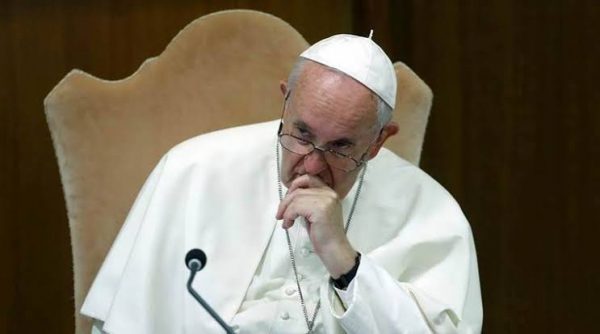 Catholic bishops gathered at a special Vatican assembly today, October 26 and called on Pope Francis to open the priesthood to married men in the Amazon, as well as giving women a greater role to play and making damaging the environment a sin.

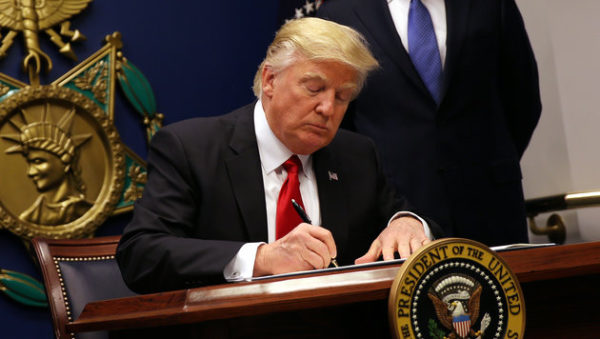 The United States budget deficit widened to almost $1 trillion in the latest fiscal year, surging to the highest level since 2012 as President Donald Trump cut taxes and boosted spending.
 The United Nations building in Abuja, Nigeria, which was bombed a couple of years ago by Boko Haram terrorists has been rebuilt and today, October 24, commissioned by the minister of the Federal Capital Territory, Muhammad Musa Bello on behalf of President Muhammadu Buhari.
 National Judicial Council (NJC) has set up a panel to investigate eight judges for various offences even as it recommended appointment and promotion of others.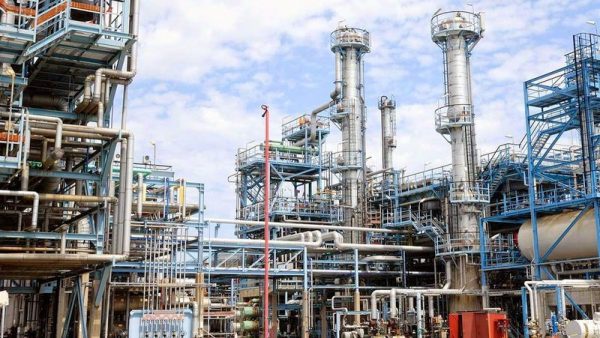
 The World Bank has named Nigeria as one of the top 10 most improved economies in the world for the second time in three years.
