The Central Bank of Nigeria (CBN) has made available the sum of $210 million, to meet customers’ requests in various segments of the inter-bank foreign exchange market.
In its quest to meet demands in the various segments of the market, the apex bank offered $100 million to authorized dealers in the wholesale segment of the market, while the Small and Medium Enterprises (SMEs) segment got a boost with the sum of $55 million.
According to figures obtained from the bank today, Tuesday, customers requesting foreign exchange for invisibles such as tuition fees, medical payments and Basic Travel Allowance (BTA), among others, were also allocated the sum of $55 million.
It will be recalled that the bank, last Thursday, intervened to the tune of $210 million to cater for requests in the wholesale segment of the forex market.
Meanwhile, the naira continued its stability in the FOREX market, exchanging at an average of N360/$1 in the BDC segment of the market as at today, Tuesday.
Former Nigerian military head of state, retired General Yakubu Gowon, has called for an urgent meeting of all leaders and elder statesmen in Nigeria to find ways of putting an end to the killings across the country, especially in Benue and Borno states.
The former head of state, who spoke in Owerri, the Imo State capital, when he visited Governor Rochas Okorocha ahead of the Nigeria Prays Group’s prayer rally in the Southeast, condemned the killings, saying that his heart bleeds at the rate at which innocent lives are lost daily.
“Without Peace, certainly, we won’t be able to grow any further. And this is what has been retarding Nigeria recently,” General Gowon said.
“Let us continue to pray but let us also play our own part to ensure that we are doing whatever we can to achieve the peace.”
Governor Okorocha wanted Nigerian to view the killings in Benue and other parts of the country as a national problem for which all the citizens should rise to face the challenge of tackling it, irrespective of political, ethnic and religious differences.
“As things stand, very little progress has been made in terms of finding a solution to the violence and killings. It started from Boko Haram, to herdsmen, to Niger Delta (militancy), to kidnapping.”
A 41-year-old armed robbery suspect, identified as ‘Pastor’ Fidelis Nelson (aka MP), and leader of dare-devil robbery gang operating within Lagos and Ogun states, has said that he went into robbery to raise money to build his church.
The self-styled pastor, who masterminded several robbery operations, confessed: “I have a pastoral calling; unfortunately I don’t have money to start my church. I have had the calling for years, but no finance to make it a reality.”
The father of three said that he and members of his gang carried out three robbery operations recently and “actually snatched three cars last month.”
The gang members met their waterloo on June 16, when the Police received information indicating that some robbers, who specialized in snatching cars in Ogun State, were bringing their loots to Lagos for sale, then laid ambush for them.
Max Air limited has concluded arrangements to announce domestic flights to all the major Airports in Nigeria in the next few days.
The Vice Chairman of the Airline, Alhaji Bashir Mangal, who disclosed this when he received the third aircraft earmarked for the domestic operation at the Malam Aminu Kano Airport in Kano, said that the Airline is putting the final touches on arrangement to commence the operation.
“For now, we are going to start with the three Boeing 737 and as situation improves, we will bring more aircraft into the system to ease the hardship being encountered by air travellers in the country.”
Alhaji Bashir Mangal said that from the inception in 2007, Max Air has been operating with seven wide bodied aircraft Boeing 747, concentrating mainly on the annual Hajj and Umrah 0perations in Nigeria.
He said that the Airline has recruited good hands, including Pilots, Engineers, ground Staff and ground handlers to take care of the domestic operation nationwide.
Last week, Max Air concluded the airlift of over 5,000 Umrah pilgrims whom it airlifted to Saudi Arabia during Ramadan fasting period.
Max Air is also expected to participate fully in the Hajj Airlift of Nigerian Pilgrims this year, just as it participated in the evacuation of pilgrims in the West African Sub region in recent years.
It has been ten years since the self-styled “strong man of Ibadan politics”, Chief Lamidi Ariyibi Akanji Adedibu, died. He died on June 11, 2008. I do not recall seeing many tributes or advertisements in the newspapers or other media commemorating his life and legacy. There was no public lecture or any important statements from those who were his protégés. That this is so is a useful lesson to today’s political Godfathers and henchmen in Nigerian politics who behave as if history has already assigned to them an immortal space on its pages.
Lamidi Adedibu was a colossal presence in the politics of Ibadan, and Oyo state for more than 50 years. Ibadan has a tradition of colourful politicians who wielded enormous influence: Adegoke Adelabu, the brilliant orator and intellectually gifted personality who authored “Africa in Ebullition”, and whose use of the phrase “peculiar mess” got transliterated by his illiterate audience as “penkelemesi”; Chief Mojeed Mobolanle Agbaje, the first Ibadan man to become a lawyer, and son of Alhaji Salami Agbaje of Ayeye, Ibadan who was the richest man in Ibadan in his time and the first to ride a car (1915) and build a house with cement; Chief Meredith Adisa Akinloye, an alumnus of the London School of Economics (LSE), founder of the Ibadan People’s Party (IPP), Chairman of Ibadan City Council and in the Second Republic, Chairman of the National Party of Nigeria (NPN); and Alhaji Busari Adelakun, the “Eruobodo” (“the river fears no one”) of Ibadan politics. There is hardly any other Ibadan indigene apart from these gentlemen who has been more influential in shaping the tone and shape of Ibadan politics and by extension, the politics of Oyo state. Local Ibadan politics is a combination of thuggery, populism, inconsistency, clientelism and intellectual opportunism, with service to the people thrown in as a lower measure.
Lamidi Adedibu lacked the intellectual gifts of Adelabu, Agbaje, and Akinloye, or the oratory of Adelabu – he was much closer to Busari Adelakun, who was his mentor. In an instructive book titled “What I saw in the Politics of Ibadanland”, Adedibu has already given his own eye-witness account from his beginning days with the Ibadan People’s Party and the Action Group, later the the National Party of Nigeria during the Second Republic, but he truly came into his own as the main Godfather of Ibadan politics with the ascendancy of the People’s Democratic Party in 1999 and especially in 2003 when he was recruited by President Olusegun Obasanjo for his second term bid. He filled the vacuum created by the exit of Alhaji Busari Adelakun, and in that aspect, he established himself as a master of the game using violence, mass appeal, and philanthropy to determine political outcomes. During the Second Republic, Alhaji Busari Adelakun was credited with having helped Chief Bola Ige of the Unity Party of Nigeria (UPN) to become Governor.
The main task of that branch of Ibadan politics represented by Adelakun and his followers, was to help deliver the votes, by any means possible. Adelakun would go from one polling booth to the other, and ensure that his clients won the vote. He was later rewarded with the position of a Commissioner (first Local Government and Chieftaincy Affairs and later, Health) in the Bola Ige government. Both men would soon fall out, and Busari Adelakun resigned in anger. He famously swore that nobody could ever occupy a position that he, Adelakun, left in anger. It then happened that his immediate successor in the Ministry of Local Government and Chieftaincy died in the hands of his own sibling. He was beheaded. Adelakun’s successor in the Ministry of Health also suffered stroke. He on account of this became a mythical figure. He would later defect to the National Party of Nigeria (NPN) with the threat that he would get Bola Ige removed as Governor. He supported Chief Victor Omololu Olunloyo who eventually became Governor. His word came to pass. But the Olunloyo government was short-lived. General Buhari struck in December 1983 and Adelakun and other NPN chieftains were herded into detention. He took ill in jail and died subsequently.
It was Lamidi Adedibu who sustained this tradition of prominent Ibadan politicians playing the role of the Godfather, and masters of the politics of clientelism. Unlike Adelakun, he didn’t have to follow the able-bodied boys, masquerading as members of the National Union of Road Transport Workers (NURTW), who snatched ballot boxes in those days and stuffed them. He had the entire city under his control in a manner nobody else before him did. Every major thug in the town reported to him, and he used them against the opponents, but he also at the same time took very good care of the ordinary people who delivered the votes to ensure victory for his clients and friends. Lamidi Adedibu, with the failure of the Alliance for Democracy in the 2003 election in Oyo state, became effectively the most influential politician in Ibadan politics, Oyo state politics, and one of the leading lights of the People’s Democratic Party (PDP). He held court and juggled the balls from his extensive home in Molete, Ibadan. That was where he held court. He was Ashipa Olubadan but he had his own palace – where he decided the political fortunes of politicians who came to him for help, or persons seeking political appointments. It was not for nothing that he was known as “Alaafin of Molete”.
His home was a palace unto itself. He was also the exponent of “Amala politics” – what is now known as the politics of stomach infrastructure. Every day, Adedibu kept his home open for the ordinary people of Ibadan. Whoever was hungry knew that if they went to Adedibu’s home, they would get a good plate of piping hot amala and a drink to wash it down. Ordinary people who could not pay school fees or hospital bills or rent went to him in his palace to ask for help. He supported them willingly. He was not a herdsman but he had a mini-ranch in his home, at any time, there were more than a dozen cows waiting to be slaughtered to feed the people, goats also, and rams and pigeons. Everyday in the Adedibu home was like a festival. He reportedly kept more than 100 vehicles, to be mobilized at short notice to pursue any political cause. The whole of Ibadan city came to regard Adedibu as the real government: he ran a government of his own. It wasn’t long before he became a national figure of real importance.
Prominent politicians visited him at home, and as they did, they brought bags of money, which in any case, Adedibu shared to the electorate. The politicians who took him as their Godfather expected him to help them deliver the votes on election day and the people who went to his house to eat and collect money waited on him to tell them how they should vote in every election. He would soon become so influential that the then Chairman of the PDP, Dr. Ahmadu Ali described him at a point, as the “garrison commander of Ibadan politics.” President Olusegun Obasanjo also visited him at home once, welcomed by a cavalcade of drums and pageantry, and he ended up describing him as the “father of the PDP”. Even politicians from other parts of the country who may not have needed him in their own constituencies, patronized him all the same. In his own immediate political constituency, his boys did as they wished. They unleashed violence on political opponents while the state authorities looked the other way. Adedibu was above the law. He was the ultimate Godfather. He once quipped: “…Let me tell you, constitution or law, that is for you men. God has his own law.” There was no one like that before him, and there has been no other like that after him. He projected himself as a Robin Hood, but he didn’t really like the poor, he used them for his own relevance.
In 2003, he had reportedly helped to install Senator Rasheed Adewolu Ladoja as Governor of Oyo State. He himself said so. That is what people like him do – they would help to install a client in a position of political authority. They would then afterwards collect rent in form of cash and appointive positions and exercise influence over public policy. Adedibu and Ladoja soon fell out. Adedibu told the public that he had a prior agreement with Ladoja that he must pay to him, every month, 50% of the state’s security vote, which was at the time about N30 million. Ladoja reneged, insisting that the security vote was meant for security. The Godfather became angry – he retorted that he was the main security of the state and did Ladoja realize that money was spent to get him into office? He swore to get Ladoja removed. And indeed he did. Eighteen out of the 32 members of the state House of Assembly, acting on Adedibu’s instructions, met and impeached Ladoja. His Deputy who was also an Adedibu protégé was immediately installed as Governor. After taking the oath of office, one of Christopher Adebayo Alao-Akala’s first assignments was to go straight to Adedibu’s home to pay homage. He went down on all fours to say “thank you.” Ladoja would later be reinstated by court order 11 months later, but the Godfather had made his point.
The kind of influence that the likes of Lamidi Adedibu wielded is a metaphor for the character and level of Nigerian politics. Godfathers still exist in today’s politics and the new Godfathers are just as messianic and as arrogant as their predecessors were. Violence also remains an instrument of persuasion and enforcement, even if since Adedibu’s exit, the level of violence in Ibadan politics has progressively reduced, across the country, many politicians routinely patronize thugs and enforcers. “Amala politics” still exists in form of “stomach infrastructure” – even when some politicians do not turn their homes into a public kitchen and abattoir, they patronize the people by bribing them with motorcycles or boreholes. In Benue state, Governor Samuel Ortom distributed wheel barrows with the inscription: “Gov. Ortom for you”. In another state, a serving APC Senator donated an electric pole to a community as constituency project and took photographs, in Kano state, Gov. Abdullahi Ganduje bought noodles, eggs, and beverages to empower tea hawkers. Now that we are in an election season, some other politicians will distribute cooked food, bags of rice or photograph themselves eating at amala joints or buying roasted corn by the roadside.
Our politicians have learnt to exploit the people’s poverty. Political Godfathers capitalize on this and turn it into a strategy. When the people are rescued from the poverty trap, they would be less susceptible to the greed and exploitation of politicians. Institutions also have to be built and strengthened to check the menace of Godfathers and their boys who decide electoral choices on the people’s behalf and by so doing, frustrate democratic expression.
As a human being, Adedibu was obviously a strong grassroots mobiliser. He was also a strong religious and community leader – he built 18 mosques – but his legacy of stomach infrastructure and political manipulation cannot endure in the long run. One week after his burial, his political acolytes returned hoping that his family will sustain the feast. They were turned back. The pots and pans used for cooking had been packed aside. Over 90 mattresses used by the army of boys that thronged the “palace” had been packed together in a heap to be disposed off. The amala-seeking crowd went over to the home of Alhaji Azeez Arisekola-Alao, an Ibadan politician and entrepreneur, hoping he would provide “amala”. Arisekola was a prominent philanthropist but he wasn’t running a public kitchen in his home. One of Adedibu’s sons, ended up in politics and became a Senator, but he did not follow in his father’s footsteps. Another son reportedly described the late politician as a “dishonest politician.”
Today, the Molete palace is desolate. The in-house ranch has disappeared. The Nigerian electorate, should be reminded that when a politician offers them food in exchange for their votes, that food will soon digest and end up in the toilet, and you’d need to eat again. When the politician dies, or leaves politics or no longer needs you, you’d still have to eat. It is better always to vote wisely and focus on the need to build and strengthen public institutions for the people’s benefit.[myad]
The Rector of Igbajo Polytechnic in Osun state, Olaolu Olugbenga, is now entangled in a case of having allegedly forged his doctorate degree (PhD) certificate.
The Rector, who is being detained by the Independent Corrupt Practices and Other Related Offences Commission (ICPC) in Ibadan, was also a former Acting Deputy Vice-Chancellor of Oduduwa University, a private institution in Ogun State. He was arrested by the anti-graft commission on Friday last week.
A statement by the commission today, Monday said that Olugbenga would be interrogated following a petition that accused him of working with fake Ph.D. certificate allegedly obtained from the University of Ibadan.
It was learnt that the University of Ibadan had disowned the troubled Rector when a copy of his purported notification of result was sent for confirmation.
“We still maintain our earlier stance on the matter. He did not graduate from the UI. We have no record of the certificate,” UI Public Relations Officer, Olatunji Oladejo, was quoted to have said.
Despite this, Olugbenga insisted that his certificate is authentic.
If found guilty, he would have violated Section 465 of the Criminal Code and Section 25 of the Corrupt Practices and Other Related Offences Act 2000, respectively.
President Muhammadu Buhari received members of the Supreme Council for Sharia in Nigeria at the Council Chamber, State House, Abuja.
President Muhammadu Buhari has lamented over the difficulty in running the government, especially with regard to appointments of Nigerians into the vital organs of the government.
He said that despite that he has all along been appointing people that were competent with much attempt to spread such appointments to cover the geographical zones of the country, both Muslims and Christians have accused him of bias.
Receiving leaders of the Supreme Council for Sharia in Nigeria at the Presidential Villa, Abuja today, Monday, was amused with the complaints that Muslims had been marginalized in appointments to government institutions such as the military and the civil service.
The President said that this had illustrated how difficult his job has been because he faced the same criticism from adherents of other faiths.
“I am in a difficult situation.”
Buhari admitted that he could be accused, rightly or wrongly of other things but not of stealing public funds and property.
“You cannot accuse me of stealing. I have appointed ministers and they are in charge. I appeal to their integrity. When they come here (Federal Executive Council) Chambers, we ensure they follow the due process. If I owned an oil well, I would have gone to jail.
“I am satisfied with what I am. I am happy I have kept myself and people close to me from benefiting from government contracts.”
The President said that he never awarded contracts and never cared about who got them as long as they did a good job at a cost that is justifiable to the nation.
“I have been in many places including (Ministry of) Petroleum. I would have gone to jail if I had taken an oil well. For integrity and honesty, I have no regrets. By this, I have contributed to my social safety. I won’t go to jail.”
On the issue of violent conflicts in some parts of country, President Buhari said that he is putting in his best, adding that he had since ordered a massive transfer of officers and men who had stayed three years and above in the troubled State.
The President appealed to the religious leaders to instruct their followers on the importance of possessing their own voters’ cards which he described as a “national entitlement,” and to preach justice to all which is an instituted pillar of Islam.
President Buhari said that he had received what he called “a stiff bill” from the minister of Information and Culture, Alhaji Lai Mohammed, for the restoration of the dilapidated infrastructure and facilities of federal government-owned radio stations in all states of the federation, promising that something would be done.
Speaking on behalf of the delegation, the Vice-President, Sheikh Hadiyyatullahi Abdulrashid commended President Buhari for accomplishing much of what he promised before his election even as he likened Buhari to the captain of a capsizing ship and the messiah needed by the country.
Sheikh Abdulrashid also spoke about the alleged marginalization of Muslims, violent conflicts between farmers and herders, the problems of drug abuse among youths and the fate of Federal Radio Corporation of Nigeria (FRCN) Kaduna, among other issues.
The Nigerian Air Force and the country’s police force have moved men, officers and war arsenals to parts of Plateau State that have been ridden by crisis and killings, perpetrated by both the indigenes and suspected herdsmen.
While the Air Force announces that deployment of Mi-35P combat helicopter and an Intelligence Surveillance and Reconnaissance (ISR), the police deployed its Special Intervention Force to the flashpoints, including Riyom, Jos South and others. The deployment of the ISR aircraft is expected to enhance intelligence gathering while the combat helicopter would conduct armed reconnaissance and other combat air support operations in close coordination with surface forces deployed to the State. Meanwhile, other NAF air assets are available at nearby alternate airfields to hasten the process of restoring normalcy in the State, as might be necessary. The Inspector General of Police, Ibrahim Idris said that the intervention is aimed at putting an end to the crisis, adding that for that purpose, a Deputy Inspector General of Police; Department of Operations is being relocated to Jos, capital of Plateau State to coordinate and supervise the operations on the ground. a statement from the police said that two Aerial surveillance Helicopters, five Armored Personnel Carriers (APCs), three police Mobile Force Units (PMF), two Counter Terrorism Cells (CTU ) and Police Intelligence Unit and conventional Police personnel from other States have been deployed to the affected areas.
It said that the police Aerial surveillance Helicopters and other components of the intervention Force are already in the State. Their arrival in the State has restored peace and prevent further attacks in the affected areas. “The IGP has directed the Commissioner of Police in charge IGP monitoring Unit to lead the Police Special investigation Team to the affected areas and other flash points in Plateau State. The investigation Team comprises the Intelligence Response Team ( IRT), the Special Tactical Squad (STS) and the Technical Platforms. The team is to carryout a thorough and discreet investigation into the killings and promptly apprehend those responsible. “The Police Special Intervention Force, also includes personnel of Force Criminal Intelligence and Investigation Department (FCIID) , detachment of Police Explosive Ordinance Department (EOD), Police K9 (Sniffer Dogs Section), Conventional Policemen, Special Anti Robbery Squads. The team that have started arriving are already working in synergy with the Plateau State Police Command to ensure that the peace and normalcy restored are sustained in the affected areas and other flash points in Plateau State. “To achieve success in this operation, the team will be proactive and strict in the enforcement of its mandates, Police standard operations procedures and rule of engagement will be fully adhered to. “The Police Special Intervention Force will ensure the full enforcement of the curfew imposed on the affected areas by the Plateau State Government. The personnel of the Police special Intervention Force will carry out twenty four (24) hours surveillance and patrol, stop and search of vehicles, and suspected locations and hideouts of the assailants . The Team will also engage in continuous raids of identified criminal hideouts and black spots, with a view to arrest promptly those responsible for the killings and nip in the bud and prevent any further attack, attempt to attack or cause any form of violence that can lead to killings and other criminalities in the affected areas. “The deployment of the personnel of the Police Special Intervention Force will equally cover communities, towns, villages, vulnerable settlements, Government and private infrastructures and facilities in all the affected areas and other flash points in the State. “Traditional rulers, religious leaders, Community Leaders, the Youth Groups, Public office holders, politicians, opinion leaders, parents and guardians are hereby called upon to prevail on their subjects, adherents/followers, children and wards to support the personnel of the Police Special Intervention Force in the discharge of their responsibilities, and implore them to allow Police Investigation and the law to take it full course, and not resort to reprisals and counter attacks. “Members of the public in the affected areas, other flash points or in any other location in the State in distress or with information to the Police Special Intervention Force and the investigation team can use the following numbers: 07059473022, 08038907662, 08075391844, and 09053872296.”
The Nigerian National Petroleum Corporation (NNPC) has been depicted by its implacable critics as a cesspool of corruption and for a good measure too. Over the years arguably, no agency has the axiomatic Nigerian strand of sleaze been more manifest than the state owned Oil giant whose reputation has been tarnished by unrelenting criticism of its less than transparent operations.
At the height of this reign of impunity and vast corruption, the former Governor of the Central Bank of Nigeria and the present Emir of Kano, Sanusi Lamido Sanusi had in 2014, accused the NNPC of failing to remit $20 billion into the coffers of government. This was during the era of high Oil prices. He had also complained about the lack of transparency in the operations of the subsidy payment regime and was booted out of office for blowing the whistle on corruption.
Recently, Sanusi Lamido Sanusi took a potshot at the present management of NNPC when he said that only an angel may be able to run the Corporation. Sanusi said “I have not seen a change in laws or regulations that will institutionalize changes that make it impossible for things to be done.”
Sanusi’s sabre rattling may play into the narrative that corruption is alive and well under the present administration in spite of the unwavering commitment of the Buhari administration to deal a mortal blow on pandemic corruption, the archetypal monster that has stymied our development. Given empirical evidence and ongoing efforts by the present management of NNPC under the guidance and leadership of Dr. Maikanti Kacalla Baru, the Group Managing Director of the Corporation, Sanusi’s criticism is premised on a lack of full information and therefore misplaced.
Four years out of government is quite a long time. The revered royal father saddled with the onerous task of administering a sophisticated emirate such as Kano may have been so overwhelmed by the task at hand that he is clearly out of touch with reality. And given the not too long enviable reputation of NNPC especially under the past administrations, the use of the brush of corruption to wrongly paint the present NNPC and its management as corrupt may be overlooked by a gullible citizenry.
But it is certainly uncharitable and unfair to throw a spanner in the works especially when Baru and his management are working round the clock to turn around the fortunes of the Corporation. Asking angels to intervene in the affairs of men is not only escapist but defeatist. As a nation, we are blessed with honest hardworking leaders, who though may be in the minority are on daily basis given their best for the good of the nation.
When Baru was appointed the Group Managing Director of NNPC in 2016, he was not under any illusion as to the formidable challenges and task ahead. He inherited a Corporation in decay and in dire need of a new direction. Independent agencies such as the Nigerian Extractive Industries Transparency Initiative (NEITI) had raised the alarm about the lack of transparency and massive corruption in the Corporation. On assumption of office, Baru demonstrated the uncommon determination to steer a new and refreshing course for NNPC. In line with the anti-corruption policy of the Buhari administration, he unveiled a well thought out 12-point agenda designed to cleanse the Augean Stable and reinvigorate the Corporation. The 12-point agenda include the creation of an all-inclusive internal advisory council on security comprising representatives from NNPC, the IOCs, the Unions and security operatives to brainstorm and address host community agitations, implementation of new business models to grant needed autonomy to the strategic business units and autonomous business units within the corporation, provision of directions and control to ensure their growth and profitability. Baru also pledged to continue to explore ways of relieving government from the burden of cash calls obligation and to address and defray the agreed call arrears of the IOCs and restore Oil and gas production and grow the reserve portfolio.
He also pledged to focus on increasing crude oil production by the Nigerian Petroleum Development Company, NPDC, review all weak contractual agreements and terminate bad ones as appropriate, leverage on equity positions to cause the development of key gas assets for both domestic and export, repair and restore Oil and gas pipeline infrastructure. Baru also promised to improve the refining efficiency of the four existing refineries to pave way for future expansion, pursue diversification of business by refocusing on the implementation of renewable energy programmes and frontier exploration services and to continue to ensure service delivery, entrench the culture of professionalism through transparency and accountability.
The 12-point agenda as enunciated by Baru is ambitious, revolutionary and represents a concerted effort to make a clean break with the past. Under his guidance, NNPC commenced and completed the repair of critical Oil and gas infrastructure leading to the deferment of about 700,000 bopd. The Corporation commenced and completed the repair of the vandalized 36” and 42” IT Export pipeline leading to the restoration of production operations from NNPC/MPN.
In 2016, when he took over the helm of affairs at NNPC, the national daily average production stood at 1.83 million barrel, in 2017, it rose to about 1.88 million barrels and in 2018 the nation had achieved its projected target of 2.2 million barrels of Oil and condensate per day occasioned by the improvement in security and the resumption of production operations in the forcados Oil Terminal (FOT) and Qua Iboe Terminal (QIT) pipelines. By June 28th, 2017, NNPC attained a record peak production of 2.3 million barrels of oil and condensate per day. Under the leadership and guidance of Baru, the repayment agreement for JV cash call arears has been negotiated and executed for arrears has been negotiated and executed for arrears up to end 2015 all the IOC partners in NNPC’s JVCs.
NNPC anchored repayment on incremental production. Also, for 2016, JV cash call shortfall, $400 million was paid to JV partners as a bullet payment in April, 2017 – with the balance to be paid in twelve installments. This commitment has rekindled the confidence the nation’s JV partners in pursuing new projects, thus enabling the transition into the self-funding models for cash-calls financed by NNPC/CNL JV of project Cheata which was oversubscribed. Driven by the desire to save cost, NNPC renegotiated upstream contracts and obtained discounts of over $2billion from various service providers to stem high production costs. In addition, Baru ensured the cancellation of all non performing agreements and continued to pursue all outstanding payments due to government.
In the gas sector, NNPC has significantly increased gas supply to power plants and industries. This achievement was made possible as a result of the completion of the repairs of vandalized 20” ELPS – A pipeline which ramped up Chevron Escravos Gas Plants that were hitherto shutdown. These include Oredo Gas Plant, Sapele Gas Plant, Ovade Gas Plant and Oben and NGC Gas Compressors. Baru has addressed the issue of condensate evacuation that had restricted the issue of condensate evacuation that had restricted the ramping up of gas supply from Oben, Utorogu and Ughelli gas plants. NNPC have also commissioned NPDC’s Utorogu NAG-2 and Oredo EPF-2 gas plants.
Under the leadership and guidance of Baru, there has been exponential growth in domestic gas supply. NNPC has also made significant progress in the seven (7) critical Gas Supply Development projects with approval of consultants to support the projects.
In the downstream sector, NNPC stabilized the market with sufficient product availability nationwide. Through the concerted efforts of Baru and his team, the modest refining efforts of NNPC and the DSDP Scheme saved the nation about 40 billion in 2017. The resuscitation of products transportation pipelines network has enabled NNPC to move products to depots at faster and cheaper rates.
In spite of the string of impressive achievements scored by NNPC under the guidance of Baru, challenges still remain. The issue of subsidy payment has remained a recurring decimal. There is a consensus of opinion that racketeering which is widely believed to have bedeviled the subsidy regime has impoverished Nigerians. Despite aspersions cast on the NNPC from certain quarters, Baru insists that he and his team are above board in their dealings. The present NNPC management has consistently stated that all subsidy claims and entitlements by NNPC are duly verified and approved by PPPRA and relevant certificates issued.
In the same vein, Minister of Finance, Kemi Adeosun, has explained the NNPC is under recovering costs being the sole importers of the petroleum products which it also sells below the cost price. In defence of NNPC and the truth, she stated that technically there is no longer subsidy payments to Oil and marketers as in the past since the NNPC bears the cost of the difference between the N145 pump and the actual landing cost of the product which in some cases stand at N180 per litre. She said “Now, when there is talk of payment of subsidy, technically there is no subsidy, but there is under-recovery.”
The failure of the four local refineries to produce enough fuel for local consumption has cast a long shadow on the concerted efforts by Baru and the Ministry of Petroleum Resources to bring about a positive change. For years the refineries have been largely comatose. Within the last three years, a lot of work has been done to revive obsolete facilities in the sector. The petroleum ministry under the leadership of Ibe Kachikwu and the NNPC under the guidance of Baru are working hard to re-position and revamp the refineries through massive refurbishing of the refineries and strategic partnerships. By 2019, it is expected that these concerted efforts will lead to Nigeria being self-sufficient in refining petroleum products.
The achievements recorded by NNPC under the guidance of Maikanti Baru was made possible through the concerted effort of a Nigerian patriot not by an angel. The situation in NNPC is not perfect, no human institution is put clearly Baru and his 12-point agenda is beginning to yield the desired results, to spur a paradigm shift. It was in recognition of his patriotic service to Nigeria and his untiring efforts to reposition the NNPC that he was awarded the Forbes Best of Africa Oil &Gas Man of the Year Prize. According to Forbes, it had followed with keen interest the rising profile and impressive career path of the NNPC GMD through the years. Forbes further stated: “For these and other landmark achievements which you have recorded throughout your enviable career, your nomination for this Prestigious Forbes 2017 Award has been approved by Forbes Custom’s Award Committee.
These and other prestigious awards in recognition of the ongoing revolution in NNPC, it is hoped will spur Baru to greater heights as he seeks to re-position NNPC and bring it to global acclaim in the service of Nigeria and humanity.
Justice Binta Nyako of the Abuja chapter of the Federal High Court has asked Senator Enyinaya Abaribe and two others to produce leader of the Indigenous People of Biafra, IPOB,Nnamdi Kanu in court tomorrow, Tuesday, or risk jail terms.
Senator Abaribe, who has since been arrested by officers of the Department of State Security (DSS); Immanuel El-Shalom who is a Jewish Chief High Priest and a Chartered Accountant residing in Abuja, Tochukwu Uchendu, entered an undertaken to produce Nnamdi Kanu before the court to face his trial, and deposited a whooping sum of N100 million each.
Justice Binta Nyako fixed the date after the court ordered the prosecution to serve the sureties with an earlier order of court demanding them to appear in court and explain the whereabouts of Kanu or show cause why they should not forfeit their bail bond.
Nnamdi Kanu, who is the first defendant, is facing four out of the five-count amended charge preferred against him and four others, whose trial had since been separated from that of Kanu.
The Judge had on April 25 released Kanu on bail after he had spent a year and seven months in detention.
We use cookies on our website to give you the most relevant experience by remembering your preferences and repeat visits. By clicking “Accept”, you consent to the use of ALL the cookies.
This website uses cookies to improve your experience while you navigate through the website. Out of these, the cookies that are categorized as necessary are stored on your browser as they are essential for the working of basic functionalities of the website. We also use third-party cookies that help us analyze and understand how you use this website. These cookies will be stored in your browser only with your consent. You also have the option to opt-out of these cookies. But opting out of some of these cookies may affect your browsing experience.
Necessary cookies are absolutely essential for the website to function properly. This category only includes cookies that ensures basic functionalities and security features of the website. These cookies do not store any personal information.
Any cookies that may not be particularly necessary for the website to function and is used specifically to collect user personal data via analytics, ads, other embedded contents are termed as non-necessary cookies. It is mandatory to procure user consent prior to running these cookies on your website.



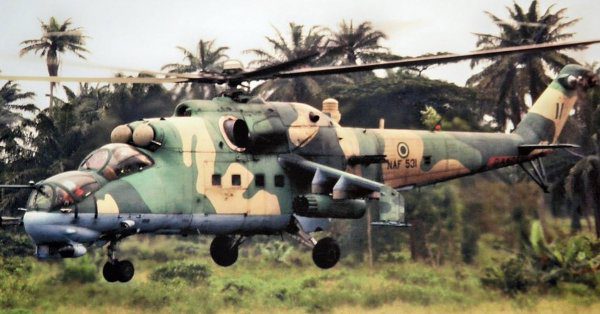 The Nigerian Air Force and the country’s police force have moved men, officers and war arsenals to parts of Plateau State that have been ridden by crisis and killings, perpetrated by both the indigenes and suspected herdsmen.


Maikanti Baru’s Reforms In NNPC, By Kingsley Ukah
The Nigerian National Petroleum Corporation (NNPC) has been depicted by its implacable critics as a cesspool of corruption and for a good measure too. Over the years arguably, no agency has the axiomatic Nigerian strand of sleaze been more manifest than the state owned Oil giant whose reputation has been tarnished by unrelenting criticism of its less than transparent operations.
At the height of this reign of impunity and vast corruption, the former Governor of the Central Bank of Nigeria and the present Emir of Kano, Sanusi Lamido Sanusi had in 2014, accused the NNPC of failing to remit $20 billion into the coffers of government. This was during the era of high Oil prices. He had also complained about the lack of transparency in the operations of the subsidy payment regime and was booted out of office for blowing the whistle on corruption.
Recently, Sanusi Lamido Sanusi took a potshot at the present management of NNPC when he said that only an angel may be able to run the Corporation. Sanusi said “I have not seen a change in laws or regulations that will institutionalize changes that make it impossible for things to be done.”
Sanusi’s sabre rattling may play into the narrative that corruption is alive and well under the present administration in spite of the unwavering commitment of the Buhari administration to deal a mortal blow on pandemic corruption, the archetypal monster that has stymied our development. Given empirical evidence and ongoing efforts by the present management of NNPC under the guidance and leadership of Dr. Maikanti Kacalla Baru, the Group Managing Director of the Corporation, Sanusi’s criticism is premised on a lack of full information and therefore misplaced.
Four years out of government is quite a long time. The revered royal father saddled with the onerous task of administering a sophisticated emirate such as Kano may have been so overwhelmed by the task at hand that he is clearly out of touch with reality. And given the not too long enviable reputation of NNPC especially under the past administrations, the use of the brush of corruption to wrongly paint the present NNPC and its management as corrupt may be overlooked by a gullible citizenry.
But it is certainly uncharitable and unfair to throw a spanner in the works especially when Baru and his management are working round the clock to turn around the fortunes of the Corporation. Asking angels to intervene in the affairs of men is not only escapist but defeatist. As a nation, we are blessed with honest hardworking leaders, who though may be in the minority are on daily basis given their best for the good of the nation.
When Baru was appointed the Group Managing Director of NNPC in 2016, he was not under any illusion as to the formidable challenges and task ahead. He inherited a Corporation in decay and in dire need of a new direction. Independent agencies such as the Nigerian Extractive Industries Transparency Initiative (NEITI) had raised the alarm about the lack of transparency and massive corruption in the Corporation. On assumption of office, Baru demonstrated the uncommon determination to steer a new and refreshing course for NNPC. In line with the anti-corruption policy of the Buhari administration, he unveiled a well thought out 12-point agenda designed to cleanse the Augean Stable and reinvigorate the Corporation. The 12-point agenda include the creation of an all-inclusive internal advisory council on security comprising representatives from NNPC, the IOCs, the Unions and security operatives to brainstorm and address host community agitations, implementation of new business models to grant needed autonomy to the strategic business units and autonomous business units within the corporation, provision of directions and control to ensure their growth and profitability. Baru also pledged to continue to explore ways of relieving government from the burden of cash calls obligation and to address and defray the agreed call arrears of the IOCs and restore Oil and gas production and grow the reserve portfolio.
He also pledged to focus on increasing crude oil production by the Nigerian Petroleum Development Company, NPDC, review all weak contractual agreements and terminate bad ones as appropriate, leverage on equity positions to cause the development of key gas assets for both domestic and export, repair and restore Oil and gas pipeline infrastructure. Baru also promised to improve the refining efficiency of the four existing refineries to pave way for future expansion, pursue diversification of business by refocusing on the implementation of renewable energy programmes and frontier exploration services and to continue to ensure service delivery, entrench the culture of professionalism through transparency and accountability.
The 12-point agenda as enunciated by Baru is ambitious, revolutionary and represents a concerted effort to make a clean break with the past. Under his guidance, NNPC commenced and completed the repair of critical Oil and gas infrastructure leading to the deferment of about 700,000 bopd. The Corporation commenced and completed the repair of the vandalized 36” and 42” IT Export pipeline leading to the restoration of production operations from NNPC/MPN.
In 2016, when he took over the helm of affairs at NNPC, the national daily average production stood at 1.83 million barrel, in 2017, it rose to about 1.88 million barrels and in 2018 the nation had achieved its projected target of 2.2 million barrels of Oil and condensate per day occasioned by the improvement in security and the resumption of production operations in the forcados Oil Terminal (FOT) and Qua Iboe Terminal (QIT) pipelines. By June 28th, 2017, NNPC attained a record peak production of 2.3 million barrels of oil and condensate per day. Under the leadership and guidance of Baru, the repayment agreement for JV cash call arears has been negotiated and executed for arrears has been negotiated and executed for arrears up to end 2015 all the IOC partners in NNPC’s JVCs.
NNPC anchored repayment on incremental production. Also, for 2016, JV cash call shortfall, $400 million was paid to JV partners as a bullet payment in April, 2017 – with the balance to be paid in twelve installments. This commitment has rekindled the confidence the nation’s JV partners in pursuing new projects, thus enabling the transition into the self-funding models for cash-calls financed by NNPC/CNL JV of project Cheata which was oversubscribed. Driven by the desire to save cost, NNPC renegotiated upstream contracts and obtained discounts of over $2billion from various service providers to stem high production costs. In addition, Baru ensured the cancellation of all non performing agreements and continued to pursue all outstanding payments due to government.
In the gas sector, NNPC has significantly increased gas supply to power plants and industries. This achievement was made possible as a result of the completion of the repairs of vandalized 20” ELPS – A pipeline which ramped up Chevron Escravos Gas Plants that were hitherto shutdown. These include Oredo Gas Plant, Sapele Gas Plant, Ovade Gas Plant and Oben and NGC Gas Compressors. Baru has addressed the issue of condensate evacuation that had restricted the issue of condensate evacuation that had restricted the ramping up of gas supply from Oben, Utorogu and Ughelli gas plants. NNPC have also commissioned NPDC’s Utorogu NAG-2 and Oredo EPF-2 gas plants.
Under the leadership and guidance of Baru, there has been exponential growth in domestic gas supply. NNPC has also made significant progress in the seven (7) critical Gas Supply Development projects with approval of consultants to support the projects.
In the downstream sector, NNPC stabilized the market with sufficient product availability nationwide. Through the concerted efforts of Baru and his team, the modest refining efforts of NNPC and the DSDP Scheme saved the nation about 40 billion in 2017. The resuscitation of products transportation pipelines network has enabled NNPC to move products to depots at faster and cheaper rates.
In spite of the string of impressive achievements scored by NNPC under the guidance of Baru, challenges still remain. The issue of subsidy payment has remained a recurring decimal. There is a consensus of opinion that racketeering which is widely believed to have bedeviled the subsidy regime has impoverished Nigerians. Despite aspersions cast on the NNPC from certain quarters, Baru insists that he and his team are above board in their dealings. The present NNPC management has consistently stated that all subsidy claims and entitlements by NNPC are duly verified and approved by PPPRA and relevant certificates issued.
In the same vein, Minister of Finance, Kemi Adeosun, has explained the NNPC is under recovering costs being the sole importers of the petroleum products which it also sells below the cost price. In defence of NNPC and the truth, she stated that technically there is no longer subsidy payments to Oil and marketers as in the past since the NNPC bears the cost of the difference between the N145 pump and the actual landing cost of the product which in some cases stand at N180 per litre. She said “Now, when there is talk of payment of subsidy, technically there is no subsidy, but there is under-recovery.”
The failure of the four local refineries to produce enough fuel for local consumption has cast a long shadow on the concerted efforts by Baru and the Ministry of Petroleum Resources to bring about a positive change. For years the refineries have been largely comatose. Within the last three years, a lot of work has been done to revive obsolete facilities in the sector. The petroleum ministry under the leadership of Ibe Kachikwu and the NNPC under the guidance of Baru are working hard to re-position and revamp the refineries through massive refurbishing of the refineries and strategic partnerships. By 2019, it is expected that these concerted efforts will lead to Nigeria being self-sufficient in refining petroleum products.
The achievements recorded by NNPC under the guidance of Maikanti Baru was made possible through the concerted effort of a Nigerian patriot not by an angel. The situation in NNPC is not perfect, no human institution is put clearly Baru and his 12-point agenda is beginning to yield the desired results, to spur a paradigm shift. It was in recognition of his patriotic service to Nigeria and his untiring efforts to reposition the NNPC that he was awarded the Forbes Best of Africa Oil &Gas Man of the Year Prize. According to Forbes, it had followed with keen interest the rising profile and impressive career path of the NNPC GMD through the years. Forbes further stated: “For these and other landmark achievements which you have recorded throughout your enviable career, your nomination for this Prestigious Forbes 2017 Award has been approved by Forbes Custom’s Award Committee.
These and other prestigious awards in recognition of the ongoing revolution in NNPC, it is hoped will spur Baru to greater heights as he seeks to re-position NNPC and bring it to global acclaim in the service of Nigeria and humanity.