The Economic and Financial Crimes Commission (EFCC) has said that the former Minister of State for the Federal Capital Territory (FCT), Jumoke Akinjide, had returned the sum of N650 million she allegedly received as part of the campaign fund for the Peoples Democratic Party (PDP) ahead of the 2015 election.
She was arraigned along with a PDP leader in Oyo State, Chief Olarenwaju Otiti, a former Senator representing Oyo Central Senatorial District Ayo Adeseun and a former Minister of Petroleum Resources, Mrs Diezani Alison-Madueke, who is said to be at large.
The EFCC accused them of conspiring to directly take possession of N650 million, which they reasonably ought to have known was part of proceeds of an unlawful act, and without going through a financial institution.
An EFCC investigator, Usman Zakari, while testifying in a trial within trial to determine the truthfulness of the defendants’ statements, said his team received N10 million bank draft from Akinjide’s husband, Aliyu Pategi, out of the N650 million traced to her and others.
He said another team headed by Shuaibu Shehu received N640million from Akinjide in a related case.
Under cross-examination by Akinjide’s lawyer, Chief Bolaji Ayorinde (SAN), the witness said the N10 million deposit payment was not the condition upon which Akinjide was released.
“On August 9, 2016, the first defendant (Akinjide) and her husband, Hon. Aliyu Pategi, were present throughout. I did not ask Pategi to make payment to ensure the release of the first defendant.”
Zakari said Pategi stood surety for Akinjide when she was granted administrative bail.
“On August 10, 2016, he volunteered a Sterling Bank draft of N10 million on behalf of his wife as part payment of the N650 million that was traced to her and her co-accused.
“The N10 million was paid by the first defendant’s husband on her behalf and the remaining N640 million has not been paid,” Zakari said.
When reminded by Ayorinde that the balance has been paid, Zakari said: “I am aware that the sum of N640 million was received from the first defendant in Stanbic IBTC Bank draft in another case investigated by a team tagged, HOPST, which was headed by one Shuaibu Shehu.”
Justice Muslim Hassan of the Federal High Court in Lagos, adjourned the case till October 18.
The Chairman of the North Central zone of Miyetti Allah Cattle Breeders’ Association of Nigeria (MACBAN), Danladi Ciroma, has said that the suspected herdsmen, who launched attacks on Plateau villages during which over 86 persons were killed, were on revenge mission.
In a statement, Danladi Ciroma said that the inhabitants of the affected village of Razat, Ruku, Nyarr, Kura and Ropp in Gashishi District of Barkin Ladi Local Government Area had earlier killed over 300 cows belonging to the herdsmen and that no action was taken by the authority.
According to him, despite the efforts of the state government, some criminal elements hiding among their people are still frustrating the peace efforts.
“These attacks are retaliatory. As much as I don’t support the killing of human being, the truth must be told that those who carried out the attacks must be on revenge mission.
“There have been recent reports of cow rustling and destruction of farms between Berom farmers and Fulani herdsmen. The people carrying out these criminal activities are well known to the communities but the communities are hiding them.
“Fulani herdsmen have lost about 300 cows in the last few weeks – 94 cows were rustled by armed Berom youths in Fan village, another 36 cows were killed by Berom youths. In addition to that, 174 cattle were rustled and the criminals disappeared with them to Mangu.
“Since these cows were not found, no one should expect peace in the areas. Even soldiers that went after the criminals to recover the rustled cows were shot by the armed rustlers and eventually escaped with all the cows.
“The government of Governor Lalong has done a lot to restore peace, but the criminal elements hiding among their people are the ones frustrating these peace efforts.
“Though the security agencies have tried, they need to do more by being fair to all parties; they should not neglect any report presented by Fulani of Berom because such report can lead to attacks and deaths if not properly handled.
“Criminals thrive a lot in Berom communities, but when the Fulani, who are always victims of their crime, react with attacks, they blame the government.
“These communities have leaders, why hide the criminals? They should fish out the criminals and hand them over to security agencies to avoid death of innocent ones.
“As it is today, the Berom man cannot go to farm, the Fulani cannot breed his cows in Berom Land. This can be stopped if the security agencies do more than what they are currently doing. The attacks will stop as soon as the security agencies stop Berom youths from stealing Fulani cows.”
President Muhahammadu Buhari has made it clear that besides honouring the past heroes of Nigeria in their various callings, the labour of the current heroes too will continued to be rewarded while they are still alive.
He said: “in our country, not only the labour of our heroes past shall not be in vain. The labour of the current generation shall also be rewarded.”
In his closing remarks today, Sunday, at the end of the two-day national convention of the ruling All Progressives Congress (APC) in Abuja, the nation’s capital, President Buhari vowed that APC will serve Nigeria to the best of God given abilities, and move the country to its right position in the comity of nations.
He commended the patience, forbearance, and spirit of accommodation that was displayed by delegates as they voted to fill positions in the party’s National Working Committee (NWC) and National Executive Committee.
“I salute aspirants who for the common good, had to shelve personal ambition, and stood down for others they were to have contended with. I also salute those who went the whole way, contested, were voted for, and who emerged victorious, or otherwise.
“Everything was done in an atmosphere of give and take, knowing that in such contest, only one person would ultimately win. Let the victors be humble in victory, and let those who didn’t win be also gallant and gracious in defeat.
“We are members of one party, and it is not about winners takes all. Rather, the purpose is to build a party that would put its best foot forward, and serve our country to the best of its ability.
You were all here through the raw weather that persisted from yesterday till today, but you bore it patiently. You persevered through the night, and deep into another day. Thank you very much.
“At the end of all proceedings, I believe we have put in place an executive that we all can be proud of, one that would lead our party from victory to victory, from progress to progress, and one that Nigerians can be proud of.”
The President congratulated members of the immediate past executive, led by Chief John Odigie Oyegun, for their selfless service to the party, and urged them to always lend the wisdom of their experience to the new executive members.
“Together, we will all build a cohesive party, that will do our country a world of good.”
Key national officers of the ruling party, the All Progressives Congress (APC) have emerged from the two-day national convention it conducted between yesterday, Saturday and today, Sunday.
The 19-member new National Executive Council (NEC) as released by the party are as follows:
1. Adams Oshiomhole, National Chairman
2. Niyi Adebayo, Deputy National Chairman (South)
3. Lawal Shuaibu, Deputy National Chairman (North)
4. Hillary Etegbo, Vice-Chairman (South-South)
5. Emmanuel Eneukwu, Vice Chairman (South-East)
6. Bankole Oluwajana, Vice Chairman (South-West)
7. Inuwa Abdulkadir, Vice Chairman (North-East)
8. Mustapha Salisu, Vice Chairman (North-West)
9.
10. Mai Mala Buni, National Secretary
11. Adamu Fanda, Treasurer
12. Tunde Bello, National Financial Secretary
13. Ibrahim Masari, National Welfare Secretary
14. George Moghalu, National Auditor
15. Bolaji Abdullahi, National Publicity Secretary
16. Salamatu Umar, National Women Leader
17. Abubakar L. Shayyu, National Youth Leader
18. Babatunde Ogala, National Legal Adviser
19. Misbahu L Didi, Representative of the physically-challenged.
Former Kano State governor and currentSenator representing Kano Central Senatorial area, Rabiu Musa Kwankwaso has said that he and his delegates avoided the National Convention of the ruing All Progressives Congress (APC), held in Abuja yesterday, Saturday to prevent frictions that could have been worse that what obtained in the case of Imo State at the convention.
In a letter to the leadership of the party, Kwankwaso said: “we had wanted to be part of the National Convention but regrettably all the congresses that we conducted at the wards, Local Government Councils and at the State level were not recognized by the outgoing National Executive Council of the party. “Therefore, I felt that presenting ourselves at such an important event will not be in the overall interest of the entire convention that is assuming we are allowed access into the convention ground. “Because there are high chances that our presence could create embarrassments and a lot of friction similar or even worse than what occurred in the pavilions of delegations from Imo and Delta States during yesterday’s convention. However, as the new EXCO settles to start the efforts of uniting the party we wish you the very best.” Senator Kwankwaso however, on behalf of his group, congratulated and felicitated with the newly elected Chairman, Comrade Adams Oshiomhole and members of the new Executive Council.
Vice President Yemi Osinbajo has predicted that, with the commissioning of new technology hub, which will be based in the University of Lagos, incredible ideas will soon begin to roll in from the university
“I know incredible ideas are going to come out of the University of Lagos. One of the reasons I’m so sure that is going to be the case is because, first of all, before we came here, we went to commission our new technology hub, which will be here in the University of Lagos. It is going to be built using containers and it’s going to take exactly three months to build.
“So, we were there earlier in the day just to take a look at it, and to see what is going on there, and I’m sure that it’s going to be a place of great creativity. Hopefully, we are going to do this in the six geo-political zones, starting here at the University of Lagos.”
Professor Osinbajo, who gave this hope on Friday at the launch of the Students Innovation Challenge in the University of Lagos, said: “we all know that the university is the best place for getting the best talents and that’s what is going to shape the future of our country.
“Every one of us is aware of that. And so, what the Federal Government did, is that we simply partnered with the UNDP, with BOI, with MTN, with Civic Foundation for Innovation and Access Bank, to come and do what we describe as the student challenge.”
The Vice President said that the student challenge is to find the best; the best innovation, the best technology ideas, the best creativity and the best creative ideas from students across Nigeria.
“Now, we are going to pick 37. But I’ve spoken to my partners and they say because of what they have seen today, we’ve got to move that up. So, we are going to pick 50, we’re adding 13 more. So, there are some here today who might get, even if you don’t get into the first pack, you should be able to get into that additional one. We are definitely going to do it in such a way that as many of the great ideas as possible, get a chance to be tested commercially, they get a chance to be supported.
“That’s why just listening to the six that were randomly picked, doesn’t necessarily mean they are the best that were here today. They were just randomly picked. I thought those ideas were fantastic; I thought the ideas were great! And I know that there are so many other people with great ideas all over here.
“That’s why I have decided that I’m going to take photograph with these 40 who are behind me here. And the simple reason is that I know that these guys are going to be famous. They are going to be rich one day and I don’t want them to forget me. So, that’s the reason I’m going to take this photograph with them.
“But to everyone else, let me say that it is an absolutely exciting time to be alive, this is the best time. You know, people talk about the good old days, they keep saying Oh the good old days, but it was Obama who said, always be suspicious of people who are telling you about these good old days, the best days are here. The future is right here. And welcome to that future!”
The heat seems turning against some lawmakers in the National Assembly over the frictions that arose between the executive and the legislature on the controversial 2018 national budget.
A group known as Coalition of Katagum Youths and Students’ Organization based in Azare, Bauchi state has passed a vote of no confidence on the member representing Katagum federal constituency of Bauchi state, Hon. Ibrahim Mohammad Baba, ahead of the 2019 elections.
This was just as the coalition said there was no hiding place for political enemies of President Muhammadu Buhari.
Chairman of the coalition, Muktar Mohammed told news men that the coalition is aware of the alleged padding of the 2018 budget, according to the President, even when Baba is on acting capacity as chairman of the House committee on public accounts.
“Our decision to passed vote of no confidence on Rep Baba is irreversible and supreme in Katagum constituency because the budget padding is an attempt to scuttle President Buhari’s 2019 bid.”
The chairman said that the 2018 budget padding saga has great consequence and has set a negative economic precedence in Katagum constituency.
“We are demanding Baba to tender a convincing statement to clear himself of his alleged role over the budget padding or risk being ousted in 2019 because he was not sent to allegedly conspire against President Buhari.”
The coalition maintained that there is no hiding place for Baba come 2019, following the lawmaker’s alleged alliance with Senator Rabiu Kwankwanso.
He blamed Baba for distancing himself from the constituents in the aftermath of the Azare market inferno.
“It’s inhuman because the lawmaker has neglected those victims of fire disaster on Azare and refused to accompany President Buhari during his sympathy visit to Bauchi state.”
The Federal Government has taken another measure aimed at containing the possible invation of Nigeria by members of the dreaded Islamic State (IS) by deploying a very senior police officer in the person of Assistant Inspector-General of Police (AIG), Danjuma Muhammad, to take charge of the Murtala Muhammed International Airport Police Command.
Indications recently emerged that leaders of members of the ISIS have started bringing into Nigeria, extremists and airplanes are reportedly being targeted.
The Lagos police Command’s spokesperson, DSP Joseph Alabi, told newsmen today, Sunday that the deployment of an AIG to take over the helms of affairs at the nation’s busiest airport was strategic.
According to him, AIG Danjuma Muhammad is an experienced officer who has served in many commands and formations.
He said that the deployment would improve safety and security of travellers and other airport users.
“The transfer of a very senior ranking officer to the airport command is very strategic; the objective is to ensure that nothing untoward occurs here.
“The AIG has assumed duties and has warned officers attached to the command that he would not tolerate laziness, idleness and dereliction of duties,’’ the spokesman said.
Alabi said that the new helmsman had read the riot act to touts parading within the airport environment, adding that he assured travellers and other airport users that adequate measures had been put in place for their safety and security.
“The command is working with the Federal Airports Authority of Nigeria and other security agencies to ensure that our airport is safe.
“Our advice is that travellers and other airport users should remain vigilant and law-abiding as well as comply with the new security measures in the airport environment.”
The new man took over from Abdullahi Ali, a Commissioner of Police, who retired recently.
The Peoples Democratic Party (PDP) has challenged the National Chairman of the All Progressives Congress (APC), Adams Oshiomhole, clear himself of corruption charges with the Economic and Financial Crimes Commission (EFCC).
In a statement issued by its National Publicity Secretary, Kola Ologbondiyan, PDP said that Oshiomhole lacks the rectitude to speak in public as a leader at any level, whatsoever, until he clears the allegations that he diverted billions of naira meant for the people of Edo State while he was governor.
The main opposition party stressed that since the petition against him at the EFCC is in the public domain, the new national chairman would do the APC, Muhammadu Buhari presidency, the EFCC as well as himself a lot of good by quietly submitting himself for investigation and possibly prosecution.
According to the party, since one of the campaign footstool upon which APC was elected into office is fighting corruption, it will be incongruous for Oshiomhole to go about his new assignment with allegation of corruption, even as tiny as a strand of hair.
“It is also instructive for the new chairman to understand that Nigerians are no longer inclined to sophistry, illogical arguments, deceits, contrivance and recourse to abuse as a method of campaign.
“As such, the PDP would be prepared for engagements that have the potency of rescuing our people from the hunger and starvation which the APC has sunk them,” it said. The party said the essence of Oshiomhole’s emergence as President Muhammadu Buhari’s sole candidate was not lost on Nigerians as the presidency imposed him as a pliable instrument to frustrate other would-be presidential aspirants of APC extraction and hand the ticket to President Buhari, who, obviously is afraid to stand a presidential primary due to his failures in office.
“With Saturday’s charade, APC and its federal government, which claims to have zero tolerance for corruption, have eaten their vomits, confirming that they have been hypocritical and trending on lies, deception and propaganda.
“With the outcome of the Saturday’s convention, the APC has kissed internal democracy goodbye in the selection of its candidates at all levels as the national leadership, led by people burdened with corruption allegations, cannot but submit to the whim and caprices of those who granted them official protection from prosecution.
“President Buhari and his handlers should however note that manipulating the APC convention and seizing the party’s presidential ticket cannot help them as Nigerians are now fully rallying on the platform of the repositioned PDP in their quest for a new president, who truly has the competence to effectively run a united, secure and prosperous nation, come 2019.”
Former governor of Edo state, Comrade Adams Oshiomhole, was destined to be national chairman of the governing All Progressives Congress (APC) at this intersection in the nation’s political evolution. His emergence approximates a part of the philosophy in the muses of H.L. Detridge that “we are all victims of our actions; our destinies are controlled by the cosmic rolls of the dice, the whims of the stars and the vagrant breeze of fortune that blows from the windmills of the gods.”
Divine elements, apparently working in harmony with existential considerations as well as the avuncular disposition and approbation by President Muhammadu Buhari, had culminated in the consensual coronation of Oshiomhole at the party’s June 23 national convention in Abuja. The magnitude of the strategic political concession that produced the Oshiomhole consensus also bore the obligatory imprimatur of the party’s 24 state governors who provided the essential validation that resolved the previously contentious issue in his favour.
From the initial audacious notices of intention to vie for the position of national chairman by no fewer than five persons and the acrimonious outlooks that the scramble for the position had assumed, huge pressure had been piled on the party under the leadership of Buhari who had to act expeditiously and sagaciously by making two down-to-earth and back-to-back interventions. The first was to overrule the decision by the National Executive Committee (NEC) of the party to extend its tenure by a year by calling for congresses and convention, thus obviating a legal conundrum.
The second and, perhaps, more strategic intervention was the expression of his preference for Oshiomhole to take over from Chief John Odigie-Oyegun as the new navigator of the APC ahead of and beyond the 2019 general election. Significantly, Buhari did not impose Oshiomhole by presidential fiat. His candidature merely and justifiably enjoyed lofty presidential recommendation. That recommendation was shorn of political shenanigans. There was no need for Buhari to dissimulate and vacillate on the issue, having been convinced that the party needed the Oshiomhole persona at this time.
The president had placed the issue on the table for interrogation and critical reflections by other influential stakeholders. The fact that all the contentious issues eventually resolved themselves in Oshiomhole’s favour derived from the stakeholders’ objective considerations; whereas, a potential flash point could be located in Oyegun and Oshiomhole’s aspirational exertions. There was no doubt that Oyegun had party apparatchiks who could have provided the rampart for his possible re-election. But, having provided the leadership compass to the APC from 2014, the shape and texture of his leadership capacity could not escape critical appraisal in the circumstance of the contemporary governance issues and the vagaries of the 2019 burgeoning political nuances.
The question would then arise: did Oyegun’s leadership style, as exemplified in Buhari’s first term, bear great and appropriate relevance in the planned prosecution of the 2019 general election and the concomitant political gerrymandering? The answer must have informed the final gravitation by some state governors, who were initially insisting on Oyegun, to embrace the political correctness of Oshiomhole’s candidature as a presidential fait accompli. Concurring with Buhari’s judgment was political wisdom. Dismounting their ego horse was in pari materia with the constructive and productive ramifications of the president’s preference.
In fact, respect for Buhari’s preference remains quite significant in the post-convention political interactions and party administration. For a governing party with a president who is revered and sure-footed in the exercise of power, it would have been foolhardy for party operatives and their back-end sponsors in government to dig in their feet in their go-getting bid to upstage the president’s strategic applecart. Besides, the president, as the poster child of the administration, receives the approbation and disapprobation for both actions and inactions. It is within the context of this cosmopolitan reality that Buhari seeks to guarantee his date with history.
As the unofficial candidate of his party, Buhari is already on the cusp of history and he would not want the electoral tragedy that consumed the former president, Dr Goodluck Jonathan, to happen to him. Disloyal antics of the leadership of Jonathan’s Peoples Democratic Party (PDP) had largely contributed to his defeat and his becoming the first incumbent to be so demystified in the annals of presidential elections in Nigeria. Buhari knows that it would be farcical if that happens to him. This perception underpinned the choice of a restless, can-do and surefooted Oshiomhole and will continue to validate his appropriateness for the position.
By and large is the fact that Oshiomhole understands the magnitude of the task ahead. Even before the national convention, he had fixed his eyes on the bigger picture of consolidating the Buhari legacies and appropriating the people’s buy-in for massive electoral advantage in 2019. While the atmospherics of victory around him were titillating his followers, he was not only clear-headed but also in serious dialogue with himself and in a series of across-the-board conversations with prolific minds on how to grow support for the party and the president. Indeed, he knew from the outset that the chosen enterprise would not be a tea party.
Therefore, beyond the song and dance of his ultimate coronation, Oshiomhole’s concern is how to lock in the vast majority of votes required in renewing Buhari’s mandate in the 2019 presidential election. That is how to prove that the confidence reposed in him by the president and the party was not misplaced. That is the burden that Oshiomhole bears. There is a mission to accomplish. Even though the objective conditions that produced Buhari’s presidency under Oyegun’s chairmanship in 2014 differ from the conditions that obtain now, there is a sense in which Oshiomhole would be inclined to want to surpass Oyegun’s accomplishments. That is the spirit: to build incrementally and purposively on his predecessor’s legacies.
Indeed, having consummated the ultimate leadership deal, Oshiomhole’s immediate task is to chart a trajectory towards a renewed, vibrant and robust political configuration in the APC. He is expected to deploy his persuasive powers and negotiating skills in the execution of his responsibilities and the initial chore is to resolve the problematic issue of the new Peoples Democratic Party (nPDP) that stares the APC in the face like a veritable bugaboo. He is obligated to build a united political family in strategic counterpoises to the dialectics of oppositional politics.
Oshiomhole is also expected to espouse and expound socio-political and economic issues within the context of APC’s manifestoes and governance philosophies. In driving pro-people national conversations, he will be defining and giving bites to the party’s electioneering onslaught against the opposition ahead of, during and after the 2019 presidential election. With a massive capacity for oration, he is expected to persuasively sell Buhari’s re-election campaign promises to Nigerians by energizing and sustaining narratives that are essentially pro-Buhari and anti the leading opposition party and its presidential candidate.
However, his post-election exertions, once he delivers Buhari, will centre fundamentally on deploying the platform of his position as national chairman to elucidate government’s policies on both national and global platforms. He will provide necessary defence to the actions and inactions of the Buhari administration within the contexts of prevailing conditions that have given rise to them. The president and the party can rest assured in Oshiomhole’s capacity to prolifically promote the issues involved in governance for citizens’ clear understanding. On that score, Oshiomhole, who has already put his nose to the grindstone in both frontline and rearguard tasks that will conduce to utilitarian benefits of the Buhari administration, will not disappoint.
Ojeifo, editor-in-chief of The Congresswatchmagazine, wrote via ojwonderngr@yahoo.com
We use cookies on our website to give you the most relevant experience by remembering your preferences and repeat visits. By clicking “Accept”, you consent to the use of ALL the cookies.
This website uses cookies to improve your experience while you navigate through the website. Out of these, the cookies that are categorized as necessary are stored on your browser as they are essential for the working of basic functionalities of the website. We also use third-party cookies that help us analyze and understand how you use this website. These cookies will be stored in your browser only with your consent. You also have the option to opt-out of these cookies. But opting out of some of these cookies may affect your browsing experience.
Necessary cookies are absolutely essential for the website to function properly. This category only includes cookies that ensures basic functionalities and security features of the website. These cookies do not store any personal information.
Any cookies that may not be particularly necessary for the website to function and is used specifically to collect user personal data via analytics, ads, other embedded contents are termed as non-necessary cookies. It is mandatory to procure user consent prior to running these cookies on your website.



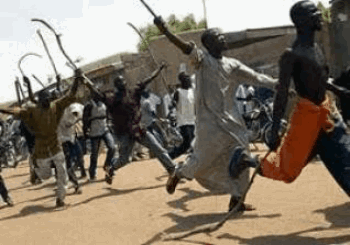 The Chairman of the North Central zone of Miyetti Allah Cattle Breeders’ Association of Nigeria (MACBAN), Danladi Ciroma, has said that the suspected herdsmen, who launched attacks on Plateau villages during which over 86 persons were killed, were on revenge mission.
 Key national officers of the ruling party, the All Progressives Congress (APC) have emerged from the two-day national convention it conducted between yesterday, Saturday and today, Sunday.

 The heat seems turning against some lawmakers in the National Assembly over the frictions that arose between the executive and the legislature on the controversial 2018 national budget.



