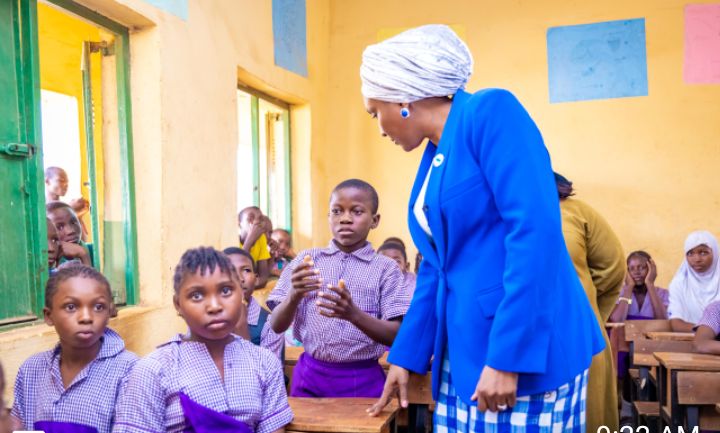
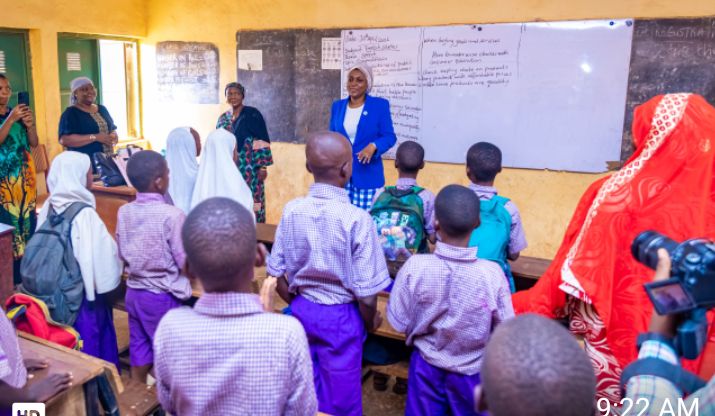
Director General of the National Emergency Management Agency (NEMA), Mrs. Zubaida Umar, has returned to classroom during which time she taught the pupils of the Local Education Authority (LEA) Primary School, Durumi, Abuja, the art of safety around them. Her interactive session with the pupils on disaster prevention and safety awareness yesterday, April 30, according to a statement by the spokesperson of NEMA, Ezekiel Manzo, is part of the ongoing efforts to promote disaster risk reduction education among young Nigerians and build a culture of safety from an early age. Manzo quoted Mrs. Zubaida Umar as stressing the importance of basic safety habits and simple disaster mitigation measures that children can adopt both at home and in school. “She taught the pupils practical steps to reduce risks associated with common emergencies such as fire outbreaks, flooding, and unsafe play environments.
“The Director General encouraged them to be safety conscious, remain alert to potential dangers in their surroundings, and promptly report hazards to teachers, parents, or other responsible adults.” He said that Mrs. Zubaida Umar told the pupils that disaster risk reduction is not only the responsibility of emergency responders, but a shared duty that begins with awareness, preparedness, and responsible behaviour at the community level. She noted that introducing children to disaster preparedness concepts at an early stage is essential to building safer and more resilient communities. Manzo said that the interactive session also featured a question and answer segment during which the pupils were provided with useful information to deepen their understanding of disasters and the important roles they can play in promoting safety within their homes, schools, and communities. According to him, the school visit underscores NEMA’s broader strategy of taking disaster risk reduction education beyond formal institutions and into communities, schools, and households across the country as part of ongoing efforts to strengthen national resilience.
The Supreme Court has ruled that David Mark is the bonafide National Chairman of the African Democratic Congress, ADC. The apex court, in a unanimous decision by a five-member panel headed by Justice Mohammed Lawal Garba, held that the Abuja Division of the Court of Appeal acted beyond its jurisdiction by unilaterally issuing an order after it had already dismissed a case that was brought before it by one of the factions. The apex court, today, April 30, in one of the landmark rulings that will shape the 2027 general election, said: “The directive of the Court of Appeal to maintain status quo ante bellum is a preservatory order, wrongly made in this case.” The Supreme Court, in the judgment today, held that the appeal that was filed before it by David Mark succeeded in part, even as it dismissed the aspect that challenged an ex parte order the Federal High Court made for service of processes in the suit filed by aggrieved members of the party. The apex court directed the factions to return to the trial court for continuation of hearing of the case. Only recently, the Independent National Electoral Commission (INEC), derecognized the national executive council of the ADC, led by David Mark, citing a court judgment by the Court of Appeal.
The National Chairman of the ruling All Progressives Congress (APC), Professor Nentawe Yilwatda, has equiped over 1,400 young Nigerians with 727 sets of income-generating equipment and toolkits, as well as ₦280 Million financial support. At the youth empowerment programme in Jos, Plateau State capital, Professor Yilwatda distributed such items as 20 tricycles, 33 catering sets, 26 embroidery machines with pressing irons, 172 sewing machines, 75 welding and fabrication toolboxes, 16 dry grinding machines, 9 wet grinding machines, 100 auto mechanic toolboxes, 75 carpentry toolboxes, 110 POS machines each accompanied with ₦100,000 startup capital. There were also 20 make-up toolboxes, and 71 phone repair toolkits supported with solar panels and cloud power stations. In addition to the equipment distributed, the programme disbursed a total of ₦280 million in cash grants to beneficiaries across four structured categories: 60 individuals received ₦1 million each; 140 beneficiaries received ₦500,000 each; 300 individuals were granted ₦200,000 each while 900 beneficiaries received ₦100,000 each. APC chairman said that the financial support is designed to provide immediate capital injection for small and medium-scale enterprises, aimed at enabling for rapid business take-off and expansion. Professor Yilwatda described the initiative as a practical demonstration of the Renewed Hope Agenda’s focus on job creation, poverty alleviation and youth-driven economic growth. The APC National Chairman recalled his earlier interventions in agriculture, saying that a farmer-support initiative he established in 2018 continues to yield measurable success. He emphasized that meaningful change begins when individuals take responsibility for improving the lives of others and that the programme represents both a moral duty and a strategic investment in Nigeria’s future. Professor Yilwatda expressed appreciation to President Bola Ahmed Tinubu for the opportunity to serve, describing his emergence as National Chairman as an act of divine grace rather than personal qualification. He reiterated his commitment to using the office as a platform to connect opportunities with the people and to drive inclusive development. He highlighted the administration’s broader economic vision of building a one-trillion-dollar economy through massive infrastructure investments, including the development of new seaports and airports, expansion of rail networks from Lagos to Kano, and the construction of major road corridors such as the Sokoto–Badagry highway and the Calabar–Lagos coastal road. According to him, these projects are designed to unlock productivity, enhance trade and position Nigeria as a leading economic force in Africa. Professor Yilwatda encouraged the beneficiaries to prioritize entrepreneurship, noting that small businesses have the potential to grow into global enterprises. He assured them of continued support, including access to financing through the Bank of Industry and export training opportunities in collaboration with the Nigerian Export Promotion Council, aimed at integrating local businesses into international markets. He announced plans for a structured monitoring and evaluation process, with periodic assessments to track progress and identify high-performing beneficiaries for further support through institutions such as the Ministry of Finance Incorporated (MOFI). He reiterated the Federal Government’s policy support for small businesses, including tax relief measures designed to create a conducive environment for growth. The State Deputy Governor of Plateau State, Mrs. Josephine Piyo, who represented the Governor, commended Professor Yilwatda for his impactful intervention, describing it as a demonstration of selfless leadership and a strong commitment to uplifting the people, adding that he has brought pride to the state and has shown that leadership must translate into tangible benefits for citizens. She advised the beneficiaries to make judicious use of the resources provided, emphasizing discipline, focus and enterprise as key drivers of success. She expressed confidence that the initiative would produce future business leaders and industrialists capable of transforming the local and national economy. Piyo said that The Renewed Hope Scale-Up Programme stands as a bold and practical step toward building a resilient, inclusive, and youth-driven economy, reinforcing the APC’s commitment to empowering Nigerians and delivering sustainable development at the grassroots.
In a display of courage and community self defense, residents of Bakkere village in Kaura Namoda Local Government Area of Zamfara State have successfully chased away bandits who attacked and engaged them in hours of gun battle, leading to the bandits fleeing. It was gathered that the incident, which occurred in the early hours of today, April 29, highlights a growing shift in community-led resistance against armed groups terrorising rural communities in the North-West. According to sources, the attackers had quietly infiltrated a section of Bakkere village when vigilant community leaders detected suspicious movements and immediately raised an alarm. The alert was said to have triggered the rapid mobilisation of local youths, who not only armed themselves but also reached out to neighbouring communities for reinforcement. It was gathered that the villagers from adjoining settlements moved swiftly to block key escape routes, particularly along the southern corridor leading to the Gegeta axis, effectively trapping the bandits within the area. With their exit routes cut off, the bandits engaged the villagers in a fierce gun battle that lasted for over an hour. Witnesses described the confrontation as intense, with the attackers attempting to break through the defensive lines mounted by the community. However, faced with stiff resistance and the risk of encirclement, the assailants eventually abandoned their mission. “They realised they were cornered and had no clear escape route. That was when they started retreating through lesser-known paths,” a local source said. The fleeing bandits escaped through an abandoned footpath, while others withdrew towards Jabanda village, a known route used by criminal elements. It was gathered that no incidents of looting, abduction, or killings were recorded during the encounter. Source: PRNigeria
The National Chairman of the ruling All Progressives Congress (APC), Professor Nentawe Yilwatda, has called on Nigerian youths to rise to the challenge of safeguarding and strengthening the nation’s democracy. He made it clear that youths are the critical force for sustaining the country’s present and future stability. Speaking against the backdrop of ongoing national reforms, Professor Yilwatda urged young Nigerians, particularly those within the active demographic bracket of 25 and 55, to take ownership of the democratic process and resist attempts by self-serving political actors to derail the country’s progress. He emphasized that this call has become imperative in view of recent movements by certain political interests across the country, aimed at promoting narrow personal ambitions while misinforming citizens about the intentions and outcomes of the current administration’s reform agenda. In a statement by Abimbola Tooki, his Special Adviser on Media and Information Strategy, he said: “Nigeria’s democracy is at a defining moment. The responsibility to defend and consolidate it rests heavily on our youths, who possess the energy, innovation, and patriotic zeal required to move the nation forward. We must not allow individuals who offer no credible alternatives to past challenges to mislead the people or truncate the gains already being recorded. “The APC today stands as a truly youth-driven political movement, with over 50 percent of its membership comprising young men and women. “This demographic strength reflects the party’s deliberate commitment to inclusion, generational renewal, and the empowerment of emerging leaders as key drivers of Nigeria’s democratic future. “The party has, for the first time since its formation, entrusted its national leadership to a youthful figure in the person of Professor Nentawe Yilwatda. ” “This development underscores the APC’s progressive orientation and its recognition of the strategic importance of youth leadership in navigating the complexities of modern governance and politics. “By elevating a young leader to its highest administrative office, the APC has not only broken new ground but has also sent a powerful signal about its confidence in the capacity, vision, and dynamism of Nigeria’s younger generation. It reinforces the party’s belief that sustainable democracy and national development are best secured when young people are not merely participants, but central actors in shaping policy, driving reforms, and defending democratic values.” The national chairman said that youthful dominance within the party structure positions it as a forward-looking institution, well aligned with Nigeria’s demographic realities and better equipped to harness the energy, innovation and resilience of its people for national progress. Professor Yilwatda warned that entrusting Nigeria’s future to such elements, who are pursuing their personal agenda of becoming the president at all costs, would be a costly mistake, capable of reversing hard-earned progress and returning the country to periods of uncertainty and stagnation. He acknowledged that the ongoing reforms under President Bola Ahmed Tinubu have come with difficult adjustments, but stressed that these measures are necessary foundations for long-term prosperity. He noted that early indicators show that the reforms are already repositioning Nigeria for sustainable growth, fiscal stability, and global competitiveness. Highlighting the advantages of a youthful population, the APC Chairman noted that young people bring adaptability, technological awareness, and a forward-looking mindset, qualities essential for deepening democratic values, enhancing civic participation, and holding leadership accountable. He said that a politically conscious and engaged youth population remains the strongest guarantee against democratic backsliding. Professor Yilwatda pointed out that the administration’s economic and structural reforms have received commendation from respected international bodies such as the World Bank and other global stakeholders, signaling renewed confidence in Nigeria’s direction. He observed that these positive signals have begun to translate into increased investor interest across key sectors, including energy, infrastructure, technology, and manufacturing. Recent policy shifts, particularly in foreign exchange management, subsidy reforms, and investment liberalization, have made Nigeria a more attractive destination for both local and foreign capital. “Investor confidence is gradually being restored. From renewed commitments in the oil and gas sector to growing interest in Nigeria’s digital economy and infrastructure space, the signs are clear that the country is on a path to recovery and growth.”
The National Hajj Commission of Nigeria (NAHCON) has announced the inaugural flight for intending Muslim pilgrims to Saudi Arabia for the 2026 Hajj take to be Sunday, May 3. The Commission said that the inaugural flight will take off from Gateway International Airport, Abeokuta, the Ogun State capital with FlyNas.
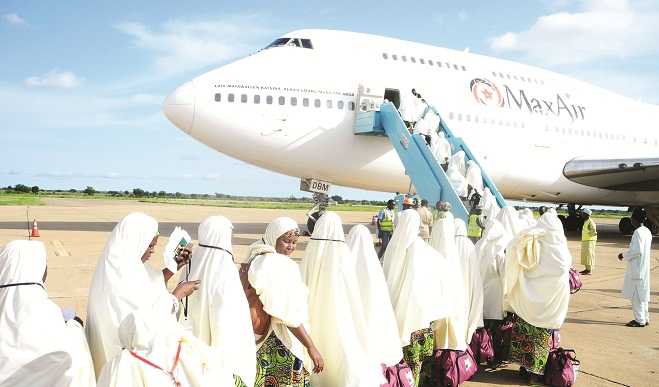
A statement today, April 28 by the NAHCON Deputy Director of Information and Publications, Fatima Sanda Usara said that other flights to take off same day are Umza and Max Air from Abuja with Kogi and Nasarawa states pilgrims respectively, Air Peace from Lagos with Oyo State pilgrims while another FlyNas flight will takeoff from Birnin Kebbi. The statement said that NAHCON staff, including ad hoc members of the National Medical Team, have already departed in advance to prepare for the arrival of the pilgrims. It reminded the pilgrims that airlift by each carrier will be conducted one zone at a time, adding that once airlift is concluded from one zone and moves to the next, the carrier will not return to that zone. “Pilgrims who miss their scheduled flight from that zone must bear the consequences of moving to the next available one. “Other fallouts include having to wait pending when they will be re-grouped for the journey. “Secondly, know that pilgrims must travel strictly under their group of 45 whose Nusuk cards will be ready and awaiting their arrival in Saudi Arabia. “Hence every pilgrim is advised to confirm and familiarize themselves with group members prior to the journey. “Similarly, pilgrims are advised to obtain the contact details of their group leaders and the State official (s) accompanying them on the flight.” Meanwhile, NAHCON Chairman, Ambassador Ismail Abba Yusuf has assured the intending pilgrims that all the necessary preparations have been made to ensure a smooth and successful 2026 Hajj exercise.
There is a dangerous simplicity in the claim that every Israeli prime minister has always wanted the United States to bomb Iran. It sounds neat, almost like a historical pattern carved in stone. But reality – like several geopolitical truths – is more complicated, more human, and far more unsettling. What is true, however, is that for decades, Iran has occupied a central place in Israel’s security imagination. Across different governments, political parties, and personalities, Tehran has often been portrayed as an existential threat; particularly because of its nuclear ambitions and regional alliances. And within that long curvature of tension, one recurring idea keeps surfacing: whether the United States, Israel’s most powerful ally, should take decisive military action against Iran. This is where the story shifts from myth to an issue that is more realistic, more emphatic and more troubling. *The Long Shadow of Strategic Fear*
For Israeli leaders, Iran is not just another rival state. It is seen as a force capable of reshaping the Middle East in ways deeply unfavorable to Israel. From its support for groups like Hezbollah to its nuclear program, Iran represents a stratified challenge: military, ideological, and geopolitical. It is against this backdrop that Benjamin Netanyahu might have brazenly taken the hardline stance. Over the years, Netanyahu has screamed repeatedly about Iran’s nuclear capabilities; urging international action. Critics, including former Israeli Prime Minister Ehud Olmert have, according to Truthout reports, suggested that Netanyahu sought to draw the United States into direct confrontation with Iran, describing such ambitions as “reckless.” It is therefore clear that Netanyahu is not every Israeli prime minister and not every Israeli leader has shared the same approach. Some favored diplomacy, others covert operations, and many balanced between deterrence and restraint. The idea of a unified, decades-long push for American bombing oversimplifies a far more divided internal debate. *When Lobbying Meets Opportunity*
Still, there is evidence that Israeli leaders, especially in recent decades, have pushed Washington toward a tougher stance on Iran. Reports suggest sustained lobbying efforts aimed at convincing successive U.S. administrations to act militarily or, at the very least, to maintain maximum pressure. For years, those efforts met resistance. Every U.S. President calculated the risks differently with majority of them wary of igniting a wider regional war. But history turned a corner when circumstances aligned: politically and strategically.
The Guardian in it’s report said that by early 2026, that alignment had materialized as the United States and Israel launched coordinated strikes on Iran, thus escalating tensions and pushing the region toward a broader conflict. Some analysts argue that this moment represented the realization of a long-held Israeli objective: to weaken or even destabilize Iran through decisive force. But others see it as a convergence of mutual interests rather than a one-sided agenda. *A Region on Edge*
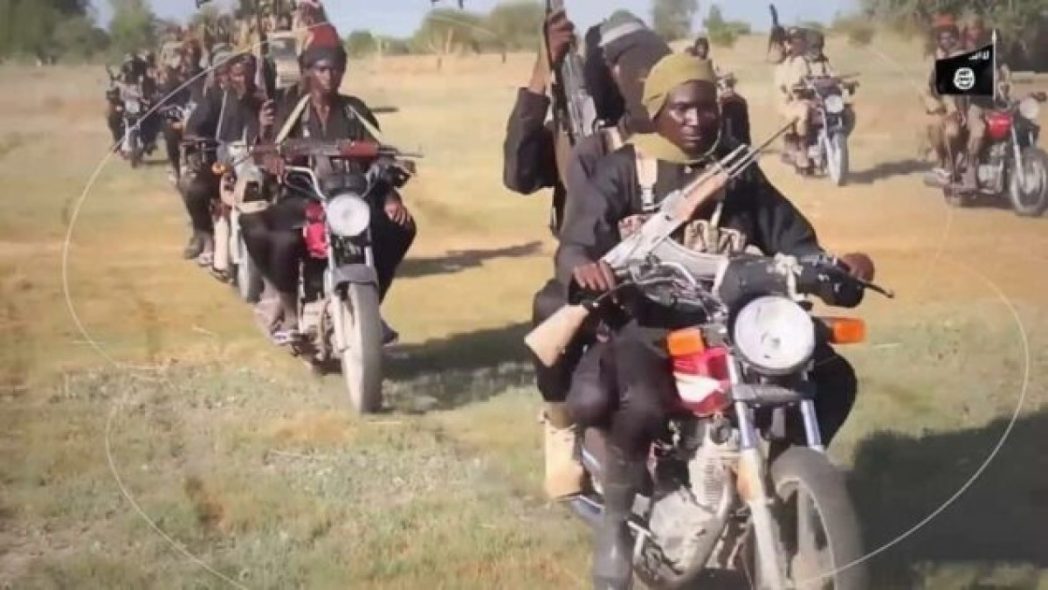
What followed has been anything but controlled. The Middle East today, could be likened to a pressure cooker that has no release valve. The conflict, according to The Guardian, has expanded beyond direct confrontation as it now involves proxies, economic warfare, and strategic chokepoints such as the Strait of Hormuz. Oil supplies are disrupted, global markets tremble, and thousands of lives have already been lost. Vox also reported that analysts describe the conflict as evolving into a prolonged standoff; less a full-scale war, more a persistent, grinding crisis with no easy resolution. To this end, the term “proxy war” could be assumed to have taken on a chilling meaning. It is not just about states confronting each other; it is about smaller actors, regional alliances, and ordinary civilians being drawn into a conflict shaped by decisions over which they have no input. *The Human Cost Behind Strategic Calculations*
Lost in the language of strategy and security are the human consequences. Behind every airstrike, every naval blockade, every diplomatic standoff, there are families disrupted, cities damaged, and futures uncertain. It is easy to speak of “bombing Iran” as a policy option. It is far harder to confront what that actually means: people (women and children inclusive) are killed, economies distroyed, and a region pushed further into instability. Even within Israel and the United States, debates continue. People are speaking vehemently against the war on Iran; warning that each escalation only deepens the cycle of violence and making long-term peace more elusive. *A Proxy War or a Shared Failure?*
Calling the situation a “proxy war of madness” may sound dramatic, but it captures something real: a sense that rational limits have been stretched, that escalation has become easier than restraint. Yet madness is not inevitable. It is a result of choices—made by leaders, supported by institutions, and sometimes tolerated by the international community. The deeper question is not who wanted what, or when. It is whether the world can still step back from the edge. Because if history teaches anything, it is this: wars that begin as strategic calculations often end as human tragedies far beyond anyone’s control.
– Abdulkarim Abdulmalik, an Abuja-based Journalist could be reached on: nowmalik@gmail.com
We all must be wondering why Donald Trump, after all the tough talk, quietly stepped back and offered an indefinite pause on military escalation with Iran. No grand announcement. No victory speech. Just a sudden, unusual stillness. Iran sent him a map. Not a peace proposal. Not a diplomatic note. 𝐀 𝐬𝐭𝐫𝐚𝐭𝐞𝐠𝐢𝐜 𝐦𝐚𝐩 𝐬𝐡𝐨𝐰𝐢𝐧𝐠 𝐞𝐱𝐚𝐜𝐭𝐥𝐲 𝐰𝐡𝐞𝐫𝐞 𝐢𝐭 𝐬𝐢𝐭𝐬 𝐢𝐧 𝐫𝐞𝐥𝐚𝐭𝐢𝐨𝐧 𝐭𝐨 𝐭𝐡𝐞 𝐮𝐧𝐝𝐞𝐫𝐬𝐞𝐚 𝐟𝐢𝐛𝐞𝐫 𝐨𝐩𝐭𝐢𝐜 𝐜𝐚𝐛𝐥𝐞𝐬 𝐩𝐚𝐬𝐬𝐢𝐧𝐠 𝐭𝐡𝐫𝐨𝐮𝐠𝐡 𝐭𝐡𝐞 𝐒𝐭𝐫𝐚𝐢𝐭 𝐨𝐟 𝐇𝐨𝐫𝐦𝐮𝐳. That map said more than a thousand missiles ever could. The Strait of Hormuz is a narrow waterway between Iran and the Arabian Peninsula. The world already knew it carries nearly 20% of global oil. What fewer people talk about is that the same narrow passage is threaded with undersea cables that carry the internet, banking data, and financial transactions for hundreds of millions of people across the Middle East, Asia, and beyond. 𝑻𝒉𝒊𝒏𝒌 𝒂𝒃𝒐𝒖𝒕 𝒘𝒉𝒂𝒕 𝒕𝒉𝒂𝒕 𝒎𝒆𝒂𝒏𝒔 𝒇𝒐𝒓 𝒂 𝒎𝒐𝒎𝒆𝒏𝒕. Your salary transfer. Your business payment. Your hospital billing system. Your supply chain software. All of it travels as pulses of light through cables thinner than a human hair, resting silently on the ocean floor. If those cables are cut, the damage is not just technological. Businesses collapse overnight. Banking systems freeze. Economies bleed while the world waits weeks for underwater repair ships to even locate where the break occurred. 𝐓𝐡𝐢𝐬 𝐢𝐬 𝐰𝐡𝐲 𝐧𝐨 𝐫𝐨𝐜𝐤𝐞𝐭 𝐥𝐚𝐮𝐧𝐜𝐡𝐞𝐫 𝐬𝐜𝐚𝐫𝐞𝐝 𝐓𝐫𝐮𝐦𝐩. 𝐀 𝐦𝐚𝐩 𝐝𝐢𝐝. Because a map of chokepoints tells you something a weapon cannot. It tells you how much the other side is willing to lose, and more importantly, how much you are. The United States and its allies have built their entire economic architecture on this invisible underwater infrastructure. Disrupting it would not hurt Iran half as much as it would hurt global markets, Western banks, and the digital economy that the modern world depends on. Iran did not threaten war. It reminded the world of its geography. There is something deeply human in this moment, and also deeply sobering. We built a globalised civilisation on thin wires buried under oceans, and we never really asked who sits above them. Now we know. 𝑻𝒉𝒆 𝒎𝒐𝒔𝒕 𝒑𝒐𝒘𝒆𝒓𝒇𝒖𝒍 𝒏𝒆𝒈𝒐𝒕𝒊𝒂𝒕𝒊𝒏𝒈 𝒕𝒐𝒐𝒍 𝒊𝒏 𝒕𝒉𝒆 𝒘𝒐𝒓𝒍𝒅 𝒊𝒔 𝒏𝒐𝒕 𝒂𝒍𝒘𝒂𝒚𝒔 𝒂 𝒃𝒐𝒎𝒃. 𝑺𝒐𝒎𝒆𝒕𝒊𝒎𝒆𝒔 𝒊𝒕 𝒊𝒔 𝒂 𝒎𝒂𝒑. 𝐒𝐮𝐤𝐡 𝐒𝐚𝐧𝐝𝐡𝐮 is a Director of CAQA; Editor-in-Chief of ISO; Poet and Writer, Forbes Business Council.
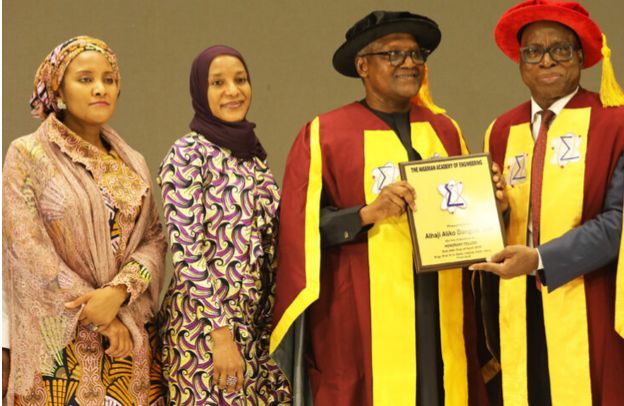
President of Dangote Group, Aliko Dangote, has announced that the expansion of the Dangote Refinery to a production capacity of 1.4 million barrels per day will afford no fewer than 95,000 skilled workers to be gainfully employed. Aliko Dangote, who dropped the hint at the weekend in Lagos during his induction as an Honorary Fellow of the Nigerian Academy of Engineering (NAE), described the project as a major milestone in Nigeria’s industrial transformation. According to him, the expansion underscores the Group’s continued commitment to engineering excellence, job creation and sustainable economic growth. “This award is particularly meaningful because it recognizes what we are doing in the industry, especially our commitment to employing engineers and skilled professionals. At the peak of construction for this expansion, we expect to have about 95,000 skilled workers on site, and we will continue to grow.” Dangote said that when completed. the expanded Dangote Refinery will surpass the Jamnagar Refinery in India to become the largest refinery in the world. Dangote said that the project would rely heavily on Nigerian expertise, creating substantial opportunities for engineers, technicians, artisans and other skilled professionals. He added that the expansion reflects the Group’s long-term vision for industrialization in Nigeria and across Africa. He said that apart from employment generation, the refinery expansion is expected to stimulate local manufacturing, enhance technology transfer and deepen Nigeria’s oil and gas value chain. “It will also improve fuel security, reduce dependence on imported petroleum products, and deliver significant foreign exchange savings for the Nigerian economy. “The scale of this expansion reflects our confidence in Nigerian capacity and our belief that Africa has the ability to build world-class infrastructure that meets global standards.” In his remarks, President of the Nigerian Academy of Engineering, Professor Rahamon Bello acknowledged that Dangote’s impact has transcended physical infrastructure. “What makes this recognition fitting is not only what has been built, but what has been inspired. Alhaji Aliko Dangote’s journey continues to motivate a new generation of engineers, entrepreneurs, and innovators to think boldly, act decisively, and believe in the immense possibilities within our continent.”
Nigeria’s Opposition Political Parties, at a crucial National Summit on Saturday April 25, in Ibadan, Oyo State capital passed a vote of no confidence on the chairman of the Independent National Electoral Commission (INEC), Professor Joash Amupitan. In a communique emanating from the Summit, the opposition parties, including the People’s Democratic Party (PDP), the African Democratic Congress (ADC), the Labour Party (LP) and others, accused the INEC Chairman of having shown bias and partisanship in favour of the ruling All Progressives Congress (APC). They insisted that Professor Joash Amupitan should not conduct the 2027 general elections “as Nigerians across board have lost confidence in him and his capacity to guarantee the required neutrality to deliver free, fair, transparent and credible elections.
“His continuous stay in office is vexatious and capable of triggering wide spread crisis in our nation.” They called on the National Assembly to immediately review the Electoral Act, 2026 to remove all sections that threaten the sanctity and integrity of the elections and run counter to constitutional provisions. Text of the communique is reproduced hereunder: IBADAN DECLARATION Communiqué issued at the end of Opposition Political Parties National Summit held on Saturday April 25, 2026 in Ibadan, Oyo State. Participating Opposition Parties in Nigeria, after an extensive deliberation on the collective threats that we face and the existential challenges facing our country under the stranglehold of the oppressive and anti-democratic All Progressives Congress (APC) and given the need for urgent, collective action to rescue our nation and the destiny of over 200 million compatriots, hereby resolve as follows: 1. That we shall resist all machinations by the APC to foist a one-party State on Nigeria and fight for the survival of multi-party democracy in our country. 2. That despite the onslaughts and manoeuvrings of the ruling party, the APC to impose President Bola Tinubu as the sole Presidential candidate in 2027; we shall field candidates and contest the 2027 Presidential and other elections. 3. That we shall work towards fielding one Presidential Candidate for the 2027 elections, which shall be agreed and supported by all participating opposition parties to rescue our nation and her long suffering masses. 4. That the INEC Chairman, Prof. Joash Ojo Amupitan, having shown bias and partisanship in favour of the ruling APC, should not conduct the 2027 general elections as Nigerians across board have lost confidence in him and his capacity to guarantee the required neutrality to deliver free, fair, transparent and credible elections. His continuous stay in office is vexatious and capable of triggering wide spread crisis in our nation. 5. That the National Assembly should immediately review the Electoral Act, 2026 to remove all sections that threaten the sanctity and integrity of the elections and run counter to constitutional provisions. 6. That all leading politicians that are being detained or harassed on bailable offences be released with immediate effect and allowed to exercise their fundamental rights of participation and inclusivity as Nigerians. 7. That we consider the recent guidelines released by the INEC as obstacles, deliberately engineered to impose conditions and deadlines on the opposition parties. We therefore demand that INEC extends the deadline for primaries till the end of July, 2026. 8. The Summit commends Nigerians for their resilience and readiness to work with Opposition Parties to free our nation from State capture. 9. The National summit of Opposition Political Parties thank the Oyo State Governor Engr. Seyi Makinde and the people of Oyo State for hosting the epochal event. SIGNED: Chairmen of Participating Opposition Parties.
We use cookies on our website to give you the most relevant experience by remembering your preferences and repeat visits. By clicking “Accept”, you consent to the use of ALL the cookies.
This website uses cookies to improve your experience while you navigate through the website. Out of these, the cookies that are categorized as necessary are stored on your browser as they are essential for the working of basic functionalities of the website. We also use third-party cookies that help us analyze and understand how you use this website. These cookies will be stored in your browser only with your consent. You also have the option to opt-out of these cookies. But opting out of some of these cookies may affect your browsing experience.
Necessary cookies are absolutely essential for the website to function properly. This category only includes cookies that ensures basic functionalities and security features of the website. These cookies do not store any personal information.
Any cookies that may not be particularly necessary for the website to function and is used specifically to collect user personal data via analytics, ads, other embedded contents are termed as non-necessary cookies. It is mandatory to procure user consent prior to running these cookies on your website.



 “The Director General encouraged them to be safety conscious, remain alert to potential dangers in their surroundings, and promptly report hazards to teachers, parents, or other responsible adults.”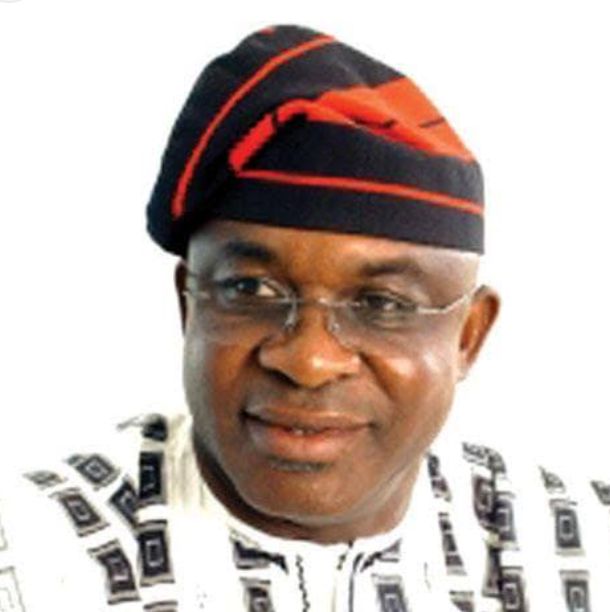
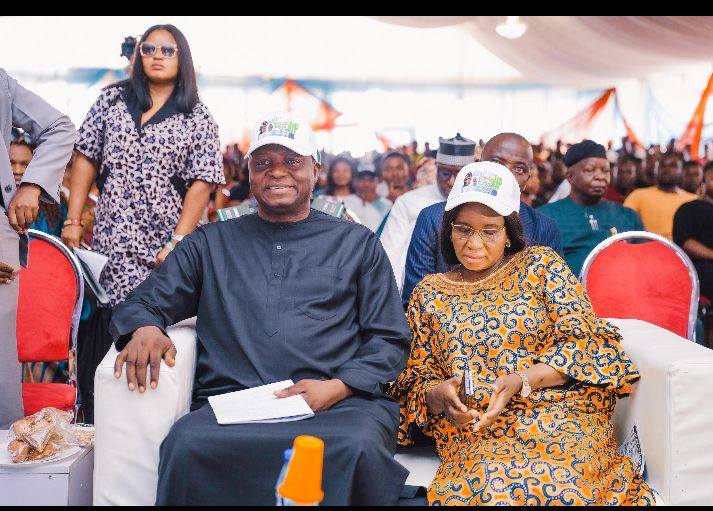





Proxy War: When Ambitions Meet Global Consequences, By Abdulkarim Abdulmalik
There is a dangerous simplicity in the claim that every Israeli prime minister has always wanted the United States to bomb Iran. It sounds neat, almost like a historical pattern carved in stone. But reality – like several geopolitical truths – is more complicated, more human, and far more unsettling.
What is true, however, is that for decades, Iran has occupied a central place in Israel’s security imagination. Across different governments, political parties, and personalities, Tehran has often been portrayed as an existential threat; particularly because of its nuclear ambitions and regional alliances. And within that long curvature of tension, one recurring idea keeps surfacing: whether the United States, Israel’s most powerful ally, should take decisive military action against Iran.
This is where the story shifts from myth to an issue that is more realistic, more emphatic and more troubling.
*The Long Shadow of Strategic Fear*
For Israeli leaders, Iran is not just another rival state. It is seen as a force capable of reshaping the Middle East in ways deeply unfavorable to Israel.
From its support for groups like Hezbollah to its nuclear program, Iran represents a stratified challenge: military, ideological, and geopolitical.
It is against this backdrop that Benjamin Netanyahu might have brazenly taken the hardline stance. Over the years, Netanyahu has screamed repeatedly about Iran’s nuclear capabilities; urging international action. Critics, including former Israeli Prime Minister Ehud Olmert have, according to Truthout reports, suggested that Netanyahu sought to draw the United States into direct confrontation with Iran, describing such ambitions as “reckless.”
It is therefore clear that Netanyahu is not every Israeli prime minister and not every Israeli leader has shared the same approach. Some favored diplomacy, others covert operations, and many balanced between deterrence and restraint. The idea of a unified, decades-long push for American bombing oversimplifies a far more divided internal debate.
*When Lobbying Meets Opportunity*
Still, there is evidence that Israeli leaders, especially in recent decades, have pushed Washington toward a tougher stance on Iran. Reports suggest sustained lobbying efforts aimed at convincing successive U.S. administrations to act militarily or, at the very least, to maintain maximum pressure.
For years, those efforts met resistance. Every U.S. President calculated the risks differently with majority of them wary of igniting a wider regional war. But history turned a corner when circumstances aligned: politically and strategically.
The Guardian in it’s report said that by early 2026, that alignment had materialized as the United States and Israel launched coordinated strikes on Iran, thus escalating tensions and pushing the region toward a broader conflict.
Some analysts argue that this moment represented the realization of a long-held Israeli objective: to weaken or even destabilize Iran through decisive force. But others see it as a convergence of mutual interests rather than a one-sided agenda.
*A Region on Edge*
What followed has been anything but controlled.
The Middle East today, could be likened to a pressure cooker that has no release valve. The conflict, according to The Guardian, has expanded beyond direct confrontation as it now involves proxies, economic warfare, and strategic chokepoints such as the Strait of Hormuz. Oil supplies are disrupted, global markets tremble, and thousands of lives have already been lost.
Vox also reported that analysts describe the conflict as evolving into a prolonged standoff; less a full-scale war, more a persistent, grinding crisis with no easy resolution.
To this end, the term “proxy war” could be assumed to have taken on a chilling meaning. It is not just about states confronting each other; it is about smaller actors, regional alliances, and ordinary civilians being drawn into a conflict shaped by decisions over which they have no input.
*The Human Cost Behind Strategic Calculations*
Lost in the language of strategy and security are the human consequences. Behind every airstrike, every naval blockade, every diplomatic standoff, there are families disrupted, cities damaged, and futures uncertain.
It is easy to speak of “bombing Iran” as a policy option. It is far harder to confront what that actually means: people (women and children inclusive) are killed, economies distroyed, and a region pushed further into instability.
Even within Israel and the United States, debates continue. People are speaking vehemently against the war on Iran; warning that each escalation only deepens the cycle of violence and making long-term peace more elusive.
*A Proxy War or a Shared Failure?*
Calling the situation a “proxy war of madness” may sound dramatic, but it captures something real: a sense that rational limits have been stretched, that escalation has become easier than restraint.
Yet madness is not inevitable. It is a result of choices—made by leaders, supported by institutions, and sometimes tolerated by the international community.
The deeper question is not who wanted what, or when. It is whether the world can still step back from the edge.
Because if history teaches anything, it is this: wars that begin as strategic calculations often end as human tragedies far beyond anyone’s control.
– Abdulkarim Abdulmalik, an Abuja-based Journalist could be reached on: nowmalik@gmail.com