Star actress of the Nollywood fame, Mercy Johnson has told her colleague, Tonto Dike that she had forgiven her and that she loved her too.
“Please, I forgave you immediately King came because I knew that u would have understood how it hurt me. “I Love you and I am short of words now but thank you and trust me I wish so much happiness and peace. am already hugging you so tightly. it is well and Purity is Blowing you a kiss too.”
Tonto Dikeh had earlier this month, apologized to Mercy Johnson for insulting her and her child in 2013.
In a post on her Instagram, Mercy Johnson stressed that she forgave Dike immediately she (Tonto) had her son.
“@tontolet am shaking and in tears as I read your post. I have learnt the more this morning that the holyspirit is true, cus by him you were in my prayers last night and this morning. am in shock. I always heard of what an Angel you are.
My God Will Bless You and Keep you Ahead always. MAMAPURITY” [myad]
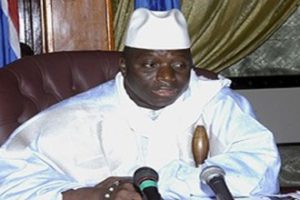
The 54-nation African Union (AU) has made it clear to the Gambian President, Yahya Jammeh that after January 18, the date he is due to hand over power to the winner of the December 1st Presidential election, Adama Barrow, it would not recognize as president of The Gambia.
The AU’s Peace and Security Council in a statement today, Friday in Addis Ababa, Ethiopia, also warned of “serious consequences in the event that his action causes any crisis that could lead to political disorder, humanitarian and human rights disaster, including loss of innocent lives and destruction of properties.”
The warning came on a day President Muhammadu Buhari was already in Banjul at the head of an ECOWAS delegation to persuade Jammeh to step down.
Yahya Jammeh’s political party, in the latest gambit, has gone to court to halt the inauguration of Adama Barrow, on the basis that his challenge of the electoral result had not been decided by the country’s Supreme Court.
The case was adjourned for months, because the court could not form a quorum. [myad]
Ebonyi State governor, David Umahi has said that God had spoken to him after fasting for days, to begin to pay monthly salaries for widows in the 13 local government areas of the state.
The governor, who did not disclose the amount his government would be paying to widows monthly, said that the payment is to help alleviate their sufferings in the mist of economic recession. Umahi who spoke today, Friday, at the grand finale of the three- day fasting and prayer summit, organized by the state government in conjunction with the Christian Association at the Abakaliki township stadium, said that God spoke to him to choose widows in the 13 local government areas of the state and place them on salaries. “God spoke to me again to nominate widows in all the 13 local government areas and start placing them on small salary just like we do for physically challenged persons. Every month, we pay about 85 physically challenged persons some salaries. We are also going to do that for widows.”
A statement today, Friday by his Chief Press Secretary, Emma Anya quoted governor Umahi as assuring that his government would continue to bridge the gap between the rich and the poor in line with his covenant with God.
He promised to complete in 2017, all the projects started by his administration and to add more vigour to the beautification of Abakaliki capital city. “The beauty of Abakaliki has seen nothing yet. Men shall come from all works of life by Easter to behold the beauty of Abakaliki.” the governor promised.
The governor told the gathering that he had declared two- day public holidays for political appointees in the state to enable them meet with people in their respective communities on how best to achieve more in the state’s agricultural programme. [myad]
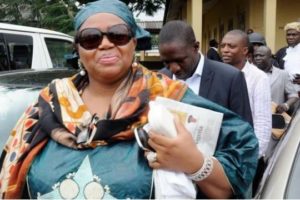
A female oil magnate, Mrs. Ada Ugo-Ndali, fainted in the dock today, Friday, shortly before she was convicted of a N1.7 billion subsidy fraud by a Lagos High Court sitting in Ikeja.
Justice Lateefat Okunnu found Ugo-Ndali, the Managing Director of Ontario Oil and Gas Limited, and the company Chairman, Mr. Walter Wagbatsoma, guilty of N1.7 billion fuel subsidy fraud. They were charged to court by the Economic and Financial Crimes Commission (EFCC).
Delivering judgment in the matter, the judge discharged and acquitted the Petroleum Products Pricing and Regulatory Agency (PPPRA) representative, Fakuade Ebenezer, of forgery allegations.
After reading the judgment, Justice Okunnu stood the matter down for a 15 minutes break for allocutus plea by the convicted persons.
When the judge returned to hear the defendants’ plea for mercy, the second defendant, Ugo-Ndagi suddenly slumped and fainted in the dock.
When the woman was finally revived, she was breathing heavily just as counsels frantically called for medical assistance and ambulance. She was later assisted out of the court into a waiting black jeep by her lawyers.
The vehicle sped out of the court premises immediately Ugo-Ndagi was brought in.
The development forced Justice Okunnu to adjourn sentencing of the convicts to Monday.
Wagbatsoma, Ugo-Ndagi and the oil company were arraigned on July 7, 2010 for collecting N1.7 billion from the Federal Government as fuel subsidy payable to Ontario Oil and Gas Nigeria Limited.
They were arranged on an eight -count charge of obtaining money under false pretence from government, forgery and altering of documents. [myad]
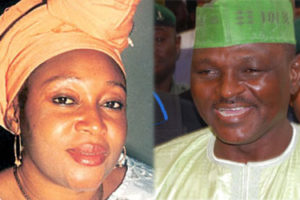
Lagos State Government has returned to court to challenge the acquittal of Major Hamza Al-Mustapha, Chief Security Officer of Head of State, late General Sani Abacha, by the Court of Appeal, Lagos Division on July 12, 2013 over the murder of Alhaja Kudirat Abiola.
Kudirat was the wife of the presumed winner of the June 12, 1993 presidential election, the late Chief Moshood Kashimawo O. Abiola.
Ruling in a suit filed by the Lagos government, Justice Walter Onnoghen of the Supreme Court, granted the State leave to appeal against acquittal of Major Al-Mustapha, saying that the for the leave was successful since it was not challenged.
“In the circumstance, the applicant, the Lagos State Government, is granted the leave to appeal the July 12, 2013 judgment of the Court of Appeal, Lagos. The would-be appellant is therefore given 30 days within which to file its notice of appeal.
“The date for the hearing of the appeal shall be fixed upon receipt of this notice by the court,” he said.
Earlier, counsel to Al-Mustapha, Mr. Joseph Daudu (SAN), withdrew an application against re-opening of the case and he did not disclose the reason he withdrew his objection.
He had argued that the applicant `slept’ over its right of appeal for about four years, adding that it was against court rule.
Justifying the lateness in filing the appeal, counsel to the applicant, Mrs. Oluwayemisi Osunsoya, said that it waited for the report of the state’s review teams on the matter.
She said that it took a long time for the two legal teams to present their findings, asking the court to relax its rule in the interest of justice.
The Lagos State Government had charged Al-Mustapha, Mohammed Abacha and Lateef Shofolahan with conspiracy to commit murder and murder of Kudirat, before a Lagos High Court. Kudirat was killed on June 4, 1996.
In the high court judgment delivered in 2012, Justice Moji Dada found the accused guilty as charged, and sentenced them to death by hanging.
However, the Court of Appeal upturned the judgment. [myad]
Few days from now Donald Trump will step into the White House as the 45th American President. The Americans are in fever pitch anticipation waiting for a man whose conduct, so far, has been contrary to the norm. Trump is a novelty in American politics, nay the world. His victory shocked the pundits and soothsayers whose predictions never gave Trump a chance. Why? They could not imagine a man with such crude dispositions and unorthodox style would garner votes to victory. Talk about his mannerisms, they are far away from being normal. Many dismiss his penchant of speaking what they dub the language of the street and directed at the proverbial common man right from the time he started campaigning for his party’s Republican ticket through to the presidential elections.
For the first time, a presidential candidate openly took the media up and spat on their faces for their rabid opposition to his candidacy. To him, given the obvious bias of the mainstream media in favour of his opponent, Hillary Clinton, the Fourth Estate of the Realm had betrayed the cardinal principle of the profession that truth is sacred. He sees majority of the journalists and broadcasters as liars and jokers. He also threw a punch at illegal immigrants, vowing that he would fish them out and get them expelled as soon as he was sworn in. He had a scathing message for the religious bigots – especially the Muslims – threatening once sworn in, he would make the United States too hot for them to stay. To him “they are blood suckers”. .
Trump is now US President elect, rhetorics of electioneering campaigns are gone. The question begging for an answer is: Will he be true to his campaigns promises? A BBC commentary column of 10 November 2016 raised some poignant posers for Trump on tackling
Some of the major issues he raised during his electioneering trips across America. I wish to recall few of them in this piece. Already some of his cabinet nominees are talking of the rules of law to implement some of Trump weird policies rather than carrying them out by fiat.
First on his card is the removal of two million illegal immigrants. How he is going to achieve this still remains cloudy. There are only an estimated 178,000 illegal immigrants with criminal records. Even if they are two million, to begin mass deportation on that scale would be hard. However, Americans are waiting for his joker.
Second: The building of Trump Wall. He has slightly changed one of his campaign promises that would make Mexicans finance the building of the wall to now saying the wall will
be built through appropriations process as soon as April. In one of his tweets, Trump said: “The congressional appropriation to build the wall was because of speed”. New York Republican Representative, Chris Collins, echoing that said American tax payers would fund the cost for the wall but that he was confident Trump would negotiate getting the money back from Mexico. “When you understand that Mexico’s economy is dependent upon US consumers, Donald Trump has all the cards he needs to play” . The wall is estimated to cost as much as $10 billion ( N480 billion).
Third: To deny visa- free travel to countries which refuse to take back their citizens. In theory he can, under section212 ( F) of the Immigration and Nationality Act of 152 making reference to President Barack Obama who had used the act to block visas of certain groups. But for Trump to apply the rule to the entire countries of the world may be difficult to achieve.
Fourth: appointment of a new Supreme Court Judge. It is yet to be seen. Though there is a vacancy in the higher echelon of the US court after the death of conservative Antoin Scalia.
President Obama has nominated a replacement but the Republican controlled house has refused to consider it. Mr. Trump has an opportunity to nominate a candidate to the Supreme Court. Through this, he could influence decisions on everything from abortion to freedom of the Press and probably same sex marriage.
Fifth: Repealing Obama Care. Already the Republican legislators who now dominated the two houses of Congress have tactically endorsed Trump pledge to have Obamacare repealed as soon as he assumes office. Though this threat will be a tall order to achieve,Trump will need to find a way to overcome a strong Democratic opposition in both houses. To repeal health legislation without an immediate replacement will deny millions of Americans now receiving affordable health care.
Sixth: Cancellation of all payments to the UN climate change programmes. Though he can get the scrapping of payment through the Republican dominated Congress, he will have to contend with Paris Agreement which ratified it as an international law. Withdrawal may take four years or more.
Seventh: Trump who described China as a currency manipulator may be inclined to rattle China with an executive order to remedy what he considered an unacceptable situation. But given the vibrancy of the Chinese economy, whatever measure President Trump might take against China is likely to be of limited effect.
The Trump cabinet is almost in place. These are the men and women who will set the tone of implementing Trump “weirdest” ideas. It is, however, a mixed grill. Some of his nominees do not share the rather extreme positions of Trump on some issues, like the National Security Adviser, Michael Flynn, who has a history of tactically supporting anti- Muslim activists , Jefferson Beauregard who believes in equal rights for all and Steve Bannon- Trump’s Chief Strategist- whose selection was most welcome by white supremacists. In a most dramatic twist on Tuesday 9 January 2016, Trump nominee for US Attorney General stunned the Senate Confirmation Panel when he said : ” I abhor the KK Klan and what it represents and its hateful ideology”. Even those placard carrying protesters against his nomination: “Stop the racist pig from getting into power” were dis appointed when he further said, he did not support outright Muslim ban from the U.S. ”We have great Muslim citizens”.
Trump will be carrying a lot of baggage into his office next Friday judging from his last news conference last Wednesday 11 January 2016. As a business man, he maintained he would ever be, though he pledged to transfer the running of his multi- billion dollars businesses to his two sons. His link to Russia is an albatross that is making many Americans to believe that their indomitable world influence will be compromised. And the last which to me will be very hard for him to fight is his disdain for the Press.
The world is waiting for Trump and how he wants to actualise his campaign mantra: ” WE WANT TO TAKE OUR AMERICA BACK” against these odds.
Folu Olamiti is Media Consultant writes from Las Vegas.
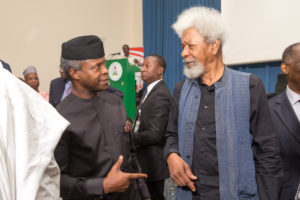
Nigeria’s Vice President, Professor Yemi Osinbajo with Professor Wole Soyinka at the book discussion on Religion & Making of Nigeria, presented at Shehu Musa Yar’Adua’s Centre, Abuja, the nation’s federal capital territory, today, January 12th, 2017. Photo by Novo Isioro. [myad]
The Nigerian Army and an online medium operating from Abuja, the PREMIUM TIMES are now at each other’s throats as the army instituted a legal action against the medium, even as the medium, threatened to institute a counter legal action against the army.
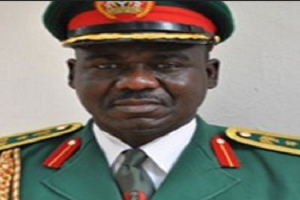
The army instituted the legal action against the Premium Times because of what it called the failure of the medium to retract and apologize over alleged false, subversive and malicious publications against the person of the Chief of Army Staff, Lieutenant General Tukur Buratai and the Nigerian Army.
Brigadier General Sani Kukasheka Usman, Director Army Public Relations, in a statement, said that all efforts to make the medium make amend proved abortive.
“The Nigerian Army sent a letter to the management of the online publishers to retract and apologize before 31st December 2016. The medium however remained adamant and recalcitrant.
“Consequently, the Nigerian Army has briefed its lawyers to institute legal action against the medium.”
But, in a swift response, Premium Times Editor-in-Chief/Chief Operating Officer, Musikilu Mojeed, said that the medium has replied a letter sent by the Nigerian Army, threatening legal action against the newspaper for publications about the army and its chief, Tukur Buratai, a Lieutenant General.
Mojeed in a statement recalled that on Wednesday, the medium published a letter dated December 22, written on behalf of Mr. Buratai, by I.M Alkali, a Major General, accusing PREMIUM TIMES of “unwarranted serial provocative, unauthorized, libelous and defamatory publications.
“The letter also claimed the paper published reports without reference to the army, saying the stories exposed a “deep hatred for the leadership of the Nigerian Army.
“The letter expressed displeasure with three stories published by the medium between October and December last year. The army described the stories as “false, unsubstantiated, and unprofessional” but provided no evidence to back its claim.
“The letter demanded PREMIUM TIMES retract the reports and apologise to the army and Mr. Buratai.
“PREMIUM TIMES, on Tuesday, through its lawyers, delivered a detailed response to the Army, affirming its stories, and unequivocally rejecting the demand for retractions and apology.
“The paper, instead, asked the army to write a letter within seven days of receiving its reply, withdrawing the allegations and threats against it and its staff, or risk being sued.
“Jiti Ogunye, the newspaper’s principal counsel, who signed the response, took the army to task on the ‘grave implications’ of its letter, and described the army’s letter as a threat to the well-being and life of PREMIUM TIMES’ staff.
“By your letter you have threatened the lives of our clients, and our clients are thus obliged to put the public on notice that should any harm come to them, you, the Chief of Army Staff and the Nigerian Army should be held accountable.”
“Mr. Ogunye said the “chilling threats” contained in the army’s letter was an affront on the constitutional guarantee of civilian control of the army and the freedom of the press.
“It is our view that all working journalists and news outlets are entitled to some protection from public officers, especially of the military and security agencies who are charged with the duty to secure and protect Nigeria and Nigerians, their lives and property, and maintain law and order, but who often, because of the uniqueness of that duty and for reason of the exclusive bearing of arms and control of our commonly owned ordinance, assume very erroneously that they are above the law.”
“He rebuked the army for describing PREMIUM TIMES’ stories as “unprofessional” saying military and other public officials were not in a position to question the paper’s professionalism.
“The penchant of public officers to flippantly, arrogantly and ignorantly label media reports and stories and journalists ‘unprofessional’ once they are affected by media reports and stories must be deprecated with decorous pungency. Sir, you are not in any position at all to teach our Clients media professionalism, ethics and standards,” the paper said.
“It really can be exasperating and disconcerting to see public officers condescendingly castigate journalists, many of whom are not only internationally acclaimed and celebrated but who also have up to forty years of practice as journalists under their belt,” the letter stated.
“Mr. Ogunye also criticised the army’s penchant for claiming exclusivity of patriotism and national sacrifice.
“We must also rebuke the false assumption that our military men, exclusively, are an epitome of patriotism and national sacrifice, and that they love Nigeria more than civilians do.
“Sir, the Nigerian Army of which you spoke so glowingly is an heir to a military that unpatriotically subverted, many times, constitutional governance in Nigeria, plunged Nigeria into a three-year internecine civil war, committed unspeakable rights violations against the Nigerian people and thwarted the efforts of Nigerians to restore democratic governance to Nigeria.
“The Nigerian Media, if you must be reminded, played a frontline role and suffered gross human rights violation, perpetrated by the military, in the struggle to rid Nigeria of military dictatorship. Our clients, therefore, totally reject your claim that they hate Nigeria, their country.
“The Nigerian Army does not love Nigeria more than Nigerians love themselves. An armed force of less than three hundred thousand officers and men cannot claim to love Nigeria, a country of over one hundred and eighty million people, more than the Nigerian civil population.”
Premium Times said it has asked the army to write a letter, addressed to its Publisher, Dapo Olorunyomi, withdrawing the threats and allegations within seven days. The paper warned of legal action to enforce its fundamental rights.
“In the circumstances, we hereby demand that you write a letter of withdrawal of these threats and allegations, to our clients, wherein you are to assure them of their safety and protection by the security and law enforcement agencies in Nigeria, in particular, the Nigerian Army. The letter, to be addressed to Mr. Dapo Olorunyomi, Managing Director of Premium Services Ltd/ Editor in Chief of Premium Times must be received within seven (7) working days of delivery of this letter to you.
“That should you fail, refuse or neglect to write and deliver the above letter as demanded, our clients will not hesitate to institute a legal action against you, your principals, the Nigerian Army and the Federal Government of Nigeria, to enforce their fundamental rights under the Constitution.” [myad]
Nigeria has offered to accommodate the embattled Gambian President, Yahya Jammeh if he steps down and wishes to relocate to Nigeria.
Spokesman of the House of Representatives, Abdulrazak Namdas told news men yesterday that the House had already communicated the decision to President Muhammadu Buhari who is due in Gambia tomorrow, Friday, to join other leaders of the ECOWAS to convince Jammeh to hand over power to the winner of the December 1st Presidential election, Mr. Adama Barrow.
Namdas said that the decision by Nigeria to offer Jammeh political asylum in Nigeria is to help end Gambia’s political crisis. Gambia has been in a political lockdown since Jammeh, who ruled the small West African nation for 22 years with an iron fist, refused to accept the result of the December 1st presidential election which saw him lose power to Barrow. Earlier yesterday, Jammeh announced he will not step down when his mandate ends on January 18.
Jammeh is planning to remain in office until the Supreme Court decides on a petition he filed that challenges the result of the December 1st presidential election, the information ministry said in a statement read on national television. President-elect, Barrow, a former real-estate agent who was little known before he announced his candidacy, had reiterated that he is planning to take office on January 19, as scheduled. Earlier this week, Gambia’s dysfunctional Supreme Court adjourned hearing in Jammeh’s petition to Monday, since only one of a required minimum of five judges were present. Experts, however, believe that it will be highly unlikely that four additional judges will be present on Monday, because the Supreme Court has not been operational since Jammeh fired several of the court’s judges in mid-2016. All other eligible Court of Appeal judges left the country after the December election. Observers fear that delays to the planned handover of power could lead to violence. [myad]
The World Bank has projected that Nigeria will bounce back from the current economic recession, and grow its Gross Domestic Product, GDP, by one per cent.
“Nigeria is forecast to rebound from recession and grow at a 1 percent pace while Angola is projected to expand at a 1.2 percent pace.”
This was contained in a statement which projected that the global economy will accelerate moderately to 2.7 percent in this year.
While forcasting that growth in oil-exporting countries will be weaker, the global financial institution stated that economies that are not natural-resources intensive will experience robust growth.
“Sub-Saharan African growth is expected to pick up modestly to 2.9 percent in 2017 as the region continues to adjust to lower commodity prices.
“Growth in South Africa and oil exporters is expected to be weaker, while growth in economies that are not natural-resource intensive should remain robust.
“Growth in South Africa is expected to edge up to a 1.1 percent pace this year.” [myad]
We use cookies on our website to give you the most relevant experience by remembering your preferences and repeat visits. By clicking “Accept”, you consent to the use of ALL the cookies.
This website uses cookies to improve your experience while you navigate through the website. Out of these, the cookies that are categorized as necessary are stored on your browser as they are essential for the working of basic functionalities of the website. We also use third-party cookies that help us analyze and understand how you use this website. These cookies will be stored in your browser only with your consent. You also have the option to opt-out of these cookies. But opting out of some of these cookies may affect your browsing experience.
Necessary cookies are absolutely essential for the website to function properly. This category only includes cookies that ensures basic functionalities and security features of the website. These cookies do not store any personal information.
Any cookies that may not be particularly necessary for the website to function and is used specifically to collect user personal data via analytics, ads, other embedded contents are termed as non-necessary cookies. It is mandatory to procure user consent prior to running these cookies on your website.



 Ebonyi State governor, David Umahi has said that God had spoken to him after fasting for days, to begin to pay monthly salaries for widows in the 13 local government areas of the state.