Presidency has given assurance that President Muhammadu Buhari will appoint chairmen and board members for the government agencies and parastatals in the early part of next year, 2017. In a chat with news men today, Tuesday at the Aso Presidential Villa, senior special adviser to the President on media and publicity, Malam Garba Shehu said: “you know that the reconstitution of the board members began methodically, from sector by sector. You should expect that to resume at the beginning of the New Year. The President has given directives on what to do.” Garba Shehu said that the Presidency is fully aware that this is an issue of interest to a lot of the members of the governing party, the All Progressives Congress (APC). On the agricultural programs of the Buhari’s administration, Malam Garba said that the President’s persistent call for a return to farming is yielding good results. “The talk about agriculture has driven people to the farm. This year, there is a huge boom in the rural economy. We have witnessed an excellent harvest. Farmers are getting value for their output. What has encouraged farmers the more is the increasing availability of extension services. New farming techniques are helping farmers to do their occupation better. The readiness of off takers to buy the produce is also a major boost. “When you put all these together with the systematic move to curb importation as a boost local production through the restriction of the available foreign exchange to critically important sectors of the economy, you have favorable environment for the diversification of the economy. “As we speak, several of the country’s major manufacturing industries are actively backward-integrating- Nestle, Unilever, the breweries are looking what we have as local materials, changing their formulations to maintain production levels and keep their share of the market. Manufacturers who are hooked on import of raw materials are advised to re-strategize and take full advantage of local raw materials. The future belongs to those who employ the use of local raw materials.” [myad]
Former Super Eagles Coach, Sunday Oliseh has landed a plum with Fortuna Sittard, a Dutch side, as the club’s new manager. Oliseh succeeds Ben van Dael at Fortuna Sittard Stadium, having earned just five wins from 19 games this season. The owner of the Club, Isitan Gün, sai via the club website: “With Sunday chooses Fortuna a coach who is young and ambitious, vision and where players look up to. “We were looking for someone who plays attractive football combined with the sheer will to win. In Sunday we think we found this trainer. “The past few days he has already watched all the matches of Fortuna, so Sunday from January 2 is well prepared to begin his work.” Fortuna is 18th on the Dutch second division log with 15 points from 19 matches and will tackle Achilles 29 in their next game on January 13, 2017. [myad]
Federal Government has announced that it is treating the recently-released 21 Chibok School girls as its ‘adoptees, even against complain by their parents that they have not been having enough of their daughters. This is even as some local and international organizations have shown interest in the welfare of the girls. In a statement today, Tuesday, the senior special adviser to President Muhammadu Buhari on media and publicity, Malam Garba said: “a black American billionaire, Mr. Robert Smith who is currently sponsoring the education of 24 girls from Chibok, among them the first set of escapees from Boko Haram at the American University of Nigeria, Yola has offered to pay for the education of the 21 released through negotiations and is offering to take responsibility for all the others who will hopefully be eventually set free. “The Murtala Mohammed Foundation in the country is equally interested.” The Presidential spokesman confirmed that some parents of the 21 Chibok girls have been complaining that they did not have enough room for interaction with their daughters who were brought home for Christmas by the Department of State Services (DSS), saying that there were some hitches arising from a lack of understanding of the objective of the trip on the part of some security operatives. He said that following the receipt of the complaints of the parents, a directive has been given from the headquarters for the parents to be given easy access to interact with their daughters. “If the situation persists, please let us know so that the higher authorities will make a further intercession,” he assured. [myad]
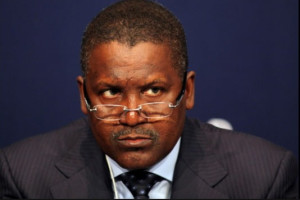
Business mogul and Africa’s richest man, Alhaji Aliko Dangote, has assured Nigerians that the sacrifices they have made would soon see Nigeria out of the woods even as he commended them for their resilience and doggedness in the face of the prevailing economic challenges. Addressing in Lagos a group of small and medium enterprises operators who met with him during the festive period, Dangote said Nigerians have demonstrated the capacity to face challenges, be undaunted and tackle them headlong. According to him, some countries have been thrown into upheaval at the slightest economic downturn, rather than joining hands together to solve the economic problems. He said that what Nigeria is going through, though painful, but at the end of the day would make the nation a better self reliant economic power house. He advised the people to continue to join hands with the government in finding lasting solution to the problems, adding that Nigeria will be the better for it. He added that most countries in the world, which have attained economic buoyancy, have at one time in their history faced economic hardship. “Thank God in our own situation, we know where the problem lies and as such we only need to muster the courage to apply solution. “Nigeria needs to look inward and produce what we consume as opposed to incessant importation, which takes away our forex. This is one of the fundamental problems of our country. “We import just anything and the reality has dawned on us now that we have to change this habit. This is why the Federal Government has been emphasising the need to go back to agriculture and total manufacturing so that we also can produce what we need and even export rather than import.” Dangote said not until Nigeria becomes a producing nation and reduce import, her economy would continue to grope in the dark, noting that his company would continue to take the lead in any sector that requires the nation to look inward. He said Nigeria has no business with importation of some products, the production of which the nation has abundant raw materials to produce. He gave an example of milk. He lamented that 80 per cent of milk consumed in Nigeria is imported, a situation he described as unacceptable, given that the nation has all it takes to produce milk locally and even feed other countries. Dangote promised that he would be venturing into diary production to reverse the trend, saying Nigeria can produce the amount of milk needed for her citizenry. He therefore urged the people to continue to be patient and cooperate with the government at all levels, while all hands are on deck to bring Nigeria back to a path of sufficiency and economic buoyancy. It would be recalled that the business mogul had indicated that his new $12 billion three in one project – the refinery, petrochemical and fertilizer plants – currently under construction would create a minimum of 235,000 new jobs, both direct and indirect, as it becomes operational in the first quarter of 2019. Dangote is optimistic that there will be market for the refined products because even in Africa, only three countries have effective functioning refinery, with others importing from abroad. [myad]
The Federal Government has announced that 11 Nigerians, who specialize in promoting ghost workers have been identified and handed over to the Economic and Financial Crime Commission (EFCC) even as 50,000 ghost workers have been fished out, leading to the saving of N200 billion. According to the Presidency, the amount of N13 billion was gradually saved off ghost workers monthly salaries from February to December this year. Speaking with State House correspondents at an interactive meeting to mark the end the year, the Senior Special Assistant to the President on Media and Publicity, Malam Garba Shehu confirmed that 11 persons championing the syndicate of ghost workers have been handed over to the EFCC. “The flagship program of the Muhammadu Buhari administration to rid the system of fraud and instill good governance is on course. “Through a notable initiative, the Efficiency Unit of the Federal Ministry of Finance, the government has embarked on the continuous auditing of the salaries and wages of government departments. “When the the Committee was constituted in February 2016, Federal government monthly salary bill was N151 billion excluding pensions. Now the monthly salary warrant is N138 billion, excluding pensions. “Which means that the government is making a monthly saving of about N13 billion. That is from February 2016 to date.” The Presidential spokesman added: “the pension bill was 15.5bn monthly as at February. Now it is down to N14.4 billion, which means average monthly saving is made of about N1.1 billion.” [myad]
The Spiritual Head of Brotherhood of the Cross and Star (BCS) Worldwide, Olumba Olumba has blamed the economic recession which Nigeria is currently going through on greedy leaders who did not love the country even as he said that the recession would soon come to an end if Federal Government continues with its current economic recovery programme.
Olumba who spoke to news men today, Tuesday, in Calabar on the activities lined up for the celebration of the divine manifestation of its founding Leader Olumba Olumba Obu said: “If there is love there will be no recession; recession is a result of mismanagement of Nigeria’s resources by the leaders.
“Nigeria has abundant resources as a nation, but because leaders lack love with one another, they squander the collective wealth of the people.
“President Buhari will succeed in ending recession, if he continues with his current programs, including the fight against corruption among others.”
Olumba, who spoke through BCS spokesman, Mr. Edet Archibong said that, part of activities to mark the event include visit to Motherless Homes; heeling the Sick; Deliverance and giving of Arms.
He described leader Olumba Olumba Obu as a true Son of God who came to fulfill the prophecies about the establishment of the New Kingdom of God and the second advent of Christ.
According to him, the activities which began on Monday, Dec.26, would reach a climax on Friday.
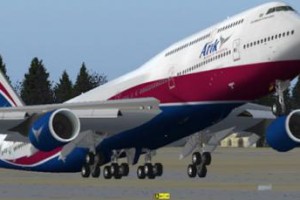
The Nigerian Civil Aviation Authority (NCAA) has fined Arik Air Limited N6 million delaying passengers’ baggage on London – Lagos route between December 2 and 4 thereby contravening the provisions of the Nigerian Civil Aviation Regulations (Nig.CARs).
The NCAA also ordered the airline to pay each of the passengers with the baggage the sum of $150 as compensation.
This was contained in a statement by the NCAA General Manager, Public Relations, Sam Adurogboye today, Tuesday.
The statement said that a Letter of Sanction with reference no. NCAA/DG/CSLA/RM/1-06/16/439 and dated December 22, has already been sent to Arik Air and that the Authority discovered that Arik Air violated Part 19.7.2 and 19.17.2.1 (ii) of the Nig.CARs 2015.
It said that the authority was earlier inundated with complaints of delay and inability to ferry the passengers’ checked – in luggage on the airline’s services from London to Lagos from December 2 to December 4.
It said upon receipt of the complaints, the NCAA invited the airline to a meeting on December 6 which was duly attended by the airlines’ representative.
“However, Arik embarked on continuous flouting of the Nig.CARs and the authority’s directives to freight all backlog of short – landed baggage to Lagos within 48 hours.
“Similarly, the carrier declined to offer care and compensation to the affected passengers which were unanimously agreed for $150 to each passenger.
“In addition, the airline did not inform the passengers at the soonest practicable time that their checked – in baggage would be off – loaded as required by Part 19.7.2 of Nig.CARs 2015,” the statement said.
It said the N6 million fine must be paid within seven days of receipt of the letter while the $150 compensation to each of the passengers must be made within 30 days.
The statement said “the NCAA expects strict compliance with the provisions of Part 19 of the Nig.CARs by the airline in future.
“This is to assure all stakeholders that the authority exists to protect their rights at all times and as such any violation of the regulation in that regard will be viewed seriously.”
“I am speaking French. You mean you don’t even understand elementary French?”
“No, I don’t. Speak English. How was Christmas?”
“Low-key. Like this, like that”.
“For me, it was a dead-end Christmas”
“God forbid. May we never have a dead-end Christmas. I reject it in Jesus name.”
“If you like, summon the Holy Ghost. We have never had a Christmas like this one. On Christmas eve in Lagos, come and see people just going about, many of them aimlessly. The kind of shopping that heralds Christmas was absent. For the first time, I could see the real colour of sadness, frustration and regret on the people’s faces.”
“It depends on what part of Lagos you are talking about. If you had been in Lekki or Victoria Island, you would have seen a different colour.”
“I know. There are two countries in one: the real Nigeria and the other Nigeria, where people live in a bubble. But the bubble is beginning to burst everywhere. With the Naira now N500 to the dollar, and businesses failing everyday, the pain is spreading. It was an unusual Christmas.”
“Everywhere jus’ dry. I know some people who used to hold Christmas parties every December 25. They just decided to postpone it till next year. But did you at least manage to eat rice and chicken?”
“Anybody that eats rice these days is very lucky indeed, with a bag of rice now N20, 000. And you can’t even be sure it is real rice. I learnt the market was flooded with plastic rice.”
“Plastic rice? What does that taste like?”
“I guess like plastic. “
“Never heard of that. Plastic rice?”
“To be on the safe side, these days, I only eat Ofada rice. Local rice.”
“All kinds of things happen during recession. Plastic rice. Empty pockets.”
“I know something about empty pockets, my brother. Imagine what I went through trying to get money from the ATM, two days to Christmas. I went to about five banks, you’d think people were queuing for fuel, with everyone looking anxious.”
“I know.”
“One queue covered an entire street. When I eventually found an ATM and it was my turn, the machine just started blinking. I didn’t know when I started shouting Blood of Jesus, Blood of Jesus.”
“You should have planned ahead. I don’t know why people have to wait till the last minute before withdrawing money. Nigerians should learn to plan ahead.”
“I did. The ATMs misbehave a lot these days and they are always crowded.”
“There is no money in circulation. I hear the Central Bank is broke. The banks are just managing.”
“You have started, hen? How can the Central Bank of Nigeria be broke? For the past three weeks now, the spot price of crude oil has been over $50 per barrel. That’s some good revenue.”
“May be it is the banks that are broke then. I just hope nobody has taken depositors’ funds to go and invest in the MMM.”
“What nonsense!”
“MMM was giving people better returns on their investments. Even bankers invested in the scheme. And now that the scheme has been frozen till January ending, there is panic everywhere. You would be surprised the kind of revelations that would come up if the profile of investors in the scheme is investigated.”
“Nigerians are always looking for quick profit, but I don’t believe that a bank will invest in MMM”
“Dey there. Look at the way special prayers, night vigils and deliverance sessions are being held over this MMM thing. Some churches are holding get-your-MMM-money-back prayer sessions, and when you attend those sessions, come and see crowd! If that Ponzi scheme should crash eh, a lot of people will commit suicide.”
“One man sold his only car and invested the money in MMM.”
“I know. Some people sold their houses too.”
“The MMM scheme is a comment on the Nigerian banking system. Obviously, Nigerians don’t trust the banks and their miserable deposit interest rates.”
“Tell me, did you invest in the MMM?”
“No. But I almost did. I know some people who made huge profits from it. I was still contemplating putting some money down to test the waters when the alarm blew.”
“You are lucky, then.”
“I guess every investment is a risk.”
“I tried to make fun of some of my friends who invested in the MMM the other day. January 2017 has suddenly become the most important month in their lives. The way they reacted, hen. I was accused of being insensitive and sadistic. I quickly shut up”.
“So, what are your plans for the new year?”
“I have no plans yet. But I have been following what the prophets are predicting.”
“You believe those predictions? I just read them for fun. But this December, I have only read the predictions by Prophet Ayo Fayose”
“Prophet Ayo Fayose. Never heard of him. Which Christian Ministry does he lead?”
“The Ayo Fayose Evangelical Church of Yahweh, Iyana Jogunomi, Ori oke Ekiti-Kete.”
“You are joking!”
“Yes, I am. But you mean you don’t know that the Governor of Ekiti State is a prophet?. Every year, he also makes predictions about the coming year. He has released his 2017 predictions”
“Seriously, is he also among the Prophets?”
“Uhn hun. In his latest predictions, he talks about how the Holy Spirit directed him.”
“I hear, though, that he has been anointed by Daddy G.O. Pastor Adeboye.”
“Anointment comes from God. What happened is that Pastor Adeboye commended Fayose publicly for leading his people courageously and defending their interests.”
“The APC won’t like that”
“Daddy G.O is not a politician.”
“But have you not heard that the Ekiti Chapter of the APC issued a statement to say that Fayose bribed Pastor Adeboye?”
“May the Holy Ghost slap the mouth of anybody who utters that blasphemy. The Bible says touch not my anointed. The Bible also says He that is in me is greater than he that is in the world. The word of God is greater than politics. “
“The way you are carrying on, the APC in Ekiti will issue another statement to say you have also been bribed by Fayose. Anyway don’t worry, they have denied the statement. But the PDP in Ekiti has also issued a statement saying the denial is an after-thought. Too much politics in that their Ekiti.”
“Forget about them. But what did the Governor predict, if I may ask? You mean, he has so much free time on his hands; he is busy making predictions. In any case, many of these predictions are somehow. Anybody can predict Nigeria’s future at anytime. It is always something like: I foresee a crisis in the Niger Delta. I foresee a change of cabinet. I foresee deaths in Nollywood. I foresee changes at the Central Bank. I foresee the emergence of a new political party…I foresee Donald Trump creating tension in the world. Three prominent traditional rulers should pray against sickness and bereavement…. Common sense.”
“Oh, oh.”
“But how come no prophet predicted that Nigerian soldiers will capture Sambisa forest and drive out the Boko Haram or that a day after, there will be suicide bombing at a cattle market in Maiduguri? “
“Suicide bombing at a cattle market? What is the target?”
“No prophet foresaw the killings in Southern Kaduna and the waste of human lives or that a white man will be arrested inside Sambisa forest. You don’t have to be a prophet to know tomorrow”
“Whatever.”
“We should thank God for everything and for the joy of surviving Christmas in a season of recession. We should also thank God we are not in Saudi Arabia, but in our country, Nigeria.”
“What has Saudi Arabia got to do with Christmas? I don’t get it.”
“It is a crime to celebrate Christmas in Saudi Arabia. This year, seven Africans – 4 Nigerians, 2 Ghanaians, and one Kenyan were arrested in Saudi Arabia for playing Christmas Carols, they could be sent to jail for 10 years.”
“What? For playing Christmas songs?”
“I understand there is even an Islamic cleric in India, Zakir Abdul Karim Naik who told Muslim brothers and sisters not to wish Christians Merry Christmas, because it is a “big sin, worst evil, worse than fornication or murder.” What is the world turning into: A world of hate, bigotry and intolerance. Tell me it is not true. ”
“It is true.”
“Sad.”
“Sorry about the fire accident at Nigerian Breweries in Lagos. I know you drink beer.”
“If you want to talk about something else, do so”
“I am just concerned that there are too many fire accidents taking place these days. When petrol tankers are not exploding on the highways, markets are being gutted by fire, companies and houses are going up in flames. The Lagos State Fire Service reported for example that 45 markets in Lagos had fire accidents between January and September 2016 alone.”
“The Fire Service should not moan. They need to do a lot more to educate the people about safety precautions and ensure that buildings respect the Fire Code. They also need to be better organized to deal with emergencies.”
“The Fire Service in Nigeria is poorly funded.”
“Harmattan. Dry season. The possibility of more fire accidents is high. The public should be sensitized all the same.”
“Most of the fire accidents are due to electrical faults, either faulty connections or power surge. We need a national safety programme to prevent fire outbreaks. Every market and major company should have a fire station. There should be fire hydrants across every major city.”
“I’d just say that prevention is better than cure.”
“Who is your Man of the Year, 2016?”
“Man of the Year. Who is yours?”
“Yours first”
“Let me see. I’ll choose the Nigerian Soldier. The Nigerian soldier is practically holding Nigeria together. He is underpaid, over-used, overstretched, denied access to equipment, and money and often subjected to the harshest possible conditions. Our soldiers are involved in one operation or the other across the country, protecting the country and even doing police work. Operation Crocodile Tears, Operation Harmony, Operation Lafiya Dole, Operation Delta Safe, Operation Gama Aiki, Operation MESA, Operation Awatse, Operation Sharan Daji, Operation Maximum Security. From one region to the other, the Nigerian soldier is busy keeping Nigeria safe from kidnappers, terrorists, secessionists, oil bunkerers, cattle rustlers and extremists.”
“Our soldiers have even been sent abroad to learn cattle rearing because their next assignment includes the management of cattle ranches. I agree with you. I salute their courage.”
“And who is your own man of the year?”
“I’ll choose the average Nigerian for the resilience, the capacity and the courage to suffer and smile at the same time.” [myad]
The Chief of Army Staff, General Tukur Buratai has announced that Sambisa forest, which the Nigerian Army had taken over from the dreaded Boko Haram on Thursday would be turned into a training ground for officers of the Nigerian Army as from next year.
Buratai, who spoke at Damasak, Borno, while celebrating Christmas with troops of 145 Battalion after the road leading to the town was reopened by Governor Kashim Shettima, three years after closure said: “we are also opening up roads to Sambisa and Alagarno forest. Sambisa forest is going to be one of our training grounds.
“I have already directed that we should conduct Nigerian Army small arms championship in that forest next year.
“And we are going to use it also to test fire our fighting vehicles, other key equipment and weapons that requires testing whenever we want to induct new weapon and equipment into the Nigerian army inventory.
“It will afford us very good ground for basic tactics and indeed advance tactics, including but not limited to tactics at the Platoon, company, battalion, Brigade and even division levels.
“We are going to make it more robust to make sure that these criminals do not come back to that forest again.” [myad]
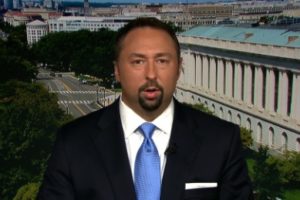
Jason Miller, President-elect Donald Trump’s spokesman, says he will not take the job of White House Communications Director he was nominated for on Thursday. Miller announced in a statement that he would not continue on to the White House, citing family reasons. “I will hand off my responsibilities as Communications Director to Sean Spicer, the Republican National Committee Communications Director.” Spicer was announced this week alongside Miller as the incoming White House press secretary, a position he would also retain. Miller said: “After spending this past week with my family, the most amount of time I have been able to spend with them since March 2015, it is clear they need to be my top priority right now. “And this is not the right time to start a new job as demanding as White House Communications Director.” Miller added that he was also expecting the birth of his second daughter in January 2017. According to him, however, he looks forward to continue to work with incoming President Trump. “I look forward to continuing to support the President-elect from the outside after my work on the Transition concludes,” Miller said. Miller joined the Trump campaign in June as Senior Communications Adviser. He previously worked for Texas Senator Ted Cruz’s presidential campaign. Trump had named Spicer Assistant to the President and Press Secretary, Hope Hicks Assistant to the President and Director of Strategic Communications, Miller Assistant to the President and Director of Communications, and Dan Scavino Assistant to the President and Director of Social Media. “Sean, Hope, Jason and Dan have been key members of my team during the campaign and transition. I am excited they will be leading the team that will communicate my agenda that will Make America Great Again,” Trump announced in a statement on Thursday. [myad]
We use cookies on our website to give you the most relevant experience by remembering your preferences and repeat visits. By clicking “Accept”, you consent to the use of ALL the cookies.
This website uses cookies to improve your experience while you navigate through the website. Out of these, the cookies that are categorized as necessary are stored on your browser as they are essential for the working of basic functionalities of the website. We also use third-party cookies that help us analyze and understand how you use this website. These cookies will be stored in your browser only with your consent. You also have the option to opt-out of these cookies. But opting out of some of these cookies may affect your browsing experience.
Necessary cookies are absolutely essential for the website to function properly. This category only includes cookies that ensures basic functionalities and security features of the website. These cookies do not store any personal information.
Any cookies that may not be particularly necessary for the website to function and is used specifically to collect user personal data via analytics, ads, other embedded contents are termed as non-necessary cookies. It is mandatory to procure user consent prior to running these cookies on your website.

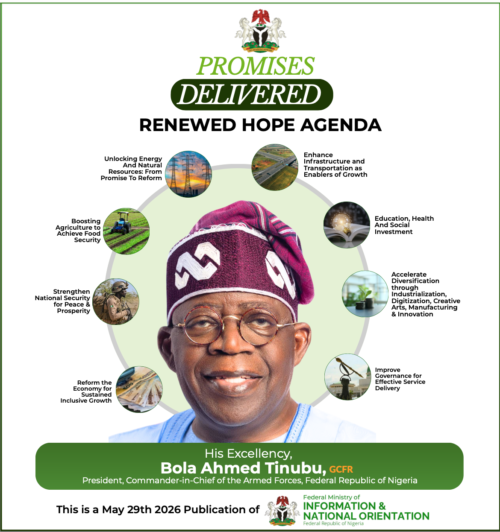

 Presidency has given assurance that President Muhammadu Buhari will appoint chairmen and board members for the government agencies and parastatals in the early part of next year, 2017.
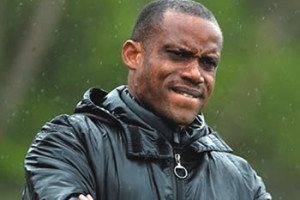 Former Super Eagles Coach, Sunday Oliseh has landed a plum with Fortuna Sittard, a Dutch side, as the club’s new manager.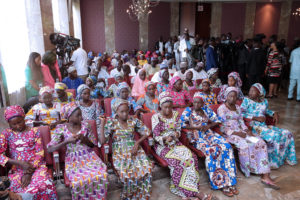
 The Federal Government has announced that 11 Nigerians, who specialize in promoting ghost workers have been identified and handed over to the Economic and Financial Crime Commission (EFCC) even as 50,000 ghost workers have been fished out, leading to the saving of N200 billion.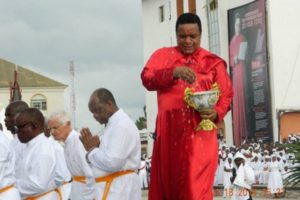
 “How was your Christmas Day?”