

What Nigeria Means To Me, By Reuben Abati
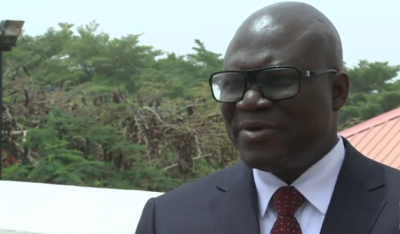 Reuben Abati
The various reactions on Independence Day yesterday can only compel us to ask one question: what does Nigeria mean to you or me? I had written a piece on Friday, September 30, in which I advised that Nigerians should embrace hope rather than despair and that in the long run, it shall be well with our country. I also recommended as part of the celebration, Timi Dakolo’s soul-inspiring and masterly song, “Great Nation”, hoping that special attention will be paid to its touching lyrics. But the reactions to my interventions did no more than further reinforce the fact that too many Nigerians are angry with Nigeria as an entity, they are angry with how Nigeria has been run and is being run, they are frustrated with the current situation in the country, and what the future holds for the entire country.
The last time Nigerians found themselves at this kind of crossroads was under the rule of General Sani Abacha. The issue was not just about General Abacha, however, but how military rule had led the country into a ditch, and the people wanted something different. The disappointment today is of a different form of extraction: some people raised the people’s hopes beyond the stratosphere: they assured them that the Nirvana that they wanted was at the door; they told them that to run Nigeria is easy, it was just that the wrong people were in charge. And now, all promises seem illusionary, the scales are falling off the people’s eyes and the people are transferring their anger unto every situation. The change agents who promised a revolution are in disarray, they are caught up in an atomistic war among themselves. The we-are-better-than-them-we-wil l-save-Nigeria crowd has suddenly discovered that there is a great gulf between election time propaganda and the real assignment of governance. Even the partisan clerics among them no longer know what to tell the congregation. They cannot afford to say that the God they worship speaks with two tongues.
Their nemesis and their hubris lie in a certain lack of understanding or a certain omission, or perhaps oversight. I maintain my earlier position that Nigeria is a complex entity and that it is not a country made for any Messiah, now or in the far future. Nowhere in the world is the age of the messiah real. There is no such thing. Every country must face its own destiny. It is the duty of leaders to manage that destiny, transform it and not destroy it. Nigeria’s destiny is to be great and successful. We only need to find the right combination of people. Note the emphasis on combination. We will never find the right combination if we remain divided by ethnicity, ego and religion.
It is partly the reason, therefore, why every Nigerian moving forward must ask the question: what does Nigerian mean to me? Too many compatriots relate to this country as an abstraction. When they hear Nigeria, the only thing they think of is their ethnic root. They don’t even have any attachment to the Nigerian passport. I bet we would all be shocked the day we take a census of all the Nigerians who have foreign passports and the millions who are still on the queue, begging to give up on this country. Nigeria is thus, regrettably today, a provider of important talents for other countries in all fields of human endeavour in the same manner in which Ireland sold out its talents at the turn of the 19th Century.
We have reached a point and that is perhaps one of the gains of democracy since May 2015, whereby every Nigerian, at home and abroad must ask himself or herself, that simple question: what does Nigeria mean to me? Does it mean incumbent government and its politics? Mere identity? A passport? Home? Association with my parents and old friends and so a homeland linked by blood? Or is Nigeria nothing, no more than a space for opportunities, or just an option, or at best, mere geography crashing into DNA? I guess no other country has such divided and scattered emotional brains like Nigeria. When the people decide individually and collectively that they want a country, may be that is when we can begin to talk of Nigeria. What does Nigeria mean to you? I urge you to answer this question as part of the national reflection process after our country’s 56th Independence Anniversary. I’ll start with what I believe.
I am a grateful Nigerian citizen. I went to primary school in this country at a time when teachers were very proud to be teachers. Our teachers worshipped our parents and vice versa. If your parent ever told you your teacher complained about you, you would feel like running away. Today, Nigerian parents go to schools and beat up teachers, and the teachers ask for bribe. The idea of being in loco parentis has since being destroyed. Something has gone terribly wrong. Quality education is now a matter of cash and class. It actually seems if you don’t have a lot of money, your children cannot make it in in life. In this same country, the children of ordinary people were the ones who had all the hopes because the system supported the poor. My father, God bless his soul, could afford to send me to any level, I was the first son of a second wife married at old age, and he was prepared for the choice he made, but the Nigerian system was behind him too. I pay tribute to those teachers who poured their lives into mine, who did everything to mould me, those selfless soldiers who gave what they had so that other people’s children could grow. That is what Nigeria means to me, Those indeed are the true Nigerians. What am I trying to say? I am saying that in those days in this country, you could make brave choices and the country will stand by you because it was a country that worked. We need to make Nigeria work again.
As a university student, our mattresses were made. There was regular water flow in the hostels. “Bush meats” were accorded due respect, and the “campus meats” were not badly treated either, and only the most brilliant boys were inducted into the campus cults. Everything was respectable. Food was cheap. Life was easy. Our libraries were well stocked. Lagos to Calabar by road was N15, by air it was N40 and for three months, we survived on N42, 500. I was a Federal Government University Merit Scholar. That means I went to university free of charge. My father insisted he would pay and he didn’t need government to send me to school. I used his money to buy books. That was how I started building a personal library that can only compete with that other one owned by the bibliophile called Odia Ofeimun. When I got to the University of Ibadan, I also ended up as a University Scholar. My father again insisted on paying his bills, but Nigeria insisted on training me. I consider myself a product of Nigeria. I got to wherever with my father and Nigeria competing to pay the bills. My father felt a sense of responsibility. Nigeria had a system that looked out of for people like me.. Once upon a time in this country, Nigeria looked out for people’s children and invested in them. I am one of those products. Standing on Nigeria’s investments, I have gone to so many other places in the world. Nigeria has given me a foundation that I could never imagine. And by some sheer accident of fate, I ended up as Presidential Spokesman at Nigeria’s highest level. Nigeria means a lot to me. I cannot give up on this country. No matter the travails, I believe that this country means a lot to so many of us: search your own history.
I have children who despite the difficulties are also not willing to throw away their Nigerian passports. Nigeria remains the home of my children and their great-grand children to come. Nigeria is the country that has given me all the opportunities I have had. It is the landscape of my joys and sorrows. It is your landscape too. What Nigeria means to me is a country that needs to be rescued from many years of abuse, from the locusts that eat things up, and the agents of the devil who turn a good country into a land of regrets. I am consoled by the realization that the people who love this country and who want to see it work and make progress possible are in the majority. Nigeria is a country not only of great potentials but also of great achievements. Let us take certain things seriously beyond satire and parody, and resolve that we all have a duty to make this country great.
I believe in this country because every opportunity that I have enjoyed came my way because in the long run, I am a Nigerian. The world is a competitive place. It is also a rational world. You can have the best CV in the world in any circumstance, but the people in charge of opportunities don’t just look at brilliance and genius, they consider so many other factors. What Nigeria means to me is a country that has given me many opportunities and opened many doors for me. I will confront those who want this country destroyed for false reasons and if ever given the opportunity, I will run this country and place it on the right path.
By now, you know where I stand. I am a grateful citizen who wants to rescue this country. My choice is a reformed and improved Nigeria that serves the interest of all citizens and mankind. What is your exact choice in this matter as we celebrate this 56th Independence Anniversary weekend? What does Nigeria mean to you? [myad]

 The Nigerian Maritime Administration and Safety Agency (NIMASA) has appointed Snecou Financial Services Company Limited to assist in recovering debt of over five billion US Dollars various companies are owing it.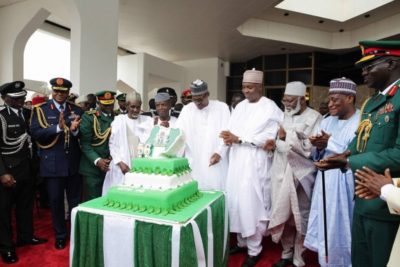


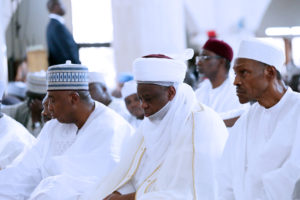


56th Independent Day: Time For Sober Reflection, By Bobboi Kaigama
I extend warm greetings to Nigerians around the world on this occasion of our 56th anniversary as a country.
My thoughts turn first towards the founding fathers of our nation. I applaud their sacrifice and the legacy they have left behind. Yes, we are politically free but still constrained economically to the apron strings of erstwhile colonial masters. Ours is a tale of a country that has been hijacked by the Brettonwood institutions and an insignificant few in terms of number, who now manipulate the system to their own personal aggrandizement. The politicians collude with the big players in the economy to rape the treasury, leaving the people prostrate, hopeless and frustrated.
We are clearly embittered seeing Nigerians lose their jobs in droves and the people in charge are doing nothing in terms of initiating stimulus economic policies other than the clamour for sale of national assets. The cabal have long infiltrated the polity. In fact, virtually every bill passed in the National Assembly today is to the advantage of these few Nigerians.
Nigeria is the sixth oil-producing country in the world yet the poorest. Are we heading in the right direction? No. The backbone of every democracy is a vibrant parliament or National Assembly (as it is in our own case), unbiased judiciary, media and active organized labour/civil society. Unfortunately, out of all these only labour and its civil society ally appear to be interested in the development and growth of the country. Profligacy has become the order of the day, especially the Eight Assembly. At first it was the issue of salary and allowances; exotic and bulletproof cars for lawmakers and their wives, budget padding, etc. They play politics without principles, amass wealth without work. “We are patriots and we feel your pains”, they say, but their actions speak otherwise.
I wish to assess the following areas:
POLITICS:
A lot has been said about our style of politicking in my introduction, but I have a few more things to add. The political terrain is a battlefield. Put differently, politics has become a do-or-die instead of a service to the people. We are a people blessed with human and natural resources but cursed with bad leadership. Our leaders care less and never give a hoot about nation-building. India, Nigeria, China, Malaysia were in the league of third world countries a few decades ago but now they have created a niche for themselves in the global economy.
It is our resolve that blame and counter-blame will do us no good. It hurts that the country is in a recession, but hurts more that even in the midst of the untold hardship the lawmakers are busy dwelling on inconsequential. The ministers and other government agencies are not left out of these blames. We are distraught by the fact that federal government and most state governments refuse to remit our deducted pension and the promised new minimum wage and palliatives meant to cushion the pain caused by the last deregulation has not been implemented. At inauguration at all levels of government, their speeches presented a wind of hope to Nigerians. But no sooner were they sworn in that they made national interest optional, dashing our hope again. Why the leadership of the Senate and some of his colleagues called for the sale of performing national assets still beats our imagination. It is a shame!
ECONOMY:
There is no gainsaying the fact that all sectors of our economy have collapsed, and our most cherished naira bows every hour to foreign currencies. As at yesterday the naira exchanged for between N480 and N492 per US dollar. The Central Bank of Nigeria (CBN) appears hopeless, not knowing what to do. Many companies have close shops while others are fleeing the country, a situation that has lead to millions of job losses. Our economy has been hijacked by the International Monetary Fund (IMF) and a few wealthy Nigerians and the society is the worse for it.
The challenge before the country is the few greedy Nigerians who see the country as their personal property. They use our commonwealth to buy our viable national assets only to turn them to warehouses. They are paid upfront to fix the refineries that never worked; they increase the price of fuel to N145 per litre; canvass for the sale of LNLG, Airports, Sea Ports, etc. They have a common goal, which is to loot.
The report from Nigerian Bureau of Statistics (NBS), in its Second Quarter released at the beginning of September 2016, noted that the fortune of the economy has dwindled by 2.06 per cent which has never happened in the last three decades. We have been assured that the recession will soon be over; we agree but it is important government look beyond the ruling party to source for capable hands that can help save our economy. All hands must be on deck to ensure that we become economically free by exporting more than we import and by patronising made in Nigeria goods.
INSECURITY
The Congress appreciates the military for their effort so far at maintaining peace in the country. We also share their pains and that of families who lost their loved ones in the North-east and Niger Delta while trying to stall the activities of the militants. Be that as it may, what the military is doing at the moment in those regions can best be described as “addressing the symptoms”. The main causes of the unrest itself must be looked into – unemployment, poverty, etc.
The saying, an idle hand is the devil’s workshop is the case here. Where there is good leadership there would be development; where there is development there would be jobs; and when there are jobs there would be no youths in the street waiting to be used for political thuggery.
SALE OF NATIONAL ASSETS
In our race to come out of the recent recession that has bedevilled the country, caution should be taken to ensure we do not auction our life-wire to people as being suggested by Nigerian governors during the National Economic Council (NEC) meeting and a few other Nigerians. The consequences of such action would be disastrous. Tell me of any asset sold in this country without hundreds of people losing their jobs! Did they even tell us what they did with the proceeds?
Truly, we are experiencing increasing economic complexities, but that does not mean we should sell our birthright for a mussel of porridge. If only those canvassing this will pay their appropriate taxes and the economy well diversified we wouldn’t be complaining by now. Let us remember that if those who invested in the assets had sold them, the current administration would not have been able to bailout some state governments when they cried for help some months ago. The recommendation of the sale is hasty, unreasonable and we suspect foul play. Our challenge as a country is not paucity of resources, but rather the inability (or deliberate refusal) of successive governments to convert the “blessings” for the general good of all.
OIL AND GAS
The oil and gas industry is the country’s cash cow. Sadly, governments, like those in the past, do not even know how many barrels of oil the country produces. They told us deregulation was the only way to go; they have deregulated yet the status-quo remains. Meanwhile prices of commodities have sky-rocketed. We urge government to de-militarize the Niger Delta and seek peace so that the country can recover fast.
It suffices to say here that we are disappointed in the Ministry of Petroleum and Petroleum Products Pricing Regulatory Agency (PPPRA). The poor performance of PPPRA is not a surprise to us because we had expected it. Government skillfully shoved labour out of PPPRA so it can have reason to justify the deregulation. Such a step is dangerous for a nation that is economically gasping for breath.
We call on government to commence the process of making the sector more viable. It should also encourage local refining processes. The Congress is convinced that the oil and gas workers can successively manage the sector if government stops unnecessary interference. They are capable of making it vibrant enough to fund a large percentage of the national budget. We also call for the passage of the Petroleum Industry Bill (PIB). The bill would address the insurgency situation in the Niger Delta as their demands are duly taken care of in the bill. Losing over N61trn according the Nigerian Extractive Industries Transparency Initiative (NEITI) report to non-passage of PIB at this time makes us look unserious before the international community. The cost of fighting the insurgents is not inclusive in the amount cited above. What about the lives of our soldiers that are dying on a daily basis? This is a needless war!
CENTRAL BANK OF NIGERIA
The Central Bank of Nigeria has not got it right on a number of policies. First is the conscious devaluation of the naira. Today, the naira is not only unpredictable but also subservient to virtually all foreign currencies. We are a mono-economy now battered by the combined forces of devaluation and inflation. Growing an economy is about local production/investment directed at massive development. We expect that managers of the economy should know that, regrettably they prefer to dance to the turn of International Monetary Fund (IMF) and World Bank.
In addition, the CBN should shun this conspiracy and romance with the Bureau De Change and banks to manipulate the exchange rate while neglecting its core duties, which include: determination of foreign exchange rate for the naira and to maintain appropriate external reserve. The apex bank has been found wanting in these areas. We urge the Federal Government Economy Team and the CBN to appreciate the fact that growing an economy is about local production/investment, no more no less.
CORRUPTION
Unbridled greed and corruption are like Siemens twins. These two evils are responsible for the country’s abysmal under-development. The scourge is flourishing in the polity and the economic cycle. Painfully the more you try to fight it the more it fights back, apology to politicians.
In 2013, Transparency International declared Nigeria as the 144th in Corruption Perception Index out of the 177 countries. While our politicians have since perfected the act of election-rigging and passing of anti-people laws their partners in crime and big players in the economy are awarded contracts for Turn-Around-Maintenance (TAM) of the refineries, roads, etc. It will be recalled that the money meant for arms procurement for the prosecution of the Boko Haram war was misappropriated; likewise all the people awarded contracts to develop the Niger Delta region. It has always been the pattern and we will be deceiving ourselves to think corruption is not taking place under this administration. It is disheartening to know that some privileged individuals are diverting grains meant for Internally Displaced Persons (IDPs). This is regrettable! We advocate that state of emergency be declared on corruption. It has to be fought without vendetta or favor; and people must be convicted. Is this too much to ask?
Where have they ever got it right? The education sector is in a sorry state. In fact, our best university is not even among the best 1000 in Africa, talkless of the world. The government has never implemented the 26.5 percent of annual budget mandated by UNESCO. All their policies in the sector are never implemented.
LESSON FROM SAUDI ARABIA GOVERNMENT
The cost of servicing our presidential system of government is too grave to bear. It is an institutional problem. Politics is big business in Nigeria and we urge the executive, legislature and judiciary to lead by example by slashing their salaries and allowances just like the Saudi Arabia government has done. This is one way to tell Nigerians that they truly feel our pain as they profess.
Thank you! [myad]