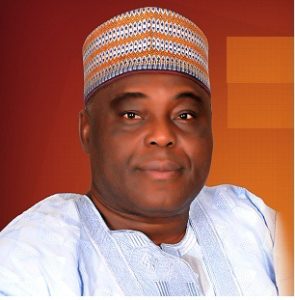
A national chairmanship aspirant of the Peoples Democratic Party (PDP), Raymond Dokpesi, has predicted that the party will die if its forthcoming national convention flops.
“The party will break and disappear into oblivion. I tell you that if the party does not reform now, it won’t survive the crisis,” he told journalists in Abuja on Thursday.
“Time has come for the party to determine its future. I represent reform. If we love the party and if we want to move the party forward and also deepen democracy then we have to leave the old way of overbearing, imposition that brought us to where we are. We are hungry for a new way of doing things.”
On the zoning of the office of the national chairman to the southern part of the country, he said: “the constitution of the party vested the power to zone on the National Working Committee as represented by the Senator Ahmed Makarfi-led caretaker committee.
“It zoned the office to the entire south. When you are in government, you can do micro zoning, but now you have to look for the best. The zoning of the president was done to the entire north. The office had not been zoned to any of the three zones from the north.
“Makarfi has said so, that anyone who feels he can win the election and knows he is capable of leading the party, is free.
“I have visited about 24 states when that micro zoning was done. Now, I have covered 34 states and FCT, leaving Taraba and Adamawa States.”
Dokoesi insisted that he remained the best candidate for the job because, according to him, he did not belong to any faction in the party. [myad]
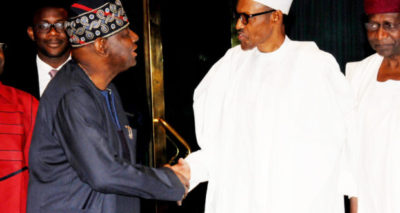
President Muhammadu Buhari has confessed that it has been difficult running Nigeria’s economy because of the fall in the price of crude oil globally. “It has been a very difficult year for Nigeria. Before we came to office, petroleum sold for about $100 per barrel. Then it crashed to $37, and now oscillates between $40 and $45 per barrel. “Suddenly, we are a poor country, but commitment to transparency and accountability is not making people know that there is severe shortage.” President Buhari spoke Thursday at State House, Abuja, while receiving the United Nations Population Fund (UNFPA) Executive Director and Under Secretary General of the United Nations, Professor Babatunde Osotimehin. He said that what the country needed to survive the difficult time as a result of severe shortage of resources is commitment to transparency and accountability. Buhari begged UNFPA to bear with Nigeria in whichever area the country could not live up to its responsibilities for now. He reminded UNFPA that explosion in the population and different cultural practices in the country should be a fertile ground for its research. The President thanked the UN agency for its commitment to saving lives in Nigeria, particularly of women and children. On food security, President Buhari said that reports from the North-East of the country are encouraging, as people have started returning to their farmlands, with the guarantee of relative security. Prof Osotimehin, who is former Minister of Health in Nigeria, said that UNFPA is determined to promote health care facilities across the country. He said that reduction of maternal mortality is possible if the country would pay more attention to access to health facilities and human resources to run them. He encouraged Nigeria to commit to providing resources for health care, on a rollover basis, pledging that the UN would work with the country to provide humanitarian assistance not only in the North-East, “but even extended to the Lake Chad basin.” [myad]
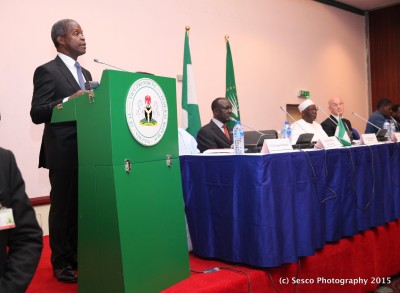
Nigeria’s Vice President, Professor Yemi Osinbajo has announced that the sum of N1.4 Trillion has so far been saved as a result of the removal of fuel subsidy. “This action (fuel subsidy removal) has led to reduced daily demand for Premium Motor Spirit (PMS) for which the daily demand has reduced from 1,600 trucks per day to 850 trucks per day. This has resulted in the savings of N1.4 trillion on subsidy payments thereby conserving budget resources.” Vice President Osinbajo spoke on Thursday in Lagos at the Presidential policy dialogue, organised by the Lagos Chamber of Commerce and Industry and was chaired by the President of Dangote Group, Alhaji Aliko Dangote. Osinbajo recalled that removal of subsidy was one of the interventions which the Muhammadu Buhari government implemented and has so far helped to boost household and social spending and to prevent the economy from falling into deep recession. “Deregulation of the downstream petroleum sector has equally had significant increase in the availability of PMS throughout the country. This has been achieved at a price of N145 per litre as against over N200 per litre been paid at most parts of the country prior to the deregulation.” He said that the subsidy removal has also reduced demand for foreign exchange required to import volumes of fuel that was often smuggled to neighbouring countries because of the previous price differential. “The recent introduction of a flexible exchange rate regime, which has helped to ease the pressure on the external reserves, is equally of note. It is of course true that the immediate effect is depreciation of the Naira and some of the consequences for inflation, etc., but we expect that with the greater clarity we are seeing in the implementation of the policy by the CBN, the foreign exchange market will stabilise, and confidence will be restored. “There will be an increase in the supply of foreign exchange especially due to inward investment and increased receipts from non-oil exports.” Osinbajo said that the federal government had pledged to keep capital spending in the budget at a minimum of 30 percent, adding that the government is determined to meet the set target since it is investment that grows an economy. “Accordingly, we have already made capital releases of N332billion, which is more than the entire amount released last year for capital expenditure, with another N100 billion set to be released in the next few days. “The main sectors for which the funds have been released are power, works and housing; defence; transportation and agriculture.” He told the business moguls that one of the first areas in which the government brought change about was in public financial management and that it had a consequential effect of saving jobs as well as money. According to him, every “ghost worker” has been eliminated at the Federal level thereby saving many jobs. The Vice President said that the on-going implementation of the Integrated Payroll and Personnel Information System is bringing about monthly savings of N8 billion, while the creation of the Efficiency Unit is projected to save N14 billion in 2016 fiscal year. He said that a great effort has been made to improve non-oil revenues, saying: “this includes bringing an additional 700,000 companies into the tax net as compared to the targeted 500,000 set at the beginning of the year. Non-oil revenue from both FIRS and Customs continues to lag behind projections partly due to seasonal factors and economic conditions. The FIRS has implemented VAT-COLLECT for auto-tracking and remittance of VAT, increased collaboration with State Governments in tax collection. “FIRS has achieved 73.17% of its target for the first half of the year. In a similar vein, the Customs have undertaken substantial revision of incentives, control and enforcement measures.” Osinbajo said that in deepening the diversification efforts of the government, agriculture is clearly a major priority. He said that the gains would be in food security and a reduction in the financial burden and pressure on foreign exchange resulting from importing foods that we can produce. We reproduced here, the full text of the Vice President Osinbajo speech:
I am honoured to have been invited to participate at this important policy dialogue.
The Lagos Chamber of Commerce and Industry is perhaps Nigeria’s most significant private sector group even if only because it is located in the Nation’s commercial nerve centre, and of course draws its membership from that crucial community. Please accept my commendations for this laudable initiative.
I doubt whether there is any need to say that Nigeria in the past 15 months has gone through probably its most challenging period in recent history.
First just by way of providing a context let me start by recalling some of the challenges that we were confronted with when we came into office.
The immediate problem was the sharp decline in oil prices and production, and the lack of savings to cushion the impact. The crisis affected nearly all the sectors of the economy, as reflected in:
Declining external reserves;
Scarcity of foreign exchange
Fuel supply shortages;
Derelict infrastructure, especially crippling power outages;
Mounting salary arrears at both State and Local Government levels;
Increasing unemployment and poverty levels;
Failing business confidence; and
A vicious cycle of corruption, evidenced by huge leakages, fiscal misdemeanours and indiscipline
All these things have been compounded in various ways due to continued weakness in the overall global economy and inherent structural deficiencies in the domestic economy:
GDP declined from 6.3% in 2014 to 2.15% in 2015 and -0.36% in Q1 2016;
Insecurity, especially in the North East, elongated by the corruption in Defence procurement;
FDI, which stood at about USD395 million in Q1 2015 declined by 56% to USD175million by Q1 of 2016. FPI, which averaged USD621 million in Q1 of 2015, had declined to USD90.3 million by Q1 2016.
With the decline in the value of Naira, value of equities have been eroded by over 43% closing at market capitalisation of USD48billion in May 2016 against USD84 billion in same period 2014.
Inflation is at 16.5%. Depreciation of the Naira, increase in importation costs due to scarcity of FX,
Declining earnings from oil in the past eight months due to vandalization of pipelines and export assets in the Delta.
Power output fell from a historic high of 5000MW in February to about 2500 in recent times on account of over 60% loss in gas production due to vandalization of pipelines.
It was in order to tackle these problems that we undertook some specific interventions, which were prioritized and reflected in various ways in the 2016 Budget and its Strategic Implementation Plan.
Permit me to elaborate on some of the steps taken in this regard.
In order to safeguard jobs and prevent further increases in unemployment, the Federal Government paid priority attention to assisting the States and Local Governments so that they could pay the salaries of their workers, which were several months in arrears.
We have had three such interventions including the latest loan of N90bn as part of a fiscal responsibility plan for States. In order to access these funds States are required to comply with a fiscal responsibility plan, which includes cleaning up their payrolls, the use of TSA and showing clear plans for improving IGR.
These interventions have helped to boost household and social spending which were key steps to prevent the economy from falling into deep recession.
Deregulation of the downstream petroleum sector has equally had significant increase in the availability of PMS throughout the country. This has been achieved at a price of N145 per litre as against over N200 per litre been paid at most parts of the country prior to the deregulation.
This action has led to reduced daily demand for premium motor spirit (PMS) for which the daily demand has reduced from 1,600 trucks per day to 850 trucks per day. This has resulted in the savings of N1.4 trillion on subsidy payments thereby conserving budget resources and reducing demand for foreign exchange required to import such volumes, which were also smuggled to neighbouring countries because of the previous price differential.
The recent introduction of a flexible exchange rate regime, which has helped to ease the pressure on the external reserves, is equally of note. It is of course true that the immediate effect is depreciation of the Naira and some of the consequences for inflation, etc., but we expect that with the greater clarity we are seeing in the implementation of the policy by the CBN the foreign exchange market will stabilise, and confidence will be restored.
There will be an increase in the supply of foreign exchange especially due to inward investment and increased receipts from non-oil exports. There is already anecdotal evidence that Nigerian agricultural products are being exported to neighbouring countries in substantial quantities and credible sources in the banking sector have also informed us about incipient response in terms of portfolio and foreign direct investments.
We had also pledged to keep capital spending in the budget at a minimum of 30%. This is a target that we are determined to keep since it is investment that grows an economy.
Accordingly, we have already made capital releases of N332billion, which is more than the entire amount released last year for capital expenditure, with another N100 billion set to be released in the next few days.
The main sectors for which the funds have been released are power, works and housing; defence; transportation and agriculture.
One of the first areas in which we brought change about is in public financial management. This has had a consequential effect of saving jobs as well as money. The reality is that every “ghost worker” eliminated at the Federal level is a job saved.
Other policy instruments used in this regard include the Treasury Single Account, which has brought transparency into inflows and outflows of government monies.
The on-going implementation of the Integrated Payroll and Personnel Information System is bringing about monthly savings of N8billion, while the creation of the Efficiency Unit is projected to save N14billion in 2016 fiscal year.
A great effort has been made to improve non-oil revenues; this includes bringing an additional 700,000 companies into the tax net as compared to the targeted 500,000 set at the beginning of the year. Non-oil revenue from both FIRS and Customs continues to lag behind projections partly due to seasonal factors and economic conditions. The FIRS has implemented VAT-COLLECT for auto-tracking and remittance of VAT, increased collaboration with State Governments in tax collection.
FIRS has achieved 73.17% of its target for the first half of the year. In a similar vein, the Customs have undertaken substantial revision of incentives, control and enforcement measures.
In deepening the diversification efforts agriculture is clearly a major priority of this government. The obvious gains are food security and a reduction in the financial burden and pressure on foreign exchange resulting from importing foods that we can produce.
The problem of the agricultural sector is two-fold:
Inability to meet domestic food requirements. This is a productivity challenge driven by an input system and farming model that is largely inefficient – (inadequate seeds, fertilisers, irrigation, crop protection, etc.)
Inability to export at levels required for market success – (inefficient system for setting and enforcing food quality standards, poor knowledge of target markets, weak inspectorate system, poor coordination amongst relevant agencies).
The Government has commenced the process of resolving some of these issues with the objective of ensuring that Nigeria is self-sufficient in food production particularly rice, wheat, sugar, maize, beans, soya beans, millet, sorghum, fish, vegetable oils, meat, milk, fruits and vegetables.
This has led to increased rice yields in Kebbi State from 3.5tons per hectare to 7.5tons per hectare.
Similarly, milled rice capacity is being increased from 3million tons annually to 10million tons of paddy annually.
Going forward, the Ministry of Agriculture has now published a roadmap named ‘The Green Alternative’, which is our administration’s strategy for unlocking growth in the agricultural sector.
We do realize of course that the private sector has been the engine of growth in successful economies. This is why we continue to support and encourage massive investments by private investors and key employers of labour as demonstrated by the development of the Dangote Refinery, the Indorama Eleme Petrochemical facilities, Honeywell Sorghum Plant as well as the Golden Sugar and Savannah Sugar projects.
Our intention with other solid minerals is to emulate what has already been achieved in turning limestone into cement. Our recent settlement on Ajaokuta holds out the promise for reviving our iron and steel industry in similar manner.
In addition to benefitting from an improved skills mix in the labour market, the private sector will be a major beneficiary of the infrastructural investments that the Federal Government is making in power, roads, rail and airports. Just to mention some of them, the Abuja-Kaduna standard gauge rail line is up and running while work in underway with regard to the first leg of the Lagos-Kano railway which will run from Lagos to Ibadan and the Calabar-Lagos line which will start at that end.
On road rehabilitation, government has paid N70billion to contractors who had not been paid in over two years with over 70 construction firms benefitting. This has resulted in the recall of not less than 5000 workers. Indeed, work has started on sections of Kano-Katsina; Kano-Maiduguri; Ilorin-Jebba; and Lagos-Ibadan roads amongst others.
You are all witnesses to the fact that the power situation had started to improve after this Administration came into office. The data available shows that average generation rose from 3565MW from January to May 2015 to as high as 5000MW in February 2016.
The situation however has become more challenging by the recent spate of insecurity in the Niger Delta, impacting on the supply of gas for electricity generation. The sabotage of the Forcados export terminal alone cost the loss of 40% of gas supply to power plants.
However, efforts are underway to continue to diversify sources of energy including hydro, biomass, coal and solar amongst others. The recent signing of agreements with 14 solar companies, which is expected to add 1,125 megawatts to the National Grid, is an example in this regard.
In addressing the intolerably high levels of poverty and youth unemployment especially, the Buhari administration established the most far reaching socio investment programme yet. The N500billion is provided in the current budget for social investments.
The programme includes the Home Grown School Feeding Programme, which has started through collaboration with two states already. The number of participating States is expected to become ten by the time schools resume in September 2016.
Similarly, since over 60% of Nigerians are under the age of 25 we are determined to leverage their vigour, dynamism and creativity by tackling youth unemployment upfront.
Current applications on the N-Power website for recruiting young graduates to the Teacher Corps have reached 710,000 and counting.
The delivery model that we are using relies on private sector participation across the value chain.
These measures will be accompanied by improvements in soft infrastructure of rules and processes by removing red tape and other impediments to doing business. By this, I mean that it will become easier to register businesses, obtain land titles, clear goods from the ports, obtain a business visa and pay taxes among other things.
This is why President Buhari has approved the establishment of Presidential Council on Ease of Doing Business. We are already seeing results at the Corporate Affairs Commission, with construction permits and registration of property.
The present administration is a strong believer in public-private dialogue. We have scheduled periodic meetings with the private sector to ensure quality feedback and to make the policy process inclusive. Indeed, we will institutionalize a Quarterly Business Briefing as a means of institutionalizing such policy dialogue starting next quarter.
We fully realize that our plans have to continue and be rapidly implemented if they are to have the desired impact. Nevertheless, we are firmly convinced the Nigerian economy is resilient and will surely turn the corner.
Our economy is robust and resilient; we have incredibly innovative and dynamic entrepreneurs; we have a vibrant market; we have the tremendous resource endowments and we have an uncontested reputation for hardwork.
On the part of government, our tasks are clear: To ensure security, fight corruption and improve the economy.
Our immediate tasks to achieve our economic objectives are:
reduce fiscal and forex imbalances;
boost dollar liquidity;
curb inflation;
lower interest rate and ensure lending to the real sector;
increase FDIs and FPI by sustaining enabling policies;
encourage PPPs and other collaborative engagements in the private sector;
deepen diversification;
create jobs directly and indirectly; and
reduce poverty
I am convinced that if we optimize all of these, Nigeria will finally embark on the path of sustained growth and transformation.
Let me thank the Lagos Chamber of Commerce once again for organizing this dialogue session and assure you that the government will always engage with the private sector in line with the best democratic ideals.
The Central Bank of Nigeria (CBN) has announced that at no time it stopped the licensing of International Money Transfer Operators (IMTOs) in Nigeria.
Reacting to rumour making the rounds that the apex bank has stopped the IMTOs, the acting Director of Corporate Communications, Isaac Okorafor said that the licensing has been ongoing with a great deal of transparency.
In a statement, Okorafor stressed that the CBN had not foreclosed the licensing of interested players in the IMTO space in Nigeria, even as he asked interested applicants to forward their requests for licensing to the Director, Trade and Exchange Department of the CBN.
He said that the applications would be treated in accordance with the CBN Guidelines on International Money Transfer Services in Nigeria (2014), which among other things, specifies the minimum technical and business requirements for various participants in the international money transfer services industry in Nigeria.
“The aforementioned guidelines can be downloaded from the website of the Central Bank of Nigeria (CBN) www.cbn.gov.ng
“The Central Bank of Nigeria remains committed to providing an enabling environment for international money transfer services in Nigeria. It is, however, important to emphasize that a prospective player shall first obtain the requisite licence to operate in Nigeria as an IMTO.” [myad]
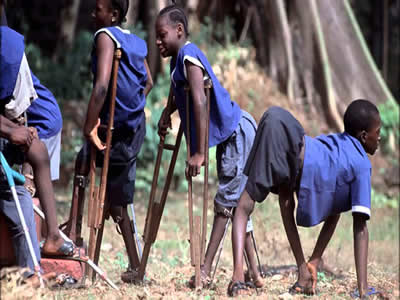
In spite of the recent declaration of Nigeria as polio free nation by the World Health Organization (WHO), an outbreak of wild polio virus in Borno State has been reported. The outbreak affected two children from Gwoza and Jere Local Government Areas of the State. The discovery and confirmation of the outbreak was as a result of strengthened surveillance due to improved accessibility, which has been made possible by the recent military action in liberating more communities in the North Eastern part of the country. Nigeria Health Minister, Professor Isaac Adewole, who confirmed the outbreak, said the that detection of children paralyzed by polio shows that surveillance has increased with more access. He said that the discovery of the outbreak is a reminder that the country needs to remain vigilant and immunize all eligible children with oral polio vaccine until polio is completely eradicated worldwide. “Our overriding priority right now is to rapidly boost immunity in the affected areas to ensure that no more children are affected by this terrible disease.” The Minister directed the deployment of an national emergency response team comprising government and partners to Borno State for immediate and robust polio vaccination campaign, targeting eligible children to prevent the spread of the virus locally and internationally. The Federal Ministry of Health through the National Primary Healthcare Development Agency with the support of partners, including WHO and UNICEF, are conducting detailed risk analysis to clearly ascertain the extent of circulation of the virus and to assess overall levels of population immunity in order to guide the response. As an immediate response, about one million children are to be immunized in four local government areas in Borno State. Children in adjoining states of Yobe, Adamawa and Gombe will also be immunized, bringing the number to about five million in the four states. Prof. Adewole reiterated the Federal Government’s commitment to achieving a polio-free Nigeria and assuresd the general public that this outbreak will be controlled as soon as possible, adding that government will provide the needed resources to contain it. He therefore called on other states and local governments to redouble their efforts by safeguarding their territories from importation of the virus by providing the required leadership and ensuring accountability among healthcare workers and other stakeholders. It would be recalled that in 2012, Nigeria accounted for more than half of all polio cases worldwide, but the country has made significant strides in recent years, going two years without a single case. This progress has been as a result of concerted efforts by all level of government, civil society, traditional and religious leaders as well as dedicated health workers. [myad]
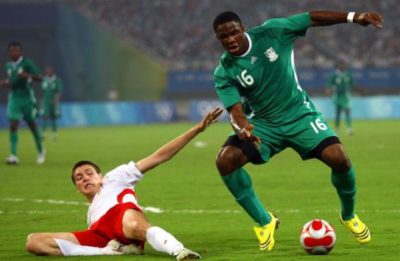
Nigeria’s Under 13 Dream Team VI suffered a two-goal defeat on Thursday in the hands of their Columbian counterparts in Sao Paulo, but not enough to send them parking from the Rio Olympic Games. The Nigeria team will face Denmark in the quarter-finals of the Rio Olympics Men’s football event.
The South Americans were clinical as an early first half goal by Captain Teofilo Gutierrez and a second-half penalty from Dorlan Pabon prove to be enough.
Dream Team VI manager, Samson Siasia as expected, rested some key players but surprisingly started Captain Mikel Obi and top scorer, Oghenekaro Etebo after already securing top spot even before the Colombia match.
The Los Cafeteros took a fourth minute lead as unmarked Sporting Lisbon forward, Gutierrez, volleyed a cross from Pabon past Daniel Akpeyi who was making his first appearance in goal for Nigeria in the tournament.
The Colombians continued to pile pressure on the Nigerian defence as they grew in confidence – Akpeyi denied Harold Preciado’s close-range header before Pabon put his efforts wide.
The Dream Team VI created opportunities of their own as Roma striker Sadiq Umar played Oghenekaro Etebo through on goal but he failed to make the most of the chance
The former Warri Wolves had another chance but Cristian Bonilla in goal for Colombia saved comfortably from his well-struck freekick.
However, it was Colombia that increased their lead in the second half as Dream Team VI goalkeeper Daniel Akpeyi brought down Preciado and Pabon took the resultant penalty which he converted effortlessly for 2-0.
The win over Nigeria earned Colombia a quarter final pairing against hosts Brazil in Sao Paulo as they finished second in Group B with five points while the Dream Team VI topped the log with six points and will travel to Salvador on Saturday to play Denmark. [myad]
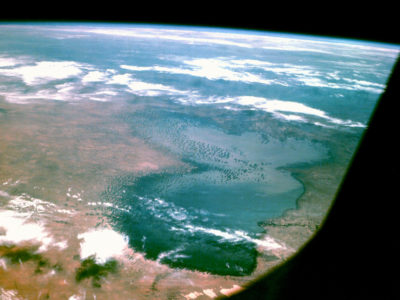
President Muhammadu Buhari has asked rich countries to do something urgent to save the Lake Chad from extinction, arising from the effects of climate change. Receiving the Director-General of UNESCO, Ms Irina Bokova, in Abuja on Thursday, President Buhari said that failure to regenerate the Lake Chad will lead to another round of migration by the people living in the areas. The President, who led seven ministers to an interactive meeting with the UNESCO chief, said Nigeria and the other countries of the Lake Chad Basin lacked the billions of dollars required to channel water from the Congo Basin into the lake to check its rapid depletion. “Those living in the Lake Chad region have suffered untold hardship and displacement because of the violence perpetrated by Boko Haram terrorists. ‘‘If there is no farming and fishing, they will dare the desert to migrate. “Unless the developed countries make concerted efforts to complete the feasibility study, mobilize resources and technology to start the water transfer from the Congo Basin, the Lake Chad will dry up. “The people will go somewhere and they will create problems for those countries.” President Buhari commended UNESCO’s support to Nigeria particularly on the ongoing rehabilitation work in the North East and reintegration of Internally Displaced Persons (IDPs). He said that the pathetic situation of IDPs require immediate and urgent response from international organisations such as UNSECO to provide infrastructure, health and education for the people in the area. The UNESCO Director-General, Mrs. Bokova, who commenced a week-long visit to West and Central Africa on August 6, said she was in Nigeria to strengthen the organizations programme in the areas of science and technology, gender and youth development, culture, water resources development, health and environment. [myad]
The Independent National Electoral Commission (INEC), has released the final list of candidates for the Edo Governorship election scheduled for Saturday, 10th September 2016. In a document signed and issued by the Secretary to the Commission, Mrs. Augusta C. Ogakwu, 19 Political Parties and their Candidates have been cleared by the Commission to contest the election. A statement by the commission’s spokesman, Nick Dazang, quoted section 34 of the Electoral Act 2010 (as amended) provides which says: “The Commission shall, at least thirty days before the day of the election publish by displaying or causing to be displayed at the relevant office(s) of the Commission and on the Commission’s website, a statement of the full names and addresses of all candidates standing nominated.” The list of candidates and their parties released are as follows: 1) Governor – Ishaka Paul Ofemile (Comrade) – AA Deputy – Ewemade Nancy Osagie – AA 2) Governor – Andrew Igewmoh – ACD Deputy – Osagie Egharevba Andrew – ACD 3) Governor – Cosmos Irabor – ACPN Deputy – Fredrick Parker Odegua – ACPN 4) Governor – Godwin Nogheghase Obaseki – APC Deputy – Philip Shaibu – APC 5) Governor – Onaiwu Osaze Osaro – APGA Deputy – Okpebholo Oyemen Gladys – APGA 6) Governor – David Ewanlen Okoror – CPP Deputy – Ekhorotomwen Smile Uyi – CPP 7) Governor – Tobi Adeniyi – ID Deputy – Ibolo Julius A. – ID 8) Governor – Thompson Osadolor – KOWA Deputy – Florence Adaehomen Okundaye – KOWA 9) Governor – Amos Osalumese Areloegbe – LP Deputy – Jane Osagie – LP 10) Governor – Oronsaye Richard – MPPP Deputy – Omijie Ehinor – MPPP 11) Governor – Peters Osawaru Omoragbon – NCP Deputy – Ahmed Haruna – NCP 12) Governor – Ukonga Frank Onaivi – NNPP Deputy – Emodogo Dorcas Eweha – NNPP 13) Governor – Akhalamhe Amiemenoghena – PDC Deputy – Aiyanyor Efosa Osarobo – PDC 14) Governor – Ize-Iyamu Osagie Andrew – PDP Deputy – John Ehibhatoman Yakubu – PDP 15) Governor – Thomas Amanesi Sadoh – PPA Deputy – Onaiwu V. Ogbeide – PPA 16) Governor – Agol Tracy Ebun – PPN Deputy – Osayomore Clement Osazee – PPN 17) Governor – Omorogieva Gbajumo – SDP Deputy – Isaac P.E. Ogona – SDP 18) Governor – Adviser Shadrach Nowamagbe Efogie – UPP Deputy – Okosun Davies Roseline – UPP 19) Governor – Nurudeen Inwanefero – YDP Deputy – Dakpokpo Georgina – YDP. [myad]
Federal Capital Territory Administration, (FCTA), in conjunction with the Korean Government, has concluded a 10 – day capacity building workshop for 72 teachers of the Nigeria/Korean Model School currently under construction in Abuja. Speaking at the closing ceremony of the local training workshop at the FCDA Conference Room, Abuja on Thursday, the FCT Minister, Malam Muhammad Musa Bello, congratulated all the stakeholders in the project. He expressed appreciation for the collaboration and that 30 teachers among this number would be further trained at another workshop in Korea by the end of the year to improve their capacity in school administration. The Minister explained that these training programmes are part of the capacity building component of a multi-million-dollar multilateral cooperation between Nigeria and the Korean government to build a world-class school in the Federal Capital Territory. Muhammad Bello said that seven resource persons, made up of five Professors from the Younsam University in South Korea and two Nigerian experts, worked during the local workshop to equip the teachers with the requisite knowledge for the task ahead. The Minister, who urged the participants to consider the capacity building workshop as a very rare privilege which must be optimally utilized to impact positively on other teachers, students and the entire FCT education sector, asked them to strive to be good ambassadors of Nigeria. He thanked the International Cooperation Agency in Nigeria (KOICA), Mrs. Park Sook Hyun as well as the Korean Ambassador to Nigeria, Noh Kyu-Duk for their untiring efforts and contributions in moving the project forward. [myad]
Defending champion, Serena Williams, has been beaten and is out of the Rio Olympics even as she declared that she was happy that she was able to make it to Rio.
Defeated by Ukrainian Elina Svitolina in the third round of the women’s singles, Serena said: “It didn’t work out the way I wanted it to but at least I was able to make it to Rio – that was one of my goals.”
She lost 6-4 6-3 to Svitolina, ranked 20th in the world.
The world number one’s struggles were highlighted by five double faults in the seventh game of the second set.
Serena further said: “the better player today won but I know next time is going to be a really good match and I look forward to it.”
Serena Williams and her sister, Venus were knocked out of the women’s doubles on Sunday by Czech Republic pair Lucie Safarova and Barbora Strycova.
Svitolina, who will face the Czech Republic’s Petra Kvitova in the quarterfinals, said: “It’s an unreal feeling for me. This is just a perfect moment.”
Serena Williams follows men’s top seed Novak Djokovic in exiting the Olympics after he was defeated in both singles and doubles.
The 34-year-old’s exit means Angelique Kerber and Madison Keys are the only top-eight seeds remaining of what had appeared a very strong field.
Kerber faces Britain’s Johanna Konta in the quarter-finals after both won their matches earlier on Tuesday. [myad]
We use cookies on our website to give you the most relevant experience by remembering your preferences and repeat visits. By clicking “Accept”, you consent to the use of ALL the cookies.
This website uses cookies to improve your experience while you navigate through the website. Out of these, the cookies that are categorized as necessary are stored on your browser as they are essential for the working of basic functionalities of the website. We also use third-party cookies that help us analyze and understand how you use this website. These cookies will be stored in your browser only with your consent. You also have the option to opt-out of these cookies. But opting out of some of these cookies may affect your browsing experience.
Necessary cookies are absolutely essential for the website to function properly. This category only includes cookies that ensures basic functionalities and security features of the website. These cookies do not store any personal information.
Any cookies that may not be particularly necessary for the website to function and is used specifically to collect user personal data via analytics, ads, other embedded contents are termed as non-necessary cookies. It is mandatory to procure user consent prior to running these cookies on your website.


 Nigeria’s Vice President, Professor Yemi Osinbajo has announced that the sum of N1.4 Trillion has so far been saved as a result of the removal of fuel subsidy.
 President Muhammadu Buhari has asked rich countries to do something urgent to save the Lake Chad from extinction, arising from the effects of climate change.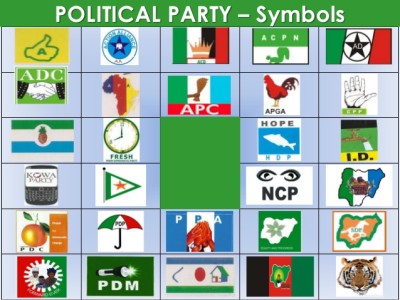
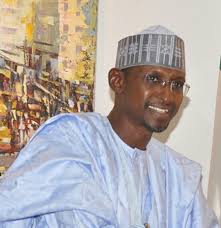 Federal Capital Territory Administration, (FCTA), in conjunction with the Korean Government, has concluded a 10 – day capacity building workshop for 72 teachers of the Nigeria/Korean Model School currently under construction in Abuja.