When I learned last year that I would be going to northeastern Nigeria, I was more afraid of what my mother would say than I was of encountering Boko Haram militants.
I broke the news to her over the phone two weeks before I was to leave. I held my breath as I finished telling her about my plans. “You know how I feel about Nigeria,” she said, after a pause, with an exasperated sigh.
While I was growing up, my mother, Grace, rarely talked about her childhood in Nigeria. It’s only in the past few years that I have come to know how she feels about her birth country. She was born in Enugu, a city in the southeastern state of Anambra, to my Yoruba grandmother, Francisca, and my Ghanan grandfather, Fred, who worked in the British civil service. At age 14, my mother fled with her family to Ghana to escape the violence of Nigeria’s brutal Biafra civil conflict, which killed 1 million Nigerians in the late 1960s.
My mother met my father at college in Ghana, and eventually they immigrated to the United States, settling in Dallas. My siblings and I knew my mother’s life was roughly divided in two: “before the war” and “after the war.” But as I was working on a graduate school paper on the Biafra war four years ago, my mother opened up to me about the war. I called to tell her about my paper — and got a burst dam of painful memories in return.
She recalled food and water shortages. Classmates killed in bomb raids. The loyal dog they had to leave behind as the circle of violence tightened around Enugu. How for almost two years they bounced from town to town, living in abandoned homes. Finally, in 1968, my grandfather got the family out on a Red Cross evacuation flight to Accra, Ghana, where my grandmother and relatives still live.
“You know, Karen, we had such a nice life before the war. Grandpa J. was part of the colonial finance ministry, so he was respected. We were like, what you might say, middle class. We had just bought a new house and we were moving our things in, and then the war. . . .” Her voice trailed off. Then she got angry.
“Everything was taken from us. We had to run and only take what we could carry. We had to run to forest areas to hide from shellings. . . . Some people had no food, eating lizards in the bushes!” Later she told me that she sobbed uncontrollably the evening after we talked.
She has never gone back, which may be why I viewed my first trip to Nigeria as a chance for a redemption of sorts. As soon as I landed in Abuja, the capital city, I felt as though I was meeting a grandparent for the first time. The humidity of the air and the smell of the earth reminded me of my trips to visit relatives in Ghana. I was thrilled to finally set foot in my mother’s birthplace, yet I couldn’t help but feel a sense of sadness and resentment — that Nigeria was the grandparent who had failed to protect my mother.
The next day, I flew to Yola, capital of the northeastern Adamawa state. Over several days, I saw the catastrophic toll that the conflict with Boko Haram had taken in the northeast, particularly on women and children. As of April, about 2 million people had been displaced within Nigeria, mostly from Borno, Yobe and Adamawa states. I spent hours at two food distribution sites organized by the American University of Nigeria in Yola, where thousands, mostly women, stood in lines to receive parcels of maize, rice and cooking oil. I spoke to women whose husbands had been killed and whose houses and farms had been destroyed. Despite Nigerian President Muhammadu Buhari’s declaration of a “technical victory” over the group, more than 1,000 Nigerians have been killed by Boko Haram since his inauguration last year.
My mother, a lifelong book lover, has always said that the most painful part of moving from place to place during the war was that she could not go to school. I saw for myself the devastating toll that Boko Haram has taken on education — the schools riddled with bullet holes, some even burned to the ground. According to Human Rights Watch, more than 910 schools have been destroyed. It is estimated that more than 950,000 school-age children have fled the violence, leaving them with little or no access to education. The assault on education in Nigeria’s already poor northeastern region will dampen development there for generations.
Perhaps selfishly, I wish I could tie this story up with a neat little bow, and happily report that, as a result of my trip, my mother is planning to return to Nigeria. She doesn’t think she ever will. “What home would I return to?” she asked me. “I’ve learned that my home is wherever my family is.”
I’ll always feel like I met my mother and grandmother in those groups of displaced women and children in Yola. On this Mother’s Day, I am eternally grateful to my mother for sharing her history with me, despite the pain. “War is in me. It’s a part of my makeup,” my mother likes to say. It’s a part of mine, too.
Karen Attiah is The Washington Post’s Deputy Digital Opinions Editor. [myad]
The first rain in the 2016, which started around 4:30 a.m. and lasted for about one hour today, Saturday, has sent people of Maiduguri, the Borno state capital back to their farms.
Information reaching us indicated that some of the residents were surprised by the early rain, confessing that the early rain this year would encourage them to cultivate crops as soon as possible, unlike in the previous years.
They also saw the early rain as an antidote to reduce the excessive heat being experienced in the state. The residents were being forced to sleep in the open in spite of the security threat brought about by the activities of Boko Haram insurgents.
The residents said that the commencement of the rains would reduce the huge money being spent to buy ice blocks, cold drinks and water to quench the thirsts.
Farmers in Maiduguri metropolis have described the rainfall as “a sign of blessing” and that they would soon mobilize to his farmlands.
“I have been praying for the rains to commence, I can now go back to farm with the hope of making a bumper harvest,” Bulama Bulama, one of the farmers said. [myad]
Members of the Reactionary Club have been saying this about president Buhari that because of his refusal to sign the over- padded 2016 budget, the nation was in disarray. Despite the fact that the federal government rejected the National Assembly approved budgets about three times, the president was still able to sign the 2016 budget into law on 6th May 2016 which still beats the many signing dates of similar national budget, presided over by the past PDP governments. For our records, the following are the dates that the past PDP presidents signed their budgets (Appropriation Bills ) into law, from 2008 to 2016: 2008- April 15 2009- March 10 2010-April 22 2011-May 27 2012-April 13 2013-February 26 2014- May 24 2015-May 19 2016- May 06 Why the fuse about the delay, when this one was signed earlier than the most immediate past? When next the enemies of the government challenge the President on any national issue, kindly ask them how they handled the same matter under their kleptomaniac regime. [myad]
Medical and other staff of the General Hospital in Kuje, the Federal Capital Territory (FCT) have raised eyebrow over what they called insecurity around the hospital, even as a suspected thief who visited the hospital in the early hours of today, Saturday, had been nabbed and handed over to police.
Some workers who spoke to our reporters complained that the hospital is virtually a haven for criminals as a result of lack of facilities to protect both the staff and the equipment.
They said that apart from the fact that thieves regularly disturbed the hospital, especially in the night when the premises is thrown into darkness, there has been fear of snakes crawling into the premises to bite them, saying that they always lock their doors whenever the night falls.
Meanwhile, the suspected thief who was apprehended today was said to have sneaked into the hospital through the back door, but was caught in the act by a vigilant junior staff in the card room.
The suspect, who was said to have given his name simply as Baba Fati, was beaten up by the security personnel before he was taken to the Kuje police division where he was detained.
While the police said that investigations would be conducted on the identity of the suspect, the Medical Director of the hospital whose name was given simply as Doctor Tambude could not be reached to explain why the hospital has become a dangerous place to work in by both the staff and the patients. [myad]
The Nigerian military authorities have vowed to go all out and face the Niger Delta Militants who they said are nothing but criminals and would be so treated.
Responding to what he called increasing dangerous activities of the militants in recent times, the Director of Defence Information (DDI), Brigadier General Rabe Abubakar said that the military is set to respond appropriately and decisively to the Delta militants who have blown up major economic facilities in the nation’s maritime areas in recent times.
Describing the recent attacks by the militants as unpatriotic and callous activities of the criminal gang, the army spokesman said that the Defence Headquarters (DHQ) is aware of increased militant activities and promised that the military response will be both holistic and professional.
He vowed that the security forces will leave no stone unturned to apprehend the perpetrators, adding: “this is no doubt a criminal activity and they will be treated as such at an appropriate time. The whole world is seeing the callous and unpatriotic activities of this gang. Our response will be holistic and professional, which will come at an appropriate time.
“The military and other security agencies will ensure the apprehension of these criminals and leave no stone unturned in this direction, in compliance with the directive (by President Muhammadu Buhari.”
General Abubakar called on the community leaders, oil companies and innocent individuals to go about their legitimate endeavour as military and other security agencies have the capability to respond appropriately and guard the nation’s strategic assets and other platforms. [myad]
The Ekiti State Governor, Ayodele Fayose, has described the Economic and Financial Crimes Commission (EFCC) as irresponsible, barbaric and undemocratic, against the background of it’s continued detention without trial of Warimopei Dudafa, a former Special Assistant on Domestic Affairs to ex-President Goodluck Jonathan, and the invasion of the Abuja residence of a former Minister of Aviation, Chief Femi Fani-Kayode.
In a statement by his special assistant on public communications and new media, Lere Olayinka, the governor said that it is the height of executive rascality for the EFCC to have held occupants of Fani-Kayode’s residence hostage for eight hours despite the fact that he was only invited to come to the EFCC office on Monday and there was no evidence that Fani-Kayode refused to honour the invitation.
“EFCC under President Muhammadu Buhari is acting as if it is above the law and Nigerians and the international community must remind the commission that we are in a democracy where rule of law is sacrosanct.” Fayose said that the actions of the EFCC have shown clearly that it is an instrument of victimization against oppositions in the country, adding that the anti-graft agency should go and study how other anti-corruption agencies in other countries behave. “The EFCC must be reminded of the judgement delivered in March, this year by Justice Yusuf Haliru of the Federal High Court in Nicholas Arinse Vs EFCC & Nigerian Army where the judge held that the EFCC did not behave as if we were in a civilised society and that the anti-graft commission was behaving as if we were in a military dictatorship, where they arrest and release person at will. “In the case of the former Special Assistant on Domestic Affairs to ex-President Jonathan, no one is saying those suspected of corrupt practices should not be investigated and tried, but it is wrong for Warimopei Dudafa to have been kept in EFCC custody for over two weeks without trial. “Also, it is a demonstration of barbarism for the same EFCC that invited Fani-Kayode to its office on Monday to have invaded his house yesterday, holding the occupants hostage for eight hours when there is no evidence that Fani-Kayode refused to honour EFCC invitation. “Why the show of barbarism by the EFCC as if Nigeria is now back to 1984 when Buhari was a military dictator?” The governor called on the international community to pay attention to the abuse of rights of Nigerians and threat to democracy under President Buhari, even as he said: “it is obvious that democracy in Nigeria is becoming unsafe in the hands of Buhari’s government.” He said that Nigerians must begin to ask the EFCC what happened to the several petitions written against leaders of the All Progressives Congress (APC) and financiers of President Buhari’s election, including former governors. He said that it is worrisome that the EFCC and the Department of State Services (DSS) have become President Buhari’s instrument of political victimization. [myad]
Veteran Nollywood actress, Monalisa Chinda has said that men termed single women who do not marry at the age of 35 as ‘dead engines.’
Monalisa, who featured in the cover of the May 2016 edition of Genevieve Magazine said: “Marriage is always a better option for any woman who is single in this country. Forget 30, once you attain 35 and counting, men in this country call you a dead engine.”
She said that before now, she had categorized all men she met as the same useless idiots, saying however: “I am happy that I feel differently now.”
The actress who revealed she met her husband, Victor Tonye Cole at 14, got married to him on February 20, 2016 in a grand ceremony in the popular city of Port Harcourt.
Monalisa had earlier married to Segun Dejo-Richard and their marriage crashed in 2009 following domestic abuse.
Labour candidate, Sadiq Khan, has won London’s mayoral election yesterday, Friday, making him the first Muslim in history to take the helm of a European Union capital.
Khan, who is a member of the center-left Labour Party, defeated Conservative Zac Goldsmith in the race to replace outgoing Mayor Boris Johnson, who is also a member of the Conservative Party.
“I am so proud that London has chosen hope over fear and unity over division,” Khan said after his victory.
The son of Pakistani immigrants, Khan worked as a human rights lawyer before becoming a politician. He was elected as a Member of Parliament in 2005, and later served in several government ministries.
From 2009 to 2010, he served in Gordon Brown’s cabinet as transport minister, the first Muslim to serve in this position.
England’s Muslim population has doubled over the last decade, and as of 2011, 12.4 percent of London’s population practiced Islam. Like many European cities, London has struggled with rising Islamophobia in recent years.
Racial tensions also crept into the mayoral race. In April, the Muslim Association of Britain accused Goldsmith’s campaign of sinking to “disturbing lows “ by distributing pamphlets critics said were aimed at exploiting anti-Muslim sentiment. Prime Minister David Cameron, who is the leader of the Conservative Party, also drew criticism for accusing Khan of having ties to an imam who Cameron alleged supported the Islamic State. Goldsmith himself offered similar sentiments, accusing Khan of giving “platform, oxygen and cover to people who are extremists.”
Khan fired back at the comments, describing them as “horrible desperate stuff from a Tory campaign that is clearly losing.” [myad]
Governor Yahaya Bello of Kogi State has ordered the new leaders of the local government areas in the state to be ready to account for every kobo that comes to them for the development of the council.
Speaking at the inauguration of a five-member caretaker committee for each of the 21 local government councils in the state, the governor said: “every kobo of councils’ funds must be accounted for. I, Yahaya Bello, will not send anyone to get money from you. Disregard any request for money from anyone no matter how highly placed in my government.” Saying that the heads of the caretaker committees will be addressed as Administrators, the governor advised them to be diligent in the discharge of their duties.
He made it clear that they would be strictly monitored by his office and their opponents, adding: “you owe a lot of salaries. Mr. President has graciously released part of our bailout fund. Ensure it is disbursed strictly for the purpose it is meant. I will hold you responsible for any security issue from your local government. Flush out criminals from amongst you.” Governor Yahaya Bello asked the new leaders to handle the affairs of their councils with fear of God, adding that they should work for its progress and development. “No one can boast that he is instrumental to your being appointed. Your allegiance should be to this State and to your people at the grassroots. Our people have suffered enough. “I hereby inaugurate you and give you the authority to inaugurate other four members of the committee by Monday.” Those appointed were Moses Akande, (Ogori-Magongo), Mohammed Tanko (Kogi), Taofik Isah (Ijumu), Olorunleke Moses (Kabba-Bunu), Sunday David (Mopa-Mpro) and Ashiru Abdulrazak (Yagba East). Others are Olutimi Joseph (Yagba West), Andulraheem Ohiare (Okehi), Kabru Odris, (Dekina), Baron Okwoli (Igala-Mela Odolu), Thomas Ofor (Ibaji), Mohammed Ibrahim (Ankpa), Adejo Nikodemus (Olamaboro),and Sule Amodu (Idah, Ebititan, Ofu) Others are Ibrahim Yakubu (Omala), Samuel Zakari (Bassa), Akaba Mustapha (Ajaokuta), Ajoge Enesi (Adavi) and Abdulrazak Mohammed (Okene), while the Administrator of Lokoja Local Government will be announced later. [myad]
President Muhammadu Buhari is expected to head for London on Tuesday, May 10 to participate in the international Anti-Corruption Summit which will be held in the British capital on Thursday, May 12.
A statement by the special adviser to the President on media and publicity, Femi Adesina described Buhari as “an internationally recognized leader in the global fight against corruption,” who he said, would play a prominent part in the summit that will be hosted by Prime Minister David Cameron of Great Britain with many other Heads of State and Government in attendance.
The statement said that ahead the summit’s opening, President Buhari will deliver a keynote address titled: “Why We Must Tackle Corruption Together” at a pre-summit conference of development partners, the Commonwealth Enterprise and Investment Council, Transparency International and other civil society groups on Wednesday, May 11, 2016.
Adesina said that President Buhari being one of the world leaders is scheduled to speak at the opening session of the Anti-Corruption Summit with others, including Prime Minister Cameron and the President of the World Bank, Dr. Jim Yong Kim.
The President is also scheduled to participate at special plenary sessions on Exposing Corruption, Tackling Corruption and Driving out Corruption.
“In his address to the summit and interactions with other participating leaders, President Buhari will urge the international community to move faster on the dismantling of safe havens for the proceeds of corruption and the return of stolen funds and assets to their countries of origin.
“The President will also reaffirm his administration’s unwavering commitment to the fight against corruption and the Federal Government’s readiness to partner with international agencies and other countries to identify, apprehend and punish corrupt public officials.”
The statement said that the Minister of Justice and Attorney-General of the Federation, Alhaji Abubakar Malami and the acting Chairman of the Economic and Financial Crimes Commission (EFCC), Ibrahim Magu are amongst those that will be on President Buhari’s delegation to the Summit.
It said that the President is expected to have separate meetings with Prime Minister Cameron to discuss ongoing Nigeria-Britain collaboration in the war against corruption and terrorism, as well as other issues, including trade and economic relations between both countries.
The President is expected to return to Nigeria on Friday, May 13. [myad]
We use cookies on our website to give you the most relevant experience by remembering your preferences and repeat visits. By clicking “Accept”, you consent to the use of ALL the cookies.
This website uses cookies to improve your experience while you navigate through the website. Out of these, the cookies that are categorized as necessary are stored on your browser as they are essential for the working of basic functionalities of the website. We also use third-party cookies that help us analyze and understand how you use this website. These cookies will be stored in your browser only with your consent. You also have the option to opt-out of these cookies. But opting out of some of these cookies may affect your browsing experience.
Necessary cookies are absolutely essential for the website to function properly. This category only includes cookies that ensures basic functionalities and security features of the website. These cookies do not store any personal information.
Any cookies that may not be particularly necessary for the website to function and is used specifically to collect user personal data via analytics, ads, other embedded contents are termed as non-necessary cookies. It is mandatory to procure user consent prior to running these cookies on your website.



 The first rain in the 2016, which started around 4:30 a.m. and lasted for about one hour today, Saturday, has sent people of Maiduguri, the Borno state capital back to their farms.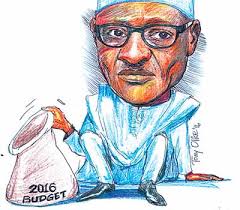




My Trip To Nigeria: I hope To Help My Mother Heal The Scars Of War, By Karen Attiah
When I learned last year that I would be going to northeastern Nigeria, I was more afraid of what my mother would say than I was of encountering Boko Haram militants.
I broke the news to her over the phone two weeks before I was to leave. I held my breath as I finished telling her about my plans. “You know how I feel about Nigeria,” she said, after a pause, with an exasperated sigh.
While I was growing up, my mother, Grace, rarely talked about her childhood in Nigeria. It’s only in the past few years that I have come to know how she feels about her birth country. She was born in Enugu, a city in the southeastern state of Anambra, to my Yoruba grandmother, Francisca, and my Ghanan grandfather, Fred, who worked in the British civil service. At age 14, my mother fled with her family to Ghana to escape the violence of Nigeria’s brutal Biafra civil conflict, which killed 1 million Nigerians in the late 1960s.
My mother met my father at college in Ghana, and eventually they immigrated to the United States, settling in Dallas. My siblings and I knew my mother’s life was roughly divided in two: “before the war” and “after the war.” But as I was working on a graduate school paper on the Biafra war four years ago, my mother opened up to me about the war. I called to tell her about my paper — and got a burst dam of painful memories in return.
She recalled food and water shortages. Classmates killed in bomb raids. The loyal dog they had to leave behind as the circle of violence tightened around Enugu. How for almost two years they bounced from town to town, living in abandoned homes. Finally, in 1968, my grandfather got the family out on a Red Cross evacuation flight to Accra, Ghana, where my grandmother and relatives still live.
“You know, Karen, we had such a nice life before the war. Grandpa J. was part of the colonial finance ministry, so he was respected. We were like, what you might say, middle class. We had just bought a new house and we were moving our things in, and then the war. . . .” Her voice trailed off. Then she got angry.
“Everything was taken from us. We had to run and only take what we could carry. We had to run to forest areas to hide from shellings. . . . Some people had no food, eating lizards in the bushes!” Later she told me that she sobbed uncontrollably the evening after we talked.
She has never gone back, which may be why I viewed my first trip to Nigeria as a chance for a redemption of sorts. As soon as I landed in Abuja, the capital city, I felt as though I was meeting a grandparent for the first time. The humidity of the air and the smell of the earth reminded me of my trips to visit relatives in Ghana. I was thrilled to finally set foot in my mother’s birthplace, yet I couldn’t help but feel a sense of sadness and resentment — that Nigeria was the grandparent who had failed to protect my mother.
The next day, I flew to Yola, capital of the northeastern Adamawa state. Over several days, I saw the catastrophic toll that the conflict with Boko Haram had taken in the northeast, particularly on women and children. As of April, about 2 million people had been displaced within Nigeria, mostly from Borno, Yobe and Adamawa states. I spent hours at two food distribution sites organized by the American University of Nigeria in Yola, where thousands, mostly women, stood in lines to receive parcels of maize, rice and cooking oil. I spoke to women whose husbands had been killed and whose houses and farms had been destroyed. Despite Nigerian President Muhammadu Buhari’s declaration of a “technical victory” over the group, more than 1,000 Nigerians have been killed by Boko Haram since his inauguration last year.
My mother, a lifelong book lover, has always said that the most painful part of moving from place to place during the war was that she could not go to school. I saw for myself the devastating toll that Boko Haram has taken on education — the schools riddled with bullet holes, some even burned to the ground. According to Human Rights Watch, more than 910 schools have been destroyed. It is estimated that more than 950,000 school-age children have fled the violence, leaving them with little or no access to education. The assault on education in Nigeria’s already poor northeastern region will dampen development there for generations.
Perhaps selfishly, I wish I could tie this story up with a neat little bow, and happily report that, as a result of my trip, my mother is planning to return to Nigeria. She doesn’t think she ever will. “What home would I return to?” she asked me. “I’ve learned that my home is wherever my family is.”
I’ll always feel like I met my mother and grandmother in those groups of displaced women and children in Yola. On this Mother’s Day, I am eternally grateful to my mother for sharing her history with me, despite the pain. “War is in me. It’s a part of my makeup,” my mother likes to say. It’s a part of mine, too.
Karen Attiah is The Washington Post’s Deputy Digital Opinions Editor. [myad]