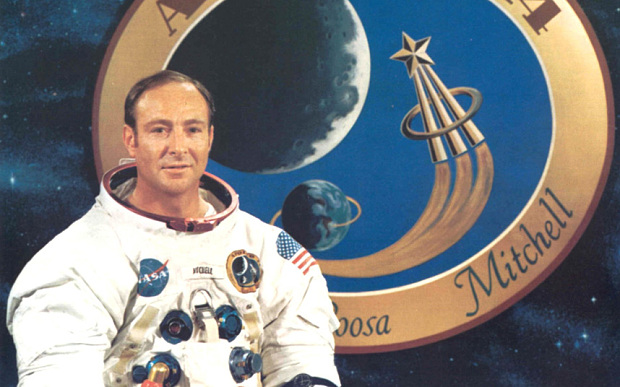
The United States of America astronaut, Edgar Mitchell, one of just 12 people to have walked on the Moon, has died aged 85.
His family and NASA said that he died in Florida after a brief illness late Thursday at the eve of the 45th anniversary of his lunar landing.
NASA which described Mitchell as a “pioneer,” paid glowing tribute to him.
The late astronaut was a member of the 1971 Apollo 14 mission along with Alan Shepard Jr. and Stuart Roosa. Mitchell was the last Apollo 14 survivor: Roosa died in 1994 and Shepard in 1998.
Speaking in a 1997 interview for NASA’s oral history program, Mitchell said that he was drawn to spaceflight after President John F. Kennedy’s call to send astronauts to the Moon.
“That’s what I wanted because it was the bear going over the mountain to see what he could see, and what could you learn, and I’ve been devoted to that, to exploration, education and discovery since my earliest years, and that’s what kept me going,” Mitchell said.
NASA Administrator, Charles Bolden recalled Mitchell marveling at the stunning view of Earth from space.
“Edgar spoke poetically about seeing our home planet from the Moon saying, ‘Suddenly, from behind the rim of the Moon, in long, slow-motion moments of immense majesty, there emerges a sparkling blue and white jewel, a light, delicate sky-blue sphere laced with slowly swirling veils of white, rising gradually like a small pearl in a thick sea of black mystery.
“‘It takes more than a moment to fully realize this is Earth… home.’”
Bolden added: “He is one of the pioneers in space exploration on whose shoulders we now stand.”
Buzz Aldrin, the second person on the Moon, echoed that on Twitter, calling Mitchell a “lunar pioneer.”
The Apollo 14 mission — Mitchell’s only spaceflight — began when the trio blasted off from Cape Canaveral, Florida, on January 31, 1971.
Mitchell was in charge of piloting the Antares lunar module, which landed in the Fra Mauro region of the Moon.
It was the third manned mission to the Moon and Mitchell became the sixth human to walk on the lunar surface.
During the mission, the astronauts collected 100 pounds (40 kilos) of lunar rock samples and carried out a series of experiments.
The mission ended when the astronauts, traveling aboard a space capsule, splashed down in the Pacific Ocean on February 9, 1971.
In 1972, Mitchell retired from NASA and the following year he founded the Institute of Noetic Sciences, dedicated to the study of consciousness and paranormal phenomena.
He said he believed that extra-terrestrial unidentified flying objects (UFOs) had visited the Earth, but acknowledged that he had never seen one.
Mitchell was the author of several books, including his 1996 memoir, “The Way of the Explorer.”
Two daughters, three adopted sons and nine grandchildren are among family who survive him.
The family told The Palm Beach Post newspaper that Mitchell died at a West Palm Beach hospital after a short illness. [myad]
Wife of Edo State Governor, Iara Oshiomhole, has described as ‘most wicked and malicious’ rumors making the rounds, especially on social media that she filed for divorce from Governor Adams Oshiomhole.
Former Miss Iara Fortes, a Cape Verdean, got married to Oshiomhole, a widower, last year May at a private marriage registry at Iyamho, Etsako West LGA of Edo State.
Less than one year into the marriage, rumors surfaced online this week that Lara had filed for divorce from the governor on claims that he is fetish and diabolic.
She was also alleged to have accused her husband of being responsible for the death of his former wife, Mrs. Clara Oshiomhle, who died in 2010, after a protracted battle with chest cancer.
Reacting to the unconfirmed reports, Lara said she is currently enjoying her marriage and that there was no reason to divorce her husband.
In a statement signed by Executive Director, Media and Public Affairs, Governor’s Office, John Mayaki, the governor’s wife said that she was in her office throughout the week holding meetings and brainstorming on how to better the lots of the less-privileged women and children in the state through her pet project: “We Care Trust.”
Mrs. Oshiomhole added that she followed her husband on project inspection to the World-Class Central Hospital, Erosion Control sites, Road Construction sites as well as visited four Orphanage homes in Benin metropolis, in demonstration of her milk of kindness, drawing from the support of her husband.
“We Care Trust,” Mrs. Lara Oshiomhole’s pet project is embarking on training of Edo Youths under a programmed christened “Project Focus”.
“This is part of her efforts to uplift the socio-economic life of Edo people just as details of this event would soon be made public”, the statement said.
Mayaki, however, advised those he called rumor mongers “to engage in more productive engagements to deploy their energies rather than market inanities about public personalities all in their bid to sell their medium”.
“Which Court of Law was the alleged divorce initiated and to whom was it served? Which country, state, municipal or county, if any, is the Court situated? And when was the action/suit filed? Of course the writers didn’t bother to inform their readers. The truth however is that the answers only exist in the warped imagination of the purveyors of the lies.” [myad]
A former President of the Nigerian Senate, Ken Nnamani, has announced his resignation from the Peoples Democratic Party, a political platform to which belonged since 1999, and which, in 2005, made him the third most powerful man in Nigeria.
In a statement today, Nnamani said he was quitting the party because the platform had abandoned “the path of its noble vision and values.” This is even as he recalled that the virus of corruption of values and mission was what his colleagues and him set out to cure through the formation of the PDP Reform Forum in 2010/11.
“We worked hard to draw up a new direction for the Party,”Nnamani who was elected as Senate President in 2003, and was senate president between 2005 and 2007 said.
In his statement today, entitled: “PDP, the Burden and My Conscience,” the politician said he was fed up with the current status and direction of the PDP, and was therefore quitting “without any iota of bitterness” in his heart.
“I do not believe I should continue to be a member of the PDP as it is defined today,” Nnamani said, and added: “this is certainly not the party I joined years ago to help change my country. I do not also believe that the PDP as it is managed today will provide an opportunity for me to continue to play the politics of principles and values which I set for myself as a young man on leaving graduate school and working for a large multinational in the United States in the 70s and 80s.
“Therefore, today I resign my membership of the PDP. In stepping out of partisan politics for the meantime, I will continue to be politically engaged. I will also continue to support the government and all the elected officers in Nigeria to repositioning the nation.
“I will also constructively criticize them when by commission or omission they take actions that could damage the prospects of transforming Nigeria into a productive, merit-based and honestly governed country.”
We reproduced here, the full text of Nnamani’s statement
PDP, the Burden and My Conscience
Without any iota of bitterness in my heart, I have decided to disengage from the Peoples Democratic Party (PDP) and consequently step aside from partisan politics in the interim. I wish to express my profound gratitude to the party that gave me the platform with which I attained the height I did in the politics of our country.
How I wish the efforts I mounted with some of my colleagues (many of whom have left the party) to keep the PDP on the path of its noble vision and values had been supported by those who were privileged to be at the helm of affairs of the party, it would have been a different day for the PDP. It would have been a day of victory and pride not of defeat and shame.
I recall that the virus of corruption of values and mission was what those my colleagues and I set out to cure through the formation of the PDP Reform Forum in 2010/11. We worked hard to draw up a new direction for the Party.
This was to help steer the party away from illegality and impropriety so that PDP can fulfill its promise of being a vanguard of Nigeria’s political and economic development. A direction defined by strict adherence to basic rules and morality in the management of party affairs. Chief of these values is respect for choice of party members in electing party candidates for elections.
With more than half a decade of championing such a fundamental but simple idea, I regret that the PDP leadership continues to rebuff internal democracy. The party allowed itself to be blinded by hubris to believe that it will remain in power and influence for 60 years in spite of several gross missteps and grievous misnomer. We foresaw this ditch and prescribed how to avert falling into it. But we were dismissed as idealistic. Today the idealists have become realists.
Recently, even after our avoidable abysmal electoral defeat, I continued to believe that we can still chart a new course and retrieve victory from the jaw of defeat. I continued to urge the leadership of the party to believe that the time of defeat could be the time of renewal, and that renewal requires strategic thinking and bold actions.
I urged that this is a time to reembrace internal democracy and principled leadership to reposition the party for new politics. We are living in different times and we need new tools, ethos and codes of conduct. We need to become a party of technocrats and professionals and not a party of mercenaries and rent seekers.
We need to become the party of young men and women with new ideas and not a party of political dinosaurs. It is clear now that these pleas have fallen on deaf ears. Every day the crisis of confidence and the contradictions in our party deepen. We continue to lose members and morale. The rebuilding some of us had urged on the leadership is not happening. Those who led us to defeat are determined to continue to lead the party as undertakers.
I do not believe I should continue to be a member of the PDP as it is defined today. This is certainly not the party I joined years ago to help change my country. I do not also believe that the PDP as it is managed today will provide an opportunity for me to continue to play the politics of principles and values which I set for myself as a young man on leaving graduate school and working for a large multinational in the United States in the 70s and 80s.
Therefore, today I resign my membership of the PDP. In stepping out of partisan politics for the meantime, I will continue to be politically engaged. I will also continue to support the government and all the elected officers in Nigeria to repositioning the nation. I will also constructively criticize them when by commission or omission they take actions that could damage the prospects of transforming Nigeria into a productive, merit-based and honestly governed country.
As I leave PDP, I wish the leaders a new awakening and ethical revival. I cherish all the friends I made while in PDP and hope the friendship will continue to flourish.
Minister of the Federal Capital Territory (FCT), Malam Muhammad Musa Bello has promised to give special award to any of the six area councils which is adjudged to maintain cleanest environment.
The who spoke today at the flagging-off exercise of the Household and Community Sanitation exercise in Kwali, the headquarters of the Kwali Area Council of the FCT said that his Administration has considered the policy of reward and punishment for environmental sanitation as a way of encouraging the residents to clean their immediate environment.
Muhammad Bello said that the chairman of the cleanest Area Council at the end of the year, would not only be recognized but enjoy certain privileges even at the national level through representing the territory.
The Minister reiterated that the issues of improved personal hygiene and removal of environmental nuisances in the Area Councils and Satellite Towns in the Federal Capital Territory, is on the front burner of the current FCT Administration.
He said that the need to go back to the old ways of keeping the environment clean necessitated the introduction of the FCT Household and Community Sanitation Exercise, even as he called on the Council Chairmen, Traditional Rulers and community leaders to key in.
He also promised that the traditional ruler in whose domain is the cleanest Area Council would also be adequately rewarded, giving assurance that the FCT Administration would support the Area Councils financially and with quality policies to drive this laudable programme.
“It is our duty individually and collectively to safeguard and maintain our environment because nobody can do it better than us.”
Muhammad Bello used the occasion to call on all the residents of the Federal Capital Territory to imbibe the Change Agenda of the Federal Government, by changing their attitude as political, traditional, community, religious leaders, civil servants and citizens.
The Minister noted that the community-based approach to environmental sanitation would lead to a more realistic and sustainable effort in maintaining the environment.
Chairman of Kwali Area Council, Mr. Ibrahim Daniel commended the Minister for introducing the Household and Community Sanitation exercise, saying that it would go a ong way in reducing incidences of avoidable diseases in the Territory.
He called on the FCT Administration to complete the Kwaita road under construction since 2004 as well as the Kwali Township roads.
The FCT Permanent Secretary, Dr. Babatope Ajakaiye, the Executive Secretary of the FCDA, Engineer Adamu Ismaila, several directors of the FCT Administration and all the four graded traditional rulers in the Kwali Area Council led by the Etsu Kwali also attended the flag-off ceremony. [myad]
President Muhammadu Buhari has said that there is no evidence before his government to prosecute the immediate past Minister of Petroleum Resources, Deizani Alison-Madueke and other petroleum workers.
In an exclusive interview with Peter Okwoche of the BBC, President Buhari was quoted as saying “to prosecute corruption successfully we need evidence. That’s not easy especially in petroleum sector.”
The President had earlier came smoking with anger that his government would prosecute all those who dipped their hand into the nation’s wealth for private use and among those brandished and suspected to be prosecuted is the immediate past petroleum Minister.
In the search for evidence, the President seems to have been convinced that there was no form of evidence privy to his government against Mrs. Madueke and as such vindicated her from diverse alleged corrupt malpractices leveled against her by Nigerians.
Meanwhile, Diezani had earlier debunked the report that she is seeking asylum in some foreign countries in order to avoid been probed, saying that the consistent malicious and libelous attacks on her person was due to the reforms she brought to the oil and gas sector which was not favorable to some cabals in the country.
“Let me state it clearly for the records that Nigeria is my country and am not going anywhere. I love my country and I do think that I have done the best for my country.
“For everything that has a beginning there is an end and that is not a surprise. What is the surprise is the sort of malevolence bordering on personal malicious libel to my person during this period of time.
“I do believe that I have done the best for Nigeria in this job and I have attained many firsts in the history of oil and gas, especially in the reforms that we have done. In this period of time, I have stepped on many big toes, particularly the feet of the cabal in the industry when we came in.
“I have said severally that we will open up the industry to all Nigerians and we have, but that is not to the pleasure of certain cabal. And I have been continuously maligned because of this and we have taken millions and in fact, billions of dollars out of the hands of multinationals and their sub-contractors and put them in the hands of Nigerians through Nigerian content.
“Hundreds of thousands of Nigerians have come into the oil and gas industry because of our reforms.” [myad]
As dwindling oil prices take their toll on oil industry operations, Royal Dutch Shell has announced that it will sack 10,000 workers from its global staff strength this year.
It also announced in its fourth quarter of 2015 financial report that it would defer its final investment decision (FID) on the Bonga South-west deepwater project in Nigeria, saying that its operating costs and capital investments had been reduced by $12.5 billion with further reductions expected in 2016.
Shell’s Chief Executive Officer (CEO), Mr. Ben Van Beurden, made the announcement on the cost-cutting measures in a webcast presentation with analysts. A transcript of the presentation was released yesterday in Abuja.
“The completion of the BG transaction, which we are expecting in a matter of weeks, marks the start of a new chapter in Shell, rejuvenating the company, and improving shareholder returns.
“We are making substantial changes in the company, reorganising our upstream, and reducing costs and capital investment, as we refocus Shell, and respond to lower oil prices.
“As we have previously indicated, this will include a reduction of some 10,000 staff and direct contractor positions in 2015-16 across both companies,” said Van Beurden.
He went on to state: “In 2015, we significantly curtailed spending by reducing the number of new investment decisions and designing lower-cost development solutions.”
In 2016, he said Shell had exited the Bab sour gas project in Abu Dhabi, and was postponing final investment decisions on LNG Canada and the Bonga South-west in deepwater Nigeria.
“Operating costs and capital investment have been reduced by a total of $12.5 billion as compared to 2014, and we expect further reductions in 2016,” he added.
Van Beurden explained that as a result of Shell’s actions in 2015, the company retained a strong balance sheet position, with 14 per cent gearing.
According to him: “Shell will take further impactful decisions to manage through the oil price downturn, should conditions warrant that. Shell’s dividends for 2015 were $1.88 per share, and are expected to be at least $1.88 per share in 2016, as previously announced.” [myad]
President Muhammadu Buhari has disclosed that his government had as at January this year succeeded in mopping up over N2.2 trillion through the Treasury Single Account (TSA) arrangement. President Buhari spoke in London while addressing members of the Nigerian community in the United Kingdom, admitted that though the TSA was introduced by the administration of former President Goodluck Jonathan, but that it did not implement it for reasons best known to its officials. He said that his government decided to implement the arrangement when he came on board and discovered that the country was broke. “You know the condition we are in now. I am sure with demands from home, in spite of what your effort is, you know we are really in trouble. “We have tried to impose what we call Treasury Single Account. The reason is simple. This government did not initiate it. It was initiated by the previous government. But it was so unpopular to the bureaucracy, so the previous government for its own reasons, could not impose it. “But when we came and we found out that we were broke, we said this is the way to do it. “I will tell you two examples to convince you. Firstly, the Nigerian National Petroleum Corporation had more than 45 accounts. Ministry of Defence had more than 70 accounts. Tell me which Accountant-General can trace all these accounts? “So, we imposed TSA. By the end of December, coming to January 2016, we mopped up more than N2.2 trillion which would have been used through bureaucratic system to raise vouchers and sign cheques so that they don’t go into the next budget.” The President said Nigeria owed the United States and Britain a lot of appreciation for stopping the former administration from rigging the last presidential election. He recalled that ahead of the elections, the former National Security Adviser (NSA), retired Colonel Sambo Dasuki , directed the service chiefs and the then Inspector-General of Police to tell officials of the Independent National Electoral Commission (INEC) that they could not guarantee their safety during the polls. He said the then Chairman of INEC, Professor Attahiru Jega, however, gave a comprehensive report at a meeting of the National Council of State, where he said he would be able to deliver, at least, 60 per cent free and fair election. The President said that as of that time, the country had never gone beyond 45 per cent, adding that it took the intervention of US Secretary of State, John Kerry, for the last administration to conduct credible election. “Then we insisted that election must be done according to the constitution. At this point again, I must hasten to thank the United States for sending the Secretary of State, Kerry, to go and read the riot act to the previous government and speak to Prof. Jega, the Chairman of INEC and speak to us as opposition that the US would not tolerate any election outside the Nigerian constitution. “They maintained the pressure from that date until after the election and the formation of the new government. I think Nigerians honestly should thank the US for this. The same thing with Britain, they used all their experience and their powers to make sure that the Federal Government did not rig the last election. “We thank God, we thank these super powers and we thank technology. Why we thank technology is because of the permanent voter cards and the card readers.” [myad]
Former President Olusegun Obasanjo has expressed joy that Peoples Democratic Party (PDP) lost power at the centre in the last year’s general elections.
Obasanjo, who spoke yesterday at an event organized by the Staff Club of the Obafemi Awolowo University, Ile-Ife, Osun State, said that it was better for Nigerians that PDP lost the last presidential election, adding that with someone like Jonathan at the helm of affairs, it was better the party lost. “Power is still the same way I left it in 2007. Railway is the same way and other sectors. “It was best that PDP stopped ruling us. It was a thing of joy to me that the earlier declaration of 50 years governance for PDP did not come to pass.”
The former President blamed Jonathan for the plight of the over 200 female students of the Government Girls Secondary School, Chibok in Borno state who were abducted by members of Boko Haram in April 2014 to forget about ever finding them.
“The former President (Jonathan), heard about the kidnap of the girls by 8.00 in the morning of the abduction, but failed to act until 72 hours later and by then it was too late.” Obasanjo made it clear that there is no way the girls could be brought back after spending almost two years with their abductors, saying: “anyone saying they will return is telling lies. May be some of them will return to tell their story.” [myad]
“If you steal, do not steal too much at a time: you may be arrested. Steal little by little.”– Mobutu Sese Seko to Ministers/party Delegates, 1971.
I begin this piece with a question: Is every chief a thief? I ask this because in the biggest bazaar of corruption in our history, of which Dasuki-gate is but a rehearsal, every one of note being mentioned in negative light is a chief.
If you do not understand what I am saying, just look at the roll-call: Chief Raymond Dokpesi, Chief Olisa Metuh, Chief Femi Fani-Kayode, Chief Olu Falae, Chief Jim Nwobodo, Chief Bode George, Chief Tony Anenih, Chief Rasseed Ladoja, Chief Musliu Obanikoro, Chief Peter Odili, Chief Amadu Ali etc.
And there is mention of Dr. Ngozi Okonjo-Iweala as well as Dr. Iyorchia Ayu. They may not be titled chiefs, but to the extent that are a Ph.D is an academic chief, we can talk of the duo as Chief Okonjo-Iweala and Chief Ayu. And if we factor in the fact that Okonjo-Iweala was the Finance Minister and Coordinating Minister of the Economy (a Prime Minister, sort of), we can up-grade her to a High Chief. Ditto for Ayu. As former Senate President and Minister many times over, he too is a High Chief. And for those who are obsessed with gender equity, they are not disappointed: for besides Chief Okonjo-Iweala, there is Chief Diezani Alison-Madueke and Chief Stella Oduah.
I do not know if an “Alhaji” can also be considered a chief of sorts since, but if yes, then, we have them aplenty. Many Alhajis feature in this notorious bazaar. There is Alh. Tanko Yakassai. He forgot that he collected money from Dasuki, and then he remembered it. It is either forgetfulness or amnesia. One is a bad habit; the other is a sickness. There is also Alh. Mohammed Haliru. An ex-Customs boss, he appears wedded to the custom of collecting customs! There is Alh. Adamu Muazu. And, yes, there is Alh. Attahiru Bafarawa, the prayer-warrior, prayer-consultant and prayer-specialist all combined into one!
However, even if an Alhaji is not ordinarily qualified to be a chief, to the degree that an Alhaji is a chieftain of a party, in this case the PDP, he is a chief. Matter-of-factly, both chief and chieftain are in the same neighbourhood. After all, a chief can be the short form of chieftain. And so we have these Alhaji-Chiefs: Chief Bashir Yuguda. Chief Mahmud Shinkafi. Chief Shuaibu Salisu. Chief Bello Sarkin Yaki etc.
And in running the bazaar, the chiefs were very fair, very equitable and very balanced: no zone was marginalized. In the South-South, Chief Odili led the locust army; with High Chief Dokpesi providing adequate cover. In the South-East, there was Chief Jim Nwobodo, with his evergreen handsomeness. (I cannot help but remember that in 1984, he grossed over 200 years as jail-term for corrupt enrichment from a military tribunal during Gen. Muhammadu Buhari first coming. Will history repeat itself?).
Well, let us move on. In the North-Central, there was Dr. Amadu Ali. He was chaperoned by Dr. Iyorchia Ayu, From the North-East, there was Amb.Yuguda himself. And was ably supported by AbdullahiYerima. In the South-West, there was the SDP leader, Chief Olu Falae: ex-banker, ex-SGF, ex-Finance Minister, ex-Presidential candidate! (Although the Dasuki largesse was for the SDP, the party did not know about it until January 2016 after the Dasuki testimony!) The Ondo chief was serenaded by the (in)famous Lagos-Boy, Chief Bode George, Chief Obanikoro, Gov. (Chief ) Ayo Fayose among others.
Nigeria’s North-West is the biggest in terms of electoral demographics, and that is, not surprisingly, where the bulk of the bazaar funds went. Chief Muhammed Haliru made a big impression, but the prize really goes to Chief Bafarawa, who, besides allegedly collecting money from Yuguda and Muazu, grossed another N4.7 billion for prayers and “spiritual” purposes. One just wonders: If Bafarawa could take almost N5billion from President Jonathan for prayers, how much did he pay for his two election-victories in 1999 and 2003? And, by the way, since Witches and Wizards also endorsed President Jonathan, and he was paying for endorsements (Listen to Falae), was it Bafarawa’s schedule to pay the National Association of Nigerian Witches and Wizards?
And the professions were fairly represented too. The Imams, the Bishops, the Ogboni Fraternity, Witches, Marabouts, even the media, a usually neglected zone, was represented by the Chairman/Editor-in-Chief of THISDAY newspapers, Chief Nduka Obaigbena.
And just when I was thinking that chiefs and the pejorative connotation of thieves is a civilian thing, the military top-brass made a powerful, even if shameful, advent. There is Col. Sambo Dasuki himself. With a whole Gate (Dasuki-Gate) forever named after him, he stands kampe as the Grand Father Christmas. As a scion of the Sultanate, Northern Nigeria’s paramount traditional stool and even an heir, Dasuki is a chief in his own right. Then, there is the former Chief of Air Staff, AVM Adeola Amosu. If the chief of Air staff is not a chief, I do not know who again is a chief. But that is not all: a chief must have followers. And so there is AVM JB Adigun, Chief of Accounts and Budget, NAF. There is also another chief: the former Chief of Army Staff, Gen. Azubuike Ihejirika. And there is the whole former Chief of Air Staff and former Chief of Defence Staff, Air Chief Marshal Alex Badeh. Did you see that? A Chief of Air Staff and Chief of Defence Staff who is a Chief Air Marshall! That is a Chief in three places! So he is not just a chief or a high chief – Alex Badeh is a Triple High Chief! And if you see him, he looks like a chief: big, full, large…overflowing in his uniform.
And because this is a democracy, the chiefs were democratic in running the bazaar. This is why we are reading and hearing of academics, ambassadors, statesmen, doctors, publishers, bureaucrats, technocrats, ex-servicemen, service men etc. In other words, we have academic chiefs, bureaucratic chiefs, technocratic chiefs, political chiefs, military chiefs who ministered as chiefs, high-priests and chief-priests in Dasuki’s temple of trans-national corruption.
But I am worried. We have chiefs all over the place; some of them looking respectable and doing respectable things i.e. as far as eyes can see. So it cannot be true that every chief is a thief. I do not want to believe that. Nonetheless, the worry lingers. Today, when Chief A appears on TV, someone says: “That chief is a thief.” And when another chief is shown on another channel, again, someone exclaims: “And that chief too: he is a thief.”
So how can we know which chief is not a thief or associated with thieving? How can we tell that this clean chief today is not a potential thief or that his name will not be in tomorrow’s newspaper? Is it until Dasuki sings or stops singing? Is it until the probe is over? Can we tell the character of a chief by his dressing or smile or carriage or voice? It is confusing. When I asked this in a café, a Peace Ambassador told me that: “Every chief is not a thief, but every chief is corrupt.”
More confusion. But ex-President Jonathan said: “Stealing is not corruption.” So it means these chiefs in issue were not stealing. But if they were not stealing, they are not thieves. So why are they in trouble now? He added that they were looting! I try to get the drift. A looter is not a thief – he is a looter. But what is looting? It is to raid. It is like a Pandora Box i.e. if you consider the synonyms. And these are its synonyms: despoil, vandalize, wreck, shatter, demolish, damage, knock down, pull down, flatten, ruin, desecrate, destroy….
So, well, yes: a looter is not exactly a thief: he is a senior or super-thief, a mega-thief. He is a damager, a destroyer, a vandal…, in fact, a weapon of mass destruction. This is because when one man loots N15billion, N30billion or even N5billion, it means roads go undone, hospitals become mere consulting rooms, hoodlums take over the streets, teachers are not paid, grasses take over schools, projects are abandoned half-way….
I insist that it is worrisome. How and Why? Let me explain. Every chief is a community leader. Many people look up to him: his clan, his friends, his supporters, his associates, his business partners, and even his community of chiefs: for there are chiefs and there are chiefs. And we can add to the list even his detractors who might seek to dethrone him.
On a wider level, both his nation and generation look up to him too. This is why his generation may confer a knighthood on him and his nation too may bestow this award or that National Honour on him: OON, CON, CFR, GCON ….
And talking about National Honours and Generals AVMs, as well as military chiefs, President Muhammadu Buhari comes to my mind. As a double Commander-in-Chief, he is a double chief. And being a two-star general, that makes him a double chief. If we combine double and double, Buhari emerges as a Quatro chief! He is also general: that makes him a chief. But this Chief is a very powerful argument that not every chief is a thief. And this is why in 1984, he threw many of these knighted, but thieving chiefs into Kirikiri prisons, with their National Honours and gleaming medals: OON, CON, OFR, CFR, GCON….Today, history seems to be repeating itself.
Imobo-Tswam, a public affairs analyst, writes from Abuja. He can be reached at: simonpita2008@yahoo.com. [myad]
President MuhammaduBuhari deserves the sympathy of the multitude of Nigerians and foreign friends who want him to succeed, the multitude yearning for the change he earnestly promised, that change the country can’t wait to see and which his administration has consistently insisted would be faithfully delivered.
And he alone, no one else, would determine the destiny of this grand promise. But given his well-known passion for rectitude, and the inherenthonesty in his desire to right the wrongs of decades of terrible governance(the worst being 1999-2015), Buharileaves the perception of a genuine leader who would not want to see the promise of change blown away in the long run, let alone just as swiftly as it was made.
In that sense, the motto of the Boy Scoutreadily lends itself as a cautionary guide. This President must “be prepared,”because as he himself can see, danger looms very early in the life of his administration. If ever anything exists that has shown thus far that there’s no pretence to severely hurting his promise of change in its most vital artery, it is the judicial branch of government, that branch whose most visible symbol of a blindfolded lady with a sword in one hand and scales in the other gives the ostensible impression of dispensing justice in the interest of justice. But in reality the outcome of its intervention, more often than not, has been a potential threat to the well-being of the society.
At the apex of this branch is the Supreme Court, adour, supposedlyregimented institution with a dubious façade of impenetrability which only serves to mock its folly. Yes, Buhariknows what he is talking about when he asserts at every given opportunity that in this historic task of wheeling the business of governance off impunity, and toward the direction of transparency and accountability, the judiciary is a “major headache.”
Although touted as the “the last hope of the common man,” Nigeria’s judiciary as conspicuously epitomised by the Supreme Court, is indeed the ultimate bodyguard of society’s biggest crooks.
How else does one respond when, even in the exclusive club of the learned folks, there are growing whispers among the discerning senior members of the Bar that most of thejudgments that have issued from this court in recent times are nothing but a devastating blow to the Buhari government’s effort at reining in the impunity and corruption that have for long bedeviled the conduct of elections in Nigeria.
For example, in states such as Rivers, AkwaIbomand Delta, and evenin most of the South East states where no honest person or group can claim to witness any election in its proper sense, where elections were marred with violence and massive rigging became the order of the day, Nigeria’s retrograde Supreme Court has returned verdicts which, for both the learned and the unlearned, further authorises, recommends, promotes and reinforces the notorious culture of electoral malpractice.
It doesn’t matter which party it affects, some governorship and legislative elections ought to have been nullified and a re-run ordered. It’s so shocking that despite the overwhelming evidence oflarge-scale rigging and violence, nothing in those judgments recommended punishment for such gross acts criminality.
The lesson from theSupreme Court’s decisions is this: As a contestant in an election, make the election a do-or-die affair. Slash, burn, kill and maim as many as try to block your path to being declared winner. In fact, write the results in your bedroom, ensure that you are pronounced the victor by an equally diminished electoral umpire (INEC), and then counsel your opponent to take the enlightened path of going to court, knowing that in the end, the matter will land at our supreme court of injustice where it will be cleared of all doubts and resolved in your favour.
Then you can organise a carnival procession of your supporters across the state, followed by a thanksgiving service at a stadium to celebrate a stolen mandate. Simple as that.
Furthermore, the signal from this court offers an immense ray of hope to the big thieves in the society, and those being interrogated as well as the accused facing trial in the multi-billion dollar Dasukigate scandal. They will now have no reason whatsoever to fret, knowing full well that whenever the matter snakes its way up to the highest court of the land, there will be no shortage of complaisant judges in the chamber.
Lest anyone be deceived, in their effort to completely scuttle the change that is gradually creeping in, diehard conservatives and agents of the status quo are already counting on the judiciary to help preserve entrenched interests.
Justice Ayo Salami, thewell-persecuted former president of the court of appeal in President Goodluck Jonathan’s administration, one to whom you can ascribe anything but flippancy, has already dissected the character of the Nigerian judiciary. Speaking on the sub-theme, Eradicating Corruption in the Nigerian Judiciary, at the 2015 annual lecture of the Nigerian National Merit Award, the eminent jurist observed ruefully: “The problem with the Nigerian judiciary is that some dishonourable people not cut out to be judges got into the system and after that made it to the highest level of their judicial careers.” No sane mind will dismiss that statement in the light of what is happening especially at the Supreme Court.
Salami goes on to advise that to tame corruption in the judiciary, the place tobegin is the appointment of judges. One can’t but agree with him.And Buhari has said if we don’t kill corruption, corruption will kill Nigeria. One can’t also but agree with him. But for us to kill corruption Buhari must start identifying progressive lawyers and judges to be appointed to the supreme court – learned men and women with indubitable track record of judicial activism – to replace the bunch (when their time is due) who dish out funny judgments whose reasons will be given at a future date under the “ruse of law.”
Unless he does this, the cause of change will not be helped.
Godwin Onyeacholem is a journalist. He can be reached on gonyeacholem@gmail.com. [myad]
We use cookies on our website to give you the most relevant experience by remembering your preferences and repeat visits. By clicking “Accept”, you consent to the use of ALL the cookies.
This website uses cookies to improve your experience while you navigate through the website. Out of these, the cookies that are categorized as necessary are stored on your browser as they are essential for the working of basic functionalities of the website. We also use third-party cookies that help us analyze and understand how you use this website. These cookies will be stored in your browser only with your consent. You also have the option to opt-out of these cookies. But opting out of some of these cookies may affect your browsing experience.
Necessary cookies are absolutely essential for the website to function properly. This category only includes cookies that ensures basic functionalities and security features of the website. These cookies do not store any personal information.
Any cookies that may not be particularly necessary for the website to function and is used specifically to collect user personal data via analytics, ads, other embedded contents are termed as non-necessary cookies. It is mandatory to procure user consent prior to running these cookies on your website.



 The United States of America astronaut, Edgar Mitchell, one of just 12 people to have walked on the Moon, has died aged 85.





So, Is Every Chief A Thief? By Simon Imobo-Tswam
I begin this piece with a question: Is every chief a thief? I ask this because in the biggest bazaar of corruption in our history, of which Dasuki-gate is but a rehearsal, every one of note being mentioned in negative light is a chief.
If you do not understand what I am saying, just look at the roll-call: Chief Raymond Dokpesi, Chief Olisa Metuh, Chief Femi Fani-Kayode, Chief Olu Falae, Chief Jim Nwobodo, Chief Bode George, Chief Tony Anenih, Chief Rasseed Ladoja, Chief Musliu Obanikoro, Chief Peter Odili, Chief Amadu Ali etc.
And there is mention of Dr. Ngozi Okonjo-Iweala as well as Dr. Iyorchia Ayu. They may not be titled chiefs, but to the extent that are a Ph.D is an academic chief, we can talk of the duo as Chief Okonjo-Iweala and Chief Ayu. And if we factor in the fact that Okonjo-Iweala was the Finance Minister and Coordinating Minister of the Economy (a Prime Minister, sort of), we can up-grade her to a High Chief. Ditto for Ayu. As former Senate President and Minister many times over, he too is a High Chief. And for those who are obsessed with gender equity, they are not disappointed: for besides Chief Okonjo-Iweala, there is Chief Diezani Alison-Madueke and Chief Stella Oduah.
I do not know if an “Alhaji” can also be considered a chief of sorts since, but if yes, then, we have them aplenty. Many Alhajis feature in this notorious bazaar. There is Alh. Tanko Yakassai. He forgot that he collected money from Dasuki, and then he remembered it. It is either forgetfulness or amnesia. One is a bad habit; the other is a sickness. There is also Alh. Mohammed Haliru. An ex-Customs boss, he appears wedded to the custom of collecting customs! There is Alh. Adamu Muazu. And, yes, there is Alh. Attahiru Bafarawa, the prayer-warrior, prayer-consultant and prayer-specialist all combined into one!
However, even if an Alhaji is not ordinarily qualified to be a chief, to the degree that an Alhaji is a chieftain of a party, in this case the PDP, he is a chief. Matter-of-factly, both chief and chieftain are in the same neighbourhood. After all, a chief can be the short form of chieftain. And so we have these Alhaji-Chiefs: Chief Bashir Yuguda. Chief Mahmud Shinkafi. Chief Shuaibu Salisu. Chief Bello Sarkin Yaki etc.
And in running the bazaar, the chiefs were very fair, very equitable and very balanced: no zone was marginalized. In the South-South, Chief Odili led the locust army; with High Chief Dokpesi providing adequate cover. In the South-East, there was Chief Jim Nwobodo, with his evergreen handsomeness. (I cannot help but remember that in 1984, he grossed over 200 years as jail-term for corrupt enrichment from a military tribunal during Gen. Muhammadu Buhari first coming. Will history repeat itself?).
Well, let us move on. In the North-Central, there was Dr. Amadu Ali. He was chaperoned by Dr. Iyorchia Ayu, From the North-East, there was Amb.Yuguda himself. And was ably supported by AbdullahiYerima. In the South-West, there was the SDP leader, Chief Olu Falae: ex-banker, ex-SGF, ex-Finance Minister, ex-Presidential candidate! (Although the Dasuki largesse was for the SDP, the party did not know about it until January 2016 after the Dasuki testimony!) The Ondo chief was serenaded by the (in)famous Lagos-Boy, Chief Bode George, Chief Obanikoro, Gov. (Chief ) Ayo Fayose among others.
Nigeria’s North-West is the biggest in terms of electoral demographics, and that is, not surprisingly, where the bulk of the bazaar funds went. Chief Muhammed Haliru made a big impression, but the prize really goes to Chief Bafarawa, who, besides allegedly collecting money from Yuguda and Muazu, grossed another N4.7 billion for prayers and “spiritual” purposes. One just wonders: If Bafarawa could take almost N5billion from President Jonathan for prayers, how much did he pay for his two election-victories in 1999 and 2003? And, by the way, since Witches and Wizards also endorsed President Jonathan, and he was paying for endorsements (Listen to Falae), was it Bafarawa’s schedule to pay the National Association of Nigerian Witches and Wizards?
And the professions were fairly represented too. The Imams, the Bishops, the Ogboni Fraternity, Witches, Marabouts, even the media, a usually neglected zone, was represented by the Chairman/Editor-in-Chief of THISDAY newspapers, Chief Nduka Obaigbena.
And just when I was thinking that chiefs and the pejorative connotation of thieves is a civilian thing, the military top-brass made a powerful, even if shameful, advent. There is Col. Sambo Dasuki himself. With a whole Gate (Dasuki-Gate) forever named after him, he stands kampe as the Grand Father Christmas. As a scion of the Sultanate, Northern Nigeria’s paramount traditional stool and even an heir, Dasuki is a chief in his own right. Then, there is the former Chief of Air Staff, AVM Adeola Amosu. If the chief of Air staff is not a chief, I do not know who again is a chief. But that is not all: a chief must have followers. And so there is AVM JB Adigun, Chief of Accounts and Budget, NAF. There is also another chief: the former Chief of Army Staff, Gen. Azubuike Ihejirika. And there is the whole former Chief of Air Staff and former Chief of Defence Staff, Air Chief Marshal Alex Badeh. Did you see that? A Chief of Air Staff and Chief of Defence Staff who is a Chief Air Marshall! That is a Chief in three places! So he is not just a chief or a high chief – Alex Badeh is a Triple High Chief! And if you see him, he looks like a chief: big, full, large…overflowing in his uniform.
And because this is a democracy, the chiefs were democratic in running the bazaar. This is why we are reading and hearing of academics, ambassadors, statesmen, doctors, publishers, bureaucrats, technocrats, ex-servicemen, service men etc. In other words, we have academic chiefs, bureaucratic chiefs, technocratic chiefs, political chiefs, military chiefs who ministered as chiefs, high-priests and chief-priests in Dasuki’s temple of trans-national corruption.
But I am worried. We have chiefs all over the place; some of them looking respectable and doing respectable things i.e. as far as eyes can see. So it cannot be true that every chief is a thief. I do not want to believe that. Nonetheless, the worry lingers. Today, when Chief A appears on TV, someone says: “That chief is a thief.” And when another chief is shown on another channel, again, someone exclaims: “And that chief too: he is a thief.”
So how can we know which chief is not a thief or associated with thieving? How can we tell that this clean chief today is not a potential thief or that his name will not be in tomorrow’s newspaper? Is it until Dasuki sings or stops singing? Is it until the probe is over? Can we tell the character of a chief by his dressing or smile or carriage or voice? It is confusing. When I asked this in a café, a Peace Ambassador told me that: “Every chief is not a thief, but every chief is corrupt.”
More confusion. But ex-President Jonathan said: “Stealing is not corruption.” So it means these chiefs in issue were not stealing. But if they were not stealing, they are not thieves. So why are they in trouble now? He added that they were looting! I try to get the drift. A looter is not a thief – he is a looter. But what is looting? It is to raid. It is like a Pandora Box i.e. if you consider the synonyms. And these are its synonyms: despoil, vandalize, wreck, shatter, demolish, damage, knock down, pull down, flatten, ruin, desecrate, destroy….
So, well, yes: a looter is not exactly a thief: he is a senior or super-thief, a mega-thief. He is a damager, a destroyer, a vandal…, in fact, a weapon of mass destruction. This is because when one man loots N15billion, N30billion or even N5billion, it means roads go undone, hospitals become mere consulting rooms, hoodlums take over the streets, teachers are not paid, grasses take over schools, projects are abandoned half-way….
I insist that it is worrisome. How and Why? Let me explain. Every chief is a community leader. Many people look up to him: his clan, his friends, his supporters, his associates, his business partners, and even his community of chiefs: for there are chiefs and there are chiefs. And we can add to the list even his detractors who might seek to dethrone him.
On a wider level, both his nation and generation look up to him too. This is why his generation may confer a knighthood on him and his nation too may bestow this award or that National Honour on him: OON, CON, CFR, GCON ….
And talking about National Honours and Generals AVMs, as well as military chiefs, President Muhammadu Buhari comes to my mind. As a double Commander-in-Chief, he is a double chief. And being a two-star general, that makes him a double chief. If we combine double and double, Buhari emerges as a Quatro chief! He is also general: that makes him a chief. But this Chief is a very powerful argument that not every chief is a thief. And this is why in 1984, he threw many of these knighted, but thieving chiefs into Kirikiri prisons, with their National Honours and gleaming medals: OON, CON, OFR, CFR, GCON….Today, history seems to be repeating itself.
Imobo-Tswam, a public affairs analyst, writes from Abuja. He can be reached at: simonpita2008@yahoo.com. [myad]