Vice President, Professor Yemi Osinbajo has gotten a mandate of stearing the affairs of Nigeria as President from today, February 5 until next Tuesday, February 10. This is because, the President, Muhammadu Buhari is proceeding on a brief vacation, shortly after his series of official visits outside the country. A statement by the special adviser to the President on media and publicity, Femi Adesina said the Osinbajo will perform the functions of the President, saying that the action of the President is in compliance with Section 145 (1) of the Nigerian Constitution. “President Buhari has dispatched a formal notice of his vacation to the Senate President and the Speaker of the House of Representatives.” This is the first time President Buhari would take a break since ascending the Presidency in on May 29 last year after more than a year excruciating campaigns across the length and breadth of this country. During the campaigns, so many stories about his ill-health were spinned from the opposing political parties even as he campaigned day and night. [myad]
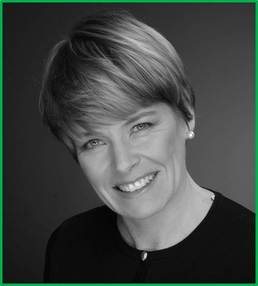
World Economic Forum (WEF) has picked a globally recognized expert in energy technology and innovation, Dr. Cheryl Martin as the Head of Centre for Global Industries and member of the Managing Board. The Centre for Global Industries is the foremost global multistakeholder platform shaping global and regional industry agendas. It is made up of over 20 industry sectors and employs around 200 strategic specialists in offices in Geneva, New York, Beijing and Tokyo. In her new role, Cheryl Martin’s responsibilities will be to ensure further growth and development of industry partnerships, deepening private-sector engagement in public-private initiatives aimed at solving critical global challenges. She will work closely with Sarita Nayyar, Chief Operating Officer of the Centre for Global Industries and Managing Director of the World Economic Forum USA. Jim Hagemann Snabe will continue his role as Chairman of the World Economic Forum USA. Cheryl Martin founded Harwich Partners LLC in 2015 to work with public- and private-sector entities to identify critical business, technology, finance, regulatory and policy drivers to accelerate commercial adoption of new technologies. She recently led a critical aspect of New York State’s comprehensive Reforming the Energy Vision (REV) strategy. In 2013-2014, she served as Acting Director of the US Department of Energy’s Advanced Research Projects Agency-Energy (ARPA-E), while also serving as the agency’s Deputy Director for Commercialization. Prior to that she was an Executive in Residence at Kleiner Perkins Caufield and Byers, which she joined after a 20-year career with Rohm and Haas Company, where she started her career as a Senior Scientist for the company’s Plastics Additive business and was most recently general manager for the Paint and Coatings Materials business in Europe, Middle East and Africa. Cheryl Martin holds a BA in chemistry from the College of the Holy Cross and a PhD in organic chemistry from the Massachusetts Institute of Technology (MIT). She is active in the American Chemical Society (ACS) and serves on the Board of Directors for Philabundance, the greater Philadelphia region’s largest hunger relief organization. Responding to her appointment, Cheryl Martin said: “I am honoured to be joining the World Economic Forum at this critical moment in time – the Fourth Industrial Revolution. I am excited to bring my leadership experience in the public and private sectors and my passion for innovation and technology to this important effort in multistakeholder cooperation. I am fully dedicated to building the partnerships required to shape industry agendas to fulfil the Forum’s commitment of improving the state of the world.” Meanwhile, the Executive Chairman and Founder of the World Economic Forum, Klaus Schwab, observed that the Fourth Industrial Revolution will affect every industry and has the capability of delivering vast economic and social value. “It also brings with it unprecedented disruption, the likes of which we are only now beginning to witness. Cheryl’s addition to our leadership team will enhance the World Economic Forum’s ability to act as a trusted partner in this transformation by helping business translate the technological and scientific changes we are undergoing into benefits for all humankind.” [myad]
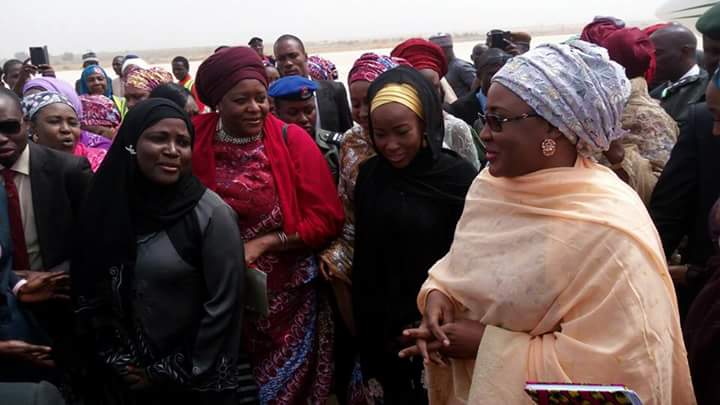
Wife of the president, Mrs. Aisha Muhammadu Buhari has flagged off maternal child health week in Kebbi state. Mrs. Aisha Buhari, during the launching of the a week-long programme, called on the wives of governors across the country to assist their husbands to reduce maternal and infant mortality rates. The President’s wife, who was accompanied by the wives of the Senate President and Speaker, Governors, ministers and top women politicians said that wives of Governors should be in a better position to influence change in the health sector, particularly that of women and children in their respective states. She was speaking at the commissioning of Birnin Yari primary Health Care Centre and Jega General Hospital which was named after her. Mrs. Aisha Buhari said that children and women’s education is key to understanding the dynamics of their health status, adding that it is also a means of enhancing their lives and ultimately the society at large. She commended the initiative of the wife of The Kebbi state Governor, Mrs. Zainab Bagudu, saying that such gesture is in line with the expectation of the people to have a very sound and functional health care facility at their door step to address various health challenges. Mrs. Aisha Buhari expressed joyed that the health facility has been named after her, saying that she is determined to continue the crusade for improved health care for women and children. This, she said, is was the nexus of her advocacy initiative tagged: FUTURE ASSURED” and targeted at the disadvantaged group in the society. “Every mother should take advantage of the available health centers to seek for medical advise to guard against early death of women and children.” She also acknowledged the steadfastness and enthusiasm shown by development partners to make their inputs and influence the rebirth of the health sector . “To all our partners in the stride for improved health care, I say thank you for your efforts in influencing the development of the health status of women and children.” The state governor’s wife, Mrs. Zainab Bagudu in her remarks, said that the health of women and children is of utmost concern to her, hence the initiative to reduce maternal and child mortality. She commended Mrs. Aisha Buhari for making herself available for the event and her leadership role in advocacy initiative to change the fortune of Nigerian women and children: “because women and children are the most vulnerable group deserving serious attention.” Stakeholders who were at the event, include representatives of the World Bank, UNICEF, John Hopkins and others. They all commended the initiative and pledged their support to such health reform for the benefit of the populace and, especially the rural inhabitants . They also called for the engagement of adequate manpower to maintain the facility to live up to the demands of the beneficiaries. [myad]
Vice President Yemi Osinbajo has vowed that pressure currently being mounted by the Nigerian elites would not slow down the ongoing fight against corruption and graft. Said he: “we get regular messages from some Nigerian elites saying cool down.” The Vice President who held a meeting today in his office with a delegation from the Muslim Congress of Nigeria (MCN) made it clear that the pressures on the presidency to relent in the anti-corruption fight would not shake the resolve of the government to push on until it is eliminated. “It is a very strange morality that some of those people have very complicated but cutting across all tribes and religious differences.” He observed that the masses of the Nigerian people have a clearer understanding of right and wrong, adding: “the masses don’t have that problem.” Osinbajo said that a few of the elites are however asking that government should merely ask the looters of the commonwealth of the nation to return the money and go. Professor Osinbajo is happy that “a new tribe of Nigerians who would not compromise their values but would maintain a sense of right and wrong is now emerging. “The man on the street is very clear, so whatever some of these elites say, we shall keep our focus on the masses who voted for us.” The Vice President said that it is unacceptable that in the last 16 years, there is not a single federal government completed road project, not to even talk of rail. The reason, he stressed, is corruption, adding that the cost of projects are often inflated as people entrusted with public trust struggle to enrich themselves at the expense of the masses. He noted that it was the same inordinate desire for enrichment that explains why money meant to procure arms were being distributed among persons at a time when the territorial integrity of the nation was being attacked. “The insurgency has gone on for six years because government could not adequately equip the military.” The Vice President assured Nigerians that President Muhammadu Buhari and himself would not relent, saying that the president and himself have no other agenda but “the progress of this country.” He reassured that the President and him are extremely focussed on what needed to be done, saying: “we will focus on critical things, infrastructure and social investments.” Speaking earlier, the leader of the delegation from the Muslim Congress of Nigeria, Imam Abdulahi Shuaib expressed the support of the organization to the government in its programmes, including anti-corruption. He said that the choice of the President and Vice President were made by God Himself during last year’s presidential election. The Vice President also received delegations from the Nigeria Society of Engineers (NSE) and the Facility for Oil Sector Transparency Reform (FOSTER), a group composed of NGOs involved in different issues in the Niger Delta areas. At his courtesy meeting with the NSE, Professor Osinbajo praised the engineers and highlighted the importance of the profession in national development. “There is no question at all that engineers are central to the development of the society.” The NSE delegation was led by its President, Engineer Otis Anyaeji. Speaking earlier while receiving FOSTER, the Vice President restated the government’s commitment to the development of the Niger Delta. He also commended the group for coming together to develop a common framework to support the process of development in the area. The group which said it adopted a common framework in order to avoid duplication was led by Mr. Richard Oshowole. [myad]
The Minister of the Federal Capital Territory (FCT), Malam Muhammad Musa Bello has commended his predecessors for developing the city in accordance with the dream of its founding fathers. Said he: “the dreams of Abuja’s founding fathers have been achieved, and what remains now, as beneficiaries of this beautiful city, is to make sure that we run it efficiently.” The Minister spoke today when he and some key Directors went on unscheduled tour of FCT facilities within the Federal Capital City, Abuja. “the previous FCT Administrations have done their bit to build a befitting city to this level of maturity, and therefore, we must join hands to maintain as well as improve on the bequeathed infrastructure to guarantee efficient services to the residents.” Muhammad Bello insisted that Abuja should be a city where the residents are provided quality services that will make their life more comfortable because Abuja is the only city in Nigeria that is a creation of law. He charged the heads of all the various Departments and Agencies under the FCT Administration to work collectively towards achieving this onerous goal. “All of us tend to look at the issue of this our beautiful city only from the perspective of our individual department. We have lost sight of the fact that it is the collective successes of the various departments that make us to be what we are. It is this collective success that makes us to be recognized as running our city well or not. No matter how efficient the man in Urban & Regional Planning is, if the man in Public Works is not working the right way, we will not have the required benefit.” The Minister stressed that the Administration must work to see how it could replicate in the Area Councils, the infrastructure already existing in the city centre, to make it convenient and comfortable to live anywhere within the 8,000 square kilometers Abuja. Muhammad Bello said that henceforth, the FCT Administration will hold weekly management meeting, starting from next week, where all the heads of the Mandate Secretaries and Agencies including the FCDA, under the leadership of the Permanent Secretary will brainstorm and see how they can move the city to the next level. The FCT Permanent Secretary, Dr. Babatope Ajakaiye and the FCDA Executive Secretary, Engr. Adamu Ismaila also participated in the unscheduled facility tour. [myad]
About 169 companies that registered as contractors with the Nigeria Railway Corporation and which benefited from rail projects valued at N1 trillion are no where to be found. The House of Representatives Ad Hoc Committee on Failed Rail Contracts raised alarm during the investigative hearing at the National Assembly that none of the 169 companies invited by the committee had showed up. The Chairman of the committee, Johnson Agbonnayinman (Ikpoba/Okha Federal Constituency), said the need to invite the contractors was important, but lamented that efforts to reach them had so far proven fruitless. Agbonnayinman added that so far, only the China Civil Engineering Construction Corporation (CCECC) had responded to the committee’s letter. The committee chairman made it clear to the Railway Corporation: “You are duty bound to produce the contractors. They are nowhere to be found; they are not faceless but yet they cannot be reached. “You gave them the job, so you should produce them; we are holding you responsible.” The committee also asked the corporation’s MD, Adeseyi Sijuwade, to make available the agency’s record of Internally Generated Revenue (IGR) between 2010 and 2014. He is also to tell the committee what the IGR was used for. In response, the MD said the IGR was used to augment the agency’s overhead budget. Drama, however, started when the committee, acting on documents before it, asked the MD to explain all he knew and the reason behind his request to the Office of the Accountant-General of the Federation for a return of N2 billion or 20 per cent of the corporation’s pension fund to the corporation in December 2014. Responding, Sijuwade, who was reminded of being on oath, denied making such request to either the Accountant-General or Minister of Finance. “I never at any time made any request to the AGF to return N2 billion pension fund to the corporation,” he said. Insistent on getting to the root of the matter, the committee asked the Director of Finance, Felix Njoku, to take an oath in order to take questions regarding the issue. Njoku did and insisted that there was never any correspondence from his office to the Accountant-General’s on return of the said money. Not satisfied, the committee veered into what the organisation did with N2 billion that was in the corporations coffers around the period under review. The Finance Director explained that the money was not related to pension and was used to fund ongoing contracts at the time. He was asked to list the contracts, which he said was impossible at that point but that all transactions were duly documented. He promised to make available the records. The committee also faulted the award of rail contract to Costain Construction Company, claiming that it had no competence in railway projects. Sijuwade replied that Costain went through due process and was found competent by the Federal Executive Council, adding that it successfully completed its project. [myad]
President Muhammadu Buhari today in London, called on the global community to give greater support to countries whose populace are suffering humanitarian crises, terrorism and civil strife. Speaking at the Supporting Syria and the Region conference in the British capital, President Buhari said that without collective support and assistance from all well-meaning countries, companies and organisations, the humanitarian catastrophe affecting millions of people in countries like Nigeria and Syria cannot be successfully addressed. The President said that the increasingly complex and inter-connected security challenges faced by the global community necessitate increased international cooperation in pursuit of effective solutions. President Buhari strongly condemned the continuing violence by terrorists against innocent civilians, abuse of human rights and destruction of public and private assets and cultural heritages in Nigeria, Syria and other countries of the world. He told the gathering that having experienced civil war and terrorist insurgency, Nigeria understands the pains inflicted on the people of Syria and the hardship that innocent civilians suffer in the hands of misguided elements. President Buhari called on all parties involved in the Syrian conflict to seek a peaceful resolution, saying that only a political solution could bring the ongoing tragedy in the country to an end. Concluding his address, President Buhari expressed Nigeria’s immense sympathy for the people of Syria. “We all stand in solidarity with them. Despite the magnitude of our own challenges and the increasing stress on our economy, I reaffirm our Government’s commitment to support and assist the war-affected people of Syria,” he said. Participants in the conference included the British Prime Minister, Mr. David Cameron, Chancellor Angela Merkel of Germany, the Secretary-General of the United Nations, Mr. Ban Ki Moon, King Abdullah II of Jordan, Prime Minister Erna Solberg of Norway and the Emir of Kuwait, Sheikh Sabah Al-Ahmad Al-Jaber Al-Sabah. Others were the President of the International Committee of the Red Cross, Mr. Peter Maurer, the President of the World Bank, Dr. Jim Yong Kim, the Administrator of the United Nations Development Programme, Helen Clark and the High Representative of the European Union, Federica Mogherini. [myad]
No, no, no no. INEC was not manipulated? INEC was settled. I don’t want to go into the issue of INEC. This was the confession of the embattled former Secretary of the Peoples Democratic Party (PDP) in Ekiti State, Dr. Temitope Aluko when he spoke in an interview with Channels Television.
On the Strike Force
In fact senator Iyiola was very right. It was not a scheduled meeting. They were just in the middle of Ayo Fayose’s room. The strike teams were a mixture of DSS (Department of State Security), the military and MOPOL (Mobile Police). Yes, that’s about all.
Aluko presented documents purportedly showing names and ranks of the strike team and the people they were supposed to hit.
Not as in to kill but to just demoralise them; detain them, so that once you take out the opposition leaders and you take out the cash, they wanted to give their supporters, then that would be all. That was the agreement we had then. There were 44 teams, made up of about 11 per truck (Hilux vans) and they were supposed to have a contact person there. A contact person was somebody in the PDP that was supposed to show them where the opposition leaders. Before that time in May, we had 64 people coming together.
They brought in 1040 soldiers under the leadership of Brig Momoh and then a strong politician too, who somebody identified as Ubah but not Senator Ubah (Andy), brought in from Enugu another 400 (soldiers). With that, we had more than enough to cage the whole opposition in the state. What we did was to block all the routes leading into the state and to block all the APC-controlled areas.
Developments before the election
Let me tell you what happened. There was a small riot in mid-May in Iyin-Ekiti, my home town. And I think Governor Fayemi called in the military from Akure to quell the riot. And it was at that point that we realised that our plans were not going to work out well, because we did not have the control of the military. That was when we petitioned the former GOC so that he would be taken away from Akure and he was replaced him with a more amenable GOC in Brig-Gen. Momoh. That decision was taken at the last security meeting. It was there that the then President told Minimah, the former Defence chief, with others in attendance that Ayo Fayose would stand in for him. He said Áyo Fayose would stand in for me in Ekiti politics.’ He didn’t sy more than that, but of course to all the military men as the C-in-C; that they had to provide an amenable Brigade Commander to join the DSS personnel that were brought in from outside the state. Now, when you look at the strike team, we had 44 teams. In fact, all the van that organised for the 44-member strike team members were actually parked in my place, in my house. I was the party secretary and the chief returning officer, as well as the chairman of security and intelligence and also the co-ordinator of the campaign.
By Wednesday (June 18, 2014), the strike team members were distributed to the 16 local government areas and each council had an anchorage, who was a key leader in the PDP. All this you can see in the slide.
The slides showed the residence of some leaders and how the military laid the siege
Explaining…..Those were the routes that were blocked. They were about 10 and when you looked at those special polling units, we are not talking about all polling units in a ward. It’s either high volume polling units or polling units that were very weak or those that they must operate on. And when you come down, you’ll see that the man that was the contact person is now the current speaker; that’s Pastor Kola Oluwawole. He was PRO (Public Relations Officer) in my own SWC (State Working Committee) and the state PRO then. He was the one that co-ordinated that. And then when you look at the other people there with their numbers, they were the ones that were manning the routes and taking care of the team. Let’s go now to where we have the team. Let’s go to the residences, we’ll call it the anchorage.
In some local governments depending on the size, those are the key residences where they were anchored, where their welfare was taken care of. You notice that those people in charge, one is now a senator, one is a commissioner and one is a member of House of Reps, somebody has moved out.
We had them in their anchorages three days before. They had targets that they were supposed to destroy. They went to houses of APC members and the people who were disgruntled with us. They were in PDP then but we didn’t want to take any chances. So, they were also visited as opposition members and they were harassed. At times, they were arrested and kept in special detention camps in primary schools or friendly police stations till Sunday morning. The strike force members operated till Sunday morning. And by Sunday morning when there was no opposition in sight again We told members of the team that they should keep any cash found on the opposition leaders.
On whether INEC manipulated the process
Answer: No, no, no no. INEC was not manipulated? INEC was settled. I don’t want to go into the issue of INEC.
On why he won’t discuss INEC role
No, because we’re talking about Ekitigate. Okay let me tell you what happened. INEC was the second option. INEC was the second option because by May in Abuja, we had given N1 billion to INEC for the two states, for the two states. And it was not Jega. Jega was not involved. Jega was not involved? It was to ensure that the returning officers from FUTA were our own. And I can give you the names of the two people who coordinated it. One was Oluwawole and the other was Adekanbi. They had to look for amenable returning officers from FUO.
On the integrity of lecturers
You are just saying that. They didn’t even know what was happening. The funding came for the primaries. It came from Ifeanyi Ubah who we met at the NNPC Towers in Abuja. He gave us $2 million on behalf of Mr. President. It was in cash and not too clean. $100 bills and he (Ubah) said that they had to retain 300,000 as courier fees for those people in the presidency.
On the implication of mentioning peoples names
Because I have to tell the truth and because I was there. I was privy to the process. I was there at the NNNP Towers. I was there with the Rt. Hon. Femi Bamisile. He gave the money in cash, less $300, 0000. And we now took the cash to Prince and princess into his house and he put it in his wardrobe. And he said we should go down to Ekiti for the primaries, to get them ready for the primaries. I was the head of the team, the head of the pro-primaries. That is the funding..(points to slide). You can see that that is the funding, that is Ekiti East and you can see that that is Ayodele Fayose’s signature. Let the slide go down.
On how much wasspent on the election
It was $35 million and it came in January, not June 17. I was privy to all the arrangements. Obanikoro was just the courier. It came in from the former National Security Adviser Sambo Dasuki. The money was given from the former NSA in cash and by a courier. Because we asked for security and we asked for funds and Mr. President said everything would be made available. We had a meeting on Thursday, Wednesday, or Thursday. I think Wednesday 18th or so. And that is the money given out to the strike team. It was N1 million per van per day and they worked for three days, that is N132 million. And then for those people that blocked the road, it was N4 million for the period and we’re talking about 16 local governments, making it N64 million.
On the involvementof Hon Kareem Abisodun
He was at the meeting thatwas attended by Koli. But, he was more of a personal friend to… If he says he was part of the security meeting, that’s a different thing. He wasn’t at the security meeting but he was at the meeting in Ekiti, in Spotless Hotel. Or Koli had lied about his presence? If I’m saying he was there and Koli said he was there. I don’t have any issue with Hon Kareem. I’m just telling the truth to the whole world so that we’ll know how to manage our democracy.
Implications of blowing the whistle
Because I was part of it does that mean I shouldn’t have any proper legacy that I’ll leave to my children? Why should I be afraid? Have we not done it? [myad]
Former Political Adviser to the ex-Vice President, Namadi Sambo, Malam Abba Dabo, has told a Federal High Court in Abuja that the National Publicity Secretary of the Peoples Democratic Party, Olisa Metuh gave him the sum of N25 Million for media publicity work but that he had returned the money to the Economic and Financial Crimes Commission (EFCC).
Abba Dabo, who was testifying today as the seventh prosecution witness against Metuh, said he returned the money on his own volition in January 2016 due to media publications indicating that it was sourced from funds meant for procurement of arms.
He said that the N25 million was paid to him through Metuh’s firm, Destra Investment Limited’s account, on December 16, 2014, five days after former President Goodluck Jonathan and Sambo emerged as the PDP’s presidential and vice-presidential candidates of the party at the party’s nomination convention.
The witness, who is a past newspapers’ editor and was the Chief Press Secretary to former President Shehu Shagari, said he decided to return the money to the EFCC because he could not reach Metuh, who was then in the custody of the anti-graft agency.
The PDP chief said: “Unfortunately, there were reports in the media, on this transaction with Chief Metuh linking it to controversial circumstances. I mean it was identified that Chief Metuh paid the N25m to my account through his company and that the source of the money was from the arms deal that was being discussed generally in the country.
“As a result of that publication, we thought we needed to explain, and because it was paid to my personal account , in my name, I decided to make a refund, and I paid it to EFCC, because I couldn’t reach Mr. Metuh that particular time.
“The newspapers were awash with the story that linked the money given to me to the arms money that was said to have been diverted to other uses by the Office of the National Security Adviser. On my own volition, I decided that the the best way out of the rigmarole was to pay back the amount. I paid it back to EFCC.”
The EFCC is prosecuting Metuh and Destra Investments Limited, on seven counts of fraudulent collection of N400m from the Office of the National Security Adviser on November 22, 2014 and money laundering involving cash transaction to the tune of $2m.
The prosecution alleged that the N400m which Metuh got from the NSA office and used for PDP’s campaign activities was “part of the proceeds of an unlawful activity” of the immediate past NSA, Col. Sambo Dasuki (retd).
Dabo said on Thursday that with the N25m which he got from Metuh in the build-up to the 2015 presidential election, he helped to mitigate and counter negative media reports against the then Jonathan-led government and the PDP.
He said used the money to run the Media Support System which he had set up to boost the PDP’s media profile in response to “vicious attacks” from Hausa radio stations and criticisms from the Nigerian media as well as the social media.
He said he also set up a team of facilitators and young Information Technology enthusiasts, who were active on the Internet to run a website, ‘What’s Up Naija’.
“From the money we received from Chief Metuh, we paid salaries and allowances of facilitators, bought equipment and computers for the young people working on What’s Up Naija.
“We even paid that year’s rent for our office at 12B Deb Street, Off Danube Street in Maitama, Abuja. We also used that office to monitor the election.”
Dabo, who described Metuh as “a loyal party man, dedicated, strong and outspoken person”, said he however, chose to refund the money to the EFCC following media reports linking the money to the botched purchase of arms.
“I decided to refund the money not only because it was from the NSA Office, but also because it was linked to the botched arms purchase deal,” Dabo said.
But the trial judge, Justice Okon Abang, upheld an objection raised by the defence to the admissibility of documents relating to the activities of the What’s Up Naija and Media Support System as well as the tenancy agreement for the office used by the campaign platforms.
The judge rejected the documents relating to the two campaign platforms because, being computer-generated they did not meet the standard set out in Section 84(1) (a) to (c) of the Evidence Act, and the tenancy agreement because the prosecution failed to lay proper foundation as to why it tendered the photocopy instead of the original.
Under cross-examination by the defence counsel, Mr. Onyechi Ikpeazu (SAN), Dabo confirmed that he considered the refund of the money “absolutely important” and that he made the refund to EFCC through three bank drafts.
“I wrote a letter to the EFCC attaching three bank drafts with a cover letter acknowledging that the Chief Olisa Metuh, the PDP National Publicity Secretary, gave N25m to me on December 16, 2014 for the purposes of publicity campaign which was paid by WhatsApp naija and Media Support System,” he said.
He said he did not mention the refund in his statement made to the EFCC on January 6, 2016 “because I needed to go to the bank the next day and make necessary arrangement”.
Fielding more questions from Ikpeazu, the witness confirmed that he was at Metuh’s home in Gudu area of Abuja on the day he was arrested while trying to find out the source of the campaign money from him.
“Up till now I have not have the chance of meeting with him,” the witness said.
He confirmed that former President Jonathan, the Federal Government and the PDP benefited “immensely” from the media works Metuh engaged him for.
Metuh attended the proceedings from home today, without handcuffs and prison officials around him. Today was his first court appearance after he met his bail conditions and was released from prison.
Decked in a black suit with a pair of eye glasses, his gray beards which were left to grow during his 13 days of detention, had been shaved clean.
Like the previous court sessions, a battery of women party faithful in PDP customised wrappers, relatives and friends, filled all available spaces in the court room.
After the court proceedings on Thursday, they surrounded and accompanied Metuh to a waiting Prado jeep which later drove him away.
Justice Abang adjourned till Monday for further trial. [myad]
Former commissioners, special advisers and other political appointees who served in the administration of for Governor Idris Wada of Kogi State have been given till February 5 to return government vehicles in their possession. The Transport Officer of the Kogi State Government, Laraba Okedi, in a statement in Lokoja said that the order also affected other categories of political appointees, including members of boards and agencies. Apart from the vehicles, Okedi said that the former political office holders should immediately return other government property in their possession. Sources told newsmen that many former commissioners, special advisers and board chairmen were yet to return their official vehicles. The new Governor of the state, Alhaji Yahaya Bello, had on January 30, dissolved boards of all parastatal agencies and other government establishments in the state. [myad]
We use cookies on our website to give you the most relevant experience by remembering your preferences and repeat visits. By clicking “Accept”, you consent to the use of ALL the cookies.
This website uses cookies to improve your experience while you navigate through the website. Out of these, the cookies that are categorized as necessary are stored on your browser as they are essential for the working of basic functionalities of the website. We also use third-party cookies that help us analyze and understand how you use this website. These cookies will be stored in your browser only with your consent. You also have the option to opt-out of these cookies. But opting out of some of these cookies may affect your browsing experience.
Necessary cookies are absolutely essential for the website to function properly. This category only includes cookies that ensures basic functionalities and security features of the website. These cookies do not store any personal information.
Any cookies that may not be particularly necessary for the website to function and is used specifically to collect user personal data via analytics, ads, other embedded contents are termed as non-necessary cookies. It is mandatory to procure user consent prior to running these cookies on your website.



 Vice President, Professor Yemi Osinbajo has gotten a mandate of stearing the affairs of Nigeria as President from today, February 5 until next Tuesday, February 10.