Impeached Speaker of the Kogi State House of Assembly, Alhaji Momoh-Jimoh Lawal, today, presided over the presentation of the 2016 budget proposal by the state governor, Captain Idris Wada on the floor of the House of Assembly in Lokoja, even as he appealed to members to allow peace to reign so as to move the state forward. The speaker referred to members of the Assembly as elder statesmen and patriots who should not sacrifice the interest of the state on the altar of selfish interests. “As elder statesmen and patriots, I wish to appeal that we sheath our swords and close ranks to move the state forward. As members of one House and one family, we cannot do without having misunderstanding among ourselves. “What we must always guard against is a situation where we allow rancour and bitterness to linger on and our differences unresolved. As trustees and representatives of the people, much is expected of us by the electorate. “We cannot afford to sacrifice the interest of the state at the altar of personal and selfish interests. “Rather than bickering here and there and heating up the polity, we should rather unite and work together to ensure that the unity of the state is maintained.” Lawal described the state as a collective patrimony, even as he enjoined members to guard against being used by external forces to jeopardise the peace and stability of the state. On the 2016 budget presented by Wada to 10 of the 25-member House, Lawal said that members present formed a quorum, and that the bill would undergo necessary legislative process before passage. He said the budget was realistic, adding that all leakages through which the state economy was hitherto plundered would be blocked to make the budget implementable. [myad]
The Peoples Democratic Party (PDP) has warned that the N6.08 trillion 2016 federal budget presented by President Muhammadu Buhari is loaded with time-bomb that would destroy the country. The party further warned that with the proposed borrowing of N1.84 trillion, the country is going the way of Greece. The National Publicity Secretary of the party, Olisa Metuh, in a statement today, said that a breakdown of the N1.84 trillion shows that Nigeria would be borrowing N5 billion a day for the next 365 days, starting from January I, 2016, without corresponding provision for economic production and a clear repayment plan. He insisted that such scenario “spells doom for the future of the nation. “Some people may be wondering why we raised an alarm about the budget. The reason is simple. When we analyzed the budget, we discovered it is a misshapen attempt at a Keynesian economics of applying deficit spending to stimulate growth even when studies have proven that GDP growth rates decrease by over 50% when debt goes from low or moderate to high. “But then we know the borrowing here is to pay huge campaign debt and fund a political war chest. “By every standard, this budget is a booby trap against the nation. When you break down the proposed N1.84 trillion borrowing, you discover that it amounts to borrowing N5 billion everyday for the 365 days in 2016. The questions are: for what specific projects are they borrowing N5 billion per day and how do they intend to pay back? “The President should explain to Nigerians how they intend to pay back the loan. Is it by continuous borrowing to service the interests, and does he intend to accumulate colossal debt for future generations of Nigerians? “The truth is that this administration cannot justify this proposal. There is no known economy in the world where you can justify borrowing N1.84 trillion without specific projects and precise repayment outline. “This is worse still in an oil-driven, mono-economy at a time crude oil is selling at $30 dollars per barrel and is speculated to go down to about $20 dollars or even lower in the next one year.” The PDP spokesman said that the idea of borrowing could be adopted when the nation diversifies the economy and boost production capacity in manufacturing and other critical sectors, saying that this is a direction which the budget clearly failed to provide. “From all indicators, the borrowing will be negative. They are driving us to be like Greece, and to plunge us into unnecessary debt. When the PDP took office in 1999, we achieved the cancellation of inherited debts. This administration, in seeking to accumulate debts, should know that there is no possibility that any country in the world will give us debt cancellation anymore. “More importantly, we are really worried about negative economic policies of the present administration and the copying of strategies that failed in other economies. Recall that we had earlier alerted on the negative consequences of the retrogressive foreign exchange controls wherein this government is making it impossible for honest Nigerians to engage in free trade and regulate their personal activities. “There seems to be the erroneous belief that the controls will create foreign exchange stability or strengthen the Naira by limiting foreign currency outflows. This policy had badly affected other countries in the recent past; including Argentina, whose new government had to reverse the policy to save their economy. Why then are we copying a policy that failed in other countries? “In practice, the kind of crude controls the Federal Government is implementing have been proven ineffective in preventing capital flight. By limiting the local availability of foreign exchange, the controls have instead increased the demand for foreign exchange, putting greater pressure on the naira and achieving the exact opposite of what the government in its naivety believed would happen. “The negative impacts of the ill-conceived controls include the hindering of international trade and discouraging of foreign investment. We have seen first-hand the crippling of the private sector in the last six months, upon the implementation of these measures were out. Traders, importers and all manner of businesses are being destroyed as a result of the contrived unavailability of foreign exchange.” The PDP spokesman challenged the Federal Government to a public and open debate on the budget devoid of the sentiments of the APC-controlled National Assembly and who are minded against any cuts in their own allocation. [myad]
Governor Idris Wada of Kogi State has presented the 2016 budget of N75 billion to 10 out of the 25 member State House of Assembly, presided over by the impeached speaker, Alhaji Momoh Jimoh Lawal. The budget was christened: “Budget of Consolidation.” The governor said that the budget is 15.3 per cent or N13.6 billion lower than that of 2015. “The total budget package for year 2016 is N74,996,241,381 as against N88,617,070,854 billion approved for year 2015, which is a decrease of N13.6 billion or 15.37 per cent compared to the 2015 Revised Budget,” he said. Wada said the budget had Recurrent Expenditure of 45.3 billion, representing 60.4 per cent, and Capital Expenditure of N29.6 billion, representing 39.5 per cent. According to him, the budget is drafted in line with international best practices. Wada said the specific objective of the budget was to allow for effective allocation of scarce resources. “Also, to identify critical programmes and projects including completion of ongoing projects and new ones in the critical areas of need.” Other objectives, according to the governor, include to expand the revenue base in the area of Internally Generated Revenue and to produce a conducive environment for investors and donor agencies to operate and as well to reduce the level of domestic debt profile of the state.” Wada commended the state Ministry of Budget and Planning for complying with the directive to the 21 local government areas to align their Accounting and Budget formats with Chart of Account of International Public Sector Accounting Standard. He said that with the format, the accounting/budget of the state and the local government would be consolidated in the near future. The governor said that the state expected recurrent revenue of N49.4 billion, consisting of N7.8 billion from internal sources, N33.7billion Federal Allocation to the state and N7.9 billion revenue from Value Added Tax. Wada said that he did not make allowance for Sure-P and Excess Crude because those revenue components were not being expected to feature in 2016 fiscal year in view of the dwindling price of crude oil. Earlier, the speaker, Lawal commended the governor for the way he had judiciously managed the resources of the state, assuring that the House would speedily pass the budget even as he expressed happiness over the robust working relationship between the legislature and the executive. [myad]
Professor Foluke Ogunleye, an elder sister of the special adviser to President Muhammadu Buhari on media and publicity, Femi Adesina, is dead. Professor Ogunleye, who is a lecturer at the Department of Dramatic Arts at the Obafemi Awolowo University (OAU) in Ile-Ife, died in an auto crash along the Lagos/Ibadan expressway. The Public Relations Officer of OAU, Mr. Abiodun Olanrewaju, confirmed the death of Professor Ogunleye. The deceased was the Head of the Department of Dramatic Arts in OAU between 2006 and 2009. She was popular for writing plays including; “Nest in a Cage” and “Jabulile”. Ogunleye was also the Executive Director, Ife International Film Festival of OAU. Meanwhile, the former Governor of Abia State, Dr. Orji Kalu has expressed sadness and shock over the death of Professor Foluke Ogunleye, describing her death as a tragedy. Kalu, in a statement, described Professor Ogunleye as an outstanding scholar and a renowned author, who contributed immensely to the academia in different capacities beyond the Obafemi Awolowo University, Ile Ife, Osun State community. The statement, signed by Special Adviser, Kunle Oyewumi, Kalu said: “I was destabilized and heartbroken on hearing the news of the passing of Femi’s sister, Prof. Fouke Ogunleye of the Obafemi Awolowo University, Ile-Ife. She was humble and easy going despite her intimidating academic credentials. She exhibited selflessness in all her endeavours in life. A good woman has departed this sinful world. “Our hearts and prayers are with the entire Adesina family at this grieving period. May her gentle soul rest in peace.” While commiserating with the authorities and students of Obafemi Awolowo University and University of Ibadan, Kalu prayed for the speedy recovery of the deceased’s husband, Prof. Ogunleye, who was also involved in the accident. [myad]
President Muhammadu Buhari will hold his first Presidential Media Chat tomorrow, December 30. A statement from special adviser to the President on media and publicity, Femi Adesina said that the programme will be broadcast live on the network services of the Nigerian Television Authority (NTA) and the Federal Radio Corporation of Nigeria (FRCN). He said that President Buhari will answer questions from a panel of journalists on a broad range of current national issues. Adesina said that the Presidential media chat is scheduled to begin at 7pm even as he advised other television and radio stations in the country to hook-up to NTA and FRCN to relay the programme to their viewers and listeners. [myad]
The Hult Prize Foundation, the world’s largest start-up accelerator for social entrepreneurship, holds an annual $1,000,000 international competition for university students. These students are challenged to develop innovative social enterprises that aim to tackle grave social issues faced by billions of people. The Foundation is a partnership with President Bill Clinton, the Clinton Global Initiative, and Hult International Business School which, each year, challenges millennials around the world to produce life changing ideas. In early 2015, the American University of Nigeria as the only undergraduate team to make it twice to the semi-final round in Dubai, was granted the hosting right for “The Hult Prize @”. At this level of the competition, participants from AUN get an opportunity to bypass 10,000 applicants in the traditional process. This privilege fast-tracks the AUN team and its ideas through to one of five regional final rounds of the competition in Dubai, London, San Francisco, Shanghai, or Boston. AUN’s undergraduate scholars competed against master’s degree students, PhD candidates, and alumni from other universities around the world. Unlike other business case competitions that are geared towards solving typical business issues, the Hult Prize engages students to use their business skills and expertise to take on some of our world’s most pressing social problems, such as clean water access, education, and poverty. The 2015 challenge focused on building start-ups that might provide sustainable, high quality, and early education to 10 million children under the age of six by 2020. As Africa’s first Development University, this million-dollar challenge is particularly well suited to the American University of Nigeria students, all of whom routinely focus on development issues as part of their undergraduate education. This is one of the reasons that the Hult Prize organizers chose AUN as an “Hult Prize @” site, with the President of AUN, Dr. Ensign, serving as one of the student coaches for the project. An instructor in Business & Entrepreneurship, Fardeen Dodo, who worked with last year’s Hult team, utilized the networking benefit of the Hult Prize. He arranged an e-learning session at AUN’s new e-library with Mr. Bijan Masagh, the winner of the 2014 Dubai round. Mr. Masagh, leveraging on AUN’s Internet capabilities, served as guest lecturer in AUN’s Entrepreneurial Innovation class. The 25-year-old Hult Dubai winning team leader shared his experiences with the students in Mr. Dodo’s class, speaking about entrepreneurship and his Hult competition experiences. AUN senior Blessing Douglas, who has led the effort to bring the Hult competition to AUN, and has participated in the two regional Hult finals, was invited to a Hult Prize@ Campus summer camp in the United Kingdom. Here she was appointed a Hult Prize Campus Director for AUN. As a campus director, Ms. Douglas qualifies for over 25 incentives, including meeting President Clinton and a trip to attend the Clinton Global Initiative annual meeting New York. “Hopefully, in 2020 AUN will be hosting the regional competition in Africa,” Ms. Douglas said with high hopes the competition.” As part of “Hult Prize @,” 15 AUN student teams competed in the first ever AUN Hult Prize Campus challenge. Each team pitched ideas that will address the 2016 topic focus: “Crowded urban spaces – solutions on doubling the incomes of the residents who live in some of the toughest conditions in the world through improved mobility and increased connectivity to people, products, and services.” The teams at the AUN Hult Prize @ Campus Challenge took the opportunity to present compelling social business ideas to a panel of influential judges including popular Nollywood actress and role model, Ms. Joke Olu Jacobs (née Silva). The campus challenge winning team led by Ms. Feyiosola Ogunbanjo pitched their idea on sustainable farming methods – an indoor faming that incorporates vertical and greenhouse farming. Vertical farming is cultivating crops on an inclined surface or a skyscraper. The group explained that the indoor farming allows growing year-round crops, farming at home, healthier crops, and producing crops that grow faster than the produce of conventional farms. This method also allows minimum overheads, low labor costs, and low water usage with controlled transpiration, enabling a farmer to use 90 percent less water. The selected team will be the third AUN team to represent the University at the Dubai regional finals which will take place in 2016. Mrs. Jacobs commented, “We chose Sil Indoor Farms because the team dealt with several challenges that the world is facing right now. They are looking at running the business in a sustainable manner.” Mr. Dodo said that the Hult Prize competition will enrich the students’ college experience. “Besides the competition, students will benefit from several workshops, networking, and entrepreneurial learning events run by a number of professionals and trail-blazing global experts, including Stuart Fleming of Enviroserve; Garett Awad of the Scholl Centre of Entrepreneurship; Ali Edrissi of JP Morgan (UK), and Khaled Gazawi, the CEO of Grameen-Jameel.” The $1,000,000 incentive is also not far from anyone’s mind. [myad]
Nigeria and the United States of America are currently engaged in talks over the sale of the country’s crude oil
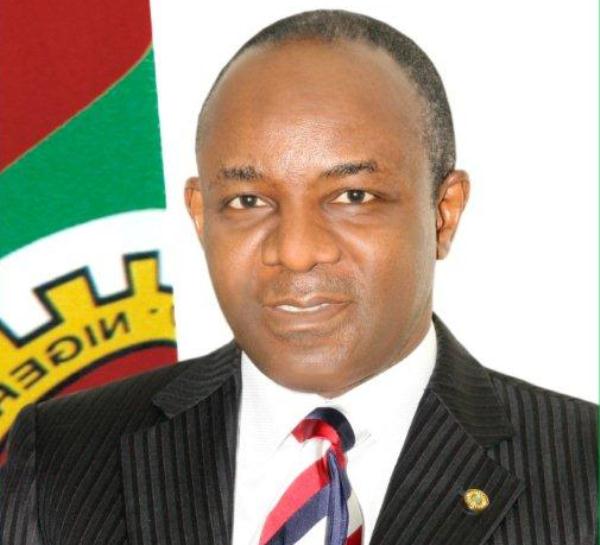
Nigeria’s minister of state for petroleum, Dr Emmanuel Ibe Kachikwu who gave this indication, expressed hope that the ongoing talks might result into the US resuming buying Nigeria’s crude oil.
Kachikwu said that despite having diversified into the Asian market and other parts of the world, the talks with the US government on the possibility of the latter resuming the purchase of crude oil from Nigeria is part of the outcome of President Muhammadu Buhari’s visit to the United States.
He, however, explained that it would be wrong to say that there’s presently zero infusion of Nigerian crude into the US, noting that there are about three oil majors, including ExxonMobil, which are US-based companies that export their share of Nigerian crude into US-based refineries. He therefore stated that the Nigerian National Petroleum Corporation (NNPC) portion of crude is the one being discussed. [myad]
Nigerians woke up just about two days ago to discover that suddenly, fuel had became available in many of the nation’s filling stations. This was a sharp diversion from the ‘acute’ shortage which, since late October, had led to fearful long vehicular queues in most of the filling stations across the country for fuel that was hardly available. The magic wand for the sudden return of fuel was the announcement recently, by the nation’s minister of state for Petroleum, Dr. Ibe Kachikwu, of the impending reduction in the fuel pump price from N87 per litre to N85. The oil marketers who apparently have hoarded the product, creating artificial scarcity, in anticipation of increase in the pump price, were thrown off balance by Muhammadu Buhari’s government which is gradually focusing on dislodging the masses of Nigeria from the strangle hold of the few blood-suckers that called themselves oil marketers, and their sponsored surrogates that are found even in the supposedly respected labour unions. These blood suckers, who have fed fat on the poor masses, by collecting huge sums of money for the products they did not supply to specification, and which subsequently snowballed into excruciating prices of common commodities in the markets and services, suddenly realized that they would lose huge money if they allow January 1 to roll in with the hoarded fuel unsold. They seemed clever-by-half, for, if conversely, Kachikwu had announced that the government would increase fuel price from N87 per litre to maybe, N90, they would have kept the product under lock and key until January, so that they would make a huge rip off. With the scenario that has played out in just these few days, Buhari’s government has shown that it is cleverer, more foresighted and more proactive than the oil marketers who have been guzzling every kobo, every dollar, every Euro and so on, irrespective of the negative effects it has on the common people of the country. This brings me to the notion I always have that Nigeria is a very funny country with some kind of funny people. The good thing about Nigeria is that Nigerians have shown clearly that they are the easiest set of God’s creation to be governed, just by anybody, including thieves. And the bad side is that they rank highest or one of the highest in murmuring complaints about their leaders and about the prevailing system that does not favour them. I have always been amazed that Nigerians remain as cool as cucumber whenever they are being ripped off, a thing that could lead to major revolution in some other countries. When oil marketers and their cohorts decided to hoard the product and make them to be on unending queues, Nigerians could only murmur and complain under their breath.Now that the marketers have rushed the product out to beat price loss, Nigerians jubilate in murmur. That also reminds me: when many parts of the country began to enjoy some kind of steady electricity shortly after President Buhari mounted the leadership of this country, ardent supporters of former President Goodluck Jonathan said it was the foundation he laid that we were enjoying. Even now that fuel has resurfaced in filling stations, some people are saying that it was Jonathan that laid the foundation. Some others are even blaming the Nigerian labour unions for keeping quiet as the Buhari government proposes to remove fuel subsidy, even though the government has slashed the price of the fuel and begin to ensure that refineries are working. Those are they who would not buy Buhari for a cent. That are Nigerians for you; always dogmatic on individual leader! [myad]
Arsenal, today, beat Bournemouth by two goals to nothing in the Premier League match, by advancing the top of the table and ending the Cherries’ six-match unbeaten run. The opening 25 minutes of the contest went by with little incident as Bournemouth largely frustrated the hosts and were the more threatening of the two sides. However, the Cherries fell behind as Gabriel Paulista marked his return to the team with his first goal in Arsenal colours, heading home a corner from Mesut Ozil, who claimed his 16th Premier League assist of the season. The goal filled Arsenal with confidence and they were soon surging forward in numbers. Theo Walcott was twice denied by Artur Boruc, while Gabriel, who had not scored for over two-and-a-half years, almost had a brace in 10 minutes as another header from an Ozil corner came back off the post. Boruc appeared to get a crucial fingertip on the ball to help it on to the post and Per Mertesacker somehow headed wide the rebound from point-blank range. Bournemouth managed to get through until half time just one behind and Howe decided to make a half-time change by bringing on Junior Stanislas for Marc Pugh. The visitors appeared to have settled down upon the resumption, but Arsenal carved them open shortly after the hour mark to double their advantage. This time Ozil was the scorer, exchanging passes with Olivier Giroud before calmly slotting past Boruc from close range. Arsenal players were keen for a third goal to kill off Eddie Howe’s side, with first Walcott flashing a shot wide before Giroud was denied from 20 yards by Boruc. Matt Ritchie warmed Petr Cech’s palms with a speculative effort at the other end, but it was Arsenal who always looked more likely to score the third goal. Giroud slid the ball just wide from Ozil’s cutback before being taken off, while Alex Oxlade-Chamberlain hit the woodwork with a deflected shot in the final 10 minutes. Three points takes Arsenal to the top for 24 hours at least, with the two teams below them – Leicester and Manchester City – meeting on Tuesday night. Bournemouth drops a place to 20th and stays three points above the relegation zone. [myad]
As a Muslim who not only studied Quran at a tender age and attended Islamic institutions in my formative years, I pray to Almighty Allah to bless the great woman of our decade, Chancellor Angela Merkel of Germany, for her righteousness in accepting the influx of immigrants, especially Muslims for protection in her country. There is this negative and erroneous image of Islam that was created due to the unwholesome activities of some leaders who promote intolerance and extremism for their personal survival selfish interest. This stereotype can easily be removed going by the noble teaching of Islam, which spreads love and tolerance among all people, whatever their race, ethnicity, religion, doctrine, language, tribe and social class system. The holy book of Islam, Quran, also teaches us that all humanity is but one great family. It states: “O mankind, fear your Lord, who created you from one soul and created from it its mate and dispersed from both of them countless men and women.” Quran 4 Verse 1. While Arab leaders in mostly Muslim countries exacerbate crises and rebellions that result in mass killing and displacements of millions of their citizens, Christian countries, like Germany have become sweet homes for Muslim refugees. Born on July 17, 1954, Merkel is a German politician who has been the Chancellor of Germany since 2005 and the Leader of the Christian Democratic Union since 2000. It is not surprising that this conservative Christian politician was recently named Time magazine’s coveted Person of the Year for her work in the Greek debt saga and largely for her unique intervention in Europe’s migrant crises. Merkel has voted against abortion rights and believes that marriage is “the sacred union of a man and a woman”. When immigrants from Arab and Muslims countries are threatened by senseless civil wars and terrorism, she generously opened up her country’s borders to a million refugees, providing safety and comfort. The Time editors clearly pointed out that Merkel understands the mind-set of many refugees fleeing dictatorship through her experience growing up in East Germany, behind the infamous Iron Curtain. While announcing the award, the Editor of Time Magazine observed that at a moment when much of the world is once more engaged in a furious debate about the balance between safety and freedom, the Chancellor is asking a great deal of the German people, and by their example, the rest of the world as well. Merkel is passionately appealing to her citizens “to be welcoming. To be unafraid. To believe that great civilizations build bridges, not walls, and that wars are won both on and off the battlefield. By viewing the refugees as victims to be rescued rather than invaders to be repelled, the woman raised behind the Iron Curtain gambled on freedom.” A daughter of a pastor and deeply religious woman rather than atheist, Merkel recently and proudly described her faith to a young theology student that: “I believe in God, and religion is also my constant companion, and actually has been my entire life… one knows there is something higher than just human beings, and that we are also called on to shape the world in responsibility for others. This is a framework for my life, which I consider very important.” The exodus of citizens from Arab and Muslim world are triggered by Arab leaders and collaborating Western counterparts who instigate global humanitarian crises through petty vendetta and deceits. In connivance with Arab leaders, the western power destroyed Iraq under false allegation that Saddam Hussein had stockpiled Weapons of Mass Destruction and they destroyed Libya on the false pretence for entrenchment of democracy. The powerful forces, are largely behind the sponsorship of rebels against legitimate governments in the Arab and Muslim worlds. A close examination of those engineered crises, clearly show that they are not religious but rather sectional, tribal and primordial conflicts under the guise of religion. A clear case is the destruction of Iraq, Libya, Syria and Yemen by the same forces that would rather protect undemocratic monarchy system and fuelled conflicts in other seeming democracies. It was therefore not surprising when Sunni-Shiite debacle was introduced to justify the wanton destruction of lives and property in some countries. There is a fear that the same scenario could play out in Nigeria if the recent clash between Nigerian military and an Islamic group in Zaria is not contained and controlled. Until after the alleged Zaria massacre of members of Islamic Movement of Nigeria, headed by Sheikh Ibraheem El-Zak-Zaky, on the day they were to celebrate Moulud (Birthday) of Prophet Mohammed (SAW), Nigerian Muslims don’t bother about dichotomy of creeds in Islam. It is therefore, unfortunate that while the country is yet to resolve the Boko Haram terrorism, the political elite seems to find ways of dividing the Muslim community along Sunni and Shiite doctrines when majority simply believe in the Quran and Hadith. It is worrisome that politicians have ways of playing politics with everything including innocent life and yet they cunningly seek for the endorsement of voters during campaigns for elections. Meanwhile, just like the good hearted Angela Merkel of Germany, top Nigerian Christians and their umbrella organisation, Christian Association of Nigeria (CAN) have shown empathy, expressed sympathy and condoled families of Zaria victims who were killed like rats to be freely robbed by miscreants. Surprisingly, some Muslim leaders who should be more concerned, either keep mute or merely engage in blame-game on confused doctrines. There is a lot to be learned from leaders like Chancellor Merkel, who as a Christian is providing shelter, food, medication, education and even enabling environment for Muslims to practice their religion in her country. She has clearly demonstrated the Islamic injunction, which states: “O humankind! We created you from a single pair of a male and female, and made you into nations and tribes, that you may know each other. The most honoured of you in the sight of God (Allah) is the most righteous of you.” Quran 49 Verse 13. Truly, righteousness is the sole standard value in humanity. . Shuaib writes from www.yashuaib.com and yashuaib@yahoo.com. [myad]
We use cookies on our website to give you the most relevant experience by remembering your preferences and repeat visits. By clicking “Accept”, you consent to the use of ALL the cookies.
This website uses cookies to improve your experience while you navigate through the website. Out of these, the cookies that are categorized as necessary are stored on your browser as they are essential for the working of basic functionalities of the website. We also use third-party cookies that help us analyze and understand how you use this website. These cookies will be stored in your browser only with your consent. You also have the option to opt-out of these cookies. But opting out of some of these cookies may affect your browsing experience.
Necessary cookies are absolutely essential for the website to function properly. This category only includes cookies that ensures basic functionalities and security features of the website. These cookies do not store any personal information.
Any cookies that may not be particularly necessary for the website to function and is used specifically to collect user personal data via analytics, ads, other embedded contents are termed as non-necessary cookies. It is mandatory to procure user consent prior to running these cookies on your website.



 Impeached Speaker of the Kogi State House of Assembly, Alhaji Momoh-Jimoh Lawal, today, presided over the presentation of the 2016 budget proposal by the state governor, Captain Idris Wada on the floor of the House of Assembly in Lokoja, even as he appealed to members to allow peace to reign so as to move the state forward.





May Allah Bless Chancellor Merkel Of Germany, By Yushau A. Shuaib
There is this negative and erroneous image of Islam that was created due to the unwholesome activities of some leaders who promote intolerance and extremism for their personal survival selfish interest. This stereotype can easily be removed going by the noble teaching of Islam, which spreads love and tolerance among all people, whatever their race, ethnicity, religion, doctrine, language, tribe and social class system.
The holy book of Islam, Quran, also teaches us that all humanity is but one great family. It states: “O mankind, fear your Lord, who created you from one soul and created from it its mate and dispersed from both of them countless men and women.” Quran 4 Verse 1.
While Arab leaders in mostly Muslim countries exacerbate crises and rebellions that result in mass killing and displacements of millions of their citizens, Christian countries, like Germany have become sweet homes for Muslim refugees.
Born on July 17, 1954, Merkel is a German politician who has been the Chancellor of Germany since 2005 and the Leader of the Christian Democratic Union since 2000. It is not surprising that this conservative Christian politician was recently named Time magazine’s coveted Person of the Year for her work in the Greek debt saga and largely for her unique intervention in Europe’s migrant crises. Merkel has voted against abortion rights and believes that marriage is “the sacred union of a man and a woman”.
When immigrants from Arab and Muslims countries are threatened by senseless civil wars and terrorism, she generously opened up her country’s borders to a million refugees, providing safety and comfort.
The Time editors clearly pointed out that Merkel understands the mind-set of many refugees fleeing dictatorship through her experience growing up in East Germany, behind the infamous Iron Curtain.
While announcing the award, the Editor of Time Magazine observed that at a moment when much of the world is once more engaged in a furious debate about the balance between safety and freedom, the Chancellor is asking a great deal of the German people, and by their example, the rest of the world as well. Merkel is passionately appealing to her citizens “to be welcoming. To be unafraid. To believe that great civilizations build bridges, not walls, and that wars are won both on and off the battlefield. By viewing the refugees as victims to be rescued rather than invaders to be repelled, the woman raised behind the Iron Curtain gambled on freedom.”
A daughter of a pastor and deeply religious woman rather than atheist, Merkel recently and proudly described her faith to a young theology student that: “I believe in God, and religion is also my constant companion, and actually has been my entire life… one knows there is something higher than just human beings, and that we are also called on to shape the world in responsibility for others. This is a framework for my life, which I consider very important.”
The exodus of citizens from Arab and Muslim world are triggered by Arab leaders and collaborating Western counterparts who instigate global humanitarian crises through petty vendetta and deceits. In connivance with Arab leaders, the western power destroyed Iraq under false allegation that Saddam Hussein had stockpiled Weapons of Mass Destruction and they destroyed Libya on the false pretence for entrenchment of democracy. The powerful forces, are largely behind the sponsorship of rebels against legitimate governments in the Arab and Muslim worlds.
A close examination of those engineered crises, clearly show that they are not religious but rather sectional, tribal and primordial conflicts under the guise of religion. A clear case is the destruction of Iraq, Libya, Syria and Yemen by the same forces that would rather protect undemocratic monarchy system and fuelled conflicts in other seeming democracies.
It was therefore not surprising when Sunni-Shiite debacle was introduced to justify the wanton destruction of lives and property in some countries. There is a fear that the same scenario could play out in Nigeria if the recent clash between Nigerian military and an Islamic group in Zaria is not contained and controlled.
Until after the alleged Zaria massacre of members of Islamic Movement of Nigeria, headed by Sheikh Ibraheem El-Zak-Zaky, on the day they were to celebrate Moulud (Birthday) of Prophet Mohammed (SAW), Nigerian Muslims don’t bother about dichotomy of creeds in Islam. It is therefore, unfortunate that while the country is yet to resolve the Boko Haram terrorism, the political elite seems to find ways of dividing the Muslim community along Sunni and Shiite doctrines when majority simply believe in the Quran and Hadith. It is worrisome that politicians have ways of playing politics with everything including innocent life and yet they cunningly seek for the endorsement of voters during campaigns for elections.
Meanwhile, just like the good hearted Angela Merkel of Germany, top Nigerian Christians and their umbrella organisation, Christian Association of Nigeria (CAN) have shown empathy, expressed sympathy and condoled families of Zaria victims who were killed like rats to be freely robbed by miscreants. Surprisingly, some Muslim leaders who should be more concerned, either keep mute or merely engage in blame-game on confused doctrines.
There is a lot to be learned from leaders like Chancellor Merkel, who as a Christian is providing shelter, food, medication, education and even enabling environment for Muslims to practice their religion in her country. She has clearly demonstrated the Islamic injunction, which states: “O humankind! We created you from a single pair of a male and female, and made you into nations and tribes, that you may know each other. The most honoured of you in the sight of God (Allah) is the most righteous of you.” Quran 49 Verse 13.
Truly, righteousness is the sole standard value in humanity.
. Shuaib writes from www.yashuaib.com and yashuaib@yahoo.com. [myad]