A 31 year old suspected lady kidnapper, whose name was given as Janet Igohia, has been arrested by troops from 93 Battalion under 6 Bridget of the Nigerian Army, while trying to pick up ransom for a kidnapped victim in Taraba State. Spokesperson of the Nigerian Army Bridget, Lieutenant Oni Olubodunde, in a statement today, February 8, said that Janet Igohia was arrested after picking up the sum of N1.5 million, being ransom payment for a kidnapped victim at Chanchangi in Takum Local Government Area of the state. He said that Igohia confessed that she was married to Voryor Gata, a notorious criminal and former second – in – command to the late Gana Terwase. “She is currently married to the leader of a violent extremist group in southern Taraba.” She was said to have confessed also of having previously married to high profile criminals, such as the late Terkibi Gemaga aka Mopol, a notorious kidnapper who was killed by troops five years ago. “She revealed that she also got married to the late Gana Terwase, another notorious criminal who was killed during a joint special force operation three years ago.” Lieutenant Olubodunde said that the troops deployed in Mararaba Baissa community of Donga LGA apprehended two other suspected gun runners who were allegedly involved in extra-judicial killings and cattle rustling with the sum of N 600,000. “The money recovered from the suspects was part of the proceeds from their illegal activities and 2 Techno mobile phones.” He gave the names of the suspects as Alhaji Adamu Damisa (40 years old) and Usman Isah (44 years old). Source: DAILY TRUST.
The Nigerian National Petroleum Company Limited (NNPC Ltd.), has formally pledged to domicile a significant portion of its revenues and other banking services with the Central Bank of Nigeria (CBN). The decision was taken at a meeting between the Group Chief Executive Officer of the NNPCL, Mallam Mele Kyari, and the Governor of the CBN, Olayemi Cardoso. At the meeting in Abuja today, February 8, the NNPC Ltd. and CBN Chiefs noted the value created by the decision for all parties, especially in providing the NNPC Ltd. with an improved platform for managing its cash holding obligor limits in commercial banks set by the Board of Directors. The CBN has provided enhanced digital platforms for all transactions and has established specific limits to manage NNPC Ltd. transactions. A joint statement by the spokespersons of the NNPCL, Olufemi O. Soneye and CBN, Mrs. Hakama Sidi Ali said that both parties have also committed to further strengthening the collaboration to ensure seamless operations of the commercial NNPC Limited. They said that NNPC Ltd. would continue to have banking transactions with commercial banks as required.
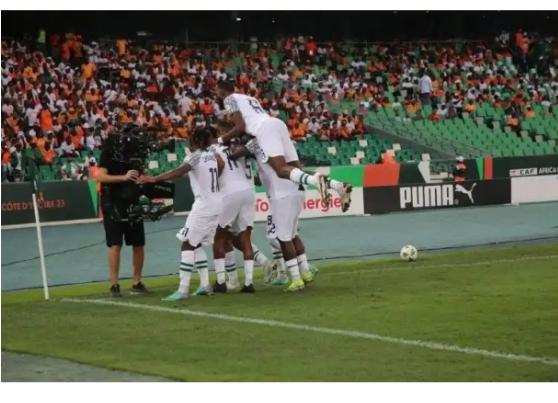
The Supper Eagles goalkeeper, Stanley Nwabali has been named Man-of-the-Match after the semi-final encounter with the Bafana Bafana of South Africa. Nwabali saved two penalty kicks to help the Super Eagles earned a place in the final. The Chippa United goalkeeper also made two brilliant saves in regulation time. The Super Eagles won the keenly contested encounter 4-2 this evening, February 7, on penalties. The game ended in a 1-1 draw after 120 minutes. The Super Eagles will face the winner of the second semi-final between hosts Cote d’Ivoire and Democratic Republic of Congo in the final on Sunday.
Nigeria’s Super Eagles, this evening, February 7, kicked out their South African Bafana Bafana in the semi final of the ongoing African Cup of Nations in Cote d’Ivoire. The two teams resorted to mandatory penalty shootouts after the full and extra time ended one apiece. Goalkeeper Stanley Nwabali emerged the hero of the match after saving two of the South African’s penalty kicks. Kelechi Iheanacho scored the last penalty. Ola Aina was the only Nigerian who missed his kick. The match, played at Stade Bouaké in Bouaké, Cote d’Ivoire, saw both sides give good account of themselves. The first goal of the match was scored by Super Eagles On-Field Captain, William Troost-Ekong, from the penalty spot. This followed a foul on Nigeria’s top striker and African Footballer of the Year 2023, Victor Osimhen, in the 18 yard box. South Africa also converted its penalty kick after a player was fouled in the 18 yard box of the Super Eagles.
Police have paraded an over 80 year old man, Pa Olowofela, as one of the suspected bandits, kidnappers and terrorists from Ekiti state. He is believed to be the mastermind of the banditry, killing and kidnapping in Ekiti and Kwara States. He was said to have participated in the recent killing of the three monarchs. Pa Olowofela was arrested after one Baboga Alhaji (another kidnapper that was involved in the killing of the monarchs) was arrested by soldiers. The soldiers also arrested 14 others, including the person receiving the ransom on behalf of the bandits.
The Federal Capital Territory Administration (FCTA) has disbursed the sum of N4.816 billion to the six Area Councils and other stakeholders as statutory allocation for the month of December, 2023. The amount represents a slight increase when compared to N4,729,281,486.64 shared in the month of November, 2023. The Minister of State for the FCT, Dr. Mariya Mahmoud, who presided over the 185th Joint Account Allocation Committee (JAAC), meeting, expressed satisfaction over the synergy between the Satellite Towns Development Department (STDD) and the Area Council authorities as regards waste collections and management. On the report submitted by the FCT Primary Health Care Board, the Minister tasked the Board to expand its scope beyond the routine immunization, stressing that drugs and personnel should also be given adequate attention. Breakdown of the figures released during the JAAC meeting indicates that the sum of N2,364,151,892.54 was made available for distribution to the six Area Councils, while the sum of N2.452 billion was made available to other stakeholders, bringing the total sum to N4,816,227,915.56. Similarly, distributions to the six Area Councils shows that the Abuja Municipal Area Council (AMAC), received N549,980,396.03, while Gwagwalada got N371,095,234,.30 and Kuje received N402,341,400.14. Other Area Councils include, Bwari Area Council, which received N364,674,660.98, Abaji got N313,335,126.30, while Kwali received N362,725,074.79, bringing the total sum to N2,364,151,892.54 disbursed to the six Area Councils. Distribution to other critical stakeholders include Primary School Teachers, which got N2,069,585,348.67; 15 percent Pension Funds took N226,478,989.57 while One percent Training Fund got N48,162,279.15, even as 10 percent Employer Pension Contribution received N107,849,405.63, bringing the total sum to N2,452,076,023.02.
The National Hajj Commission of Nigeria (NAHCON) has announced the recruitment of National Medical Team (NMT) for the 2024 hajj operations in the Holy Land of Saudi Arabia. In a post on its website today, February 7, NAHCON said that the recruitment of the NMT will commence on February 12 and ends on February 26. The Commission said that the medical team to be recruited are medical doctors, pharmacists, nurses and environmental health personnel. The Commission made it clear that the application and other processes for the recruitment are free, even as it lists many requirements that applicants must fulfill to qualify. It asked applicants to apply by clicking “Resources” and “NMT” on its main NAHCON website portal, to fill the application forms.
A shop owner in Ebonyi State, Njoku Michael, has narrated how a Fulani herdsman lured him into the kidnapping of some returnees from the United States of America for the last Christmas and New Year celebrations. The shop owner, who was paraded alongside 16 other persons, made the revelation when he was paraded by the spokesman of the Ebonyi State Police Command, Joshua Akandu, a Deputy Superintendent of Police, at the State Headquarters in Abakaliki, the state capital. He confirmed that they received N40 million ransom, in both Naira and Dollar, as ransom for the kidnap. Michael, who is from Abia State, said: “We were four persons who carried out the kidnap but it was only two of us who were captured by the police and we don’t know where the others are. “We didn’t kill anybody, the lady who died was out of fear, we didn’t shoot anybody. “The person who involved me into the kidnap of these persons we kidnapped in Ebonyi didn’t disclose it to me. “The man who involved me is a Fulani man, he is my customer. “He buys things from me in my shop where I sell provisions. “The man came to my shop on December 13, 2023 with his cattle. “I told him: ‘Alhaji, you have many cows now o.’ “But he told me: ‘Yes, the cows are mine.’ “I pleaded with him to borrow me N50,000 and promised to pay him back in February. “He told me that he had no money and promised to get back to me. “Five days later, the man came back to me. “He didn’t come back with his cattle this time around. “He told me that he wanted to carry me to work in Afikpo, Ebonyi State and I had never been to Afikpo before. “I asked him the type of work he wanted to carry me told and he told me it’s manure work, that he wanted me to bag it and if I worked hard, I would earn N30,000 or N40,000 in four days. “I said okay and called my brother to be taking care of my shop so that I would follow the Alhaji and go for that work. “I followed the man to Afikpo and we got to Afikpo on that New Year in the evening. “He bought me food and lodged me in one hotel. In the money, he stopped a bike and told me to join him in the bike and he took me to a thick forest and told me he was coming back. “He went and brought two of his brothers and kept them with me. “He didn’t tell me what he wanted me to do and it was evening period. “He left us and came back with a bag. “When he turned it on the ground, it was a gun and a cloth. “I asked him what we were going to do with a gun, he asked me: ‘I think you said you were looking for money? This is the time we are going to look for the money.’ “He prepared himself finish and told us to follow him. “We got to a bush path where he ordered us to stay in a corner in that bush path. “When we were in the bush, he saw a jeep coming and shot on the air. “The vehicle stopped and he attacked the vehicle and opened it. “There were two men and one woman and he ordered the two men and one woman out on the ground and told them to follow us. “He was at the front directing us and we followed him to a thick forest. “We trekked for two hours before we got to the thick forest.” Source: The Punch.
The issues that have shot to the front burner of the Federal Capital Territory (FCT) lately are kidnapping, banditry and other vices. But the fundamental issue that has beclouded the nation’s capital for a long time now and which has been downplayed, has been the dirtiness in many corners of the city, even in unbelievable places. The dirtiness, in a simple terms, come in different forms, including refuse dumps, flooding, erosion and eyesore sediments. It is as if refuse dumps have been officilized in the capital city. Although the area that is referred to as city centre – the main Abuja Municipal and parts of Maitama and Asokoro – can be said to be fairly well kept, but nearby areas and, indeed, many satellite towns around the Area Councils leave much to be desired and are irritative. For instance, Gwagwalada, which is the main entrance to the capital territory through Lokoja in Kogi State, is practically an eyesore. As a matter of fact, most first timers to Abuja coming through Lokoja would be forced to wonder if really Gwagwalada is part of the much talked about “prestigious city of Abuja.” Zuba too, which is the next town, a few kilometres to the main city, from Kaduna axis, does not present a different picture from the Gwagwalada axis. As you move into the main city through Dei Dei axis, you are confronted by God-forbidden environmental degradation. As you approach the main city through Gwagwa and Karimo Idu axis, you get more and more into the dirtiness and it makes you to wonder whether Abuja is still far away from you, whereas you are already deep into the heart of the city. Same thing around Kubwa, which effectively welcome you into what obviously looks like a slum city. It is obvious from the dirts that have overtaken most of the city that FCT is in dare need of a well coordinated and effective environmental cleaning systems to bring about the real beauty of the capital city.
It is these bungling of the environment that Minister Nyeson Wike should necessarily direct his attention to. He needs to focus on places like Bwari, Kuje, Gwagwalada, Abaji, Kwali and Abuja Municipal area council ( AMAC). All these satellite towns or Area Council headquarters in particular are begging for attention. And the workaholic minister Wike need to quickly swing into action on this. Rashidat Yusuf wrote from Abuja. Yusufrashidat12@gmail.com
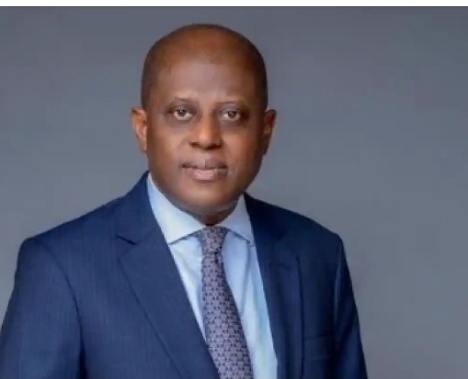
The Governor of the Central Bank of Nigeria (CBN), Oluyemi Michael Cardoso has warned that task of stabilising the Nigerian foreign exchange rate is beyond the apex bank. “It also seems that the task of stabilizing the exchange rate, while an official mandate of the CBN, would necessitate efforts beyond the Bank itself and indeed to an attitudinal change of all our citizens.” Cardoso, who addressed members of the House of Representatives today, February 6, at the National Assembly in Abuja, said that the genuine issue impacting the exchange rate is the simultaneous decrease in the supply of, and increase in the demand for, US Dollars. According to the Governor, over the past 12 years, oil exports, constituting over 90 percent of the nation’s foreign exchange earnings, have declined from US$93.89 billion in 2011 to US$31.4 billion in 2020. Overall however, Cardoso said that he and his team would be dedicated to refocusing the apex Bank by giving priority to price stability. “We also aim to build confidence in the Nigerian economy through the maintenance of stability in consumer prices and the foreign exchange market. “We are aware that the twin challenges of inflation and exchange rate depreciation on our economy are daunting, however, they are not insurmountable. “Monetary policy actions are sometimes inhibited by transmission lags, nonetheless, it is expected that the policy measures implemented by the Bank will permeate the economy in the short- to medium-term.” The apex Bank Chief acknowledged that inflation pressures may persist, albeit temporarily, “but are expected to moderate significantly by Q4 2024. “Exchange rate pressures are also expected to reduce with the smooth functioning of the foreign exchange market.” He said that the Bank is committed to implementing policies that will ensure a stable macroeconomic environment and guarantee improved livelihoods for all Nigerians. Please, read the full text of of the CBN Governor’s address: Protocols 1. Good afternoon, Honourable members. I am honoured to appear before House to address critical concerns related to exchange rates and inflationary pressures in the economy. 2. Upon receiving the invitation letter, I keenly sensed the urgency and the acknowledgment of the economic challenges and resistance to proposed solutions by various stakeholders. 3. However, I want to emphasize that we are now at a turning point, and the bold reforms underway across different segments of the economy, though initially challenging, are aimed at addressing these challenges sustainably. 4. I am confident that positive outcomes are already emerging and will become more apparent in the near future. The dedicated and relentless efforts being made are certain to bring about significant and positive changes for our economy. 5. Notably, recent reports from international rating agencies such as Fitch, Moody’s, S&P and commendations from multilateral banks like the World Bank reflect this positive trajectory, with upgrades to Nigeria’s ratings from stable to positive. These reports acknowledge the potential reversal of the deterioration in the country’s fiscal and external position due to the authorities’ reform efforts. While recognizing the painful adjustments, they all point to a direction that will unlock much-needed growth and development for our economy in the medium to long term. 6. Honourable members, I acknowledge that despite these commendations, the concerns regarding the cost of living and currency exchange rates remain. Indeed, this is a major topic of concern in our villages, our towns, and our cities. The urgency of the matter is not lost on us at the Central Bank and I assure you we are working tirelessly with colleagues from across government, including with the leadership of this House, to bring lasting solutions. 7. Given that this will be the first time I will be before this esteemed body this year 2024, please permit me to provide you with what we consider our outlook for 2024. Global Outlook: 8. The global economy is currently grappling with persistent challenges, including inflation and subdued growth prospects. Despite GDP growth outperforming expectations in 2023, it is projected to further moderate in 2024 due to tightened financial conditions, sluggish trade expansion, and reduced business and consumer confidence. The International Monetary Fund (IMF) initially projected a mild slowdown in global economic growth to 2.9% in 2024 now reviewed upwards to 3.1 with Asia driving the majority of the projected global growth in 2024, similar to the previous year. 9. The near-term outlook is clouded by downside risks, including heightened geopolitical tensions such as the Israel-Hamas conflict and the ongoing Russia-Ukraine war. Broader escalation of conflicts could disrupt energy markets, trade routes, and financial markets, leading to a slowdown in growth and increased inflationary pressures. Additionally, rising trade barriers, protectionist policies, and global value chain restructuring could exacerbate uncertainties in global trade. 10. In this challenging landscape, key policy priorities involve ensuring durable inflation reduction, addressing fiscal pressures, and fostering sustainable and inclusive growth. The global monetary policy environment is expected to remain restrictive until sustained inflation reduction becomes evident. Governments must grapple with rising fiscal pressures, necessitating credible medium-term fiscal frameworks to effectively manage debt burdens. Domestic Outlook: 11. The Federal Government of Nigeria anticipates a 3.76 percent real GDP growth in 2024, slightly surpassing the estimated 3.75 percent for 2023. This optimism is backed by key government reforms and the expectation of improved crude oil prices and production, which are set to drive economic growth. A. Each sector may face unique challenges and opportunities in 2024. The services sector is expected to thrive due to increased digital lending offerings, while the agriculture sector is projected to grow faster with improved productivity. Anticipated growth in the industry sector is linked to increased crude oil production. B. Inflationary pressures are expected to decline in 2024 due to the CBN’s inflation-targeting policy, aiming to rein in inflation to 21.4 percent, aided by improved agricultural productivity and easing global supply chain pressures. 12. The CBN’s inflation-targeting framework involves clear communication and collaboration with fiscal authorities to achieve price stability, potentially leading to lowered policy rates, stimulating investment, and creating job opportunities. 13. The Nigerian foreign exchange market is currently facing increased demand pressures, causing a continuous decline in the value of the naira. Factors contributing to this situation include speculative forex demand, inadequate forex supply due to non-remittance of crude oil earnings to the CBN, increased capital outflows, and excess liquidity from fiscal activities. 14. The shift to a market-driven exchange rate was intended to create a stable macroeconomic environment and discourage currency hoarding. However, short-term volatilities are attributed to arbitrage and speculation. 15. To address exchange rate volatility, a comprehensive strategy has been initiated to enhance liquidity in the FX markets. This includes unifying FX market segments, clearing outstanding FX obligations, introducing new operational mechanisms for BDCs, enforcing the Net Open Position limit, and adjusting the remunerable Standing Deposit Facility cap. 16. Honourable Members, we understand the economic costs of these developments not just for the economy, but also as they affect ordinary Nigerians. 17. However, as I have mentioned in previous engagements, these costs are temporary, and our decisions will address a lot of fundamental issues bothering Nigeria’s macroeconomic landscape. 18. Honourable Members, these measures, aimed at ensuring a more market-oriented mechanism for exchange rate determination, will boost foreign exchange inflows, stabilize the exchange rate, and minimize its pass-through to domestic inflation. On the exchange rates, 19. Permit me to say that put simply, the exchange rate is determined by the dynamics of supply and demand for a product or service. In essence, similar to the pricing of cows or cars, the value of the US Dollar in Nigeria is determined by the balance of US Dollars entering the country and the demand for US Dollars among Nigerians. Applying this demand and supply principle, let’s examine how the exchange rate has performed in recent years. The exchange rate in Nigeria has increased/depreciated due to the simultaneous occurrence of two factors: a decline in the supply of US Dollars coinciding with a surge in the demand for US Dollars. 20. Looking at the demand side of the exchange rate, it’s important to note the growing number of Nigerian students studying abroad. In the 1980s and 1990s, the need for US Dollars for their living expenses was minimal. However, recent data shows a significant change. According to UNESCO’s Institute of Statistics, the number of Nigerian students abroad increased from less than 15,000 in 1998 to over 71,000 in 2015. By 2018, this figure had reached 96,702 students, as per the World Bank. Another report projects the number of Nigerian students studying abroad to exceed 100,000 by 2022. Additionally, the UK’s Higher Education Statistic Agency noted a 64% increase in Nigerian students studying in the country, rising from 13,020 in the 2019/2020 academic session to 21,305 by the 2020/2021 session. 21. Given this data, it’s crucial to highlight that between 2010 and 2020, foreign education expenses amounted to a substantial US$28.65 billion, as per the CBN’s publicly available Balance of Payments Statistics. Similarly, medical treatment abroad has incurred around US$11.01 billion in costs during the same period. Consequently, over the past decade, foreign exchange demand for education and healthcare has totaled nearly US$40 billion. Notably, this amount surpasses the total current foreign exchange reserves of the CBN. Mitigating a significant portion of this demand could have resulted in a considerably stronger Naira today. 22. Personal Travel Allowances have accounted for a total of US$58.7 billion during the same period. Notably, between January and September 2019, the CBN disbursed US$9.01 billion to Nigerians for personal foreign travel. 23. Continuing on the topic of the demand for US Dollars, Nigeria’s annual imports, which require dollars for payment, amounted to US$16.65 billion in 1980. By 2014, the annual import expenditure had significantly surged to US$67.05 billion, although it gradually decreased to US$54.71 billion as of last year. Similarly, food imports escalated from US$2.63 billion in 1980 to US$14.84 billion in 2019. 24. In 1980, more than 75 percent of the vehicles used in Nigeria were domestically produced by companies like Volkswagen in Lagos, Peugeot in Kaduna, and others. Presently, over 99 percent of the cars driven are imported, necessitating dollar payments. Similarly, in 1980, the majority of the clothing worn was sourced from Nigerian textile mills in Funtua, Asaba, Kano, Lagos, and various other towns and cities. Today, nearly all the clothing worn is made from imported fabrics. 25. Given the substantial demand for education, healthcare, professional services, personal travel, and similar needs, the exchange rate is bound to face ongoing pressure. 26. On the supply side of the exchange rate, to bolster the inflow of US Dollars into a country, the economy must “earn” these dollars through exports, whether oil or non-oil, or by attracting foreign investments. A robust economic foundation is essential to produce goods and services that the global market is willing to pay for in US Dollars. When such supply surpasses demand, the exchange rate appreciates, causing the price of the dollar to fall. Unfortunately, in Nigeria, the contrary has taken place. 27. In 1980, our import expenditure stood at US$16.65 billion, while our exports amounted to US$25.97 billion, resulting in a surplus of US$9.32 billion. Thus, during that year, we managed to fulfill the demand for US Dollars from our existing supply and still had over US$9 billion in surplus. In such a situation, the exchange rate (the value of the US Dollar) would not increase because, similar to any commodity, its supply surpassed the demand. Moreover, from 2003 to 2013, we experienced a surplus of US$331.73 billion in the economy, with oil exports alone contributing over US$798 billion. This surplus of dollars would typically stabilize the exchange rate, leading to a “strong” Naira. 28. Regrettably, over the past 12 years, oil exports, constituting over 90 percent of our foreign exchange earnings, have declined from US$93.89 billion in 2011 to US$31.4 billion in 2020. 29. From the aforementioned points, we can infer that the genuine issue impacting the exchange rate is the simultaneous decrease in the supply of, and increase in the demand for, US Dollars. It also seems that the task of stabilizing the exchange rate, while an official mandate of the CBN, would necessitate efforts beyond the Bank itself and indeed to an attitudinal change of all our citizens. Concluding Remarks: 30. Honourable members, my team and I are dedicated to refocusing the Bank by giving primacy to price stability. We also aim to build confidence in the Nigerian economy through the maintenance of stability in consumer prices and the foreign exchange market. 31. We are aware that the twin challenges of inflation and exchange rate depreciation on our economy are daunting, however, they are not insurmountable. 32. Monetary policy actions are sometimes inhibited by transmission lags, nonetheless, it is expected that the policy measures implemented by the Bank will permeate the economy in the short- to medium-term. 33. Inflation pressures may persist, albeit temporarily, but are expected to moderate significantly by Q4 2024. Exchange rate pressures are also expected to reduce with the smooth functioning of the foreign exchange market. 34. We are committed to implementing policies that will ensure a stable macroeconomic environment and guarantee improved livelihoods for all Nigerians. 35. Thank you for your attention.
We use cookies on our website to give you the most relevant experience by remembering your preferences and repeat visits. By clicking “Accept”, you consent to the use of ALL the cookies.
This website uses cookies to improve your experience while you navigate through the website. Out of these, the cookies that are categorized as necessary are stored on your browser as they are essential for the working of basic functionalities of the website. We also use third-party cookies that help us analyze and understand how you use this website. These cookies will be stored in your browser only with your consent. You also have the option to opt-out of these cookies. But opting out of some of these cookies may affect your browsing experience.
Necessary cookies are absolutely essential for the website to function properly. This category only includes cookies that ensures basic functionalities and security features of the website. These cookies do not store any personal information.
Any cookies that may not be particularly necessary for the website to function and is used specifically to collect user personal data via analytics, ads, other embedded contents are termed as non-necessary cookies. It is mandatory to procure user consent prior to running these cookies on your website.








A Call On Minister Wike To Clean Up Dirty Abuja, By Rashidat Yusuf
The issues that have shot to the front burner of the Federal Capital Territory (FCT) lately are kidnapping, banditry and other vices. But the fundamental issue that has beclouded the nation’s capital for a long time now and which has been downplayed, has been the dirtiness in many corners of the city, even in unbelievable places.
The dirtiness, in a simple terms, come in different forms, including refuse dumps, flooding, erosion and eyesore sediments. It is as if refuse dumps have been officilized in the capital city.
Although the area that is referred to as city centre – the main Abuja Municipal and parts of Maitama and Asokoro – can be said to be fairly well kept, but nearby areas and, indeed, many satellite towns around the Area Councils leave much to be desired and are irritative.
For instance, Gwagwalada, which is the main entrance to the capital territory through Lokoja in Kogi State, is practically an eyesore.
As a matter of fact, most first timers to Abuja coming through Lokoja would be forced to wonder if really Gwagwalada is part of the much talked about “prestigious city of Abuja.”
Zuba too, which is the next town, a few kilometres to the main city, from Kaduna axis, does not present a different picture from the Gwagwalada axis.
As you move into the main city through Dei Dei axis, you are confronted by God-forbidden environmental degradation. As you approach the main city through Gwagwa and Karimo Idu axis, you get more and more into the dirtiness and it makes you to wonder whether Abuja is still far away from you, whereas you are already deep into the heart of the city.
Same thing around Kubwa, which effectively welcome you into what obviously looks like a slum city.
It is obvious from the dirts that have overtaken most of the city that FCT is in dare need of a well coordinated and effective environmental cleaning systems to bring about the real beauty of the capital city.
It is these bungling of the environment that Minister Nyeson Wike should necessarily direct his attention to. He needs to focus on places like Bwari, Kuje, Gwagwalada, Abaji, Kwali and Abuja Municipal area council ( AMAC). All these satellite towns or Area Council headquarters in particular are begging for attention. And the workaholic minister Wike need to quickly swing into action on this.
Rashidat Yusuf wrote from Abuja.
Yusufrashidat12@gmail.com