The Federal Government of Nigeria, under the leadership of President Muhammadu Buhari, has arrived at a total of N6 Trillion as the 2016 budget proposal for the country. The Minister of Budget and National Planning, Senator Udoma Udo Udoma, who spoke to news men shortly after a special meeting of the Federal Executive Council (FEC) meeting at the Presidential Villa, Abuja today, said that 2016 budget would be N1 trillion more than the one for the 2015. “And so next year, we are looking at an expansionist budget; we are looking at a budget that will be N1 trillion more than last year. So we are looking at a budget of about N6 trillion. Last year’s budget, including the supple that was about N5 trillion. The minister said that the budget increase would be spent on capital because, he explained “there is the need to increase the capital because of the infrastructure issues that we have to address.” Udoma said that FEC also approved the Medium Term Economic Framework (MTEF), which sets out the policies of government over the next years. “It sets out the fundamental economic underpinning of the budget,” he said. According to him, the Federal Government would be working with $38 crude oil price in order to be very conservative in its spending. “We are also working with 2.2 million barrels a day production. It is achievable, particularly because with the passage of the Petroleum Industry Bill ( PIB) which we are working to achieve, we believe that, that is a modest figure that we should be able to produce something higher than that. “Following from this, the MTEF will be submitted to the National Assembly, and we expect a feedback from them. Thereafter, we will be working to try and get the budget finalised. It is when the budget is finalised that you will really see the details of what we intend to do. This is just a medium term economic framework,” the minister said. Udoma said that the 2016 budget would be sourced from two sources, explaining: “we are looking at trying to increase our non-oil revenue; we are looking at trying to get more money from the various government agencies, policing their collection and trying to get more money from them. We will also look at keeping down our recurrent budget. That means we are looking at savings that we can make from overheads. “We will look at the efficiencies from our revenue collecting agencies like the FIRS, in terms of company in cone tax, in terms of VAT, and then the difference, we will have to borrow. But the level of borrowing that we anticipate and we are projecting will be well within the maximum that we allow, which is 3 per cent of the GDP, because we want a prudent budget, we want a credible budget, so we are working on that now.” He said that government will be working with the exchange rate that the Central Bank of Nigeria (CBN) has given. Responding to question on whether the subsidy will be retained in the budget, the minister simply said: “We are looking into that.” Udoma, who said that the government is projecting 30 per cent capital project, up from the current 15 per cent, assured that the budget would not affect the federal workers’ salaries negatively. “We are projecting almost 30 per cent capital project, up from the 15 per cent or so that it is currently. We will try and reduce overheads but keep personnel cost. We are not going to adjust it by much, but we are expecting some savings from the IPPIS system which we are using. So we are not cutting anybody’s salary; everybody will get their salaries.” [myad]
James Abiodun Faleke has made it clear that he will never accept to be deputy to Yahaya Bello who has been declared the winner of the governorship election in Kogi state. Faleke is still officially the deputy governor-elect under the umbrella of All Progressives Congress (APC)
Faleke, who spoke today at a meeting of APC stakeholders in Kogi West Senatorial District said that he would not be available for swearing in with Yahaya Bello on January 27, 2016.
According to him, his decision was based on his earlier letter to the national leadership of the party where he vowed not to work with Bello, even as governorship candidate.
Faleke stressed that he would pursue the legal option to a logical conclusion, that the Audu/Faleke ticket remained intact and unchanged, adding: “I will not disappoint Prince Abubakar Audu. I, James Abiodun Faleke will not be there for the swearing in if we don’t finish the case before the Jan. 27, 2016.
“Nobody consulted me before making me a deputy to Bello. Bello too did not consult me. I have made my position known to the party leadership on this. I am not ready to betray and disappoint Prince Abubakar Audu.”
He exonerated President Mohammadu Buahri from the crisis, saying that Buhari he knows cannot be a party to injustice and outright violation of the rule of law even as he warned the leadership of the party against setting it on a path of destruction through impunity and injustice.
He asked them to learn from what happened to the Peoples Democratic Party (PDP), saying that those who are fighting in 2015 for positions in 2019 were trying God.
“People are fighting for 2019 in 2015. Are they God? What is happening is beyond human imagination.”
He warned members and supporters of the party against fighting or castigating anybody, saying that those behind the plot were only working to actualise God’s plan and the ultimate liberation of the state from the jaws of poverty and under-development.
He thanked the Igalas for their support and resolve to defend the mandate with their blood and assured them that their efforts will not be in vain. [myad]
I am a child of Biafra. I was born on the eve of that avoidable and internecine civil war. My father fought in that war on the side of Biafra. I have sat through many hours of interview to get a glimpse, from his personal experience, of what happened.
At 81, my father still has very vivid memories of the civil war. He tells me there is nothing to be ashamed of fighting in that war which he joined willingly after failed attempts to conscript him. For him, Biafra was the product of our bungling of our independence, our nationhood; and those who prosecuted the war on both sides mismanaged it. During our last discussion earlier in the year on this issue, in light of renewed agitation for the actualisation of Biafra, my father reminded me that the civil war ended 45 years ago and that today’s Nigeria is, in many ways, different from the Nigeria of 1967 when the war broke out.
Of course, as a journalist and student of history, I didn’t need to be told that Nigeria of 2015 is not my father’s Nigeria. I have lived through it. My father is not naïve or in denial. When he says things are different in many respects, he understands that there are still issues of injustice and alienation across the country. However, he points to the fact that structurally Nigeria is not what it used to be; but, more important, we have the benefit of a 30-month civil war. We can learn from that war in dealing with contemporary problems. I would add to my father’s position the fact that today’s Nigeria is not the sum total of its “ethnic nationalities.” So, while I believe Nigeria is negotiable, I do not think any attempt to negotiate Nigeria can and should be done solely on the basis of ethnic, religious or cultural affinity. That is my position on the Biafra issue.
In this sense, I am uncomfortable with those who see the Biafra agitation necessarily as an Igbo problem. It is in the same vein that I do not see, for example, the herdsmen issue as a Fulani problem. We may deplore the antics of Nnamdi Kanu, director of Radio Biafra, and his Indigenous People of Biafra (IPOB) movement; we may be genuinely concerned about the activities of all parties in the Fulani herdsmen issue. But in the end, the question that we should be asking is, how has the Nigerian state addressed the many faults lines and centrifugal forces that are threatening to rip the country asunder?
Adeolu Ademoyo’s piece titled “Biafran secessionist call, a national, not an Igbo question” which appeared in Premium Times on December 6, 2015, put the issue in proper perspective. The central argument of Ademoyo’s piece is that we need to see the Biafra agitation and sundry agitations that threaten the unity and stability of the country as a Nigerian problem and not the problem of the group or people pushing it. Since the national question goes beyond an “ethnic problem” or “identity politics” as Ademoyo rightly contends, we must continue to dialogue even as we seek to build a perfect union. When we come to this realisation, we can then begin the long and arduous task of framing a collective national ethos which will accommodate every Nigerian.
The explanation for our current dilemma can be found in the failure of our rulers in the last fifty-five years to build a nation out of what was handed to us at independence. I do not think, however, that it is too late to start the process of reconstructing Nigeria in the image of Nigerians – the ethnic nationalities and other interests that make up the country.
In the midst of the name-calling, rhetoric and chutzpah that have dominated the Biafra debate, three points stand out. One, the immediate danger the agitation poses for ordinary Nigerians who just want a space to live in peace in the midst of debilitating conditions occasioned by corruption and mismanagement of the country; two, replicating the knee-jerk response of successive governments in Nigeria to similar agitations in the past; and three, perhaps most important, what lessons we can draw from the current impasse.
There is enough from history to tell us that we need to address the Biafra agitation constructively and quickly too. The government can’t adopt the approach of, “the leaves are dying then cut off the branches.” Yes, we have the problem of corruption, of building our educational and health sectors and providing basic social services for our blighted country and impoverished citizens. But we have a bigger and fundamental question, that of national cohesion.
Truth is that we have a deeply fractured nation and we can only ignore that reality at our own peril. There are those who still think and feel that the civil war is far from over; that the cheque of “no victor, no vanquished” issued 45 years ago was indeed a dud cheque. The feeling of alienation is real. There are millions of our compatriots across Nigeria for whom this country provides no succour; there are millions who feel they have no stake in Nigeria; millions who feel they have been left out of the gains that independence ought to bring.
I don’t think there is anything immoral or criminal for Nigerians – from the East, West, North or South – who feel justifiably aggrieved or oppressed in a federation to seek to address such grievances or oppression. While the current agitation by Nnamdi Kanu and his Indigenous People of Biafra (IPOB) movement to wage war against Nigeria can’t be the solution, it affords us the opportunity once again to interrogate Nigeria. And it is simply because we have refused to do so that Kanu and others like him across the country have thrived over the years. That interrogation will, among other things, help the young men and women lining up behind Nnamdi Kanu understand why the question of independence for Biafra, whatever it means, is no answer to the problem of poverty and unemployment confronting them.
That interrogation will explain why our states and local governments in a supposed federation have abdicated their responsibilities and become mere appendages of the federal government; why our state governors run to Abuja every month to collect their share of the national cake; why the states in the federation have nothing to show for the trillions of naira that have accrued to them in the last 16 years since the return to civilian rule. Of course, this is not about the governors of the states in the south-east zone of the country, but for the purposes of argument, it will be interesting to find out how much the governors in the zone have collected (and generated?) since 1999 and how that has impacted the lives of citizens in that zone.
In the end, the different manifestation of Biafra may well be a metaphor. To that extent, we are all Biafrans as long as we seek to confront the clear and present danger. Yes, our rulers have contributed to the near collapse of a country that held so much promise at independence 55 years ago. Yes, we are so far gone in this ruinous part, but I think we can still retrace our steps. What the current situation calls for is a bold attempt to confront Nigeria’s seemingly intractable problem: the structure of our federation!
Now is the time to expand the debate on Nigeria’s federalism. My take is that we can build the new Nigeria of our dreams around what I call a “civic federation” that provides justice and equal opportunities for every Nigerian; a federation where every Nigerian can live in peace, work and have a future wherever they find themselves, irrespective of place of birth, ethnic nationality or creed; a country where governance will be localized and states and local government can make laws and have the capacity to enforce such laws within the context of a greater national interest.
That is the conversation we should be having now in our workplaces, newspaper stands, viewing centres and ultimately at the national assembly; that is, if our legislators can find time from their busy schedule of chasing social media activists. That is the only way to overcome the violent and dangerous ideology of Nnamdi Kanu and others like him!
The Nigerian Army has commenced strikes deep inside Sambisa forest, which is believed to be the only remaining strong point of the Boko Haram terrorists. Various units of the Nigerian Army have advanced deep into the forest, clearing most of the camps therein, rescuing persons held captive, arresting terrorists and destroying most of their weapons and equipment. Advancing troops of the Nigerian Army, supported by the Nigerian Air Force, were able to clear and destroy Boko Haram terrorists camps at Shuari, Adembe, Yerimari Kura, Yerimari Gana, Gonin Kurmi, Kore, Mainya Kore and Lopere. Additionally, the Multi-barrel Rocket Launcher Regiment has destroyed the terrorists camps at Dure, Dure Kore, Jokwa, as well as several other camps. The troops recovered foodstuffs, motorcycles, flags, Improvised Explosive Device making materials and military uniforms. Among other discoveries were the terrorists’ tunnels, weapons and equipment. The soldiers also recovered 2,000 cows rustled from various persons over time and rescued women and children held captives by the Boko Haram. While the animals have been moved to Kanwuri, the rescued persons have been evacuated and are being given all the necessary support and assistance. During the encounter with the terrorists at Yerimari Gana, a number of Boko Haram terrorists were killed and some suspected terrorists were arrested. They are being interrogated. However, a soldier sustained gunshot wound and fracture on the leg. Similarly, while advancing to destroy Nefari terrorists camp, troops discovered and cleared three IEDs laid along the route. The camp was successfully cleared and troops have continued their advance while a blocking force has been deployed to prevent infiltration and possible escape by the terrorists. Unfortunately during another encounter with the terrorists along the axis of advance, three soldiers made the supreme sacrifice, while an officer and two soldiers were wounded in action. A statement on Sunday by the spokesman of the Nigerian Army, Colonel Sani Usman, said troops morale is very high and being conscious of their set objective, they are unrelenting in their determination to defeat the Boko Haram terrorists. In a related development, troops have also destroyed Boko Haram terrorists camps in Bulagaije and Disa, both in Gwoza Local Government Area of Borno State and recovered motorcycles, dane guns and ammunitions. [myad]
The Peoples Democratic Party (PDP) lectured the Independent National Electoral Commission (INEC) on how it ought to have declared the Kogi state governor, Captain Idris Wada the winner of the governorship election which final results were declared today in Lokoja, the State capital.
The Publicity Secretary of the party in Kogi State, Bode Ogunmola, said that with the death of the candidate of the All Progressives Congress (APC), Abubakar Audu, on November 22, while collation was ongoing, INEC should have declared PDP’s candidate and incumbent governor the winner of the poll. Ogunmola stressed that the results of the election which declared Yahaya Bello of the APC the winner, was unacceptable to the party and cannot stand the test of time. He said that PDP had therefore rejected the declaration of Yahaya Bello as winner of the exercise, saying that the party would challenge the results before the tribunal. This was even as the national publicity secretary of the PDP, Olisa Metuh has asked members of the party to remain calm, saying that some people might want to use the declaration of Bello as the governor-elect as an opportunity to trigger trouble. In a statement today in Abuja, Metuh said that the law would soon “take the centre stage on the result of the election.” [myad]
Governor Seriake Dickson of the Peoples Democratic Party (PDP) and Chief Timipre Sylva of the All Progressives Congress (APC) appear to be running neck and neck in yesterday’s governorship election in Bayelsa State as results of the poll began to trickle in.
Early results as at yesterday evening showed that the PDP performed badly in some of the areas it considered its strongholds including the neighbourhood of Government House, Yenagoa.
At the Peace Park polling unit 10 close to the seat of power Sylva polled 58 votes to Dickson’s 27. The PDP also lost to the APC in the wards of several of its notable leaders including the Chairman of the party in the state Chief Serena Dokubo (Brass LG),and the Deputy Majority leader in the State House of Assembly, Hon. Tonye Isenah (Kolokuma/Opokuma LGA).
Results from Ekeremor, Brass, Kolokuma/Opokuma, Nembe and Yenagoa Local Government Areas showed that Sylva had pulled ahead of Dickson, although the governor was on top in Sagbama Local Government area.
Results from Ogbia LGA showed a close race.
There was no election in Wards 4 and 5 in Ogbia council area following of security threat by supporters of the two major contending parties.
Some of the unofficial results obtained last night:
The Guild of Corporate Online Publishers (GOCOP) has kicked against the move by the senate to deny Nigerians of their universally recognized right to freedom of expression.
In a statement in Lagos on Sunday by its Publicity Secretary, Olumide Iyanda, GOCOP said that the draft bill to “Prohibit Frivolous Petitions and Other Matters Connected Therewith,” which passed Second Reading in the Senate last week, poses a threat to the freedom of expression and obligation of the media as enshrined the Nigerian Constitution.
It noted that the bill proposes up to two years in prison or a fine of N2 million or both for anyone who posts an “abusive statement” via text message, Twitter, WhatsApp,or any other form of social media.
The bill also proposes varying penalties for false publications by print, radio and TV outlets.
GOCOP said on the proposed bill: “we wish to call the attention of the Senate to the UN Declaration of Human Rights, which guarantees freedom to hold opinions without interference and to seek, receive and impart information and ideas through any media and regardless of frontiers.
“Nigeria is also a signatory to other international statutes like the African Charter on Human and Peoples’ Rights, the International Covenant on Civil and Political Rights and the UN Convention against Corruption, among others.”
The Guild expressed concern that given the inadequate media and internet penetration in the country, the Senate will lend itself to any move to discourage further growth.
“As other countries adopt more generous and dynamic approach to the protection of free speech to allow citizens access to information without fear of intimidation, the National Assembly should not shackle the very media for which our present democracy owes it survival.
“Having benefitted from a vibrant media, it is worrisome that the lawmakers have turned around to debate a law which seeks to punish users of online media platforms.”
GOCOP, therefore, called on the lawmakers to desist from any action that will create fear among media practitioners, online activists and whistleblowers who may become likely targets if the bill becomes law.
“While we continuously campaign for responsible, objective and transparent practice among media practitioners and social media users across platforms, members of the Senate should not restrain access to information to protect politicians and other high ranking individuals who do not want to be held accountable for their actions,” GOCOP said.
Meanwhile, the Senate has vowed to proceed with the anti-social media bill, which was passed into second reading on December 2. The Senate, however, said there will be the opportunity for Nigerians to shape its final outcome. It said there is an elaborate process, which the bill must undergo before it becomes a law. It would be recalled that on December 2, the bill seeking to curb frivolous petitions, false allegations and statements in the social media passed second reading. Presenting the bill titled: “A bill for an act to prohibit frivolous petitions, and other matters connected therewith, 2015 (SB. 143),” Senator Bala Na’Allah, the Deputy Senate Leader, explained that the aim of the bill was to bring sanity into the system and make way for “credible and verifiable” petitions. In a statement on Sunday by its spokesperson, Senator Aliyu Sabi, the Senate said members of the public, including those for or against the anti-frivolity bill or parts of the bill, will have the opportunity to shape its final outcome as there is an elaborate process, which the bill must undergo before it becomes a law. It noted that some of the comments on the bill emanated from misconception and misunderstanding of the objective, which it said is meant to protect all individuals and institutions, including journalists and social media users. It said: “The Senate is committed to freedom of speech and a fully inclusive and participatory democracy. “The process of passing a bill is comprehensive and provide for inputs to be taken from all and sundry. The fist stage is merely to read the short title of the bill. The second stage is purely to debate the general principles. “The next stage is committal of the bill to appropriate committee or committees for further detailed legislative action where the details, intendment and clause by clause implications of the bill is dissected by the committee. This stage also involve public hearing in which members of the public, civil society, nongovernmental organizations and all interested parties for or against the bill have the opportunity to shape and influence its content. “The outcome from this committee stage is what will be finalized and then represented to the chamber for clause by clause consideration and approval or disapproval by the Senate. Thereafter, if the bill is approved, then the clean version of the bill is forwarded to the House of Representatives for concurrence or otherwise.” The Senate added that the differences that may emerge from the House of Representatives version will be resolved through the Conference Committee of the two chambers of the National Assembly. It added that the anti-frivolity bill will go through the whole hog and there is no intention to make the process of passing this bill any different. “Accordingly, the Senate wants to re-assure the public about this. So, all those who are either for or against this bill or its part and any other one have ample opportunities to reshape it,” the Senate stated. Senator Sabi further explained that the Eighth Senate is conscious of its responsibility to the people and will not do anything that will stifle participation and inclusion. He said further in the statement: “We will always ensure we pass laws which meets best practices across the world and indeed democratic scrutiny. Suggesting that the senate wants to pass a law not even practiced in China etc is being mischievous. “This Senate is people-centred, pro-poor and participatory. We will always act in the best interest of the citizenry. In this regard, we are totally committed to performing our duties and discharging our responsibilities without let or hindrance. “All those spreading hate campaigns as a result of the Anti-frivolity bill, hauling insults at and making derogatory comments on Senators of the Federal Republic of Nigeria and the institution of the Senate are advised to key into the elaborate legislative process that a bill must pass through before becoming law if they are interested in shaping the outcome of the bill. This is the right way to go and part of the change we all aspire for our democracy “The eighth Senate is totally committed to protecting the liberty of all Nigerians and the independence of the Senate and the legislative arm of government as we deepen our democratic journey.” [myad]
Ask President Muhammadu Buhari what he thinks is the chief reason for the violence and insecurity in Nigeria, including the Boko Haram terrorism in the north-east, bloody wars between cattle herdsman and farmers in central Nigeria, erosion in the east and the environmental catastrophe in the coastal regions and he will say, almost upon instinct that it’s the climate change.
The new Nigerian president who promised to tackle the problem of climate change in his inaugural speech has spun a compelling narrative on the disappearing Lake Chad, the environment around the Chad basin and how these have become the problem of the economy of the neighboring states through the failure of agriculture and joblessness which in turn have provided an easy recruitment into violent extremism. It was a narrative so compelling that it literally arrested the attention of the world as 190 countries met in Paris to agree on the first global agreement on climate change. President of the United States, Barack Obama took it from here, illustrating how the drying up of the lake is becoming a major factor in the migration of Africans to the west, and on account of which, he agreed with our President that the revival of the lake had become a global imperative. It will require 14 billion U.S. Dollars to divert East African rivers to empty into the lake, the kind of money President Buahri told world leaders that his country cannot pay. He therefore asked for global assistance.
President Buhari’s speech at the conference centered on two major planks: one, Nigeria under him has the political will to secure its ecological interests and two, we will work with the rest of the world to protect the environment without compromising industrial development.
Starting with the Lake Chad, the President illustrated his awareness of the risk the changing climate presents to human security by recalling the richness of the waters and surrounding agriculture of the Lake Chad that attracted settlers, allowing the settled communities to enjoy education and comparable economic wellbeing. However, with prolonged drought and desertification, Lake Chad is now one-tenth of its original size,leading to poverty due to the failure of agriculture and fishing causing instability in the region that the insurgency of the Boko Haram has been able to cash in upon. The lake that once spread its territorial waters onto the four countries of the Lake Chad Basin Commission has now been reduced to a miserly presence on the Chadian territory, denying thereby direct access to its waters to Nigeria, Niger and Cameroon.
Traders in Baga, the major trading hub which the army just recovered from the Boko Haram said on a good day, five truck-loads of fish are now transported out of town, in stark contrast to the 100 a day that carried fish from the interstate market in the past.
Beyond the drought conditions of the Lake Chad, the President successfully showed the world Nigeria’s vulnerability to climate change as manifested in the various ecological zones.
He cited the problem of soil erosion in the South as a consequence of “climate-change-related heavier and steadier than normal rainfall” that is worsening soil erosion in the subregion. “The recent increase in the number of reported severe landslides in the South-Eastern states of the country is an attestation to the possible climate change-induced changes in erosion intensity.”
The President also reported on the sea-level rise, stating that Nigeria’s coastline is already undergoing ” pronounced morphological changes as a result of natural extreme events, such as sea surges and tidal waves.” He projected that 35% of the highly-productive Niger Delta could be lost if nothing was done to stop the anticipated global warming-induced accelerated sea level rise of between half-a-meter to one meter. Much of Lagos, the nation’s commercial capital will be abandoned if the sea waters rise by one meter.
Forests and other ecosystems, he noted, which are already under significant pressure are being affected by the worsening climate change. In particular, he warned of persistent flooding and water logging that would make the coastal regeneration difficult and the Savannah region of Northern Nigeria becoming vulnerable to the reduction of rainfall. The recent violence wracking Kaduna, FCT, Plateau,Nassarawa and Benue states pitching herdsmen and farmers was equally cited, its primary factor, no doubt being the weather.
The President listed a myriad of other implications arising for the climate change vulnerabilities of Nigeria including a major risk to access to potable water, increased energy demand for cooling; negative implications for tourism, one of the country’s fastest growing industries, as well as consequences for agriculture and food security.
In line with the principles of the Paris conference, Nigeria joined 179 other countries-which together are responsible for 97 percent of global greenhouse gas emissions- to submit voluntary commitments on how and when they plan to cut emissions.
In our specific case, the President submitted a two-stage proposal- an unconditional first phase to cut our own contribution to global warming by 20 percent, and this included a decisive plan to end the flaring of gas in our oil fields and a commitment to extending power supply to parts of the country that don’t enjoy electricity using solar energy and other renewable sources. On account of the latter, President Buhari accepted an invitation by Narendra Modi to join an international alliance of 121 “solar-rich” countries to advance the use of this clean source energy. The second phase of the Nigerian proposal described as equally bold would see the country cutting the emission by a total of 45 percent,however on condition of international support. The measures here include increased level of energy efficiency and a significant reduction in the use of generators while providing access to power to all Nigerians.
To do this, Nigeria has asked for support from the rich countries accused by Indian Prime Minister Modi of “powering their way to prosperity on fossil fuel” at the expense of the developing countries.
The moral underpin of the Paris conference states unequivocally that the rich countries must actually take responsibility for the current mess up of the global climate and lead the fight against global warming through several compensatory steps, one of which is a proposal to fund redemptive activities with an annual fund of 100 million U.S Dollars.
In addition to drawing from this, Nigeria is asking for further international support in the form of finance and investment, technology and capacity building.
All these proposals are in a document Nigeria joined other countries to table as its “Intended Nationally Determined Contribution, INDC.”
In these documents, the countries of the world each outlined their goals and action plans towards a redemption of the environment and the steps, going forward they will be taking to achieve sustainable development and delivering on government priorities.
In the case of Nigeria, President Buhari approved several policies and measures that will deliver immediate development benefits which are in addition to the climate benefits.
These policies and measures, according the government document, set out to alleviate poverty,increase social welfare and inclusion, as well as improving individual wellbeing in a healthy environment. President Buhari made clear the political will on the part of the government at the center in Nigeria to tackle the catastrophic problems associated with climate change. Some of these, as manifested by the dirty air in our cities deriving from the use of diesel generators, cars and trucks as well as the burning of wastes that in turn spew up toxic gases are matters he said government will tackle.
To achieve this massive transformation (oh,no! Transformation again?), the approved policy document sets out what it calls sector-specific strategies, policies, programs to reduce the impact of climate change through actionable measures by the federal government ,the states, local governments, civil society, private sector, communities and individuals.
In a nutshell, these measures will, hopefully improve awareness and preparedness for climate change impact; mobilize communities for climate change adaptation actions; reduce the impact of climate change on key sectors and vulnerable communities and integrate climate change adaptation into national,sectoral, state, local government planning and into the plans of universities, research and educational organizations, the civil society, the private sector and the media.
Broken down, there are strategies for agriculture (crops and livestock); fresh water and coastal water resources and fisheries; forests; biodiversity; health and sanitation; human settlement and housing;energy; transport and communications; industry and commerce; disaster, migration and security.
Equally, there are strategies for livelihoods which are about encouraging community participation including civil society organizations; the vulnerable groups who are not to be left out and strategies for education.
The overall participation by Nigeria at the Conference of Parties to United Nations Framework Convention on Climate Change (COP-UNFCCC) agreement at the Paris Conference on Climate Change showed a rare type of seriousness on the part of our country. This is in terms of both preparation, pedagogy and actual participation.
While this is a true reflection of President Muahmmadu Buhari’s self-professed seriousness of commitment to issues of the environment, it is also a testimony to the solid teamwork the new ministers, Mrs. Amina Ibrahim Mohammed and Ibrahim Usman Jibrin are injecting into the ministry responsible.
It is equally important to note that this ministry which enjoys a rare combination of bureaucrats, scholars and technocrats in its staff had spent not less than one year setting out scenarios and priorities for the country at the conference, a spectacular effort that won the appreciation of the ministers and the President. No doubt, Nigeria’s historic presentation at the climate change conference is a milestone at the start of a long, tortuous journey.
In the final analysis however, it is the resolutions taken and the actions that follow that will determine the success of Nigeria at the COP in Paris and the policies and actions that will be pursued. For now however, it is gratifying that the President’s appeal to the rich nations, the UN and other world bodies has been heard and heeded, somewhat to a degree, with world leaders including India’s Modi and Barack Obama coming in tow.
Garba Shehu is Senior Special Assistant to the President on Media and Publicity. [myad]
A day after the present set of Ministers took oath of office, Nigerians took to twitter to recommend books they think will be of use to them and provide necessary knowledge and guidance suitable for the discharge of their various assignments. Tolu Ogunlesi initiated the idea with the tag: #ReadingListNG, and a request that the name of Ministers should be indicated alongside book title and url link. The exercise turned out to be so popular with all manner of bibliophiles loading our time lines with book titles.
In the end, Kathleen Ndongmo, the Cameroonian lady with a keen interest in all things Nigerian, storified the various suggestions. The assumption that informed the reading list is not difficult to explain: the received wisdom is that persons in such important positions should be knowledge seekers, knowledge workers as well, and that in the age of knowledge and information, it will be disastrous indeed to have any dandified ignoramus at the highest levels of government. After all, “Reading maketh the man” Francis Bacon said. #ReadingListNG is thus at once an admonition, a reminder and a statement about the importance of reading, and in every respect, a worthy proposition.
Writing about this subject, I recall that in the early days of the Jonathan administration, there was a similar focus on reading and knowledge as valuable tools for governance. Much earlier, during the campaigns, President Jonathan launched a Bring Back the Book campaign to promote literacy and a reading culture. He more or less continued with this at cabinet level by promoting and encouraging a culture of reading and debate among members of the Federal Executive Council.
He had made it clear to the then new Ministers that he wanted a cabinet of knowledgeable men and women whom he had deliberately put together to deliver the transformation agenda, through hardwork, dedication, efficiency and faithful execution. I indeed recall further that during one of the earliest Cabinet meetings, each Minister received a pack of reading materials including the Nigerian Constitution, the Transformation Agenda Blueprint, relevant statutes and Public Service Rules.
This idea of having a knowledgeable Cabinet, soon led to a situation once when the President recommended to all Cabinet members a reading of Lee Kuan Yew’s From Third World to First: The Singapore Story. This was followed by a reading of one of President Jonathan’s favourite books -Richard Dowden’s Africa: Altered States, Ordinary Miracles, The interest that this particular book generated resulted in Richard Dowden being invited to deliver the keynote address to mark Nigeria’s 51st Independence Anniversary in 2011. As President, when Dr Jonathan was not quoting Lee Kuan Yew, he loved to quote Chinua Achebe’s Things Fall Apart, or Cyprian Ekwensi (An African’s Night’s Entertainment, Burning Grass, Passport of Mallam Ilia) and the late Tai Solarin, whose writings covered a broad range from public policy and governance to public morality.
Book reading and discussion by that Cabinet became even more formalized with the reading by all Cabinet members of a book titled If We Can Put A Man On The Moon: Getting Big Things Done In Government authored by William D. Eggers and John O’Leary. The reading of this particular book was co-ordinated by the then Minister of National Planning, Dr Shamsuddeen Usman, who distributed copies to every Minister, with the following attached note: “Hoping that the cases profiled in this book will give us the inspiration to make a great success of the several initiatives that are necessary to achieve the Transformation Agenda and Vision 20:2020”.
I further recall that after copies had been distributed, President Jonathan personally appointed Omobola Johnson, Minister of Communications, who also doubled as the Council’s class monitor, as the reviewer of the book and lead discussant. The discussion of the book was scheduled for two Cabinet meetings from thence, and when it took place, it was quite an illuminating session. For the rest of the period that we were in government, book reading or the exchange of books as gifts was a regular feature around the Cabinet. Perhaps owing to his background as an academic, Dr Jonathan knew the importance of ideas, and hence in conducting cabinet meetings, he encouraged robust debates, which sometimes resulted in open and vehement disagreements.
The promotion of this culture is sustainable. Books are vehicles of ideas, albeit the application of those ideas and the quality and impact are just as crucial, and the main point of course, is to understand what the book teaches, and having the capacity to apply what is learnt. In a country where people usually stop reading after graduating from school, it is important to encourage those who take critical decisions to read and think. Those who hold this view will have no problems appreciating the #ReadingListNG initiative. The outcome is quite interesting.
Respondents recommended books dealing with governance, policy, biographical narratives, power politics, and history. These include Daniel Yergin, The Quest: Energy, Security and the Remaking of the Modern World; Daren Acemoglu and James Robinson, Why Nations Fail, Ngozi Okonjo-Iweala, Reforming the Unreformable: Lessons from Nigeria; Joe Studwell, How Asia Works: Success and Failure in the World’s Most Dynamic Region; Robert Greene, The 48 Laws of Power; Nasir El-Rufai, The Accidental Public Servant; Steven Covey, The Seven Habits of Highly Effective People; Olusegun Obasanjo, My Watch (Vol 2); Olusegun Adeniyi, Power, Politics and Death; Hernando do Soto, The Mystery of Capital; Franklin Zimring, The City that Became Safe; William Rosen, The Most Powerful Idea in the World; Archie Brown, The Myth of the Strong Leader: Political Leadership in the Modern Age; Thomas Kuhn, The Structure of Scientific Revolutions; Karlson Hargroves and Michael Smith, The Natural Advantage of Nations; Robert Caro, The Power Broker: Robert Moses and the Fall of New York; Zoltan J. Acs, Innovation and Growth of Cities, C.K. Prahalad, The Fortune at the Bottom of the Pyramid; Nicos Komninos, The Age of Intelligent Cities, John C. Maxwell, 21 Irrefutable Laws of Leadership, Malcolm Gladwell, The Tipping Point
Other recommendations include Adam Smith, The Wealth of Nations; Malcolm Gladwell, David and Goliath, T D Jakes, Instinct, Douglas Stone and Sheila Heen, Thanks for the Feedback; Dan Senor and Saul Singer, Start up Nation; Richard Branson, Losing my Virginity; Muhammad Yunus, Building Social Business; Rashid Al Maktoum, My Vision; Muhammad Yunus, Banker to the Poor, Lee Kuan Yew, From Third World to First: The Singapore Story; John Steinbeck, The Grapes of Wrath, Maccchiavelli, The Prince, Amy Wallace and Edwin Catmull, Creativity Inc., Gregg Braden, The God Code, Moises Naim, The End of Power; Brian Tracy, Eat That Frog, David Osborne and Ted Gaebler, Reinventing Government; Spencer Johnson, Who Moved My Cheese?; Malala Yousafzai with Christina Lamb, I am Malala; Greg McKeown, Essentialism: The Disciplined Pursuit of Less; The World Watch Institute, Governing for Sustainability, Claudia Altucher, Become an Idea Machine; Dambisa Moyo, Dead Aid; Andrew McAfee and Erik Brynjolfsson, The Second Machine Age; William Easterly, The Tyranny of Experts, Leo Tolstoy, War and Peace; Jim Huling, Sean Covey and Chris McChesney, The Four Disciplines of Execution, Daniel Goleman, Leadership, Jay Elliot with William Simon, The Steve Jobs Way; Charles Colson, The Good Life; Goke Adegoroye, Restoring Good Governance in Nigeria; David Landes, The Wealth and Poverty of Nations; and William Easterly, The Elusive Quest for Growth.
The foregoing list shows an eclectic range in terms of the subjects covered, and a fixation with foreign authors and publications. Except in about five instances, almost all the authors are foreign. But without any doubt, these are books of great value and penetrating insights. If I must add one more, I’ll recommend Break Out Nations by Ruchir Sharma. My concern however is the relative absence of Nigerian books, authors and narratives on the list.
The big problem with governance in Nigeria is not the lack of understanding of the catch-phrases of power, modern politics and policy, in fact it is fashionable to be seen to have read some of these books, the problem lies in a gross and pervasive lack of understanding of Nigeria itself. In addition to everything else, anyone who wants to govern Nigeria at any level, must begin with reading books on and about Nigeria: its history, people, geography, social culture. A starting point should be The History of Nigeria.
Those who occupy high positions should also read Nigerian newspapers, watch local television, and listen to Nigerian stories, and not restrict themselves to foreign media. Every Minister must start by keeping abreast of the news: not summaries by media aides, but a genuine effort to know what the people want, feel or think at all times. Some of the people who suddenly become Federal Ministers do not know any other part of Nigeria apart from their ethnic enclaves. They have no friends outside their states of origin. They may never have travelled round the country! Nobody can govern Nigeria or make a difference who does not know the country. This disconnect is often the bane of performance.
It is also regrettable that when people get to high office in Nigeria, they soon get consumed with the minutiae and the ceremony of being powerful and as time passes, they devote little or no time to reflection and contemplation. Nasir el-Rufai revealed the nature of this dilemma the other day at the Ake Arts and Book Festival in Abeokuta when he told his audience that whereas he used to read a lot, now as Governor of Kaduna State, he can hardly find time to read: “In the last two years, I have been busy with opposition, new political party and elections. I used to read a book a week when I was less busy. But now, I just read files and documents and so on. My advice to anyone that thinks being Governor is nice, don’t try it. You don’t get to read; you don’t have a life.”
Precisely the point: In a society where talk is so cheap and rumour-mongering is rife, perhaps our leaders need to genuinely find the leisure window to develop their mental capacity and personal horizons, so they can act and lead better. [myad]
Alhaji Yahaya Bello Adoza (Fair Plus) is an astute business man and the Managing Director of FairPlus International Ltd and also the Director of Kogi Youth Arise Forum.
He was born on 18th June 1975 in Agassa, Okene Local Government Area of Kogi State to the family of Alhaji Bello Ipemida Ochi and Hajia Hawa Bello Oziohu. He is the last of 6 siblings.
He started his early education in 1984 in LGEA Primary School, Agassa In Okene LGA. In 1989 he enrolled for College in Agassa Community Secondary School, Anyava, Agassa-Okene. His quest for qualitative education saw him changing schools five times until he finally settled for Government Secondary School, Suleja-Niger State, where he sat for his JSSCE. He continued in the same school for his secondary education and wrote his SSCE Exams In 1994. He immediately enrolled for ‘A’ level exams in Kaduna State Polytechnic Zaria in 1995 and proceeded to the prestigious Ahmadu Bello University ABU Zaria in 1996 to study Accounting. He graduated in 1999.
He bagged his Bachelor of Accounting Degree from the Ahmadu Bello University Zaria and Master of Business Administration from the same institution.
Whilst pursuing his Masters he also enrolled for professional certification with the Association of National Accountant of Nigeria (ANAN) at Jos (2002) and became a chattered fellow of ANAN in 2004.
Alhaji Yahaya Bello’s working career started in 2001 when he was posted to Revenue Mobilization Allocation and Fiscal Commission (RMAFC) for his NYSC mandatory service to his fatherland. He distinguished himself during the course of the service and was offered an appointment in the same office as Revenue Officer II. His hard work singled him out for promotion to accountant in a very short period. He was later transferred to head the Makurdi Zonal office Account Department. He has worked in various departments in the office and has risen to the post of Assistant Chief Accountant.
Applying his entrepreneurial skills, Alhaji Yahaya Bello mastered the art of informed stock trading and had a financial breakthrough right before the crash of the stock market. His stock portfolio investments cut across the oil and gas, finance, transportation, and agro related sectors. He then grew and expanded his real estate investments expanding into a number of states in the country. He currently funds three orphanage homes and sponsors hundreds of Kogi State undergraduates in various higher institutions both within and outside the country. His strong drive for community development inspired him to invest in various community projects. He loves reading, traveling, driving, soccer and boxing.
After extensive consultations, the All Progressives Congress (APC) yesterday submitted the name of Yahaya Bello as the party’s new candidate for Kogi governorship supplementary poll.
Bello replaces Prince Abubakar Audu, who died last weekend after leading the poll with 41,000.
Alhaji Yahaya Bello is married with children. [myad]
We use cookies on our website to give you the most relevant experience by remembering your preferences and repeat visits. By clicking “Accept”, you consent to the use of ALL the cookies.
This website uses cookies to improve your experience while you navigate through the website. Out of these, the cookies that are categorized as necessary are stored on your browser as they are essential for the working of basic functionalities of the website. We also use third-party cookies that help us analyze and understand how you use this website. These cookies will be stored in your browser only with your consent. You also have the option to opt-out of these cookies. But opting out of some of these cookies may affect your browsing experience.
Necessary cookies are absolutely essential for the website to function properly. This category only includes cookies that ensures basic functionalities and security features of the website. These cookies do not store any personal information.
Any cookies that may not be particularly necessary for the website to function and is used specifically to collect user personal data via analytics, ads, other embedded contents are termed as non-necessary cookies. It is mandatory to procure user consent prior to running these cookies on your website.



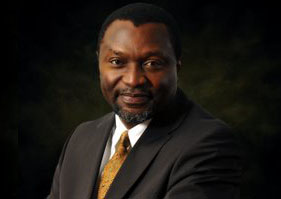 The Federal Government of Nigeria, under the leadership of President Muhammadu Buhari, has arrived at a total of N6 Trillion as the 2016 budget proposal for the country.







East, West, North, South: We are all Biafrans! By Chido Onumah
At 81, my father still has very vivid memories of the civil war. He tells me there is nothing to be ashamed of fighting in that war which he joined willingly after failed attempts to conscript him. For him, Biafra was the product of our bungling of our independence, our nationhood; and those who prosecuted the war on both sides mismanaged it. During our last discussion earlier in the year on this issue, in light of renewed agitation for the actualisation of Biafra, my father reminded me that the civil war ended 45 years ago and that today’s Nigeria is, in many ways, different from the Nigeria of 1967 when the war broke out.
Of course, as a journalist and student of history, I didn’t need to be told that Nigeria of 2015 is not my father’s Nigeria. I have lived through it. My father is not naïve or in denial. When he says things are different in many respects, he understands that there are still issues of injustice and alienation across the country. However, he points to the fact that structurally Nigeria is not what it used to be; but, more important, we have the benefit of a 30-month civil war. We can learn from that war in dealing with contemporary problems. I would add to my father’s position the fact that today’s Nigeria is not the sum total of its “ethnic nationalities.” So, while I believe Nigeria is negotiable, I do not think any attempt to negotiate Nigeria can and should be done solely on the basis of ethnic, religious or cultural affinity. That is my position on the Biafra issue.
In this sense, I am uncomfortable with those who see the Biafra agitation necessarily as an Igbo problem. It is in the same vein that I do not see, for example, the herdsmen issue as a Fulani problem. We may deplore the antics of Nnamdi Kanu, director of Radio Biafra, and his Indigenous People of Biafra (IPOB) movement; we may be genuinely concerned about the activities of all parties in the Fulani herdsmen issue. But in the end, the question that we should be asking is, how has the Nigerian state addressed the many faults lines and centrifugal forces that are threatening to rip the country asunder?
Adeolu Ademoyo’s piece titled “Biafran secessionist call, a national, not an Igbo question” which appeared in Premium Times on December 6, 2015, put the issue in proper perspective. The central argument of Ademoyo’s piece is that we need to see the Biafra agitation and sundry agitations that threaten the unity and stability of the country as a Nigerian problem and not the problem of the group or people pushing it. Since the national question goes beyond an “ethnic problem” or “identity politics” as Ademoyo rightly contends, we must continue to dialogue even as we seek to build a perfect union. When we come to this realisation, we can then begin the long and arduous task of framing a collective national ethos which will accommodate every Nigerian.
The explanation for our current dilemma can be found in the failure of our rulers in the last fifty-five years to build a nation out of what was handed to us at independence. I do not think, however, that it is too late to start the process of reconstructing Nigeria in the image of Nigerians – the ethnic nationalities and other interests that make up the country.
In the midst of the name-calling, rhetoric and chutzpah that have dominated the Biafra debate, three points stand out. One, the immediate danger the agitation poses for ordinary Nigerians who just want a space to live in peace in the midst of debilitating conditions occasioned by corruption and mismanagement of the country; two, replicating the knee-jerk response of successive governments in Nigeria to similar agitations in the past; and three, perhaps most important, what lessons we can draw from the current impasse.
There is enough from history to tell us that we need to address the Biafra agitation constructively and quickly too. The government can’t adopt the approach of, “the leaves are dying then cut off the branches.” Yes, we have the problem of corruption, of building our educational and health sectors and providing basic social services for our blighted country and impoverished citizens. But we have a bigger and fundamental question, that of national cohesion.
Truth is that we have a deeply fractured nation and we can only ignore that reality at our own peril. There are those who still think and feel that the civil war is far from over; that the cheque of “no victor, no vanquished” issued 45 years ago was indeed a dud cheque. The feeling of alienation is real. There are millions of our compatriots across Nigeria for whom this country provides no succour; there are millions who feel they have no stake in Nigeria; millions who feel they have been left out of the gains that independence ought to bring.
I don’t think there is anything immoral or criminal for Nigerians – from the East, West, North or South – who feel justifiably aggrieved or oppressed in a federation to seek to address such grievances or oppression. While the current agitation by Nnamdi Kanu and his Indigenous People of Biafra (IPOB) movement to wage war against Nigeria can’t be the solution, it affords us the opportunity once again to interrogate Nigeria. And it is simply because we have refused to do so that Kanu and others like him across the country have thrived over the years. That interrogation will, among other things, help the young men and women lining up behind Nnamdi Kanu understand why the question of independence for Biafra, whatever it means, is no answer to the problem of poverty and unemployment confronting them.
That interrogation will explain why our states and local governments in a supposed federation have abdicated their responsibilities and become mere appendages of the federal government; why our state governors run to Abuja every month to collect their share of the national cake; why the states in the federation have nothing to show for the trillions of naira that have accrued to them in the last 16 years since the return to civilian rule. Of course, this is not about the governors of the states in the south-east zone of the country, but for the purposes of argument, it will be interesting to find out how much the governors in the zone have collected (and generated?) since 1999 and how that has impacted the lives of citizens in that zone.
In the end, the different manifestation of Biafra may well be a metaphor. To that extent, we are all Biafrans as long as we seek to confront the clear and present danger. Yes, our rulers have contributed to the near collapse of a country that held so much promise at independence 55 years ago. Yes, we are so far gone in this ruinous part, but I think we can still retrace our steps. What the current situation calls for is a bold attempt to confront Nigeria’s seemingly intractable problem: the structure of our federation!
Now is the time to expand the debate on Nigeria’s federalism. My take is that we can build the new Nigeria of our dreams around what I call a “civic federation” that provides justice and equal opportunities for every Nigerian; a federation where every Nigerian can live in peace, work and have a future wherever they find themselves, irrespective of place of birth, ethnic nationality or creed; a country where governance will be localized and states and local government can make laws and have the capacity to enforce such laws within the context of a greater national interest.
That is the conversation we should be having now in our workplaces, newspaper stands, viewing centres and ultimately at the national assembly; that is, if our legislators can find time from their busy schedule of chasing social media activists. That is the only way to overcome the violent and dangerous ideology of Nnamdi Kanu and others like him!
conumah@hotmail.com; Follow me on Twitter: @conumah. [myad]