Former Governor of Kogi state and APC governorship candidate Prince Abubakar Audu has described himself as the most pursued politician in Nigeria by the operatives of the Economic and Financial Crime Commission (EFCC) over framed up allegations of stealing N11 Billion during his tenure as governor of the state.
“I was 1st accused of stealing N1.5b, then N4b, then N8b and finally N11 billion. It’s also on record that I was the most pursued politician by the EFCC, as the PDP wanted my head at all cost – always during elections.”
These were contained in a statement by the former governor, full text of which is reproduced here:
“When the then ruling People’s Democratic Party saw me as a threat, they started instigating Kogites against me, and when the people couldn’t buy into that, having known the truth, they orchestrated my arrest, which led to my being dragged before the ICPC, CCB, CCT and EFCC.”
“When all that failed, the then PDP led Kogi state government took over and issued a white paper, banning me from politics for 10years. I proceeded to court, and the court ruled that the Kogi government has no such right to ban me from politics.”
“When I was in office between 1999 – 2003, we received average monthly allocation of N350 million – about N16.8 billion for the entire 4 years of my tenure. With these, we paid all salaries, we built Kogi State University, Obajana Cement Factory (now owned and run by Dangote Cement), Confluence Beach Hotel, Stella Obasanjo Library, Paparanda Square, Govt. house (Lugard) House, Government Office, secretariat, the banquet hall, started the confluence stadium and built the Lokoja township stadium, others are the Fed. Medical Centre + equipped same with 25 state-of-art ambulances, NTA Kogi, Radio Kogi, Kogi Graphics Newspaper, 75 rural electrification projects, the presidential lodge, Governor’s lodge, Abuja, inter-state roads; We also built the specialist eye centre, commissioner’s quarters, 200 housing units, just to mention a few. In 2002, the Fed. Govt. instituted a panel to evaluate and reward performance. Out of 12 awards for the 36 state governors, I won 7 awards. Now, how could all these have been achieved?
“The Economic and Financial Crimes Commission, EFCC, has also taken me to 7 courts in total (4 in Kogi and 3 in Abuja). In each of these cases, they’ll always pull out before judgment is passed and go back to frame up new figures; I was 1st accused of stealing N1.5b, then N4b, then N8b and finally N11 billion. It’s also on record that I was the most pursued politician by the EFCC, as the PDP wanted my head at all cost – always during elections.”
“And so I ask all Kogites and Nigerians, how could my administration have achieved all we did with less than N6 billion, if N11 billion was missing? Again only the work I did in Kogi State stands there today. The PDP govt. since I left office, has received about N550 billion, without accounting for it.”
“So the questions should be where have these funds gone? Why are Kogites still languishing in abject poverty? Why is Lokoja the dirtiest state capital in Nigeria? Why has EFCC been mute? Clearly the PDP led EFCC had a different agenda. I leave these thoughts to my fellow Kogites to mull over and ponder. The truth is out there for those who care to know but my happiness is that all well-meaning Kogites know the truth and have pledged to support me and the APC to victory ahead of the November 21 Governorship election, as I promise to do even more, when we eventually take up power.” [myad]
I have tried delaying the writing of this piece in the honest expectation that someone probably misquoted Chief E.K. Clark, when he reportedly publicly disowned former President Goodluck Jonathan. I had hoped that our dear father, E.K. Clark, would issue a counter statement and say the usual things politicians say: “they quoted me out of context!” “Jonathan is my son”. That has not happened; rather, some other Ijaw voices, including one Joseph Evah, have come to the defence of the old man, to join hands in rubbishing a man they once defended to the hilt and used as a bargaining chip for the Ijaw interest in the larger Nigerian geo-politics.
If President Jonathan had returned to power on May 29, 2015, these same persons would have remained in the corridors of power, displaying all forms of ethnic triumphalism. It is the reason in case they do not realize it, why the existent power blocs that consider themselves most fit to rule, continue to believe that those whose ancestors never ran empires can never be trusted with power, hence they can only be admitted as other people’s agents or as merchants of their own interests which may even be defined for them as is deemed convenient. Mercantilism may bring profit, but in power politics, it destroys integrity and compromises otherwise sacred values.
President Jonathan being publicly condemned by his own Ijaw brothers, particularly those who were once staunch supporters of his government further serves the purpose of exposing the limits of the politics of proximity. Politics in Africa is driven by this particular factor; it is at the root of all the other evils: prebendalism, clientelism and what Matthew Kukah has famously described as the “myownisation of power”. It is both positive and negative, but obviously, more of the latter than the former. It is considered positive only when it is beneficial to all parties concerned, and when the template changes, the ground also shifts. As in that song, the solid rock of proximity is soon replaced by shifting sands. Old worship becomes new opportunism. And the observant public is left confounded.
Chief E.K. Clark? Who would ever think, Chief E.K. Clark would publicly disown President Jonathan? He says Jonathan was a weak President. At what point did he come to that realization? Yet, throughout the five years (not six, please) of the Jonathan Presidency, he spoke loudly against anyone who opposed the President. He was so combative he was once quoted as suggesting that Nigeria could have problems if Jonathan was not allowed to return to office. Today, he is the one helping President Jonathan’s successor to quench the fires. He always openly said President Jonathan is “his son”. Today, he is not just turning against his own son, he is telling the world his son as President lacked the political will to fight corruption. He has also accused his son of being too much of a gentleman. Really? Gentlemanliness would be considered honourable in refined circles. Is Pa E.K. Clark recommending something else in order to prove that he is no longer a politician but a statesman as he says?
As someone who was a member of the Jonathan administration, and who interacted often with the old man, I can only say that I am shocked. This is the equivalent of the old man deleting President Jonathan’s phone number and ensuring that calls from his phone no longer ring at the Jonathan end. During the Jonathan years, Chief E. K. Clark was arguably the most vocal Ijaw leader defending the government. He called the President “my son”, and both father and son remained in constant touch.
There is something about having the President’s ears in a Presidential system, elevated to the level of a fetish in the clientilist Nigerian political system. Persons in the corridors of power who have the President’s ear- be they cook, valet, inlaws, wife, cousin, former school mates, priests, or whatever, enjoy special privileges. They have access to the President and they can whisper into his ears. That’s all they have as power: the power to whisper and run a whispering campaign that can translate into opportunities or losses for those outside that informal power loop around every Presidency, that tends to be really influential.
Every President must beware of those persons who come around calling them “Daddy”, “Uncle”, na my brother dey there”, “my son”, “our in-law”: emotional blackmailers relying on old connections. They are courted, patronized and given more attention and honour than they deserve by those looking for access to the President or government. Even when the power and authority of the whispering exploiters of the politics of proximity is contrived, they go out of their way to exaggerate it. They acquire so much from being seen to be in a position to make things happen.
Chief E. K. Clark had the President’s ears. He had unfettered access to his son. He was invited to most state events. And he looked out for the man he called “my son”, in whom he was well pleased. Chief Clark’s energy level in the service of the Jonathan administration was impressive. Fearless and outspoken, he deployed his enormous talents in the service of the Jonathan government. If a press statement was tame, he drew attention to it and urged a more robust defence of “your boss”. If any invective from the APC was overlooked, he urged prompt rebuttal. If the party was tardy in defending “his son”, he weighed in.
If anyone had accused the President of lacking “the political will to fight corruption” at that time, he, E.K. Clark, would have called a press conference to draw attention to the Jonathan administration’s institutional reforms and preventive measures, his commitment to electoral integrity to check political corruption, and the hundreds of convictions secured by both the ICPC and EFCC under his son’s watch. So prominent and influential was he, that ministers, political jobbers etc etc trooped to his house to pay homage.
In due course, those who opposed President Jonathan did not spare Chief E. K. Clark either. He was accused of making inflammatory and unstatesman-like statements. An old war-horse, nobody could intimidate him. He was not President Olusegun Obasanjo’s fan in particular. He believed Obasanjo wanted to sabotage his son, and he wanted Obasanjo put in his place. Beneath all of that, was an unmistaken rivalry between the two old men, seeking to control the levers of Nigerian politics.
Every President probably needs a strong, passionate ally like Chief E. K. Clark. But what happened? What went wrong? Don’t get me wrong. I am not necessarily saying that the Ijaw leader should have remained loyal to and defend Goodluck Jonathan because they are both Ijaws, patriotism definitely could be stronger than ethnic affinities, nonetheless that E. K. Clark tale about leaving politics and becoming a statesman is nothing but sheer crap. If Jonathan had returned to office, he would still be a card-carrying member of the PDP and the “father of the President” and we would still have been hearing that famous phrase, “my son”. Chief E. K. Clark, five months after, has practically told the world that President Buhari is better than “his own son”.
It is the worst form of humiliation that President Jonathan has received since he left office. It is also the finest compliment that President Buhari has received since he assumed office. The timing is also auspicious: just when the public is beginning to worry about the direction of the Buhari government, E. K. Clark shows up to lend a hand of support and endorsement. Only one phrase was missing in his statement, and it should have been added: “my son, Buhari.” It probably won’t be too long before we hear the old man saying “I am a statesman, Buhari is my son.” I can imagine President Obasanjo grinning with delight. If he really wants to be kind, he could invite E.K. Clark to his home in Ota or Abeokuta to come and do the needful by publicly tearing his PDP membership card and join him in that exclusive club of Nigerian statesmen! The only problem with that club these days is that you can become a member by just saying so or by retiring from partisan politics. We are more or less being told that there are no statesmen in any of the political parties.
It is not funny. Julius Ceasar asked Brutus in one of the famous lines in written literature: “Et tu Brutus?” President Jonathan should ask Chief E. K. Clark: “Et tu Papa?” To which the father will probably tell the son: “Ces’t la vie, mon cher garcon.” And really, that is life. In the face of other considerations, loyalties vanish; synergies collapse. The wisdom of the tribe is overturned; the politics of proximity dissolves; loyalties remain in a perpetual process of construction. Thus, individual interests and transactions drive the political game in Nigeria, with time and context as key determinants.
These are teachable moments for President Jonathan. Power attracts men and women like bees to nectar, the state of powerlessness ends as a journey to the island of loneliness. However, the greatest defender of our work in office is not our ethnic “fathers and “brothers” but rather our legacy. The real loss is that President Jonathan’s heroism, his messianic sacrifice in the face of defeat, is being swept under the carpet and his own brothers who used to say that the Ijaws are driven by a principle of “one for all and all for another”, have become agent-architects of his pain. The Ijaw platform having seemingly been de-centered, Chief E.K. Clark and others are seeking assimilation in the new power structure. It is a telling reconstruction of the politics of proximity and mimicry.
Chief E.K. Clark once defended the rights of ethnic minorities to aspire to the highest offices in the land, his latest declaration about his son reaffirms the existing stereotype at the heart of Nigeria’s hegemonic politics. The same hegemons and their agents whom Clark used to fight furiously will no doubt find him eminently quotable now that he has proclaimed that it is wrong to be a “gentleman”, and that his son lacks “the political will to fight corruption”. There is more to this than we may ever know. Chief Clark can insist from now till 2019, that he has spoken as a statesman and as a matter of principle. His re-alignment, is curious nonetheless. [myad]
Federal government has mandated the Adams Oshiomhole led ad hoc committee on remittances by the agencies into the Federation Account, to investigate some government agencies which are said to have been in the habit of remitting dollar revenue in naira into the federal government coffers.
This fact came to light today at the monthly meeting of the National Economic Council (NEC) which was presided over, at the Presidential Villa, Abuja, by the Vice President, Professor Yemi Osinbajo.
Some of the agencies involved, according to the governor of the Central Bank of Nigeria (CBN), Godwin Emefiele, who briefed members of NEC, made up of all the governors and some top federal government operatives are the Nigerian National Petroleum Corporation, Nigerian Port Authority and the Nigerian Maritime Administration and Safety Agency among others.
Briefing news men shortly after the meeting, the Cross River State Governor, Professor Ben Ayade, confirmed that a brief report on the Federal Government agencies remitting dollar revenues in naira into the Federation Account was given by the CBN governor.
He said that investigations are ongoing even as he confirmed that such agencies “include but not limited to NNPC, NIMASA and NPA.”
Professor Ayade said the affected agencies are already undergoing a separate probe instituted by NEC through governor Adams Oshiomhole-led ad hoc committee on remittances by the agencies into the Federation Account.
He said that the CBN governor also informed the Council that the excess crude account had hit $2.2 billion as at October 15.
He said that CBN also informed the Council that 27 states have made request for the N10 billion facility that was being processed, adding that the state affected have been advised to complete all necessary documentation to that effect.
“It should be recalled at this point in time that not all states have indicated interest on this ECA collaterised loan.”
He also said that the Vice President assured states that had incurred expenses on maintenance of Federal Government roads and adhered to laid down rules would be refunded soon.
Other governors at the briefing included Aliyu Wamakko (Sokoto), Darius Ishiaku (Taraba) and Olusegun Mimiko (Ondo). [myad]
Former President Olusegun Obasanjo has confessed that he enjoyed being insulted by all manners of characters when he was President of Nigeria. He said that he has documented and kept in his archives all such published insults which he regarded as fun.
“If you visit the Olusegun Obasanjo Presidential Library in Abeokuta, you will find thousands of archived newspaper comics and columns meant to spite and insult my person even as a sitting President. No individual or group of people was ever queried or jailed or repressed for expressing this freedom. Rather, I encouraged them because I derived fun and pleasure from the humour as I know who I am and nobody needs to tell me who and what I am not.“
He spoke in a keynote address at the first international conference of the African Studies Association of Africa (ASAA), entitled, “African Studies in the Twenty-First Century, Past, Present and Future” which held at the International Conference Centre of the University of Ibadan.
The elder statesman, who described himself as incurable optimist on a brighter future of Africa, reiterated that the continent will soon wriggle out of bad governance and corruption which seemed to be a syndrome in the continent.
He recalled the ugly past when Africans were used as slaves by colonialists.
Chief Obasanjo said that the inhumanity meted to the continent then formed the basis for the seeming backwardness being experienced at present saying, “the stain and stench of slave trade, the cold war, poor governance made some Africans to laud the good old days of colonialism, corruption and problem of human rights violations.
“In all these, I am delighted that the so-called great European historians who professed that Africa has no history lived to realise that African history and culture had impacts and ramifications on other parts of the world including theirs.”
However, he was happy that all factors that militate against growth and development were no longer in vogue in the continent.
“The right to free speech, the right to express a different view point, the right to draw personal conclusions based on self-instituted research and to querry certain cultural practices and beliefs are part of the huge liberty that the continent of Africa now boasts of.”
Professor Akin Mabogunje who was the chairman of the event and other speakers aligned with Chief Obasanjo on the need to use the nation’s intellect to develop the continent.
Other notable people at the occasion included Professor Toyin Falola, a keynote speaker, the Vice Chancellor of the University of Ibadan, Professor Isaac Adewole was represented by the Deputy Vice Chancellor (Administration) , Professor EmilOlorun Aiyelari, the Deputy Vice Chancellor (Academic) Professor Mrs Gbemisola Oke, the Director of the African Studies of the University of Ibadan, Professor Dele Layiwola, Professor Femi Osofisan, Dr. Sola Olorunfemi, Dr. Olaoluwa Shenayon and many others.
Deputy Digital Editor of the Washington Post, in the United States of America, Karen Attiah, poses for a snap-shot at Bazza, with Editor-In-Chief of Greenbarge Reporters, Yusuf Ozi-Usman when they, among other national and international Journalists, toured the reclaimed captured towns and cities by Boko Haram in Adamawa State. The tour was facilitated by Adamawa Peace Initiative in conjunction with the American University of Nigeria (AUN). Major towns visited are Mubi, Michika, Bazza, Shuwa, Hong and other villages captured and occupied by members of Boko Haram but retaken by Nigerian soldiers. [myad]
No fewer than 105 Member of the Kenyan Parliament have signed a motion to impeach President Uhuru Kenyatta over claims that he has violated the constitution.
Suba MP, John Mbadi, who is leading the initiative, said that the exercise is progressing well and he expects the matter to be concluded by the end of this week.
The constitution requires that at least a third of the 349 MPs support the motion before it is introduced in the House for debate.
“Those who thought we were joking should be very afraid because the train left the station a long time ago,” said Mbadi, who is also the ODM chairman. He spoke yesterday at Parliament Buildings.
The committee consisting of Cord’s top leaders, Raila Odinga, Kalonzo Musyoka and Bungoma Senator Moses Wetang’ula which was formed to push for Uhuru’s impeachment said it is in the final stages of preparing the motion.
The committee is co- chaired by Senators James Orengo (Siaya) and Johnstone Muthama (Machakos).
Other members are MPs Eseli Simiyu (Tongaren), Tom Kajwang’ (Ruaraka), Peter Kaluma (Homa Bay Town), Mbadi, nominated Senator Janet Ongera and lawyer Anthony Oluoch.
It is not yet clear when the motion will be presented to the clerk for scrutiny before the approval by the speaker.
The draft motion accuses the President of contempt of court.
It states that Uhuru defied court orders by calling for the destruction of a ship in Mombasa which was alleged to be ferrying drugs.
The President’s refusal to pay the teachers the court ordered 50-60 per cent salary increase is another point given as grounds for impeachment.
The draft motion says Uhuru has openly discriminated against some Cabinet Secretaries by directing those named in corruption scandals to step aside while defending Devolution CS Anne Waiguru.
“The President has resisted calls that she steps aside for investigations over the loss of Sh791 million at the National Youth Service that is under her watch,” the draft motion reads.
Violation of the gender rule has also been cited. [myad]
The United Nations Children’s Fund (UNICEF) has lamented that Nigeria is losing no fewer than 150,000 children annually from diarrhoea alone, largely caused by unsafe water, sanitation & hygiene practices. The Fund likens the number deaths as being equivalent to a big passenger aircraft crashing every day!
In a statement to mark hand-washing day today by its Chief of Communication, Doune Porter, UNICEF said that a survey conducted across six states in Nigeria have revealed gaps in hygiene due to poor hand-washing practice among the people.
Although the survey, part of which was released today to coincide with the Global Hand-washing Day, found that an average of 82 per cent of the people washed their hands before eating, while only 53 per cent of people washed their hands with soap after defecation. It found that only about 14 per cent of the people wash their hands with soap after cleaning a child’s faeces.
According to the agency, regular hand-washing with soap after using toilets, after changing children’s nappies and before eating or handling food saves more lives than any single vaccine or medical intervention. It also noted that such practices can reduce deaths from diarrhea by almost half and deaths from acute respiratory infections by one-quarter. This is as handwashing with soap was also an important line of defense against the spread of Ebola in Nigeria.
Meanwhile, to mark Global Hand-washing Day in Nigeria, UNICEF, with the Federal Ministry of Water Resources, the National Task Group on Sanitation and other partners plans to reach at least 10 million Nigerians this year through high profile handwashing demonstrations in schools and communities, mass rallies, road shows, airing of jingles on radio and television, and dissemination of hand-washing messages on U-Report, Facebook and Twitter.
The eighth Global Hand-washing Day comes less than a month after the United Nations adopted the Sustainable Development Goals, including hygiene for the first time in the global agenda. One of the SDG targets is to achieve ‘access to adequate and equitable sanitation and hygiene’ by 2030.
UNICEF says improvements in hygiene must supplement access to water and sanitation, or children will continue to fall victim to easily preventable diseases like diarrhoea.
“Along with drinking water and access to toilets, hygiene, particularly hand-washing with soap, is the essential third leg of the stool holding up the Goal on water and sanitation,” global head of UNICEF’s water, sanitation and hygiene programmes, Sanjay Wijesekera said, adding: “from birth, when unwashed hands of birth attendants can transmit dangerous pathogens, right through babyhood, school and beyond, hand-washing is crucial for a child’s health. It is one of the cheapest, simplest, most effective health interventions we have.” [myad]
Members of the House of Representatives have mandated the committee on transport to probe the N18 billion contracts awarded by the government of former President Goodluck Jonathan for the rehabilitation of rail tracks, standard gauge, bridges, coaches, wagons and locomotives between 2010 and 2014.
This is was even as the House also resolved to probe infrastructural decay at the Akanu Ibiam International Airport in Enugu State.
A motion that dovetailed into the probing of the projects, titled: Need to Investigate the Ministry of Transport and the Nigeria Railways Corporation (NRC), on the Award of Contracts for Rehabilitation of Railway Tracks, Maintenance of Bridges and Procurement/Rehabilitation of Coaches and Locomotives from 2010-2014 was moved by Solomon Ahwinawhi (PDP/Delta).
Ahwinawhi said: “The level of performance, with respect to the 463km Port Harcourt-Markurdi rail track rehabilitation of the eastern line with N19,963,752,330, out of which NRC has paid N4,017,054,841, while SURE -P paid N5,594,021,377 and only about 3km of ballast has been done with 400km left undone and the total money released so far is N9, 611, 076, 218.
“The Abuja-Kaduna rail project had 841 million US dollars as the project cost, out of which the China EXIM Bank provided a loan of 500 million US dollars with about 25 percent of the project completed, when the entire project was envisaged to have been completed in 2014.“
He also said the Lagos-Jebba track rehabilitation project was awarded at a contract sum of N12, 293,390 with the payments made so far at N11, 699, 999,218, without any tangible work done adding that the same goes for Jebba-Kano.
The announced suspension of loading and distribution of fuel products by Eastern Zone of Nigeria Union of Petroleum and Natural Gas Workers (NUPENG) has grounded many motorists in Port Harcourt and its environment.
Chairman of the union, Godwin Eruba, said that the decision was taken to protest alleged police harassment of its members at the premises of an oil firm, Weatherford Nigeria Limited. According to him, members were picketing the firm over labour related issues when policemen allegedly started molesting the union members.
This was even as the national industrial officer of NUPENG, Mr. Bassey Harry, said the strike which commenced yesterday, would only be suspended when the police officers who harassed the union members were made to face the law.
The Trade Union Congress of Nigeria (TUC), has expressed support for NUPENG’s action, saying the Rivers State Government, Commissioner of Police and the Federal Ministry of Labour and Productivity, should step in to resolve the crisis.
State Chairman of TUC, Chika Unuegbu, said the Congress was shocked that the Police could be so ruthless over a labour related issue.
The Police on its part denied that its men harassed members of the union.
Police spokesman in the state, DSP Ahmad Muhammad, said the Police only made effort to assist bailiffs/officials to enforce a court verdict from the National Industrial Court, Yenegoa, Bayelsa State.
DSP Muhammad explained in a statement that the court officials requested the assistance of the Police, adding that the police merely ensured that there was no breakdown of law and order while the bailiffs and court officials went about their assignments.
“It is relevant to state that the Rivers State Police Command acted on the request of court bailiffs to enforce a court judgment delivered by Justice J. T. Agbambu-Fishim of the National Industrial Court, Yenagoa, Bayelsa State. In such circumstances, it is the constitutional mandate of the Police to maintain law and order during the execution of the court judgment which was purely done by the court bailiffs without police actually taking part in the execution. The Police were merely performing their constitutional duties in line with the principles of natural justice and rule of law.” [myad]
Nasarawa State Governor, Umaru Tanko Al-Makura has submitted a list of 16 nominees for commissionership to the state’s House of Assembly for screening and confirmation as members of the State Executive Council.
The Majority leader of the house, Alhaji Tanko Tunga (APC-Awe North) presented the list on behalf of the governor at the floor of the house in Lafia.
Tunga said also that Governor Tanko Al-Makura is requesting the house to approve 20 Special Advisers that will assist him in running the affairs of the state.
The sixteen nominees for the position of commissioners are Barrister Yusuf Shehu, Dr. Dominic Bako, Ramatu Ajuji-Abu, Dr. Othman Ibrahim-Ahmed, Aliyu Yusuf-Lawee, Sony Agasi,Dr.Daniel Iya, Mustapha Yahaya-Idris, Haruna Iliya Osegba, and Eunice Kigbu.
Others are: Engr.Mohammed Idris, Isiaka Galadima, Aliyu Tijani, Makeri Godwin, Barr.Gabriel Aka’aka and Team Yiga.
The Speaker of the house, Alhaji Ibrahim Balarabe, said that the House would commence the screening from Monday October 26 to Wednesday 28. [myad]
We use cookies on our website to give you the most relevant experience by remembering your preferences and repeat visits. By clicking “Accept”, you consent to the use of ALL the cookies.
This website uses cookies to improve your experience while you navigate through the website. Out of these, the cookies that are categorized as necessary are stored on your browser as they are essential for the working of basic functionalities of the website. We also use third-party cookies that help us analyze and understand how you use this website. These cookies will be stored in your browser only with your consent. You also have the option to opt-out of these cookies. But opting out of some of these cookies may affect your browsing experience.
Necessary cookies are absolutely essential for the website to function properly. This category only includes cookies that ensures basic functionalities and security features of the website. These cookies do not store any personal information.
Any cookies that may not be particularly necessary for the website to function and is used specifically to collect user personal data via analytics, ads, other embedded contents are termed as non-necessary cookies. It is mandatory to procure user consent prior to running these cookies on your website.




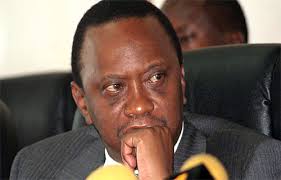






Edwin Clark’s Tale Of Leaving Politics To Be A Statesman Is Sheer Crap, By Reuben Abati
I have tried delaying the writing of this piece in the honest expectation that someone probably misquoted Chief E.K. Clark, when he reportedly publicly disowned former President Goodluck Jonathan. I had hoped that our dear father, E.K. Clark, would issue a counter statement and say the usual things politicians say: “they quoted me out of context!” “Jonathan is my son”. That has not happened; rather, some other Ijaw voices, including one Joseph Evah, have come to the defence of the old man, to join hands in rubbishing a man they once defended to the hilt and used as a bargaining chip for the Ijaw interest in the larger Nigerian geo-politics.
If President Jonathan had returned to power on May 29, 2015, these same persons would have remained in the corridors of power, displaying all forms of ethnic triumphalism. It is the reason in case they do not realize it, why the existent power blocs that consider themselves most fit to rule, continue to believe that those whose ancestors never ran empires can never be trusted with power, hence they can only be admitted as other people’s agents or as merchants of their own interests which may even be defined for them as is deemed convenient. Mercantilism may bring profit, but in power politics, it destroys integrity and compromises otherwise sacred values.
President Jonathan being publicly condemned by his own Ijaw brothers, particularly those who were once staunch supporters of his government further serves the purpose of exposing the limits of the politics of proximity. Politics in Africa is driven by this particular factor; it is at the root of all the other evils: prebendalism, clientelism and what Matthew Kukah has famously described as the “myownisation of power”. It is both positive and negative, but obviously, more of the latter than the former. It is considered positive only when it is beneficial to all parties concerned, and when the template changes, the ground also shifts. As in that song, the solid rock of proximity is soon replaced by shifting sands. Old worship becomes new opportunism. And the observant public is left confounded.
Chief E.K. Clark? Who would ever think, Chief E.K. Clark would publicly disown President Jonathan? He says Jonathan was a weak President. At what point did he come to that realization? Yet, throughout the five years (not six, please) of the Jonathan Presidency, he spoke loudly against anyone who opposed the President. He was so combative he was once quoted as suggesting that Nigeria could have problems if Jonathan was not allowed to return to office. Today, he is the one helping President Jonathan’s successor to quench the fires. He always openly said President Jonathan is “his son”. Today, he is not just turning against his own son, he is telling the world his son as President lacked the political will to fight corruption. He has also accused his son of being too much of a gentleman. Really? Gentlemanliness would be considered honourable in refined circles. Is Pa E.K. Clark recommending something else in order to prove that he is no longer a politician but a statesman as he says?
As someone who was a member of the Jonathan administration, and who interacted often with the old man, I can only say that I am shocked. This is the equivalent of the old man deleting President Jonathan’s phone number and ensuring that calls from his phone no longer ring at the Jonathan end. During the Jonathan years, Chief E. K. Clark was arguably the most vocal Ijaw leader defending the government. He called the President “my son”, and both father and son remained in constant touch.
There is something about having the President’s ears in a Presidential system, elevated to the level of a fetish in the clientilist Nigerian political system. Persons in the corridors of power who have the President’s ear- be they cook, valet, inlaws, wife, cousin, former school mates, priests, or whatever, enjoy special privileges. They have access to the President and they can whisper into his ears. That’s all they have as power: the power to whisper and run a whispering campaign that can translate into opportunities or losses for those outside that informal power loop around every Presidency, that tends to be really influential.
Every President must beware of those persons who come around calling them “Daddy”, “Uncle”, na my brother dey there”, “my son”, “our in-law”: emotional blackmailers relying on old connections. They are courted, patronized and given more attention and honour than they deserve by those looking for access to the President or government. Even when the power and authority of the whispering exploiters of the politics of proximity is contrived, they go out of their way to exaggerate it. They acquire so much from being seen to be in a position to make things happen.
Chief E. K. Clark had the President’s ears. He had unfettered access to his son. He was invited to most state events. And he looked out for the man he called “my son”, in whom he was well pleased. Chief Clark’s energy level in the service of the Jonathan administration was impressive. Fearless and outspoken, he deployed his enormous talents in the service of the Jonathan government. If a press statement was tame, he drew attention to it and urged a more robust defence of “your boss”. If any invective from the APC was overlooked, he urged prompt rebuttal. If the party was tardy in defending “his son”, he weighed in.
If anyone had accused the President of lacking “the political will to fight corruption” at that time, he, E.K. Clark, would have called a press conference to draw attention to the Jonathan administration’s institutional reforms and preventive measures, his commitment to electoral integrity to check political corruption, and the hundreds of convictions secured by both the ICPC and EFCC under his son’s watch. So prominent and influential was he, that ministers, political jobbers etc etc trooped to his house to pay homage.
In due course, those who opposed President Jonathan did not spare Chief E. K. Clark either. He was accused of making inflammatory and unstatesman-like statements. An old war-horse, nobody could intimidate him. He was not President Olusegun Obasanjo’s fan in particular. He believed Obasanjo wanted to sabotage his son, and he wanted Obasanjo put in his place. Beneath all of that, was an unmistaken rivalry between the two old men, seeking to control the levers of Nigerian politics.
Every President probably needs a strong, passionate ally like Chief E. K. Clark. But what happened? What went wrong? Don’t get me wrong. I am not necessarily saying that the Ijaw leader should have remained loyal to and defend Goodluck Jonathan because they are both Ijaws, patriotism definitely could be stronger than ethnic affinities, nonetheless that E. K. Clark tale about leaving politics and becoming a statesman is nothing but sheer crap. If Jonathan had returned to office, he would still be a card-carrying member of the PDP and the “father of the President” and we would still have been hearing that famous phrase, “my son”. Chief E. K. Clark, five months after, has practically told the world that President Buhari is better than “his own son”.
It is the worst form of humiliation that President Jonathan has received since he left office. It is also the finest compliment that President Buhari has received since he assumed office. The timing is also auspicious: just when the public is beginning to worry about the direction of the Buhari government, E. K. Clark shows up to lend a hand of support and endorsement. Only one phrase was missing in his statement, and it should have been added: “my son, Buhari.” It probably won’t be too long before we hear the old man saying “I am a statesman, Buhari is my son.” I can imagine President Obasanjo grinning with delight. If he really wants to be kind, he could invite E.K. Clark to his home in Ota or Abeokuta to come and do the needful by publicly tearing his PDP membership card and join him in that exclusive club of Nigerian statesmen! The only problem with that club these days is that you can become a member by just saying so or by retiring from partisan politics. We are more or less being told that there are no statesmen in any of the political parties.
It is not funny. Julius Ceasar asked Brutus in one of the famous lines in written literature: “Et tu Brutus?” President Jonathan should ask Chief E. K. Clark: “Et tu Papa?” To which the father will probably tell the son: “Ces’t la vie, mon cher garcon.” And really, that is life. In the face of other considerations, loyalties vanish; synergies collapse. The wisdom of the tribe is overturned; the politics of proximity dissolves; loyalties remain in a perpetual process of construction. Thus, individual interests and transactions drive the political game in Nigeria, with time and context as key determinants.
These are teachable moments for President Jonathan. Power attracts men and women like bees to nectar, the state of powerlessness ends as a journey to the island of loneliness. However, the greatest defender of our work in office is not our ethnic “fathers and “brothers” but rather our legacy. The real loss is that President Jonathan’s heroism, his messianic sacrifice in the face of defeat, is being swept under the carpet and his own brothers who used to say that the Ijaws are driven by a principle of “one for all and all for another”, have become agent-architects of his pain. The Ijaw platform having seemingly been de-centered, Chief E.K. Clark and others are seeking assimilation in the new power structure. It is a telling reconstruction of the politics of proximity and mimicry.
Chief E.K. Clark once defended the rights of ethnic minorities to aspire to the highest offices in the land, his latest declaration about his son reaffirms the existing stereotype at the heart of Nigeria’s hegemonic politics. The same hegemons and their agents whom Clark used to fight furiously will no doubt find him eminently quotable now that he has proclaimed that it is wrong to be a “gentleman”, and that his son lacks “the political will to fight corruption”. There is more to this than we may ever know. Chief Clark can insist from now till 2019, that he has spoken as a statesman and as a matter of principle. His re-alignment, is curious nonetheless. [myad]