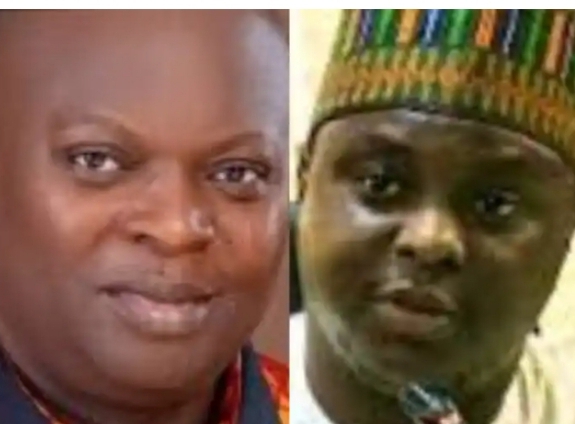
Executive Chairman of the Federal Inland Revenue Services (FIRS), Dr. Zacch Adedeji has appointed , Dare Adekanmbi, a veteran journalist and senior editor at the Tribune to serve as his Special Assistant on Media. Adekanmbi replaces, Johannes Oluwatobi Wojuola who served in the same capacity as SA media to the immediate past FIRS boss, Mohammed Nami Wojuola, on his part, has secured an appointment as the Special Assistant on Media and Communication to the Executive Vice Chairman of the Nigerian Communications Commission (NCC), Dr. Aminu Maida Dr. Maida is an accomplished technology executive with experience spanning across telecommunication and payment industries.
The Nigerian Air Force (NAF) has announced that its MI-35P helicopter has crashed in Port Harcourt, shortly after take off. The crash occurred at about 7.45 am shortly after the aircraft took off for an operation against economic saboteurs in Rivers. A statement by the NAF Director of Public Relations and Information, Air Commodore Edward Gabkwet, today, December 1 in Abuja, said that five crew members were aboard the helicopter. He said that all the five survived with minor injuries, and were being treated at the NAF Medical Centre in Port Harcourt. “The Chief of the Air Staff, Air Marshal Hasan Abubakar, is currently enroute Port Harcourt to assess the situation, see to the wellbeing of the crew and give further directives. “Incident of this nature is yet again a grim reminder of the dangers associated with military flying and the risks NAF pilots and technicians experience in their onerous tasks of defending our nation and deterring criminal elements from their nefarious activities.” Source: NAN.
Unidentified political thugs this morning, December 1, attacked the residence of the Kogi State Resident Electoral Commissioner (REC) in Lokoja, Kogi State capital. Report from the Commission said that the thugs engaged the security personnel in a gun battle for over 30 minutes until reinforcement arrived. The incidence took place at about 3.30 am this morning. The statement said however that there were no lives were lost, but that property was destroyed in the ensuing gun battle. “A team of combined security personnel have been deployed to protect the residence.” The gun battle came a day after some political hoodlums occupied the INEC office in Lokoja and were brought under control by the combined security forces Meanwhile, the Commission has called for a thorough investigation and enhanced security protection for its personnel and assets in the State.
The Central Bank of Nigeria (CBN) has appointed Mrs. Hakama Sidi Ali as its Acting Director of Corporate Communications. Mrs. Sidi Ali is a professional public relations practitioner and a recognised member of the Nigeria Institute of Public Relations (NIPR). She has previously served as a Deputy Director in the same department at the apex bank. A 1992 graduate of Bayero University, Kano (BUK) with a Bachelor of Arts degree in Mass Communication, Mrs. Sidi Ali holds an MSc in Mass Communication and a PGDE in English. She is also a member of reputable professional bodies such as the Chartered Institute of Loan and Risk Management (CILRM), Chartered Institute of Personnel Management of Nigeria (CIPMN), Africa Development Studies Centre (ADSC), and Toastmasters International. The appointment has been lauded by the NIPR as a positive step in stopping the illegal practice of appointing non-professionals and quacks as official spokespersons. Mrs. Sidi Ali’s extensive qualifications and professional affiliations make her a valuable addition to the CBN’s communication team. Overall, the appointment of Mrs. Hakama Sidi Ali as the new CBN spokesperson demonstrates the central bank’s commitment to maintaining high standards of professionalism in its communication efforts.
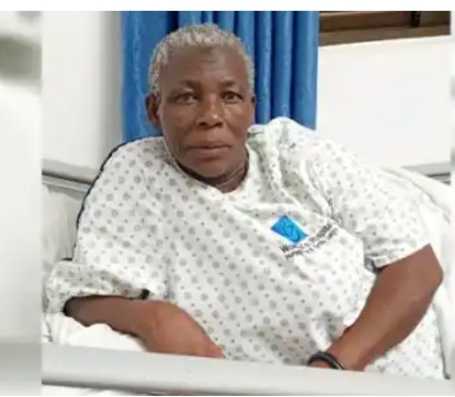
A 70-year-old woman, Safina Namukwaya from Uganda, who gave birth to twins has complained that her husband has been avoiding her. Safina, who was delivered of twins yesterday, November 30, said that her husband has not visited her since she came to the hospital for the delivery, saying: “maybe he is not happy that I delivered twins because men don’t want to know you are carrying more than one child in a womb for fear of may be responsibilities that come with that.” Safina delivered the twins at a medical facility in the capital Kampala, where she had received fertility treatment. Doctor Edward Tamale Sali, who supervised her pregnancy and delivery, told AFP: “this is extraordinary achievement, delivering twins to Africa’s oldest mother at 70 years,” He said that mother and babies, a boy and a girl, were still in the care of the Women’s Hospital International and Fertility Centre that he founded, but were in good health. Safina said: “there is no way to express my joy at this moment. “At 70 years when I’m considered weak, unable to get pregnant and deliver, or look after a baby, and here is a miracle of the twins.” Safina said that she previously gave birth to a girl in 2020, after being mocked as “cursed woman” who had previously failed to produce a child.
The nation was recently agog with controversies over the status of the Chief Judge of Osun state, Justice Adepele Ojo. The status quo is that the state Governor has handed off the matter by forwarding the case to the National Judicial Council(NJC). But the body is also said to be in possession of two direct petitions against the Chief Judge. The matter got complicated with the labour action by the judicial workers union against the Chief judge. While political colouration earlier dominated the crisis, the labour angle opened up a new line of arguments. Suddenly, internal management questions within the judiciary popped up with a series of allegations against the Chief Judge which interestingly are non-political. The House which originally acted on the matter adopted a new approach by releasing its judiciary committee findings. The findings aroused further question as to what is happening within the state judiciary. Analysts started doubting the original narration of witch hunt. The House proceeded to forward the resolution to the Governor under the premise that it was acting to expose corruption. A peep into the House resolution is truly an eye opener. The revelations painted a state judiciary riddled with corruption: “Pursuant to series of petitions received against the Honourable Chief Judge of Osun State from members of His Lordship’s staff, Osun State Chapter of the Judiciary Staff Union of Nigeria (JUSUN) and some Civil Society Organisations, the House, being fully conscious of the provision of the law that the House and the Executive Governor of the State cannot initiate any form of disciplinary action against the Honourable Chief Judge, without the input of the National Judicial Council, resolved to embark on a fact-finding proceeding, and upon conclusion of the fact-finding proceeding and adoption of the report submitted by the Fact-finding Committee, the House hereby resolved as follows: “(i) That in view of the fact that neither the House nor the Executive Governor can exercise any form of disciplinary action against the Honourable Chief Judge, without the input of National Judicial Council (NJC), this House should advise and hereby advise that all the Petitioners should channel their petitions to the NJC which is the supreme authority over all judicial officers in terms of discipline and control. “(ii) That the Executive Governor of Our State being the Chief Executive and the father of all should with immediate effect ensure that the perpetual economic torture being experienced by the said 5 staff of High Court be brought to an end now. Thus, as a measure to rehabilitate them economically, the Governor is to ensure that each and every one of them begins to receive his or her salary as from this November, 2023 even if it requires that the State Government will immediately transfer their services from High Court to Customary Court of Appeal or any other Agency of the Government in order to bring this economic torture to an immediate end. “(iii) In addition to (resolution 2 above) and in view of the fact that the salaries of three out of the 5 staff have been diverted for 57 months and the remaining 2 staff for 46 months at the instance of the Hon. Chief Judge, the House urges the Governor with immediate effect to assist these 5 staff by directing the payment of all or part of their salaries for the concerned months, pending the conclusion of the investigation of the NJC. “(iv) that this House which uncovered all these facts should equally cause the Honourable Speaker to write a Petition to NJC on all the misconducts of the Honourable Chief Judge. “(v) that in view of the facts that some Associations and purported Civil Organisations are deliberately playing politics with this grave matter; this Honourable House has specifically resolved that any Organisation that is interested in having its findings, reports and the said petitions is free to apply for certified true copies of the reports including all the documents obtained in the course of the Committee’s sittings. “(vi). that the Osun State House of Assembly as an organ of Government saddled with legislative and oversight responsibilities as contained in the 1999 Constitution of the Federal Republic of Nigeria (as altered) shall continue to perform its functions especially as it relates to exposing corruption in any institution of government, by any person or authority without fear or favour; “(vii). that the State Government should with immediate effect stop the consultant in charge of e-affidavit at the State High Court, and take further steps to see that all revenues being generated in respect of e-affidavit go directly to the account of the State Government. “(viii). that in view of the fact that an effective Library is vital to effective administration of justice and in view of the fact that Honourable Chief Judge has abandoned purchase of law reports/books (except newspapers) into the Library since 2015 notwithstanding that the State Government is making available the sum of #1m for the purchase of books in the High Court monthly running cost, the State Government is hereby advised to immediately take steps to stock the Library and upgrade its facilities pending the investigation, by the National Judicial Council, of the allegation of diversion of Library funds by the Honourable Chief Judge. “(ix). that in view of the finding of fact that the Honourable Chief Judge is not expending the four million naira monthly security cost being provided by the State Government on the security of the High court, the House advised that the State Government should suspend forthwith the payment of the said sum of #4m as monthly security cost to the High Court pending the conclusion of investigation by the National Judicial Council. However, the State Government shall do everything within its powers to provide adequate security for the High Court in the State. “(x) that the sum of #3.6m monthly which the High Court of Justice under the watch of the Chief Judge is collecting for uniforms and clothing is obviously not being expended on any uniforms and clothing, hence, the State Government is hereby advised to suspend it forthwith pending the conclusion of investigation by the National Judicial Council”, the report concluded. The depth of the Osun judicial crisis places a heavy burden on the NJC. Will the body look into the core issues contained in several petitions before it or wave the issue aside as political? The answer is best addressed from the integrity question in the administration of justice. The body is surely at liberty to separate the core issues from fringe political drama that surrounded the crisis. The NJC cannot ignore the critical question of corrupt conduct raised in the petitions before it. To sustain the integrity of the judiciary, the NJC will be interested in digging into the truth or otherwise of the allegations. A dispassionate investigation which the NIC is known for will produce a credible verdict on the petitions. The world is watching. ● Daniel Akamo wrote from Games Village l, Abuja
The spokesman of the Social Democratic Party (SDP) Muri-Sam Campaign Council, Farouk Adejoh-Audu, has angered the State Police Command and its Commissioner, Bethrand Onuoha, for linking them to the temporary occupation of the State Headquarters of the Independent National Electrical Commission (INEC) by hoodlums yesterday, November 29. The Command, today, November 30, gave Adejo, a 24-hour ultimatum to prove his allegations against it or face the process of answering some questions from them. In a statement in Lokoja, the State capital, the command Public Relations Officer, SP Williams Ovye-Aya, said: “the Command is hereby giving Farouk Adejoh-Audu 24 hours to substantiate his allegations against the State Police Command and the CP or we might have no option than to invoke our operational processes to hold him to account for his reckless and unsubstantiated claims.” The Command described the allegations against the command and the CP as very weighty, frivolous and disturbing, saying: “the Police Command doesn’t belong to any political party. “Our responsibility is to protect lives and property, a mandate we have protected without fear or favour.” The Command said that Adejoh-Audu, had in a statement yesterday, accused the Commissioner of using policemen and thugs to barricade the INEC office in Lokoja, saying that the target of the Commissioner was to use ambush and attack lawyers and forensic experts of the Social Democratic Party (SDP), as well as INEC officers inspecting documents and materials used for the November 11 governorship election. The Command accused the SDP media officer of saying that Onuoha was not only privy to the attack, but also plan to use plain cloth personnel in five unmarked Toyota Sienna Buses to trail the SDP team and INEC personnel and shoot at the convoy as they depart for Abuja. It said that the allegations were not only reckless but a direct affront on the integrity and authority of the Nigerian Police Force. The Command warned the SDP and other political parties “to desist from disturbing the peace of the state. ”Anyone that tries to obstruct operations at the INEC Office will face the full wrath of the law.” It said that the command would conduct unbiased investigations into the allegations “to ensure that a final knell is placed on attempts by politicians to drag the Police Force into partisan disagreements.” Source: NAN.
President Bola Tinubu, yesterday, November 29, presented to the joint session of the National Assembly, the sum of N27.5 Trillion as the 2024 budget proposal for the country, Nigeria. The budget, no doubt, was well articulated in many aspects of the nation’s socio-economic realities. But what caught our attention was the issue of borrowing more money for the development of several sectors of the nation’s socio-economy. Of course, the budget contains a lot of positive parts to raise the hope of the citizens for a better tomorrow, but the idea of going to borrow N7.83 trillion to finance the deficit in the budget seems to have crashed such hope, for those who understand the dangerous implications of debt burden. The President explained that N298.49 Billion will be borrowed from the privatisation proceeds while N1.05 trillion will be borrowed from drawdown on multilateral and bilateral loans, secured for specific development projects. Indeed, loans, by whatever name they are called and with whatever design, have hidden and open dangers to the very development being pursued. It is instructive to know that some countries in Africa cannot even boast of N7.83 trillion, which we want to borrow, for their annual budget. Some religious scriptures are clear about the uncomplimentary nature of debts. For instance, the Bible, in Proverb 22:7 says: “the rich rules over the poor, And the borrower becomes the lender’s slave” and Deuteronomy 15:6 prays: “For the Lord your God will bless you as He has promised you, and you will lend to many nations, but you will not borrow; and you will rule over many nations, but they will not rule over you.” The Qur’an, verse 7:31 says: “squander not wastefully, surely the squanderers are the devil’s brethren.” The verse is supported by verses 17:26-27. In essence, Islam discourages heavy debt as much as possible. It is considered to have a serious and direct effect on a Muslim’s belief or conviction for, it can lead to harmful consequences. Apart from the spiritual, moral and psychological dangers and enslavement inherent in debts, they ironically stand in the way of real development in many sectors of the nation’s economy, not to talk of heralding some obvious elements of financial subjugation and neocolonialism. As a matter of fact, many philosophers have discussed the dangers of borrowing and indebtedness. Some of them include Friedrich Nietzsche who believed that borrowing is dangerous because it can lead to one losing his independence and becoming enslaved to the creditors. He argued that the creditors can use their power to coerce the debtors into doing their bidding, thus undermining their autonomy. Immanuel Kant too believed that borrowing can undermine our moral character, as it can lead to us failing to keep our commitments and obligations. He argued that we have a duty to be honest and truthful, and that borrowing can make us dishonest by leading us to make promises we cannot keep. Jean-Jacques Rousseau equally believed that borrowing can lead to economic inequality and social injustice. He argued that when people borrow, they often have to pay interest on their loans, which enriches the lender and makes the borrower poorer. This can lead to a widening gap between the rich and poor, which can have damaging social consequences. And Karl Marx believed that borrowing can be a symptom of a deeper problem with the economic system. He argued that when people borrow, they are often doing so because they do not have enough money to meet their basic needs. This is a sign of economic inequality and exploitation, which is caused by the capitalist system. Overall, these philosophers believed that borrowing can be dangerous because it can lead to loss of independence, undermine the moral character, contribute to economic inequality, and be a symptom of deeper problems with the economic system. It is our view, in Greenbarge Reporters online newspaper and hardcopy magazine that President Tinubu can still achieve his developmental dream for the country by prioritizing sectors that require urgent attention and tying whatever financial resources available locally to them. In other words, instead of taking all the sectors: infrastructure, health, education, financial reformation, employment, etc in one fell swoop, his government can identify most salient ones for which locally generated revenue can accomplish and go for them. As a matter of fact, sustainable development that ensures a future of fresh air for the citizens can be achieved not by rushing to get all things done today with heavy borrowing that forecloses the future comfort of the citizens, but by gradual, calculative steps, with less dependent on borrowing.
We are not unaware that some so-called developed nations are also neckdeep in debts, external and internal, but our government needs to take some peculiar situation of Nigeria into consideration and work within that parameter. As mainly a consuming economy, our government needs to start rethinking on the best way to source for funds locally for the development of essential sectors and to ensure wealth creation. Rehabilitation and fully operation of the Ajaokuta Steel Company, Itakpe Iron Ore, moribund oil refineries and similar others for example, would stand us up not only for the generation of needed funds to develop other sectors, but ensures our relative financial independence. We therefore, appeal to President Tinubu, the National Assembly and even the future governments to save the next generations of the country from debt strangulation that is capable of returning them and the country to 1900.
Minister of the Federal Capital Territory (FCT), Ezenwo Nyesom Wike has presented a N61,553,778,259 billion 2023 statutory supplementary budget proposal for the FCT before the Senate and House of Representatives Committees of the National Assembly. The Minister told the federal lawmakers yesterday, November 29 that the supplementary budget is to accommodate additional cash inflows to the FCT to ensure the completion of prioritized projects and programmes of the Administration. He said that the additional cash inflows comprise of receipts of N25.8 billion Paris Club Refund, N28.6 PAYE Tax liabilities from federal agencies, N5 billion Special intervention funds (palliatives) from the Federal Government, Internally Generated Revenue (IGR) of N9.4 billion and N5 billion Infrastructure Support Fund. According to the minister, out of the N61.55 billion proposed sum, N12.9 billion is for overhead costs while N48.6 billion is earmarked for capital expenditure. He said that some of the capital projects that will benefit from the supplementary budget include the resurfacing of existing roads and remedial works phase I and II, completion of roads B6, B12 & Circle Road in the Abuja Central Area, Full Scope Development of Arterial Road N20 from Northern Parkway to Outer Northern Expressway (ONEX) and Construction of Southern Parkway from Christian Centre (S8/9) to Ring Road I (RRI). Others, Wike said, are the provision of Engineering Infrastructure to Wuye District, Provision of Access Road to Kabusa Garden Estate, Provision of Mass Transit Buses/Rehabilitation of existing and Serviceable, Rehabilitation of National Mosque and National Christian Centre, Design and Construction of Vice President’s residents, amongst others. According to him, all the contractors working for the FCT Administration had left the project sites prior to his coming as minister due to non-payment of contractual obligations. He said that the FCT Administration required the consent of the National Assembly via appropriation in order to utilize the needed funds to get the contractors back to the various sites, adding that the budgeted funds would be attached to some of the ongoing projects to ensure their completion before May next year. He said that the projects are part of the presidential deliverables of which he is committed to completing before the celebration of one year in office of the President in May 2024. The Minister said that substantial funds from the supplementary budget has been earmarked for extensive advertisements in the national newspapers aimed at creating enough awareness in its bid to enforce the payment of ground rent and the proposed recertification of Certificates of Occupancy These actions, the Minister said, will help to boost the IGR of the FCT and improve the security features of the FCT land Title documents as well as checkmate fraud. He said that the Administration will engage the services of Senior Advocates of Nigeria to efficiently defend the FCTA in the numerous litigations leveled against it which he said numbered about 800. The Minister said that the 2023 supplementary budget differs from the national supplementary budget, presented by the President, where the sum of N100 billion was allocated to the FCT to carry out national projects, like the metro line and some other road projects. He called on the National Assembly to give expeditious approval to the supplementary budget, promising that the FCT will witness the commissioning of many projects next year. Speaking, Chairman of the House of Representatives Committee on FCT, Mukhtar Betara commended the Minister for his passion and commitment to the development of the FCT. Other members of the Committee also called for improved security and increased CCTV surveillance in the capital city as well as the provision of road infrastructure, education and health facilities in the satellite towns.
Suspected political hoodlums today, November 29, temporarily occupied the Kogi State headquarters of the Independent National Electoral Commission (INEC) in Lokoja, the State capital. Reports reaching us at Greenbarge Reporters online newspaper said that it took security operatives tough time to be able to prevent the hoodlums from turning the scene into bloody riot. The hoodlums were believed to have taken the advantage of a meeting between officials of INEC and legal teams of aggrieved governship candidates in the November 11 election in the State. Confirming the incidence, the INEC Resident Electoral Commissioner in the State, Dr. Hale Gabriel Longpet said that the hoodlums, who he described as “mob,” barricaded all entrances to the office and prevented access for staff to carry out routine duties.” Gabriel Longpet, in a statement, said: “the siege also prevented attorneys representing political parties involved in the recent off-cycle governorship election from inspecting documents/materials used in the election. “It took the intervention of the Nigerian Army to calm the situation down at the State Headquarters. The security agencies have assured us that they will maintain normalcy on our premises.” The Commission assured all parties and litigants that the Kogi State office is committed to granting unimpeded access to all materials needed to prosecute their petitions.
We use cookies on our website to give you the most relevant experience by remembering your preferences and repeat visits. By clicking “Accept”, you consent to the use of ALL the cookies.
This website uses cookies to improve your experience while you navigate through the website. Out of these, the cookies that are categorized as necessary are stored on your browser as they are essential for the working of basic functionalities of the website. We also use third-party cookies that help us analyze and understand how you use this website. These cookies will be stored in your browser only with your consent. You also have the option to opt-out of these cookies. But opting out of some of these cookies may affect your browsing experience.
Necessary cookies are absolutely essential for the website to function properly. This category only includes cookies that ensures basic functionalities and security features of the website. These cookies do not store any personal information.
Any cookies that may not be particularly necessary for the website to function and is used specifically to collect user personal data via analytics, ads, other embedded contents are termed as non-necessary cookies. It is mandatory to procure user consent prior to running these cookies on your website.







 We are not unaware that some so-called developed nations are also neckdeep in debts, external and internal, but our government needs to take some peculiar situation of Nigeria into consideration and work within that parameter.




Will NJC Act On Osun Judicial Crisis? By Daniel Akamo
The nation was recently agog with controversies over the status of the Chief Judge of Osun state, Justice Adepele Ojo. The status quo is that the state Governor has handed off the matter by forwarding the case to the National Judicial Council(NJC). But the body is also said to be in possession of two direct petitions against the Chief Judge.
The matter got complicated with the labour action by the judicial workers union against the Chief judge. While political colouration earlier dominated the crisis, the labour angle opened up a new line of arguments. Suddenly, internal management questions within the judiciary popped up with a series of allegations against the Chief Judge which interestingly are non-political.
The House which originally acted on the matter adopted a new approach by releasing its judiciary committee findings. The findings aroused further question as to what is happening within the state judiciary. Analysts started doubting the original narration of witch hunt. The House proceeded to forward the resolution to the Governor under the premise that it was acting to expose corruption.
A peep into the House resolution is truly an eye opener. The revelations painted a state judiciary riddled with corruption:
“Pursuant to series of petitions received against the Honourable Chief Judge of Osun State from members of His Lordship’s staff, Osun State Chapter of the Judiciary Staff Union of Nigeria (JUSUN) and some Civil Society Organisations, the House, being fully conscious of the provision of the law that the House and the Executive Governor of the State cannot initiate any form of disciplinary action against the Honourable Chief Judge, without the input of the National Judicial Council, resolved to embark on a fact-finding proceeding, and upon conclusion of the fact-finding proceeding and adoption of the report submitted by the Fact-finding Committee, the House hereby resolved as follows:
“(i) That in view of the fact that neither the House nor the Executive Governor can exercise any form of disciplinary action against the Honourable Chief Judge, without the input of National Judicial Council (NJC), this House should advise and hereby advise that all the Petitioners should channel their petitions to the NJC which is the supreme authority over all judicial officers in terms of discipline and control.
“(ii) That the Executive Governor of Our State being the Chief Executive and the father of all should with immediate effect ensure that the perpetual economic torture being experienced by the said 5 staff of High Court be brought to an end now. Thus, as a measure to rehabilitate them economically, the Governor is to ensure that each and every one of them begins to receive his or her salary as from this November, 2023 even if it requires that the State Government will immediately transfer their services from High Court to Customary Court of Appeal or any other Agency of the Government in order to bring this economic torture to an immediate end.
“(iii) In addition to (resolution 2 above) and in view of the fact that the salaries of three out of the 5 staff have been diverted for 57 months and the remaining 2 staff for 46 months at the instance of the Hon. Chief Judge, the House urges the Governor with immediate effect to assist these 5 staff by directing the payment of all or part of their salaries for the concerned months, pending the conclusion of the investigation of the NJC.
“(iv) that this House which uncovered all these facts should equally cause the Honourable Speaker to write a Petition to NJC on all the misconducts of the Honourable Chief Judge.
“(v) that in view of the facts that some Associations and purported Civil Organisations are deliberately playing politics with this grave matter; this Honourable House has specifically resolved that any Organisation that is interested in having its findings, reports and the said petitions is free to apply for certified true copies of the reports including all the documents obtained in the course of the Committee’s sittings.
“(vi). that the Osun State House of Assembly as an organ of Government saddled with legislative and oversight responsibilities as contained in the 1999 Constitution of the Federal Republic of Nigeria (as altered) shall continue to perform its functions especially as it relates to exposing corruption in any institution of government, by any person or authority without fear or favour;
“(vii). that the State Government should with immediate effect stop the consultant in charge of e-affidavit at the State High Court, and take further steps to see that all revenues being generated in respect of e-affidavit go directly to the account of the State Government.
“(viii). that in view of the fact that an effective Library is vital to effective administration of justice and in view of the fact that Honourable Chief Judge has abandoned purchase of law reports/books (except newspapers) into the Library since 2015 notwithstanding that the State Government is making available the sum of #1m for the purchase of books in the High Court monthly running cost, the State Government is hereby advised to immediately take steps to stock the Library and upgrade its facilities pending the investigation, by the National Judicial Council, of the allegation of diversion of Library funds by the Honourable Chief Judge.
“(ix). that in view of the finding of fact that the Honourable Chief Judge is not expending the four million naira monthly security cost being provided by the State Government on the security of the High court, the House advised that the State Government should suspend forthwith the payment of the said sum of #4m as monthly security cost to the High Court pending the conclusion of investigation by the National Judicial Council. However, the State Government shall do everything within its powers to provide adequate security for the High Court in the State.
“(x) that the sum of #3.6m monthly which the High Court of Justice under the watch of the Chief Judge is collecting for uniforms and clothing is obviously not being expended on any uniforms and clothing, hence, the State Government is hereby advised to suspend it forthwith pending the conclusion of investigation by the National Judicial Council”, the report concluded.
The depth of the Osun judicial crisis places a heavy burden on the NJC. Will the body look into the core issues contained in several petitions before it or wave the issue aside as political? The answer is best addressed from the integrity question in the administration of justice. The body is surely at liberty to separate the core issues from fringe political drama that surrounded the crisis. The NJC cannot ignore the critical question of corrupt conduct raised in the petitions before it.
To sustain the integrity of the judiciary, the NJC will be interested in digging into the truth or otherwise of the allegations. A dispassionate investigation which the NIC is known for will produce a credible verdict on the petitions. The world is watching.
● Daniel Akamo wrote from Games Village l, Abuja