The Plateau State Governor, Jonah Jang and the Governor of Delta State, Dr. Emmanuel Uduaghan, have called on Nigerians to support the Federal Government in the search for the abducted female students of the Government Girls Secondary School, Chibok in Borno state.
Jang, who is a factional Chairman of the Nigerian Governors’ Forum, said in a statement in Abuja today, called for a united Nigerian front against Boko Haram, even as his Delta state counterpart said that the prevailing situation in the country required the cooperation of all .
Governor Jang warned that divisions along ethnic or religious lines would only exacerbate the situation, adding that religious leaders should mind their utterances as regards insecurity in some parts of the country.
Dr. Uduaghan also asked the security agencies not to relent in their effort to track down and rescue the Chibok girls even as he commended them for their sacrifices at ensuring that Nigerians enjoy a peaceful nation.
He called on Nigerians to pray for the safe return of the girls, adding that what was needed was the cooperation of all and not to trade blame.
“We all need to come together with one voice and condemn the abduction and also pray for the safety of the girls wherever they are. It is not the best time for name-calling.”
The Commander of the National Drugs Law Enforcement Agency (NDLEA), Suleiman Jadi has said that many students in universities and polytechnics have been caught selling hard drugs on the campuses to make money to survive the hard time.
He said that such students engage in drug peddling for survival on their campuses, even as he called on the authorities of tertiary institutions to ensure effective monitoring of their students.
Jadi who made spoke today when he paid a courtesy call on the Vice Chancellor of the Federal University, Oye, Prof. Isaac Asuzu also advised the institutions to empower their security officers to effectively monitor the activities of students indulging in smoking Indian hemp or illicit drugs.
He promised to deploy officers of the agency to institutions to organize seminars on drug abuse and cultism.
The Vice Chancellor commended the agency for its concern on the safety of students, even as he urged it to organise seminars for both staff and students in order to educate them on the dangers inherent in drug abuse.
Asuzu promised to partner with the agency to achieve the desired objective of eradicating drug peddling among students.
The Director of Policy Strategy in the office of the National Security Adviser, Ambassador Layiwola Lasehinde has made it clear that America cannot bring Boko Haram to an end in Nigeria even as he said that it will still take much longer to end the activities of Boko Haram and other acts of insurgency.
“It took American 10 years to locate Bin Laden and when you are talking of resources, American government spent huge amount of money in search of Bin Laden who was sitting in a house close to a military station. “America cannot solve the terrorism problem in Afghanistan and they were there for years, spending $1m everyday. They were also in Iraq, spending $1m everyday also. In fact, what they have achieved there now was worse than when they got there. “We are not saying that we will not get to the end of terrorism in Nigeria, but don’t expect a quick resolution. It is a virus that had entered the political body of the country and it will be extremely difficult to remove it because there are many disgruntled people all over supporting them.” Lasehinde spoke today in Abuja at a symposium organized by the United Nigerians Forum with the theme: “Nigeria of our dreams.” He said that there will be no meaningful development in the affected region until there is peace adding that doctors sent there have been kidnapped and killed. “If you try to build anything there, you will be massacred. So peace has to be returned there first to achieve meaningful development in the area.” He said the European Union and the Department for International Development are already involved in a comprehensive strategy to ensure transparency in the development of a blue print for the area in line with the International best practices. The initiative, he added, has long term, short term and medium term measures to rejuvenate socio-economic activities in the region. “The prime program will be jointly funded by the federal government, states and the development partners, which had pledged several billions of naira for the execution of the programme. “The government had also put in place, a victim support program. The office of the NSA had designed two programs to combat terrorism and from discouraging young people from buying into the concept of terrorism.” He, however said that the Federal Government has remained focused despite the security challenges posed by the activities of the Boko Haram sect in the north eastern part of the country. Lasehinde said the office of the NSA had also started a programme to protect critical assets of the country by compiling the comprehensive list of their current locations, and condition of the assets. Under the arrangement, he said the strategic assets including government and private buildings such as NNPC headquarters, police headquarters, secretariats, educational institutions, and other facilities, would be fully guided against terrorists attacks.
Other prominent Nigerians like Human rights activist, Mike Ozekhome, Former Presidential spokesman, Mr. Segun Adeniyi, Mr. Umar Farouk, Dr. Inusa Tanko, Hajia Ramatu Bala_Usman, Hajia Aisha Bako, Dr. Kunle Fagbemi, and Mr. Bankole Afilaka, among others, also spoke on the occasion.
Information reaching us has indicated that the President of the Christian Association of Nigeria (CAN), Pastor Ayodele Joseph Oritsejafor has come up with a university, owned by him. The university, Eagle Heights University is located at Omadino in Warri South Local Government Area of Delta state.
Oritsejafor, who is Founder/General Overseer of Word of Life Bible Church, had only in early November 2012, acquired a private jet.
Information from the oil city of Warri, Delta State said that arrangements are already in top gear for the ground-breaking opening ceremony to be conducted by President Goodluck Jonathan on June 3.
It was gathered that Oritsejafor’s church had since obtained a licence from the national Universities Commission (NUC) for the establishment of the university.
Leader of the Niger Delta Peoples Volunteer Force (NDPVF), Alhaji Asari Dokubo has made it clear again that no amount of conspiracy will stop President Goodluck Jonathan from going for a second term in office, promising that the Niger Delta militants are ready to take the battle to the enemy’s camps.
Asari Dokubo, whio described the abduction of female students of Government Girls Secondary school, Chibok, Borno state by Boko Haram as a scam, insisted that the governor of Borno state and some top northern opposition politicians know the whereabouts of the girls.
The militant leader who spoke yesterday in Port Harcourt at an event to mark Isaac Adaka Boro’s day, led hundreds of I jaw youths on a protest march through major roads in Port Harcourt. He said that the protest was a march towards freedom, stressing that all the ex militant leaders are solidly behind President Jonathan.
“Our enemies are not sleeping; but we will take the battle to the enemies where ever they are… they have been tempting us; and pushing us. Today is a great day, not only in our lives, but also in the history of the Niger Delta. Perhaps, this may be the greatest day in the Niger Delta; this is because we are going to demonstrate to the world how and what we feel about oppression.
Our political office holders have not learned how to stand and fight; at all times, they shift ground to those who have sworn to make us play the last fiddle; those who have told us to our face that they were born to rule; while we were born to be ruled; I wish to restate that I was not born to be a drawer of water or hewer of wood. I was born to be equal to all others; no matter who they are; or where they come from. How long shall we wait while strangers take their turns to exploit, exclude and marginalize us; with all the painful sacrifices we made.”
Militants have announced the suspension of the Libyan parliament after they assaulted lawmakers. This came last night after crossfire erupted near the parliament building and the roads from and to Tripoli International Airport, leaving two people dead and more than 60 injured.
Colonel Mukhtar Fernana, speaking on behalf of the assailants loyal to a retired general, announced that the country’s constitutional assembly would take over the parliament.
He added that the acting Prime Minister, Abdullah Al-Thinni’s government will serve as care-taker cabinet until new general elections are held.
The militant group loyal to Gen. Khalifa Haftar launched an assault on Libya’s parliament on Sunday afternoon. Some of the militants dashed into the parliament building to expel the lawmakers, forcing a session to adjourn.
Haftar led his self-proclaimed ‘national army’ into Libya’s second largest city of Benghazi at dawn on Friday aimed at purging the city from ‘terrorists,’ leaving at least 79 dead and around 140 wounded, local media reported.
Fernana said that last night’s attack on parliament was not a coup, but “a correct way of following the revolutionary spirit,” adding that the country can’t be a hotbed or an incubator for terrorism.
In response, Libya’s interim government defined Haftar’s action as a “coup,” and Libyan Justice Minister Salah al-Marghani early on Monday condemned Fernana’s statement as “expression of political opinion by using armed force.”
The North African country has witnessed a drastic escalation of violence and become a major base of extremists since the downfall of former leader Muammar Gaddafi in 2011.
Foreign military operations are believed to have commenced in Chibok, Borno state to recue the 275 female students abducted on April 14th by members of Boko Haram, with the arrival of the UK’s Sentinel R.1 ASTOR aircraft in Ghana, from where it will fly missions over the heartland of the Nigerian militant group Boko Haram, some 1,500 km to the northeast. Source.
A Raytheon Sentinel R.1 Airborne Stand-Off Radar (ASTOR) aircraft of the UK Royal Air Force (RAF) deployed to West Africa on 18 May to join the international effort in the rescue mission.
The dispatch of the aircraft from its base at RAF Waddington in Lincolnshire followed a regional heads of government security summit in Paris on 17 May to co-ordinate military and intelligence responses to the continuing Boko Haram insurgency in northeast Nigeria.
The Sentinel R.1 is to be based at Kotoka International Airport in Ghana’s capital Accra for the mission over Nigeria, which is 5 (AC) Squadron’s third over Africa since 2011.
Senior UK military sources told IHS Jane’s on 18 May that the aircraft and a ground liaison element would be integrated into the international intelligence, surveillance, targeting, acquisition, and reconnaissance (ISTAR) campaign being developed to counter Boko Haram’s operations.
A UK liaison team led by Brigadier Ivan Jones, the head of the UK’s Joint Force Operations Headquarters has since arrived in the Nigerian capital Abuja. The brigadier, whose headquarters is held at high readiness to deploy to crisis zones at short notice, described in a media interview how his team was working with Nigeria and other countries to develop an “information picture” of the area where Boko Haram operates.
The UK deployment followed the arrival in Abuja of a 30-strong team from US Africa Command (AFRICOM) on 6 May.
US Air Force (USAF) Beechcraft MC-12W Liberty aircraft based at Niamey in Niger began flying over northern Nigeria on 12 May, according to US government sources. They were joined by USAF Northrop Grumman RQ-4 Global Hawk unmanned aerial vehicles (UAVs) flying from US Naval Air Station Sigonella on Sicily. The USAF also bases General Atomics MQ-1 Predator UAVs at Naimey but there have been no reports to date of them participating in operations over Nigeria.
President Francois Hollande announced at the 17 May conference that French aircraft in the region would be available to join the operation.
The French Air Force is well placed to intervene from its large base at N’Djamena in Chad, which is close to the Boko Haram heartland. French aircraft at the base include a detachment of Dassault Rafale and Dassault Mirage 2000 fighters, as well as Boeing KC-135FR tankers. A pair of French General Atomics MQ-9 Reaper UAVs also deployed to Niamey in January this year, putting them within range of northern Nigeria.
UK military sources say the international advisors have established two distinct co-ordination hubs or cells in Abuja. One is embedded into the Nigerian army headquarters in Abuja to assist in developing land operations against Boko Haram. The other – led by the United States, United Kingdom, and France – is focused on building the information picture of the crisis zone and co-ordinating airborne ISTAR, satellite imagery, and signals intelligence assets to best effect.
The airborne ISTAR assets now in theatre give commanders a combination of ground moving target indictor (GMTI) radar to provide wide area surveillance with a mix of synthetic aperture radar and electro-optical sensors for close-in target identification.
The overall air operation is being co-ordinated by AFRICOM’s air component at Ramstein Airbase in Germany.
A constitutional lawyer, Dr. Tunji Abayomi has dragged the Senate President, David Mark and the Speaker of the House of Representatives, Aminu ambuwal before the Federal High Court in Abuja over an accusation that they illegally injected N53billion into the 2014 budget.
The plaintiff is asking the court to determine whether it is within the constitutional powers of the National Assembly which is led by the defendants, to increase the budget estimate that was submitted to the legislature by President Goodluck Jonathan.
He wants the court to determine whether the National Assembly can create a new expenditure/budget head in a budget estimate submitted by the President for passage/approval.
Abayomi is also urging the court to declare that it was not within the constitutional powers of the National Assembly to increase the budget estimate submitted by the President for passage.
In an affidavit in support of the suit deposed to by one Uzoanya Kelechi Victoria, the plaintiff, told the court that the increase in the budget by the National Assembly amounted to an infringement and a gross abuse of the constitution, as well as, wrongful exercise of legislative powers under the Constitution.
He told the court that the budget estimate passed on Wednesday April 9, 2014 was laterally increased by N53billion.
Meantime, no date has been fixed for hearing of the case.
“Corruption is what is making it difficult to bring the Boko Haram insurgence to an end and unless we fight corruption, it will be difficult for Nigeria to make much progress as a nation because it has taken over much of our national life.”
Archbishop Joseph Edra Ukpo, the Archbishop Emeritus of the Catholic Arch Diocese of Calabar made these pronouncements in Okpoma, the Yala Local Government headquarters in Cross River State yesterday. He delivered a homily during the induction of the Paramount Ruler of Yala Local Government Area, Ogamode Onah Ipuole into the Knighthood of St John at the Christ the King Catholic Church, Okpoma.
He insisted that that corruption is severely impeding the effective fight against Islamic insurgents currently ravaging the north east part of the country.
He said that Nigeria is ordained by God to be a great country but attain that status, corruption has to be rooted out to ensure meaningful progress in our national life.
Former Nigeria’s military President, General Ibrahim Badamasi Babangida has expressed fear that overheating of polity as Nigeria approaches the 2015 general election would lead to nothing but confusion and anarchy.
“An overheated polity will produce nothing other than chaos and anarchy in our midst and I wish to advise politicians to be careful and responsible as they start their campaign train for 2015 contest.
In a message at a book launch entitled, ‘Fasting according to Islamic law’ authored by the Director-General of the National Teachers Institute, Dr. Aminu Sharehu held in Kaduna today, Babangida stressed the need for politicians to accept defeat at polls and learn to prepare for another.
“Nigerians deserve nothing less than the dividends of democracy that will guarantee minimum comfort for better, quality life.
“This is what is required to take the youths off the streets, restore the confidence of the disenchanted and provide succor to the poverty-stricken masses of this country.
The former military ruler speaking against the background of the insecurity in the land, urged politicians to play the game according to the rule and accept defeat whenever the need arose.
“Politics is a game that produces winners and losers at the same time. Not all contestants will emerge victorious at the polls and so losers must learn to accept defeat with grace and prepare for another race someday.
“This is what is needed to check the menace of violence perpetrated by militants and Boko Haram insurgents.”
In his address, the author of the book, Sharehu noted that he has consistently written on the subject of fasting in Islam due to its significance.
“In the observance of fasting, Muslims owe it a duty to learn how to do it in accordance with the tenets of Islam as enshrined on the Shari’ah.
“There is need for the Muslim ummah to close ranks and work together for the unity and progress of our religion and the entire nation.”
We use cookies on our website to give you the most relevant experience by remembering your preferences and repeat visits. By clicking “Accept”, you consent to the use of ALL the cookies.
This website uses cookies to improve your experience while you navigate through the website. Out of these, the cookies that are categorized as necessary are stored on your browser as they are essential for the working of basic functionalities of the website. We also use third-party cookies that help us analyze and understand how you use this website. These cookies will be stored in your browser only with your consent. You also have the option to opt-out of these cookies. But opting out of some of these cookies may affect your browsing experience.
Necessary cookies are absolutely essential for the website to function properly. This category only includes cookies that ensures basic functionalities and security features of the website. These cookies do not store any personal information.
Any cookies that may not be particularly necessary for the website to function and is used specifically to collect user personal data via analytics, ads, other embedded contents are termed as non-necessary cookies. It is mandatory to procure user consent prior to running these cookies on your website.



 The Plateau State Governor, Jonah Jang and the Governor of Delta State, Dr. Emmanuel Uduaghan, have called on Nigerians to support the Federal Government in the search for the abducted female students of the Government Girls Secondary School, Chibok in Borno state.
 The Commander of the National Drugs Law Enforcement Agency (NDLEA), Suleiman Jadi has said that many students in universities and polytechnics have been caught selling hard drugs on the campuses to make money to survive the hard time.
 The Director of Policy Strategy in the office of the National Security Adviser, Ambassador Layiwola Lasehinde has made it clear that America cannot bring Boko Haram to an end in Nigeria even as he said that it will still take much longer to end the activities of Boko Haram and other acts of insurgency.
 Leader of the Niger Delta Peoples Volunteer Force (NDPVF), Alhaji Asari Dokubo has made it clear again that no amount of conspiracy will stop President Goodluck Jonathan from going for a second term in office, promising that the Niger Delta militants are ready to take the battle to the enemy’s camps.

 A constitutional lawyer, Dr. Tunji Abayomi has dragged the Senate President, David Mark and the Speaker of the House of Representatives, Aminu ambuwal before the Federal High Court in Abuja over an accusation that they illegally injected N53billion into the 2014 budget.
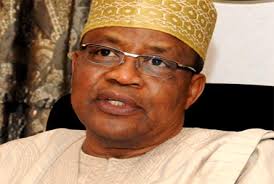 Former Nigeria’s military President, General Ibrahim Badamasi Babangida has expressed fear that overheating of polity as Nigeria approaches the 2015 general election would lead to nothing but confusion and anarchy.