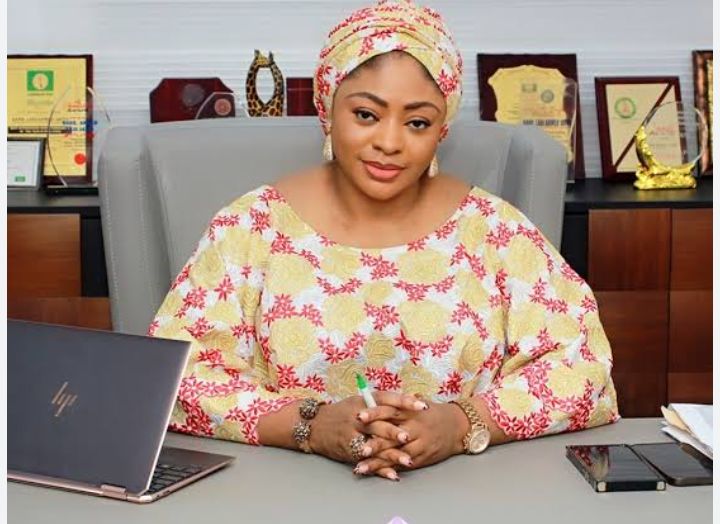
The National Emergency Management Agency (NEMA) has bagged the Vanguard Newspaper Humanitarian Agency of the Year 2025 award. The award was conferred on the Agency at the 2025 Vanguard Personality of the Year Awards held in Lagos. The event attracted an array of eminent dignitaries, including State Governors, Ministers, Heads of Government agencies and captains of industry. NEMA’s award was presented on behalf of the organisers by the Inspector-General of Police, Mr. Olatunji Rilwan Disu. The Director General of NEMA, Mrs. Zubaida Umar, was represented at the event by the Director of Special Duties, Hajiya Fatimah Suleiman Kasim, who received the award on behalf of the Agency. Speaking at the event, the Editor of Vanguard Newspaper, Mr. Eze Anaba, said that the award was a well-deserved recognition of NEMA’s outstanding humanitarian interventions and impactful service delivery. He said that the Board of Editors of the newspaper undertook a rigorous and transparent selection process to ensure that only deserving individuals and institutions were honoured for their exceptional performance and contributions to national development.
Nigeria’s President Bola Tinubu has made it clear that what the world needs now are tranquillity, peace and love. Tinubu spoke April 23, against the background of the ongoing war between Iran and America/Israel when he received new Ambassadors to Nigeria at the presidential villa, Abuja, Nigeria. The Nigerian leader told the new Ambassadors, especially the ones from the Kingdom of Saudi Arabia, the State of Qatar, the United Arab Emirates, the State of Kuwait, the Kingdom of Bahrain, the Sultanate of Oman and the Hashemite Kingdom of Jordan: “The world needs tranquillity, peace and love.” Tinubu said that in the face of the recent attacks between Iran and America/Israel, Nigeria would always strive for peace and stability across the world. He suggested that global challenges should be tackled with the collective will and cooperation of nations and international institutions. “The global community today faces a complex web of overlapping crises—from the changing international order, climate change and energy transitions to counter-terrorism and the need for a more equitable global financial architecture.” He said that Nigeria would continue to work together with international partners to pursue peace within the African sub-region and the globe. According to him, Nigeria’s foreign policy will continue to guide its active engagements with the global community for mutual benefits. “As you engage with our government and our people, you will observe that our strategic foreign policy actively guides our interactions on the global stage. “Nigeria seeks to collaborate with your nations to harness the boundless energy of our youthful demography, drive infrastructural and economic development, maximise the mutual potential of our diaspora populations and champion democratic governance. “Furthermore, Nigeria remains acutely aware of its responsibilities within our immediate neighbourhood and the broader African continent. We are resolute in our commitment to the principles and protocols of the Economic Community of West African States (ECOWAS). The defence of constitutional order, the pursuit of regional economic integration, and the stabilisation of the Sahel region are priorities that we cannot achieve in isolation. We look forward to robust partnership and cooperation with your respective countries in addressing these transnational security and development challenges.’’ Responding on behalf of the envoys, the Ambassador of Qatar thanked the President for taking the time to receive them at the Presidential Villa. He assured the President of excellent relations with Qatar and pledged that all the envoys would do their best to improve relations with Nigeria after their tour. President Tinubu received Letters of Credence from the Ambassador of the State of Qatar, Yousef Mohammed Ahmed Mohammed Al-Hail; Ambassador of the Kingdom of Saudi Arabia, Yousef Bin Mohammed Albalawi; Ambassador of the Lebanese Republic, Wissam Kalakeche; Ambassador of the Republic of Sudan, Mohammed Abdelaal Haroun and High Commissioner of the Republic of Namibia, Walda Natangwe Ndevashiya, High Commissioner of Rwanda, Moses Rugema; Ambassador of the Republic of Somalia, Mohamed Osman Mohamed; Ambassador of the Argentine Republic, Nicolas Perazzo Naon and Ambassador of the Republic of Congo, Moyongo Dieudonne.
President Bola Tinubu has sent a letter to the Senate, requesting the approval of the sum of $516,333,070 to be borrowed from external lender to fund sections of the proposed Sokoto–Badagry Super Highway. In the letter addressed to the President of the Senate, Godswill Akpabio and was read during plenary today, April 23, Tinubu said that the loan would be sourced from Deutsche Bank to support the construction of Sections 1, 1A and 1B of the 1,000-kilometre highway, designed to link Nigeria’s North-West to the South-West corridor. The letter partly read: “Specifically, approval is sought for the syndicated financing facility from Deutsche Bank in the total sum of US$516,333,007 for the execution of Sections 1, 1A, and 1B of the Sokoto–Badagry Superhighway Project. “The inclusion of the said financing in the Federal Government’s borrowing plan, as earlier approved by the National Assembly. The Senate is invited to note that the Sokoto–Badagry Superhighway is a flagship infrastructure initiative under the Renewed Hope Agenda.” President explained that the project would traverse Sokoto, Kebbi, Niger, Kwara, Oyo, Ogun and Lagos states, stretching from Illela to Badagry, and is expected to enhance connectivity and economic integration significantly. “The project is designed to open up Nigeria’s northwest–southwest economic corridor through the construction of an approximately 1,000-kilometre high-capacity carriageway, linking Sokoto, Kebbi, Niger, Kwara, Oyo, Ogun, and Lagos States, stretching from Illela to Badagry. “It is also expected to enhance north–south connectivity and road safety, improve network performance along the corridor, reduce logistics costs and travel time, facilitate trade and strengthen food security and promote national integration by linking production zones to markets and ports.” Tinubu said that the financing structure includes a syndicated loan backed by a partial risk guarantee from the Islamic Corporation for the Insurance of Investment and Export Credit, while the Federal Government would provide counterpart funding of ₦265.5bn for land acquisition, compensation and related infrastructure. He said that the loan would run for nine years, including a grace period of up to three years, with an interest rate benchmarked at the Chicago Mercantile Exchange SOFR plus 5.3 per cent per annum. According to President Tinubu, the Federal Executive Council (FEC) had approved the financing arrangement, even as he appealed to the Senate to fast-track the request. “I look forward to the expeditious consideration and approval of this request by the Senate. Please accept, Distinguished Senate President and Distinguished Senators, the assurances of my highest regards.” On the floor of the Senate, lawmakers acknowledged the economic significance of the project, emphasizing that large stretches of the highway cut across several states and would reduce travel time between Sokoto and Lagos from about 13 hours to six hours. This was even as the Senate President, Akpabio described the project as a major economic game-changer that is capable of saving lives and boosting national productivity. He emphasised that borrowing for critical infrastructure is justified, particularly where such investments yield long-term economic benefits and can facilitate repayment through generated value. The Senate President referred the request to the Senate Committee on Local and Foreign Debts, directing it to report back within one week. Senator Akpabio advised the panel to expedite its review to enable timely consideration of the loan request.
Nigeria, despite its aboundant human and natural resources, remain webbed in crises that defy logic and reason. Many factors are responsible for the evitable narrative. Two of these factors contributing to this paradox are religious dogmatism which is an uncompromising adherence to beliefs without critical examination and its companion, the poverty of rationality. Together, they form a silent but potent force shaping public discourses, governance and everyday life in ways that hinder national development. Religion, in itself, is not the problem. Indeed, faith has historically played a vital role in providing moral guidance, social cohesion and a sense of purpose for the overall good of humanity. Nigeria’s two major religions – Islam and Christianity – preach values of justice, compassion and accountability. However, when religious adherence becomes rigid, intolerant and resistant to reason, it ceases to be a tool for enlightenment and instead becomes a barrier to progress. Religious dogmatism manifests in many forms across Nigeria. It is seen in the refusal to question religious authorities, even when their teachings contradict common sense or public interest. It appears in the blind acceptance of miracles over medicine, prophecy over policy and divine intervention over civic responsibility. It is evident when citizens prioritize religious identity over national unity or when leaders exploit faith to manipulate emotions and evade accountability. This culture has serious implications for rational thinking. Rationality requires the ability to question, to analyze evidence and to make decisions based on logic and facts. Yet, in a society where questioning religious narratives is often seen as sacrilegious, critical thinking is stifled. It becomes an inmate in the prison of rational deficit. Young people are discouraged from asking “why” and are instead trained to accept “what is” without scrutiny. The result is a populace that is easily swayed by rhetoric, misinformation and emotional appeals. One of the consequences of lack of this rational or failure is the proliferation of misinformation and conspiracy theories. From health crises to political events, many Nigerians rely more on religious interpretations than on scientific evidence. During disease outbreaks, for instance, some communities have rejected medical advice in favor of spiritual remedies, sometimes with tragic outcomes. This not only endangers lives but undermines public trust in institutions and the experts managing them. Bearing in mind that religious dogmatism often fuels division and conflict, Nigeria’s history is replete with instances where religious differences have escalated into monumental violence. Although the causes of such conflicts are complex and multifaceted, the role of rigid belief systems could not be ignored. When individuals are taught that their faith is the only truth and all others are false or inferior, tolerance becomes difficult, and coexistence becomes fragile. Peace becomes wishful. In the political arena, the intersection of religion and governance further complicates matters. Many politicians would, in their campaign, invoke religious sentiments to gain support, framing policy debates in moral or spiritual terms. This does not only create distractions from substantive issues but also polarizes the electorate. Instead of evaluating leaders based on competence and performance, many voters are influenced by shared religious affiliations or endorsements from clerics. Education, which should be a breeding ground for critical thinking, is not immune to these challenges. In some cases, curricula are shaped by religious considerations that limit exposure to diverse perspectives. Teachers may avoid controversial topics for fear of backlash, while students are rarely encouraged to engage in open debate. Without a strong foundation in critical inquiry, the future generations risk perpetuating the same cycle of dogmatism and irrationality. The economic implications are equally significant. A society that undervalues rationality is less likely to innovate, adapt or compete in a globalized world. Investment in science, technology and research suffers when decision-making is guided more by belief than by evidence. Entrepreneurs may shy away from risk, while policymakers may ignore data-driven solutions in favor of populist or measures that appeal to religious sentiments. Over time, this erodes productivity and stifles growth. Granted that it would be unfair to paint all religious expressions in Nigeria with the same brush, there are numerous faith leaders and communities actively promoting dialogue, education and social development. Interfaith initiatives, such as those led by journalists and civil society organizations, demonstrate that religion could be a force for unity and progress when approached with openness and sincerity. The challenge, therefore, is not to eliminate religion from public life, but to recalibrate its role. Faith must coexist with reason, not replace it. Religious teachings should encourage inquiry, compassion and critical engagement. Clerics have a responsibility to guide their followers not only spiritually but also intellectually towards fostering an environment where questions are welcomed and evidence respected. Government and educational institutions also have a crucial role to play. Policies must prioritize scientific literacy, critical thinking and civic education. Schools should be safe spaces for dialogue, where students can explore ideas without fear of condemnation. Media organizations, too, must uphold standards of accuracy and objectivity, resisting the temptation to sensationalize religious narratives. Ultimately, the future of Nigeria depends on its ability to balance faith with reason. A society that embraces and harnesses the moral strength of religion as well as the problem-solving power of rationality. But if dogmatism continues to overshadow critical thinking, the nation risks remaining trapped, gyrating in a cycle of underdevelopment and avoidable division. The time has come for a national conversation: one that challenges entrenched beliefs, promotes intellectual curiosity, and redefines the relationship between religion and reason. This way, Nigeria would be on the match to unlocking its full potential and thus, charting a path toward sustainable development and lasting peace.
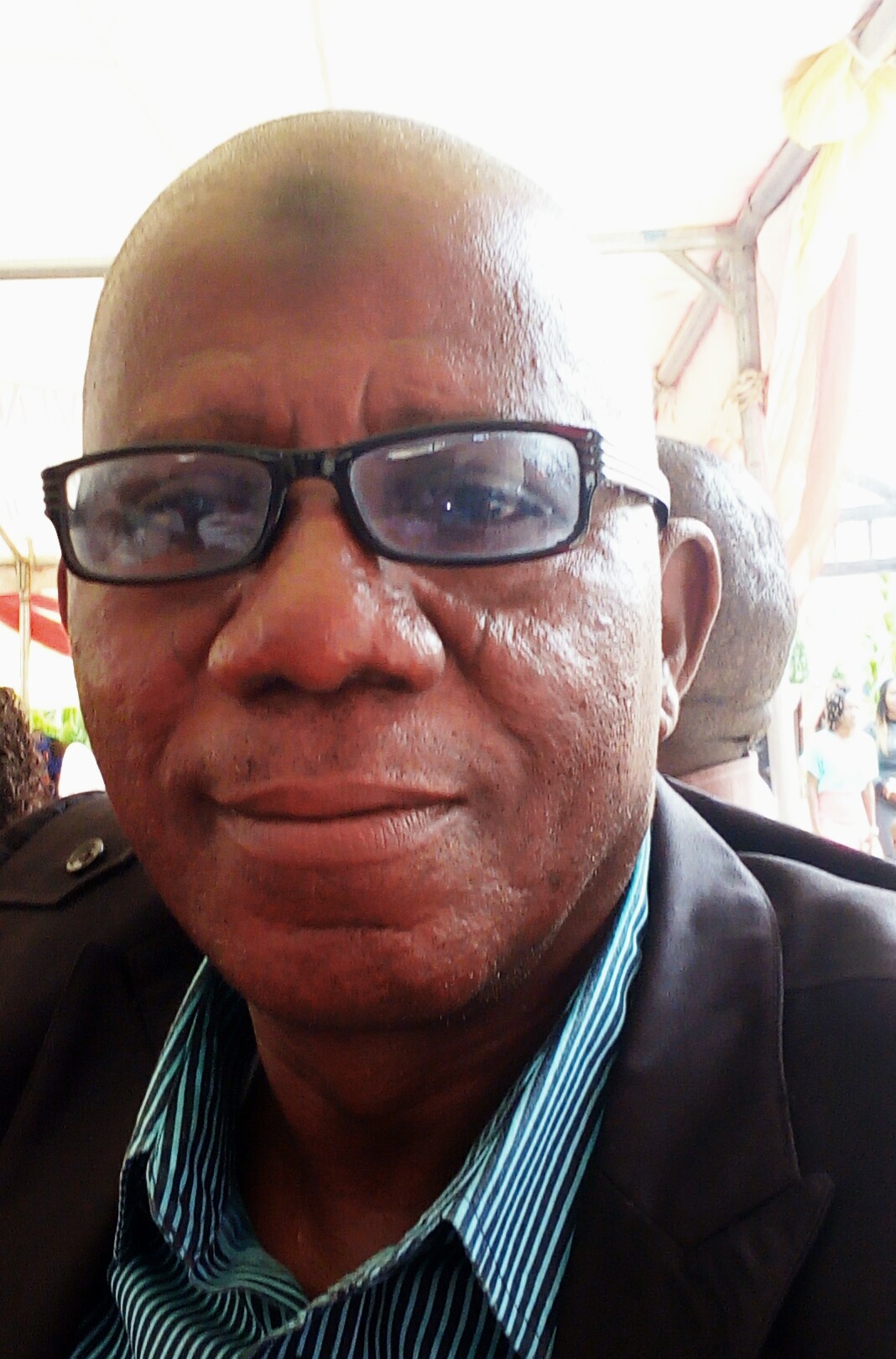
– Abdulkarim Abdulmalik is a journalist and Chairman, Governing Board of the Guild of Interfaith Media Practitioners Nigeria (GIMP-Nigeria). He can be reached on: info@interfaithmediaguild.org; nowmalik@gmail.com
The Ambassador of the Kingdom of Saudi Arabia to Nigeria, Yousef Bin Mohammed Al Balawi, has suggested to the minister of Nigeria’s Federal Capital Territory (FCT), Nyeson Wike the need for the two countries to start exchanging experiences on security, economy and urban development. Ambassador Yousef Bin Mohammed Al Balawi, who paid a courtesy visit to minister Wike in his office in Abuja, said that he has been comfortable in Nigeria since he formally assumed duty in February, 2026 because of the hospitality of the people. He suggested a deeper exchange of experience in security, economy and urban planning, saying: “I’m looking forward to strengthening our relationship in many fields—political, diplomatic, economic, security, and education. “We need to work together to exchange our experience on how we can build beautiful, green and modern cities like Abuja through exchanges between Abuja and Riyadh (Saudi Federal Capital).” Ambassador Yousef noted that major Saudi cities like Jeddah share similar atmospheric and planning potentials with Abuja, which he said provides a solid foundation for future bilateral cooperation between the two cities. This was even as minister Wike accepted the Ambassador’s suggestions, saying that he is ready of to partner with Riyadh and other modern cities in the Kingdom to foster urban development and mutual economic growth. He said that his administration is eager to translate the cordial ties between Nigeria and Saudi Arabia into tangible urban cooperation. “Your coming today is for us to solidify and make sure that we work together for our mutual interest. Saudi Arabia is very important, not just as a leading city in the Gulf States but also in the world. We would like to capitalize on that good relationship to see how our cities can cooperate, learn from each other and see what we can do together for the mutual benefit of the two countries.”
It often begins with a question people ask quietly, sometimes out of frustration, sometimes out of genuine curiosity: Why are some acts of violence described one way, and others differently? Why does language seem to shift depending on who commits the act? In today’s fast-moving mass media industry, words used in casting headlines are less than neutral. They influence how we see the world, how we judge others, and sometimes, how we judge entire communities. Among the most debated of these words is “terrorism”—a term that carries moral weight, political consequences, and emotional intensity. To understand the concern requires an excursion into history. When Adolf Hitler orchestrated the Holocaust, six million Jews were systematically murdered in one of the darkest chapters of human history. Yet, Hitler is not commonly described in religious terms. He is remembered as a Nazi dictator, not as a “Christian terrorist,” even though he emerged from a Christian-majority society. Similarly, Joseph Stalin presided over policies that led to the deaths of millions through purges, forced labor camps and famine. His brutality is well documented, yet he is framed as a communist authoritarian, not a figure defined by religious identity. In China, Mao Zedong oversaw campaigns like the Great Leap Forward, which resulted in catastrophic famine and mass death. His actions are analyzed through the lens of revolutionary ideology and governance failures; not religion. The same pattern appears with Benito Mussolini, whose expansionist ambitions caused suffering and loss of life. He is remembered as a fascist ruler, not labeled through a religious framework. These examples are not raised to diminish their crimes; far from it. They are cited to highlight a broader point: when history records mass violence by certain figures, it tends to emphasize political ideology, power and context rather than religion. This stands in contrast to how some contemporary acts of violence are reported. Since the early 21st century, especially after the events of 9/11 bombing of the Twin Tower in the United States of America, media narratives have often linked acts of terrorism involving Muslim perpetrators to religion itself. Phrases like “Islamist terrorism” became part of everyday vocabulary. Over time, critics argue, this has created an association in the public mind; one that risks attaching the actions of individuals or groups with the beliefs of over a billion people. But reality, as always, is more complicated. Take the ongoing crisis involving the Rohingya Muslims in Myanmar. Reports of violence, displacement and human rights abuses have shocked the international community. Many observers note that the language used to describe these atrocities often avoids broad religious labeling. Instead, it focuses on ethnic conflict, nationalism and military action. Consider the wars in Iraq and Afghanistan during the presidency of George W. Bush. These conflicts resulted in significant loss of life and long-term instability. However, discussions around them tend to revolve around geopolitics, security strategy and foreign policy decisions; not the personal religious identity of the leaders involved. Looking further back, some of the most devastating events in history are rarely framed through religion at all. World War I and World War II reshaped the world and claimed tens of millions of lives. The atomic bombings of Hiroshima and Nagasaki introduced a new scale of destruction. The chronicles of colonial expansion, the decimation of indigenous populations in the Americas and Australia, and the transatlantic slave trade all represent immense human suffering. Yet, in most historical accounts, these events are explained through empire, economics, race and power. Not religion! So, what explains the difference? Part of it lies in how the concept of “terrorism” has evolved. In modern usage, it is often associated with non-state actors: groups or individuals who use violence against civilians to achieve political or ideological goals. This definition has shaped how mass media organizations report conflicts, especially in the context of global security concerns. However, critics argue that even within this framework, inconsistencies remain. When similar acts of violence occur, the labels applied can vary depending on the identity of the perpetrator. This inconsistency, whether intentional or not, could influence public perception. And perception matters. When a particular group is repeatedly associated with negative labels, it can lead to stereotypes. Over time, these stereotypes could resort to prejudice; affecting everything from social interactions to public policy. For many Muslims around the world, this is not an abstract concern. It is a lived experience. At the same time, it is important to approach this issue with objectivity and balance. Not every act of violence involving a Muslim should be labeled as terrorism, just as not every act involving a non-Muslim is framed differently. Media landscapes are diverse, and many journalists work hard to provide fair and accurate reporting. In recent years, there has also been greater attention to other forms of extremism, including far-right and white supremacist violence, which are increasingly recognized and labeled as terrorism. Thus, historical comparisons must be made carefully. For instance, leaders like Hitler, Stalin, and Mao were driven by ideologies that were often hostile to religion itself. So, describing their actions in religious terms would amount to oversimplifying the motivations behind their crimes. The challenge therefore, is not to replace one form of labeling with another. It is about striving for consistency and clarity. Violence against innocent people should be condemned, regardless of who commits it. The criteria for labeling an act as terrorism should be applied evenly premised on actions and intent; not identity. And when religion is invoked, it should be done with nuance, recognizing the difference between individual actions and the beliefs of a wider community. There is also a responsibility on the part of readers and viewers. In an era of social media and viral headlines, it is easy to accept narratives at face value. But critical thinking – asking questions, seeking context, and considering multiple perspectives – is more important than ever. Ultimately, this conversation is not just about media. It is about fairness. It is about how we see one another in an increasingly interconnected world. And it is about whether we allow language to divide us or to help us understand. History is filled with painful lessons. It shows us what happens when people are reduced to labels, when complexity is ignored, and when entire groups are judged by the actions of a few. To this end, there is one lesson to carry forward: justice begins with how we tell the story.
– Abdulmalik is an Abuja-based journalist and can be reached on: nowmalik@gmail.com
“Nigeria’s prolonged security challenges including banditry, terrorism, kidnapping and organised crime have exposed the weaknesses of the country’s centralised policing structure.” President of the Alumni Association of the National Institute (AANI), Ambassador Emmanuel Obi Okafor, made this point at the 46th Annual General Meeting (AGM) and National Colloquium of the Alumni in Abuja. This was even as the Alumni advised for what it called “a far-reaching overhaul of Nigeria’s policing system.” It advocated a decentralised, intelligence-led and community-based approach to tackle the nation’s persistent security challenges. The Association’s President stressed the urgent need for practical and decisive reforms even as Professor Femi Mimiko described Nigeria’s single layer policing system as overstretched and incompatible with federal principles. He said that an effective security framework must be multi-layered and responsive to local realities. According to him, intelligence gaps, manpower shortages and over centralisation have significantly weakened policing effectiveness, making comprehensive reform inevitable. Professor Mimiko added that a properly structured state policing system, supported by strong institutional safeguards, would enhance responsiveness, accountability and public confidence.
The Head of the Civil Service of the Federation, Mrs. Didi Esther Walson-Jack, appreciated AANI for convening the forum and commended its leadership for sustaining a platform for strategic national dialogue. Represented by the Permanent Secretary, Federal Ministry of Innovation, Science and Technology, Dr. Mukhtar Mohammed, she reaffirmed the critical role of security in national development and pledged support for the implementation of the meeting’s outcomes. “I am confident that the robust deliberations at this colloquium will generate practical insights and actionable recommendations to enrich ongoing conversations and guide informed decision-making.” Discussing the keynote paper, retired Deputy Inspector-General of Police, Adeleye Oyebade, proposed a hybrid policing model that integrates state and community policing, while retaining the Nigeria Police Force as the central coordinating authority. The retired police chief noted that such a framework would ensure uniform standards and improve rapid response to security threats at the grassroots. While discussing kenote paper also, Brigadier General Abdulrahman Idris, emphasised the need for a holistic approach to security, noting that effective policing goes beyond enforcement. He highlighted the importance of public trust, community collaboration, and addressing socio-economic issues such as unemployment and social exclusion. Deliberations at the colloquium identified key concerns, including structural and institutional deficiencies in the policing system, the importance of community trust and intelligence gathering, and the need to integrate legal, operational and socio-economic strategies in reform efforts. AANI reaffirmed its role as a policy think-tank committed to providing evidence-based recommendations to support government initiatives in addressing national security challenges. The association disclosed that outcomes of the AGM and colloquium would be harmonised into a communiqué and strategic policy proposals for relevant authorities. As insecurity continues to dominate national discourse, AANI cautioned that incremental measures are no longer sufficient, calling instead for bold, comprehensive reforms to secure the nation’s future. The event also featured goodwill messages from various security agencies, while participants made contributions during interactive sessions. The event, themed: “State Police and Community Policing: Challenges, Options and Opportunities,” attracted a wide range of stakeholders from across the country. Participants included senior security and intelligence officials, representatives of Zamfara and Sokoto State governments, and key federal institutions. The Secretary to the Government of the Federation was represented by Professor Babatunde Bolaji.Also, the Inspector-General of Police was represented by Assistant Inspector-General Aisha Abubakar; the Chief of Army Staff represented by Colonel Jubril; the Chief of Naval Staff by Navy Captain Hassan Yusuf; and the intelligence community by Dr. Bakeji, among others.
The Joint Admissions and Matriculation Board has released the results of candidates who sat for the 2026 Unified Tertiary Matriculation Examination on Thursday, April 16, 2026, with a total of 632,788 results now available for viewing. In a statement issued by the Board on Friday, and signed by its spokesperson Fabian Benjamin, candidates were advised to check their results by sending “UTMERESULT” via SMS to 55019 or 66019, using the same phone number (SIM) used during registration. JAMB said that at this stage, candidates can only view their results, as printing options are not yet available. It also issued a strong warning against attempts to manipulate or alter result messages received from official channels, stressing that such actions constitute a criminal offence. “Candidates are strongly cautioned against manipulating the SMS received from the official platform (55019/66019) to fabricate or alter scores with the intent to mislead others, including parents. Such actions constitute a serious criminal offence,” the statement said. The Board added that it is already taking action against offenders, revealing that some suspects are currently in custody. “Currently, two candidates and one parent are in custody for engaging in result falsification using AI and other electronic means. Any candidate found culpable will face the full consequences of the law.” JAMB assured that the examination process is still ongoing and that results will continue to be released in batches as they are processed.
“Every soul shall taste death… but a great journalist’s story is never truly over as long as his colleagues remember the truth he told.”—- Anon The world of Northern Nigerian journalism has lost one of its most spirited and fearless voices. Balarabe Nazeephy (April 16, 1960 – February 2026) was more than a reporter; he was a bridge between eras, a guardian of professional integrity, and a man whose life was anchored in both the grit of “Fleet Street” and the sacred verses of the Holy Quran. Our journey began nearly 29 years ago. I was a young, green reporter at the Triumph Publishing Company, and Nazeephy was already a veteran fixture of the industry, serving as the Kano Correspondent for The Vanguard. Two years later, as I transitioned to The News/TEMPO and PM News, our bond tightened on the bustling pavement of Kano’s Galadima Road. In those days, Galadima was our Fleet Street—a high-octane hub of news, deadline pressure, and camaraderie. Our offices were a mere stone’s throw apart. Nazeephy was a man of infectious energy, professional to the core, and possessed that rare, raw fearlessness that defines the best of our craft. Beneath the dogged pursuit of a lead was a man of deep familial loyalty. I remember vividly how he would insist I look after his niece, Mrs. Maryam Hali, whenever she visited the office. He went as far as jokingly dragging me to his family home at Kwanar Jaba, emphatically declaring that I should become his in-law. He sought to cement a friendship into a brotherhood—a bond that remained a respectful, lifelong friendship with Maryam. Indeed, it was through Maryam’s post that I finally confirmed the heavy news of his passing, after his successor at The Vanguard, Nathaniel Ikyur, sought clarification on the Kano Correspondents Reunion platform. Nazeephy’s career was a testament to his versatility and dedication to the public record. He navigated the shifting tides of Nigerian media and governance through several key institutions: • Radio Kano: Where he honed his early broadcast instincts. • Concord Press: Serving during the golden era of MKO Abiola’s media empire. • Vanguard News: Where he became a household name in the North West. • Daily Times: Contributing to the “Old Lady of Kakawa Street.” • The Senate, National Assembly: Where he transitioned into policy communications as a Special Assistant. Despite these professional heights, he remained a man of the Word, having memorized the Holy Quran—a spiritual grounding that balanced his earthly pursuits. His education at the Exam Success Correspondence College, Lagos, laid the foundation for a man who never stopped seeking knowledge. The circumstances of his departure are deeply poignant. I saw him last at an eatery in Wuse while he was still at the National Assembly, full of his usual vigor. However, many of us noticed his unusual silence on social media since last year. As Jacob Ajakaye noted, his absence is a “great loss to journalism practice in northern Nigeria.” He was found dead in his Abuja home by his five young children, who noticed their father was no longer moving and alerted cousins nearby. While an aunt in Abuja ensured he received his final rites, a heavy question remains: Who will look after the five young children he left behind? Balarabe Nazeephy was a man of the heartland, a vanguard of the truth, and a soul whose dagger was always sharpened for justice but sheathed in kindness for his friends. May Allah (SWT) forgive his shortcomings and grant him Aljanna Firdaus. May He grant his family, friends, and the journalism community the courage to bear this irreparable loss. Adieu, Nazeephy. The newsroom is quieter without you. Bello wrote in from Abuja.
In a move aimed at addressing unemployment and improving access to reliable services, a technology company, Zelink Technologies Nigeria, has launched Zelink360, a new digital platform designed to connect Nigerians with verified professionals and skilled artisans in their communities.
The platform is expected to help bridge a long-standing gap in Nigeria’s service sector by linking individuals who need services with professionals who possess the required skills but often struggle to reach potential customers.
Across the country, many Nigerians face the frustrating challenge of finding trustworthy artisans when something needs fixing. Whether it is electrical faults, plumbing issues, generator breakdowns, or the need for qualified home tutors, locating reliable professionals often requires numerous referrals, uncertain recommendations, and wasted time.
At the same time, thousands of skilled workers remain underutilised because they lack access to a structured marketplace where their services can easily be discovered.
Developed by Zelink Technologies Nigeria, the platform allows service seekers to instantly connect with nearby verified professionals through a simple and convenient system powered by artificial intelligence. Instead of searching endlessly for contacts, users can simply send a message to the platform’s dedicated AI-powered WhatsApp number (08155693487) and get connected with professionals within their area.
The technology behind Zelink360 intelligently matches service requests with registered professionals, helping customers to quickly find reliable help, while providing artisans with direct access to job opportunities.
According to the developers, the initiative is also designed to support economic empowerment by giving skilled workers a digital platform to promote their services and expand their reach.
“Many talented artisans and professionals in Nigeria possess valuable skills but lack the visibility and digital tools needed to connect with customers consistently,” a spokesperson for Zelink Technologies Nigeria said. “Zelink360 is designed to give these professionals a trusted platform where they can register, get verified, and gain access to real service requests from people who need their expertise.”
The platform supports a wide range of everyday services including electricians, plumbers, AC technicians, home tutors, Islamic tutors, cleaning services, carpenters, appliance repair technicians, generator repair specialists, and CCTV installation experts.
To ensure trust and reliability, professionals who join the platform undergo a verification process before they can begin receiving service requests.
The pilot phase of Zelink360 is currently launching in Abuja, where the company has begun actively onboarding and registering artisans and professionals across different service categories.
Residents of the Federal Capital Territory will be the first to benefit from the platform as it begins connecting households and businesses with verified professionals within the city.
At the same time, artisans and service providers in Abuja are being encouraged to take advantage of the opportunity by registering on the platform and becoming part of the growing network of verified professionals.
According to the company, the Abuja pilot will serve as the foundation for a broader rollout across other major Nigerian cities in the near future.
“We are starting with Abuja as our pilot city, where we are currently onboarding professionals and artisans,” the company explained. “Our goal is to expand to other cities across Nigeria in the near future, creating a nationwide network of trusted professionals that Nigerians can access easily.”
Industry observers believe that platforms like Zelink360 could play a meaningful role in modernizing Nigeria’s informal service sector while helping skilled workers access more consistent income opportunities.
As Nigeria continues to embrace digital solutions that improve everyday life, initiatives like Zelink360 demonstrate how technology can be used to simplify access to services while also creating new economic opportunities for hardworking professionals.
For Nigerians seeking reliable services, connecting with a verified professional is now as simple as sending a WhatsApp message to 08155693487.
Meanwhile, professionals and artisans in Abuja who wish to join the platform can register and begin the verification process by visiting www.zelink360.com.ng
We use cookies on our website to give you the most relevant experience by remembering your preferences and repeat visits. By clicking “Accept”, you consent to the use of ALL the cookies.
This website uses cookies to improve your experience while you navigate through the website. Out of these, the cookies that are categorized as necessary are stored on your browser as they are essential for the working of basic functionalities of the website. We also use third-party cookies that help us analyze and understand how you use this website. These cookies will be stored in your browser only with your consent. You also have the option to opt-out of these cookies. But opting out of some of these cookies may affect your browsing experience.
Necessary cookies are absolutely essential for the website to function properly. This category only includes cookies that ensures basic functionalities and security features of the website. These cookies do not store any personal information.
Any cookies that may not be particularly necessary for the website to function and is used specifically to collect user personal data via analytics, ads, other embedded contents are termed as non-necessary cookies. It is mandatory to procure user consent prior to running these cookies on your website.
Religious Dogmatism And Poverty Of Rationality In Nigeria, By Abdulkarim Abdulmalik
Nigeria, despite its aboundant human and natural resources, remain webbed in crises that defy logic and reason. Many factors are responsible for the evitable narrative.
Two of these factors contributing to this paradox are religious dogmatism which is an uncompromising adherence to beliefs without critical examination and its companion, the poverty of rationality. Together, they form a silent but potent force shaping public discourses, governance and everyday life in ways that hinder national development.
Religion, in itself, is not the problem. Indeed, faith has historically played a vital role in providing moral guidance, social cohesion and a sense of purpose for the overall good of humanity. Nigeria’s two major religions – Islam and Christianity – preach values of justice, compassion and accountability. However, when religious adherence becomes rigid, intolerant and resistant to reason, it ceases to be a tool for enlightenment and instead becomes a barrier to progress.
Religious dogmatism manifests in many forms across Nigeria. It is seen in the refusal to question religious authorities, even when their teachings contradict common sense or public interest. It appears in the blind acceptance of miracles over medicine, prophecy over policy and divine intervention over civic responsibility. It is evident when citizens prioritize religious identity over national unity or when leaders exploit faith to manipulate emotions and evade accountability.
This culture has serious implications for rational thinking. Rationality requires the ability to question, to analyze evidence and to make decisions based on logic and facts. Yet, in a society where questioning religious narratives is often seen as sacrilegious, critical thinking is stifled. It becomes an inmate in the prison of rational deficit.
Young people are discouraged from asking “why” and are instead trained to accept “what is” without scrutiny. The result is a populace that is easily swayed by rhetoric, misinformation and emotional appeals.
One of the consequences of lack of this rational or failure is the proliferation of misinformation and conspiracy theories. From health crises to political events, many Nigerians rely more on religious interpretations than on scientific evidence. During disease outbreaks, for instance, some communities have rejected medical advice in favor of spiritual remedies, sometimes with tragic outcomes. This not only endangers lives but undermines public trust in institutions and the experts managing them.
Bearing in mind that religious dogmatism often fuels division and conflict, Nigeria’s history is replete with instances where religious differences have escalated into monumental violence.
Although the causes of such conflicts are complex and multifaceted, the role of rigid belief systems could not be ignored. When individuals are taught that their faith is the only truth and all others are false or inferior, tolerance becomes difficult, and coexistence becomes fragile. Peace becomes wishful.
In the political arena, the intersection of religion and governance further complicates matters. Many politicians would, in their campaign, invoke religious sentiments to gain support, framing policy debates in moral or spiritual terms. This does not only create distractions from substantive issues but also polarizes the electorate. Instead of evaluating leaders based on competence and performance, many voters are influenced by shared religious affiliations or endorsements from clerics.
Education, which should be a breeding ground for critical thinking, is not immune to these challenges. In some cases, curricula are shaped by religious considerations that limit exposure to diverse perspectives. Teachers may avoid controversial topics for fear of backlash, while students are rarely encouraged to engage in open debate. Without a strong foundation in critical inquiry, the future generations risk perpetuating the same cycle of dogmatism and irrationality.
The economic implications are equally significant. A society that undervalues rationality is less likely to innovate, adapt or compete in a globalized world. Investment in science, technology and research suffers when decision-making is guided more by belief than by evidence.
Entrepreneurs may shy away from risk, while policymakers may ignore data-driven solutions in favor of populist or measures that appeal to religious sentiments. Over time, this erodes productivity and stifles growth.
Granted that it would be unfair to paint all religious expressions in Nigeria with the same brush, there are numerous faith leaders and communities actively promoting dialogue, education and social development. Interfaith initiatives, such as those led by journalists and civil society organizations, demonstrate that religion could be a force for unity and progress when approached with openness and sincerity.
The challenge, therefore, is not to eliminate religion from public life, but to recalibrate its role. Faith must coexist with reason, not replace it. Religious teachings should encourage inquiry, compassion and critical engagement. Clerics have a responsibility to guide their followers not only spiritually but also intellectually towards fostering an environment where questions are welcomed and evidence respected.
Government and educational institutions also have a crucial role to play. Policies must prioritize scientific literacy, critical thinking and civic education. Schools should be safe spaces for dialogue, where students can explore ideas without fear of condemnation. Media organizations, too, must uphold standards of accuracy and objectivity, resisting the temptation to sensationalize religious narratives.
Ultimately, the future of Nigeria depends on its ability to balance faith with reason. A society that embraces and harnesses the moral strength of religion as well as the problem-solving power of rationality. But if dogmatism continues to overshadow critical thinking, the nation risks remaining trapped, gyrating in a cycle of underdevelopment and avoidable division.
The time has come for a national conversation: one that challenges entrenched beliefs, promotes intellectual curiosity, and redefines the relationship between religion and reason. This way, Nigeria would be on the match to unlocking its full potential and thus, charting a path toward sustainable development and lasting peace.
– Abdulkarim Abdulmalik is a journalist and Chairman, Governing Board of the Guild of Interfaith Media Practitioners Nigeria (GIMP-Nigeria). He can be reached on: info@interfaithmediaguild.org; nowmalik@gmail.com