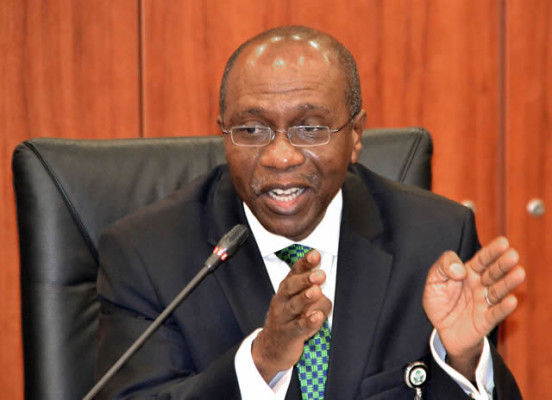
Clerk to the National Assembly (CNA), Barrister Mohammed Ataba Sani-Omolori is on a collision course with the National Assembly Service Commission (NASC) over the retirement age of staff of the National Assembly.
While the NASC put the approved age for retirement at 35 years of service or 60 years of age, Sani-Omolori insisted that it is 40 years in Service or 65 years of age whichever comes first.
Sani-Omolori, in a statement today, July 15, titled: “Retirement age for staff of the National Assembly is 40 years of Service or 65 years of age whichever comes first” said the NASC does not have the powers to set aside the Revised Conditions of Service as passed by the 8th National Assembly.
Sani-Omolori said: “The attention of the National Assembly Management has been drawn to a Press Release dated 15th July, 2020 signed by the Chairman of the National Assembly Service Commission, informing the general public that the Commission has approved the retirement age of staff of the National Assembly as 35 years of service or 60 years of age whichever comes first.
“The Management of the National Assembly wishes to inform all staff and the general public that the extant regulation as contained in our Revised Conditions of Service duly passed by both Chambers of the 8th National Assembly puts the retirement age of staff at 40 years of service and 65 years of age whichever comes first.
“The Resolution of the 8th National Assembly on the Conditions of Service of Staff has not been rescinded nor abdicated by the National Assembly, who under the authentic National Assembly Service Act 2014 as passed is empowered to review any proposed amendment to the Conditions of Service by the Commission.
“Therefore, the National Assembly Service Commission does NOT have the powers to set aside the Revised Conditions of Service as passed by the 8th National Assembly.
“The Management had maintained a studied silence in deference to the leadership of the 9th National Assembly who is looking into the position being canvassed by the Commission.
“It is therefore intriguing that the National Assembly Service Commission has unilaterally gone ahead to take a ‘’decision’’.
“Management urges all staff to disregard the press release by the Commission and go about their lawful duties.”
However, the Chairmen of the NASC, Ahmed Kadi-Amshi had in a statement titled: “The National Assembly Service Commission approves the retirement age for the staff of the National Assembly Service as 35 years of Service or 60 years of age which ever comes first” said that the commission has approved the retirement of all staff that have attainted the age.
Kadi-Amshi said: “Pursuant to its mandate as provided in the National Assembly Service Act 2014 (as amended), the National Assembly Service Commission at its 497th meeting held on Wednesday 15th July 2020 has approved the retirement age of the staff of the National Assembly Service as 35 years of service or 60 years of age whichever comes first.
“To this effect the Commission has approved the immediate retirement of staff of the National Assembly Service who have already attained the retirement age of 35 years of service or 60 years of age.
“Retirement letters would be issued to the affected staff accordingly.”
The Revised Conditions of Service for Staff of the National Assembly approved by the 8th National Assembly has been a subject of controversy.
About 150 directors, including the CNA, Sani-Omolori were said to have benefited from the additional years afforded by the Revised Conditions of Service.
The House of Representatives had in a statement recently said it stands by the resolutions of the 8th National Assembly on Revised Conditions of Service.
However, the Commission insisted that the amendment of the Conditions of Service by the 8th National Assembly, did not follow due process and therefore, they are null and void.
“The thing that we must take note of is that corruption fights back. And it is fighting back and it has the resources to do so.”
This was the submission of the Nigeria’s Vice President, Yemi Osinbajo when he spoke at the 20th anniversary regional webinar, organised by the Independent Corrupt Practices and other offences Commission (ICPC) yesterday, July 14.
Professor Osinbajo, who warned that many people will be discouraged to stand against corruption in the coming days due to its multifaceted nature and difficulty in combating the scourge, stressed that the fight against corruption would become more difficult.Osinbajo spoke on: “Combating corruption and illicit financial flows: New measures and strategies.”
The Vice President said: “the fight against corruption is nuanced and hydra-headed. It is not going to get easier by the day; as a matter of fact, it will get more difficult by the day and many will become discouraged in standing up against corruption.
“But it is our duty both as individuals and institutions, especially in developing countries where corruption has such a devastating effect, to ensure that we prioritise the fight against corruption and continually devise new ways and new approaches even as the hydra-headed problem itself continues to manifest in different ways.”
Osinbajo said that the President Muhammadu Buhari-led government has so far been charting a new course forward for the fight against corruption in the country.
“Over the years, massive public resources and assets have been directly stolen, diverted, deliberately misapplied to gratify corrupt tendencies, stashed in foreign jurisdictions or mired in and susceptible to pilferage by the inequitable and unjust international economic system that continues to undermine the social and economic development aspirations of poor countries, especially from Africa.
“Without effectively combating corruption and IFFs and promoting international cooperation for asset recovery and asset return, Africa cannot achieve the Sustainable Development Goals. Goal 16 of the SDGs is devoted to corruption.”
Although anonymous companies are not always illegal, nevertheless secrecy provides a convenient cover for criminality and corruption.
“Our experience in Nigeria, as in other developing countries, is that anonymous corporate ownership covers a multitude of sins, including conflict of interests, corruption, tax evasion, money laundering, and even terrorism financing.
“We must make corruption expensive for those who engage in it and send the unequivocal message that corruption simply does not pay.
“It is the unenviable but noble task of the ICPC and other anti-corruption agencies to make corruption unattractive to its disciples and facilitate new approaches to stemming IFFS and promoting asset recovery and return.”
Professor Osinbajo said that there is need for holistic measures to completely stamp out corruption from the polity.
“We must protect, even more, whistle-blowers – persons who come forward with information against corruption.
“We must protect those who are ready to fight against corruption and who are prepared to do so without necessarily disclosing their identities and even those who are ready to disclose their identities”
The death of the first female combat helicopter pilot in the Nigerian Air Force, Tolulope Arotile, has sent Shockwaves across the country with President Muhammadu Buhari taking the lead in the pain of loss.
Tolulope died yesterday, July 14, as a result of head injuries sustained from a road traffic accident at NAF Base Kaduna.
Until her death, Flying Officer Arotile, who was commissioned into the NAF in September 2017 as a member of Nigerian Defence Academy Regular Course 64, was the first ever female combat helicopter pilot in the Service.
During her short but impactful stay in the Service, late Arotile, who hails from Ife in Ijumu Local Government Area of Kogi State, contributed significantly to the efforts to rid the North Central States of armed bandits and other criminal elements by flying several combat missions under Operation GAMA AIKI in Minna, Niger State.
In a condolence message, President Buhari described her death as shocking and painful, especially, against the background of her dedication towards the battle against bandits and criminal elements in the society.
The President said that he received with deep pain the passing of Flying Officer, Tolulope Arotile, describing her a promising officer, whose short stay on earth impacted greatly on the nation, especially in peace and security.
He acknowledged Arotile’s bravery in the field to protect the country from onslaught of bandits and terrorists, even as he assured that her memory will be indelible, and her efforts remembered.
Buhari consoled
President Buhari the deceased family, Kogi State, the Nigerian Air Force, airmen, airwomen and all friends of the deceased.
He recalled “her deft skills in manoeuvring combat helicopters, which I physically witnessed with pride.”
President Buhari prayed that the Almighty God will receive the soul of the departed, and comfort the family she left behind.
This is even as the Chief of the Air Staff, Air Marshal Sadique Abubakar, sympathized with the family of late Arotile.
Suspended acting chairman of the Economic and Financial Crimes Commission (EFCC), Ibrahim Magu has described the charges against him in the ongoing probe of his tenure as trumped-up allegations aimed at tarnishing his image and rubbish the credibility and image of the EFCC.
in a petition by his lawyer, Wahab Shittu, to the Presidential Investigation Committee On The Alleged Mismanagement of the EFCC, Magu complained that he was not accorded his fundamental rights to fair hearing in the matter.
“The charges against our client are trumped-up allegations designed to tarnish his image and rubbish the credibility and image of EFCC which has been Stellar and outstanding under our client’s watch.
“Based on the above circumstances, our client was not given adequate time and facilities for his defence and his demand for a copy of the allegations against him has not been honoured till date.
We appeal to the Honourable Panel to consider the above and uphold the Fundamental Rights to fair hearing of our client.”
Full text of the petition is reproduced here:
The Chairman,
The Presidential Investigation Committee
On The Alleged Mismanagement Of
Economic and Financial Crimes Commission (EFCC)
Federal Government Recovered Assets and Finances
From May 2015 to May 2020.
Attention: Hon Justice Isa Ayo Salami (Rtd)
Gentlemen:
PUBLICATIONS PREJUDICIAL TO THE PROCEEDINGS OF THIS HONOURABLE PANEL
We act as Counsel of Choice to Mr Ibrahim Mustafa Magu, the suspended Acting Chairman of the EFCC hereinafter referred to as “Our Client” and on whose behalf and specific instructions we write as follows:
This is a follow-up to our letter dated 10th July, 2020 on behalf of our client.
Please be advised that the attention of our client has been drawn to serial falsehood publications in the media in respect of matters which never featured in the proceedings of this Honourable Panel.
These falsehood publications being orchestrated in the media include the following:
NFIU SUBMITS REPORT ON MAGU’S FOREX TRANSACTIONS TO PANEL (SEE THE PUNCH OF TUESDAY, JULY 14, 2020)
This report was published in The PUNCH on Tuesday July 14, 2020.
Our client states categorically that he has not been confronted on alleged illegal transactions and no such report was tendered by NFIU in any proceedings before this panel involving him till date.
Our client states categorically that the maximum forex transactions he has been involved in is the sum of $10,000 (Ten Thousand Dollars) till date.
Our client also wishes to place on record that he has no link with Kaduna-based Bureau De Change Operator as erroneously reported in the publication.
ALLEGED N573 MILLION NAIRA DUBAI PROPERTY LINKED TO MAGU
This allegation is outright falsehood and is denied by our client in unmistakable terms. It is instructive to state that the General Overseer of Divine Hand of God Prophetic Ministries, Prophet Emmanuel Omale, in a pre-litigation letter addressed to News Agency of Nigeria (NAN), on Monday 13th July, 2020, denied the allegations that he bought a property in Dubai worth N573 million on behalf of our client. Our client challenges his accusers to provide details of such property and proof of ownership by our client. Instructively, The PUNCH at Page 8 of Tuesday July 14th, 2020 had published the denial of Prophet Emmanuel Omale to set the record straight.
ALLEGED DIVERSION OF INTEREST ON RECOVERED FUNDS (SUNDAY PUNCH EDITION OF 12TH JULY, 2020)
This Publication on Front Page of Sunday Punch Edition of 12th of July, 20320 is outright falsehood.
Our client states that all recovered funds are lodged with TSA Account with Central Bank of Nigeria. It is elementary that funds in TSA Account lodged with CBN do not generate interest. It is therefore falsehood to publish that our client placed N500 billion (Five Hundred and Fifty Billion) recovered loot into deposit account. The alleged transaction never featured in the proceedings before this Honourable Panel. Our client was never confronted with any such allegation in the proceedings before this panel and the news is blatant falsehood.
DAY 6: PANEL QUIZZES MAGU ON N700 MILLION TRAINING FUND (VANGUARD, TUESDAY 14TH JULY, 2020)
The allegation that this Panel requested our client to account for the sum of N700 million meant for the commission’s operatives is not true. Our client has not been confronted with such allegation by this Honourable Panel. Our client does not disburse any such funds in the EFCC. The immediate Director of Finance and Administration (DFA) summoned by the Panel must have furnished details on this as the custodian of the funds. Our client denies this allegation completely. Funds earmarked for training was properly utilised by the Commission. The DFA and the Director of Audit will explain the utilisation of the funds meant for training with supporting documentations.
ALLEGED BID TO SPIRIT MAGU AWAY BUSTED (VANGUARD, JULY 14TH 2020 PG. 5)
The allegation that there were plans by some associates of our client to spirit him out of detention as published above is complete fabrication. Since our client has been in detention Nine (9) days ago, he has cooperated maximally with Law Enforcement Agents. Our client is only allowed very few restricted and fully screened visitors. No such incident took place as reported and this is an attempt to bring our client on collision course with the authorities he respects enormously. Our client, as a commissioner of police, will never escape from custody as he remains innocent and a patriotic citizen.
SALAMI PANEL GRILLS MAGU, EFCC DIRECTORS AGAIN
(DAILY TRUST, TUESDAY 14TH JULY, 2020 PG. 3)
The allegation that our client was grilled by the Panel on Monday, 13th July, 2020 as reported above is complete falsehood. The correct position was that our client and his Counsel (Mr. Wahab Shittu) arrived the venue of the ongoing Investigations on Monday 13th July, 2020 by 9am. Our client and his Counsel were kept at the waiting room of the venue of the sittings unattended to from 9am to 9pm when our client was taken back to custody. This followed the same pattern on Thursday and Friday last week when our client waited for 12 hours without being called upon by the Panel to partake in the proceedings. Witnesses called by the Panel were interrogated by the Panel without the participation of our client or his Counsel in the proceedings. This was also the pattern on Tuesday, 14th July, 2020. Our client chose to wait patiently on the panel.
ALLEGED PAYMENT OF N4 BILLION TO PROF. YEMI OSINBAJO SAN, GCON, VICE-PRESIDENT OF THE FEDERAL REPUBLIC OF NIGERIA
Our client strongly denies this falsehood against the respected Vice President of the Federal Republic of Nigeria. Our client has never given the sum of N4billion or any sum at all to Prof. Yemi Osinbajo SAN, GCON, Vice President of Federal Republic of Nigeria as wrongly reported. This allegation is complete falsehood designed to tarnish the hard-earned reputation of the Vice President and our client.
ALLEGED PAYMENT OF N28 MILLION TO FEMI FALANA SAN
This allegation is complete fabrication. Our client never gave N28 million or any amount to Mr Femi Falana SAN as maliciously reported. Our client also denies any link with a Kaduna-based Bureau De Change Operator as alleged.
SEARCH OF OUR CLIENT’S HOUSE – NO INCRIMINATING EVIDENCE FOUND
Our client confirms that his House was searched last Monday in his absence while in custody, but no incriminating evidence was found. It is untrue as reported that some dollars and expensive jewelries and wrist watches were found. Our client states that the search into his house did not reveal any incriminating evidence or materials. The cars removed from his residence were official vehicles assigned to our client as acting Chairman of EFCC.
DENIAL OF COPIES OF ALLEGATIONS AGAINST OUR CLIENT
Our client is spending the 9th day in custody without being given copy of the allegations against him to enable him formally respond to same. Our client is ready to formally respond to allegations and furnish documentary evidence in support if served with the copy of the allegations.
Our client respectfully demands the following:
a) A copy of the report of the Presidential Audit Committee
b) A copy of the memo of HAGF to the President on our client
c) Individual Petitions submitted to the Panel against our client.
Our client observes that rather being afforded copies of the allegations against him, some of these allegations are flying round on Social Media platforms with prejudicial consequences. Our client requests that these allegations be formally served on him to enable him respond to same immediately.
Our client observes that the Panel has issued official statement to the effect that it did not authorise the detention of our client. We request the Panel to recommend to the Inspector General of Police in whose custody our client is to release him from custody to enable him adequately prepare his defence and attend to his failing health. We plead with the authorities to release our client from custody.
QUESTIONS OVER ALLEGED N5BILLION ELECTION FUND (VANGUARD, MONDAY, JULY 13, 2020)
Our client denies receiving from INEC or anybody the sum of N5billion Election Fund as maliciously reported above. Our client has never been confronted with the alleged N5billion Election Fund by this Panel. This outrageous sum quoted above is outright falsehood. Funds released by INEC to EFCC were disbursed directly to the beneficiaries who participated in the electoral process. This information can be verified from the INEC Chair, the Director of Finance and Administration EFCC and Director of Audit respectively. Our client has absolutely nothing to do with the sum disbursed as Electoral Fund and never benefitted from the disbursement. The story is complete fabrication designed to tarnish the image of our client.
ALLEGED FAILURE TO SUBMIT EFCC AUDITED ACCOUNTS FOR FOUR (4) YEARS (THISDAY, MONDAY, JULY 13, 2020).
This publication above is complete fabrication. The truth is that EFCC under our client’s watch is not in arrears on the submission of Audited Accounts. EFCC has complied in the submission of Audited Accounts for four years running. The Audited Account for 2020 will be due statutorily for submission in September, 2020 by virtue of Section 37 of the EFCC Act, 2004.
DSS, POLICE GO AFTER NFIU OFFICE BURGLARS (DAILY SUN, MONDAY, JULY 13, 2020).
Our client denies any link in the alleged burgling of the office of the Nigerian Financial Intelligence Unit (NFIU), located at No 12, Ibrahim Taiwo Street, Aso Villa. Our client has no link with the Kaduna-based Bureau De Change (BDC) as reported. Our client states that an attempt to link him with the burglary or the Bureau De Change is a cheap blackmail. Our Client calls for investigation to unravel the truth.
SUSPENDED EFCC BOSS ALLEGEDLY QUERIED OVER 322 RECOVERED PROPERTIES DAILY SUN JULY 13TH, 2020
It is untrue that this Honourable Panel queried our client over 322 recovered properties. In the interrogation of our client so far this has never featured even if the head of Assets Forfeiture of the EFCC has appeared before the Penal. Our client has also not been given a copy of the report of the Presidential Committee on Audit of Recovered Assets (PCARA). This publication is complete fabrication. The truth is that EFCC under our client’s watch is ready to respond to this allegation if obliged a copy of PCARA.
There has been no mismanagement of and certainly, there is no lack of transparency in the management of recovered assets under the leadership of our client. Our client’s detailed explanations are as follows:
SEIZED PROPERTIES ALLEGEDLY CORNERED BY TOP EFCC OFFICIALS, MAGU’S FRIENDS – PANEL (THE PUNCH, JULY 13TH, 2020)
The above publication is outright falsehood. Our client requests answers to the following:
a) Who are the EFCC officials who cornered the properties?
b) What specific properties were cornered? And by who?
c) Who were these Magu’s friends who cornered these properties?
Our client insists that these imputations attributed to the Panel are outright falsehood. Our client states that these allegations never featured in the proceedings of the panel.
GENERAL COMMENTS
The charges against our client are trumped-up allegations designed to tarnish his image and rubbish the credibility and image of EFCC which has been Stellar and outstanding under our client’s watch.
Based on the above circumstances, our client was not given adequate time and facilities for his defence and his demand for a copy of the allegations against him has not been honoured till date.
We appeal to the Honourable Panel to consider the above and uphold the Fundamental Rights to fair hearing of our client.
Kindly find attached, copies of these newspapers for ease of reference.
The Inspector-General of Police (IGP), Mohammed Adamu, has denied responsibility for the detention of the erstwhile Acting Chairman of the Economic and Financial Crimes Commission (EFCC), Ibrahim Magu, who is currently being interrogated by a
presidential investigation committee headed by Justice Ayo Salami.
Magu has been detained for the last 10 days while the panel probes about 21 corruption allegations leveled against him by the Attorney General of the Federation and Minister of Justice, Abubakar Malami.
Following the detention, the former anti-graft boss’ lawyer Tosin Ojoamo, had written to the IGP requesting for his bail.
But in a response to the request, the police boss denied a hand in Magu’s detention, attributing it to the presidential panel.
In a letter addressed to the lawyer with reference number: CB:7000/IGP.SEC/ABJ/VOL.489/171, dated 14th July, 2020 on Wednesday, the IGP explained that Magu was not being detained by the police but by the panel investigating the activities of the EFCC.
The IGP response read in part: “Your letter 00C/TOL/89A/07/2020 of 10th July, 2020 on the above underlined subject refers.
“The Inspector General of Police directs that your attention be drawn to the fact that the Nigeria Police Force is not investigating C.P. Ibrahim Magu (your client) and he is accordingly, not being detained by the police but by the presidential panel that is investigating the activities of the Economic and Financial Crimes Commission (EFCC).
“The Inspector General of Police, therefore, advises that you consider re-directing your request to the Chairman of the presidential panel for appropriate attention.
“I am to convey the assurances of the warmest regards of the Inspector of Police, please.”
It was signed by DCP Owohunwa, Principal Staff Officer for the Inspector General of Police.
Pastor of the Household of God Church International Ministries in the Oregun area of Lagos State, Reverend Chris Okotie, has described the leadership of the Christian Association of Nigeria (CAN) as “modern-day Pharisees, bereft of any authority to speak on behalf of the Church of Jesus Christ.
He said that there is nowhere in the scripture where for online church service, as is now being practiced across the country as a result of coronavirus pandemic.
In a sermon titled: ‘The COVID-19 Mystery’, Pastor Okotie maintained that the novel disease is a satanic conspiracy to challenge the power of God by keeping Christians out of the church.
“We are dealing with one of the most sinister conspiracies in human history. What we call the online church is absolutely untrue, because for you to be in church, you have to be ecclesia, which is translated from the Greek word, ec, which is out, and the word caleo, called out.
“You cannot gather unto God until you are called out. That’s why Israel was called out of the world. So, this thing, this phenomenon that we are talking about, the Internet and cyber churches, is totally unscriptural.
“God knows where you are; if He was not interested in the assembly, you don’t need to come to church; you can pray in your house. I pray in my house. You praise in your house. I praise in my house. He can see all of us. He doesn’t need computers. But that denies Him who He is; so, we must – that’s why the bible puts that verse as an imperative – you must not forsake the assembly of yourselves together.”
Okotie had recently opposed government’s coronavirus social distancing guidelines for churches.
Nigerian Senate has passed a bill making kidnapping punishable with life jail, as against the current 10 years maximum sentence.
The bill contains amendments to the criminal code which is currently in operation in the southern part of Nigeria.
The proposed legislation, sponsored by Senator Oluremi Tinubu, is titled: “A bill for an Act to amend the Criminal Code Act CAP. C.38, Laws of the Federal Republic of Nigeria 2004.”
It seeks to delete the statute of limitation on defilement, increase punishment for the offence of kidnapping, and remove gender restrictions in the offence of rape and other related matters.
The bill eliminates time frame for prosecuting defilement cases by increasing the period from two months to as many years as the victim decide to take up the manner.
It also removes gender restrictions on the offence of rape by explaining that both male and female could be raped. Punch
The Nigeria’s Presidency has mocked the opposition Peoples Democratic Party (PDP), whose leadership, it said, could not differentiate between corruption and theft.
“Corruption became so normalized by the PDP that they had difficulty defining what is corruption and theft.”
Reacting to series of issues raised by the PDP since the beginning of the interrogation of suspended acting EFCC Chairman, Ibrahim Magu, Senior Special Assistant to the President on Media and Publicity, Garba Shehu, said that the volume and reach of the anti-corruption crusade so far reflects what the PDP left behind.
He said that President Buhari, who doubles as African Union (AU) Anti-Corruption Champion in Africa, will not be deterred by baseless criticisms by the opposition in his determination to eradicate rampant, chronic corruption.
“The large number of cases, new and old, may appear to be daunting but PDP, which is now heckling the President, has forgotten that the party bequeathed this to the current administration. They had large number of cases they did not investigate and prosecute.”
Garba Shehu cautioned the PDP to allow the process of investigation and prosecution to work instead of being preemptive about ongoing cases and unduly agitating the public.
He expressed the hope that the Judiciary would deal with the cases swiftly and satisfactorily, in a manner that would deter other would-be offenders.
“The current administration is handling many of the cases that the PDP should have dealt with and the new ones as they arise.”
The Central Bank of Nigeria (CBN) has unveiled series of guidelines for Non-Interest Financial Institutions under its Agri-Business, Small and Medium Enterprise Investment Scheme (AGSMEIS), Micro, Small and Medium Enterprises Development Fund (MSMEDF), the Accelerated Agricultural Development Scheme (AADS) and seven other intervention schemes in its bouquet.
The issuance of the ten guidelines is sequel to plans disclosed by the Bank in its June 2020 meeting to unveil a framework that will integrate non-interest window in all its intervention programmes aimed at supporting businesses and households that have been impacted negatively by the corona virus (COVID-19).
The Bank, in the guidelines for the Operations of the Agri-Business, Small and Medium Enterprises Investment Scheme (AGSMEIS) for Non-Interest Financial Institutions (NIFIs) issued in Abuja on Tuesday, July 14, 2020, revealed the creation of a Fund to be known as ‘AGSMEIS Non-Interest Fund’ to be domiciled in a dedicated account with the CBN.
The guidelines stipulate that each Non-Interest Deposit Bank (full-fledged or window) is to set aside 5% of its profit after tax (PAT) annually as contribution to the Fund. It added that each Non-Interest Deposit Bank is also to transfer its contribution to the CBN not later than 10 working days after the Annual General Meeting (AGM) of the participating bank.
Eligible activities under the Scheme are businesses across the agricultural value chain, covering production, inputs supply, storage, processing, logistics and marketing; MSMEs in the real sector including manufacturing, mining and petrochemicals; MSMEs in the service sector including information and communication technology (ICT) and the creative industry as well as other activities as the Central Bank of Nigeria (CBN) may determine from time to time.
According to the guidelines, financing under the Scheme will be for start-ups, business expansion or revival of ailing companies and shall be in compliance with provisions of BOFIA (1991) as amended and the principles underpinning operations of NIFIs
The MSMEDF for NIFIs guidelines are aimed to channel low return funds to the MSME sub-sector of the Nigerian economy through participating Financial Institutions (PFIs) to enhance access by MSMEs to financial services.
Similarly, the non-interest guidelines for the AADS are aimed at engaging a minimum of 370,000 youths in agricultural production across the country between now and 2023, in order to reduce unemployment among the youths in the country.
While the specific objectives of the MSMEDF for NIFIs are to increase the productivity and output of microenterprises, job creation and engender inclusive growth, those of the AADS are to increase agricultural production towards food security, job creation and economic diversification.
The non-interest guidelines for the AADS, which is targeted at Nigerian youth between 18 and 35 years, seek to promote interaction among state governments, the CBN and other stakeholders in the agricultural value chain in each state to enhance job creation in the agricultural sector, with focus on two crops where States have comparative advantage, among others.
Other non-interest guidelines issued by the CBN on Tuesday were for the Anchor Borrowers’ Programme: the Credit Support for the Health Sector; Intervention in the Textile Sector; the Real Sector Support Facility (RSSF) revised guidelines (V3); the Real Sector Support Facility (RSSF) through CRR; Non-Oil Export Stimulation Facility (ESF) and the Creative Industry Financing Initiative (CIFI).
Speaking on the guidelines issued by the Bank, the Director, Corporate Communications Department, Isaac Okorafor said the establishment of the non-interest windows had opened more opportunities for eligible beneficiaries to be considered for funding under all the Bank’s initiatives.
The Inspector-General of Police (IGP), Mohammed Adamu has sympathized with the families of seven Police officers attached to the Special Forces Unit of the Nigeria Police Force who died in a ghastly motor accident on Sunday, July 12 on their way to Katsina State.
A statement from the Force Headquarters spokesman, Frank Mba, said that the accident, which involved an 18-seater Toyota Hummer Bus conveying eighteen personnel of the Unit, occurred at Jaji town along Kaduna-Zaria Road.
The statement said that the officers were part of an additional deployment made recently by the Force to boost the ongoing fight against bandits in Birnin-Gwari, Katsina State.
The police boss, according to the statement described the incident as a huge loss to the Force, saying that it is one of the sacrifices which officers had to make in the line of duty.
He described the deceased as Heroes of Peace.
The statement said that already a team of Police Medical Personnel has been dispatched to Kaduna State where eleven officers that survived the accident are receiving medical attention.
It said that three of the deceased officers have been buried according to Islamic rites while the remains of the other four officers have been deposited in a Morgue.
The statement said that the IGP had directed the Police Accounts and Budget Department to ensure the immediate payment of the burial expenses, benefits and other entitlements to the families of the deceased officers.
We use cookies on our website to give you the most relevant experience by remembering your preferences and repeat visits. By clicking “Accept”, you consent to the use of ALL the cookies.
This website uses cookies to improve your experience while you navigate through the website. Out of these, the cookies that are categorized as necessary are stored on your browser as they are essential for the working of basic functionalities of the website. We also use third-party cookies that help us analyze and understand how you use this website. These cookies will be stored in your browser only with your consent. You also have the option to opt-out of these cookies. But opting out of some of these cookies may affect your browsing experience.
Necessary cookies are absolutely essential for the website to function properly. This category only includes cookies that ensures basic functionalities and security features of the website. These cookies do not store any personal information.
Any cookies that may not be particularly necessary for the website to function and is used specifically to collect user personal data via analytics, ads, other embedded contents are termed as non-necessary cookies. It is mandatory to procure user consent prior to running these cookies on your website.



 Clerk to the National Assembly (CNA), Barrister Mohammed Ataba Sani-Omolori is on a collision course with the National Assembly Service Commission (NASC) over the retirement age of staff of the National Assembly.
 The death of the first female combat helicopter pilot in the Nigerian Air Force, Tolulope Arotile, has sent Shockwaves across the country with President Muhammadu Buhari taking the lead in the pain of loss.