Home Blog Page 834

Accountant General Halts FCT Health Workers From Embarking On Strike

The Accountant General of the Federation (AGF), Ahmed Idris, has moved to halt health workers in the Federal Capital Territory (FCT) from embarking on indefinite strike over delay in payment of their salaries.

Ahmed Idris, who met with Joint Health Sector Unions (JOHESU) in the FCT today, May 20, gave assurance that their outstanding salaries will be paid on May 22. The meeting was held in Abuja at the behest of the Speaker of the House of Representatives, Femi Gbajabiamila.

The Accountant General blamed the delay in the payment of the salaries on technical challenges associated with the Federal Government’s Integrated Payroll and Personnel Information System (IPPIS) policy.

He also blamed the delay on incomplete information by some workers and laxity on the part of the consultant who had been fired.

Ahmed Idris said that all the issues had been resolved and the workers would be paid their salaries on or before May 22.

Between Buhari, Adesina, And Gambari, By Femi Olufunmilade 

Adesina and Gambari

“A tale told by an idiot, full of sound and fury, signifying nothing”. – William Shakespeare. This describes a campaign of calumny in the form of an old article in the 12th July, 2008, issue of The Sun newspaper making the rounds on social media to put a wedge between the writer, Femi Adesina, presidential spokesman,  and Prof. Ibrahim Gambari, the new Chief of Staff to President Buhari.

The piece titled, “Gambari: The Slap Next Time” was unsupportive of Gambari’s appointment to broker peace between the Federal Government and the Niger Delta militants. He cited the professor’s stance on the  trial and execution of Ken Saro-Wiwa under the Abacha regime as not too clement to make him a fitting peace envoy to the Niger Delta region. Considering the reactions of the militants themselves to the idea, you cannot but agree with Adesina’s position. That was under late President Umaru Musa Yar’Adua, the author of Ministry of Niger Delta Affairs, and the highly successful Presidential Amnesty Programme in the Niger Delta.

The issue is, Adesina is simply a professional journalist who owes the reading public his honest views and he remains one till date. And as far as serving President Buhari is concerned,  he will work smoothly with anyone, not the least someone he disagreed with on just one issue in a fleeting context.

Adesina is a God-fearing man with strong convictions. He could have criticised anyone on a given issue in a particular context and time. It’s his entitlement as a free citizen of Nigeria within his constitutional right. Criticism is not a crime under the Nigerian law. More importantly, I know for a fact that he accepted his position as Special Adviser on Media and Publicity to the President not for love of high office. He wouldn’t have accepted it from Abacha had he transmuted to a civilian president before God called him suddenly!

Adesina is working with President Buhari as a matter of conviction in the patriotic mission and integrity of the man. I also know that first hand. In those years everyone knew I was the leading publicist of General Muhammadu Buhari in our quest to get him elected as president, Adesina was unrivalled among the media chiefs that lent us a helping hand in the form of free advertisements. Yes. Or, how do you describe a series of promotional articles on a presidential candidate published with my email and phone numbers at no cost?

Adesina believed in Buhari and he didn’t hide it. He not only published my articles at all times, he also used his back page column to write promotional articles on the general. His boss then and proprietor of The Sun newspaper, Senator Orji Uzor Kalu, once told me he had been approached by very top leaders of the then ruling party to sack him, which he rebuffed.

There was a day I submitted an article late to Adesina. I called him on phone about the likelihood of publishing it as there was a day between the submission and the deadline of political campaigns.  He simply replied “Olorun a fun wa se”, meaning God would make a way for us. The next day, he had it in print. That was in 2011. Less than 72 hours or so to the presidential election, the piece titled “The Myth of Buhari’s Religious Fanaticism” was out.

Fast forward to late 2014 on the day of APC presidential primaries.  We were hopeful and jittery at the same time about the prospects of General Buhari emerging the new party’s candidate.  We had rooted for CPC’s merger with the ACN, ANPP, and a faction of APGA and had succeeded – all for the emergence of  Buhari as candidate. But now, there were strong challengers like Alhaji Atiku Abubakar and Engr. Rabiu Musa Kwankwanso, among others.  We heard of huge money changing hands etc. We were worried.  All we had was the good name of our choice for president.  That was all we’ve been marketing and advertising for over a decade at every presidential election.  We had no money. The little we had was never to grease anybody’s palms. It was from our individual pocket to pay our individual hotel and transport bills etc. Our horde of party agents and campaign ground’s surging crowds were freewilling Buhari believers like me and Adesina. They were not paid but were all too prepared to go to any length to promote and defend the Buhari for president project.

With bated breath, I penned a highly persuasive article to sway delegates at the APC presidential primaries in Lagos to our side. I reached out to Adesina to hatch a strategy. My piece originally titled “Buhari is APC’s Best Bet” was published to coincide with the day of the presidential primaries on 10th December, 2014. Adesina had removed “Buhari” from the title to keep the reader guessing who the caption “APC’s Best Bet” was referring to. A good tactic by a guru. He further vacated his back page column for the piece to make it visible in the hands of vendors who had flooded Lagos and ambience of the venue of the primaries with copies of The Sun newspaper.  The rest is history.

In essence, what matters is that Adesina is serving a man he believes in, strongly and unapologetically, and the man, in like measure, reciprocates confidence and trust in him. The day I joined him in Ibadan, three years ago, for the burial of his elder sister, a professor of Theatre Arts, who had died in a road accident, in his grief, he was so overwhelmed by President Buhari’s emotional and financial support that he told me to find time to specially thank the president on behalf of his family.

President Buhari and Adesina are great friends who deeply respect each other. For Buhari, Adesina is a bosom friend united in their quest for a new Nigeria. When Adesina’s mum passed on in the days of our struggle for his enthronement, General Buhari attended her burial. You can count the times he had honoured anyone in that manner on your fingertips. To underscore their bond, it may interest you to recall that Adesina was the very first person given appointment by President Buhari after he assumed office in 2015. I was notified as soon as Adesina arrived at Transcorp Hilton Hotel, Abuja. I went there speedily and there locked each other in a warm, emotional embrace. Victory at last!

I am certain Adesina would find it very easy to get along with Prof. Ibrahim Gambari as Chief of Staff because they are united in their resolve to give the president the best of themselves. Adesina, being a cultured Yoruba man and a good Christian will respect and support Prof. Gambari not only as a matter of duty but in conformity with cultural etiquettes of according elders respect due our parents and, Biblically,  as though serving God. Nothing will obstruct that. Not any mischievous reference to an old article.

I am quite certain the article would have no impact on Prof. Gambari’s attitude to Adesina as a thoroughbred academic for whom criticism is a norm, and as a cosmopolitan world citizen who has waded through many troubled waters, seeking peace across the world during his stint as  super-diplomat/ Under-Secretary General with the United Nations.

How many times have we, his younger colleagues, not asked our students to answer a question in this vein: “Do a critique of Gambari’s Concentric Circles’ Model of Foreign Policy, with emphasis on conformity or otherwise of Nigeria’s foreign policymaking to the model”.

I wish both Prof. Gambari, our father, our teacher, and my brother, Adesina, a good working relationship in the service of President Buhari and Nigeria.

We’ll Use Next 14 Days To Plan Re-Opening Of Mosques, Churches – FCT Minister

Minister of the Federal Capital Territory (FCT), Malam Muhammad Musa Bello has said that the next 14 days will be used to prepare ground for re-opening of Mosques and Churches in the territory.

The minister spoke today, May19 during a briefing following a meeting between the FCTA and representatives of the FCT Christian and Muslim communities led by the FCT Christian Association of Nigeria (CAN) Chairman, Dr Samson Jonah and the FCT League of Imams Initiative, Dr Tajudeen Mohammed Bello Adigun.

 The Minister said that the continued restrictions of the religious gathering in the FCT is guided by advise from medical experts and guidelines from the Presidential Task Force on COVID-19 which had directed that all measures approved two weeks earlier be extended for another two weeks and these include the restriction on religious gatherings.

“Based on the guidance of the medical experts and consultations with highest authority, the Presidential Task Force gave a decision and communication on the fact that all the measures approved two weeks ago be extended for another period of time to enable organisations, individuals and all of us plan for a gradual opening up of the society.”

He said that all actions on the re-opening of the society is hinged on the advice of medical experts who at the moment do not support it, adding that in the interim, a team consisting of representatives of the religious organisations and their leadership, as well as the FCT has been constituted to look at what the modalities and protocols of operating places of worship will be  when coronavirus lockdown is relaxed.

 He said that such modalities are not new considering that certain protocols were put in place at the height of insecurity in the country when religious places were the targets for terrorists.

He explained that the protocols, including use of face masks, hand washing and social distancing will have to be adhered to when places of worship eventually re-open.

Airports Authority Fumigates Nigerian Airports Against Coronavirus

 Photo credit: Radio Nigeria

The Federal Airports Authority of Nigeria (FAAN) has commenced fumigation of airports in Lagos, Abuja and Port-Harcourt.

The General Manager, Corporate Affairs of FAAN, Henrietta Yakubu, in a statement today, May 19, said that the fumigation exercise was in line with the efforts to contain the spread of coronavirus.

She said however that the date for the ban on flights to be lifted is not yet clear, adding that the authority is taking the proactive steps.

“This is to ensure the safety of passengers and other airport users when the airports eventually reopen. In March this year, the authority embarked on a similar exercise of disinfection and fumigation.”

The ongoing fumigation could mean that local flight operations may resume soon.

The Presidential Task Force (PTF) on COVID-19 on May 6 announced the extension of ban on flight operations by four weeks. The ban expires first week of June.

Coronavirus: Nigeria Police Women Join In Providing Palliatives

Nigerian police women

The Inspector-General of Police, Mohammed Adamu, has flagged-off a Community Sensitization Campaign and Palliative Support Program against coronavirus.

The program, a community-driven initiative of the Force, which was launched today, May 19 in Abuja, is aimed at supporting families within the policing communities adversely affected by coronavirus pandemic prevention lockdown and other regulations.

A statement by the spokesman of the Force Headquarters, Frank Mba, said that already the IGP has appointed a Commissioner of Police, Dr. Aisha Abubakar, presently the most senior female police officer in the Force, to coordinate other female police officers in accomplishing the task.

The statement said that initiative, a brain-child of serving female Police officers, would involve visits to local communities in the States across the country and the Federal Capital Territory (FCT).

“The Team shall carry out sensitization and enlightenment campaigns on the prevention of COVID-19 pandemic. It would also engage in the distribution of palliatives and relief materials including food items, beverages and other essentials to families of junior police officers and the civil populace.

“In the FCT, the Team will be visiting Kurduma, Galadimawa, Keti, Kabusa, Garki and Deidei areas as part of the flag-off.”

Speaking at the flag-off, the IGP said that there is a thin line between abject lack and crime, even as he commended the female police officers for the initiative and their personal and collective sacrifices.

He said that they have proven the fact that they are true Mothers, Aunties, Sisters and worthy Ambassadors of the Force.

CBN Poised To Return Nigeria’s Economy To Manufacturing, Agric Prosperity

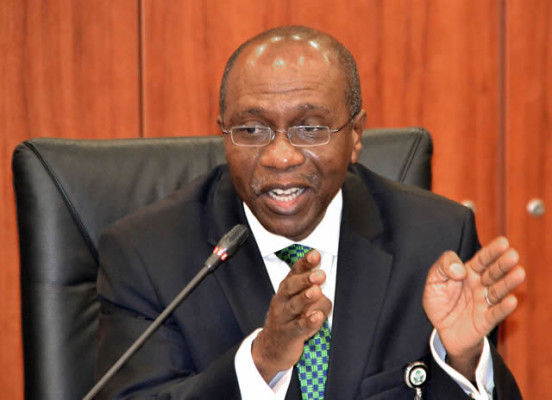
CBN Governor, Godwin Emefiele

The Central Bank of Nigeria (CBN) has expressed its determination to return the Nigerian economy to the period when the manufacturing and agricultural sectors formed the base of the economy.

The apex bank’s Governor, Godwin Emefiele, who spoke during a virtual meeting with Chief Executive Officers (CEOs) of conglomerates in Nigeria, called on industrial conglomerates operating in the country to support efforts aimed at growing the Nigerian economy and returning it to its glory days.

Emefiele, who acknowledged the challenge of low crude oil prices to major economies of the world, expressed confidence that the price of crude will not remain at low levels for a long period.

He emphasized that the low crude oil prices were surmountable, even as he said that Nigeria’s foreign reserves of about $37Billion remained robust to support the economy.

He enjoined the conglomerates to key into the current administration’s drive of diversifying the base of the Nigerian economy by taking advantage of its large population to market their products, which he insisted could be produced in Nigeria and exported to the rest of the world.

He pledged the bank’s willingness to provide foreign exchange to companies that required such for raw materials and machinery that could not be obtained in Nigeria.

Emefiele said that with the African Continental Free Trade Area (AfCTFA) now billed to commence in January 2021, Nigeria provided the companies with immense opportunities to produce their items and make huge profits through the Nigerian market, which he noted is large enough to support their respective businesses.

He emphasized the need to prioritise the Nigerian market, assuring the companies that the apex bank will collaborate with the relevant government agencies to help nip smuggling in the bud, while also promising to protect their businesses to ensure they succeed in Nigeria.

He also assured the CEOs of the apex bank’s willingness to collaborate with other fiscal authorities to improve on their ease of doing business in Nigeria, with a view to simplifying their import and export processes.

On the issue of Direct Foreign Investments (FDIs), Emefiele said that the bank is not opposed to the conglomerates seeking alternative but legitimate sources of foreign exchange to boost their businesses, just as he said the CBN would not hinder the companies from repatriating their dividends.

Ex UN Scribe, Ban Ki-Moon Describes Buhari’s New Chief Of Staff As Great Asset

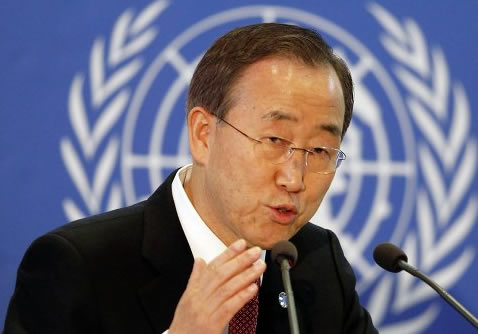
Former UN Secretary General, Ban Ki-moon

Former United Nations (UN) Secretary-General, Ban Ki-Moon has described Professor Ibrahim Gambari, the new Chief of Staff to President Muhammadu Buhari as a great asset to Nigeria and Africa in a broader sense.

In a letter of congratulations addressed to Professor Gambari, dated May 18, the former UN Secretary-General wrote:

“I would like to sincerely congratulate you on your recent appointment as Chief of Staff to H.E. President Muhammadu Buhari of Nigeria.

“Your appointment is a great asset not to the President of Nigeria but also your country Nigeria and Africa in a broader sense.

“I am confident that your invaluable experience gained while serving the UN, with various important leadership roles, will help your leadership in addressing these challenging times caused by COVID-19.

“I shared this good news with the former Minister Yoo Chong-ha, your good friend and former Foreign Minister of Korea. He sends his warmest congratulations to you.”

The 8th Secretary-General of the UN, who wrote his congratulatory letter from his base in Seoul, South Korea’s capital, said that he looked forward to meeting his former colleague at the UN again, while wishing the accomplished Nigerian diplomat success on his new assignment.

Also, UK High Commissioner to Nigeria, Catriona Laing, expressed delight with the appointment of Prof Gambari as the Chief of Staff to the President.

The High Commissioner said that the Mission will work closely with the Chief of Staff on “our shared agenda in the challenging COVID-19 times.”

COVID-19 And Nigerian Banks, By Reuben Abati 

The COVID-19 pandemic has reshaped the entire world – the future of everything and the world of work, but perhaps the most visible effect of this disruption is most felt in the financial services sector, the markets and the global economy. In this regard, the banking sector is one of the most gravely impacted. It would be useful to reflect a little on the extent to which this is so in Nigeria and the meaning of the multi-dimensional implications, and hopefully, someday, someone will take on the task of analyzing in greater detail, bank-customer relations and the role of the banks in the time of COVID-19 pandemic in Nigeria. I seek to provide a preliminary sketch, throw up a few posers and make some observations.

When on March 29, Nigerian President Muhammadu Buhari announced the imposition of an initial two-week lockdown on Lagos and Ogun States and the Federal Capital Territory, the three parts of the country that had then presented a higher COVID-19 sero-prevalence, he exempted healthcare workers, security personnel, pharmaceutical companies, oil company workers, the country’s food supply chain, the media, and other essential workers. His speech made no mention of the banks.

This omission was addressed the following day, March 30, by the Minister of Finance, Budget and National Planning and the Governor of the Central Bank who further informed the public that Nigerian banks/money markets would also be expected to provide essential services during the period of the lock-down. Obviously, during the period of the lock down, Nigerians would need money either in terms of access to cash, or the completion of pending transactions, transfers, payments and savings. In April, the Federal Government further extended the lockdown by another two weeks and yet by another week, towards the end of the month. As it turned out, other states of the Federation relying on Section 8 of the Quarantine Act and enabling state laws also enforced their own versions of the lockdown.  Effectively, Nigeria became part of the global response to COVID-19. People were asked to stay at home, stay safe, follow guidelines, and avoid the risk of infection and transmission. It all happened so suddenly, so unexpectedly.  Nobody was prepared for it. There were reports of harvests of death in Europe, Asia, and the Americas. Fear gripped the world. Panic reigned. People asked the inevitable question: will humanity survive given the virulence of the virus? As people stayed at home and off the streets, they still needed to survive. Nobody had withdrawn cash or saved towards COVID-19. The importance of access to the banks and to cash was writ large; earning an income became a matter of life and death for households and businesses. The world thus found itself in a pre-historic Darwinian situation where only the fittest survived. The banks in Nigeria were not of much help. Their rating in terms of customer relations/support fell.

The banks simply refused to open their doors to customers. The few that pretended to do so in Lagos, provided only skeletal services. People were advised to make withdrawals using Automated Teller Machines (ATMs), but most of these machines had no cash supply, and where they had, long queues could be seen daily, without anyone observing the physical distancing guidelines. Digital banking transactions, which had been touted as the new way of the world, proved difficult. If you went directly to an open branch, you would be kept waiting by a gate man who knew nothing about banking. He would return later to tell you that the officer hidden inside the banking hall would need to contact someone at the Headquarters. Many account officers who attended to the middle class were also under quarantine. Their phones were switched off. A major pillar of the banking business – making the customer happy, collapsed. The bankers took their own survival more seriously. The customer was no longer king! COVID 19 is the great destroyer of all known norms. It has shifted paradigms and turned the table against all known norms.

When on one occasion, I had cause to protest, I was told that the banks were also being careful. They needed to protect their staff. They would not allow customers to bring the virus into their banking halls.  They had also recorded quite a few cases of fraud during the lockdown. So does that justify the scarcity of cash at cash points and the epileptic e-banking platforms?  It will be recalled that the Central Bank of Nigeria introduced a Financial Inclusion Strategy in 2016, the objective of which was to promote electronic banking and mobile money transactions. This led to the increasing digitalization of banking transactions in the country and the emergence of such features as the use of POS, e-banking and payment service agents. Whereas this has been hailed as a progressive development, Nigeria remains far behind other countries like Kenya and South Africa, where a higher rate of financial inclusion has been recorded. Nigeria’s slow penetration rate in this regard was exposed by the COVID-19 lockdown and indeed in reality, Nigeria remains under-banked; its banking practices are still far behind.

For many subsistence workers whose survival depended on daily work, the banking situation was worse because these blue-collar workers live or suffer relative to their daily hustle. Whatever work that linked them to the banking value-added chain was cut off.  The extended family community that often helps to bridge the gap in Africa, was also adversely affected. Nigerians in Diaspora whose financial remittances constitute a major source of oxygen for local households and the economy also ran into troubled waters. In every sense, Nigeria’s financial sector faced a severe respiratory crisis with corresponding implications for economic growth and social stability. It didn’t take long before Nigerians especially the youth, became restive. A social crisis loomed large in the horizon. In Lagos and Ogun States, neighborhoods were attacked by those who called themselves “One Million Boys”. The rich became afraid of their own shadows. Nigerian banks had to take extra security measures. Organized Labour and the Organized Private Sector began to push the argument that the lockdown would not work in Africa, and that it was better government re-opened the business space.

On April 27, it may be said that the Federal Government succumbed to pressure when in a nationwide broadcast, President Muhammadu Buhari announced a “phased and gradual” easing of the lockdown in the Federal Capital Territory, Ogun and Lagos States, with the same advice for other parts of the Federation subject to their own peculiar circumstances with regard to COVID-19.  The responses were varied. Ogun State chose to defer its own relaxation of the lockdown by a week, having joined a week later than the FCT and Lagos State. On May 17, the state announced yet a further extension of the lockdown. Other states of the Federation again took their cue from the Federal Government in due course. Delta, Ebonyi, Katsina, and Borno states have since allowed mosques and churches to re-open. Kaduna state and others have also announced relaxed measures. Across the country, a curfew remains in place from 8 pm to 6am. Inter-state travel has been banned, even if there are concerns about the movement of the almajirai across state borders with many of them testing positive for COVID-19. In the face of new guidelines, banks also opened their doors.

But even then, bank customers are still unhappy, particularly in Lagos and the Federal Capital Territory. The banks remain an index of the people’s frustration. From May 4 to date, the premises of virtually every bank has been a war zone. Customers besiege the banks daily, without caring about either physical or social distancing rules. They sit outside or they queue up in a long, snaky, stretch. The people seem determined to die, if possible, just to gain access to their bank accounts. The queues are long. The desperation is palpable. A few banks have since provided tents and chairs in front of their branches. I won’t be surprised if in the third week of the easing of the lockdown, some Nigerian banks also begin to provide mattresses and mats!. Those queues may not disappear unless the banks open up more branches and pay better attention to customer care.

Just how serious this is, was brought to the fore in a now popular, and sensational video, showing the Chairman of Ikwerre Local Government in Rivers State, Samuel Nwanosike who led a mini-task force to a branch of the United Bank for Africa (UBA) to disperse a crowd of bank customers, who did not wear face masks, and did not observe physical or social distancing.  “Do you want to kill my people?”, Nwanosike asked the bank officials, angrily. “Who is the bank manager here?… Who is the second in command?” One bank official told him: “The people are not listening to us”. There may be a lot to learn from this as all businesses adjust to a “new normal” occasioned by a capricious virus.

The banks and their sympathizers insist however, that they do not deserve any blame, vulnerable as they are like every other business, without any measurable support from either government or their regulator, and yet they continue to play their part as responsible corporate citizens. There is probably a point here: it is on record that the banks and their CEOs enthusiastically joined the Private Sector Coalition Against COVID-19 known as CA-COVID which has so far raised over N27 billion. It is part of the burden that banks face that many of their customers think that the donations should have been given to them directly since the banks have their bank accounts and verification numbers. The banks were accused of seeking tax reliefs, and their CEOs, of promoting their own individual egos.

But perhaps the biggest challenge for Nigerian banks, and the extent of their vulnerability, emerged when a tele-conference video was leaked, showing the CEO of Access Bank, Herbert Wigwe, in which he announced that Access Bank was going to cut staff salaries and retrench staff as part of its business continuity and sustainability plans in the context of a public health crisis that has crippled business. The leakage of the Access Bank video was met with outrage. Wigwe was called names. The Bank was abused. A few days later, the Central Bank of Nigeria in response to this drama, announced that no bank is allowed to cut any job without its express approval, and that indeed job cuts in the banking sector are forbidden at this time. Access Bank denied the video that was in circulation. Stakeholders may accuse Nigerian banks of lapses in the face of COVID-19 but the truth is that the attack on Wigwe and Access Bank was totally unwarranted. In my view, Wigwe showed leadership and was honest.

The only “COVI-diot” in the Access Bank matter is the disloyal staff who leaked the content of an in-house conversation. No serious organization should condone that kind of treachery. Wigwe says salaries will be cut and branches will be rationalized. Last year, Access Bank acquired Diamond Bank in one of the biggest Merger and Acquisitions that the Nigerian banking sector has witnessed in the past decade. Since that merger, Access Bank has not rationalized staff or branch networks. It simply inherited all the branches and staff that belonged to the defunct Diamond Bank resulting in a situation where you could have up to three branches of the same bank on the same street. Access Bank may have chosen the wrong time to announce its business re-design plan, but it is confronted with a reality that every business would have to deal with. But the question should be asked: Is it part of the work of the regulator to dictate cost and business models?

Before COVID-19, one of the problems Nigerian banks faced was that of over-regulation by the Central Bank. Regulatory high-handedness hampered the capacity of the banks. Many of the banks also faced the threat of deteriorating credit quality due to over-exposure particularly to ailing sectors – oil and gas and the power companies. COVID-19, collapsing oil prices and naira devaluation turned the crisis in the banking sector into a triple whammy. Micro-finance Banks are losing over N45 billion uncollected loans. To all intents and purposes, it is part of the role of the Central bank to protect the banks and stave off the possibility of corrosive stress. Elsewhere we have seen Central Banks intervening to protect the banking sector. The Central Bank of Nigeria has made useful interventions in other areas– to protect SMEs, pharmaceuticals, loans, manufacturing sector, agriculture… but it has done little to strengthen the capacity of the banks to survive as business.

The plug on job cuts, or the furloughing of bank staff is at best the postponement of the evil day. Bank staff as well as other employees must prepare for the worst. Many businesses will end up as part of the COVID-19 death rate statistics. Jobs will die too. Previous pandemics posted a V-shaped recovery trajectory. There are no such guarantees this time around. A U-shaped recovery scenario may even be optimistic. Many economies will sink in an L-shaped format. And that is where leadership matters. What should leaders do in relation to economic risks and the structural legacy of COVID-19?  This is the kind of rigorous thinking we need to see instead of the same government that wants to implement the Oronsaye Report, cut cost and ensure economic sustainability telling banks and other businesses that they cannot cut costs. The mixed messaging that has characterized Nigeria’s management of the COVID-19 tragedy so far points to serious issues of governance.

15 Chinese Who Landed In Nigeria On April 8 Have Commenced Work In Abuja – Minister

Minister of Interior, Ogbeni Rauf Aregbesola, has said that the 15-member Chinese medical team, who came into Nigeria on April 8 this year have commenced work in Abuja, the nation’s federal capital.

Responding to media enquiries as to the whereabouts of the Chinese, the minister said that they came to Nigeria on the bill of CCECC, a Chinese company working in Nigeria

“Indeed, 15 Chinese nationals came into Nigeria on April 8, 2020 and from everything we have heard and said, they are here on the bill of CCECC, a Chinese company working in Nigeria, doing some work for us in several places and in conjunction with some Nigerian companies agree to support us in the effort to respond to the Pandemic.

“At Idu in Abuja, they participated in retrofitting and equipping the isolation there. They equally worked on the Dome project that was handled by the NNPC Consortium in conjunction with Thisday. So, those were the locations in which they came to work.

“They helped in retrofitting the two facilities and installing critical, essential and sensitive medical equipment. They came in 15 of them, on April 8. “They came on a 30-day Visa issued in Beijing. They are still here.

“I do not need to tell you why they are still here. They are still here not because they have not completed their job but because there is a restriction on travels in Nigeria, occasioned by the protocol of Covid-19.”

I Have Come To Wipe Out Tribalism From FIRS If It Exists – Nami

“If any FIRS worker had been a victim of tribalism or religious discrimination in the past, I say to such marginalized worker:, not anymore and not on my watch at the FIRS.”


These were the pledge by the Executive Chairman, Federal Inland Revenue Service (FIRS), Mr. Muhammad Nami, in a statement today, May 18, by the Director of Communication and Liaison, Abdullahi Ismail Ahmad.

According to Nami, “the FIRS is one national institution which any Nigerian joins and is assured of rising to the very top in the hierarchy based on his or her individual competence and hard work on the job, and not on the basis of any tribal or religious affiliation.”

The revenue boss stressed that claims in a section of the media alleging appointments and retirements along ethnic and religious lines at the FIRS are very far from the truth in relation to publicly available evidence.

The statement continued:

“The Federal Inland Revenue Service (FIRS) wishes to clarify that the recent staff retirement exercise which affected nine directors was done in full compliance with the law and in the best interest of the Service and the country, contrary to insinuations in a section of the media.

“The Board of the Federal Inland Revenue Service (FIRS) in a meeting held on Friday, March 20, 2020 took the decision and approved that all directors who had served in the FIRS for eight years and above should be retired.

“The FIRS Board took that decision in line with Paragraph 10.1(a)(iii) of Human Resources Policy and Programmes (HRPP)” of the FIRS after considering a number of career progression complaints by some staff in the Service.

“Worthy of note is that FIRS Establishment Act, 2007, Section 7 empowers the FIRS Board to take certain far-reaching decisions in the interest of the Service and by extension, the country.

“Specifically, Section 7 (d) states that the Board shall… “employ and determine the terms and conditions of service including disciplinary measures of the employees of the Service”. Section 7(J) states that the Board shall “do such other things which in its opinion are necessary to ensure the efficient/performance of the functions of the Service under this Act”.

“It is in the discharge of such responsibilities that the Board approved the retirement of the nine directors who had spent eight years and above as directors as provided by the FIRS statutes.

“In doing that, the FIRS Board considered subsisting issues in the Service which have to do with career progression. Management had observed that there was stagnation in career progression in the Service because some directors had served for about 10 years while younger members of staff who also possessed requisite expertise could not progress in their career line. Some staff had taken a number of promotion examinations and had passed but could not be promoted. The affected staff and the staff unions had complained to the Management to intervene in the situation.

“Consequent upon the appointment and inauguration of the new Executive Chairman together with the Board by the Federal Government, the career progression issue was tabled before the Board on March, 20, 2020. In its wisdom, the Board used its prerogative to direct the nine directors to be retired immediately.

“The retirement of the directors was a selfless and courageous decision taken in compliance with the laws. It was done in good faith and in the best interest of the Service.

“To further portray its good intensions, the Board of FIRS reappointed five of the retired directors either as Coordinating Directors or as Special Advisers in the Service. This way, the junior colleagues could have the opportunity to rise in their career line.

“It is unfortunate that some unnamed individuals were quoted in a section of the media alleging that the FIRS did not follow due process in retiring the directors and in appointing new ones.

“The retirement exercise and the appointment of new directors was not done in secret or with ulterior motives. The FIRS issued a press statement announcing their retirement and the appointment of new directors. This information is in the public domain for anyone interested to verify.

“The newly appointed directors out of the nine retired directors are: Chiaka Okoye (an Igbo) the Group Lead, Digital Support Group and a member of the management team; Mr. Olufemi Faniyi (a Yoruba) the Coordinating Director, Tax Operations Group and a member of the management team; Dr Asheikh Madugu (a Kanuri) the Acting Coordinating Director, ECFIRS Group and a member of the management team; Mr. Innocent Ohagwa (an Igbo) the Acting Coordinating Director, Support Services Group and a member of the management team; Mr. Ezra Zubairu ( a Northern Christian) the Acting Coordinating Director, Compliance Support Group and a member of the management team. While Mrs. Faosat Oguniyi (a Yoruba Muslim) who is not among the nine retired directors is the Group Lead, Enforcement Support Group and also a member of the management team. Kola Okunola (a Yoruba) and Auta Mohammed (a Hausa) have been retained as Special Advisors ICT and Administration respectively. And Nneka Ofekwuna (an Igbo) is the Board Secretary.

“The current management team is composed of two Yoruba, two Igbo, and two Northern minority tribes; and in all there are four Christians and three Muslims in the current FIRS management team. The public is therefore called upon to disregard the mischief making the rounds in some sections of the media. The current management team and the Board of the FIRS is poised to discharge its statutory responsibilities without succumbing to blackmail or unnecessary distraction.”

Advertisement ADVERTORIAL
WP2Social Auto Publish Powered By : XYZScripts.com