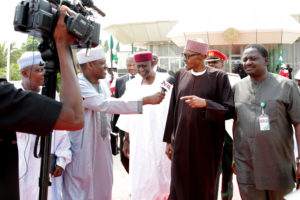
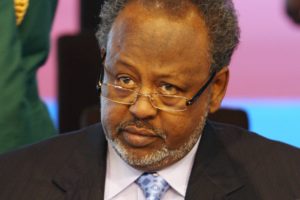
President Ismail Omar Guelleh of Djibouti is seeking the support of Nigeria for its candidate for the Deputy Chairmanship of the African Union Commission at an election coming up before the end of January. Ahmed Cheick Moumin, who was at the Presidential Villa, Abuja, as Special Envoy of President Ismail Omar Guelleh, reminded his host, acting President Yemi Osinbajo that the AU election for which he is seeking Nigeria’s support, is scheduled for later this month, January. The Special Envoy who is also that country’s Justice Minister, expressed gratitude to the Nigerian government for the hospitality he and his delegation enjoyed on their arrival in the country. Responding, Professor Osinbajo assured that Nigeria would consider the candidate, saying that the position is one that has to be occupied by the right person. The Vice President said that Nigeria and Djibouti have been enjoying “very good diplomatic relationship over the years.” He expressed appreciation to the President of Djibouti for the country’s support for Nigeria in various international platforms. [myad]
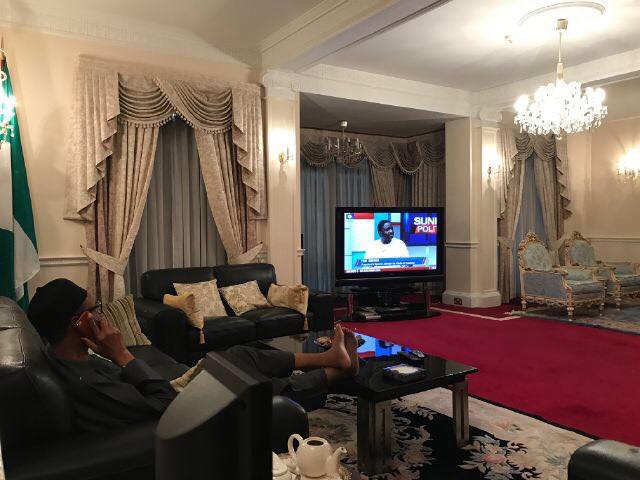
President Muhammadu Buhari has told his second-in-command, Professor Yemi Osinbajo on phone from London that he is always in touch with news from home (Nigeria). The President, who began a 10-day vacation and flew to London on Thursday last week, made this comment on his Twitter handle, @MBuhari, on Sunday in London. He was on cellphone to Acting President Osinbajo, while watching Mr. Femi Adesina who appeared on Politics Today, Channelstv. A statement by Adesina, who is the President’s special adviser on media and publicity, quoted Buhari as having saluted the Nigerian media for performing its duties diligently. President Buhari, whose picture was also posted in the tweet, specifically named Channels TV as one of his favorite Television stations. He said: “Wherever I am, I keep up with news from home. Channels TV is one of my favorites. I’m proud of what the Nigerian media are achieving.” Adesina said that the post had dispelled the insinuation about the President’s health conditions. [myad]
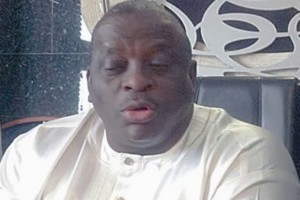
The Senator representing Ogun East Senatorial District in the National Assembly, Prince Buruji Kashamu has regretted that the governors on the platform of the Peoples Democratic Party (PDP) had no better person to choose to lead the PDP Governors’ Forum other than Governor Ayo Fayose who he said is a liability, loud-mouth and immature politician.
In a statement in Ijebu-Igbo, Ogun State today, Sunday Senator, Kashamu said: “it was a misnormer that the governors of an opposition party that is in need of rebranding and repositioning could chose a liability, a loud mouth and an immature politician like Fayose as the Chairman of the PDP Governors’ Forum.
“It is not that his emergence as the Chairman of the Forum means anything to me. But as a committed and loyal party man, it gives me great concern that instead of taking steps that will foster peace and unity, we are doing things that will widen the gap and cause more unity.
“Those who chose him should have a rethink in the interest of the party that is striving hard to return to power. His brother-governor, Dr. Olusegun Mimiko, whose tenure he purportedly continued as Chairman of the PDP Governors’ Forum, is a cool-headed and balanced character. “Even then, some of us pointed out that Governor Mimiko was slippery and sly, and a traitor who could not be relied upon. What happened at the end of the day?
“The party broke on his head when he overreached himself in the South West as the Chairman of the PDP Governors’ Forum at the behest of Governor Fayose.
“Instead of being a strong leader who would be fair to all, and do good to all manner of people, without fear or favour, he became more of a weather-beaten fowl, sullen and uninspiring. But, we thank God that we held our grounds and fought for our rights.
“Fayose had always wanted to be the Chairman of the PDP Governors Forum. That was why he had some resentment towards Mimiko upon his emergence as the Chairman of the Forum in 2015.
“While I concede to our Governors the right to choose whoever they want to lead them, my point is that they should have settled for a balanced, more experienced and mature person to lead the Forum, not a cantankerous, divisive and unstable character like Governor Fayose who snaps at the slightest provocation. I know that the Forum boasts of Governors who are true leaders, not pretenders.
“There are those who are better educated, well-cultured and better exposed who are not working against the interest of their people and country. We have Governors who have held public offices since the return to democracy in 1999 but who are untainted. The Economic and Financial Crimes Commission (EFCC) does not have any case against them. Those are the kind of people that could have been chosen to lead the Forum, not one with a goodwill deficit whose hands have been found in the public till.”
Kashamu said that the choice of Fayose as the Chairman of the PDP Governors’ Forum will further polarize the party and destroy it.
“How many of the notable leaders of the party in Ekiti State and the South West are ready to work with Governor Fayose? He had the opportunity to fight for the interest of the good people of Ekiti State and Yoruba land but he flunked it, preferring to promote impunity and side with a tiny clique who will always do his bidding.
“How can our respected leaders stay aloof and allow this to happen when they are aware of the genesis of the crisis in the party – Fayose’s and Mimiko’s unbridled ambition to impose their will on the party and ride roughshod over all other stakeholders of the party in the South West. “The other day, he lured our father, Chief Olabode George to Port Harcourt and sought to disgrace him at the rescheduled National Convention in August, 2016.″
The Senator recalled that Governor Fayose brought Senator Ali Modu Sheriff and sold his candidature to other stakeholders.
“But when he saw that Senator Sheriff would not be pliable in his inordinate ambition to arbitrarily hand him the critical structures of the party from the South West zone to the national level, he cooked up a lot of lies and sold them to Governor Nyesom Wike of Rivers State and others in order to discredit Sheriff.
“Even now, his utterances about the lingering national leadership are a pointer to the fact that he will exacerbate the crisis. Anyone who thinks that Sheriff is not needed in the efforts to restore peace to the party must be joking. I wager that Fayose’s conduct and utterances will widen the division in the party and more people will use it as an alibi to continue to defect to other parties. “I am aware that more PDP Senators and members of the House of Representatives, including the three Senators from Ekiti State are consulting among themselves with a view to dumping the PDP very soon, all because of Fayose’s deception, divisive tendencies and arrogance.
“We must reject Governor Fayose now or strictly restrict him to running the affairs of the Governors’ Forum while well-meaning leaders and elders of the party who are not part of the crisis bedeviling the party are allowed to take charge of the affairs of the party and run it properly and legitimately.
“Fayose keeps boasting that he is the oldest Governor in Nigeria and that he is the only one who has defeated two incumbents. The fact is: he did not do it alone. Some people pulled resources together to help him achieve those feats. But, the question is: where are they today?
“Most of them have left him when he showed them his true character. Even in Ekiti State, he cannot put members and leaders of the party together. He sees himself as the Alpha and Omega of the party in the state, shutting out any voice of dissent.
“It is important to remind Fayose that the true measure of success ‘is not how far but how well’. The Governors’ Forum is made up of seasoned, experienced and respected political leaders who have been consistent with the PDP since its foundation in 1998 unlike Fayose who could not manage his first term, went to exile and later abandoned the PDP for the Labour Party (LP), only to return in 2014 or thereabout.
“Now, we are aware he is in talks with the Alliance for Democracy (AD) and those who want to float the so-called Mega Party. He has not been able to organize the party in Ekiti State, let alone the South West zone and the national level. In fact, he is on record as saying he does not know if the 2018 Governorship and House of Assembly election in Ekiti State would be contested on the platform of PDP.
“Therefore, if he has failed to bring the much-need leadership skills to bear on the party in Ekiti State, which superior and respectable South West zonal leader and elder will listen to him? Of course, I am not the leader of the party in the zone. But, I am one of the foot-soldiers and voices of the party in the zone. I interact with our leaders, elders and stakeholders across the zone. I know their feelings and views.
“If Fayose thinks that his emergence has conferred on him some advantage that he wants to use to perpetrate the illegalities that led the party to where it is today, some of us will continue to resist him vigorously. For, as they say, it is not over until it is over. Fayose had better restrict himself to brain-washing his colleagues in the Governors’ Forum. If he seeks to lord his wishes over the constitutionally recognized organs and structures of the party, trying to impose the minority over the majority, then peace will continue to elude party.”
Kashamu said that Fayose has about 12 months before he will use his usual turban and attempt to escape through Benin Republic to Ghana because of all the messy things he has done with Ekiti State resources and ONSA funds and for which he would be held accountable.
He said that it would be a long shot if anyone told Senator Ali Modu Sheriff and his team as well as Senator Ahmed Makarfi and his team that the reserved judgment of the Court of Appeal sitting in Port Harcourt would resolve the national leadership crisis of the party, adding: “it is pure deceit, self-delusion and a mere wishful thinking.”
He advised the superior leaders and elders of the party in the Board of Trustees (BoT), the Governors Forum and the leadership of the PDP in the National Assembly as represented by the Deputy Senate President, Senator Ike Ekweremadu; Senate and Reps Minority Leaders, Senator Godswill Akpabio and Hon. Leo Ogor, to prevail on Senators Sheriff and Makarfi to step down for the party to move forward.
“The various blocs could then constitute a committee that would organize an all-embracing National Convention within 30 to 45 days, even as he suggested that on the day such a meeting would be called, the National Executive Committee (NEC) should meet to ratify the decisions reached at the meeting.
He said that any of the two leaders who refused to accept such a proposition would then be seen as the one who does not have the interest of the party at heart.
“If that is what they have to do for the party to survive, then they must do it if there is no hidden agenda. I love and cherish the two leaders but the party is bigger than any and all of us.
“The problem with the PDP is that we talk too much, but without a strategy. No (financial) commitment, no action, no implementation and no finishing. How then does anyone expect the party to move forward or succeed? We envy the others but are not ready to pay the price of perseverance, selflessness and dedication that they paid to get them to where they are today.
“If we must get things right, we need to wake up from our slumber and be organized and proactive. You cannot give what you don’t have. A disorganized and tactless person cannot successfully lead a respected body like the PDP Governors’ Forum, let alone the party. If care is not taken, his so-called leadership of the Forum could sound the death knell on the party.” [myad]
A housewife, Zainab Sanni, has gone to Oja Oba/Mapo Grade C Customary Court, Mapo, Ibadan, Oyo State seeking for divorce with her husband, who she said is lifeless ‘down-stair.’
“My husband is not a man. Although, he has a good look which makes women fall for him, but below, he is lifeless. His manhood is lifeless. He knows that my charge against him is true and that’s why he has refused to appear in court.”
She narrated: “We got married four years ago and I was looking forward to a blissful marriage which I believe sex has an important role to play in, but I ended up being disappointed and devastated.
“Early in our marriage, after the day’s work, I would expect my husband to initiate sex while I was always prepared to satisfy him. But to my chagrin, he would get into bed and sleep off or pretend to be asleep.
“Initially, I was reserved and couldn’t demand for it, but after starving me for long, I summoned courage and discussed it with him. His initial excuse was that his job was too demanding and always left him fagged out.
“The first time we had sex, my husband was shaking and sweating as if he saw a ghost. I realized that he was already through with it before we started anything at all. The experience was awful and I was left unsatisfied and this had been the pattern the few times we had sex in our four years of marriage.
“I knew there was a problem, but he was not ready to discuss it. I need not be told that my husband is impotent. Our childless union was an enough proof.
“I eventually left his house and got married to another man, who aside taking good care of me, is superb in bed. I had a baby for my new husband a year after I left my first husband.
“I’m happy and I’m enjoying my new marriage. I no more love my first husband which is the reason for asking for a divorce,” the plaintiff stated.
Zainab had brought a suit before the court stating that her husband was impotent and had failed to satisfy her sexually. She therefore urged the court to dissolve their marriage.
President of the court, Chief Ademola Odunade after listening to the plaintiff. and taking cognizance of the fact that the defendant had failed to show up in court after being served a court notice more than once, ruled that the union between Zainab and Abubarka be dissolved and a repayment of dowry be made by the plaintiff to the defendant. He also instructed that a copy of the court judgment be served the defendant. [myad]
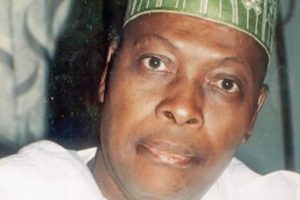
The Presidency is obviously angry with former House of Representatives member from Kano State, Dr. Junaidu Mohammed whom it said has been infected by pathological cynicism.
“It is unfortunate that Junaidu Mohammed has been using his political retirement life to engage in insulting every President to grab the newspaper headlines, in addition to taking advantage of the gullibility of uncritical readers that don’t bother to subject him to facts-check. These kinds of critics are toxic to national progress because they are only primarily interested in destroying every positive effort and achievements of the government.”
These were contained in a statement by the senior special assistant to President Muhammadu Buhari on media and publicity, Mallam Garba Shehu when he reacted to what he called the latest attack on President Buhari’s integrity in an interview by Fr. Junaidu.
Garba Shehu made it clear from the beginning: “we will like to break with tradition,” saying: “it must be noted that President Buhari was not the only target of Junaidu’s personal vituperations, as former Presidents Shehu Shagari, Ibrahim Babangida, Olusegun Obasanjo,Umaru Yar’adua and Goodluck Jonathan, had all been victims of his jaundiced and malicious attacks. When it came to the late Sani Abacha, he tried it, but once he saw the prospect of elimination, he retreated.
“A cursory library search will reveal that this man has nurtured the habit of insulting every leader this country has produced in his time. Like a narcissist, he is just interested in grabbing headlines. Without publicity, Dr. Junaidu would probably give up on life.”
The Presidential spokesman conceded the fact that Dr.Junaidu Mohammed is entitled to his opinion, but that he is not entitled to misrepresent facts about the concrete achievements of the Buhari administration in the past two or so years, including the undeniable fact that the Boko Haram terrorists have been significantly crippled militarily.
The Boko Haram insurgents, he explained no longer have the capability to invade and occupy towns and villages unchallenged by the country’s reinvigorated and motivated military personnel.
“The fact that civil servants and political office holders are now afraid to steal with impunity is itself a major psychological boost for the anti-corruption crusade of the Buhari administration, which no sincere Nigerian can pretend not to notice.
“Contrary to Junaidu’s claims that President Buhari doesn’t acknowledge mistakes, we wish to remind the medical doctor that the President publicly took responsibility and apologized over the dissolution of the Governing Councils of Federal Universities when it was discovered that due process was not followed.
“We must stress that taking responsibility for mistakes is one of the finest components of integrity, and that President Buhari has never failed in demonstrating this virtue in words and deeds.
“Since the coming of the Buhari administration, the country has saved billions and trillions of naira which could be diverted to private pockets if the government wasn’t committed to transparency and accountability.
“We advise Nigerians to be wary of prejudiced and biased critics like Dr. Junaidu Mohammed who are more interested in personal publicity than respecting facts and figures about their claims.
“If Junaidu Mohammed wants to be taken seriously, he should demonstrate the duty of speaking truthfully about those he frequently attacks in his interviews.” [myad]
Former Senate President, Senator Ken Nnamani, has confessed that impunity and undemocratic were responsible for the death of the Peoples Democratic Party (PDP) on which platform he contested and won senatorial seat.
Nnamani made this pronouncement today, Sunday when he defected to the ruling All Progressives Congress (APC) at his Amaechi ward in Enugu South Council Area of Enugu State.
“If you want to get groceries from the market, you do not send the person who has already left the market, but the one going to the market.”
The former senate President, who had, early last year denounced his membership of the PDP, declared that the party is now dead, unproductive and unprofitable.
He currently heads the Electoral Reform Committee set up by President Muhammadu Buhari last year. [myad]
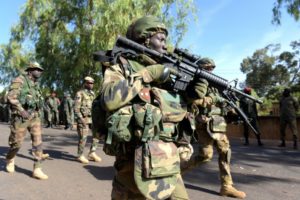
The West African troops were engaged in a fierce gun battle with pro-Jammeh elements and mercenaries today, Sunday, when they entered The Gambia to secure ground for President Adama Barrow’s arrival from neighbouring Senegal where he had been sworn-in at the time the ousted President Yahya Jammeh stayed-put in power.
It was gathered that the West African troops entered The Gambia to control strategic points to ensure the safety of the population and facilitate Barrow’s assumption of his role as the new country’s President.”
Senegalese forces had briefly crossed into the former British colony on Thursday but pulled out shortly afterwards, with Sunday’s troop movement the first by soldiers from the joint force.
A top official with the Economic Community Of West African States (ECOWAS), which organized the deployment, Marcel Alain de Souza, said that pro-Jammeh elements and mercenaries remained on the ground and had opened fire as troops crossed the border.
“They were neutralized,” he said in a statement, without elaborating.
De Souza said that the country “could not be left open” for long, and that Barrow must be in place “as soon as possible.
“A country must have a government, but the security conditions required the troops we have sent to secure Banjul and other towns.”
A security guard, Babacar Jallow said: “we are going to wait for Barrow at the airport all the way to State House. Before we were scared to come out.” He described Jammeh as “a killer.”
With Jammeh gone, all eyes will be on the Barrow administration as they make their first steps as a government of reform and development.
A key official in the government-in-waiting, Isatou Touray, said: “the will of the people have come to be — at last.”
Ex President Jammeh took power in a 1994 coup from the country’s only other president since independence from Britain, Dawda Jawara, making this The Gambia’s first democratic transition of power. [myad]
Nigerians living in the United Kindom (UK) under the banner of the UK chapter of Nigerians in Diaspora Monitoring Group (NDMG) have condemned the death rumour of President Muhammadu Buhari, describing it as the handiwork of corrupt and unpatriotic individuals.
The group, in an electronic message by its co-coordinator, Engr. Adekaa Onyilo said those behind the rumour do not mean well for Nigeria as a country that is trying to overcome long years of strangulation imposed by their benefactors.
He said that such rumour revealed the depth to which morals have sunken and the desperation of the beneficiaries of corruption want an end to the current war on corruption so that they can again return the country to the path of perfidy.
He said that the Group is pleased at the promptness with which the Presidency dispelled the evil rumors around the health of President Muhammadu Buhari, “who is currently on a medical leave with us here in the United Kingdom.”
According to Onyilo, even as the President continues with his rest for the duration of his leave, the prayers of the millions of Nigerians who are yearning for the disruption of the status quo imposed by corruption would not go unanswered.
”The irresponsible news could only have been floated by those that want to see Nigeria go up in flames. Unfortunately, they failed to realize that the change and reforms initiated by Mr President would outlive everyone since they are targeted at strengthening institutions and building systems.
“We therefore want to warn the purveyors of such rumors to desist as their act affect more than President Buhari. At a time when our dear country is working to contain the pressure on the naira, their action has served to further spook the currency and shake investors’ confidence. When this happens, citizens that played no role in starting the lies would suffer for it.” [myad]
The Presidency has announced the release of over N375 million toward the implementation of its school feeding programme in five states this year.
A statement by the Senior Special Assistant to Vice-President Yemi Osinbajo on media and publicity, Laolu Akande said that the release of the amount was meant to feed almost 700,000 primary school pupils in the five states.
According to him, all states of the federation, except two, are now being processed for the payment of N30, 000 monthly stipends to 200,000 graduates, the N-Power beneficiaries.
Akande, who was giving update on the Federal Government’s Social Investment Programmes (SIP), noted that the programmes are proceeding at different stages of implementation.
He said that the government, last week, released money for the smooth implementation of the Homegrown School Feeding Programme in Anambra, Ogun, Oyo, Osun and Ebonyi, to cover the feeding for 10 school days.
“The sum of about N375, 434, 870 has just been released and paid to 7,909 cooks in those states for the feeding of a total of 677, 476 primary school pupils.’’
According to him, Ogun got a total of N119, 648, 900 paid to 1,381 cooks to feed 170, 927 pupils while Ebonyi got N115, 218, 600 paid to 1,466 cooks to feed 164, 598 pupils.
The presidential aide said that Anambra got N67.5 million paid to 937 cooks to feed 96,489 pupils; Oyo state got N72.2 million paid to 1,437 cooks to feed 103, 269 pupils, and Osun got N867,370 paid to 2,688 to feed 142, 193 pupils.
He said that all monies were paid directly to the cooks and covered 10 days of school.
Akande said that Zamfara and Enugu States would soon be paid N188.7 million and N67.2 million, respectively, later in the week.
“In Zamfara, the sum would be paid to 2,738 cooks to feed 269, 665 pupils, and in Enugu, the sum would be paid to 1,128 cooks to feed 96, 064 pupils.
“By then, over N631 million would have been released so far in 2017 for school feeding in seven states, paid to 11,775 cooks and meant to feed over one million primary school pupils.’
On N-Power, Akande said that the process of payment of verified graduates, who were beneficiaries, had reached different stages of progress in the affected states, adding: “more and more of such beneficiaries are posting their glad experiences of receiving alerts on the social media.”
He said that the payment of the December, 2016, stipends which had gone across the country would be completed in all states except two that did not meet the extended deadline for the verification process for payment.
Akande disclosed that the processing of January, 2017 stipends were also at advanced stages.
He assured the beneficiaries with issues to remain patient as their cases were being looked into.
Akande said that the payment of the unemployed graduates which had created a huge buzz across the country, especially on the social media, was being done in batches.
On the Conditional Cash Transfer (CCT), he said that payments had continued in the nine pilot states of Bauchi, Borno, Niger, Kogi, Cross Rivers, Osun, Oyo Ekiti, and Kwara.
“While payment challenges are being experienced with the banks in some of the states, beneficiaries continue to receive their stipends, which are being paid for two months.’’
According to him, N10, 000 is being paid for the CCT beneficiaries to cover the months of December, 2016 and January, 2017.
He said the CCT payments would be carried out six times in a year, with a payment of N10, 000 to cover two months. [myad]
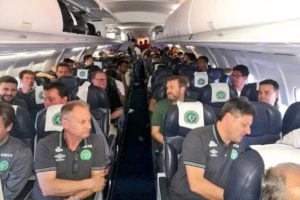
Chapecoense, a Brazilian football team, have played their first game since most of their team were killed in a plane crash on 29 November last year.
Seventy-one people, including 19 players and staff, were killed as the Brazilian team travelled to Colombia for the final of the Copa Sudamericana.
The team recruited 22 new players and hosted Brazilian league champions Palmeiras in Saturday’s friendly.
Three players, who survived the crash, received the Copa Sudamericana before the game at the Arena Conda stadium.
Defenders, Neto and Alan Ruschel and goalkeeper Jackson Follmann, who had their legs amputated, were among the six survivors. They received the trophy and medals alongside families of the victims in front of 20,000 fans at Chapecoense’s sold-out stadium, while another survivor, radio reporter, Rafael Henzel, commentated on the game.
The club gave 241 journalists from around the world accreditation for the game.
The game stopped on 71 minutes as players from both teams and supporters stood and clapped in honour of the victims, before continuing with the match.
Chapecoense were awarded the Copa Sudamericana trophy following the disaster, a move backed by Colombian club Atletico Nacional, who were scheduled to face them in the final.
To rebuild the side, sporting director Rui Costa has recruited 22 players, most of them on loan, and appointed Vagner Mancini as manager.
Douglas Grolli scored Chapecoense’s first goal and Amaral added a second as they drew 2-2 with Palmeiras.
Half of the match proceeds will go to the families of those killed, while the rest will be used to rebuild the club.
In the days that followed the plane crash in November, the Conda Arena became a site of mourning. Fans gathered with blank expressions; vigils were held with cathartic chanting. It culminated in the collective funeral services bringing together over 50 coffins to the stadium.
Today’s events were completely different, yet irrevocably linked to that day. It was all about remembering what happened, before and during the match.
In the ceremony held before kick-off, families of the crash victims received medals in their honour, and the three players who survived received the Copa Sudamericana final. They cried on the pitch, and the fans cried on the stands.
Then 71 minutes into the game, the match was interrupted to remember the 71 victims. An stadium announcer said a similar tribute would be paid in every Chapecoense match from now on.
The fans were keen to celebrate their home team again and showed their support to the newcomers – but on the stands and on the pitch, it was clear that Chapecoense’s drive to move forward will always mean looking back. [myad]
We use cookies on our website to give you the most relevant experience by remembering your preferences and repeat visits. By clicking “Accept”, you consent to the use of ALL the cookies.
This website uses cookies to improve your experience while you navigate through the website. Out of these, the cookies that are categorized as necessary are stored on your browser as they are essential for the working of basic functionalities of the website. We also use third-party cookies that help us analyze and understand how you use this website. These cookies will be stored in your browser only with your consent. You also have the option to opt-out of these cookies. But opting out of some of these cookies may affect your browsing experience.
Necessary cookies are absolutely essential for the website to function properly. This category only includes cookies that ensures basic functionalities and security features of the website. These cookies do not store any personal information.
Any cookies that may not be particularly necessary for the website to function and is used specifically to collect user personal data via analytics, ads, other embedded contents are termed as non-necessary cookies. It is mandatory to procure user consent prior to running these cookies on your website.


 President Muhammadu Buhari has told his second-in-command, Professor Yemi Osinbajo on phone from London that he is always in touch with news from home (Nigeria).