“It is this David Adeleke and Sophia Momodu soap opera”.
“I tell you. It is a perfect subject for a good home video. But what is your own?”
“No. Nothing. I am just relieved that the parties involved have agreed to let peace reign”
“This will be about the third time I would hear of that matter being resolved.”
“Well, I think the Momodus and the Adelekes should just spare us. They should not forget there is a child involved. They have suddenly made Imade Adeleke, the most famous victim of Baby Mama-Baby Papa palaver in Nigeria. Both Davido and Sophia and their supporters’ clubs should please protect the baby, and not make her a poster child for that kind of subject.”
“But me, I am enjoying the story oh.”
“Of course, too many sadists in our land enjoy other people’s misery.”
“But really, it is a simple matter. “
“If it were that simple, the drama wouldn’t be so entertaining. “
“What Davido wants, Davido gets. His father is rich. He is a famous musician. Davido says he wants custody of his daughter.”
“By taking her away from her mother by force, and giving her to his half-sister, and threatening to travel out of the country with the baby for medicals, without the mother’s knowledge or consent? A seven-month old baby, abducted at two months?”
“He gave reasons for that. He is talking about the biological mother taking cannabis and risking his daughter’s life”
“Cannabis?”
“Yes. Igbo”
“You seriously mean marijuana?”
“Yes, gbana as in Indian hemp. And Davido provided a medical report to confirm his claim.”
“You saw the medical report. You are sure it is genuine? Because I understand Sophia Momodu’s lawyers have written the lab to produce the original report of proof of drug abuse.”
“This their matter sef.”
“That’s why it is the child that is most important. I don’t like the way they have turned the young girl into a trophy to be fought over in a blood sport. We are in the age of the internet. Twenty years from today, someone could print out these funny details from the internet memory bank. A father, grandfather and a half-sister fighting a mother and her family over a baby and making sordid claims: It is not a fight that can be easily won.”
“I hear Davido says the Momodus cannot force him. He may even release a special song to make his position clear: No be by force.”
“Nobody is forcing him and his family to marry Sophia Momodu. They are just saying custody should be mutually agreed upon.”
“And he and his family are saying they want their daughter properly brought up. They too have a point. You should not take sides.”
“Ok. He is talking about Marijuana. When he was head over heels in love with the Momodu girl, he didn’t smell marijuana? I am sure if he was given Marijuana before he was allowed to inhale, he would willingly exhale?
“He insists he was just 21 years old. And that he was seduced by a full-grown woman who took advantage of his youth and innocence.”
“Innocence, indeed. Was he raped? Did he not have a relationship with her, and did he not showcase her everywhere? He was 21. If he could be tricked at 21, then he should live with the consequences. “
“You are taking sides. I know why. You are Dele Momodu’s friend.”
“I am making uncommon sense. I am saying why is Davido asking for Sophia Momodu’s birth certificate after the fact? When the thing dey sweet them, they no dey remember say na the thing wey fowl chop, him go shit.”
“But you can’t force any man to marry a woman. Why the girl too go carry belle for him junior brother? She suppose know say Davido sef him na pikin. You no see as him papa they follow am, make dem no carry big yansh, big chest, fine face, cheat him son for Lagos”
“Him try well, well. But Davido, your boy, him no sabi use rubber?”
“That girl look like person wey go gree rubber?”
“You dey craze”
“My own is that fathers should just keep an eye on their sons and daughters. Let mothers also keep an eye on their daughters. To avoid stories that break the heart like this one, fine girls should just know that you can’t detain any man with a baby. Er beg.”
“The values of the younger generation are different.”
“Some strict parents will still never have allowed this to happen.”
“Some of these children are beyond control.”
“But we all suffer for it. This is why Ghanaian ladies insist that Nigerian men are unreliable. They say they use and dump women.”
“They say they…?”
“That’s what I hear.”
“They or we?”
“They.”
“You mean you have tried the Ghanaian market too? Tell your brother something about ECOWAS romance?”
“You are an incurable gossip. Ashawo, somebody.”
“But talking seriously, it won’t be fair to condemn Nigerian men. I think this is a thing about Nigerian musicians. Those people too like women. Young women, old women oh…any woman. Even the women musicians sef, any man wey stand well… fiam”
“That is more important to them than their art? No wonder many of them sing such trashy songs”
“There is even one of them who has seven children from five women or so. And there is one they call Whizkid”
“Superkid?”
“Whatever. But there is this kid musician who also has a child from an older woman. There is this joke that when his parents heard, they quickly took charge of the situation, by telling the Baby Mama that while they would accept the baby, everyone could see that the Baby father is himself still a baby, too young to take care of another baby, not to talk of a grown woman. They pleaded that no woman should pakurumo..ko…”
“ Nice joke. I laughed. Him sef na pikin, he never grow finish to take care of pikin. The girl fled.”
“That’s why I say it is a simple matter. Davido should have consulted his seniors in this matter. That one that has seven children from five women did it so well, today all his Baby Mamas married or single, are friends.”
“Wow. That’s a real Baba of the matter. Who is he?”
“I can’t mention his name. He is happily married now to one of the Baby Mamas. I don’t want to be accused of disrespecting another man’s wife.”
“Let Davido and Sophia just make peace for their daughter’s sake. And when the matter is settled, Davido knows where to go for tutorials if he really wants to fish in this type of troubled waters.”
“But our musicians sha. They can fight?”
“Who again is fighting?”
“Olamide and Don Jazzy.”
“That face-off over awards at The Headies event? But they have apologized”
“No. You don’t get the point. Why should artistes or producers or label owners fight over awards? What I have seen is that our young artistes are obsessed with awards. They seem to be more interested in being given a plaque than developing their real work. It is this same problem with Nollywood actors. Any small award is treated as if it is the Nobel Prize.”
“I see that too. It is the Grammy award disease.”
“No true artist should work with an eye on winning a plaque. The best award is the acceptance of the market place, not by a group of biased judges. If you are good as an artist, you are good, nobody can take that away from you.”
“Quite true. But it helps to have some plaques on the wall, I must say.”
“How many of those musicians who were called the best new acts on the block in the 80s and early 90s are still making any impact today? When a work of art is good, it will be evergreen; when an artist is good, his talent will endure.”
“Some of these new kids are great though. World-class talents. In the last few years, there has been an explosion of real talent.”
“I want to hear more about talent. Great art. Not drama kings and queens, not Baby Mamas and Lab Reports.”
“You are just old-fashioned. Controversy is part of art. Life itself is about controversy. Controversy produces great art. In the world of artists, all things work out as raw material.”
“That’s why people insist artists are mad.”
“But it is not only artists that generate or attract controversy. Politicians do.”
“I know. Controversy is the soul of politics, but here it produces stress and oftentimes, tragedy.”
“I’ll give you one example.”
“Which is?”
“In Oyo State, Governor Abiola Ajimobi is trying to embarrass the Olubadan in Council by trying to determine how existing vacancies within the hierarchy are filled. He is introducing INEC guidelines to Ibadan Chieftaincy affairs!”
“How can he possibly do that?”
“He is asking for certificates of mental, physical and marital fitness before Ladoja and Balogun can fill the Otun Olubadan and Osi Olubadan vacancies.”
“Marital fitness?”
“When people ask for physical fitness, don’t you know it is all encompassing?”
“All that is politics. I am sure it will be amicably resolved. Ajimobi is smart enough to know that you don’t fight the traditional institution. Governors will come and go, the Olubadan is the owner of Ibadan”
“Don’t tell me. Go and tell Ajimobi”
“Don’t worry. He knows. He just dey make body. Body language, they call it.”
“But what is happening in Bayelsa is not body language oh. When the people of Southern Ijaw go to the polls tomorrow to determine who will be the next Governor of Bayelsa state, they won’t be joking; the state will be at war.”
“May be not real war; let’s say blood sport.”
“You are speaking grammar. I just hope the election won’t be inconclusive again.”
“It is a combat for political supremacy.”
“Put it like this: the outcome may determine the future of Bayelsa state.”
“No. Put it like this: the outcome will determine the future of the PDP.”
“You are quibbling.”
“Dickson is core Ijaw. Timipre Sylva is Nembe.”
“I don’t get it.”
“The mind of the core Ijaw voter will make the difference. We pray for peace.”
“I have an idea now. Yes. All things being equal.”
“That’s politics for you.”
“But there are other forces.”
“That’s why there is so much at stake, and a question of where the stakeholders stand.”
“I know. Stakeholders matter. They have just allowed MTN to buy Visafone.”
“Really? Is that a reward for the fine MTN is supposed to pay?”
“It is a business transaction, nothing about government.”
“Everything is about government. Has MTN paid its fine, before being allowed to take over a home-grown company?”
“We should study what happened. Why do Nigerians get licenses and approvals, run a business for a while and then sell to foreign interests? HiTV. Now Visafone. ”
“One glaring failure of local content!”
“Look, let’s discuss that after MTN must have paid the fine.”
“I hear they have sacked 2, 000 Nigerian workers at Visafone, already. They have taken over.”
Barcelona striker, Luis Suarez, faces a Copa del Rey ban after being accused by the referee of provoking Espanyol players following a heated Catalan derby. Barca came from behind to claim a 4-1 win in the first leg of yesterday night’s Copa del Rey last-16 tie, but the game proved a feisty affair as Espanyol had two players sent off and were lucky to escape further punishment as goalkeeper Pau Lopez appeared to stamp on Lionel Messi. Suarez was also booked for a clash with Lopez but could yet receive a ban of up to three cup matches for sparking a clash in the tunnel that the referee, writing in his post-match report, claimed security personnel had to break up. “Whilst all the Espanyol players climbed the stairs in the tunnel towards the dressing rooms, he (Suarez) waited for them and confronted them saying on various occasions: ‘Here I am waiting for you, come here; you are a waste of space’,” referee Juan Martinez Munuera noted in his report. “That provoked a clash between players from both clubs forcing security personnel present and the managerial staff from both teams to intervene.” Espanyol’s physical approach had frustrated Barca in an equally fiery clash between the two in La Liga on Saturday which finished 0-0. “The referees are the ones to set the limits,” Enrique said. Any Suarez ban would be his first since the four-month suspension he received for biting Italy’s Giorgio Chiellini while playing for Uruguay at the 2014 World Cup. [myad]
President Muhammadu Buhari has given assurance of his determination to invest appropriately in Science, Technology and Innovation in order to guarantee the competitiveness of Nigeria both continentally and globally.
“Our goal to secure our nation, grow our economy, create jobs and fight crime can best be achieved if we embrace science and technology.”
The President spoke today in Abuja, at the first meeting of the National Research and Innovation Council (NIRC) which was inaugurated on 18TH February, 2014.
He said that he was aware that Nigeria must accord high priority to Science and Technology if it must take it rightful place among the leading economies in the modern world.
“Nigeria’s vision of becoming one of the twenty largest economies in the world by the year 2020 is only attainable when Science, Technology and Innovation are fully integrated into our national socio-economic development process. That process will now be fast tracked with the coming on board of this Council.”
He expressed the hope that the nation’s research and innovation output would be measured by number of Intellectual Property such as patents granted and not only by the number of articles published in scholarly journals.
According Nigeria has the potential of becoming the Centre of discoveries, inventions and innovation in all fields of science and technology, adding that before long Nigeria should be in a position to produce Nobel Laureates in the sciences.
“The NRIC is geared towards coordinating and streamlining the nation’s research and development activities as well as fostering innovation. It is designed to accelerate the growth of innovation-based entrepreneurship in the country and to create conditions for the commercialization of current and further research findings in our universities and research institutes.
“Your Council is also expected to reposition STI as a national priority to guarantee sustainability, high standard of living and quality of life for Nigerians as well as fast-track industrial and economic development. In this regard, the Council will meet quarterly to consider and take vital decisions on STI related issues.”
He said that the government structure of the NRIC, as it is constituted, provides for the establishment of a Technical Advisory Committee (tac), consisting of technocrats from the various relevant MDAs and the Organized Private Sector (OPS) to ensure full implementation of resolutions of the NRIC.
“TAC, which is to be headed by the Hon. Minister of Science and Technology, is expected to meet on a monthly basis. To carry out its functions, the NRIC will be guided by the Strategic Implementation Plan of the revised policy on STI.
“I therefore wish to charge you all to use your best endeavour and wealth of experience to ensure that this big responsibility placed on you is discharged in the most effective and efficient way so that the tools of Science, Technology and Innovation are adequately deployed towards the development of our country.
“I ask for your commitment, hard-work and total support in this endeavour in order to justify the confidence reposed in you. The country looks forward to you to be the spearhead of our technological progress and achievements.” [myad]
Ahead of his January 27, 2016 inauguration, Alhaji Yahaya Adoza Bello, the Kogi State Governor-elect has constituted a three-man inauguration team, with Senator Dino Melaye as its chairman.
The other two members are Hon. Suleiman Kokori-Abdul and Hon. Benjamin Ikani Okolo.
The committee was inaugurated today at the Reverton Hotels, Lokoja by Melaye. The Committee is expected to coordinate all activities towards the effective take-off of the incoming administration.
Meanwhile, leaders of Okun Youths numbering about 100 gathered in Kabba, yesterday, to drum support for the Governor-Elect of the state, Alhaji Yahaya Bello, even as they decry the marginalization of Okun people in the State Public Service.
Rising from its meeting at the Grand Royale Hotel, Kabba, the Forum called on political stakeholders in the state to bury their personal interest in the overall interest of the people, saying it is high time the people united for peace and development.
According to the communique released at the end of the meeting and made available to newsmen, the group said it has decided to bow to party supremacy by accepting the decision of the party on the gubernatorial election in the state.
It urged the Deputy Governor-Elect, James Abiodun Faleke to accept the decision of the party.
It reads: ” Having considered all the pros and cons, we have decided to align all our political structures across the length and breadth of Okun Land behind Alhaji Yahaya Bello to ensure the success of his incoming Government.
“We implore all other camps to work harmoniously with the government of Alhaji Yahaya Bello for the betterment of Okun Land and to pave way for peace and tranquility in Kogi State”.
The Leaders Forum also frowned at the marginalisation of Okunland in terms of employment, appointment and infrastructural development, expressing confidence in the incoming administration to “correct the long standing anomaly”.
It called on the people of Kogi West and Central not to allow the selfishness of a few derail the selfless struggle of their forefathers for power rotation.
The Okun Youth Leaders also call on the incoming administration to restructure the Civil Service and ensure the rehabilitation of the Obajana-Kabba road. [myad]
Iran has complained that Saudi Arabian jets have carried out airstrikes on its embassy in Yemen today, and partly damaged it, while several security officers were injured as well. Jaber Ansari, spokesman of Iranian Foreign Ministry, said in Tehran that the strikes were conscious and deliberate attack from Saudi Arabia. Ansari said Saudis must pay reparations for the breach of international conventions as Tehran intends to take up the matter. Shiite Iran and Saudi Arabia back opposite sides in the civil war in Yemen. Relations were further soured earlier this week when Saudi Arabia executed Shiite Sheikh Nimr al-Nimr, a fiery critic of the kingdom’s Sunni authorities. [myad]
The United States Government has donated 24 Mine-Resistant, Armour-Protected vehicles to Nigeria to help in the war against Boko Haram insurgents especially in the North Eastern part of the country. The US Ambassador to Nigeria, James Entwistle, presented the vehicles, said to worth over $11 Million, to the Nigerian Government at the 9 Brigade Parade Ground in Ikeja, Lagos State. Represented by the US Defence Attache, Colonel Patrick Doyle, Entwistle said that the gesture was part of his government’s continued support for Nigeria in the fight against insurgency. “The sacrifices that have been made by Nigeria to help the Nigerian people and the West African countries in the fight against Boko Haram is commendable. I believe that the US commitment to Nigeria is second to none. “We will continue to support the Nigerian Government in its fight against Boko Haram. “We are, therefore, presenting these 24 vehicles to the Nigerian Army to aid them in their assignments.” Entwistle said that his government was donating the vehicles through its Excess Defence Articles Programme, adding that the Nigerian Government arranged for the transportation of the vehicles to Lagos from the US. The Envoy also said that it would be the responsibility of Nigeria to repair some of the vehicles that were not in good condition, adding that the US Government is currently downsizing its troops and had decided to donate some of its MRAPs to his partner countries like Nigeria. He said that very soon Nigeria would be receiving an additional eight MRAPs. The Minister of Defence, retired Brigadier General Dan-Ali, represented by Major General Barry Ndiomu, the Chief of Training and Operations at the Defence Headquarters, commended the US Government for the donation. Dan-Alli said that the donation would not have come at a better time than now, especially as Nigeria is grappling with the problem of insurgency. “We express our most profound gratitude to the US Government for this donation. “Well, like Oliver Twist, we still want to call on the US Government to support us in providing the necessary spare parts for the vehicles.” [myad]
The family of the national publicity secretary of the Peoples Democratic Party (PDP), Olisa Metuh has cried foul over the continued detention of the garrulous party spokesman by the Economic and Financial Crime Commission (EFCC).
Metuh is being held over the sum of N1,4 Billion that was allegedly traced to his account which was suspected to be part of the arms deal scandal over which the former National Security (NSA) is being investigated.
A statement today signed by Chief Gilbert Metuh on behalf of the family, pointed out what the family described as grave concern the continued incarceration of “our Diokpa and spokesperson of the opposition Peoples Democratic Party (PDP) Chief Olisa Metuh (Ugochidebelu Nnewi) since his arrest Tuesday by the Economic and Financial Crimes Commission (EFCC).”
The family said that whereas the charges for which Chief Metuh is being detained for over 48 hours now have not been formally made known to the family and the general public, “we have noted some sensational publications in a section of the media claiming that our son collected the sum of N1.4 billion from the arms deal cash and has been collecting N4 million monthly as from the Office of the former National Security Adviser.
“We have confronted our son with this allegations and he assured us that they are completely false. However, he acknowledged that in the course of his duties as the National Publicity Secretary of the PDP, the then leader of the party and President of the country directed him to carry out some urgent national assignment relating to his office, which the former President duly funded and which he duly carried out to the satisfaction of the former President.
“The family therefore views the publications bandying the figure of N1.4 billion and alleged collection of N4 million stipend from the Office of the NSA as deliberate blackmail aimed at inflaming public sentiments against our son.
“Our biggest concern for now is the health and safety of our son, who even before his arrest has alerted the nation about various threats to his life, a stance that is not unconnected to his position as the spokesperson of the opposition. Our position is more so as he has refused to eat following fears of intentions to poison him in detention.
“In view of the above therefore, we DEMAND that the EFCC immediately release our son, Chief Metuh (Ugochidebelu Nnewi) from detention or charge him to court.” [myad]
President Muhammadu Buhari has appointed Senator Babafemi Ojudu as his Special Adviser on Political Matters even as the Action Group caucus of the All Progressives Congress in Ekiti State hailed the appointment. In a statement, the group’s spokesperson, Segun Dipe, described the appointment as a New Year gift to the senator and the entire progressives in Ekiti State. He said that the entire people of the state see Ojudu, who represented Ekiti Central Senatorial District in the Senate during the 7th Assembly between 2011 and 2015, as one of their very best. “We are expressing confidence in him and assuring Mr. President that the Ojudu we know would prove his mettle as a round peg in a round hole. “The Ojudu we know is a thoroughbred progressive and a conscientised politician to whom service and loyalty mean so much. He is a pro-democracy activist who paid more than his due to achieve democratic governance in Nigeria. Two qualities he keeps displaying everywhere he has worked or served are the passion to excel and selflessness. He sees every appointment as an opportunity to serve fellow human beings, be it as a professional journalist or as a career politician. “We see Ojudu as a passionate citizen, a team player, an astute personality and a very humane fellow. “He is accessible and down-to-earth. We are very certain that he will not perform any less in this appointment, rather his impact will be greatly felt by the government and the people of Nigeria.” Meanwhile, a call has gone to every Ekiti State indigene, particularly the progressive ones, to see the appointment of Ojudu as a collective blessing and another confirmation that quality abounds among them. Dipe said further in the statement: “It is a recognition of the values that we hold. Such vote of confidence, which is continually passed on us from time to time as a people with pride and integrity, cannot be rubbished by any negative personality that may be holding our people hostage as of today. “We must hold firm to our beliefs and continually embrace the spirit of one for all and all for one. We must continue to prove to the world that we are well-nurtured and well-natured.” [myad]
The Edo State Government has commenced the process of recruiting 5,000 teachers for its public primary and secondary schools.
According to the state commissioner of education, Gideon Obakhan, in a chat today with newsmen, 50 science and special teachers have already been recruited for those with special needs. According to him, induction and orientation programmes have been organized for the teachers. “They have concluded this and they are being posted out to different schools in the state. “We are also going to start the process of the employment of 3,000 teachers within a short while. “We have carried out an analysis to that effect. Our long term plan is to have about 5,000 teachers before the end of 2016. We are still doing an analysis to be sure we are getting efficiency. “Because of the separation of senior secondary and junior secondary schools, there have been some requests for teachers. We need to do some analysis to know the exact number that we need now, but we know that there have been some complaints about teachers in some schools.” The commissioner said that the state would get the required number of teachers to run its schools, adding that many of them would be posted to rural areas. “We are also taking a firm stand on redistribution of teachers across schools in the state. “We have made it clear that there will be no preference in teachers’ redistribution, including those already in the system, because lot of people lobby to remain in the urban centres. “We have made it known to them that people in the rural areas are not less important than those in the cities. “So, if you are ready to take up appointment, you should be ready to go anywhere.” [myad]
The Lagos State Government has terminated operations of the first BRT cooperative run by the National Union of Road Transport Workers (NURTW) from the Mile 12 to CMS BRT corridor with immediate effect.
This is contained in a statement today by the state’s Commissioner for Transportation, Dr. Dayo Mobereola
“The termination of the franchise agreement with the operator is sequel to breaches of the BRT operations Service Level Agreement (SLA) which it signed with the state government, despite years of discussions and engagement to ensure SLA was adhered to.
“Though the SLA requires a one month notice prior to its termination, the Lagos Metropolitan Area Transport Authority (LAMATA), custodian of the agreement, had indeed given a three-month notice which the operator failed to honour.”
The commissioner said that the government’s decision had been communicated to the operator, even as he said that the decision was premised on the inability of the operator to offer good public transport services to commuters on the all-important BRT corridor.
According to him, this has led to incessant complaints by members of the public over poor services provided by the operator.
He said that the state government was against the non-operation of stipulated frequency schedules and operation of buses below 50 per cent fleet capacity contrary to the agreement.
Mobereola said that the breaches which the operator had indulged in and failed to remedy despite being notified prompted the government’s decision.
“The state government on Sept.29, 2015 served the operator with a notice of termination of the franchise of the agreement.
“The operator pleaded for time to be able to identify other corridors and remove all its buses from the depot, a commitment it failed to uphold.”
Mobereola said the notice of termination of franchise agreement was followed by series of meetings where government maintained its position on the need for the operator to vacate the corridor. [myad]
We use cookies on our website to give you the most relevant experience by remembering your preferences and repeat visits. By clicking “Accept”, you consent to the use of ALL the cookies.
This website uses cookies to improve your experience while you navigate through the website. Out of these, the cookies that are categorized as necessary are stored on your browser as they are essential for the working of basic functionalities of the website. We also use third-party cookies that help us analyze and understand how you use this website. These cookies will be stored in your browser only with your consent. You also have the option to opt-out of these cookies. But opting out of some of these cookies may affect your browsing experience.
Necessary cookies are absolutely essential for the website to function properly. This category only includes cookies that ensures basic functionalities and security features of the website. These cookies do not store any personal information.
Any cookies that may not be particularly necessary for the website to function and is used specifically to collect user personal data via analytics, ads, other embedded contents are termed as non-necessary cookies. It is mandatory to procure user consent prior to running these cookies on your website.



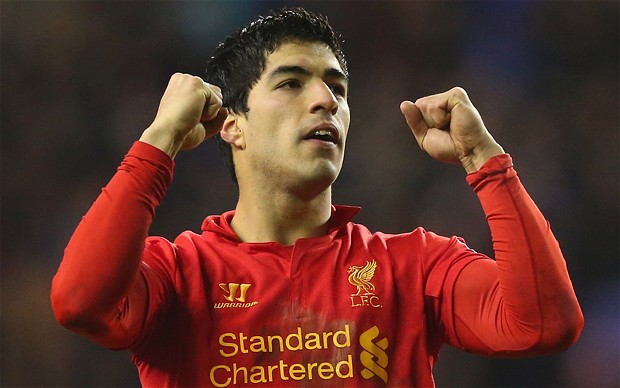 Barcelona striker, Luis Suarez, faces a Copa del Rey ban after being accused by the referee of provoking Espanyol players following a heated Catalan derby.


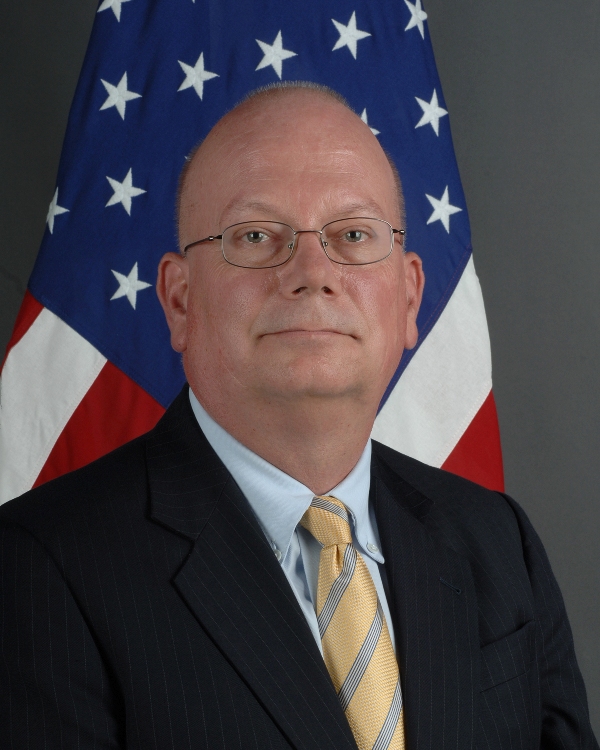





Davido, Baby Mamas And Other Stories, By Reuben Abati
“What are you relieved about?”
“It is this David Adeleke and Sophia Momodu soap opera”.
“I tell you. It is a perfect subject for a good home video. But what is your own?”
“No. Nothing. I am just relieved that the parties involved have agreed to let peace reign”
“This will be about the third time I would hear of that matter being resolved.”
“Well, I think the Momodus and the Adelekes should just spare us. They should not forget there is a child involved. They have suddenly made Imade Adeleke, the most famous victim of Baby Mama-Baby Papa palaver in Nigeria. Both Davido and Sophia and their supporters’ clubs should please protect the baby, and not make her a poster child for that kind of subject.”
“But me, I am enjoying the story oh.”
“Of course, too many sadists in our land enjoy other people’s misery.”
“But really, it is a simple matter. “
“If it were that simple, the drama wouldn’t be so entertaining. “
“What Davido wants, Davido gets. His father is rich. He is a famous musician. Davido says he wants custody of his daughter.”
“By taking her away from her mother by force, and giving her to his half-sister, and threatening to travel out of the country with the baby for medicals, without the mother’s knowledge or consent? A seven-month old baby, abducted at two months?”
“He gave reasons for that. He is talking about the biological mother taking cannabis and risking his daughter’s life”
“Cannabis?”
“Yes. Igbo”
“You seriously mean marijuana?”
“Yes, gbana as in Indian hemp. And Davido provided a medical report to confirm his claim.”
“You saw the medical report. You are sure it is genuine? Because I understand Sophia Momodu’s lawyers have written the lab to produce the original report of proof of drug abuse.”
“This their matter sef.”
“That’s why it is the child that is most important. I don’t like the way they have turned the young girl into a trophy to be fought over in a blood sport. We are in the age of the internet. Twenty years from today, someone could print out these funny details from the internet memory bank. A father, grandfather and a half-sister fighting a mother and her family over a baby and making sordid claims: It is not a fight that can be easily won.”
“I hear Davido says the Momodus cannot force him. He may even release a special song to make his position clear: No be by force.”
“Nobody is forcing him and his family to marry Sophia Momodu. They are just saying custody should be mutually agreed upon.”
“And he and his family are saying they want their daughter properly brought up. They too have a point. You should not take sides.”
“Ok. He is talking about Marijuana. When he was head over heels in love with the Momodu girl, he didn’t smell marijuana? I am sure if he was given Marijuana before he was allowed to inhale, he would willingly exhale?
“He insists he was just 21 years old. And that he was seduced by a full-grown woman who took advantage of his youth and innocence.”
“Innocence, indeed. Was he raped? Did he not have a relationship with her, and did he not showcase her everywhere? He was 21. If he could be tricked at 21, then he should live with the consequences. “
“You are taking sides. I know why. You are Dele Momodu’s friend.”
“I am making uncommon sense. I am saying why is Davido asking for Sophia Momodu’s birth certificate after the fact? When the thing dey sweet them, they no dey remember say na the thing wey fowl chop, him go shit.”
“But you can’t force any man to marry a woman. Why the girl too go carry belle for him junior brother? She suppose know say Davido sef him na pikin. You no see as him papa they follow am, make dem no carry big yansh, big chest, fine face, cheat him son for Lagos”
“Him try well, well. But Davido, your boy, him no sabi use rubber?”
“That girl look like person wey go gree rubber?”
“You dey craze”
“My own is that fathers should just keep an eye on their sons and daughters. Let mothers also keep an eye on their daughters. To avoid stories that break the heart like this one, fine girls should just know that you can’t detain any man with a baby. Er beg.”
“The values of the younger generation are different.”
“Some strict parents will still never have allowed this to happen.”
“Some of these children are beyond control.”
“But we all suffer for it. This is why Ghanaian ladies insist that Nigerian men are unreliable. They say they use and dump women.”
“They say they…?”
“That’s what I hear.”
“They or we?”
“They.”
“You mean you have tried the Ghanaian market too? Tell your brother something about ECOWAS romance?”
“You are an incurable gossip. Ashawo, somebody.”
“But talking seriously, it won’t be fair to condemn Nigerian men. I think this is a thing about Nigerian musicians. Those people too like women. Young women, old women oh…any woman. Even the women musicians sef, any man wey stand well… fiam”
“That is more important to them than their art? No wonder many of them sing such trashy songs”
“There is even one of them who has seven children from five women or so. And there is one they call Whizkid”
“Superkid?”
“Whatever. But there is this kid musician who also has a child from an older woman. There is this joke that when his parents heard, they quickly took charge of the situation, by telling the Baby Mama that while they would accept the baby, everyone could see that the Baby father is himself still a baby, too young to take care of another baby, not to talk of a grown woman. They pleaded that no woman should pakurumo..ko…”
“ Nice joke. I laughed. Him sef na pikin, he never grow finish to take care of pikin. The girl fled.”
“That’s why I say it is a simple matter. Davido should have consulted his seniors in this matter. That one that has seven children from five women did it so well, today all his Baby Mamas married or single, are friends.”
“Wow. That’s a real Baba of the matter. Who is he?”
“I can’t mention his name. He is happily married now to one of the Baby Mamas. I don’t want to be accused of disrespecting another man’s wife.”
“Let Davido and Sophia just make peace for their daughter’s sake. And when the matter is settled, Davido knows where to go for tutorials if he really wants to fish in this type of troubled waters.”
“But our musicians sha. They can fight?”
“Who again is fighting?”
“Olamide and Don Jazzy.”
“That face-off over awards at The Headies event? But they have apologized”
“No. You don’t get the point. Why should artistes or producers or label owners fight over awards? What I have seen is that our young artistes are obsessed with awards. They seem to be more interested in being given a plaque than developing their real work. It is this same problem with Nollywood actors. Any small award is treated as if it is the Nobel Prize.”
“I see that too. It is the Grammy award disease.”
“No true artist should work with an eye on winning a plaque. The best award is the acceptance of the market place, not by a group of biased judges. If you are good as an artist, you are good, nobody can take that away from you.”
“Quite true. But it helps to have some plaques on the wall, I must say.”
“How many of those musicians who were called the best new acts on the block in the 80s and early 90s are still making any impact today? When a work of art is good, it will be evergreen; when an artist is good, his talent will endure.”
“Some of these new kids are great though. World-class talents. In the last few years, there has been an explosion of real talent.”
“I want to hear more about talent. Great art. Not drama kings and queens, not Baby Mamas and Lab Reports.”
“You are just old-fashioned. Controversy is part of art. Life itself is about controversy. Controversy produces great art. In the world of artists, all things work out as raw material.”
“That’s why people insist artists are mad.”
“But it is not only artists that generate or attract controversy. Politicians do.”
“I know. Controversy is the soul of politics, but here it produces stress and oftentimes, tragedy.”
“I’ll give you one example.”
“Which is?”
“In Oyo State, Governor Abiola Ajimobi is trying to embarrass the Olubadan in Council by trying to determine how existing vacancies within the hierarchy are filled. He is introducing INEC guidelines to Ibadan Chieftaincy affairs!”
“How can he possibly do that?”
“He is asking for certificates of mental, physical and marital fitness before Ladoja and Balogun can fill the Otun Olubadan and Osi Olubadan vacancies.”
“Marital fitness?”
“When people ask for physical fitness, don’t you know it is all encompassing?”
“All that is politics. I am sure it will be amicably resolved. Ajimobi is smart enough to know that you don’t fight the traditional institution. Governors will come and go, the Olubadan is the owner of Ibadan”
“Don’t tell me. Go and tell Ajimobi”
“Don’t worry. He knows. He just dey make body. Body language, they call it.”
“But what is happening in Bayelsa is not body language oh. When the people of Southern Ijaw go to the polls tomorrow to determine who will be the next Governor of Bayelsa state, they won’t be joking; the state will be at war.”
“May be not real war; let’s say blood sport.”
“You are speaking grammar. I just hope the election won’t be inconclusive again.”
“It is a combat for political supremacy.”
“Put it like this: the outcome may determine the future of Bayelsa state.”
“No. Put it like this: the outcome will determine the future of the PDP.”
“You are quibbling.”
“Dickson is core Ijaw. Timipre Sylva is Nembe.”
“I don’t get it.”
“The mind of the core Ijaw voter will make the difference. We pray for peace.”
“I have an idea now. Yes. All things being equal.”
“That’s politics for you.”
“But there are other forces.”
“That’s why there is so much at stake, and a question of where the stakeholders stand.”
“I know. Stakeholders matter. They have just allowed MTN to buy Visafone.”
“Really? Is that a reward for the fine MTN is supposed to pay?”
“It is a business transaction, nothing about government.”
“Everything is about government. Has MTN paid its fine, before being allowed to take over a home-grown company?”
“We should study what happened. Why do Nigerians get licenses and approvals, run a business for a while and then sell to foreign interests? HiTV. Now Visafone. ”
“One glaring failure of local content!”
“Look, let’s discuss that after MTN must have paid the fine.”
“I hear they have sacked 2, 000 Nigerian workers at Visafone, already. They have taken over.”
“What?”
“Oh, yes.”
“Oh no.” [MYAD]