We have lost our dear elder brother and first in-law, Ambassador Sir (Dr) Paddy Kemdi Njoku, KSJI, KSS, a man whose life exemplified service, wisdom, humility, and devotion to humanity. His passing on May 26th, 2026, left a profound void in our hearts and particularly in the Ihedioha family. Uncle Paddy was not only our elder brother, but also a reliable source of counsel, strength and encouragement. Born on 28th August, 1950, Dr. P.K Njoku was an accomplished administrator, respected mediator and devout Catholic, who served with integrity and distinction in both public and private capacities. He was a Pan Nigerian and distinguished himself admirably in several roles as University Administrator, Chairman of the Board of NECO; as President of the Institute of Chartered Mediators and Conciliators (ICMC), and Commissioner in the Imo State Judicial Service Commission, where he consistently demonstrated excellence, fairness, and dedication. A mercurial wordsmith and multilingualist, Dr. P.K. Njoku was evidently active in several socio-cultural associations within and outside Nigeria. He was a man of great resource and compassion. Though this loss is painful, we are comforted by the lasting legacy he left behind, as we continue to pray for the eternal repose of his soul Ije Oma
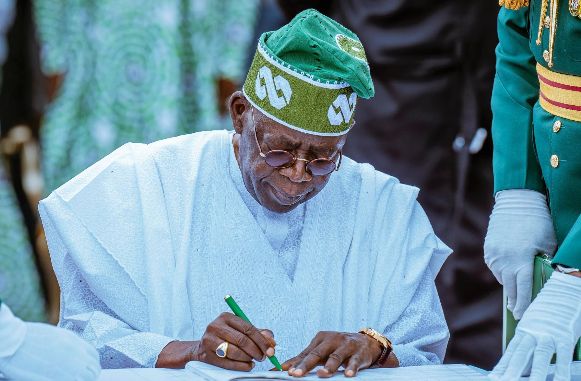
Nigeria’s identity ecosystem is set to align with global best practices, emerging technologies and the demands of a rapidly evolving digital economy following the signing into law, the National Identity Management Commission (NIMC) Act, 2026 by President Bola Ahmed Tinubu. A statement today, June 26, by the Head of Corporate Communications of the National Identity Management Commission (NIMC), Kayode Adegoke, said the signing of the new Act marks a transformative milestone in Nigeria’s journey towards a secure, inclusive and digitally empowered nation. He said that the new Act, which replaced the NIMC Act of 2007, has a defining feature which designates NIMC as the Root Certification Authority for Nigeria’s National Public Key Infrastructure (PKI) and Digital Public Infrastructure (DPI). He said that the new Act establishes the Commission as the nation’s trusted authority responsible for underpinning secure digital identity, authentication and electronic trust services across government and private-sector digital platforms. “The Act further empowers NIMC to ensure secure, interoperable and seamless data exchange among all public and private entities, laying the legal and institutional foundation for a trusted digital economy. “This landmark reform directly advances President Bola Ahmed Tinubu’s Renewed Hope Agenda by accelerating digital transformation, strengthening national security, expanding financial and social inclusion, improving public service delivery and supporting the development of a secure Digital Public Infrastructure capable of driving innovation, economic growth and Nigeria’s aspiration of becoming a one-trillion-dollar economy. Kayode Adegoke recalled that nearly two decades after the 2007 Act laid the foundation for Nigeria’s National Identity System, the global digital landscape has changed dramatically. He said that the rapid expansion of digital services, e-governance, electronic commerce, data protection requirements and evolving cybersecurity threats created an urgent need for a more robust and contemporary legal framework. “The NIMC Act 2026 responds to these realities by modernising Nigeria’s identity management framework, strengthening digital trust, protecting citizens’ personal data, enhancing cybersecurity and positioning the country to fully harness the opportunities presented by the global digital economy. “The Act strengthens NIMC’s role as the statutory authority responsible for the national identity management system in Nigeria. It firmly establishes the National Identification Number (NIN) as the country’s foundational identity credential, reinforces the principle of “One Person, One Identity,” and enables seamless identity verification and authentication across government and private-sector platforms. “Importantly, the Act positions NIMC at the centre of Nigeria’s digital trust architecture by assigning it strategic responsibility for the National Public. “Major highlights of the Act include: Robust Data Protection and Privacy: Introduces stronger safeguards for personal data in alignment with the Nigeria Data Protection Act (NDPA) and international best practices, ensuring that Nigerians’ personal information is processed, stored and protected in accordance with globally accepted privacy standards. “The Act designates NIMC as the Root Certification Authority for Nigeria’s National Public Key Infrastructure and Digital Public Infrastructure, establishing the Commission as the nation’s trusted authority responsible for secure digital identity, authentication and electronic trust services. It empowers NIMC to establish, manage and maintain the National Public Key Infrastructure and Digital Public Infrastructure, providing trusted authentication, encryption, digital signatures, digital certificates and identity verification frameworks that strengthen confidence in digital transactions and online services across government and private-sector platforms. “The Act empowers NIMC to ensure secure, interoperable and seamless data exchange among Ministries, Departments and Agencies (MDAs), private organisations and other authorised entities. This will enable trusted digital interactions, improve service delivery, strengthen cybersecurity and provide the secure digital backbone required for Nigeria’s Digital Public Infrastructure and digital economy. “Positions the NIMC General Multipurpose Card as a versatile identity credential for nationwide identity verification under the theme: “One Card, Multiple Possibilities.”
The Lagos State Police Command has dismissed earlier fears that the explosion which occurred on June 22, at No. 19 Way Street, Mushin, was caused by an Improvised Explosive Device (IED), confirming instead that the incident resulted from a mechanical failure. Speaking to newsmen on the matter, the State Commissioner of Police, Tijani Fatai, said that an extensive forensic and technical investigation conducted by the Nigeria Police Force’s Explosive Ordnance Disposal and Chemical, Biological, Radiological and Nuclear (EOD-CBRN) Unit found no evidence of explosives, terrorism, sabotage, or any criminal activity. According to the police Chief, the incident was initially treated as a suspected explosive occurrence in line with standard security protocols and international best practices after preliminary observations at the scene raised concerns about a possible IED explosion. He explained that a team of highly trained EOD-CBRN experts carried out a comprehensive examination of the scene, including forensic analysis of the affected vehicle, assessment of recovered fragments, evaluation of damage patterns, collection of physical evidence, and interviews with witnesses. “The investigation has conclusively established that the incident was not caused by an Improvised Explosive Device, terrorist activity, sabotage, or any form of criminal use of explosives.” Fatai said that investigators found no traces of explosive materials, detonators, initiation systems, explosive residues or blast characteristics commonly associated with explosive attacks. Furthermore, the damaged vehicle did not display structural deformation, fragmentation patterns, crater effects, or displacement typically linked to explosive incidents. The investigation revealed that the explosion resulted from the catastrophic failure of a pressurized mechanical component located outside the vehicle. The failure triggered a sudden release of energy, shattering the vehicle’s front passenger-side glass panels and causing minor injuries to an occupant. Based on the findings, the incident has been officially classified as a “Mechanical Explosion” and reclassified from a suspected IED incident. The Command reassured residents that there is no threat to public safety, stressing that there is absolutely no evidence connecting the incident to terrorism, insurgency, sabotage, or any other security concern. It commended members of the public for promptly alerting security and emergency services, which facilitated a swift response, while praising emergency responders and technical personnel for their professionalism throughout the investigation. Fatai called on the residents to remain vigilant and continue reporting suspicious activities through established security channels, assuring that all reported explosion-related incidents would continue to receive thorough professional scrutiny before conclusions are reached. He reaffirmed the commitment of the Nigeria Police Force to transparency, professionalism, and factual reporting in carrying out its constitutional mandate of protecting lives and property. .
The Executive Chairman of a leading telecommunications infrastructure provider in Nigeria, Phase3 Telecom, Mr. Stanley Jegede has expressed determination to continue to give support to the Guild of Corporate Online Publishers (GOCOP) in view of the credible platform it provides for the practice of good journalism in the country. Mr. Jegede, who received in audience in his Abuja office, members of the national Executive Council of GOCOP yesterday, June 25, acknowledged the imperative of supporting institution like GOCOP that ensures that the information people consume is accurate and credible. “As we continue helping Nigerians access the connectivity required for everyday life and economic activity, it is equally important to support institutions that ensure the information people consume is accurate and credible. “That is why we value organisations such as GOCOP, which promotes responsible journalism and factual reporting.”
The Phase3 Telecom Chairman also pledged the company’s support for initiatives that strengthen media professionalism and promote public access to credible information. “Good journalism is good for the country. “There is no doubt that Nigeria is better off because of it. We should continue to explore opportunities for collaboration that advance both national development and informed public discourse.” Mr. Jegede vowed the commitment of his telecom company to expanding broadband penetration across Nigeria, in line with over two decades of strategic investments in critical digital infrastructure that continue to support connectivity nationwide. The Executive Chairman said that Phase3 Telecom has spent the last 23 years building infrastructure that enables connectivity for millions of Nigerians, support for mobile network operators, educational institutions, businesses, and other critical sectors of the economy. “We are a responsible organisation that has been in existence for twenty-three years. Our primary focus has been supporting broadband penetration, and we have successfully delivered on that mandate,” he said. “We have built infrastructure across 36 states of the federation, providing services to mobile network operators, schools, businesses, and other institutions. Much of what we do happens behind the scenes, but the mobile networks Nigerians rely on every day depend significantly on our infrastructure.” He said that the company is focused on further expanding broadband access and supporting national efforts to bridge the digital divide. “Our goal is to continue increasing broadband penetration across the country. We are working closely with government and regulators to ensure that we achieve even higher levels of connectivity and digital inclusion.” Mr. Jegede linked broadband development to broader socio-economic progress, stressing the importance of access to reliable information in a digitally connected society. Earlier, the President of GOCOP, Danlami Nmodu sought the support of Phase3 Telecom for the Guild’s Annual General Meeting (AGM), scheduled for October 8, 2026, in Lagos. Nmodu described GOCOP as a trusted platform of professional online publishers committed to ethical journalism and credible reporting. “We are a body of seasoned professionals who take our ethical responsibilities seriously. We work hard to ensure that whatever is published by GOCOP members is reliable, accurate, and professionally produced.” He said that sustained investment in media organisations is essential to strengthening investigative journalism, special reports, and other forms of public-interest reporting. “The more resources available to media organisations, the greater their capacity to undertake investigative and developmental journalism. Supporting quality journalism ultimately strengthens democracy, promotes accountability, and advances good governance.” The GOCOP delegation included the Guild’s General Secretary, Mr. Sufuyan Ojeifo, and Publicity Secretary, Ms. Kemi Yesufu. Phase3 Telecom is Africa’s leading independent aerial fibre optic network infrastructure and telecommunications services provider. The company operates across the ECOWAS region and serves international markets through strategic partnerships that enable connectivity for clients in more than 400 cities worldwide.
The Governorship candidate of the People’s Democratic Party (PDP) for Abia State, Dr. Kelechi Anosike has promised to run Welfarist governance if he is elected in 2027. Speaking to newsmen today, June 25, in Abuja Dr. Anosike explained that his government would give equal attention to the wellbeing of the people of Abia State and the same way he would go for infrastructural development. “We will think people first before designing policies because people are the strength of the government.” He stressed that his government would be measured by the happiness and wellbeing of the people the same way it would be committed to infrastructural development. Dr. Anosike said that with the amount of huge money coming to the State, in the neighborhood of N30 billion per month, mainly from the Federation Account, people in the state should not have the cause to suffer from unemployment and other negative issues. The PDP candidate vowed to introduce back-to-farm policy to ensure abundance food production for self sufficiency. He gave details of how his government would make Abia State one of the best in all socioeconomic and political fronts, saying: “Abia State is not poor but it is poorly managed.”
Presidential spokesman Bayo Onanuga told Arise Television on Tuesday that he “does not share the view that the level of hunger often described by critics reflects the reality across Nigeria.”
He listed infrastructure, student loans and credit facilities as proof that “many Nigerians are benefiting” from Tinubu’s policies. Onanuga, with due respect, that is not the Nigeria the rest of us live in. Infrastructure does not cook soup. Roads are important, but a mother in Mararaba cannot take a slab of concrete to the market. Since “subsidy is gone” on May 29, 2023, transport from Nyanya to Berger moved from ₦200 to ₦800. A bag of rice that was ₦35,000 in May 2023 sold for ₦77,000 in July 2024. The NBS put food inflation at 40.87% in June 2024 — the highest in 28 years. You cannot eat flyovers. Student loans do not feed the unemployed. The Nigerian Education Loan Fund is a good idea on paper. But it is a loan, not a grant, to students whose parents have lost jobs because manufacturers closed after the naira collapsed from ₦471/$1 to ₦1,606/$1. You cannot repay a loan with hunger. And the students still have to eat today. Credit facilities do not create purchasing power. Consumer credit for workers is useful — if you have a job. NBS data from 2022 already showed 133 million Nigerians in multidimensional poverty. The World Bank added 7 million more in 2024 because of inflation. Credit without income is debt. Debt without food is despair. The reality across Nigeria. Go to Utako Market, Mr. Onanuga. A paint bucket of garri is ₦3,500. A crate of eggs is ₦5,500. Minimum wage is ₦70,000, since July 2024. That wage cannot buy one bag of rice. Go to any teaching hospital: doctors are writing prescriptions patients cannot fill. Go to any motor park: drivers sleep in their buses because one trip no longer covers fuel. SBM Intelligence tracked 4,416 kidnap victims in 2023. Hunger now walks with insecurity. Farmers do not go to farm. Traders do not open shops early. That is not “exaggerated.” That is documented. The insult of denial. To say hunger is exaggerated is to tell a man with no food that his stomach is lying. Policies are not felt in press releases. They are felt in pots. If “many Nigerians are benefiting,” name them. Show us the streets where ₦70,000 feeds a family of four for 30 days. Until then, the only thing exaggerated is the distance between Aso Rock and the average Nigerian kitchen. We do not need a spokesman to tell us we are full. We need food. When government disputes hunger, it is no longer governing. It is gaslighting. Dr Tom Ohikere is a public affairs analyst and former Commissioner of Information, Kogi State.
Nigeria’s Minister of Innovation, Science and Technology, Dr. Kingsley Udeh, has vowed to ensure effective utilisation of the nation’s abundant low-carbon hydrogen energy resources under its energy diversification initiatives. The minister, who spoke through the ministry’s Permanent Secretary, Dr Mukhtar Muhammad, at the opening of a three-day summit on Low-Carbon Hydrogen Economy in Abuja, said that as part of the blueprints towards achieving the object, a national hydrogen policy draft had reached an advanced stage and would become operational as soon as possible. He described Nigeria’s hydrogen as a critical component of the nation’s clean energy transition plan, adding: “This government commits to ensuring that the regulatory clarity our agencies require to act is not the obstacle to achieving economic diversification.” The minister acknowledged technical support from Germany and UNIDO, but cautioned that necessary regulatory work and licensing belonged strictly to Nigerian institutions. “Our partners have offered Nigeria a door; they have not offered to walk through it on our behalf. “A decade from now, when other nations are developing fleets of hydrogen-powered vehicles on their roads, will you be able to account for what you did.” The Director-General of the Energy Commission of Nigeria (ECN), Dr Mustapha Abdullahi, explained that the global hydrogen market was predicted to reach 50 billion dollars in the coming decades. Abdullahi said that Nigeria should leverage its massive natural gas reserves to produce blue hydrogen and create a new economic opportunity while working toward cleaner alternatives. “We have over 209 trillion cubic feet below the surface as reserves. What we are trying to do is to create another economy to utilise that gas. “We want Nigeria to be a hydrogen hub where we cannot just utilise, but export to other African countries.” The Programme Manager for Energy at the European Union Delegation, Godfrey Ogbemudia, said that clean hydrogen offers immense opportunities for Nigeria to meet its net-zero and renewable targets. “We are not only just interested in the knowledge that you are going to get. How does this translate into concrete investment? “How does this help Nigeria meet its energy target? That is what we will be looking forward to see and we are going to follow this up strictly.” The Statistician-General of the Federation, Semiu Adeniran, emphasised that low-carbon hydrogen was revolutionary for decarbonising hard-to-abate sectors like manufacturing and transport. Represented by Kazeem Fatai, a Senior Statistician at the National Bureau of Statistics, Adeniran warned that successful transition frameworks should be evidence-based and economically viable. “The development of a successful hydrogen ecosystem demands an entirely new baseline of robust statistics. “We need high fidelity data tracking energy input-output ratios, infrastructure factor flows, green jobs, and crucially disaggregated data on industrial process,” he said. Etiosa Uyigue, Executive Director of the Community Research and Development Centre, stated that the EU-funded project actively supports multiple core government agencies. He listed the Nigerian Electricity Management Services Agency and the Rural Electrification Agency among institutions receiving crucial capacity building and data collection support. “The overall objective of the project is to support the government efforts to achieve the energy transition goals.” The event was organised by the Energy Commission of Nigeria (ECN) and the European Union (EU).
The devastating impacts of climate change are no longer distant warnings; they are a daily reality across Africa. Climate disasters are intensifying across the region, from severe flooding in Nigeria and Togo to prolonged droughts in Ghana and Ivory Coast. Simultaneously, rising sea levels in the Gulf of Guinea are escalating food insecurity. These events have inflicted enormous human, environmental, and economic losses, threatening decades of development gains. As governments, communities, and international partners seek solutions, experts warn that understanding climate risks and accurately assessing losses are essential for effective adaptation and resilience-building. West Africa comprises 16 countries with diverse ecosystems ranging from coastal mangroves to arid deserts. In spite of contributing only a small fraction of global greenhouse gas emissions, the region is among the World’s most vulnerable to climate change. According to climate experts, average temperatures across West Africa are rising faster than the global average; rainfall patterns have become increasingly erratic, leading to more intense floods in some areas and prolonged droughts in others. These changing weather patterns affect agriculture, fisheries, water resources, energy production, health, infrastructure, and livelihoods. Weighing in on this, the Minister of Youth Development, Mr. Ayodele Wisdom, said flooding had emerged as one of the most destructive climate hazards in West Africa. Wisdom spoke recently at the opening of the Climate Beyond Borders Caravan’s (CBBC) capacity building workshop in Abuja, themed “From Awareness to Action: Mobilising Resourceful Nigerian Youth for Grassroots Climate Solutions.” Wisdom was represented by Mrs. Akinfiresoye Tolulope, Senior Special Assistant to the Minister for Youth Development on Social Security Administration and Climate action. According to him, countries including Nigeria, Ghana, Benin, Sierra Leone, Liberia, and Côte d’Ivoire have experienced repeated flooding that has destroyed homes, roads, bridges, schools, and farmlands. “In the Sahel, countries such as Mali, Burkina Faso, Niger, and Chad continue to battle persistent drought, desertification, and land degradation, reducing agricultural productivity and worsening food insecurity. “Coastal erosion and sea-level rise threaten major cities including Lagos, Abidjan, Dakar, and Accra, placing millions of residents and billions of dollars’ worth of infrastructure at risk. “Communities that depend on fishing are also experiencing declining fish stocks due to warming waters and changing marine ecosystems.” He affirmed the Federal Government’s readiness to advance youth empowerment to mitigate climate change. According to him, by mitigating climate change and reducing carbon emissions, the ministry is simultaneously creating jobs, tackling unemployment, reducing poverty, and driving sustainable development. Moreover, the Ghana Meteorological Agency (GMet) has said Ghana loses about $200 million annually to floods and droughts. The Deputy Director-General of GMet, Mr. Ignatius Williams, disclosed this when a team from CBBC, an initiative of the People, Planet and Peace Foundation, paid a courtesy visit to the agency in Accra. Williams said Ghana faced escalating climate hazards that cost the country billions of dollars annually and claimed hundreds of lives. According to him, the losses will continue to rise without strengthened early warning systems and improved climate resilience measures. “In 2023, the impact of the Akosombo Dam spillage caused severe flooding that devastated livelihoods, displaced thousands of families and resulted in losses estimated at about $141 million. “In June 2015, the Accra flood disaster caused massive economic losses, claimed more than 200 lives and resulted in food losses estimated at 108 million dollars. “In 2024, documented drought impacts affected 135,822 farmers across 571,745 hectares of farmland,” he said. On his part, Joseph Portuphy, Deputy Director, Synoptic Meteorology and Forecasting at GMet, said the impact of climate change resulting to economic losses include damaged infrastructure, reduced agricultural yields, disrupted businesses, and increased healthcare costs in Africa. He pointed out that Social losses involve displacement, interrupted education, food shortages, unemployment, and worsening poverty. “Environmental losses include disappearing forests, shrinking wetlands, biodiversity decline, soil degradation, and reduced freshwater availability. “There are also non-economic losses that cannot easily be measured in monetary terms; these include the loss of cultural heritage, indigenous knowledge, sacred sites, traditional livelihoods, and human lives. “Experts argue that these invisible losses often receive inadequate attention despite their lasting impacts on communities,’’ he said. Meanwhile, E LAFI SOU Foundation and People Planet and Peace Foundation (PPPF) trained 100 indigenous people of the Djebonoua community on agroforestry to tackle climate change. The training, held recently in Djebonoua, central Côte d’Ivoire, was aimed at equipping participants with practical knowledge and skills on strengthening climate change mitigation and adaptation efforts. The training also equipped them with sustainable agricultural practices that promote environmental conservation and improved productivity. Speaking at the event, President of E LAFI SOU Foundation, Mr. Koffi Matieu, said the programme was designed to help participants understand the fundamentals of agroforestry and effectively apply the concepts in their communities. According to him, the initiative seeks to enhance participants’ capacity to design and implement agroforestry systems that are adapted to local realities and environmental challenges. CBBC Lead, Mr. Olatunji Francisco, said agriculture remained the backbone of most West African economies, employing a significant share of the population. He, however, said that unpredictable rainfall, extreme heat, pest outbreaks, and prolonged dry spells continue to reduce crop yields. A forest expert and guest speaker at the event, Mr. Kotne Arthur, described agroecology as an integrated approach that applied ecological principles to the design and sustainable management of agricultural systems. He said agroecology optimised interactions among plants, animals, humans and the environment, thereby improving productivity, resilience, biodiversity and sustainability. Arthur noted that mitigation and adaptation remained two complementary strategies in addressing climate change. “Mitigation focuses on addressing the causes of climate change, while adaptation focuses on responding to its consequences,” he said. In a related development, the Sub-Prefect of Djebonoua, Mrs. Karamoko Sinia, pledged to intensify advocacy against indiscriminate tree felling in the community during a visit by members of the CBBC. Sinia said Djebonoua remained the leading producer of tomatoes in Côte d’Ivoire but faced major challenges, including post-harvest losses and inadequate water supply for farming. “Although we produce more tomatoes than other communities, our farmers earn little due to wastage; water scarcity is also a major challenge affecting agricultural production,” she said. Responding, CBBC Secretary in Nigeria, Miss Kumuyi Olabisi, assured the community of PPPF’s support in addressing some of the identified challenges. She said the organisation would assist in providing water reservoirs for irrigation and also support initiatives in maternal and child healthcare. Olabisi added that the foundation would explore ways of assisting farmers with tomato preservation facilities to reduce post-harvest losses and improve incomes. According to her, CBBC is a Pan-African, youth-led initiative committed to promoting climate justice, cross-border cooperation and green economic transformation across the continent. Moreover, The Rotary Club of Lomé Zenith, in partnership with the People Planet and Peace Foundation, recently planted mangrove trees along the coastline of Aneho, a coastal town in southeastern Togo aimed at mitigating the effects of flooding, coastal erosion, storms and mudslides in the area. Landry Amewounou, President-Elect of the Rotary Club of Lomé Zenith, said the organisations selected the location to complement ongoing efforts by stakeholders to address the impact of climate change in Togo. Amewounou, a solar energy photovoltaic expert, said the Togolese Government was working toward increasing the adoption of renewable energy as part of its energy transition agenda by 2030. Also Speaking, Eusebio Cesar, Project Manager of the West Africa Coastal Areas (WACA) Management Programme, commended the Rotary Club and the foundation for the tree-planting initiative. Cesar said the WACA programme had contributed to creating economic opportunities and improving livelihoods in coastal communities. He added that the programme also promoted sustainable management of marine and coastal resources through experience-sharing and networking among stakeholders. “WACA continues to strengthen a regional dynamic focused on sustainable solutions for the resilience and economic development of Africa’s coastal areas.” In a related development, Mr. Hermann Amadoto, District Governor Nominee for Rotary District 9103 (Togo, Benin and Niger), said Togo would pursue a “Waste-to-Wealth” initiative aimed at creating employment opportunities for young people. He said plans were underway to establish recycling firms to process plastic waste locally instead of exporting it for recycling abroad. According to him, the initiative would generate jobs and contribute to environmental sustainability. Similarly, Mr. Modeste Messavussu-Akue, President of the Rotary Club of Lomé Zenith, commended CBBC members for implementing climate-related projects in Togo. According to him, Rotary’s seventh area of focus is about community development supporting the environment. For West African stakeholders, climate change has become one of the most pressing development challenges in the region. They say the region’s growing exposure to floods, droughts, heatwaves, coastal erosion, and food insecurity demands urgent and coordinated action.
Lagos State Government, through its Waste Management Authority (LAWMA) has assured residents of efforts being intensified to effectively improve waste evacuation in the state. The government explained that it is intensifying efforts to strengthen operational efficiency, expand waste management infrastructure and enhance environmental sanitation. The Managing Director and Chief Executive Officer of LAWMA, Dr. Muyiwa Gbadegesin, who spoke at the ongoing intervention program, acknowledged the operational challenges affecting waste evacuation in some parts of the State and assured residents that the government is actively implementing immediate, medium-term and long-term solutions to improve service delivery. According to him, recent operational pressures were partly linked to challenges associated with access to disposal facilities, particularly during the peak of the rainy season. Dr. Gbadegesin said that LAWMA’s waste-to-wealth partner, ZoomLion Nigeria Limited, has commenced preliminary works to stabilise and reopen Road E at the Olusosun facility, a critical intervention expected to improve access, reduce turnaround time and enhance operational efficiency at the site. He said that the Authority has resuscitated and optimised the use of Transfer Loading Stations (TLSs) across the State as a stop-gap measure to facilitate quicker evacuation of waste from communities while ongoing infrastructure improvements continued. The LAWMA boss said that government is also taking steps to support the acquisition of additional waste collection vehicles by PSP operators, adding that the expected deployment of 100 Compressed Natural Gas (CNG) compactor trucks would significantly boost waste evacuation capacity across Lagos, while 10 new compactor trucks donated by the Lagos State Lottery and Gaming Board have already been deployed to strengthen waste collection operations. According to him, government has intensified enforcement against indiscriminate waste disposal and other environmental infractions, while recently constituting a coordinated Waste Police initiative involving key stakeholders, including transport unions and community groups, to strengthen environmental compliance and discourage illegal dumping. He added that government is also exploring inter-state collaboration to complement existing waste disposal infrastructure, improve operational flexibility, and support more efficient waste evacuation across Lagos State. Dr. Gbadegesin noted that LAWMA’s disposal facilities received over 418,500 tonnes of waste in May 2026, despite operational challenges experienced during the period, adding that 3,000 blackspots are being cleared daily through ongoing sanitation interventions, while government continues to invest in infrastructure, equipment, and operational improvements aimed at strengthening service delivery across the State. The LAWMA boss highlighted the ongoing construction of new Transfer Loading Stations at Olusosun and Solous III, saying that the facilities would collectively divert up to 4,000 tonnes of waste daily to recycling and treatment facilities upon completion, significantly reducing pressure on disposal sites, advancing the State’s circular economy objectives, and complementing government’s broader commitment to modernising waste management through increased investment in recycling, material recovery, waste diversion, and other sustainable waste-to-resource initiatives. Dr. Gbadegesin advised residents to continue to patronise approved PSP operators, avoid indiscriminate waste disposal and support ongoing government efforts to maintain a cleaner and healthier environment. He reassured residents that the current operational challenges are being actively addressed and that service levels would improve progressively as the various interventions took effect. He reaffirmed the Authority’s commitment to continuously improving waste management services and assured residents that all relevant stakeholders were working diligently to restore optimal service levels across affected communities.
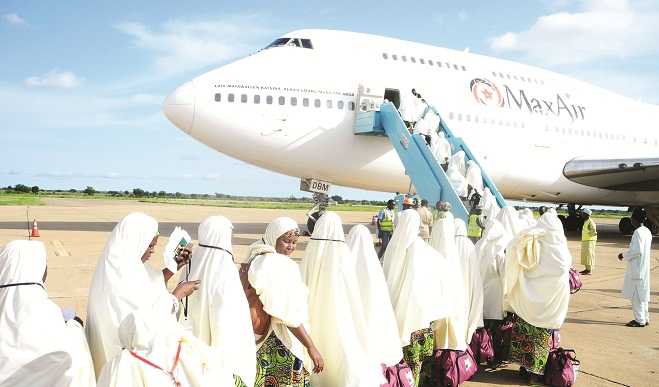
The last batch of 149 Zamfara Pilgrims and 28 Officials have left Jeddah, Saudi Arabia today, June 23, in MaxAir flight VM2014, bringing to a close, this year’s Muslim Hajj operations, undertaken by the National Hajj Commission of Nigeria (NAHCON). In all, a total of 38,052 pilgrims were airlifted in 97 flights within two weeks. In a statement today, NAHCON expressed gratitude to Allah for granting a successful conclusion to the exercise and for preserving the lives of pilgrims and officials throughout the Hajj season. “With the completion of the airlift, thousands of Nigerian pilgrims have been reunited with their families after fulfilling one of the most important obligations of their faith. We pray that their acts of worship are accepted, their supplications answered and that they continue to embody the values and lessons of Hajj in their daily lives. “The Commission acknowledges the cooperation and support received from all stakeholders, including the State Pilgrims’ Welfare Boards, approved airlines, aviation authorities, security agencies, healthcare teams, service providers and our partners in both Nigeria and the Kingdom of Saudi Arabia. Their professionalism and commitment played a significant role in the successful execution of the operation.” NAHCON pledged its commitment to evaluating the just concluded operations and to build on the experiences gained to the further enhance future operations.
Full text of the NAHCON ‘s statement is reproduced hereunder: The National Hajj Commission of Nigeria (NAHCON) has officially concluded the return airlift of Nigerian pilgrims from the Kingdom of Saudi Arabia for the 2026 Hajj exercise, with the final flight conveying pilgrims from Zamfara State expected to arrive in Nigeria today 23rd, June 2026. The completion of the return leg brings to a close the 2026 Hajj operations, marking the end of a major national exercise that involved the successful airlift of Nigerian pilgrims to and from the Holy Land. The Commission, however, disclosed that 12 Nigerian pilgrims are currently receiving treatment in different hospitals in Saudi Arabia for various health conditions. NAHCON is closely monitoring their situations and has made arrangements to facilitate their safe return to Nigeria as soon as they are discharged from the hospitals. The NAHCON Chairman, Ambassador Ismail Abba Yusuf expresses gratitude to Almighty Allah for the overall success of the 2026 Hajj exercise and appreciates the tremendous support and dedication of President Bola Ahmed Tinubu GCFR and his able Vice President Senator Kashim Shettima GCON for the unflinching support they rendered towards the success of the operation. NAHCON also appreciates the cooperation and hard work of State Pilgrims’ Welfare Boards, licensed Tour Operators, service providers, aviation partners, medical teams, security personnel, the media and, most importantly, Nigerian pilgrims. The Commission acknowledges that, as with every major operation of this scale, there were challenges encountered in the course of the exercise. Nonetheless, valuable lessons have been drawn and these will be applied toward improving subsequent Hajj operations. Meanwhile, in line with the Commission’s commitment to continuous improvement and early planning, NAHCON has already formally commenced preparations for the 1448H/2027 Hajj exercise. This was conveyed to all Hajj managers in Nigeria through a circular dated 15 June 2026 and titled “Commencement of Preparations for 1448H/2027 Hajj Season,” signed by the Secretary of the Commission, Dr. Mustapha Muhammad Ali for NAHCON Chairman/CEO. Consequently, State Pilgrims Welfare Boards/Agencies/Commissions and licensed Private Tour Operators are directed to commence preparatory activities immediately in strict compliance with the official preparation document for the 1448H/2027 Hajj season as received from the Saudi Ministry of Hajj and Umrah, NAHCON Management
We use cookies on our website to give you the most relevant experience by remembering your preferences and repeat visits. By clicking “Accept”, you consent to the use of ALL the cookies.
This website uses cookies to improve your experience while you navigate through the website. Out of these, the cookies that are categorized as necessary are stored on your browser as they are essential for the working of basic functionalities of the website. We also use third-party cookies that help us analyze and understand how you use this website. These cookies will be stored in your browser only with your consent. You also have the option to opt-out of these cookies. But opting out of some of these cookies may affect your browsing experience.
Necessary cookies are absolutely essential for the website to function properly. This category only includes cookies that ensures basic functionalities and security features of the website. These cookies do not store any personal information.
Any cookies that may not be particularly necessary for the website to function and is used specifically to collect user personal data via analytics, ads, other embedded contents are termed as non-necessary cookies. It is mandatory to procure user consent prior to running these cookies on your website.






 The Phase3 Telecom Chairman also pledged the company’s support for initiatives that strengthen media professionalism and promote public access to credible information.


 Full text of the NAHCON ‘s statement is reproduced hereunder:

Tell Bayo Onanuga, Hunger Is Devastating Nigerians, By Tom Ohikere
Presidential spokesman Bayo Onanuga told Arise Television on Tuesday that he “does not share the view that the level of hunger often described by critics reflects the reality across Nigeria.”
He listed infrastructure, student loans and credit facilities as proof that “many Nigerians are benefiting” from Tinubu’s policies.
Onanuga, with due respect, that is not the Nigeria the rest of us live in.
Infrastructure does not cook soup.
Roads are important, but a mother in Mararaba cannot take a slab of concrete to the market. Since “subsidy is gone” on May 29, 2023, transport from Nyanya to Berger moved from ₦200 to ₦800. A bag of rice that was ₦35,000 in May 2023 sold for ₦77,000 in July 2024. The NBS put food inflation at 40.87% in June 2024 — the highest in 28 years. You cannot eat flyovers.
Student loans do not feed the unemployed.
The Nigerian Education Loan Fund is a good idea on paper. But it is a loan, not a grant, to students whose parents have lost jobs because manufacturers closed after the naira collapsed from ₦471/$1 to ₦1,606/$1. You cannot repay a loan with hunger. And the students still have to eat today.
Credit facilities do not create purchasing power.
Consumer credit for workers is useful — if you have a job. NBS data from 2022 already showed 133 million Nigerians in multidimensional poverty. The World Bank added 7 million more in 2024 because of inflation. Credit without income is debt. Debt without food is despair.
The reality across Nigeria.
Go to Utako Market, Mr. Onanuga. A paint bucket of garri is ₦3,500. A crate of eggs is ₦5,500. Minimum wage is ₦70,000, since July 2024. That wage cannot buy one bag of rice. Go to any teaching hospital: doctors are writing prescriptions patients cannot fill. Go to any motor park: drivers sleep in their buses because one trip no longer covers fuel.
SBM Intelligence tracked 4,416 kidnap victims in 2023. Hunger now walks with insecurity. Farmers do not go to farm. Traders do not open shops early. That is not “exaggerated.” That is documented.
The insult of denial.
To say hunger is exaggerated is to tell a man with no food that his stomach is lying. Policies are not felt in press releases. They are felt in pots. If “many Nigerians are benefiting,” name them. Show us the streets where ₦70,000 feeds a family of four for 30 days. Until then, the only thing exaggerated is the distance between Aso Rock and the average Nigerian kitchen.
We do not need a spokesman to tell us we are full. We need food.
When government disputes hunger, it is no longer governing. It is gaslighting.
Dr Tom Ohikere is a public affairs analyst and former Commissioner of Information, Kogi State.